








How to Play Dream Wonderland Marble Pusher
- Why Marble Pusher Play Depends on More Than Timing
- How to Play Dream Wonderland Marble Pusher Redemption Game
- 1. Read the Instructions and Identify the Objective
- 2. Watch the Field Before Releasing a Marble
- 3. Make a Deliberate Play and Follow the Result
- Compare Game Features and Reward Approaches
- Match Reward Settings to the Venue
- Evaluate Venue Fit, Service Access, and Purchase Requirements
- Plan for Installation and Daily Operation
- Review Commercial and Destination-Market Details
- Our Dream Wonderland Marble Pusher Redemption Game
- Review the Game for Your Venue
- Frequently Asked Questions
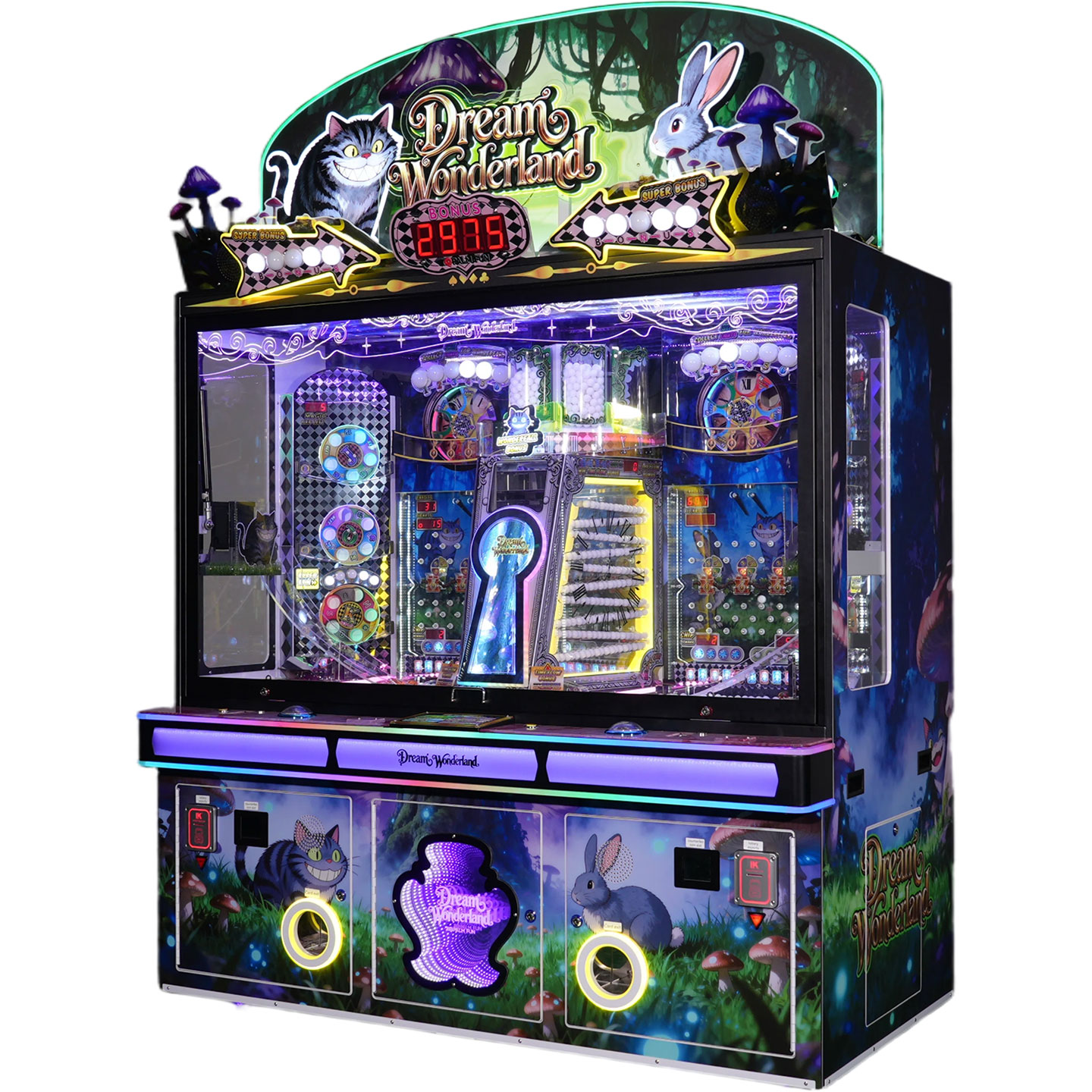
A dream wonderland marble pusher redemption game combines timing, observation, and physical play: players release marbles, watch how they interact with the playfield, and aim to advance game features or earn rewards. Before playing, check the controls and visible instructions, then use deliberate releases rather than rushing. Operators should also understand the game’s reward logic, ticket settings, maintenance needs, and fit with the venue’s audience.
Why Marble Pusher Play Depends on More Than Timing
Marble pusher games are physical skill-and-chance experiences in which a player’s action affects moving pieces on a field. The appeal comes from seeing the result unfold: a marble travels through the mechanism, interacts with other objects, and may contribute to a reward or bonus. A clear view of the playfield helps players understand that sequence and decide what to do next.
For venue operators, the same visible action creates practical responsibilities. The machine needs to attract attention, explain its basic interaction quickly, and remain serviceable through regular public use. A game that looks exciting but is difficult to understand can create hesitation at the cabinet; unclear reward feedback can make the experience feel less satisfying.
- Player understanding: Players need to identify the starting action, the objective, and the reward cues without relying on lengthy instructions.
- Visible feedback: Lights, movement, and on-screen or cabinet prompts should help players follow what happened after each action.
- Operational fit: Operators need a game that suits the venue’s audience, floor plan, staffing model, and redemption approach.
These factors are connected. A player-facing feature can also affect service needs, while a reward mechanic can influence ticket settings and the way a game fits into a wider redemption zone. Assess the full play cycle rather than choosing on cabinet appearance alone.
How to Play Dream Wonderland Marble Pusher Redemption Game
Players can approach a marble pusher methodically: learn the controls, watch the field, make a deliberate release, and observe the outcome. The precise controls and reward rules vary by machine, so players should follow the instructions displayed on the cabinet. The steps below explain a practical way to understand the play cycle without assuming that every model uses identical controls or settings.
1. Read the Instructions and Identify the Objective
Start by checking the cabinet’s instructions, payment method, and any visible explanation of how rewards work. Look for the action that releases a marble, the parts of the field that affect its path, and the conditions for triggering a bonus. If a machine offers tickets, collectibles, or another form of reward, check how those rewards are earned before beginning.
Players should avoid assuming that a particular spot or timing pattern guarantees a reward. Mechanical outcomes can depend on the arrangement and movement of objects already on the field, as well as the game’s design. Clear instructions help set expectations and let players make choices based on the game they are actually playing.
2. Watch the Field Before Releasing a Marble
Observation gives players useful context. Notice where marbles are moving, which areas appear active, and whether bonus indicators or special features are available. A short pause can help a player understand the field’s current state better than repeated, hurried actions.
Players should also watch what happens after a release. A marble’s path may be affected by the field layout and other moving pieces, so each result provides information about the interaction. That observation can make the next action more intentional, even when the outcome remains uncertain.
3. Make a Deliberate Play and Follow the Result
Use the control as instructed and give the mechanism time to complete its movement. Watch for changes in lights, bonus indicators, collectible features, or ticket output. The sequence matters: following the result helps players understand whether an action advanced a feature, changed the field, or produced a reward.
When the game includes several features, players can focus on one at a time. For example, they can first learn the basic marble release, then pay attention to how a bonus feature is activated. This makes the game easier to follow and avoids treating every light or moving object as a separate objective.
- Before play: Read the instructions and identify the control, objective, and reward cues.
- During play: Observe the field and make actions at a pace that allows the result to be seen.
- After each action: Check whether a feature changed, a reward was earned, or the game returned to its normal state.
Compare Game Features and Reward Approaches
Game features shape how quickly players understand a cabinet and how operators manage it. A straightforward play cycle can be easy to explain, while added bonus stages or collectibles can give players more to notice. The right balance depends on the venue’s audience, game mix, floor position, and approach to prize redemption.
| Approach | Core strength | Operational trade-off | Best-fit application |
|---|---|---|---|
| Simple release-and-observe play | Players can grasp the basic interaction quickly. | Fewer layered features may offer less variety during repeat play. | Locations prioritizing an easy-to-explain game experience. |
| Play with visible bonus features | Additional goals give players more cues to follow. | Instructions and reward feedback need to remain clear. | Arcades seeking a more layered interaction for their game mix. |
| Collectible or progression features | Collecting or advancing a feature can add a longer-term objective. | Operators should make collection and reward conditions easy to understand. | Venues where players respond to ongoing goals and themed play. |
| Ticket-focused redemption play | Rewards connect the game to an established redemption zone. | Ticket settings and redemption operations need to suit the venue. | FECs and arcades that use ticket-based prize redemption. |
These approaches are not mutually exclusive. A cabinet can combine a basic physical interaction with bonus features and a ticket reward. When comparing options, evaluate the complete player journey: how a person starts, what they notice, how progress is communicated, and what happens at the end of a play.
Match Reward Settings to the Venue
Ticket settings are an operating decision, not just a machine feature. Operators should consider the venue’s redemption counter, prize mix, expected player profile, and the role of the game within the overall game mix. A setting that works in one location may not fit another location’s operating model or customer expectations.
Set expectations through clear instructions and consistent reward communication. Staff should know how the game pays out and what to do if a player asks about a result. Before opening, test the player-facing flow and confirm that ticket or prize handling aligns with the venue’s procedures.
- Reward clarity: Confirm that players can understand how a feature or ticket reward is earned.
- Venue consistency: Align settings with the wider redemption area and staff procedures.
- Play-cycle review: Check the full sequence from payment and action through feedback and reward.
Evaluate Venue Fit, Service Access, and Purchase Requirements
Commercial game selection involves more than theme and play mechanics. Buyers need to consider the cabinet’s fit within the floor plan, the player profile, the surrounding game mix, and how operators will access service points. For a new venue, review these requirements during layout planning; for an existing arcade, confirm that the proposed game complements current offerings rather than duplicating them.
Plan for Installation and Daily Operation
Confirm cabinet dimensions, access routes, power requirements, and any site-specific installation constraints with the supplier before ordering. Allow enough space for players to approach and operate the game without obstructing nearby machines or walkways. Maintenance access also matters: routine checks become harder when service panels or frequently handled areas are difficult to reach.
Ask how routine cleaning, inspection, and basic troubleshooting are handled. Mechanical games have moving parts and physical play elements, so operators benefit from a defined service process and clarity about spare-parts support. Staff should know whom to contact, what information to provide, and how to keep a machine unavailable to players if a fault affects safe or correct operation.
Review Commercial and Destination-Market Details
Procurement teams should confirm the order scope, delivery arrangements, documentation, and destination-market requirements directly during project planning. For a multi-site rollout, compare the proposed game mix and operational requirements across locations rather than assuming every venue needs the same configuration. Importers and distributors should also clarify the information needed for local sales, installation, and after-sales coordination.
- Site readiness: Check cabinet fit, access, power, player circulation, and service clearance.
- Operational readiness: Confirm ticket handling, staff familiarization, routine maintenance, and escalation steps.
- Procurement scope: Clarify model, order terms, delivery coordination, documentation, and destination-market needs.
Standards and regulatory obligations depend on the destination market and the equipment category. Buyers should identify applicable requirements with the relevant local authorities or qualified compliance advisers, then confirm which documents are needed for the specific order. Do not treat a general industry standard as proof that an individual machine meets every local requirement.
Our Dream Wonderland Marble Pusher Redemption Game
At PALM FUN, we develop and manufacture commercial mechanical ticket redemption machines and arcade amusement equipment. Our Dream Wonderland Marble Pusher Redemption Game brings a themed marble-pusher experience to venues looking for visual features and multiple player goals. We designed its product concept around a magical adventure, giving operators a distinctive option to consider within a broader arcade or FEC game mix.
- Magical visual theme: Our game brings glowing lights and a Dream Wonderland setting to the player experience.
- Multiple play features: We combine magic orbs, bonus wheels, and jackpot challenges to give players features to follow during play.
- Collectible element: Our game includes character cards as part of its themed interaction and reward experience.
We support B2B buyers evaluating equipment for arcades, FECs, entertainment projects, and distribution. We can discuss model selection against venue requirements and coordinate project-specific details, including applicable customization, documentation, and support needs. We work through configuration and delivery arrangements with buyers as part of the order discussion.
Review the Game for Your Venue
We invite buyers and venue teams to review our Dream Wonderland Marble Pusher Redemption Game and share the intended application, venue requirements, and procurement scope. We can help assess whether it fits the planned game mix and discuss the relevant order and support details; reach us at luobin@palm-fun.com or +86-20-28138707.
Frequently Asked Questions
How should players start a marble pusher redemption game?
Players should read the cabinet instructions, identify the controls and reward cues, then watch the field before making a deliberate action. Following the result helps clarify how the game responds.
What should arcade operators consider when setting ticket rewards?
Operators should align ticket settings with the venue’s redemption approach, prize mix, player expectations, and staff procedures. Clear reward communication helps players understand the game and its outcomes.
What should buyers check before installing a marble pusher game?
Buyers should confirm cabinet fit, access routes, power requirements, player circulation, and maintenance access. Procurement teams should also clarify delivery, documentation, order scope, and destination-market requirements.
What features are included in the Dream Wonderland Marble Pusher Redemption Game?
Our Dream Wonderland Marble Pusher Redemption Game features glowing lights, magic orbs, bonus wheels, collectible character cards, and jackpot challenges within a magical marble pusher adventure.
How can buyers assess whether this game suits an FEC or arcade?
We recommend comparing the game’s themed features and play goals with the venue’s audience, floor layout, redemption approach, and existing game mix. We can discuss model selection and project requirements with buyers.
Recommended for you
Energy Efficiency: Lower Operating Costs for Coin Pushers
Top 5 coin arcade machines Company List and Products Compared
Top Coin Pusher Machine Suppliers - PALM FUN
Wholesale arcade game street fighter manufacturer and supplier in Asia
Why redemption ticket machines are popular?
2.Redemption machines are becoming the most important breakthrough to enhance the sustainable operation of indoor arcade game halls.
3.Players are of all ages and they continue to expand.
Effectively solve the pain points of the site and consume the amount of coins deposit.
So the stock quantity of pre-purchased tokens is an issue must be concerned, especially in the highly competitive current market. Only when the amusement park maintains a healthy cycle of token sales, consumption, stockpiling, consumption, and sales again can it ensure sustained growth and profitability.
How to perform daily maintenance and servicing on redemption machines?
1. New machine entry performance, as it is relatively unstable in operation at this stage, requires dedicated supervision, timely follow-up, and improvements.
2. Redemption machines are relatively prone to collecting dust, which can lead to mechanical wear and corrosion. Dust can also cause issues with circuit boards, such as conductivity and optical sensor malfunctions. Thus, both internal and external cleanliness of redemption machines are equally important. Regular cleaning schedules for internal and daily cleaning for external components should be established.
3. Timely inspect the quality and durability of certain components. If issues are detected with imaging equipment, for example, replacements are necessary. A thorough understanding and mastery of the machine's performance can help extend its lifespan and ensure normal usage rates. Critical inspection areas include vulnerable parts such as motors, drive belts, gears of ticket dispensers, and sensors.
4. Frequent changes in prize point settings and payout rates are discouraged. Improvements in winning odds should be pursued through other methods and approaches.
5. All machines should have procedures for ticket removal and shredding to protect the ticket dispensers from damage.
6. Monitor changes in payout rates closely, as it directly impacts the cost control of the entire redemption machine system.
7. When employees add tickets, they should verify if the ticket sensors are unobstructed (blocked sensors can prevent ticket dispensing).
8. Have the protective paper on redemption machine's adhesive tape been removed? (Leaving it on can obstruct the ticket slot and ticket dispenser).
9. Responsible personnel should periodically and discreetly check the addition of tickets inside the redemption machines, ensuring that the added tickets match the registered ones.
Research & Development, how hard is the birth of one new redemption machines?
How to guide the players to recognize tickets at the beginning setup of the redemption machines?
Never assume that your players already understand the purpose of lottery tickets(reward points). Even in venues that have been in operation for many years, it is still discovered during on-site interviews with players that many of them are not aware. Don't believe it? Just ask consumers at the venue. The machines, redemption counters, materials hung above the venue, and announcements by staff, among others, can all be channels for informing players about the purpose of lottery tickets(reward points). It is essential to do more promotion, create large displays and large cards, and clearly communicate the purpose of lottery tickets(reward points) to the players.
You may also like
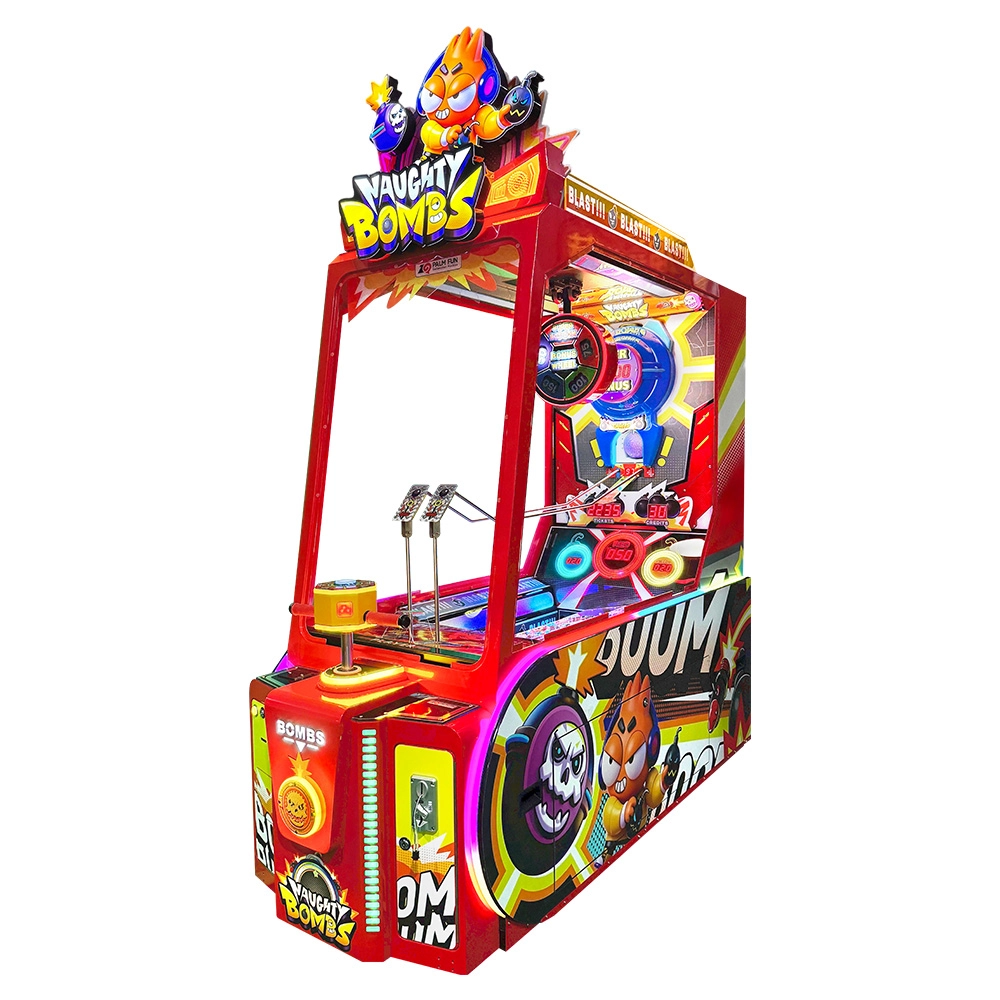
Naughty Bombs Ball Drop Redemption Arcade Game Machine
Naughty Bombs is a ball-drop redemption arcade game featuring rolling-ball gameplay, colored targets, ticket prizes, surprise bonus rewards, lighting and sound effects. Players use timing to launch and drop balls toward colored target areas. The product is presented for arcade, family entertainment center and other entertainment-venue projects, with customizable 110V / 220V AC voltage configuration.
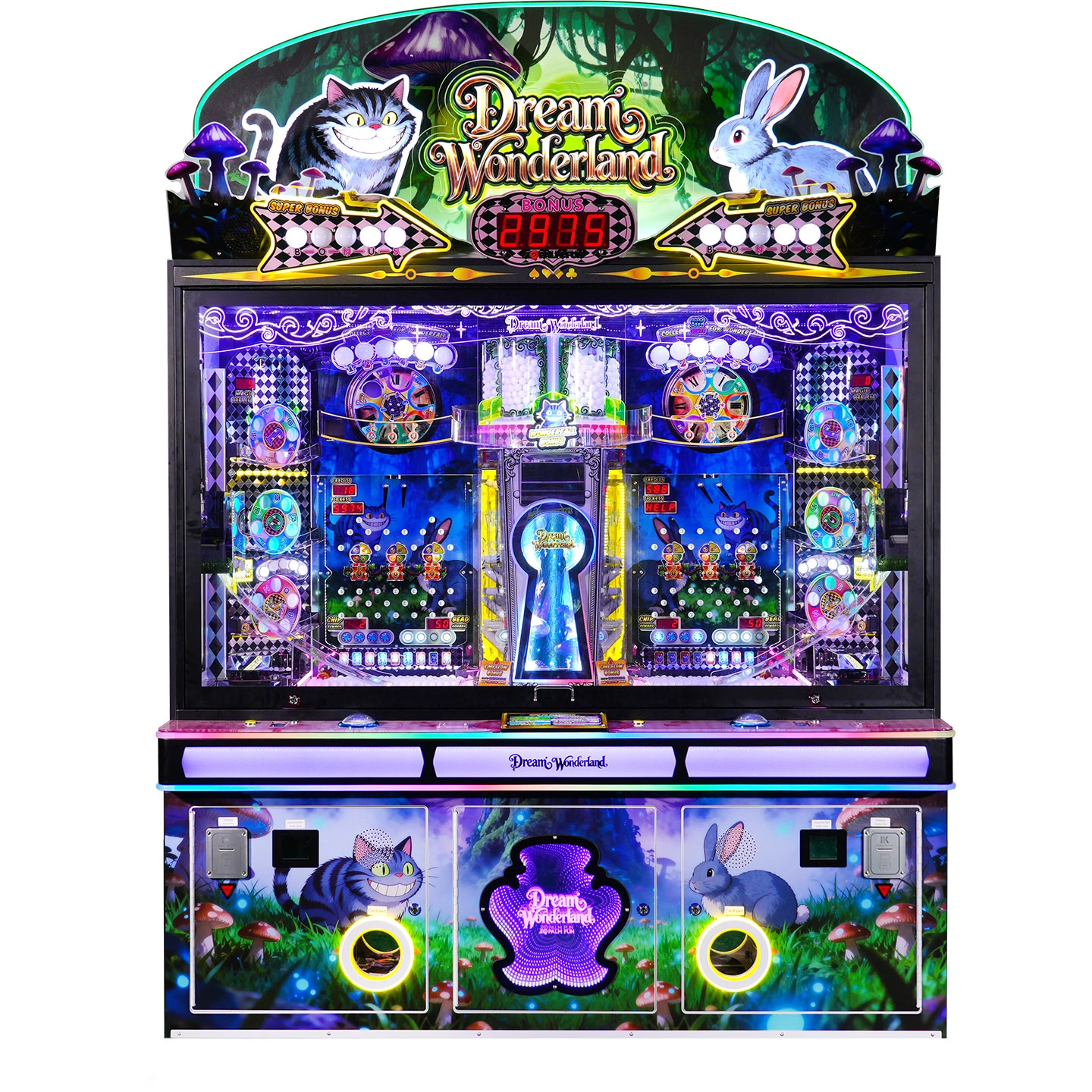
Dream Wonderland Marble Pusher Redemption Game
Enter Dream Wonderland — a magical marble pusher adventure filled with glowing lights, magic orbs, bonus wheels, collectible character cards, and exciting jackpot challenges.
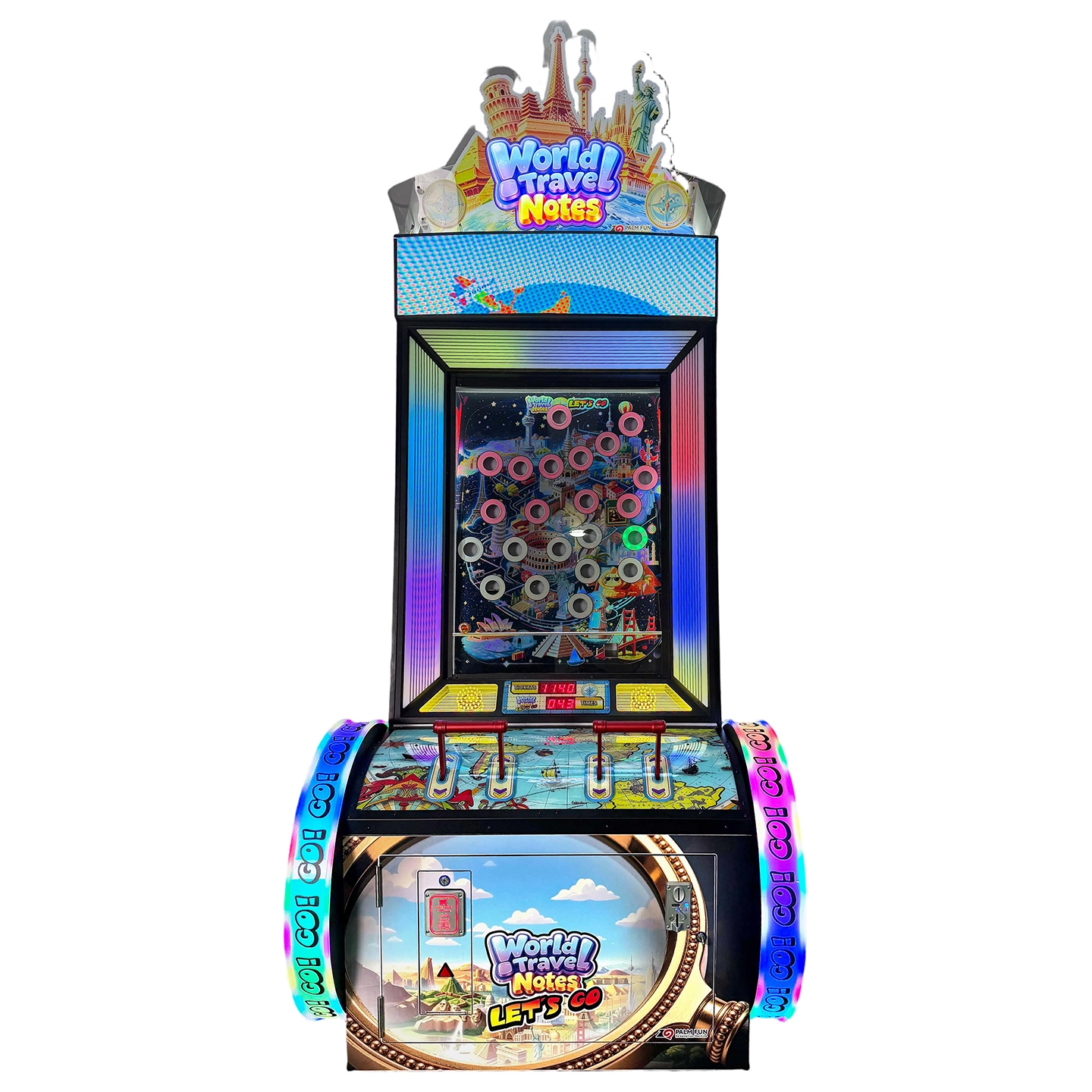
World Travel Notes – Balance Ball Redemption Arcade Game
World Travel Notes is a skill-based balance ball redemption game with a fun world-travel theme. Players use two handles to control the balance bar and guide the ball into each target hole. As the game progresses, the targets become more challenging, leading players toward the final grand prize. With colorful world-travel graphics, dynamic RGB lighting, a live score display, and progressive difficulty, World Travel Notes is designed to attract attention and encourage repeat play in arcades, FECs, shopping malls, and other entertainment venues.
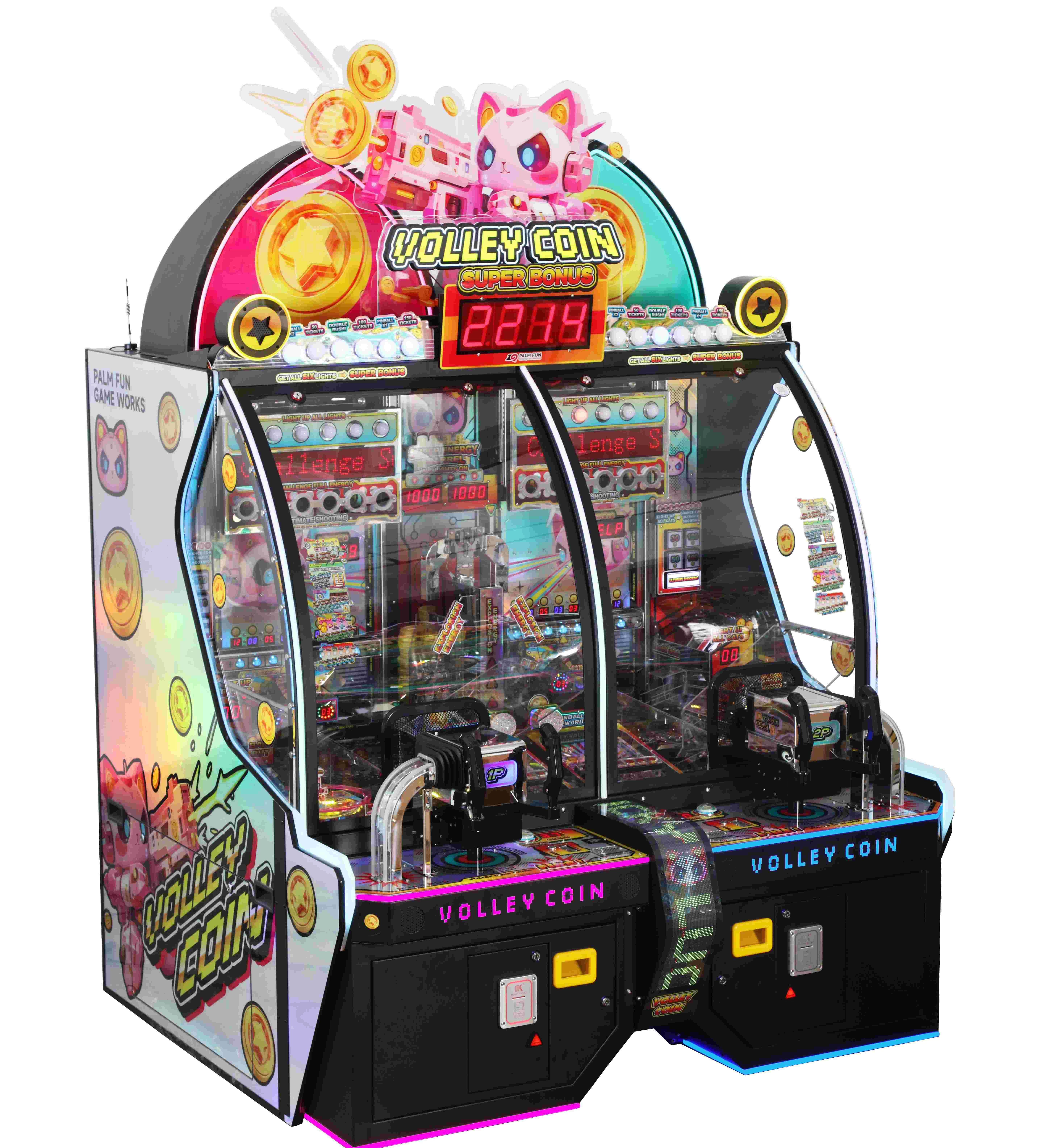
Hybrid Shooting & Pushing | Coin Pusher Arcade Ticket Redemption Machine
Volley Coin is an innovative arcade ticket redemption machine developed by Palm Fun Electronics. Combining the excitement of a fast-paced token shooter game with the proven earning power of a traditional coin pusher machine, Volley Coin offers a fresh and engaging gameplay experience that appeals to players of all ages.

Copyright © 2026 PALM FUN All Rights Reserved. | Privacy Policy • Terms and Conditions | Sitemap
palmfunarcade
Palm Fun Arcade Game
Whatsapp: +8618126837443
PalmFun Arcade
PalmFun_Arcade
PALM FUN Redemption Machine