


How Magic Train Arcade Ball Redemption Game Works
- From payment to ticket payout: the basic game cycle
- 1. Players start a round
- 2. Players interact with the balls
- 3. Scores are converted into tickets
- What makes a six-player game useful in an FEC?
- Shared play creates a group attraction
- Plan the game mix around the player experience
- Setup, safety, and maintenance operators should plan
- Commission the machine before public use
- Use a simple daily and periodic inspection routine
- Set tickets and train staff with the real configuration
- Frequently Asked Questions
- How does the Magic Train arcade ball redemption game work?
- How many players can use Magic Train?
- Can operators change ticket settings?
- What should staff check before opening?

The Magic Train arcade ball redemption game is a six-player ticket redemption attraction designed for playgrounds, game centers, and family entertainment centers (FECs). Players pay for a turn, interact with balls on the playfield, and receive tickets according to the game’s programmed scoring and redemption settings. For operators, the key to running it well is understanding the player cycle, checking the local configuration rather than assuming every installation behaves identically, and maintaining the ball path, controls, and ticket system. Magic Train brings six player positions together in one shared attraction, so it can support social play while giving operators a single machine to monitor.
From payment to ticket payout: the basic game cycle
1. Players start a round
A typical ball redemption game begins when a player selects an available position and adds credits using the installed payment method. Depending on the venue and machine setup, payment may be handled through a coin acceptor, a card reader, or an arcade cashless system. The player then uses the controls at that position to begin a round. In a six-player unit, several guests can play at once, but operators should confirm how the installed version handles occupied stations, turn timing, and new-player starts.
For a smooth first impression, keep the start instructions visible and easy to understand. Players should be able to identify where to pay, which controls belong to their position, and how a round ends. If the Magic Train arcade ball redemption game has venue-specific settings or payment equipment, staff should test those components together after installation rather than treating the payment system and game as separate systems.
2. Players interact with the balls
During a round, players use the machine’s controls to launch, release, or otherwise influence balls on the playfield. The goal is to direct play toward scoring opportunities defined by the game design. The exact movement, targets, timing, and ball return behavior should be checked against the supplied manual and the actual configuration: product descriptions alone do not establish every mechanical detail. Operators should demonstrate a complete round before opening the game to the public so staff can explain the controls accurately.
The appeal of a ball redemption game comes from the link between player action and visible results. A clear cause-and-effect relationship helps new players understand what their control input does, while repeat players can refine their timing. Keep the play area unobstructed and the instructions consistent with the machine’s actual settings. Avoid promising a particular outcome or jackpot unless it is supported by the installed game configuration.
3. Scores are converted into tickets
At the end of a round, the game applies its configured scoring and ticket rules. A successful shot or other scoring event may contribute to the final award, while the ticket dispenser issues the resulting number of tickets. Ticket values, bonus thresholds, and payout limits are operational settings, not assumptions to make from the machine’s name. Before launch, test ordinary rounds and any bonus or maximum-award conditions, then verify that the number of tickets dispensed matches the displayed result.
Redemption settings affect both player expectations and operating costs. A venue can review ticket expense alongside play price, game utilization, and prize counter demand when deciding whether a setting is appropriate. Make changes only through authorized configuration procedures, record the previous and new values, and retest payout accuracy after every adjustment. If a ticket count seems inconsistent, pause use of the affected station or machine and investigate before the issue becomes a source of disputes.
What makes a six-player game useful in an FEC?
Shared play creates a group attraction
The Magic Train arcade ball redemption game is presented as a Mega 6-Player Ball Redemption Ticket Machine. Multiple player positions allow friends and families to take part around one attraction rather than waiting for a sequence of individual turns on separate machines. This shared format can make the game a natural choice for a social area, a family arcade, or a location where groups move together. Its value still depends on fitting the site’s audience, floor plan, and operating model.
Before choosing a location, consider sightlines, queue space, access to the prize counter, nearby games, and the route guests take through the venue. Leave room for players to stand without blocking circulation, and make sure staff can reach service panels and payment components safely. A six-player format may serve several guests at once, but its real capacity depends on round length, the number of active positions, and how quickly players understand the controls. Observe actual play during a soft opening to assess throughput.
Plan the game mix around the player experience
A ball redemption machine can complement video games, sports games, and other ticket attractions by offering a hands-on activity with a visible physical element. The best game mix is not simply the largest possible collection of machines; it balances play styles, age groups, price points, and the space available. Place the Magic Train arcade ball redemption game where its activity is easy to notice, while avoiding congestion around entrances, emergency routes, or the redemption counter.
Operators can assess performance using practical measures such as plays per day, revenue per square foot, ticket cost, service interruptions, and player dwell time. Compare results over a consistent period and account for seasonality, school holidays, promotions, and changes in the wider attraction. Ask staff what questions guests commonly raise: repeated confusion about controls may indicate that instructions or onboarding need improvement, while frequent payout complaints may point to settings, ticket stock, or dispenser maintenance.
| Operating area | What to verify | Why it matters |
|---|---|---|
| Player setup | Available positions, start controls, credit method, and instructions | Reduces confusion and helps groups begin play without unnecessary staff assistance |
| Ball handling | Ball condition, unobstructed movement, return path, and access points | Supports consistent play and helps staff identify jams or wear early |
| Scoring and tickets | Displayed score, configured award rules, ticket stock, and payout accuracy | Aligns player expectations with actual redemption and helps control ticket expense |
| Site planning | Queue area, circulation, visibility, service access, and nearby attractions | Improves guest flow and makes routine operation easier |
Setup, safety, and maintenance operators should plan
Commission the machine before public use
Installation should follow the supplier’s instructions and the venue’s applicable electrical, building, and amusement-device requirements. Check that the machine is stable, positioned on a suitable surface, connected to the specified power supply, and accessible for inspection and service. Confirm the payment device, player controls, ball movement, displays, and ticket dispenser through a complete test cycle. Keep a record of configuration values and test results so that staff can distinguish a normal setting from a later change.
Risk assessment is a useful part of commissioning, not a substitute for local compliance. The ISO 12100 standard on machinery safety describes general principles for risk assessment and risk reduction in machinery design and use. The ISO 13849-1 standard for safety-related control systems addresses design considerations for control systems. These standards do not certify a specific arcade machine or replace applicable local rules; operators should consult the manufacturer and qualified local professionals where required.
Use a simple daily and periodic inspection routine
Before opening, staff can visually inspect the cabinet, play area, controls, displays, and ticket output. Check for damaged or missing balls, debris, unusual sounds, loose external parts, and signs of a ticket jam. Confirm that each intended player position starts and completes a round. If a component appears damaged or the game behaves unpredictably, follow the manufacturer’s shutdown and service guidance rather than improvising a repair while guests are playing.
Periodic maintenance should follow the product manual and the venue’s service schedule. Keep the ball path clean using only approved methods, inspect moving and wear parts at the recommended intervals, and use compatible replacement parts. Record faults, dates, adjustments, and repairs in a maintenance log. That history helps identify recurring problems and supports more informed decisions about spare parts and service intervals. Electrical work and internal repairs should be handled by appropriately qualified personnel in accordance with the supplier’s instructions and local requirements.
Set tickets and train staff with the real configuration
Ticket settings should be chosen with both guest experience and operating economics in mind. Establish the play price, scoring behavior, and ticket award rules through authorized settings, then test representative outcomes. Staff need to know what a normal round looks like, how to respond to a suspected ticket discrepancy, and when to stop the machine and contact a technician. They should not promise manual ticket compensation or change settings unless venue policy authorizes it.
Clear procedures matter because the Magic Train arcade ball redemption game combines player interaction, moving balls, scoring, and ticket dispensing. A brief staff checklist can cover opening tests, ticket replenishment, guest questions, fault reporting, and escalation. The ISO 20607 standard for machinery instruction handbooks offers guidance on preparing instructions for machinery; it is a useful reference for documentation practices, but it does not replace the machine’s own operating manual. Keep that manual and service information available to authorized staff.
Frequently Asked Questions
How does the Magic Train arcade ball redemption game work?
Players add credits, use a player position to interact with balls on the playfield, and receive tickets according to the machine’s configured scoring rules. Exact controls and game behavior depend on the installed configuration and should be checked in the manual.
How many players can use Magic Train?
Magic Train is presented as a Mega 6-Player Ball Redemption Ticket Machine, with six player positions. The number of positions available at a particular moment can depend on the machine’s condition and operating setup.
Can operators change ticket settings?
Ticket values and bonus thresholds depend on the configured settings. Authorized staff should follow the supplier’s procedures, record adjustments, and test payout accuracy after a change.
What should staff check before opening?
Staff should inspect the play area, balls, controls, displays, payment operation, and ticket dispenser, then test a complete round. Any damage, jam, or unpredictable behavior should be handled using the manufacturer’s service guidance.
To explore the Magic Train arcade ball redemption game for your venue or discuss its configuration, contact us at luobin@palm-fun.com.
Recommended for you
Wholesale arcade ticket redemption machine manufacturer and supplier
Top Features to Look in a Custom Arcade Cabinet 2026
Where to Buy Coin Pusher Machines: PALM FUN's High-Quality Redemption Game Machines
Do Casinos Have Coin Pushers? Exploring the Exciting World of Redemption Games
How to place the redemption machines in a right place?
1,Ensure that the placement and layout of the equipment are distinct and centralized.
2,Keep noise levels low and avoid having a line of sight that spans too far to prevent players from easily taking in everything, which may slow down their movement.
3,Avoid clustering high-ticket payout machines and disperse machines of the same style.
4,Mix popular machines with less popular ones and avoid placing all popular machines together.
Effectively solve the pain points of the site and consume the amount of coins deposit.
So the stock quantity of pre-purchased tokens is an issue must be concerned, especially in the highly competitive current market. Only when the amusement park maintains a healthy cycle of token sales, consumption, stockpiling, consumption, and sales again can it ensure sustained growth and profitability.
Research & Development, how hard is the birth of one new redemption machines?
How to select and match redemption machines?
2. the number of redemption game configuration: according to the characteristics of redemption machine, the proportion of redemption game configuration generally accounts for 30±5% of the whole field.
3. there are a lot of equipment on the market now, but less innovative, so the choice should be targeted in management and planning. We can divide redemption machines into children's, adults's, families, etc., according to different standards, with complete varieties and many styles, so as to give guests more choices and more changes. Specific can refer to the following:
① Inserting tokens in high frequency (mainly in mechanical redemption machines)
② Skill based games (mainly in mechanical redemption machines)
③ Games with edutainment significance (mainly in video redemption machines)
④ Entertaining games (mainly in video redemption machines)
How to guide the players to recognize tickets at the beginning setup of the redemption machines?
Never assume that your players already understand the purpose of lottery tickets(reward points). Even in venues that have been in operation for many years, it is still discovered during on-site interviews with players that many of them are not aware. Don't believe it? Just ask consumers at the venue. The machines, redemption counters, materials hung above the venue, and announcements by staff, among others, can all be channels for informing players about the purpose of lottery tickets(reward points). It is essential to do more promotion, create large displays and large cards, and clearly communicate the purpose of lottery tickets(reward points) to the players.
You may also like
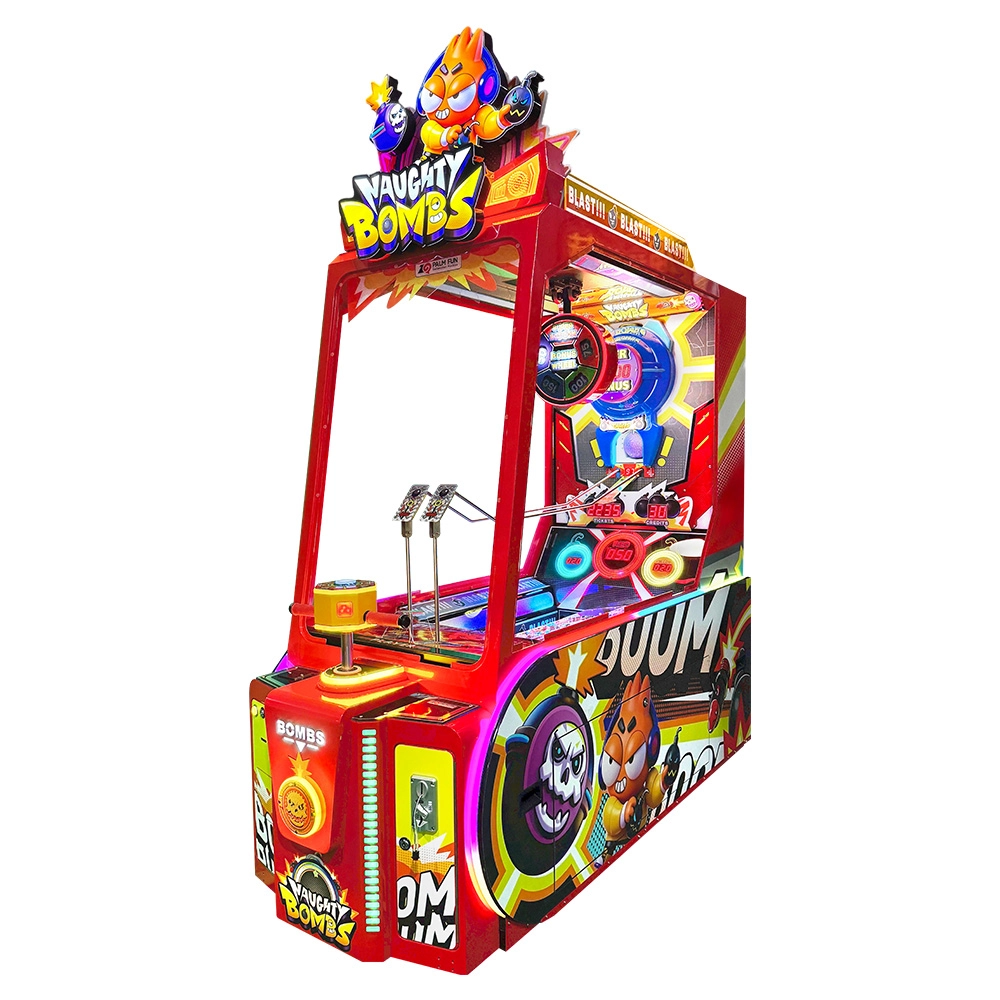
Naughty Bombs Ball Drop Redemption Arcade Game Machine
Naughty Bombs is a ball-drop redemption arcade game featuring rolling-ball gameplay, colored targets, ticket prizes, surprise bonus rewards, lighting and sound effects. Players use timing to launch and drop balls toward colored target areas. The product is presented for arcade, family entertainment center and other entertainment-venue projects, with customizable 110V / 220V AC voltage configuration.
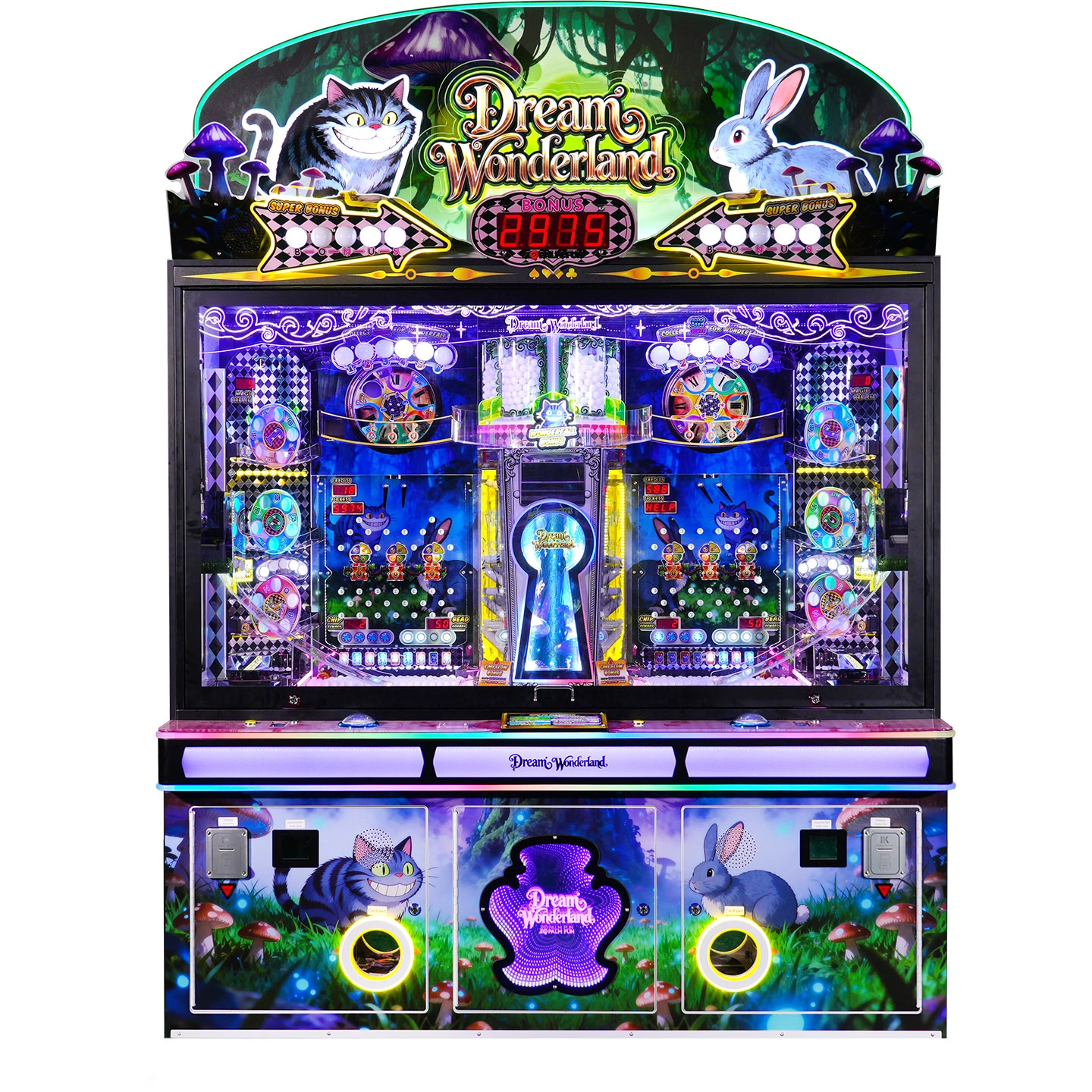
Dream Wonderland Marble Pusher Redemption Game
Enter Dream Wonderland — a magical marble pusher adventure filled with glowing lights, magic orbs, bonus wheels, collectible character cards, and exciting jackpot challenges.
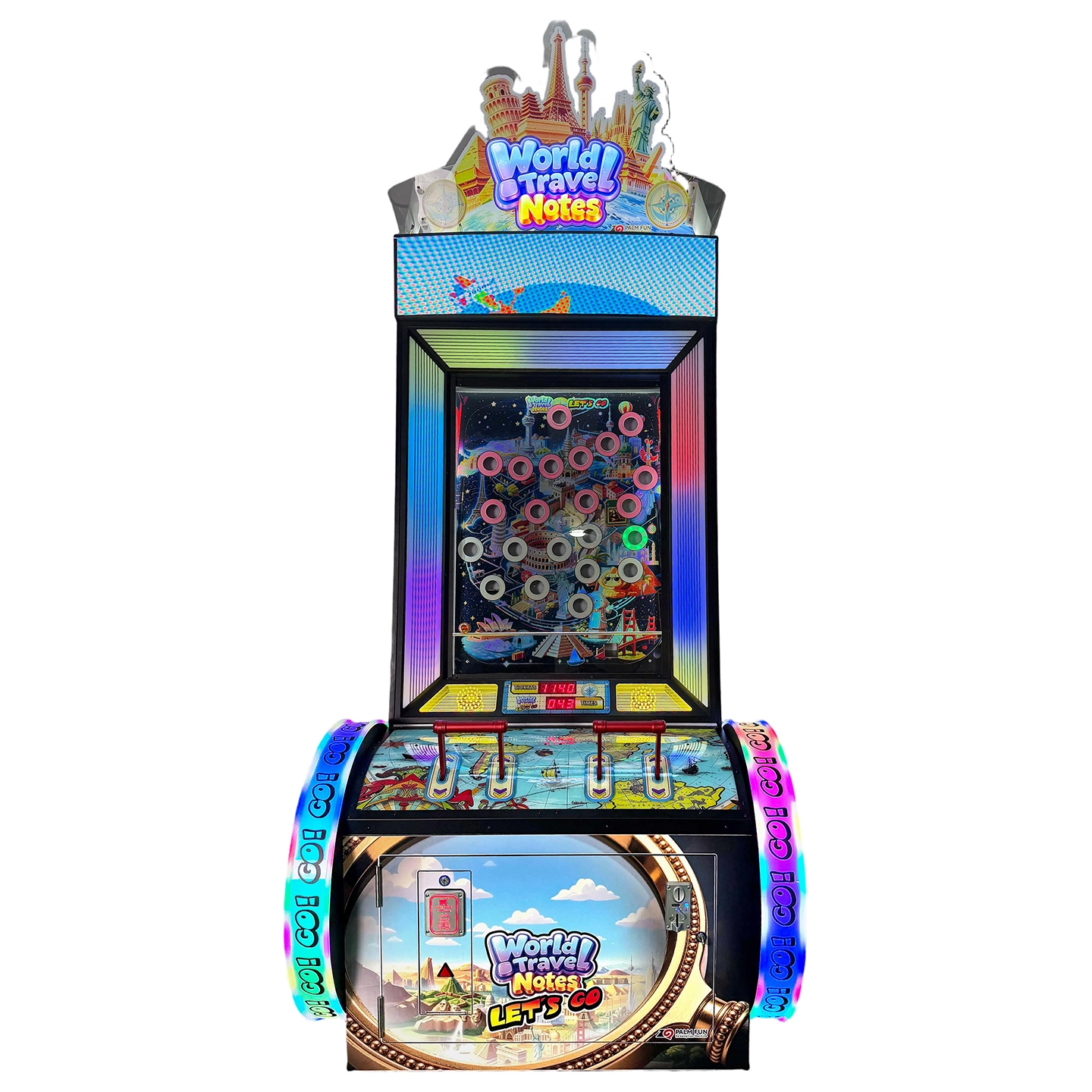
World Travel Notes – Balance Ball Redemption Arcade Game
World Travel Notes is a skill-based balance ball redemption game with a fun world-travel theme. Players use two handles to control the balance bar and guide the ball into each target hole. As the game progresses, the targets become more challenging, leading players toward the final grand prize. With colorful world-travel graphics, dynamic RGB lighting, a live score display, and progressive difficulty, World Travel Notes is designed to attract attention and encourage repeat play in arcades, FECs, shopping malls, and other entertainment venues.
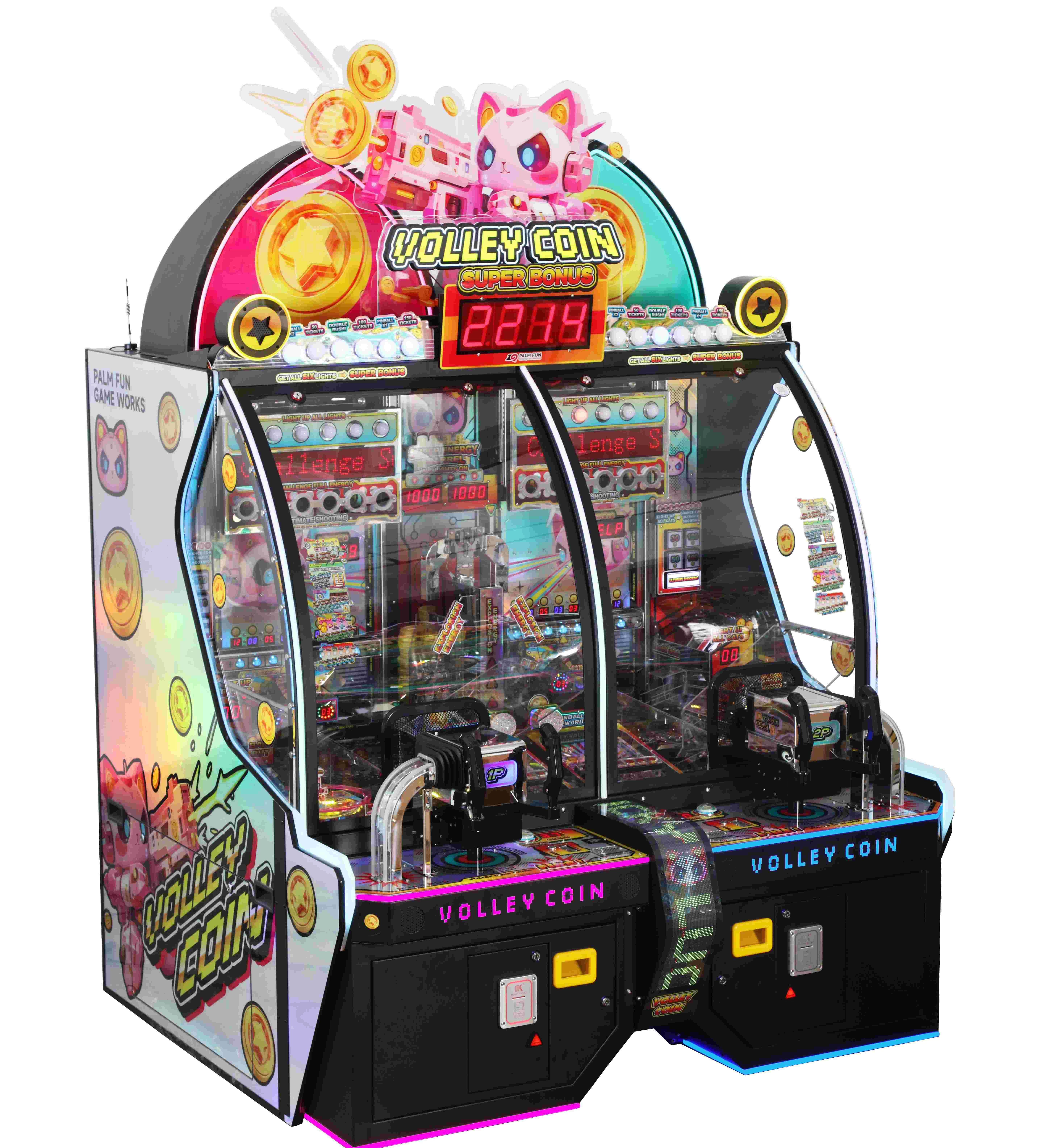
Hybrid Shooting & Pushing | Coin Pusher Arcade Ticket Redemption Machine
Volley Coin is an innovative arcade ticket redemption machine developed by Palm Fun Electronics. Combining the excitement of a fast-paced token shooter game with the proven earning power of a traditional coin pusher machine, Volley Coin offers a fresh and engaging gameplay experience that appeals to players of all ages.

Copyright © 2026 PALM FUN All Rights Reserved. | Privacy Policy • Terms and Conditions | Sitemap
palmfunarcade
Palm Fun Arcade Game
Whatsapp: +8618126837443
PalmFun Arcade
PalmFun_Arcade
PALM FUN Redemption Machine