


How IP Collaborations Make Arcade Games More Fun
- Why Familiar Characters Change the Arcade Experience
- Recognition lowers the barrier to play
- Characters give shared play a natural focus
- What Makes an IP Collaboration Work in Gameplay
- Build play first, then use IP to strengthen it
- Use humor and visual feedback with purpose
- How Operators Can Evaluate a Licensed Arcade Game
- Compare the experience, not just the character name
- Plan floor space and operation together
- Turning IP Appeal into Lasting Player Value
- Keep the experience fresh and accessible
- Choose collaboration for fit, not novelty alone
- Frequently Asked Questions
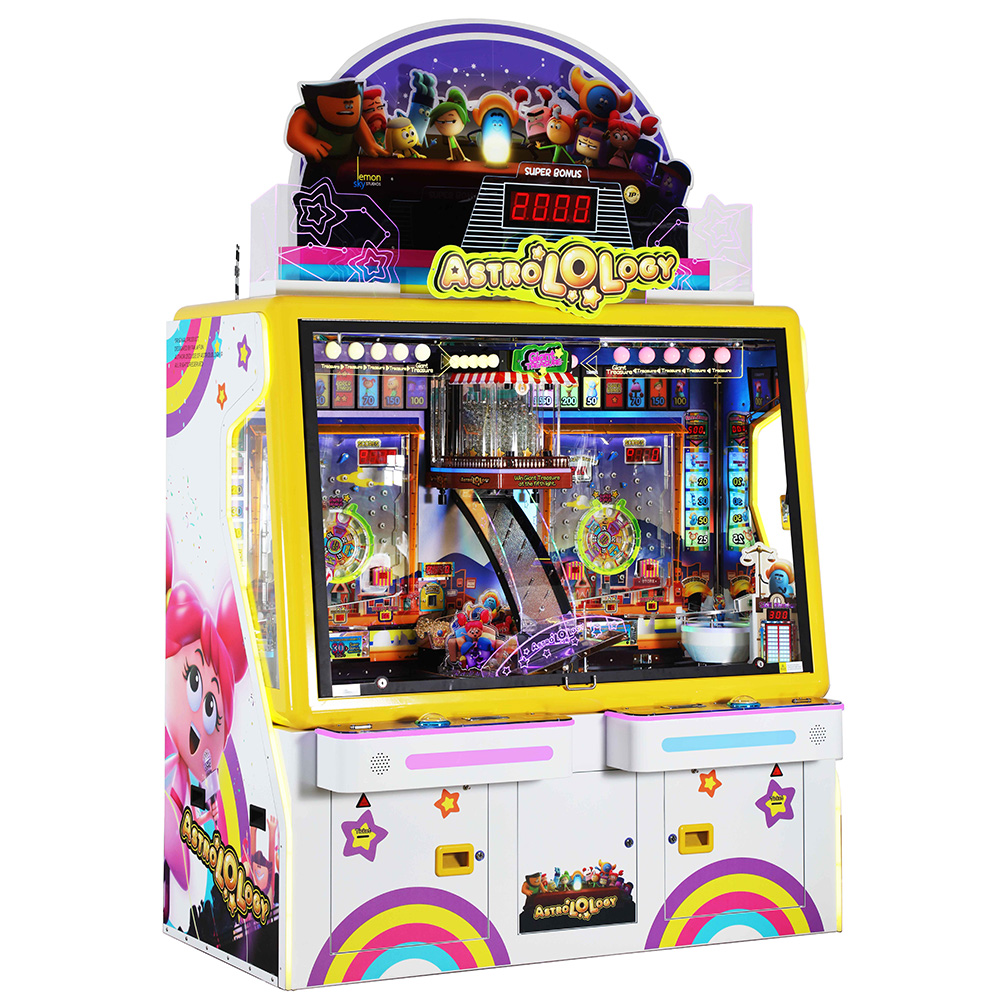
IP collaborations can make arcade games more fun by pairing familiar characters and worlds with hands-on play, social competition, and clear rewards. For players, that recognition can make a game easier to approach and more memorable; for venue operators, it can help a machine stand out and invite repeat visits. The best results come when the licensed world supports the gameplay rather than replacing it. AstroLOLogy is an original Palm Fun Electronics game developed in collaboration with its same-named animation IP, with a 1750 mm × 1100 mm × 2650 mm footprint designed to fit entertainment venues where visibility and floor space both matter.
Why Familiar Characters Change the Arcade Experience
Recognition lowers the barrier to play
An arcade floor can be visually busy. Players may pass dozens of machines without stopping, especially when they are visiting with family or friends and have not planned what to play. A known character, visual style, or story world offers an immediate point of recognition. Visitors can understand the mood of a game before reading instructions, which can make the first interaction feel less intimidating for children and casual players.
That first impression is valuable, but recognition alone is not a complete game. A player who approaches because of a familiar IP still needs an understandable objective, responsive controls, and a satisfying result. The licensed elements should help explain the experience: characters can guide the player, animations can signal progress, and familiar themes can make the game’s goal easier to remember. When these pieces work together, the IP acts as an inviting doorway into the gameplay.
Characters give shared play a natural focus
Arcade games are often enjoyed in public, where people watch as well as play. Recognizable characters give companions something to respond to: they can cheer for a favorite, react to a funny animation, or talk about a moment from the game. This helps turn a single-player turn into a small social event. In a family venue, that shared attention can be just as important as the player’s direct interaction.
The wider concept of intellectual property includes creations and distinctive identifiers that can be protected or licensed. The World Intellectual Property Organization’s overview of intellectual property is a useful starting point for understanding why authorized use matters. In commercial games, operators and developers should confirm that licensed characters, artwork, names, music, and other materials are covered by the relevant agreement. A recognizable brand is an asset only when its use is properly authorized.
What Makes an IP Collaboration Work in Gameplay
Build play first, then use IP to strengthen it
A successful collaboration begins with a simple question: what will the player actually do? The core interaction should be easy to grasp and rewarding to repeat, whether the game is based on timing, aiming, movement, collection, or another action. IP elements can then make those actions feel more expressive. A character may react to a successful move, a themed environment may give the objective context, and visual effects can make progress easier to see.
This is a practical form of human-centered design: make the experience understandable for the people using it, then test whether it works in the real environment. The ISO 9241-210 standard on human-centred design describes principles for designing interactive systems around users and their context. Applied to an arcade machine, that means considering viewing distance, player height, short play sessions, noise, queues, and the needs of people who may be unfamiliar with the game.
Operators can assess the design by watching first-time players. Do they understand where to stand and what to do? Can they identify when a round begins and ends? Are important prompts visible without a long explanation? If players need staff assistance to start every session, the game may be relying too heavily on theme and not enough on intuitive interaction.
Use humor and visual feedback with purpose
Funny character reactions can make an arcade game feel lively, but humor works best when it is connected to what the player does. A surprising animation after a successful action can create a memorable payoff. A playful response to a near miss can soften disappointment and encourage another try. By contrast, repeated animations that interrupt play or obscure the result can become frustrating, particularly for visitors waiting in line.
Strong feedback also helps players learn. A clear sound, animation, or score change can show that an action registered, while consistent visual cues help distinguish progress from mistakes. That matters for younger players and for people experiencing the game in a loud venue. The history and format of arcade games reflect their public, quick-session setting; modern machines still benefit from that same emphasis on immediate understanding and visible feedback.
How Operators Can Evaluate a Licensed Arcade Game
Compare the experience, not just the character name
A known IP may help a machine attract attention, but operators should evaluate the entire offer before committing floor space. Consider whether the game is suitable for the venue’s main audience, whether players can understand it quickly, and whether its physical form fits the intended location. Also review service access, expected maintenance needs, licensing terms, and the supplier’s support arrangements. These questions help separate a promising attraction from a product that merely looks appealing in promotional material.
| Evaluation area | Questions for operators | Why it matters |
|---|---|---|
| IP and presentation | Is the collaboration authorized, and do the characters support the game’s theme? | Protects brand integrity and makes the experience feel coherent. |
| Gameplay | Can a new player understand the objective quickly and enjoy a short session? | Reduces friction and supports use in busy public venues. |
| Footprint | Will the machine fit with safe access, visibility, and adequate circulation space? | Helps avoid blocking walkways or creating an awkward layout. |
| Operations | Are installation, servicing, and commercial terms clear? | Supports realistic planning over the life of the machine. |
| Performance | Can revenue and usage be measured after installation? | Enables decisions based on local results rather than assumptions. |
Revenue should be treated as a venue-specific outcome, not a guaranteed consequence of a popular license. Foot traffic, placement, pricing, operating hours, local audience, machine uptime, and competing attractions all influence performance. Before installation, define what success means—such as plays per day, repeat use, or revenue per square metre—and review results over a suitable period. Where possible, compare performance with similar machines in comparable locations.
Plan floor space and operation together
Footprint is more than the machine’s external dimensions. A placement plan should account for the player’s standing area, nearby circulation, visibility from the approach path, and the access needed by staff for cleaning or service. A compact design can provide more flexibility, but only if the surrounding area still supports comfortable play and safe movement. Measure the proposed site and confirm installation requirements with the supplier before making a final layout decision.
AstroLOLogy is a lively, character-led arcade attraction and an original product designed and developed by Palm Fun Electronics in collaboration with the famous same-named animation IP copyright. Its stated dimensions are 1750 mm × 1100 mm × 2650 mm. Palm Fun presents it as a small-footprint machine with the potential to generate strong popularity and earnings; actual results will depend on the venue, placement, audience, and operating conditions. For buyers searching for an alively funny arcade game that collaborate with famous ip, the practical evaluation is whether its theme, play experience, dimensions, and commercial terms suit the site—not simply whether the characters are recognizable.
Turning IP Appeal into Lasting Player Value
Keep the experience fresh and accessible
Players may arrive because they know the IP, but they return when the experience remains enjoyable. Clear rounds, satisfying feedback, and a playful sense of progress give people a reason to play again or invite someone else to try. If the machine includes multiple modes or varied outcomes, the differences should be easy to understand without a lengthy tutorial. Accessibility also matters: readable prompts, intuitive controls, and a visible play area can make the game welcoming to a broader mix of visitors.
Operators can observe how the game performs after launch. Note whether visitors stop to watch, how often players complete a session, whether companions join in, and whether staff receive recurring questions. These observations can reveal practical improvements in positioning or signage. They can also help operators decide whether the game is reaching its intended audience. Avoid judging performance from a single busy day; compare like-for-like operating periods and account for events, seasonality, and changes in foot traffic.
Choose collaboration for fit, not novelty alone
The strongest IP collaboration feels natural: the characters belong in the experience, the game respects the world they come from, and the interaction still works for people who do not know the source material. This balance makes the attraction accessible to fans without excluding first-time visitors. A licensed theme can add emotional context and visual distinction, while good game design gives that attention somewhere rewarding to go.
For buyers, a useful decision process combines product demonstration, site measurement, licensing confirmation, commercial review, and post-installation tracking. Ask suppliers about the intended audience, how a typical session works, what support is available, and what is included in the quoted offer. Then evaluate those answers against the venue’s actual floor plan and business goals. An IP-led machine can strengthen an arcade mix, but it should complement the venue rather than rely on fame to do all the work.
To explore AstroLOLogy’s product details and assess whether its compact, IP-led arcade experience fits your venue, contact Palm Fun Electronics at luobin@palm-fun.com.
Frequently Asked Questions
How do IP collaborations make arcade games more fun?
Familiar characters and worlds can make a game easier to approach, give players a shared focus, and add personality to gameplay. The collaboration works best when the IP supports clear, satisfying interaction rather than replacing it.
Does a famous IP guarantee high arcade revenue?
No. Revenue depends on factors such as venue traffic, placement, pricing, audience, operating hours, machine uptime, and competing attractions. Operators should track local performance rather than assume a license guarantees earnings.
What should operators check before buying an IP-based arcade machine?
Check that the IP use is authorized, assess gameplay and audience fit, measure the installation area, review service and commercial terms, and set measurable performance goals.
What are the dimensions of AstroLOLogy?
AstroLOLogy has stated dimensions of 1750 mm × 1100 mm × 2650 mm.
Who developed AstroLOLogy?
AstroLOLogy is an original product designed and developed by Palm Fun Electronics in collaboration with its same-named animation IP.
Recommended for you
Top redemption ticket machines Manufacturers and Suppliers
Best wholesale coin pusher arcade machines manufacturers and supplier brands
How to start a How to start an Arcade Games & Machines Business? business in US
How to start a drop game business in China
FAQs
What details should be paid attention to in the operation of redemption machines?
① Machine parameter adjustments.
② Equipment performance and gameplay.
③ Decoration and promotion of the area and equipment.
④ Machine placement locations.
⑤ Selection of prizes.
2. The primary operational techniques for redemption machines are in the attractiveness of the gameplay, maintaining a reasonable payout rate, and creating an engaging atmosphere. Depending on the season and market changes, promotional activities should be carried out with a balance, analysis, and follow-up. Therefore, you can consider the following operational methods:
① Collaborate with several venues or businesses to distribute promotional materials to enhance external visibility and interaction.
② Conduct targeted promotional activities to retain returning customers.
③ Organize regular member events to ensure member attraction and consistent customer base. For example, offering extra lottery rewards for a certain amount of tokens deposited or giving a certain number of lottery tickets(reward points) when a membership card is issued.
④ Strengthen interaction with neighboring businesses within the commercial district.
⑤ Organize selective activities for children and offer special deals for exchanging unique children-oriented prizes.
3. Setting parameters correctly:
4.New machine arrival -- Familiarizing with the game--Initial parameter control--Promotional --ctivities and advertising--Adjusting parameters based on the number of players--Multiple adjustments of parameters--Increased popularity--Profitability--Reinvestment.
Note: Data analysis should be conducted weekly to promptly understand the ticket payout probability for each redemption machine. In case of any abnormal situations, swift follow-up and troubleshooting are essential to identify the causes and rectify the issues.
How to perform daily maintenance and servicing on redemption machines?
1. New machine entry performance, as it is relatively unstable in operation at this stage, requires dedicated supervision, timely follow-up, and improvements.
2. Redemption machines are relatively prone to collecting dust, which can lead to mechanical wear and corrosion. Dust can also cause issues with circuit boards, such as conductivity and optical sensor malfunctions. Thus, both internal and external cleanliness of redemption machines are equally important. Regular cleaning schedules for internal and daily cleaning for external components should be established.
3. Timely inspect the quality and durability of certain components. If issues are detected with imaging equipment, for example, replacements are necessary. A thorough understanding and mastery of the machine's performance can help extend its lifespan and ensure normal usage rates. Critical inspection areas include vulnerable parts such as motors, drive belts, gears of ticket dispensers, and sensors.
4. Frequent changes in prize point settings and payout rates are discouraged. Improvements in winning odds should be pursued through other methods and approaches.
5. All machines should have procedures for ticket removal and shredding to protect the ticket dispensers from damage.
6. Monitor changes in payout rates closely, as it directly impacts the cost control of the entire redemption machine system.
7. When employees add tickets, they should verify if the ticket sensors are unobstructed (blocked sensors can prevent ticket dispensing).
8. Have the protective paper on redemption machine's adhesive tape been removed? (Leaving it on can obstruct the ticket slot and ticket dispenser).
9. Responsible personnel should periodically and discreetly check the addition of tickets inside the redemption machines, ensuring that the added tickets match the registered ones.
What is the character of mechanical redemption machine?
Effectively solve the pain points of the site and consume the amount of coins deposit.
So the stock quantity of pre-purchased tokens is an issue must be concerned, especially in the highly competitive current market. Only when the amusement park maintains a healthy cycle of token sales, consumption, stockpiling, consumption, and sales again can it ensure sustained growth and profitability.
How to place the redemption machines in a right place?
1,Ensure that the placement and layout of the equipment are distinct and centralized.
2,Keep noise levels low and avoid having a line of sight that spans too far to prevent players from easily taking in everything, which may slow down their movement.
3,Avoid clustering high-ticket payout machines and disperse machines of the same style.
4,Mix popular machines with less popular ones and avoid placing all popular machines together.
You may also like
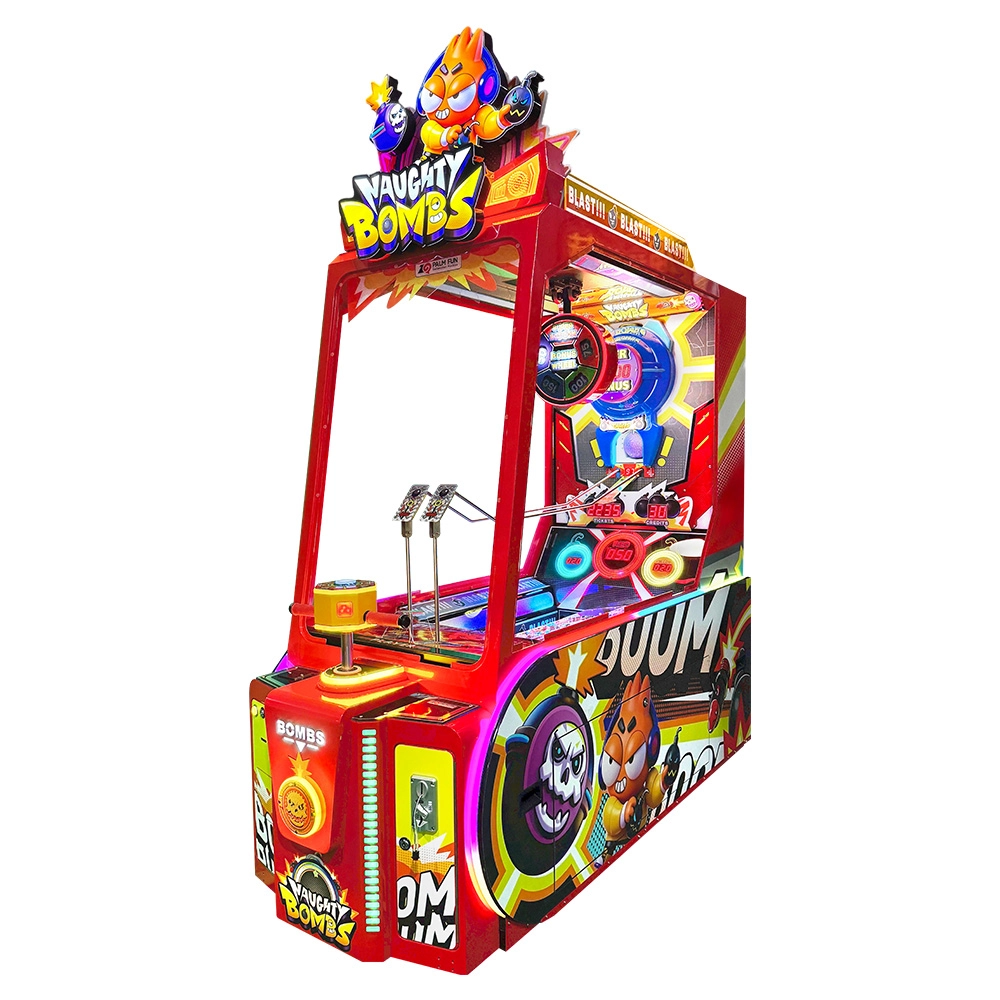
Naughty Bombs Ball Drop Redemption Arcade Game Machine
Naughty Bombs is a ball-drop redemption arcade game featuring rolling-ball gameplay, colored targets, ticket prizes, surprise bonus rewards, lighting and sound effects. Players use timing to launch and drop balls toward colored target areas. The product is presented for arcade, family entertainment center and other entertainment-venue projects, with customizable 110V / 220V AC voltage configuration.
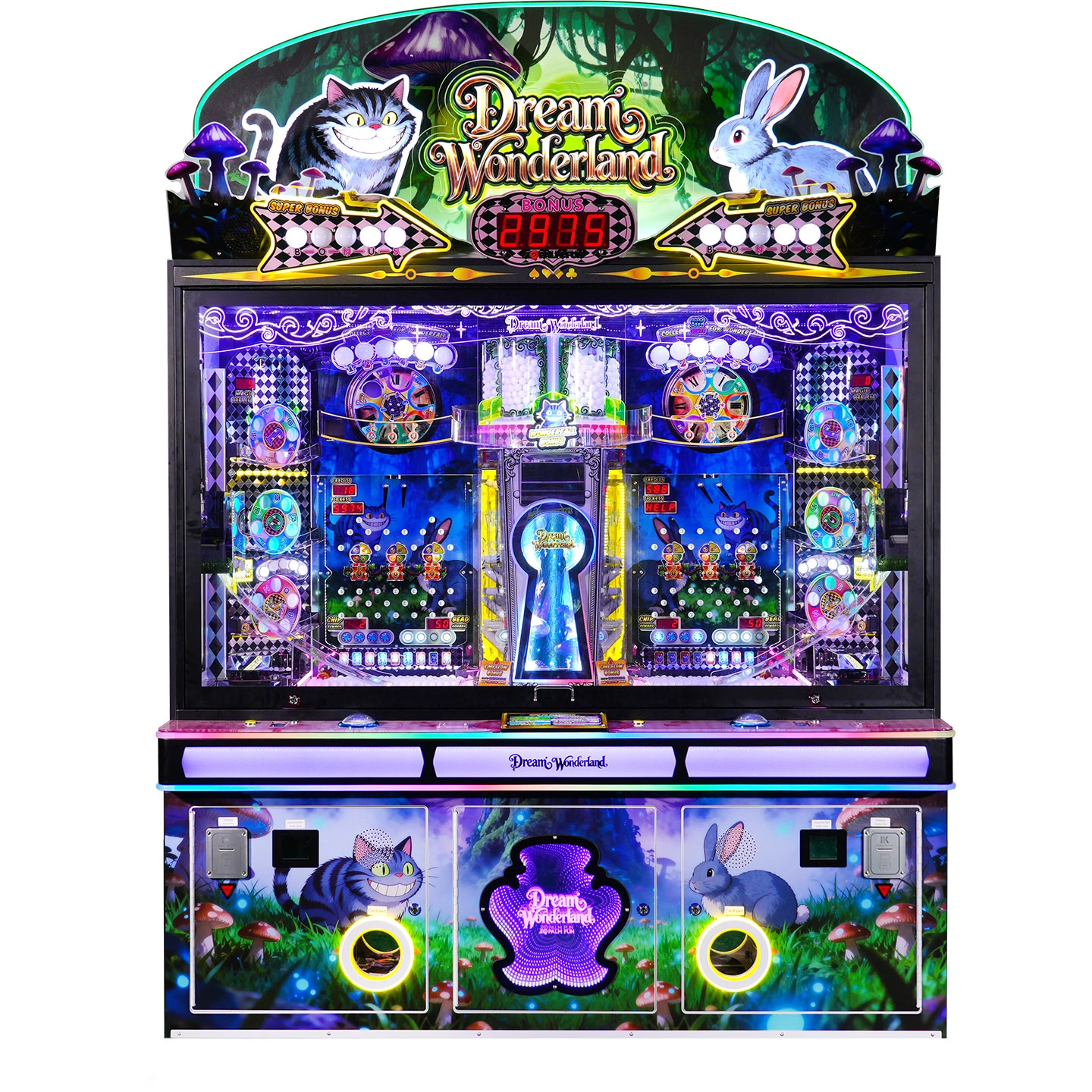
Dream Wonderland Marble Pusher Redemption Game
Enter Dream Wonderland — a magical marble pusher adventure filled with glowing lights, magic orbs, bonus wheels, collectible character cards, and exciting jackpot challenges.
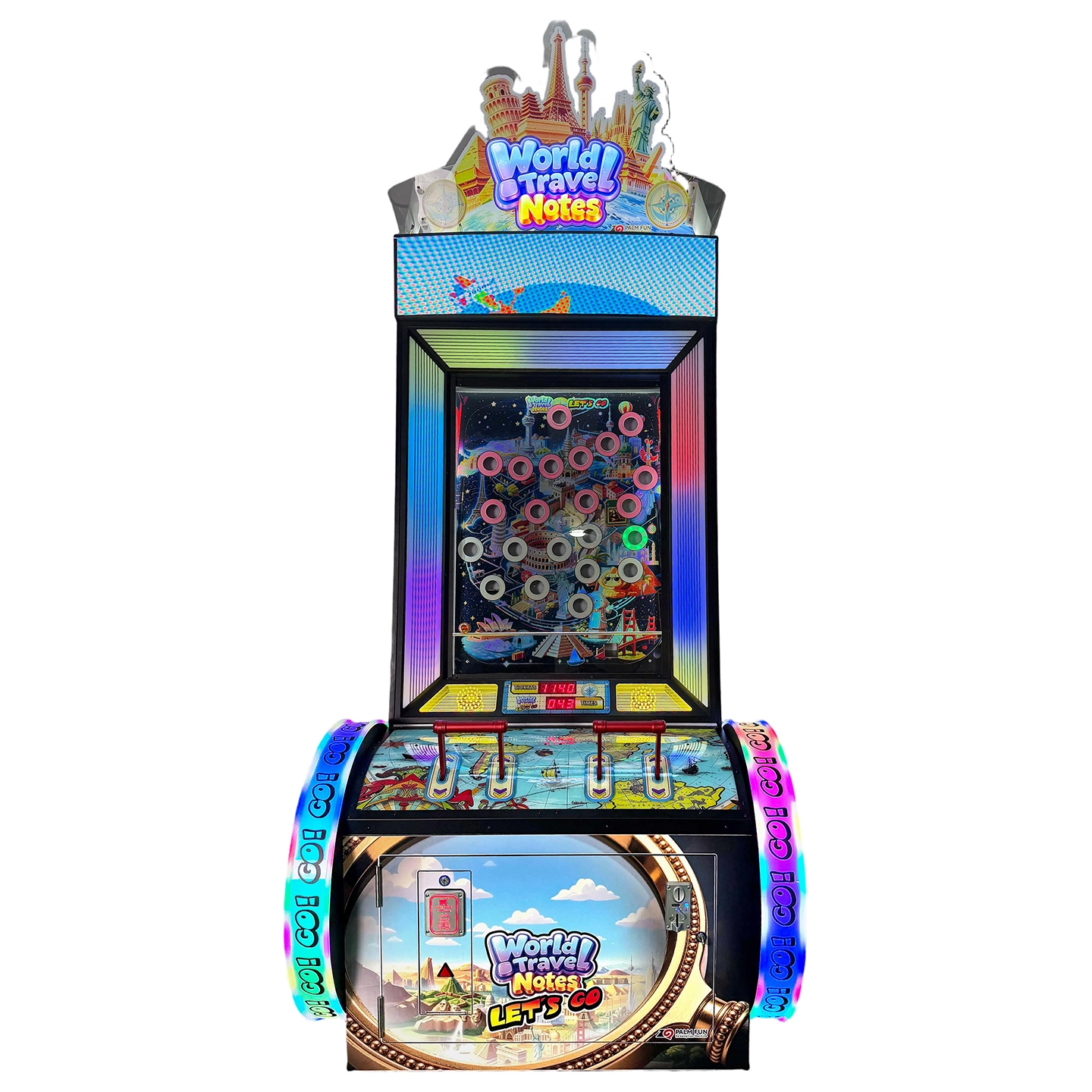
World Travel Notes – Balance Ball Redemption Arcade Game
World Travel Notes is a skill-based balance ball redemption game with a fun world-travel theme. Players use two handles to control the balance bar and guide the ball into each target hole. As the game progresses, the targets become more challenging, leading players toward the final grand prize. With colorful world-travel graphics, dynamic RGB lighting, a live score display, and progressive difficulty, World Travel Notes is designed to attract attention and encourage repeat play in arcades, FECs, shopping malls, and other entertainment venues.
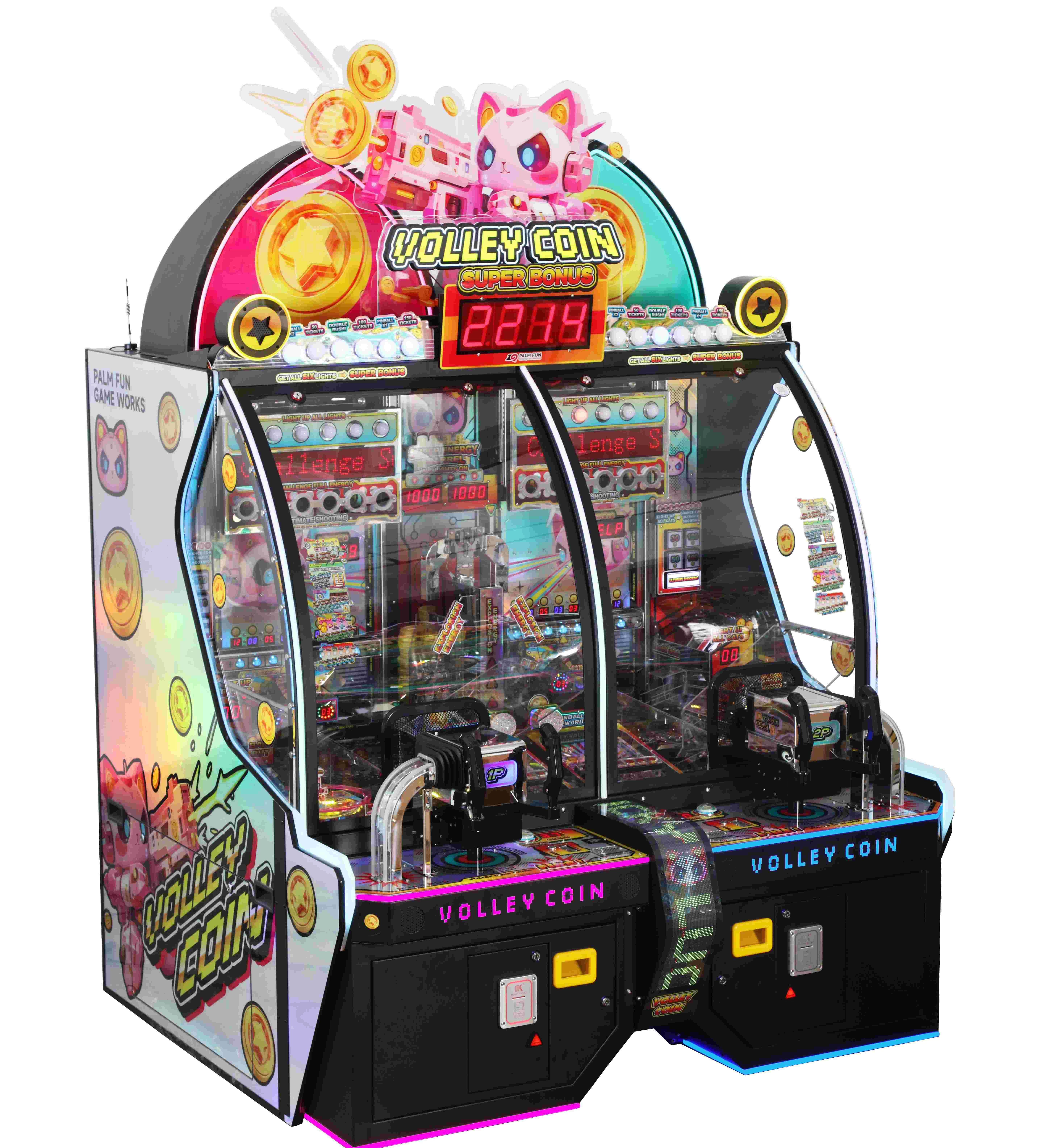
Hybrid Shooting & Pushing | Coin Pusher Arcade Ticket Redemption Machine
Volley Coin is an innovative arcade ticket redemption machine developed by Palm Fun Electronics. Combining the excitement of a fast-paced token shooter game with the proven earning power of a traditional coin pusher machine, Volley Coin offers a fresh and engaging gameplay experience that appeals to players of all ages.

Copyright © 2026 PALM FUN All Rights Reserved. | Privacy Policy • Terms and Conditions | Sitemap
palmfunarcade
Palm Fun Arcade Game
Whatsapp: +8618126837443
PalmFun Arcade
PalmFun_Arcade
PALM FUN Redemption Machine