







Gehäuse und Branding für Einzelspieler-Arcade-Automaten unter eigener Marke
- Maßgeschneiderte Gehäusekonstruktion für Solospiel-Unterhaltungsautomaten
- Designdifferenzierung: Formfaktor, Ergonomie und Raumplanung
- Materialauswahl und Dauerhaftigkeitsprüfung
- Wartungsfreundlichkeit und modulare Elektronik
- Branding-Workflows, IP- und Private-Label-Projektmanagement
- Kunstwerke, Lizenzierung und Markenkontrolle
- Vom Konzept zur Produktion: Prototyping und Vorproduktionsprüfungen
- Lieferzeiten, Mindestbestellmengen und Wirtschaftlichkeit von Losgrößen
- Beschaffung, Qualitätssicherung und Lebenszyklusmanagement für Einlöse- und Arcade-Hardware
- Lieferantenbewertungsmatrix und Beschaffungscheckliste
- Qualitätssicherung: Prüfverfahren und Akzeptanzkriterien
- Aftermarket-Support: Ersatzteile, Schulungen und Firmware-Updates
- Marktökonomie, ROI und Optimierungsstrategien
- Umsatzmodelle und Leistungs-KPIs
- Abwägungen: Individualisierung vs. Standardisierung
- Risikominderung: Garantien, Versicherungen und Einhaltung gesetzlicher Vorschriften
- PALM FUN Private-Label-Kompetenzen und Portfoliovorteile
- Fertigungsmaßstab, Konstruktions- und Produktionsanlagen
- Produktlinien und Beispiele für Eigenmarken
- Anpassungsdienste, Qualitätssicherung und globaler Einsatz
- Relevante Produkte und für Eigenmarken geeignete Modelle
- Häufig gestellte Fragen
Leistungsstarke Zulieferer und Betreiber von Veranstaltungsorten benötigen einen prägnanten Fahrplan für Eigenmarken, der maßgeschneiderte Gehäusetechnik, Workflows für Artwork und geistiges Eigentum, Produktionskosten, Einhaltung gesetzlicher Vorschriften und Aftermarket-Support für Einzelplatz-Unterhaltungsgeräte abdeckt – dieser Leitfaden fasst Checklisten für die Beschaffung, Anpassungswege und messbare KPIs zusammen, um die Markteinführungszeit zu verkürzen und den Lebenszeitgewinn pro Gerät für Betreiber und Distributoren von standortbezogenen Unterhaltungsgeräten zu maximieren.
Maßgeschneiderte Gehäusekonstruktion für Solospiel-Unterhaltungsautomaten
Designdifferenzierung: Formfaktor, Ergonomie und Raumplanung
Käufer sollten Gehäusegrößen priorisieren, die den räumlichen Gegebenheiten und den angestrebten Verweildauern entsprechen. Modulare Gehäusegrößen (schmal, mittel, breit) ermöglichen die Platzierung in Spielhallen, Bars, Freizeitzentren, Kinos und Gastronomiebetrieben. Ergonomische Aspekte wie Bedienhöhe, Beleuchtungswinkel und Displayneigung reduzieren die Ermüdung der Nutzer und verlängern die Nutzungsdauer. Geben Sie anthropometrische Bereiche für die Zielgruppe an und fordern Sie von potenziellen Herstellern 3D-Layout-Proofs an, um Sichtlinien und Besucherführung zu überprüfen.
Materialauswahl und Dauerhaftigkeitsprüfung
Die Langlebigkeit beeinflusst die Gesamtbetriebskosten (TCO) direkt. Spezifizieren Sie Gehäusematerialien (MDF vs. wasserfest verleimtes Sperrholz vs. Metallchassis), Oberflächenbehandlungen (UV-härtende Farben, Polyurethane) und spritzgegossene Blenden für stark frequentierte Bereiche. Fordern Sie vom Hersteller Daten zu Dauerfestigkeitsprüfungen an (Zyklen bis zum Ausfall von Bedienfeldern, Scharnierfestigkeit und Stoßfestigkeit). Bestehen Sie auf IEC- oder UL-äquivalenten Schutzarten und Schutzarten für Komponenten, die in stark frequentierten Unterhaltungseinrichtungen eingesetzt werden (sieheIEEE-StandardsUndISO 9001Qualitätsprozesse).
Wartungsfreundlichkeit und modulare Elektronik
Wartungsfreundliches Design reduziert Ausfallzeiten. Definieren Sie eine modulare Elektronikarchitektur mit beschrifteten Kabelbäumen, austauschbaren I/O-Karten und austauschbaren Leistungsmodulen. Käufer sollten Stücklistentransparenz, übersichtliche Ersatzteillisten und eine garantierte Ersatzteillieferzeit fordern. Dieser Ansatz ermöglicht es lokalen Technikern, Geräte schneller zu warten, die mittlere Reparaturzeit (MTTR) zu senken und die Verfügbarkeit der Anlagen zu verbessern.
Branding-Workflows, IP- und Private-Label-Projektmanagement
Kunstwerke, Lizenzierung und Markenkontrolle
In der Leistungsbeschreibungsphase sollte eine eindeutige Vereinbarung über die Eigentumsrechte am geistigen Eigentum getroffen werden. Projektverantwortliche müssen die Ergebnisse in Vektorgrafiken, Farbproofs und Druckvorlagen unterteilen. Bei Lizenz- oder Co-Branding-Projekten sind Richtlinien zur Markennutzung bereitzustellen und ein Nachweis über die Lizenzübertragung bzw. die Nutzungsrechte zu verlangen. Pantone-Farbabnahmen und Vorproduktionsmuster sind erforderlich, um kostspielige Nachbesserungen nach Produktionsbeginn zu vermeiden.
Vom Konzept zur Produktion: Prototyping und Vorproduktionsprüfungen
Implementieren Sie einen mehrstufigen Validierungsprozess: Konzeptvisualisierungen → Funktionsprototyp → Pilotserie → Serienproduktion. Typische Pilotserien (3–10 Einheiten) decken Montageprobleme und Firmware-Sonderfälle auf. Erforderlich sind ein Änderungsmanagement (CR/ECN) und Abnahmetests vor Auslieferung (PSAT), die elektrische Sicherheit, Softwarestabilität und kosmetische Kriterien umfassen.
Lieferzeiten, Mindestbestellmengen und Wirtschaftlichkeit von Losgrößen
Verstehen Sie, wie Mindestbestellmengen (MOQs) die Stückkosten beeinflussen. Kleinere Produktionsmengen erhöhen den Stückpreis aufgrund der Amortisation von Werkzeug- und Einrichtungskosten. Käufer sollten gestaffelte Preise (1–50, 51–200, 201+) anfragen und bei der Berechnung der Amortisationszeit und des internen Zinsfußes (IRR) für Investitionen in fest installierte Unterhaltungseinrichtungen die gesamten Gesamtkosten – einschließlich Fracht, Zoll, Abgaben und lokaler Installation – und nicht nur den Stückpreis berücksichtigen.
Beschaffung, Qualitätssicherung und Lebenszyklusmanagement für Einlöse- und Arcade-Hardware
Lieferantenbewertungsmatrix und Beschaffungscheckliste
Nutzen Sie für die Lieferantenauswahl eine gewichtete Bewertungsmatrix, die folgende Kriterien umfasst: Produktionskapazität, Qualitätskontrollzertifizierungen, Fähigkeiten im Bereich Grafik und Werkzeugbau, Garantiebedingungen, Kundendienst und Erfahrung in der globalen Logistik. Fordern Sie Referenzen zu früheren Private-Label-Projekten und dokumentierte Fallstudien an, die die Einhaltung von Normen für elektrische und mechanische Sicherheit belegen. Berücksichtigen Sie öffentliche Normen wie z. B.Branchengeschichte und Designnormenkönnen grundlegende Erwartungen hinsichtlich der Ball-/Mechanismusdynamik und der Spielererwartungen liefern.
Qualitätssicherung: Prüfverfahren und Akzeptanzkriterien
Vor der Auslieferung sind Testprotokolle verpflichtend zu machen: Einbrenntest (48–72 Stunden), Staub- und Dichtigkeitsprüfung, Vibrations- und Transportsimulation sowie Funktionsprüfung der Auszahlungs- oder Ticketmechanismen für Einlösegeräte. Firmware-Versionskontrolle und signierte Testberichte sind ebenfalls erforderlich. Kennzahlen zur kontinuierlichen Verbesserung, wie z. B. Fehler pro Million (DPM) und Erstausbeute (FPY), sind einzuführen, um die Fertigungsqualität im Zeitverlauf zu überwachen.
Aftermarket-Support: Ersatzteile, Schulungen und Firmware-Updates
Strukturierte Aftermarket-Programme reduzieren Ausfallzeiten und senken die Gesamtbetriebskosten. Fordern Sie leicht zugängliche Ersatzteillisten, verbindliche Lieferzeiten für kritische Komponenten und, wo möglich, Ferndiagnosefunktionen. Bestehen Sie auf Schulungsprogrammen für Techniker und Dokumentationen (Reparaturhandbücher, Explosionszeichnungen, Schaltpläne) als Bestandteil des Liefervertrags, damit lokale Servicepartner die vereinbarten Verfügbarkeitsziele (SLAs) einhalten können.
Marktökonomie, ROI und Optimierungsstrategien
Umsatzmodelle und Leistungs-KPIs
Betreiber sollten ihre Umsätze anhand von Sitzungsraten, durchschnittlichem Umsatz pro Spiel, Auslastung und Amortisationszeit modellieren. Wichtige Kennzahlen wie Spielhäufigkeit pro Tag, Ticket-Einlösungsrate und Umsatz pro Quadratmeter sollten erfasst werden. Optimierungspotenziale bieten dynamische Preisgestaltung, tageszeitabhängige Angebote, lokalisierte Grafiken und die Integration von Kundenbindungsprogrammen, um die Wiederspielrate und Kundenbindung zu erhöhen.
Abwägungen: Individualisierung vs. Standardisierung
Übermäßige Individualisierung kann Lieferzeiten verlängern und das Lagerrisiko erhöhen; umgekehrt können zu standardisierte Einheiten in bestimmten Umgebungen unterdurchschnittlich abschneiden. Nutzen Sie einen modularen Private-Label-Ansatz – standardisierte Innentechnik mit individuell gestalteten Außenhüllen –, um Skaleneffekte mit Markendifferenzierung und lokaler Markttauglichkeit in Einklang zu bringen.
Risikominderung: Garantien, Versicherungen und Einhaltung gesetzlicher Vorschriften
Verträge müssen den Garantieumfang, die RMA-Prozesse und die Haftungsbedingungen für geistiges Eigentum und Herstellungsfehler festlegen. Es ist sicherzustellen, dass die elektrischen Sicherheitsstandards und Verbrauchersicherheitsstandards für jeden Markt eingehalten werden; für Prozesskontrollen und Qualitätsmanagement sollte sich der Lieferant an anerkannte Rahmenwerke halten.ISO 9001Für elektronische Sicherheit und Emissionsnormen fordern Sie bitte gegebenenfalls Konformitätsnachweise für regionale Standards (CE/EMC, UL/CSA) an.
| Attribut | Standardware von der Stange | Private-Label-Schrank | Lizenzierte / Co-Branding-Variante |
|---|---|---|---|
| Typische Stückkosten (USD) | 2.000–6.000 US-Dollar | 3.000–9.000 US-Dollar (abhängig von Ausführung und Mindestbestellmenge) | 4.500–12.000 US-Dollar (Lizenzgebühren + Hochwertige Materialien) |
| Mindestbestellmenge | 1–50 | 50–500 Stück (kleinere Auflagen in hoher Qualität erhältlich) | 100+ (einschließlich Mindestlizenzgebühren) |
| Übliche Lieferzeit | 2–8 Wochen | 8–20 Wochen (Konstruktion + Werkzeugbau) | 12–24 Wochen (zusätzliche Genehmigungen) |
| Anpassungsumfang | Niedrig | Hoch (Grafik, Benutzeroberfläche, Bedienelemente) | Hoch, aber lizenzbeschränkt |
| ROI-Nutzung | Mäßig | Hoch (Differenzierung & Markenbildung) | Hoch (Marke Hohe Qualität) |
PALM FUN Private-Label-Kompetenzen und Portfoliovorteile
Fertigungsmaßstab, Konstruktions- und Produktionsanlagen
PALM FUN wurde 2015 gegründet und ist spezialisiert auf hochwertige mechanische Lotterieautomaten, Münzschieber und Tombola-Automaten. Das Unternehmen widmet sich der Forschung und Entwicklung, dem Design, der Produktion und dem Vertrieb innovativer Spiel- und Lotteriegeräte. Unsere hochmoderne Fabrik erstreckt sich über 3.000 Quadratmeter und beschäftigt ein Team qualifizierter Entwicklungsingenieure, die sich der Weiterentwicklung der Technologie und der Verbesserung des Nutzererlebnisses verschrieben haben. Käufer, die eine Partnerschaft mit einem Private-Label-Partner suchen, sollten die Werksabnahmedokumentation, Produktionsfotos und Musterberichte anfordern, um die Kapazität und den Reifegrad der Prozesse zu überprüfen.
Produktlinien und Beispiele für Eigenmarken
Wir bieten ein breites Spektrum an standortbezogenen Lösungen, darunter hochwertige Einlöseautomaten und mechanische Spielplattformen. Unser Katalog umfasst maßgeschneiderte Münz- und Ticketautomaten, die sich für stark frequentierte Orte eignen. PALM FUN unterstützt Private-Branding-Programme für unsere Kernproduktfamilien.Flipper-SpielhalleEinheiten und kompakte Einzelbenutzersysteme für Standorte mit geringem Platzbedarf ermöglichen einheitliche Markenerlebnisse über alle Veranstaltungsorte hinweg.
Anpassungsdienste, Qualitätssicherung und globaler Einsatz
Unser Ingenieurteam bietet Komplettlösungen: Konzeptentwicklung, komplettes Artwork-Management, CNC-Werkzeugbau und Pilotfertigung. Wir arbeiten mit einem strengen Qualitätssicherungssystem und bieten After-Sales-Logistik sowie Ersatzteilversorgung. Die Produkte von PALM FUN sind in über 50 Ländern weltweit anerkannt, und unsere internationale Logistik unterstützt die Markteinführung in großem Umfang, die regionale Zertifizierung und Schulungsprogramme für Bediener, um eine schnelle Umsatzgenerierung zu gewährleisten.
Relevante Produkte und für Eigenmarken geeignete Modelle
Für Betreiber, die sich auf Ticketeinlösung und lange Verweildauer konzentrieren, bietet PALM FUN maßgeschneiderte Systeme an, darunter die folgenden:Münzschieber-Spielautomatund funktionsorientierte Einheiten wie dieLarva Series Münzschieber-SpielautomatUnser Produktkatalog und unsere Entwicklungsdienstleistungen sind darauf ausgelegt, Konzepte effizient in verkaufsfertige Eigenmarkenprodukte umzusetzen. Interessierte Partner können sich über unseren Unternehmenshintergrund informieren unter:Hersteller hochwertiger Spielautomaten mit Gewinnmöglichkeiten.
Wir legen Wert auf partnerschaftliches Projektmanagement: Formale Leistungsbeschreibungen, meilensteinbasierte Genehmigungen und klare Garantie- und Ersatzteilvereinbarungen minimieren das kommerzielle Risiko und schützen das geistige Eigentum unserer Kunden. Käufer sollten vor der Weitergabe von Grafiken oder Lizenzmaterialien ein erstes technisches Angebot und eine Geheimhaltungsvereinbarung (NDA) anfordern.
Zur Angleichung an regulatorische und sicherheitstechnische Vorgaben können Finanziers und Beschaffungsteams auf international anerkannte Prozessstandards und Testrahmen zurückgreifen, wie zum Beispiel:ISO 9001und konsultieren Sie branchenspezifische Fachliteratur wie beispielsweiseIEEE-Standardsbei der Spezifizierung elektronischer und mechanischer Anforderungen.
Mit einer soliden Produktionsbasis und flexiblen Anpassungsmöglichkeiten hilft PALM FUN Händlern, Betreibern und Markeninhabern dabei, Private-Label-Schränke mit planbaren Zeitplänen, nachweisbaren Qualitätskontrollen und globalem Support auf den Markt zu bringen.
Kontaktieren Sie das PALM FUN-Team, um ein Leistungspaket und ein Projektangebot anzufordern, oder sehen Sie sich unser Produktportfolio an, um die Möglichkeiten für Eigenmarken zu bewerten.
Häufig gestellte Fragen
Was ist die typische Mindestbestellmenge für eine Eigenmarken-Schrankproduktion?
Die Mindestbestellmengen variieren je nach Lieferant und Komplexität der Funktionen; typische Mindestbestellmengen für Eigenmarken liegen zwischen 50 und 500 Einheiten für kundenspezifische Designs und Werkzeuge – kleinere Pilotchargen (3 bis 10 Einheiten) werden zur Validierung empfohlen, können jedoch einen höheren Stückpreis nach sich ziehen.
Welche Zertifizierungen sollten Käufer für Unterhaltungsgeräte verlangen?
Käufer sollten Nachweise über das Qualitätsmanagement (z. B. ISO 9001), die entsprechenden Zertifizierungen für elektrische Sicherheit und EMV für die Zielmärkte (CE, UL oder regionale Äquivalente) sowie Berichte über Vorversandtests anfordern, die Ergebnisse von Burn-in- und Funktionsabnahmetests enthalten.
Wie wird das Eigentum an geistigem Eigentum und Grafiken bei Private-Label-Projekten gehandhabt?
Verträge müssen die Eigentumsverhältnisse am geistigen Eigentum, die Lizenzbedingungen und die zulässige Nutzung klarstellen. Vektorgrafiken, genehmigte Farbvorgaben und eine schriftliche Lizenzübertragungs- oder Nutzungsvereinbarung für jegliches geistige Eigentum Dritter, das auf dem Gehäuse verwendet wird, sind erforderlich.
Wie lange dauert es voraussichtlich von der Konzeption bis zur Fertigstellung der Einheiten?
Typische Zeitabläufe: Konzept und Genehmigungen (2–6 Wochen), Prototyping und Pilotphase (6–12 Wochen), Produktion und Versand (8–20 Wochen) je nach Komplexität, Werkzeugbedarf und Zertifizierungsanforderungen; beschleunigte Zeitpläne sind bei geringeren Anpassungsgraden möglich.
Welche Kundendienstleistungen sollten in Lieferantenverträgen enthalten sein?
Beschaffungsvereinbarungen sollten den Garantieumfang, RMA-Verfahren, Ersatzteillisten und Lieferzeiten, Technikerschulungen sowie Firmware-Update-Verfahren festlegen. Ferndiagnose und regionale Ersatzteilverteilung reduzieren die mittlere Reparaturzeit (MTTR) und die Gesamtbetriebskosten.
Für Sie empfohlen
So starten Sie ein Arcade-Geschäft mit Round1-Preisen in China
Großhandelshersteller und -lieferanten für Arcade-Unternehmen in Asien
So starten Sie ein Arcade-Unterhaltungsgeschäft in China
PALM FUN Die besten professionellen Großhandelshersteller und Lieferanten von Arcade-Spielen
FAQs
Der Umsatzanteil der Einlöseautomaten
Wie wähle ich die Gegengeschenke für die Tickets (Prämienpunkte) aus?
2. Geschenke sollten vielfältig sein. Damit ist die Vielfalt der verfügbaren Artikel gemeint, die den Spielern mehr Auswahlmöglichkeiten bietet. Jeder hat andere Vorlieben, insbesondere Erwachsene haben höhere Erwartungen an Geschenke. Der Veranstaltungsort sollte bestrebt sein, die vielfältigen Bedürfnisse dieser Spieler zu erfüllen.
3. Geschenke sollten modisch sein. Die jüngere Generation, die Trends folgt, ist sehr an den angesagtesten Artikeln des Augenblicks interessiert. Wenn der Veranstaltungsort mit den neuesten Trends Schritt halten kann, kann er die Mehrheit der Verbraucher anziehen.
4. Geschenke sollten innovativ sein. Besonders während der Feiertage und Jahreszeiten ist es eine gute Idee, neue Ansätze auszuprobieren und sich mit einzigartigen Angeboten einen Wettbewerbsvorteil zu verschaffen. Ein Beispiel hierfür ist der aktuelle Trend, Popkultur und Blindbox-Kultur zu kombinieren.
Welche Details sind bei der Bedienung von Rücknahmeautomaten zu beachten?
① Anpassung der Maschinenparameter.
② Geräteleistung und Gameplay.
③ Dekoration und Werbung für den Bereich und die Ausstattung.
④ Standorte der Maschinen.
⑤ Auswahl der Preise.
2. Die wichtigsten Betriebstechniken für Spielautomaten bestehen in der Attraktivität des Spiels, der Aufrechterhaltung einer angemessenen Auszahlungsrate und der Schaffung einer ansprechenden Atmosphäre. Je nach Saison und Marktveränderungen sollten Werbeaktivitäten mit einem Gleichgewicht, einer Analyse und einer Nachverfolgung durchgeführt werden. Daher können Sie die folgenden Betriebsmethoden in Betracht ziehen:
① Arbeiten Sie mit mehreren Veranstaltungsorten oder Unternehmen zusammen, um Werbematerialien zu verteilen und so die externe Sichtbarkeit und Interaktion zu verbessern.
② Führen Sie gezielte Werbemaßnahmen durch, um Stammkunden zu binden.
③ Organisieren Sie regelmäßige Mitgliederveranstaltungen, um Mitglieder anzulocken und einen konstanten Kundenstamm aufzubauen. Beispielsweise können Sie für eine bestimmte Anzahl eingezahlter Token zusätzliche Lotterieprämien anbieten oder bei der Ausstellung einer Mitgliedskarte eine bestimmte Anzahl Lotterielose (Prämienpunkte) verschenken.
④ Stärkung der Interaktion mit benachbarten Unternehmen im Geschäftsviertel.
⑤ Organisieren Sie ausgewählte Aktivitäten für Kinder und bieten Sie Sonderangebote für den Austausch einzigartiger, kinderorientierter Preise an.
3. Parameter richtig einstellen:
4. Ankunft einer neuen Maschine – Einarbeitung in das Spiel – Kontrolle der anfänglichen Parameter – Werbeaktivitäten und Werbung – Anpassung der Parameter anhand der Spielerzahl – Mehrfache Anpassungen der Parameter – Erhöhte Popularität – Rentabilität – Reinvestition.
Hinweis: Die Datenanalyse sollte wöchentlich durchgeführt werden, um die Ticketauszahlungswahrscheinlichkeit für jeden Einlöseautomaten umgehend zu ermitteln. Bei ungewöhnlichen Situationen sind eine schnelle Nachverfolgung und Fehlerbehebung unerlässlich, um die Ursachen zu ermitteln und die Probleme zu beheben.
Warum sind Ticketautomaten so beliebt?
2. Einlöseautomaten werden zum wichtigsten Durchbruch zur Verbesserung des nachhaltigen Betriebs von Indoor-Spielhallen.
3. Es gibt Spieler jeden Alters und ihre Zahl wächst ständig.
Wie wählt man Einlöseautomaten aus und passt sie an?
2. Anzahl der Einlösespielkonfigurationen: Entsprechend den Merkmalen des Einlöseautomaten beträgt der Anteil der Einlösespielkonfigurationen im Allgemeinen 30 ± 5 % des gesamten Feldes.
3. Es gibt mittlerweile viele Geräte auf dem Markt, aber weniger innovativ, daher sollte die Auswahl bei Management und Planung gezielt erfolgen. Wir können die Einlöseautomaten nach unterschiedlichen Standards in Kinder-, Erwachsenen-, Familienautomaten usw. unterteilen, mit kompletter Vielfalt und vielen Stilen, um den Gästen mehr Auswahl und mehr Abwechslung zu bieten. Konkret kann sich auf Folgendes beziehen:
① Einwurf von Wertmarken in hoher Frequenz (vor allem in mechanischen Einlöseautomaten)
② Geschicklichkeitsspiele (hauptsächlich in mechanischen Einlöseautomaten)
③ Spiele mit Edutainment-Bedeutung (vor allem in Video-Einlöseautomaten)
④ Unterhaltsame Spiele (hauptsächlich in Video-Einlöseautomaten)
Das könnte Ihnen auch gefallen
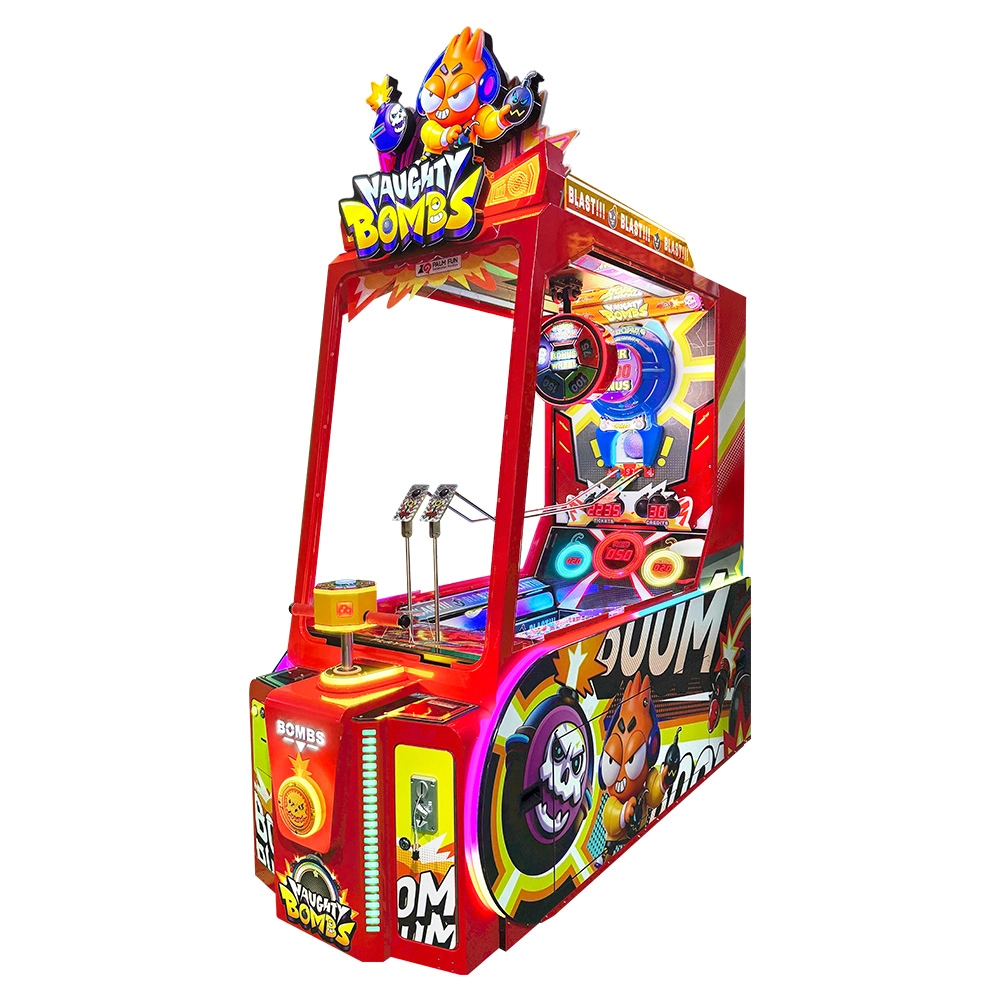
Naughty Bombs Ball Drop Redemption Arcade-Spielautomat
Naughty Bombs ist ein Arcade-Spiel mit Kugelwurf-Mechanik, farbigen Zielen, Ticketpreisen, Überraschungsboni sowie Licht- und Soundeffekten. Die Spieler müssen das richtige Timing finden, um die Kugeln auf die farbigen Zielbereiche zu werfen. Das Produkt eignet sich für Spielhallen, Familienunterhaltungszentren und andere Unterhaltungseinrichtungen und ist mit einer anpassbaren 110-V-/220-V-Wechselspannungskonfiguration erhältlich.
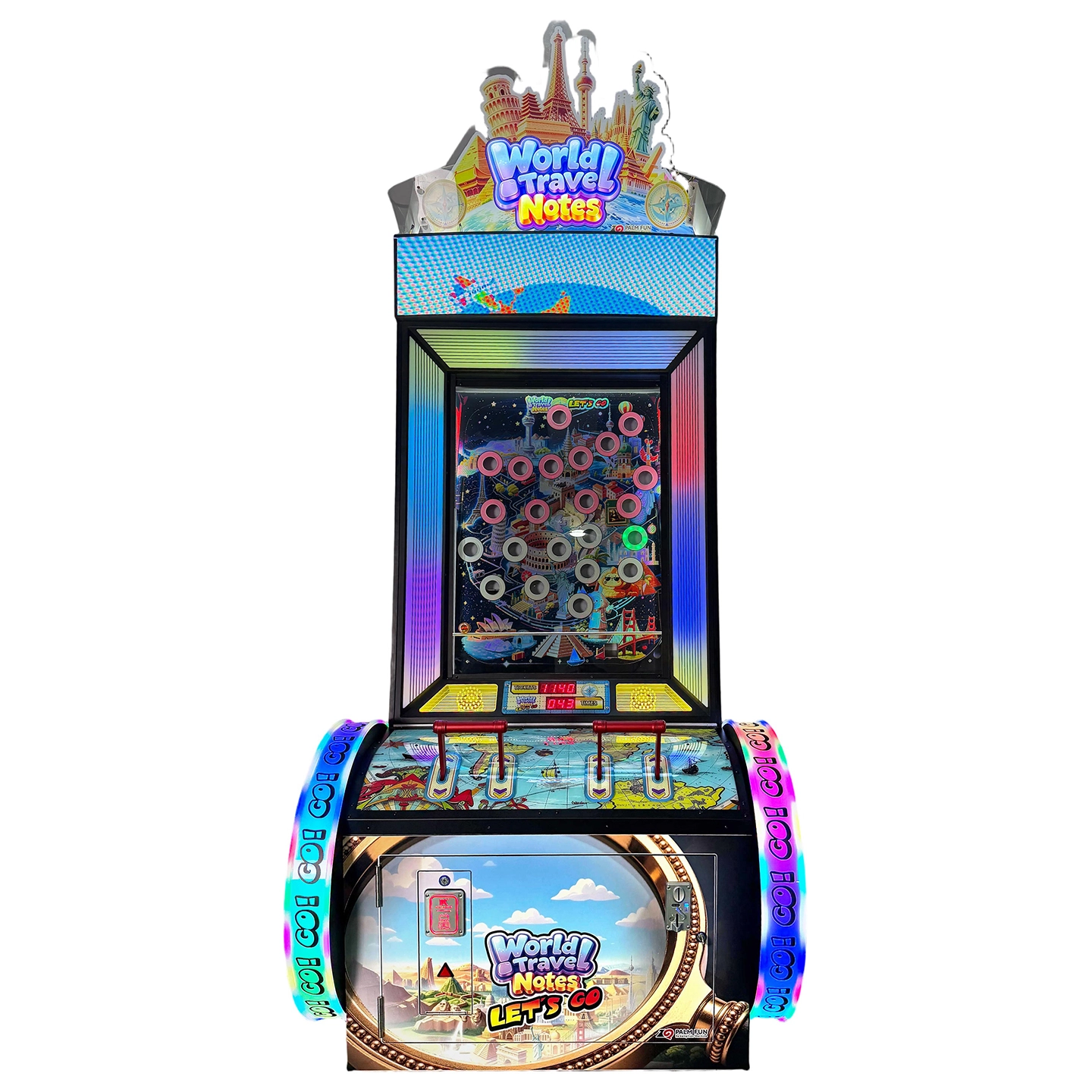
Weltreise-Notizen Balance Ball Einlösungs-Arcade-Spielautomat
World Travel Notes ist ein Geschicklichkeits-Spiel mit einer Balancekugel, bei dem jede Partie zu einer Weltreise wird. Die Spieler steuern das Balanceboard mit zwei Griffen und lenken so eine rollende Kugel über ein Spielfeld mit Weltkarte zum leuchtenden Zielloch. Mit jedem abgeschlossenen Level steigt der Schwierigkeitsgrad, und nur die geschicktesten Spieler erreichen das höchste Loch, um den Hauptpreis zu gewinnen. Dank seines farbenfrohen Weltreise-Themas, der dynamischen RGB-Beleuchtung, der Live-Punkteanzeige und des progressiven Herausforderungsdesigns ist World Travel Notes ein echter Hingucker für Spielhallen, Familienunterhaltungszentren und Einkaufszentren, die ihre Spielerbindung und ihren Umsatz steigern möchten.
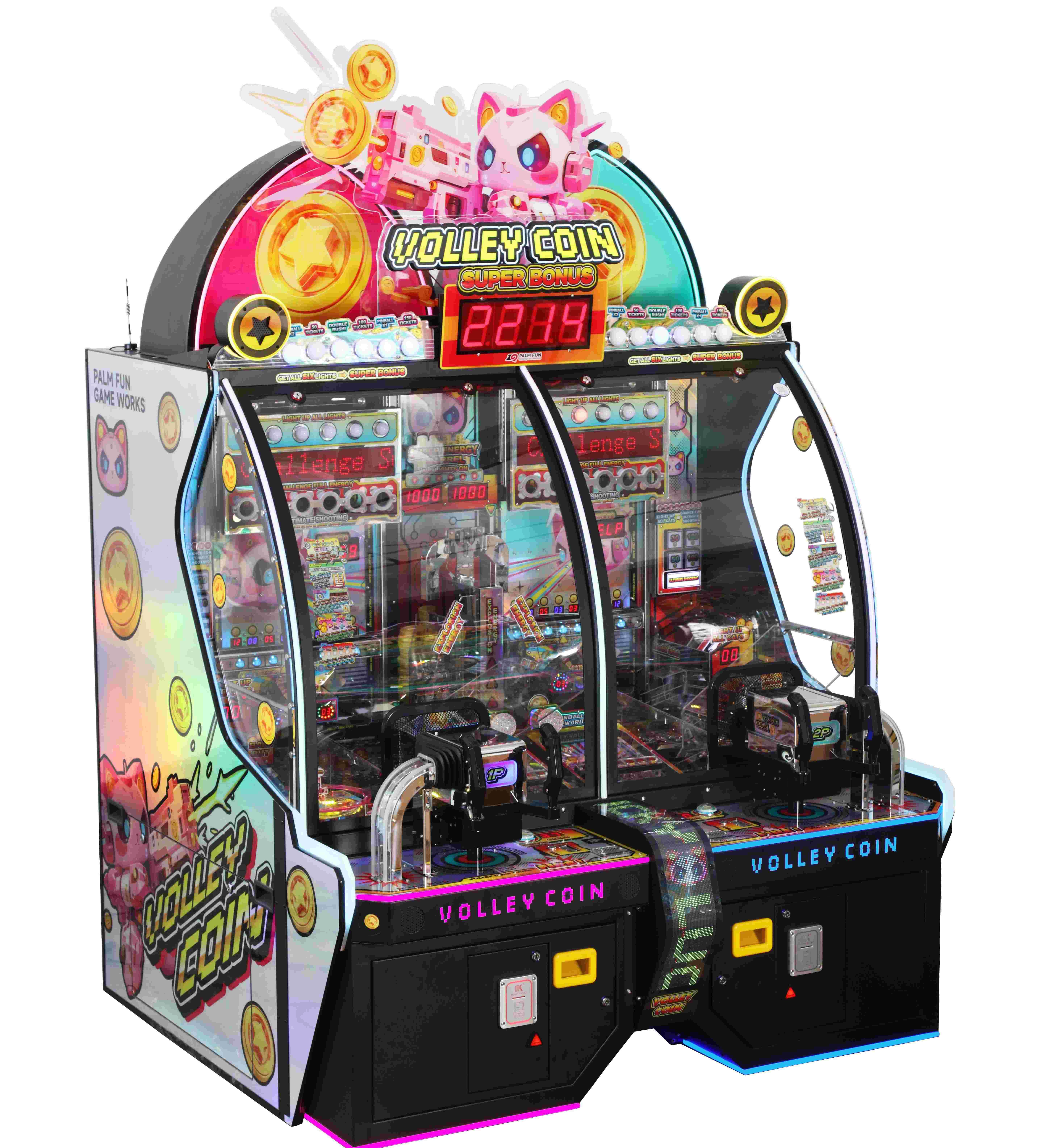
Hybrid-Spielautomat mit Schieß- und Schiebefunktion | Münzschieber-Spielautomat mit Ticket-Einlösung
Volley Coin ist ein innovativer Arcade-Spielautomat von Palm Fun Electronics. Er kombiniert den Nervenkitzel eines rasanten Token-Shooters mit der bewährten Gewinnwahrscheinlichkeit eines traditionellen Münzschiebers und bietet so ein frisches und fesselndes Spielerlebnis für Spieler jeden Alters.
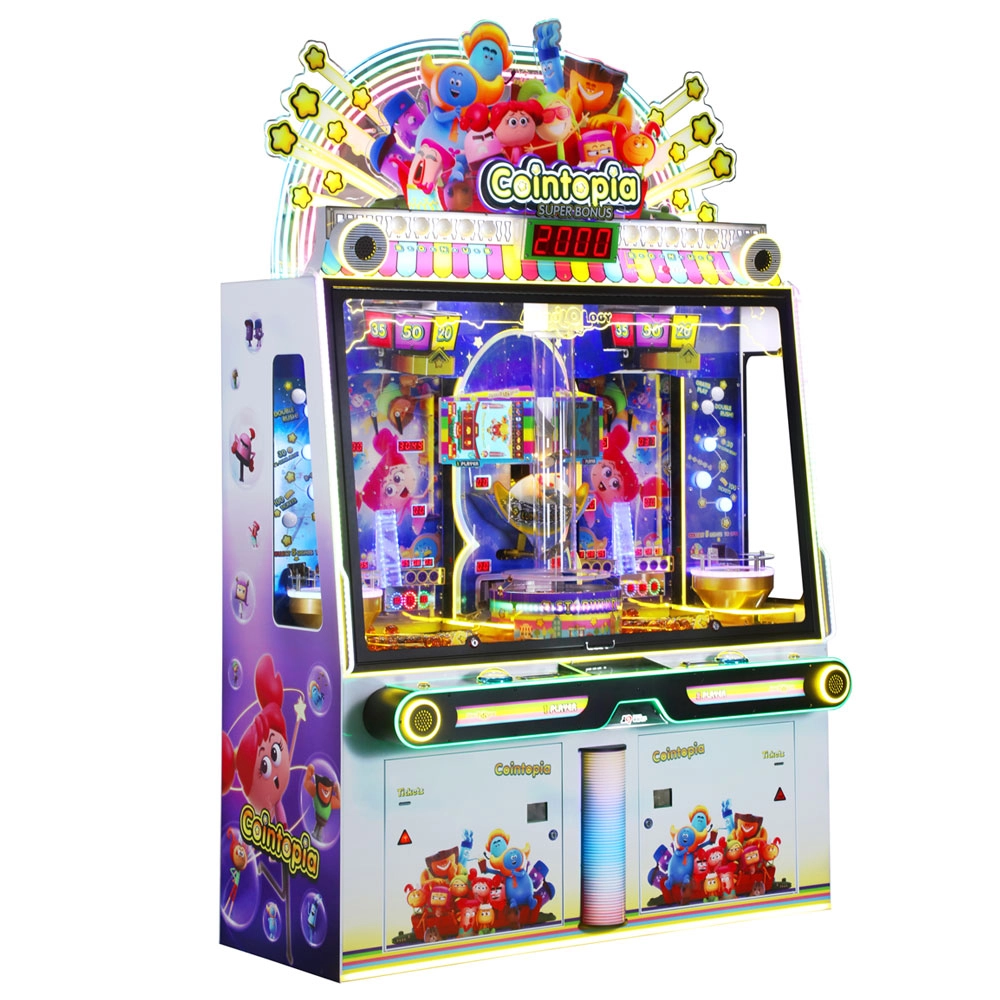
COINTOPIA, Viel Spaß zusammen mit den Zodiac Buddies in einer Utopie
COINTOPIA von PALM FUN ist ein spannender Einlösespielautomat, an dem Spieler mit Sternzeichen-Freunden in einer utopischen Umgebung Spaß haben. Dieser Ticketautomat bietet fesselndes Gameplay und lohnende Erlebnisse – perfekt für Familienunterhaltungszentren und Spielhallen, die hochwertige Einlösespiele suchen.
Copyright © 2026 PALM FUN Alle Rechte vorbehalten. |Datenschutzrichtlinie•Geschäftsbedingungen|Sitemap
Palmen-Tanzkajak
Palm Fun Arcade-Spiel
WhatsApp: +8618126837443
PalmFun Arcade
PalmFun_Arcade
PALM FUN Einlöseautomat