







Private-label cabinet and branding for single player arcade
- Custom cabinet engineering for solo-play amusement machines
- Design differentiation: form factor, ergonomics and space planning
- Materials selection and durability testing
- Serviceability and modular electronics
- Branding workflows, IP and private-label project management
- Artwork, licensing and trademark control
- From concept to production: prototyping and pre-production checks
- Lead-time, MOQs and batch economics
- Procurement, quality assurance and lifecycle management for redemption and arcade hardware
- Supplier evaluation matrix and procurement checklist
- Quality assurance: testing regimes and acceptance criteria
- Aftermarket support: spares, training and firmware updates
- Market economics, ROI and optimization strategies
- Revenue models and performance KPIs
- Trade-offs: customization vs. standardisation
- Risk mitigation: warranties, insurance and regulatory compliance
- PALM FUN private-label capabilities and portfolio advantages
- Manufacturing scale, engineering and production facilities
- Product lines and private-label examples
- Customisation services, QA and global deployment
- Relevant products and private-label-ready models
- Frequently Asked Questions
High-impact suppliers and venue operators require a concise private-label roadmap that covers tailored cabinet engineering, artwork and IP workflows, production economics, regulatory compliance, and aftermarket support for single-seat amusement devices—this guide condenses procurement checklists, customization pathways, and measurable KPIs to shorten time-to-floor and maximise lifetime earnings per machine for location-based entertainment operators and distributors.
Custom cabinet engineering for solo-play amusement machines
Design differentiation: form factor, ergonomics and space planning
Buyers should prioritise cabinet footprints that match venue constraints and target dwell times. Modular footprints (narrow, medium, wide) enable placement in arcades, bars, FECs, cinemas and hospitality spaces. Ergonomic considerations such as control height, lighting angles and display tilt reduce user fatigue and increase session length—specify anthropometric ranges for target demographics and require 3D layout proofs from potential manufacturers to validate sightlines and circulation.
Materials selection and durability testing
Durability directly affects TCO. Specify cabinet materials (MDF vs. marine plywood vs. metal chassis), finish systems (UV-cured inks, polyurethanes), and injection-moulded bezels for high-contact zones. Request manufacturer fatigue test data (cycles to failure for control panels, hinge ratings, and impact resistance). Insist on IEC or UL-equivalent electrical protection and ingress thresholds for components used in high-traffic entertainment venues (see IEEE standards and ISO 9001 quality processes).
Serviceability and modular electronics
Design for maintainability reduces downtime. Define a modular electronics architecture with labelled harnesses, replaceable I/O boards, and swappable power modules. Buyers should require BOM transparency, clear spare-parts lists, and a guaranteed parts lead time. This approach enables local technicians to service units faster, lowering mean time to repair (MTTR) and improving venue uptime.
Branding workflows, IP and private-label project management
Artwork, licensing and trademark control
Establish a clear IP ownership agreement during the SOW phase. Project owners must group deliverables into vector artwork, color proofs, and printable templates. For licensed or co-branded projects, provide trademark usage guidelines and require proof of license transfer or use rights. Insist on Pantone-mapped color approvals and factory pre-production samples to avoid costly recolors after tooling begins.
From concept to production: prototyping and pre-production checks
Implement a multi-stage validation flow: concept renders → functional prototype → pilot batch → full production. Typical pilot batches (3–10 units) reveal assembly issues and firmware edge-cases. Require change-order governance (CR/ECN) and pre-shipment acceptance tests (PSAT) that include electrical safety, software stability and cosmetic acceptance criteria.
Lead-time, MOQs and batch economics
Understand how minimum order quantities (MOQs) shape per-unit cost. Smaller runs increase unit price due to tooling and setup amortisation. Buyers should request tiered pricing (1–50, 51–200, 201+) and evaluate total landed cost—including freight, customs, duties, and local installation—rather than unit price alone when calculating payback period and IRR for fixture-based entertainment investments.
Procurement, quality assurance and lifecycle management for redemption and arcade hardware
Supplier evaluation matrix and procurement checklist
Use a weighted scorecard for supplier selection that includes: production capacity, QC certifications, artwork & tooling capability, warranty terms, post-sale support, and global logistics experience. Request references of previous private-label projects and documented case studies demonstrating compliance with electrical and mechanical safety standards. Public standards such as industry histories and design norms can provide baseline expectations for ball/mechanism dynamics and player expectations.
Quality assurance: testing regimes and acceptance criteria
Mandate pre-shipment test protocols: burn-in (48–72 hours), dust and ingress checks, vibration and transport simulation, and functional verification of payout or ticket mechanisms for redemption devices. Include firmware revision control and signed test reports. Adopt continuous improvement metrics such as defect-per-million (DPM) and first-pass yield (FPY) to track manufacturing quality over time.
Aftermarket support: spares, training and firmware updates
Structured aftermarket programs reduce downtime and lower total operating costs. Require accessible spare lists, quoted lead times for critical components, and remote diagnostics capability where possible. Insist on technician training programs and documentation (repair manuals, exploded views, schematics) as part of the supply contract to enable local service partners to maintain uptime within SLA targets.
Market economics, ROI and optimization strategies
Revenue models and performance KPIs
Operators should model revenue using session rate, average revenue per play, occupancy, and payback time. Track KPIs such as plays-per-day, ticket redemption rate, and revenue per square meter. Optimization levers include dynamic pricing, time-of-day offers, localized artwork, and loyalty integrations to increase repeat play and retention.
Trade-offs: customization vs. standardisation
Excessive customisation can extend lead times and increase inventory risk; conversely, too-standardised units may underperform in specific venue contexts. Utilize a modular private-label approach—standard internal mechanics with bespoke external skins—to balance economies of scale with brand differentiation and local-market appeal.
Risk mitigation: warranties, insurance and regulatory compliance
Contracts must specify warranty scope, RMA processes, and liability terms for IP and manufacturing defects. Ensure electrical and consumer safety standards are met for each market; for process controls and quality governance the supplier should adhere to recognised frameworks such as ISO 9001. For electronic safety and emissions, request conformity evidence for regional standards (CE/EMC, UL/CSA) as applicable.
| Attribute | Standard Off-the-shelf | Private-label Custom Cabinet | Licensed / Co-branded Variant |
|---|---|---|---|
| Typical unit cost (USD) | $2,000–$6,000 | $3,000–$9,000 (depends on finish & MOQ) | $4,500–$12,000 (license fees + High Quality materials) |
| MOQ | 1–50 | 50–500 (smaller runs available at High Quality) | 100+ (may include licensing minimums) |
| Typical lead time | 2–8 weeks | 8–20 weeks (design + tooling) | 12–24 weeks (additional approvals) |
| Customization scope | Low | High (artwork, UI, controls) | High but license constrained |
| ROI leverage | Moderate | High (differentiation & branding) | High (brand High Quality) |
PALM FUN private-label capabilities and portfolio advantages
Manufacturing scale, engineering and production facilities
Founded in 2015, PALM FUN specialises in high-quality mechanical lottery machines, coin pusher machines, and raffle machines and is dedicated to the R&D, design, production, and sales of innovative gaming and lottery equipment. Our state-of-the-art factory covers 3,000 square meters and is staffed by a team of skilled development engineers committed to advancing technology and enhancing user experience. Buyers seeking private-label partners should request factory acceptance documentation, production photos, and sample reports to validate capacity and process maturity.
Product lines and private-label examples
We supply a broad range of location-based solutions, including High Quality redemption cabinets and mechanical game platforms. Our catalogue includes bespoke coin-tactile systems and ticket-dispensing mechanics suitable for high-traffic venues. PALM FUN supports private branding programs across core product families such as pinball arcade units and compact single-user systems for small-footprint sites, enabling coherent brand experiences across venue estates.
Customisation services, QA and global deployment
Our engineering team provides turn-key services: concept proofing, full artwork management, CNC tooling, and pilot-run validation. We operate a rigorous QA regime and provide after-sales logistics and spare parts distribution. PALM FUN’s products are recognised in over 50 countries worldwide, and our international logistics capability supports volume roll-outs, regional certification assistance, and operator training programs to ensure rapid time-to-revenue.
Relevant products and private-label-ready models
For operators focused on ticket redemption and high dwell, PALM FUN offers tailored systems including the Coin Pusher Arcade Ticket Redemption Machine and feature-driven units such as the Larva Series Coin Pusher Arcade. Our product catalogue and engineering services are designed to convert concept into a sale-ready private-label product efficiently, and prospective partners can review our company background at High Quality Redemption Arcade MachinesManufacturer.
We prioritise collaborative project management: formal SOWs, milestone-based approvals, and clear warranty and spare-part agreements to reduce commercial risk and protect client IP. Buyers should request an initial technical proposal and a non-disclosure agreement (NDA) prior to sharing artwork or licensing materials.
For regulatory and safety alignment, financiers and procurement teams may refer to internationally recognised process standards and testing frameworks such as ISO 9001 and consult industry technical references such as IEEE standards when specifying electronic and mechanical requirements.
With a solid manufacturing base and flexible customisation pathways, PALM FUN helps distributors, operators and brand owners bring private-label cabinets to market with predictable schedules, verifiable quality controls and global support.
Contact the PALM FUN team to request a capability pack and project quote, or view our product portfolio to evaluate private-label opportunities.
Frequently Asked Questions
What is the typical MOQ for a private-label cabinet run?
MOQs vary by supplier and feature complexity; typical private-label minimums range from 50–500 units for custom skins and tooling—smaller pilot batches (3–10 units) are recommended for validation but may incur a higher per-unit charge.
Which certifications should buyers require for amusement equipment?
Buyers should request evidence of quality management (for example, ISO 9001), applicable electrical safety and EMC certifications for target markets (CE, UL, or regional equivalents) and pre-shipment test reports that include burn-in and functional acceptance results.
How are IP and artwork ownership handled in private-label projects?
Contracts must clarify IP ownership, licensing terms, and permissible usage. Require vector artwork, approved color standards, and a written license transfer or usage agreement for any third-party intellectual property used on the cabinet.
What is the expected lead time from concept to floor-ready units?
Typical timelines: concept and approvals (2–6 weeks), prototyping and pilot (6–12 weeks), production and shipping (8–20 weeks) depending on complexity, tooling requirements and certification needs; accelerated schedules are possible for lower customisation levels.
What after-sales support should be included in supplier agreements?
Sourcing agreements should define warranty scope, RMA procedures, spare-parts lists and lead times, technician training, and firmware update procedures. Remote diagnostics and regional spare distribution reduce MTTR and total operating cost.
Recommended for you
The Ultimate Guide to Coin Pusher Machine Manufacturers | PALM FUN
PALM FUN Best professional game machine arcade manufacturers and supplier brands
Everything You Need to Know About coinpusher
Maximizing Fun: The Ultimate Guide to Winning Redemption Arcade Prizes with PALM FUN
FAQs
What is the character of mechanical redemption machine?
The revenue proportion of redemption machines
How to place the redemption machines in a right place?
1,Ensure that the placement and layout of the equipment are distinct and centralized.
2,Keep noise levels low and avoid having a line of sight that spans too far to prevent players from easily taking in everything, which may slow down their movement.
3,Avoid clustering high-ticket payout machines and disperse machines of the same style.
4,Mix popular machines with less popular ones and avoid placing all popular machines together.
Effectively solve the pain points of the site and consume the amount of coins deposit.
So the stock quantity of pre-purchased tokens is an issue must be concerned, especially in the highly competitive current market. Only when the amusement park maintains a healthy cycle of token sales, consumption, stockpiling, consumption, and sales again can it ensure sustained growth and profitability.
What details should be paid attention to in the operation of redemption machines?
① Machine parameter adjustments.
② Equipment performance and gameplay.
③ Decoration and promotion of the area and equipment.
④ Machine placement locations.
⑤ Selection of prizes.
2. The primary operational techniques for redemption machines are in the attractiveness of the gameplay, maintaining a reasonable payout rate, and creating an engaging atmosphere. Depending on the season and market changes, promotional activities should be carried out with a balance, analysis, and follow-up. Therefore, you can consider the following operational methods:
① Collaborate with several venues or businesses to distribute promotional materials to enhance external visibility and interaction.
② Conduct targeted promotional activities to retain returning customers.
③ Organize regular member events to ensure member attraction and consistent customer base. For example, offering extra lottery rewards for a certain amount of tokens deposited or giving a certain number of lottery tickets(reward points) when a membership card is issued.
④ Strengthen interaction with neighboring businesses within the commercial district.
⑤ Organize selective activities for children and offer special deals for exchanging unique children-oriented prizes.
3. Setting parameters correctly:
4.New machine arrival -- Familiarizing with the game--Initial parameter control--Promotional --ctivities and advertising--Adjusting parameters based on the number of players--Multiple adjustments of parameters--Increased popularity--Profitability--Reinvestment.
Note: Data analysis should be conducted weekly to promptly understand the ticket payout probability for each redemption machine. In case of any abnormal situations, swift follow-up and troubleshooting are essential to identify the causes and rectify the issues.
You may also like
Naughty Bombs Ball Drop Redemption Arcade Game Machine
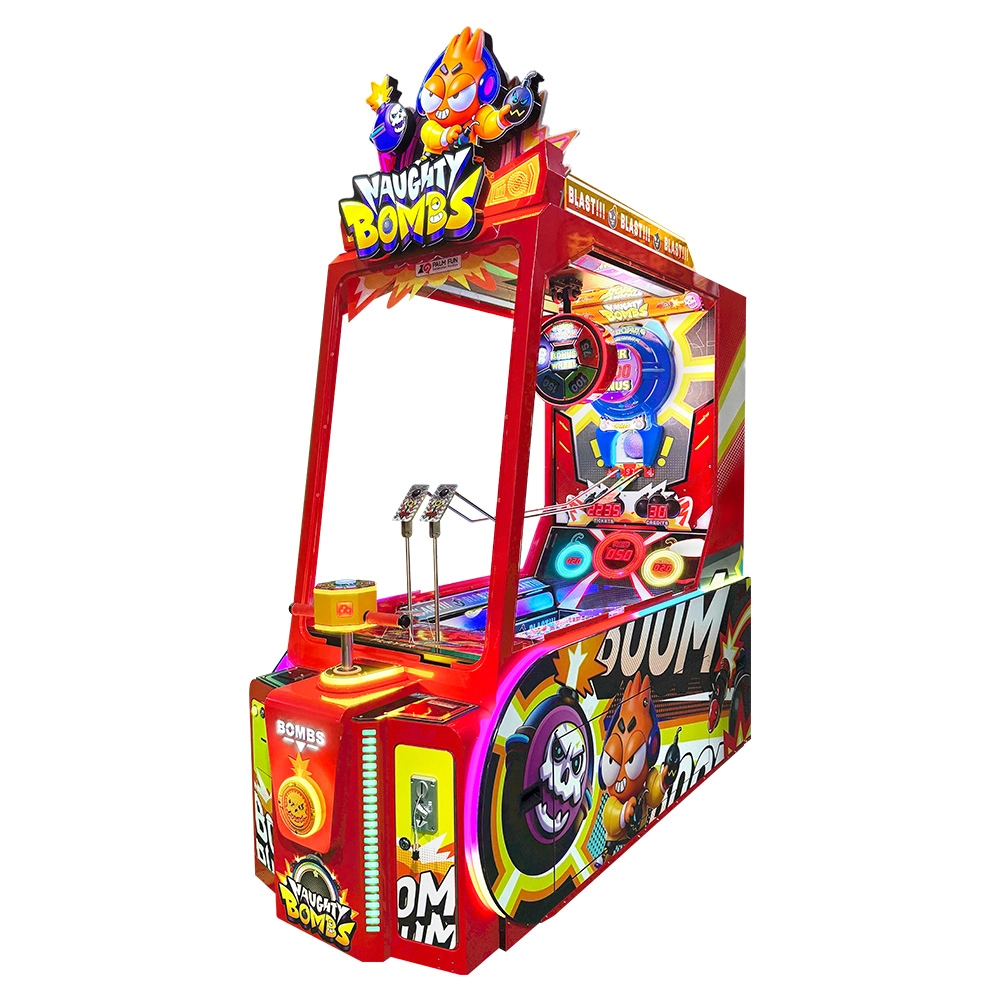
Naughty Bombs is a ball-drop redemption arcade game featuring rolling-ball gameplay, colored targets, ticket prizes, surprise bonus rewards, lighting and sound effects. Players use timing to launch and drop balls toward colored target areas. The product is presented for arcade, family entertainment center and other entertainment-venue projects, with customizable 110V / 220V AC voltage configuration.
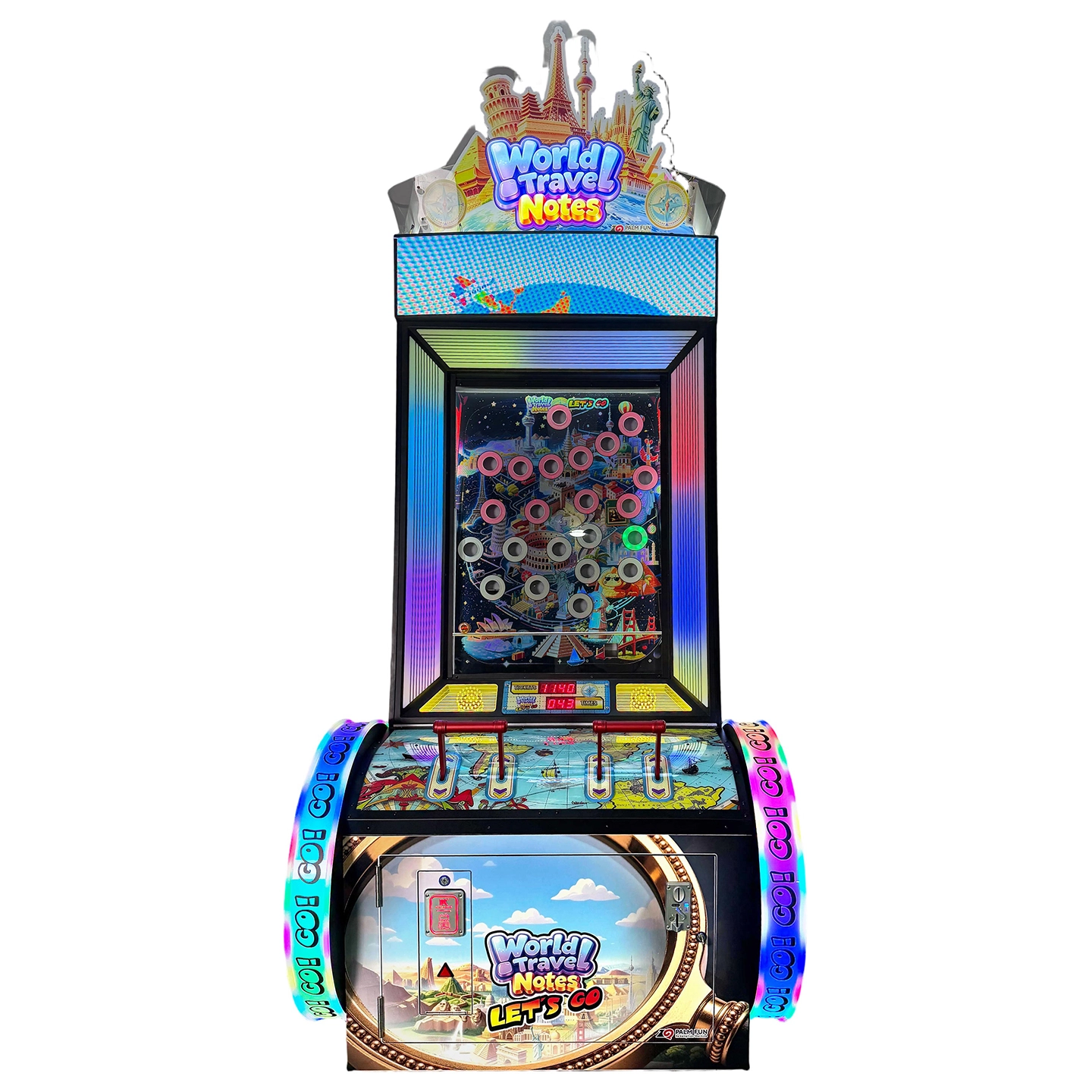
World Travel Notes – Balance Ball Redemption Arcade Game
World Travel Notes is a skill-based balance ball redemption game with a fun world-travel theme. Players use two handles to control the balance bar and guide the ball into each target hole. As the game progresses, the targets become more challenging, leading players toward the final grand prize. With colorful world-travel graphics, dynamic RGB lighting, a live score display, and progressive difficulty, World Travel Notes is designed to attract attention and encourage repeat play in arcades, FECs, shopping malls, and other entertainment venues.
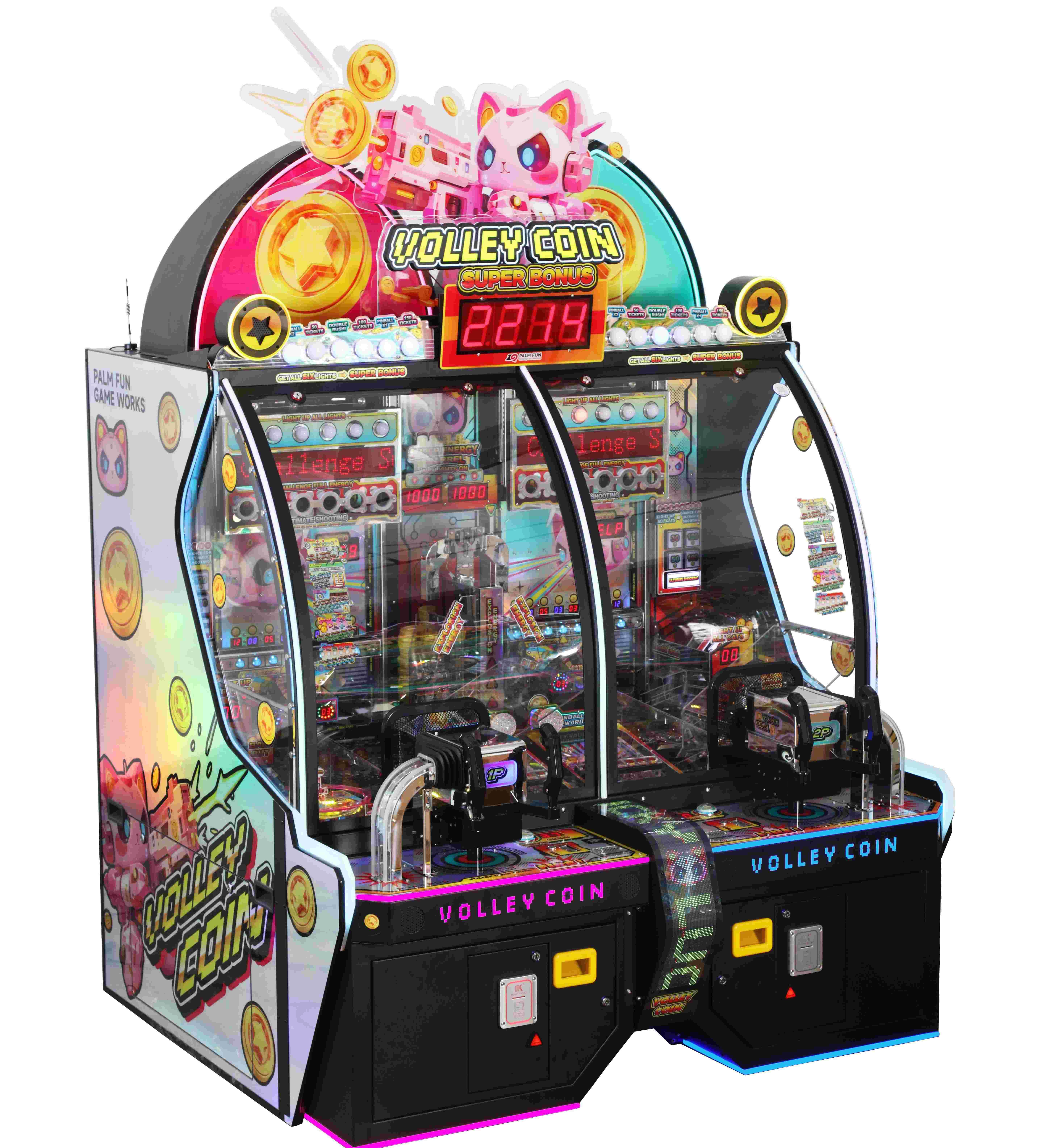
Hybrid Shooting & Pushing | Coin Pusher Arcade Ticket Redemption Machine
Volley Coin is an innovative arcade ticket redemption machine developed by Palm Fun Electronics. Combining the excitement of a fast-paced token shooter game with the proven earning power of a traditional coin pusher machine, Volley Coin offers a fresh and engaging gameplay experience that appeals to players of all ages.
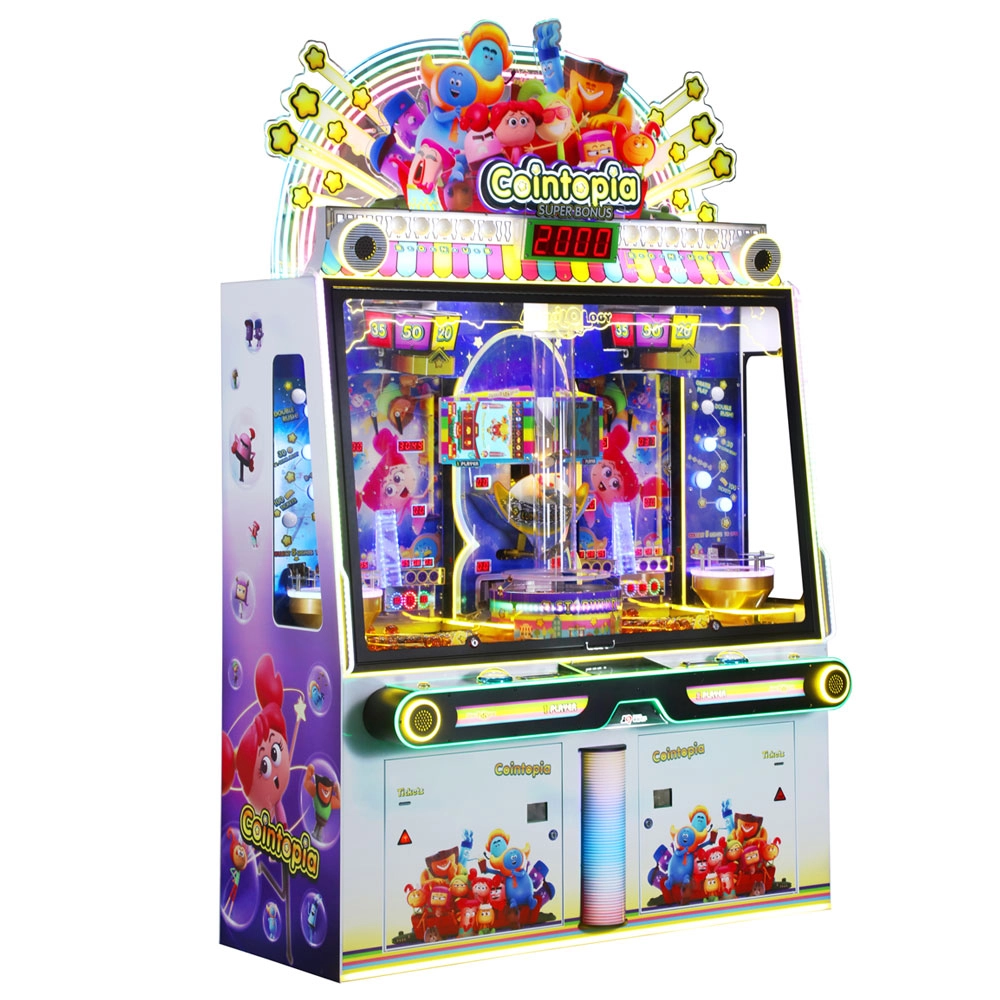
COINTOPIA, Have Fun Together With The Zodiac Buddies in an Utopia
COINTOPIA by PALM FUN is an exciting redemption game machine where players enjoy fun with zodiac buddies in a utopia setting. This ticket redemption machine offers engaging gameplay and rewarding experiences, perfect for family entertainment centers and arcades seeking top-quality redemption games.

Copyright © 2026 PALM FUN All Rights Reserved. | Privacy Policy • Terms and Conditions | Sitemap
palmfunarcade
Palm Fun Arcade Game
Whatsapp: +8618126837443
PalmFun Arcade
PalmFun_Arcade
PALM FUN Redemption Machine