







Tests et certifications pour les jeux de chute de balle d'univers parallèle
- Cadres de conformité et voies réglementaires pour les appareils de divertissement à chute de boule
- mandats régionaux applicables et marquages de conformité
- Normes généralement applicables aux machines à sous mécaniques et aux appareils à pièces.
- Classification des produits : machine de divertissement vs jouet vs distributeur automatique
- Méthodes d'essai : méthodes de laboratoire, contrôles en usine et validation sur le terrain
- Analyses effectuées par des laboratoires tiers : que demander ?
- Protocoles d'acceptation en usine et d'inspection à réception
- Essais d'acceptation sur le terrain et revérification périodique
- Atténuation des risques : documentation, traçabilité et meilleures pratiques d'approvisionnement
- Certificats à exiger des fournisseurs
- Points de contrôle d'audit pour les visites d'usines de fournisseurs
- Clauses contractuelles de transfert et de limitation de responsabilité
- Approches comparatives : inspection traditionnelle vs essais certifiés vs systèmes de qualité intégrés
- Critères de décision des acheteurs
- Compromis entre coût et temps
- performance et confiance des clients
- Pourquoi choisir PALM FUN pour des attractions à chute de boule certifiées et des systèmes à pièces ?
- Capacités de production et ingénierie de développement éprouvées
- Portefeuille de produits conforme à la réglementation et stratégie de test
- Modèles phares et options favorables à l'approvisionnement
- Présence sur le marché mondial et assistance après-vente
- Questions fréquemment posées
Les tests et certifications pour les jeux de chute de billes Parallel Universe fournissent aux équipes d'approvisionnement et aux exploitants la feuille de route pour garantir la sécurité électrique, la compatibilité électromagnétique, la durabilité mécanique et la conformité réglementaire des attractions modernes à but lucratif ; ce résumé couvre les systèmes de conformité applicables (CE/UKCA), la vérification par un laboratoire tiers, les systèmes de qualité alignés sur les normes ISO et la diligence raisonnable de l'exploitant pour des catégories telles que les machines de type flipper classique et les distributeurs de tickets à chute de billes contemporains — les acheteurs doivent commencer l'évaluation des fournisseurs en demandant des rapports de test certifiés et des preuves de la qualité de l'usine avant tout engagement contractuel.salle d'arcade de flippers
Cadres de conformité et voies réglementaires pour les appareils de divertissement à chute de boule
mandats régionaux applicables et marquages de conformité
Les fabricants et les importateurs doivent faire correspondre leurs produits aux systèmes régionaux pertinents : marquage CE (Espace économique européen) et UKCA (Royaume-Uni) pour les ventes en Europe et au Royaume-Uni ; en Amérique du Nord, les certifications UL/ETL constituent généralement un gage de conformité aux normes de sécurité électrique. Les exploitants doivent exiger des déclarations de conformité spécifiques et les références aux normes harmonisées afin de confirmer le périmètre du produit. Pour plus d’informations sur les obligations liées au marquage CE, voir :Marquage CE - Commission européenne.
Normes généralement applicables aux machines à sous mécaniques et aux appareils à pièces.
Les principales normes techniques relatives aux appareils de divertissement et de jeux d'arcade couvrent la sécurité électrique, la protection mécanique et la CEM. Les références industrielles incluent les ressources de la Commission électrotechnique internationale pour les normes électriques (CEI - Commission électrotechnique internationale) et des protocoles de test spécifiques à chaque région, provenant d'organismes de test accrédités. Les acheteurs doivent vérifier que les rapports de test font référence aux numéros de clauses standard exacts applicables à l'assemblage final.
Classification des produits : machine de divertissement vs jouet vs distributeur automatique
La classification appropriée des produits détermine les directives et normes applicables. Les attractions à chute de billes destinées aux adultes dans les centres de loisirs relèvent généralement de la catégorie des appareils de divertissement, tandis que celles commercialisées auprès des enfants peuvent être soumises à la réglementation relative à la sécurité des jouets. Cette classification influe sur les tests de résistance aux chocs, l'évaluation des petites pièces et les exigences d'étiquetage. Les équipes d'approvisionnement doivent préciser l'usage prévu dans le cahier des charges afin d'éviter toute erreur de classification en douane ou lors de la surveillance du marché.
Méthodes d'essai : méthodes de laboratoire, contrôles en usine et validation sur le terrain
Analyses effectuées par des laboratoires tiers : que demander ?
Lors de la validation d'un fournisseur, exigez des rapports d'essais complets et notariés, établis par des laboratoires accrédités (ISO/IEC 17025), incluant les numéros de série des échantillons, les conditions environnementales et les critères de réussite/échec. Les essais de laboratoire essentiels comprennent : la continuité de l'isolation et de la terre, la rigidité diélectrique, les émissions et l'immunité CEM, le niveau de protection contre les infiltrations en cas d'exposition dans des lieux publics, et les essais de charge mécanique/fatigue des composants mobiles.
Protocoles d'acceptation en usine et d'inspection à réception
Les contrôles qualité internes complètent les tests en laboratoire. Les tests d'acceptation en usine (FAT) doivent inclure des essais d'endurance fonctionnelle (cycle de service représentatif), des contrôles de couple et de force de ressort pour les éléments mobiles, ainsi que la traçabilité des composants critiques (moteurs, cartes de commande). Les acheteurs doivent exiger des rapports d'inspection de production, associés aux numéros de lot, et des preuves photographiques des points de contrôle d'assemblage.
Essais d'acceptation sur le terrain et revérification périodique
Une fois l'installation terminée, les opérateurs doivent procéder à une vérification du site concernant l'harmonisation de l'alimentation, les contrôles de l'environnement électromagnétique et l'évaluation de la sécurité d'accès. Une revérification périodique est effectuée en fonction des risques : les unités situées dans des centres de loisirs familiaux à forte fréquentation nécessitent des inspections plus fréquentes que celles situées dans des zones à faible fréquentation. Il est recommandé de tenir un registre des interventions et de l'historique des changements de composants afin de justifier les demandes de garantie et de se prémunir contre toute responsabilité.
Atténuation des risques : documentation, traçabilité et meilleures pratiques d'approvisionnement
Certificats à exiger des fournisseurs
Avant tout achat, les acheteurs doivent exiger les documents de base suivants : déclaration de conformité, rapports d’essais ISO/IEC 17025, preuve du système qualité du fabricant (certificat ISO 9001), fiches techniques des composants critiques pour la sécurité et AMDEC ou analyse des risques portant sur les points de pincement et la rétention des billes. En cas de doute, vérifiez l’authenticité des certificats auprès des organismes certificateurs.ISO 9001 - Gestion de la qualité.
Points de contrôle d'audit pour les visites d'usines de fournisseurs
Les points critiques de l'audit comprennent l'agencement de la production pour la séparation des processus critiques, l'étalonnage des équipements de mesure, les dossiers de compétences du personnel et la stratégie de gestion des pièces de rechange. Lors d'une visite, il convient de vérifier que l'échantillon de production correspond au modèle soumis aux tests ; tout écart de conception peut invalider une certification de laboratoire antérieure.
Clauses contractuelles de transfert et de limitation de responsabilité
Les contrats d'approvisionnement doivent inclure des critères d'acceptation, des conditions de garantie liées à des résultats de tests vérifiés, des procédures de rappel et des clauses de rétention jusqu'à la fin des tests de réception post-installation. Ils doivent également prévoir le droit à des tests indépendants aux frais du fournisseur si des défaillances sur le terrain révèlent une non-conformité potentielle.
Approches comparatives : inspection traditionnelle vs essais certifiés vs systèmes de qualité intégrés
Critères de décision des acheteurs
Le choix entre l'auto-inspection du fournisseur, la certification par un laboratoire tiers ou les audits complets des fournisseurs conformes aux normes ISO dépend de la tolérance au risque, du volume d'achats et de l'exposition prévue du lieu de distribution. Les déploiements à grande échelle et les grandes chaînes devraient privilégier les preuves de tests certifiés et le système de management de la qualité du fournisseur plutôt qu'une simple inspection à réception.
Compromis entre coût et temps
Les tests effectués par des tiers engendrent des coûts initiaux et des délais d'exécution supplémentaires, mais réduisent la responsabilité en aval et les temps d'arrêt imprévus. L'intégration des audits fournisseurs et de la certification des produits accélère le déploiement à grande échelle en établissant des référentiels de conformité prévisibles, ce qui améliore les délais de mise sur le marché pour les chaînes et les opérateurs.
performance et confiance des clients
Les attractions certifiées offrent des indicateurs de sécurité et de fiabilité probants qui renforcent la réputation du site et réduisent les coûts d'assurance. Les exploitants qui investissent dans du matériel certifié sont mieux placés pour obtenir des conditions avantageuses auprès des assureurs et des autorités municipales.
| Approche | Objectif principal | Impact typique de l'acheteur | Méthode de vérification |
|---|---|---|---|
| Auto-inspection des fournisseurs | Contrôle qualité de base pendant la production | Coût initial plus faible, risque ultérieur plus élevé | rapports d'inspection d'usine, contrôles par échantillonnage |
| Tests effectués par un laboratoire tiers | Conformité objective aux normes de sécurité/CEM | Plus grande certitude ; coût et délai supplémentaires | Rapports ISO/IEC 17025, certificats d'essai |
| Système de management de la qualité intégré + audits (ISO 9001) | Contrôle des processus et amélioration continue | Idéal pour les déploiements à grande échelle et les propriétaires de marques | Rapports d'audit, comptes rendus de revue de direction |
Pourquoi choisir PALM FUN pour des attractions à chute de boule certifiées et des systèmes à pièces ?
Capacités de production et ingénierie de développement éprouvées
Fondée en 2015, PALM FUN se spécialise dans les machines de loterie mécaniques, les pousse-pièces et les machines de tombola de haute qualité. Notre équipe d'ingénieurs en développement qualifiés gère l'ensemble du cycle de vie, de la recherche et développement à la conception, en passant par la production et la vente, afin de garantir une qualité constante pour chaque série de production. Notre usine ultramoderne de 3 000 mètres carrés est configurée pour la production de prototypes et la fabrication à grande échelle.
Portefeuille de produits conforme à la réglementation et stratégie de test
L'architecture de nos produits est conçue dans un souci de conformité : les systèmes électriques sont conformes aux normes de sécurité internationales, l'électronique de commande est blindée et filtrée pour respecter les réglementations CEM, et les sous-ensembles mécaniques sont validés par des essais de fatigue et des essais de longue durée. Les acheteurs sont invités à consulter la documentation d'essais spécifique à chaque modèle lors de la phase de demande de devis afin d'harmoniser les critères d'acceptation.
Modèles phares et options favorables à l'approvisionnement
PALM FUN propose une gamme de machines de divertissement certifiées, adaptées aux exploitants et distributeurs de parcs d'attractions, notamment des pousse-pièces à forte attraction et des installations interactives de fidélisation. Consultez les pages produits dédiées pour obtenir les données techniques et les références de certification.Machine à tickets d'arcade Coin PusheretLarva Series Coin Pusher ArcadePour en savoir plus sur notre entreprise, consultez notre profil d'entreprise surFabricant de machines d'arcade à tickets de haute qualité.
Présence sur le marché mondial et assistance après-vente
Présents dans plus de 50 pays, les produits PALM FUN accompagnent leurs clients en leur fournissant des dossiers de documentation, des kits de pièces détachées et des formations à la maintenance afin de réduire le temps moyen de réparation (MTTR) et d'optimiser la disponibilité des sites. Notre ambition est de devenir le leader mondial des machines de jeux à tickets ; les acheteurs peuvent consulter nos rapports de tests documentés lors de leurs achats afin de satisfaire aux exigences des parties prenantes et des assureurs.
Pour obtenir des informations de référence sur la sécurité, la conception et les cadres de conformité des appareils de divertissement, consultez des ressources générales telles que :Jeu d'arcade - Wikipédia,UL - Science de la sécurité, etCEI - Commission électrotechnique internationale.
Les opérateurs évaluant de nouveaux investissements devraient exiger dans la demande de devis des certificats, des preuves de qualité conformes aux normes ISO et des rapports de tests effectués par des tiers ; cette approche réduit les risques liés au déploiement et protège les flux de revenus à long terme.
Questions fréquemment posées
Quelles certifications sont généralement requises pour les machines à tickets à chute de bille vendues en Europe ?
Pour les ventes sur le marché européen, les acheteurs doivent exiger le marquage CE, accompagné de rapports d'essais faisant référence aux normes harmonisées applicables en matière de sécurité électrique et de CEM. Des exigences nationales supplémentaires peuvent s'appliquer selon le lieu et la tranche d'âge des utilisateurs cibles ; il est donc important de vérifier dès le début de l'achat qu'il s'agit d'un appareil de divertissement ou d'un jouet.
Comment un acheteur peut-il vérifier l'authenticité des rapports de test d'un fournisseur ?
Vérifiez que les rapports d'essais proviennent de laboratoires accrédités ISO/IEC 17025, confirmez les numéros de série et les descriptions des échantillons figurant dans le rapport, et vérifiez le statut d'accréditation du laboratoire émetteur sur le site web de son organisme national d'accréditation. En cas de doute, demandez une copie certifiée conforme et une confirmation directe du laboratoire.
Quels documents doivent figurer dans une demande de devis pour une attraction de type « chute de boule » à pièces ?
Une demande de prix (RFQ) doit inclure la déclaration de conformité, les rapports d'essais de laboratoires tiers (sécurité électrique, CEM), la preuve de la certification ISO 9001 du fournisseur, les fiches techniques des composants pour les pièces critiques pour la sécurité, les protocoles FAT et une stratégie de pièces de rechange avec les délais de livraison.
À quelle fréquence les machines de divertissement installées doivent-elles être revérifiées sur site ?
La fréquence des revérifications doit être adaptée au niveau de risque : les centres de loisirs familiaux à forte fréquentation nécessitent généralement des inspections trimestrielles ou semestrielles, tandis que les établissements à faible fréquentation peuvent être inspectés annuellement. Les inspections doivent porter sur les connexions électriques, l’usure des pièces mobiles et les mises à jour logicielles/micrologicielles ayant un impact sur les fonctions de sécurité.
Quels sont les coûts et les délais liés à l'exigence d'une certification par un tiers par rapport au recours à une inspection par le fournisseur ?
La certification par un organisme tiers augmente les coûts initiaux et les délais en raison de la planification des analyses en laboratoire et de la préparation des échantillons, mais elle réduit les risques ultérieurs, diminue la probabilité de défaillances sur le terrain et renforce souvent la confiance des assureurs et des organismes de réglementation. Pour les déploiements à grande échelle, la certification et les audits des fournisseurs sont généralement rentables sur l'ensemble du cycle de vie des équipements.
Recommandé pour vous
Questions essentielles à poser à un fournisseur de machines de divertissement
PALM FUN Meilleurs fabricants et fournisseurs de jeux d'arcade professionnels
Fabricant et fournisseur de machines d'arcade commerciales en gros
Meilleures marques de fabricants et fournisseurs de machines d'arcade commerciales à pousse-pièces
FAQ
Recherche & Développement, à quel point est difficile la naissance d'une nouvelle machine de rachat ?
La proportion de revenus des machines de rachat
Comment choisir les cadeaux d'échange des billets (points récompenses) ?
2. Les cadeaux doivent être variés. Cela fait référence à la variété des articles disponibles, offrant aux joueurs plus de choix. Les préférences de chacun sont différentes, en particulier celles des adultes qui ont des attentes plus élevées en matière de cadeaux. Le lieu doit s'efforcer de répondre aux divers besoins de ces joueurs.
3. Les cadeaux doivent être à la mode. La jeune génération qui suit les tendances s'intéresse beaucoup aux articles les plus en vogue du moment. Si le lieu peut suivre les dernières tendances, il peut attirer la majorité des consommateurs.
4. Les cadeaux doivent être innovants. En particulier pendant les fêtes et les saisons, il est judicieux d'essayer de nouvelles approches, en créant un avantage concurrentiel avec des offres uniques. Par exemple, la tendance actuelle qui consiste à combiner la culture pop et la culture des boîtes aveugles.
Quel est le caractère de la machine de rachat mécanique ?
Pourquoi les distributeurs automatiques de billets de rachat sont-ils populaires ?
2. Les machines de rachat deviennent la percée la plus importante pour améliorer le fonctionnement durable des salles de jeux d'arcade intérieures.
3. Les joueurs sont de tous âges et continuent de s’agrandir.
Vous aimerez peut-être aussi
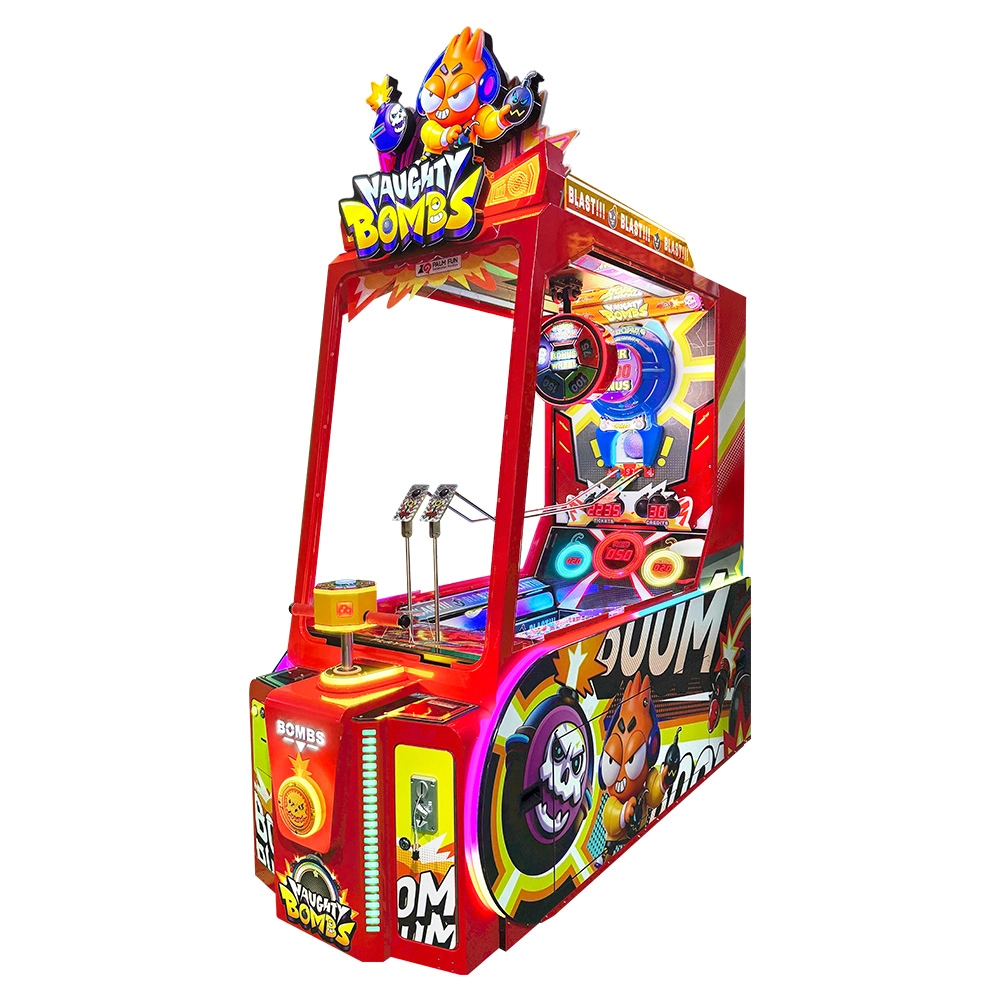
Machine de jeu d'arcade Naughty Bombs Ball Drop Redemption
Naughty Bombs est un jeu d'arcade de type « billes roulantes » proposant des cibles colorées, des tickets à gagner, des bonus surprises, ainsi que des effets lumineux et sonores. Les joueurs doivent faire preuve de précision pour lancer et lâcher les billes vers les zones cibles colorées. Ce jeu est conçu pour les salles d'arcade, les centres de loisirs familiaux et autres lieux de divertissement, et est disponible en configuration 110 V/220 V CA.
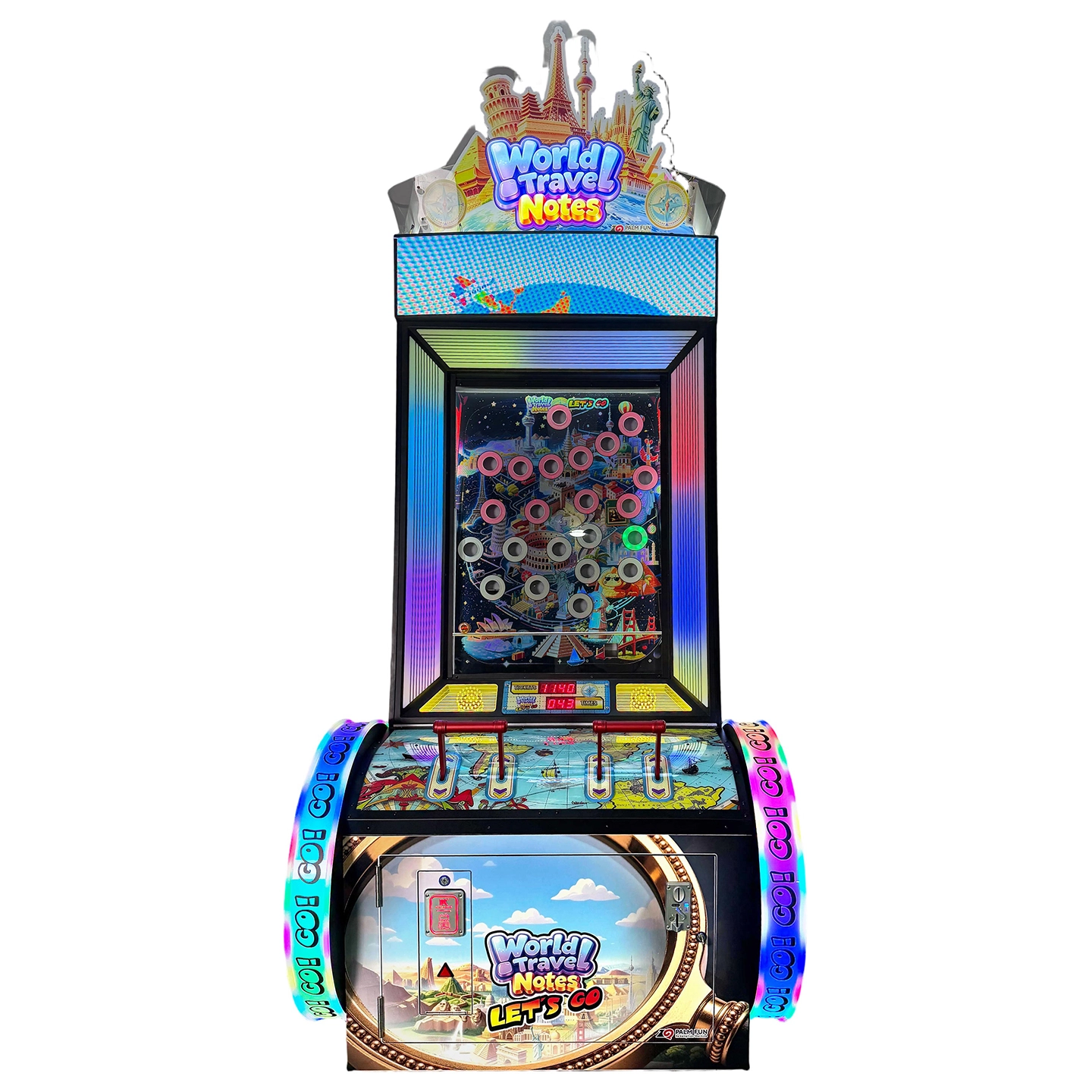
Machine de jeu d'arcade à récompenses « Notes de voyage du monde » avec balle d'équilibre
World Travel Notes est un jeu d'arcade de type « balance ball » qui transforme chaque partie en un tour du monde. Les joueurs contrôlent deux poignées pour incliner la planche et guider une bille roulant sur un plateau de jeu représentant une carte du monde, jusqu'à la cible lumineuse. La difficulté augmente à chaque niveau réussi, et seuls les joueurs les plus habiles atteignent le trou le plus haut pour remporter le gros lot. Avec son thème coloré de voyage autour du monde, son éclairage RGB dynamique, son affichage du score en direct et sa progression de difficulté, World Travel Notes est un atout majeur pour les salles d'arcade, les centres de loisirs familiaux et les centres commerciaux souhaitant dynamiser leur clientèle et augmenter leurs revenus.
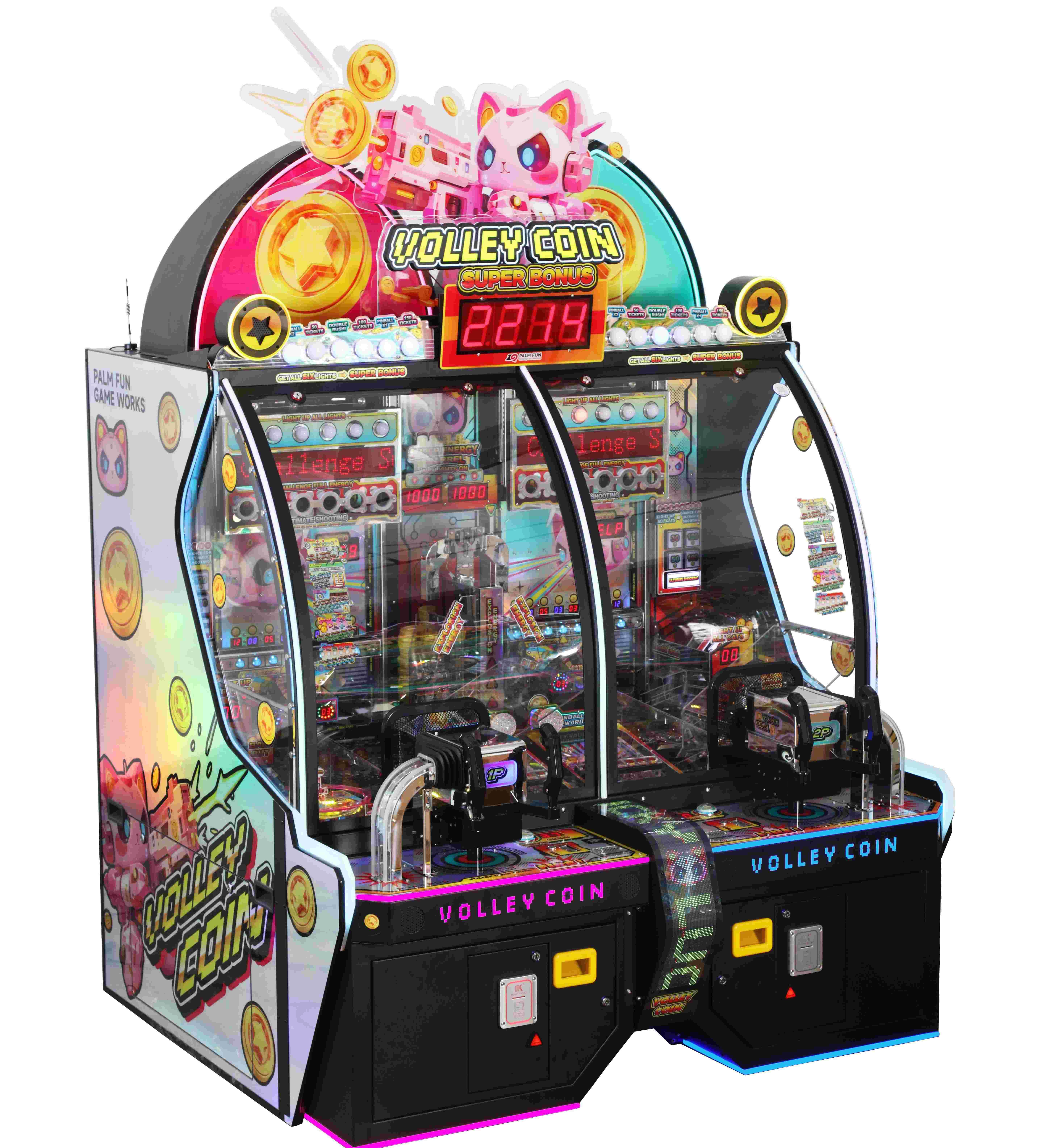
Machine hybride de tir et de poussée de pièces | Machine à tickets d'arcade à pousse-pièces
Volley Coin est une machine d'arcade innovante à tickets, développée par Palm Fun Electronics. Alliant l'excitation d'un jeu de tir de jetons rapide à la rentabilité éprouvée d'une machine à pièces traditionnelle, Volley Coin offre une expérience de jeu inédite et captivante qui séduira les joueurs de tous âges.
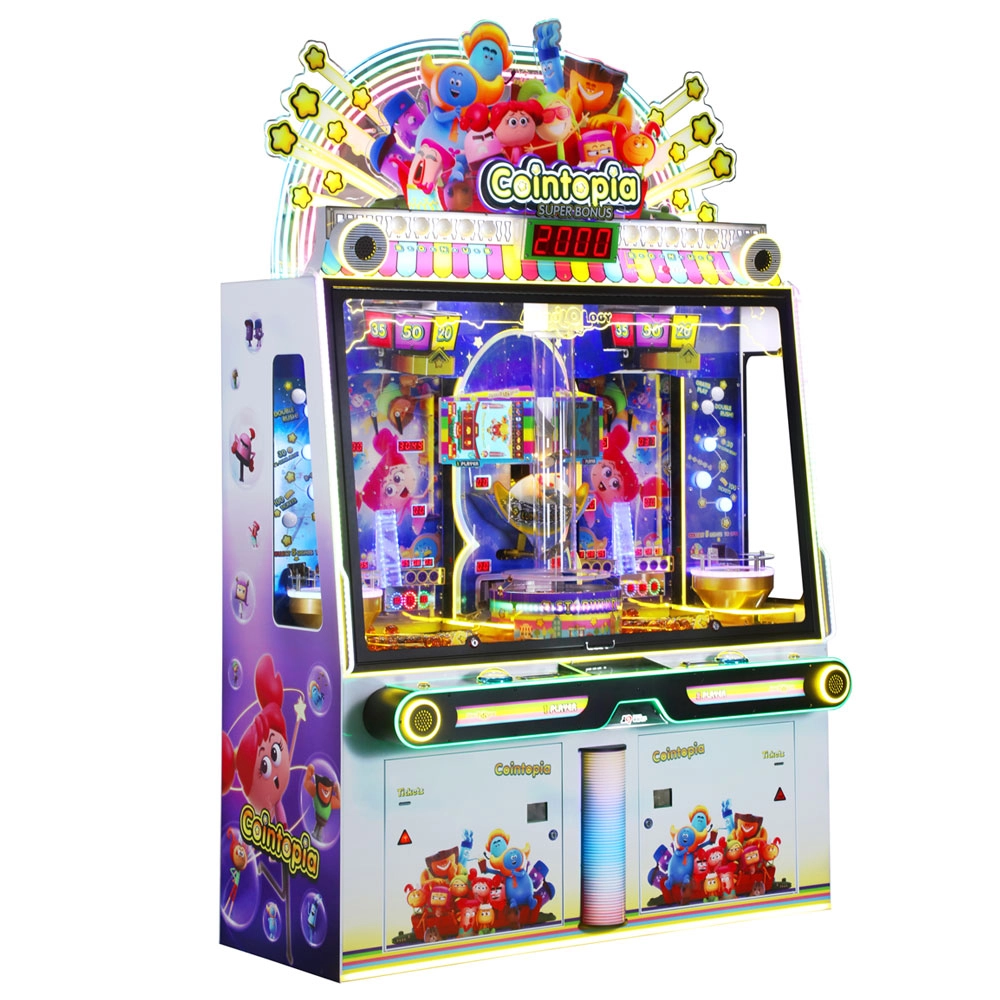
COINTOPIA, Amusez-vous avec les copains du zodiaque dans une utopie
COINTOPIA de PALM FUN est une machine à échanger des tickets passionnante où les joueurs s'amusent avec leurs amis du zodiaque dans un décor utopique. Cette machine à échanger des tickets offre un gameplay captivant et des expériences enrichissantes, idéale pour les centres de loisirs familiaux et les salles d'arcade à la recherche de jeux à échanger de qualité supérieure.
Copyright © 2026 PALM FUN Tous droits réservés. |politique de confidentialité•Termes et conditions|Plan du site
palmfunarcade
Jeu d'arcade Palm Fun
WhatsApp : +8618126837443
Arcade PalmFun
PalmFun_Arcade
Machine de rachat PALM FUN