







Testing and Certifications for Parallel Universe Ball Drop Games
- Compliance frameworks and regulatory pathways for ball-drop amusement devices
- Applicable regional mandates and conformity markings
- Standards that commonly apply to mechanical lottery and coin-operated devices
- Product classification: amusement machine vs. toy vs. vending
- Testing regimes: laboratory methods, factory controls, and field validation
- Third-party laboratory testing: what to request
- Factory acceptance and incoming inspection protocols
- Field acceptance testing and periodic re‑verification
- Risk mitigation: documentation, traceability, and procurement best practices
- Certificates to demand from suppliers
- Audit checkpoints for supplier factory visits
- Contract clauses to transfer and limit liability
- Comparative approaches: traditional inspection vs. certified testing vs. integrated quality systems
- Decision criteria for buyers
- Cost and time trade-offs
- Performance and customer confidence
- Why partner with PALM FUN for certified ball-drop attractions and coin-operated systems
- Proven manufacturing capacity and development engineering
- Compliance-ready product portfolio and test strategy
- Signature models and procurement-friendly options
- Global market presence and post‑sale support
- Frequently Asked Questions
Testing and Certifications for Parallel Universe Ball Drop Games provide procurement teams and operators with the roadmap to ensure electrical safety, electromagnetic compatibility, mechanical durability, and regulatory compliance for modern redemption attractions; this summary covers applicable conformity schemes (CE/UKCA), third-party laboratory verification, ISO-aligned quality systems, and operator due diligence for categories such as classic pinball-style machines and contemporary ball-drop ticket dispensers — buyers should start supplier evaluation by requesting certified test reports and factory quality evidence before contractual commitment. pinball arcade
Compliance frameworks and regulatory pathways for ball-drop amusement devices
Applicable regional mandates and conformity markings
Manufacturers and importers must map products to the relevant regional schemes: CE (European Economic Area) and UKCA (United Kingdom) for sales in Europe and the UK; in North America, UL/ETL listings are typical signals of electrical safety acceptance. Operators should request specific declarations of conformity and harmonized standard references to confirm the product scope. For background on CE obligations, see CE marking - European Commission.
Standards that commonly apply to mechanical lottery and coin-operated devices
Key technical standards for amusement and arcade apparatus cover electrical safety, mechanical guarding, and EMC. Industry references include the International Electrotechnical Commission resources for electrical standards (IEC - International Electrotechnical Commission) and region-specific test protocols from accredited test houses. Buyers should verify that test reports reference the exact standard clause numbers applying to the finished assembly.
Product classification: amusement machine vs. toy vs. vending
Proper product classification affects which directives and standards are applicable. Ball-drop attractions that target adults in entertainment centers typically fall under amusement device classifications, whereas units marketed to children may trigger toy safety regulations — this classification impacts mechanical impact tests, small-part assessments, and labeling requirements. Procurement teams should capture intended use in contract specifications to avoid misclassification at customs or during market surveillance.
Testing regimes: laboratory methods, factory controls, and field validation
Third-party laboratory testing: what to request
When validating a supplier, require full, notarized test reports from accredited labs (ISO/IEC 17025) that include test sample serial numbers, environmental conditions, and pass/fail criteria. Essential laboratory tests include: insulation and earth continuity, dielectric strength, EMC emissions and immunity, ingress protection if exposed to public venues, and mechanical load/fatigue tests for moving components.
Factory acceptance and incoming inspection protocols
In-house quality controls complement lab testing. Effective factory acceptance tests (FAT) should include functional endurance runs (representative duty cycle), torque and spring-force checks for moving elements, and traceability of critical components (motors, control boards). Buyers should request production inspection reports tied to batch numbers and photographic evidence of assembly checkpoints.
Field acceptance testing and periodic re‑verification
Once installed, operators must conduct site verification for power harmonization, EMI environment checks, and safe access assessments. Periodic re‑verification is a risk-based activity: units in high-use family entertainment centers require more frequent inspections than those in low-traffic locations. Maintain a logbook for service records and change-of-component history to support warranty and liability defenses.
Risk mitigation: documentation, traceability, and procurement best practices
Certificates to demand from suppliers
Buyers should request the following baseline documentation before purchase: Declaration of Conformity, ISO/IEC 17025 test reports, manufacturer quality system evidence (ISO 9001 certificate), component datasheets for safety-critical parts, and an FMEA or risk assessment addressing pinch points and ball retention. Confirm certificate authenticity with issuing bodies when in doubt: see ISO 9001 - Quality management.
Audit checkpoints for supplier factory visits
Critical audit items include production layout for segregation of critical processes, calibrated measurement equipment, staff competency records, and spare-parts strategy. During a visit, confirm that the production sample matches the model submitted for testing — any design variance can nullify previous laboratory certification.
Contract clauses to transfer and limit liability
Procurement contracts should include acceptance criteria, warranty terms tied to verified test outputs, recall procedures, and retainage clauses until post‑installation acceptance testing is complete. Include rights for independent testing at supplier expense if field failures indicate potential nonconformance.
Comparative approaches: traditional inspection vs. certified testing vs. integrated quality systems
Decision criteria for buyers
Choosing between reliance on supplier self-inspection, third-party laboratory certification, or full ISO-aligned supplier audits comes down to risk tolerance, purchase volume, and intended venue exposure. High-volume rollouts and major chains should prioritize certified test evidence plus supplier QMS over simple incoming inspection.
Cost and time trade-offs
Third-party testing adds initial cost and turnaround time but reduces downstream liability and unscheduled downtime. Integrated supplier audits and product certification accelerate scale deployment by creating predictable compliance baselines, which improves time-to-market for chains and operators.
Performance and customer confidence
Certified attractions deliver demonstrable safety and reliability metrics that enhance venue reputation and reduce insurance High Qualitys. Operators that purchase certified equipment are better positioned to obtain favorable terms from insurers and municipal regulators.
| Approach | Primary focus | Typical buyer impact | Verification method |
|---|---|---|---|
| Supplier self-inspection | Basic QC during production | Lower upfront cost, higher downstream risk | Factory inspection reports, sample checks |
| Third-party laboratory testing | Objective conformity to safety/EMC standards | Higher certainty; added cost and lead time | ISO/IEC 17025 reports, test certificates |
| Integrated QMS + audits (ISO 9001) | Process control and continuous improvement | Best for large-scale rollouts and brand owners | Audit reports, management review records |
Why partner with PALM FUN for certified ball-drop attractions and coin-operated systems
Proven manufacturing capacity and development engineering
Founded in 2015, PALM FUN specializes in high-quality mechanical lottery machines, coin pusher machines, and raffle machines. Our team of skilled development engineers manages the R&D, design, production, and sales lifecycle to ensure reproducible quality across production runs. Our state-of-the-art factory covers 3,000 square meters and is configured for both pilot builds and scaled manufacturing.
Compliance-ready product portfolio and test strategy
Our product architecture is created with compliance in mind: electrical systems are designed to meet global safety baselines, control electronics are shielded and filtered to pass EMC regimes, and mechanical subassemblies are validated through fatigue testing and long-run trials. Buyers should evaluate our model-specific test documentation during the RFQ stage to align acceptance criteria.
Signature models and procurement-friendly options
PALM FUN offers a range of certified entertainment machines suitable for location-based entertainment operators and distributors, including high-attraction coin pusher units and interactive redemption installations. Inspect specific product pages for technical data and certification references: Coin Pusher Arcade Ticket Redemption Machine and Larva Series Coin Pusher Arcade. For company background, see our corporate profile at High Quality Redemption Arcade MachinesManufacturer.
Global market presence and post‑sale support
With products recognized in over 50 countries, PALM FUN supports clients with documentation packages, spare-parts kits, and service training to reduce Mean Time To Repair (MTTR) and preserve venue uptime. Our vision is to become the world's leading manufacturer of redemption game machines; purchasers can reference our documented test evidence during procurement to satisfy stakeholders and insurers.
For authoritative background on amusement device safety, design, and conformity frameworks, consult general resources such as Arcade game - Wikipedia, UL - Safety science, and IEC - International Electrotechnical Commission.
Operators assessing new investments should require certificates, ISO-aligned quality evidence, and third-party test reports in the RFQ — this approach reduces deployment risk and protects long-term revenue streams.
Frequently Asked Questions
What certifications are typically required for ball-drop redemption machines sold in Europe?
For sales in the European market, buyers should expect CE marking supported by test reports that reference applicable harmonized standards for electrical safety and EMC. Additional national requirements may apply depending on venue and target user age group; confirm classification as an amusement device or toy early in procurement.
How can a buyer verify the authenticity of a supplier's test reports?
Verify that test reports come from ISO/IEC 17025-accredited laboratories, confirm serial numbers and sample descriptions listed in the report, and cross-check the issuing laboratory's accreditation status on its national accreditation body's website. When in doubt, request a notarized copy and direct confirmation from the lab.
What documentation should be included in an RFQ for a coin-operated ball-drop attraction?
An RFQ should request the Declaration of Conformity, third-party laboratory test reports (electrical safety, EMC), ISO 9001 evidence for the supplier, component datasheets for safety-critical parts, FAT protocols, and a spare-parts strategy with lead times.
How often should installed amusement machines be re-verified on site?
Re-verification frequency should be risk-based: high-usage family entertainment centers typically require quarterly to semi-annual inspections, while low-traffic venues may be on an annual schedule. Inspections should cover electrical connections, moving-part wear, and any software/firmware updates impacting safety functions.
What are the cost and time implications of requiring third-party certification versus relying on supplier inspection?
Third-party certification increases upfront costs and lead time due to lab scheduling and sample preparation, but it reduces downstream risk, lowers the probability of field failures, and often improves insurer and regulator confidence. For large deployments, certification and supplier audits are usually cost-effective over the equipment lifecycle.
Recommended for you
Everything You Need to Know About full tilt arcade & pinball Miami private label
Custom Arcade Machines for a Unique Gaming Experience | PALM FUN
Wholesale coin pusher arcade machine manufacturer manufacturer and supplier
OEM vs ODM: Custom Options for Parallel Universe Ball Drop
FAQs
How to place the redemption machines in a right place?
1,Ensure that the placement and layout of the equipment are distinct and centralized.
2,Keep noise levels low and avoid having a line of sight that spans too far to prevent players from easily taking in everything, which may slow down their movement.
3,Avoid clustering high-ticket payout machines and disperse machines of the same style.
4,Mix popular machines with less popular ones and avoid placing all popular machines together.
What details should be paid attention to in the operation of redemption machines?
① Machine parameter adjustments.
② Equipment performance and gameplay.
③ Decoration and promotion of the area and equipment.
④ Machine placement locations.
⑤ Selection of prizes.
2. The primary operational techniques for redemption machines are in the attractiveness of the gameplay, maintaining a reasonable payout rate, and creating an engaging atmosphere. Depending on the season and market changes, promotional activities should be carried out with a balance, analysis, and follow-up. Therefore, you can consider the following operational methods:
① Collaborate with several venues or businesses to distribute promotional materials to enhance external visibility and interaction.
② Conduct targeted promotional activities to retain returning customers.
③ Organize regular member events to ensure member attraction and consistent customer base. For example, offering extra lottery rewards for a certain amount of tokens deposited or giving a certain number of lottery tickets(reward points) when a membership card is issued.
④ Strengthen interaction with neighboring businesses within the commercial district.
⑤ Organize selective activities for children and offer special deals for exchanging unique children-oriented prizes.
3. Setting parameters correctly:
4.New machine arrival -- Familiarizing with the game--Initial parameter control--Promotional --ctivities and advertising--Adjusting parameters based on the number of players--Multiple adjustments of parameters--Increased popularity--Profitability--Reinvestment.
Note: Data analysis should be conducted weekly to promptly understand the ticket payout probability for each redemption machine. In case of any abnormal situations, swift follow-up and troubleshooting are essential to identify the causes and rectify the issues.
Research & Development, how hard is the birth of one new redemption machines?
How to choose the exchange gifts of the tickets(reward points)?
2. Gifts should be diverse. This refers to the variety of items available, providing players with more choices. Everyone's preferences are different, especially adults who have higher expectations for gifts. The venue should strive to meet the diverse needs of these players.
3. Gifts should be fashionable. The younger generation that follows trends is very interested in the hottest items of the moment. If the venue can keep up with the latest trends, it can attract the majority of consumers.
4. Gifts should be innovative. Especially during holidays and seasons, it's a good idea to try out new approaches, creating a competitive advantage with unique offerings. For example, the current trend of combining pop culture and blind box culture.
What is the character of mechanical redemption machine?
You may also like
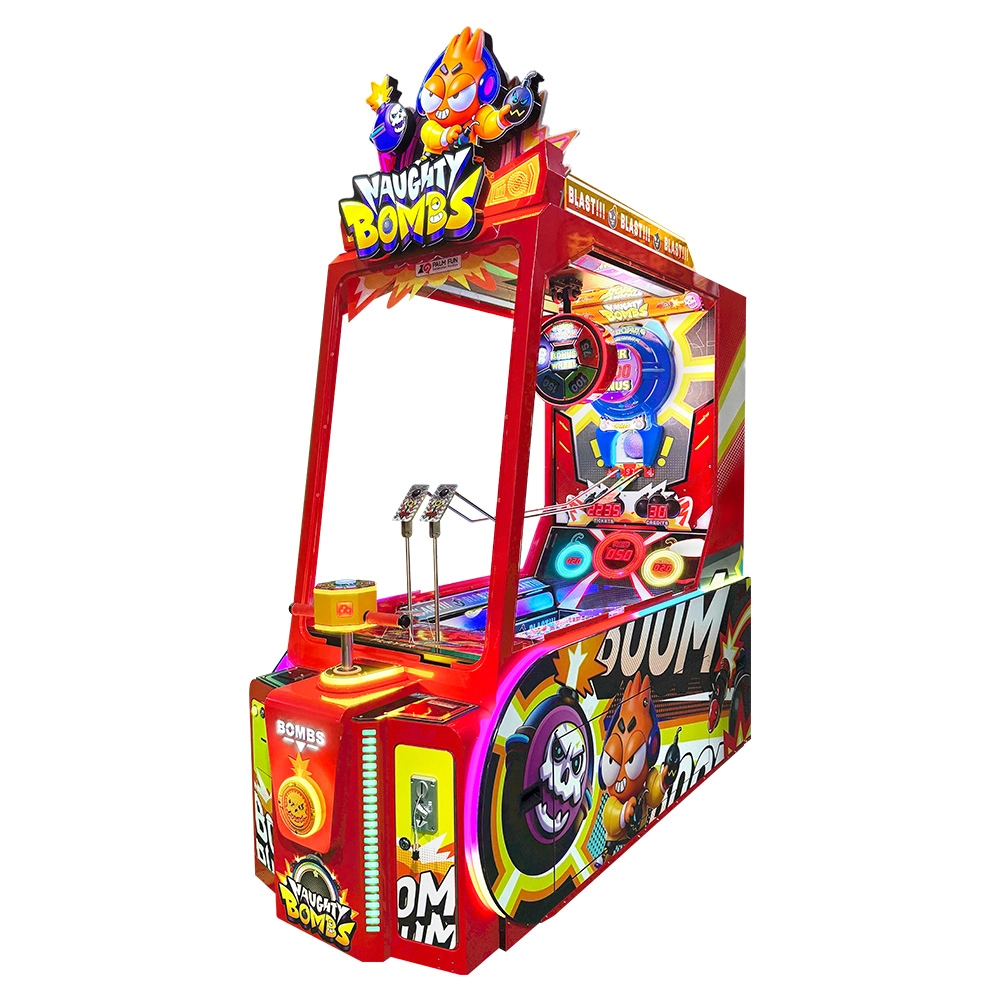
Naughty Bombs Ball Drop Redemption Arcade Game Machine
Naughty Bombs is a ball-drop redemption arcade game featuring rolling-ball gameplay, colored targets, ticket prizes, surprise bonus rewards, lighting and sound effects. Players use timing to launch and drop balls toward colored target areas. The product is presented for arcade, family entertainment center and other entertainment-venue projects, with customizable 110V / 220V AC voltage configuration.
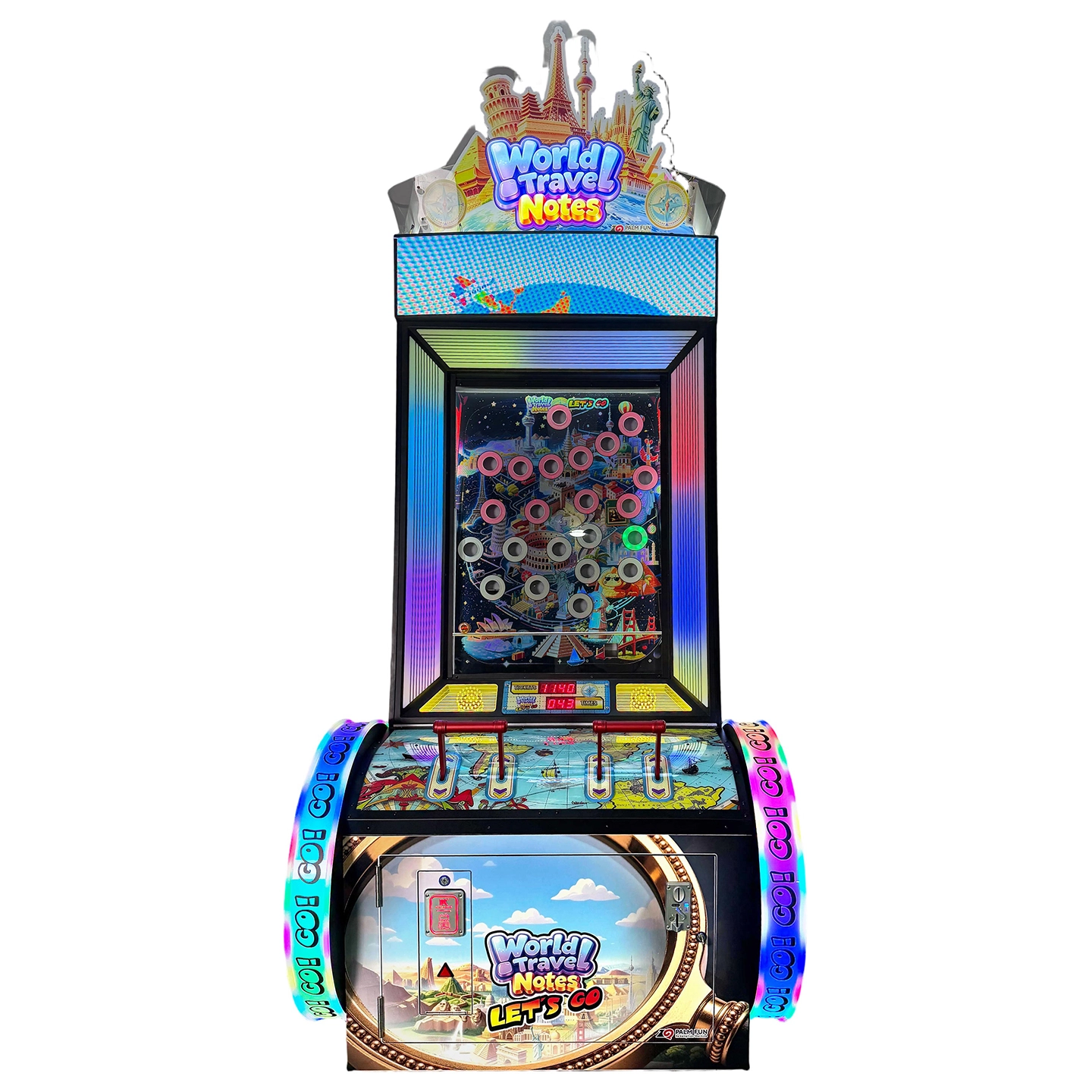
World Travel Notes – Balance Ball Redemption Arcade Game
World Travel Notes is a skill-based balance ball redemption game with a fun world-travel theme. Players use two handles to control the balance bar and guide the ball into each target hole. As the game progresses, the targets become more challenging, leading players toward the final grand prize. With colorful world-travel graphics, dynamic RGB lighting, a live score display, and progressive difficulty, World Travel Notes is designed to attract attention and encourage repeat play in arcades, FECs, shopping malls, and other entertainment venues.
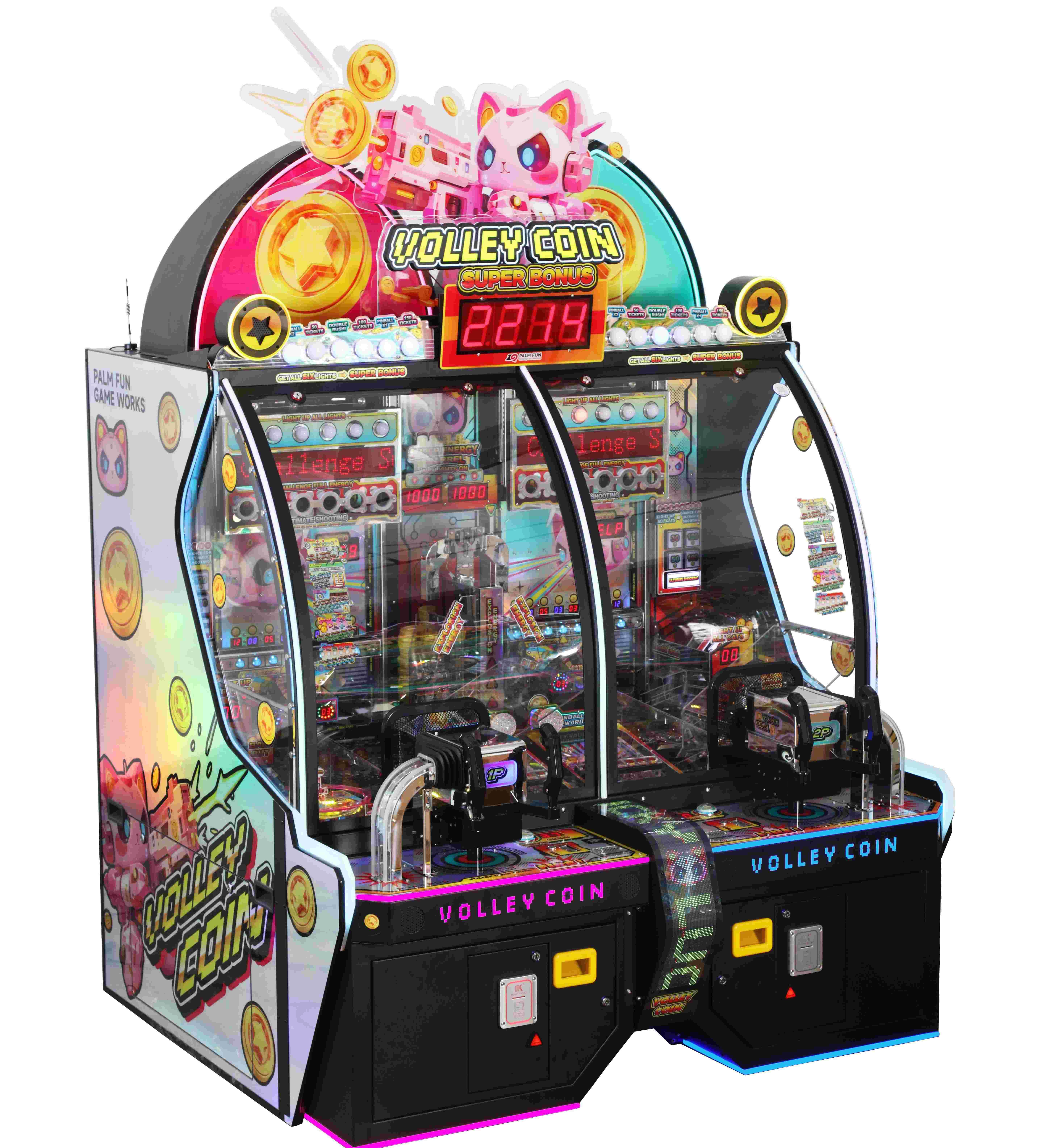
Hybrid Shooting & Pushing | Coin Pusher Arcade Ticket Redemption Machine
Volley Coin is an innovative arcade ticket redemption machine developed by Palm Fun Electronics. Combining the excitement of a fast-paced token shooter game with the proven earning power of a traditional coin pusher machine, Volley Coin offers a fresh and engaging gameplay experience that appeals to players of all ages.
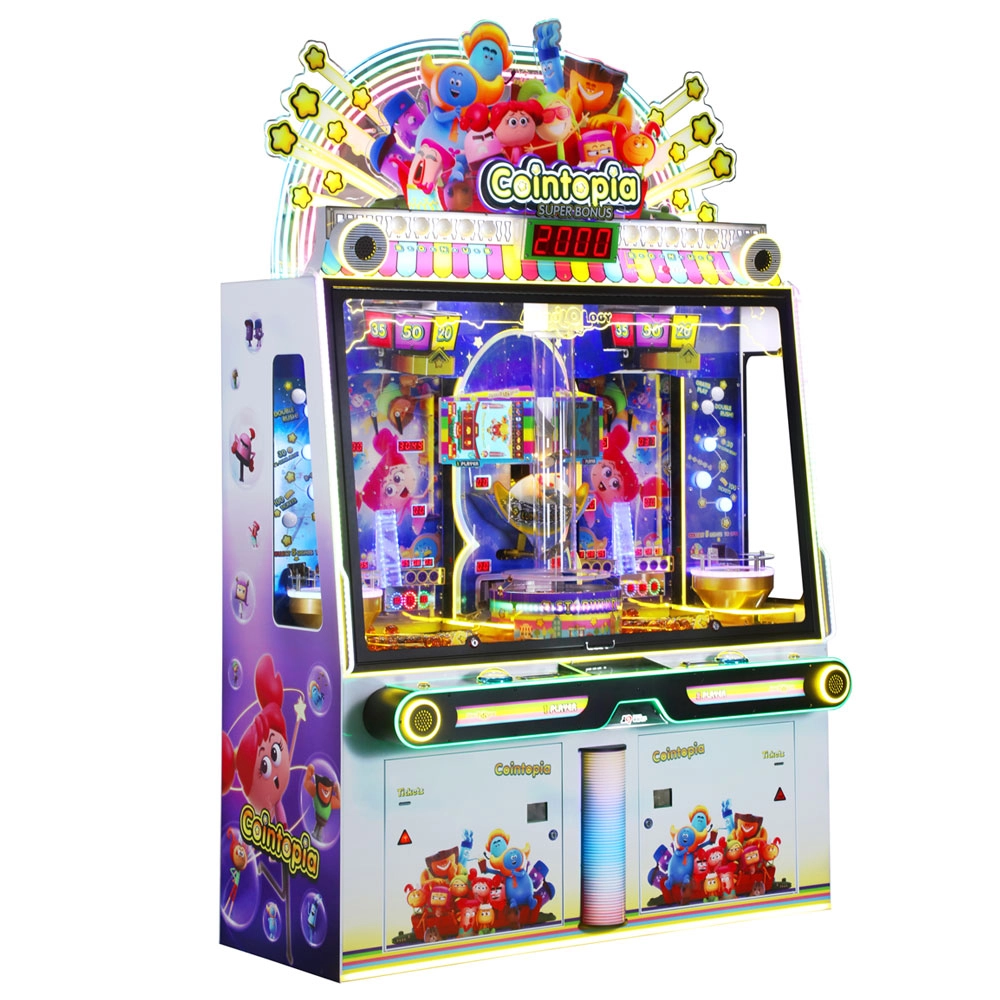
COINTOPIA, Have Fun Together With The Zodiac Buddies in an Utopia
COINTOPIA by PALM FUN is an exciting redemption game machine where players enjoy fun with zodiac buddies in a utopia setting. This ticket redemption machine offers engaging gameplay and rewarding experiences, perfect for family entertainment centers and arcades seeking top-quality redemption games.

Copyright © 2026 PALM FUN All Rights Reserved. | Privacy Policy • Terms and Conditions | Sitemap
palmfunarcade
Palm Fun Arcade Game
Whatsapp: +8618126837443
PalmFun Arcade
PalmFun_Arcade
PALM FUN Redemption Machine