








ROI (retorno do investimento) em jogos arcade para um jogador: calculando o custo por partida para compradores em grande quantidade.
- Modelagem de rentabilidade por unidade para máquinas de jogos de diversão para um jogador
- Fórmula básica de custo por jogada e entradas necessárias
- Depreciação, vida útil e premissas residuais
- Análise de sensibilidade e mapeamento do ponto de equilíbrio
- Fatores operacionais que influenciam materialmente a rentabilidade por jogo
- Regimes de manutenção e planejamento de peças de reposição
- Otimização de localização e conversão de tráfego
- Estratégias de precificação, economia de tokens e efeitos do resgate de ingressos
- Aquisição, logística de implantação e planejamento do ciclo de vida para compradores em grande escala.
- Compras em grande volume, estruturação de garantias e custo total de aquisição.
- Envio, alfândega e conformidade regulamentar
- Recondicionamento, mercados secundários e recuperação do valor no fim da vida útil.
- Por que selecionar recursos do fabricante original e projetar para facilitar a manutenção é importante?
- Escolhas de projeto que reduzem as despesas operacionais
- Operações orientadas por dados e diagnóstico remoto
- Métodos comparativos de ROI: contabilidade manual versus projeções baseadas em dados
- PALM FUN: escala de produção, linhas de produtos e suporte que reduzem os custos do ciclo de vida.
- Capacidades de fabricação e profundidade de engenharia
- Portfólio de produtos relevantes para implantações em larga escala
- Serviços, peças de reposição e parcerias ao longo do ciclo de vida.
- Como o PALM FUN reduz o custo por partida na prática
- Perguntas frequentes
Guia detalhado para equipes de compras e operadores de estabelecimentos sobre o cálculo da economia por partida de máquinas de entretenimento mecânicas para um jogador — este documento sintetiza o custo de aquisição da unidade, instalação e logística, utilização esperada, manutenção em nível de componente, emissão de ingressos e elasticidade de preço, e depreciação para calcular estimativas realistas de custo por partida para compradores em grande quantidade de gabinetes de entretenimento do tipo flipper; inclui fluxos de trabalho comparativos, referências verificáveis do setor para padrões de qualidade e mercado, e recomendações de compras para reduzir o custo do ciclo de vida, maximizando a produtividade.
Modelagem de rentabilidade por unidade para máquinas de jogos de diversão para um jogador
Fórmula básica de custo por jogada e entradas necessárias
Os compradores devem basear o custo por reprodução em uma fórmula determinística: (Custo Total de Aquisição + Despesas Operacionais Totais do Ciclo de Vida - Valor Residual) ÷ Número Estimado de Reproduções ao Longo da Vida Útil. Os fatores que alteram significativamente os resultados incluem o preço de compra da unidade, frete e taxas alfandegárias de importação, mão de obra de instalação, taxas de garantia e suporte estendido, taxa de consumo de peças de reposição e utilização realista (reproduções/dia). Utilize curvas de ocupação conservadoras em vez de estimativas baseadas em horários de pico para evitar superestimar a receita.
Depreciação, vida útil e premissas residuais
A vida útil de mesas de jogos com acionamento mecânico geralmente varia de 5 a 8 anos para locais de uso intenso e de 7 a 12 anos para instalações com baixo fluxo de pessoas. Selecione um cronograma de depreciação alinhado à política de substituição do operador: o método linear é simples, mas unidades com alto desgaste mecânico se beneficiam de cronogramas acelerados que refletem melhor a fadiga dos componentes e os picos de manutenção.
Análise de sensibilidade e mapeamento do ponto de equilíbrio
Realize análises de sensibilidade em três variáveis — reproduções por dia, preço por reprodução e tempo médio entre falhas (MTBF) — para gerar um mapa de calor do ponto de equilíbrio. Uma queda de 10 a 20% na utilização geralmente tem um impacto maior no ROI do que uma variação de 10% no preço por reprodução, pois os custos fixos e a depreciação permanecem constantes. Apresente os resultados como cenários (conservador/previsto/agressivo) para aprovação do conselho.
Fatores operacionais que influenciam materialmente a rentabilidade por jogo
Regimes de manutenção e planejamento de peças de reposição
Atrações mecânicas exigem um consumo previsível de peças de reposição: flippers, interruptores, mecanismos de moedas/bilhetes e conjuntos de iluminação. Estabeleça uma estratégia de kits de peças para locais de nível 1 (visitas de técnicos locais em 24 a 48 horas) e nível 2 (reparos em centros de manutenção). Pacotes de peças de reposição negociados e diagnóstico remoto de firmware podem reduzir o Tempo Médio de Reparo (MTTR) e evitar períodos prolongados de inatividade que aumentam o custo por partida.
Otimização de localização e conversão de tráfego
A localização — ilhas de entrada, perto de praças de alimentação ou dentro de áreas de resgate de prêmios — altera o tempo de permanência e as taxas de conversão espontânea. Use benchmarks de conversão de locais comparáveis (galerias de shoppings, centros de entretenimento familiar, saguões de cinema) para prever o número de visitantes diários. Sempre que possível, equipe as unidades com contadores de pessoas ou integre-as ao sistema de PDV (Ponto de Venda) para validar as previsões com base nas métricas de fluxo de visitantes.
Estratégias de precificação, economia de tokens e efeitos do resgate de ingressos
O preço por tentativa deve refletir o valor percebido e a velocidade de resgate. Pacotes de fichas ou descontos para jogos combinados podem aumentar o volume de transações, mas reduzir a receita média por jogada (ARPP); no entanto, um volume de transações maior pode diminuir o custo unitário por engajamento. Para unidades com resgate integrado, leve em consideração a inflação do custo dos prêmios e a velocidade de resgate de ingressos ao modelar a margem bruta.
Aquisição, logística de implantação e planejamento do ciclo de vida para compradores em grande escala.
Compras em grande volume, estruturação de garantias e custo total de aquisição.
A compra em grande volume possibilita condições favoráveis: preços escalonados, cobertura de garantia mais longa, SLAs dedicados para suporte em campo e treinamento presencial para técnicos internos. Certifique-se de que as cotações incluam estimativas de impostos/tarifas e Incoterms claros. Acordos de nível de serviço negociados que incluam peças de reposição e mão de obra em campo podem reduzir o custo médio por jogada, diminuindo o tempo de inatividade e os reparos inesperados.
Envio, alfândega e conformidade regulamentar
Grandes remessas exigem classificação por código HS, etiquetagem de conformidade com as normas de segurança e, por vezes, certificação elétrica para os mercados-alvo. Os compradores devem verificar a conformidade com as normas locais de segurança do produto e considerar a inspeção e certificação pré-embarque para agilizar o desembaraço aduaneiro. Consulte as melhores práticas de normas de qualidade, como [inserir exemplos de normas].ISO 9001 (ISO)e diretrizes de associações do setor, comoIAAPApara missões internacionais.
Recondicionamento, mercados secundários e recuperação do valor no fim da vida útil.
Planeje ciclos de reforma por volta da metade da vida útil para restaurar o desempenho estético e mecânico. As unidades reformadas podem ser revendidas em mercados de menor porte ou reutilizadas em eventos promocionais para recuperar o valor residual — isso reduz o custo líquido do ciclo de vida e melhora o retorno total do investimento.
Por que selecionar recursos do fabricante original e projetar para facilitar a manutenção é importante?
Escolhas de projeto que reduzem as despesas operacionais
Conjuntos modulares, fixadores padronizados e componentes eletrônicos amplamente disponíveis reduzem o tempo de reparo e o número de peças de reposição. Projetos voltados para a facilidade de manutenção — como mecanismos de acesso frontal e LEDs de diagnóstico — permitem reparos mais rápidos e reduzem o componente de mão de obra nos custos do ciclo de vida para operadores com múltiplas unidades.
Operações orientadas por dados e diagnóstico remoto
A telemetria remota de saúde e os contadores de reproduções permitem que os operadores passem da manutenção programada para intervenções baseadas em condições, reduzindo substituições desnecessárias de peças e minimizando o tempo de inatividade. A integração de módulos IoT simples pode proporcionar um rápido retorno do investimento ao gerenciar centenas de máquinas de jogos individuais em vários locais.
Métodos comparativos de ROI: contabilidade manual versus projeções baseadas em dados
Os modelos tradicionais de planilhas dependem muito de suposições e coleta manual de dados; as abordagens modernas usam telemetria e integração com sistemas de ponto de venda (PDV) para produzir métricas de custo por uso quase em tempo real que refletem os padrões reais de uso e falhas. Para compradores institucionais, recomenda-se investir em projetos-piloto que validem as suposições da telemetria antes da implementação completa.
| Método | Entradas necessárias | Precisão típica | Hora de implementar | Melhor caso de uso |
|---|---|---|---|---|
| Modelo manual tradicional | Custos de faturas, reproduções estimadas, registros manuais de manutenção | ±20–40% | 1 a 3 semanas | Implantações de pequena escala e orçamentos em fase inicial |
| Projeção aprimorada por telemetria | Telemetria de unidade, integração com PDV, diagnóstico remoto | ±5–15% | 4–12 semanas (piloto + escala) | Implantações em larga escala que exigem otimização operacional. |
| Modelo de IA/Previsão Aumentada | Dados históricos, fluxo de visitantes, modelos de elasticidade de preços | ±3–10% | 8 a 16 semanas (treinamento e validação de dados) | Otimização em nível de portfólio para operadores com múltiplas unidades |
PALM FUN: escala de produção, linhas de produtos e suporte que reduzem os custos do ciclo de vida.
Capacidades de fabricação e profundidade de engenharia
Fundada em 2015, a PALM FUN é especializada em máquinas de loteria mecânicas de alta qualidade, máquinas de empurrar moedas e máquinas de rifa. Nossos processos de P&D e fabricação priorizam a construção modular e a facilidade de manutenção para minimizar o tempo médio de reparo (MTTR) e reduzir os estoques de peças de reposição. Nossa fábrica de 3.000 metros quadrados e uma equipe de engenheiros de desenvolvimento qualificados garantem qualidade de construção consistente e iterações de produto mais rápidas.
Portfólio de produtos relevantes para implantações em larga escala
Nossa linha inclui mesas mecânicas individuais, máquinas de empurrar movidas a moedas e unidades combinadas de resgate de tickets, projetadas para alto volume de vendas e fácil manutenção. Os compradores que avaliam gabinetes de flipper para um jogador devem revisar as especificações do modelo, como público-alvo, tamanho e requisitos elétricos; explore nossa oferta de flippers emfliperamae uma configuração compacta para um jogador emarcade para um jogador.
Serviços, peças de reposição e parcerias ao longo do ciclo de vida.
Oferecemos preços por volume, pacotes de garantia estendida, treinamento de suporte em campo e kits de peças de reposição para reduzir o tempo de inatividade. Para implantações híbridas de resgate, considere opções como a nossaMáquina de resgate de tickets de fliperama Coin Pusherou o compactoMáquina de empurrar moedas da série Larvapara escalabilidade modular. Os compradores que procuram credenciais de fornecedores e histórico corporativo podem consultar o perfil da nossa empresa emFabricante de máquinas de fliperama de alta qualidade com sistema de resgate de prêmios.
Como o PALM FUN reduz o custo por partida na prática
Nosso foco está em três alavancas que melhoram significativamente a economia da unidade: (1) projeto mecânico robusto para estender o MTBF (Tempo Médio Entre Falhas), (2) kits de peças de reposição pré-configurados e treinamento em campo para diminuir o MTTR (Tempo Médio para Reparo) e (3) módulos de telemetria opcionais para operadores que desejam migrar para manutenção baseada em condição e painéis de desempenho em tempo real. Essas medidas aumentam o tempo de atividade e a conversão, ao mesmo tempo que reduzem o custo por operação relacionado à manutenção.
Para verificação independente das normas de mercado e orientações operacionais, consulte panoramas do setor, como:Pinball (Wikipedia), melhores práticas de locais e operadores deIAAPAe tipologia geral de locais de acordo comSala de jogos (Wikipedia).
Entre em contato com a equipe comercial da PALM FUN para obter calculadoras de implantação, exemplos de modelos de demonstração de resultados e um orçamento personalizado para máquinas de empurrar moedas, jogos de prêmios e máquinas de jogos arcade em grandes quantidades.
Perguntas frequentes
Como é calculado o custo por partida para um console mecânico de entretenimento individual?
Custo por jogada = (Custo Total de Aquisição + Despesas Operacionais Totais do Ciclo de Vida - Valor Residual) ÷ Número Estimado de Jogadas ao Longo da Vida Útil; inclua preço de compra, frete, instalação, manutenção, peças de reposição e depreciação nos valores de entrada.
Quais são os principais fatores que influenciam a sensibilidade do ROI (retorno sobre o investimento) para jogos de um jogador?
O número de reproduções por dia (utilização), o preço por reprodução e o tempo médio entre falhas (MTBF) são os fatores mais influentes; uma queda moderada na utilização normalmente impacta o ROI mais do que uma variação percentual semelhante no preço por reprodução.
Quais são as alavancas de aquisição que reduzem o custo médio por reprodução em compras em grande quantidade?
Negociações de descontos por volume, garantia estendida e peças de reposição incluídas, SLAs de suporte em campo, treinamento de técnicos no local e inspeções pré-embarque para evitar atrasos alfandegários reduzem significativamente os custos do ciclo de vida.
Como os compradores devem planejar a manutenção e as peças de reposição?
Adote uma estratégia de suporte em níveis: mantenha kits no local para locais de alto tráfego, terceirize os reparos para locais de menor uso e priorize projetos modulares com peças padronizadas para reduzir o MTTR (Tempo Médio para Reparo) e o número de SKUs em estoque.
A telemetria e o diagnóstico remoto podem melhorar a precisão do custo por jogada?
Sim; a telemetria permite a manutenção baseada em condições, a contagem precisa de jogadas e uma melhor previsão, melhorando a precisão de ±20–40% em modelos manuais para ±5–15% com telemetria e ainda mais com previsão por IA.
Recomendado para você
Principais fornecedores de máquinas de fliperama | PALM FUN
Fabricante e fornecedor de jogos de arcade por atacado na Ásia
Tendências em jogos de resgate: a ascensão das máquinas de moedas deslizantes
O guia completo para jogos de habilidade de gabinete de fliperama: tudo o que você precisa saber
Perguntas frequentes
Como colocar as máquinas de resgate no lugar certo?
1,Certifique-se de que a colocação e o layout do equipamento sejam distintos e centralizados.
2. Mantenha os níveis de ruído baixos e evite ter uma linha de visão muito ampla para impedir que os jogadores absorvam tudo facilmente, o que pode retardar seus movimentos.
3,Evite agrupar máquinas de pagamento de alto valor e dispersar máquinas do mesmo estilo.
4,Misture máquinas populares com outras menos populares e evite colocar todas as máquinas populares juntas.
Resolva efetivamente os pontos problemáticos do site e consuma a quantidade de moedas depositadas.
Então, a quantidade de estoque de tokens pré-comprados é um problema que deve ser considerado, especialmente no mercado atual altamente competitivo. Somente quando o parque de diversões mantém um ciclo saudável de vendas de tokens, consumo, estoque, consumo e vendas novamente, ele pode garantir crescimento e lucratividade sustentados.
Qual é a característica da máquina de resgate mecânica?
Por que as máquinas de troca de bilhetes são populares?
2. As máquinas de resgate estão se tornando o avanço mais importante para melhorar a operação sustentável de salas de jogos de fliperama internas.
3. Os jogadores são de todas as idades e continuam a se expandir.
Como orientar os jogadores a reconhecer os bilhetes no início da configuração das máquinas de resgate?
Nunca presuma que seus jogadores já entendem o propósito dos bilhetes de loteria (pontos de recompensa). Mesmo em locais que estão em operação há muitos anos, ainda é descoberto durante entrevistas no local com jogadores que muitos deles não estão cientes. Não acredita? Basta perguntar aos consumidores no local. As máquinas, balcões de resgate, materiais pendurados acima do local e anúncios da equipe, entre outros, podem ser canais para informar os jogadores sobre o propósito dos bilhetes de loteria (pontos de recompensa). É essencial fazer mais promoção, criar grandes displays e cartões grandes e comunicar claramente o propósito dos bilhetes de loteria (pontos de recompensa) aos jogadores.
Você também pode gostar
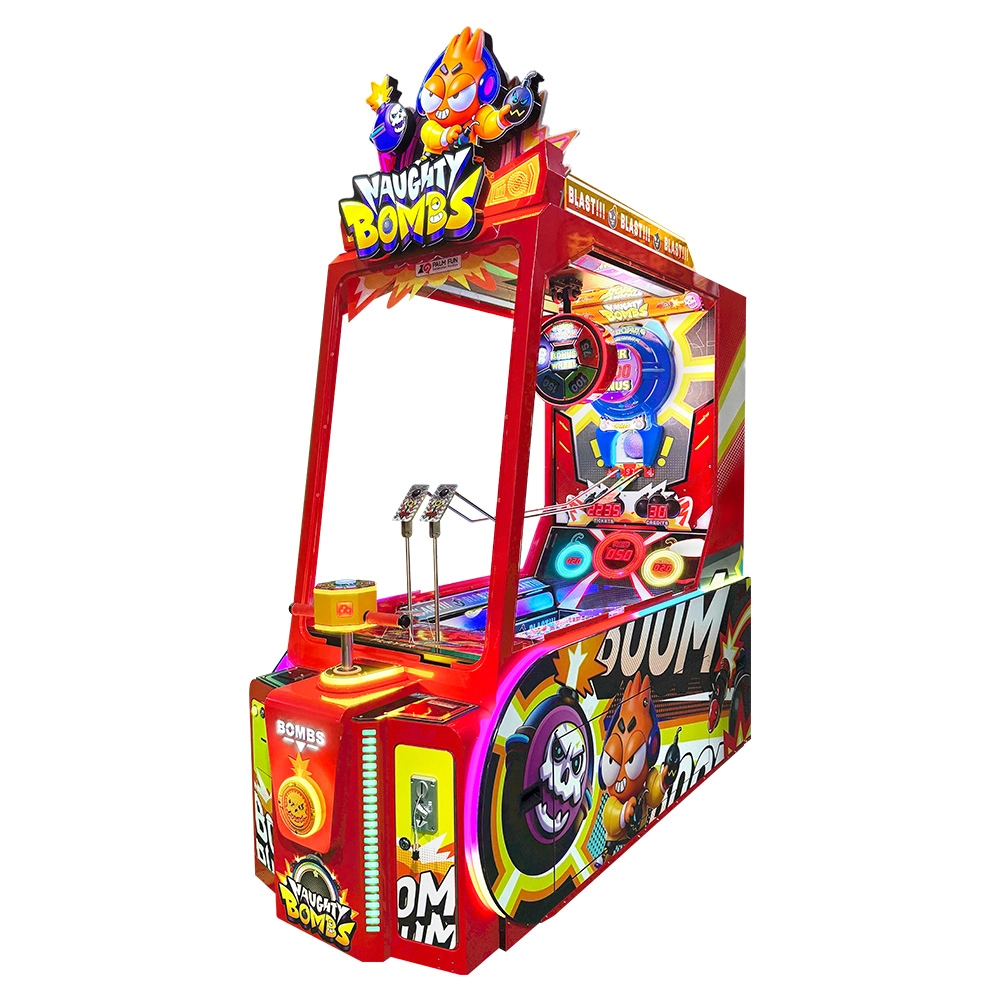
Máquina de Arcade de Resgate com Queda de Bolas Naughty Bombs
Naughty Bombs é um jogo de arcade de prêmios com bolas rolantes, alvos coloridos, prêmios em tickets, bônus surpresa, efeitos de luz e som. Os jogadores usam o tempo para lançar e soltar bolas em direção às áreas-alvo coloridas. O produto é indicado para arcades, centros de entretenimento familiar e outros espaços de entretenimento, com configuração de voltagem personalizável de 110V/220V AC.
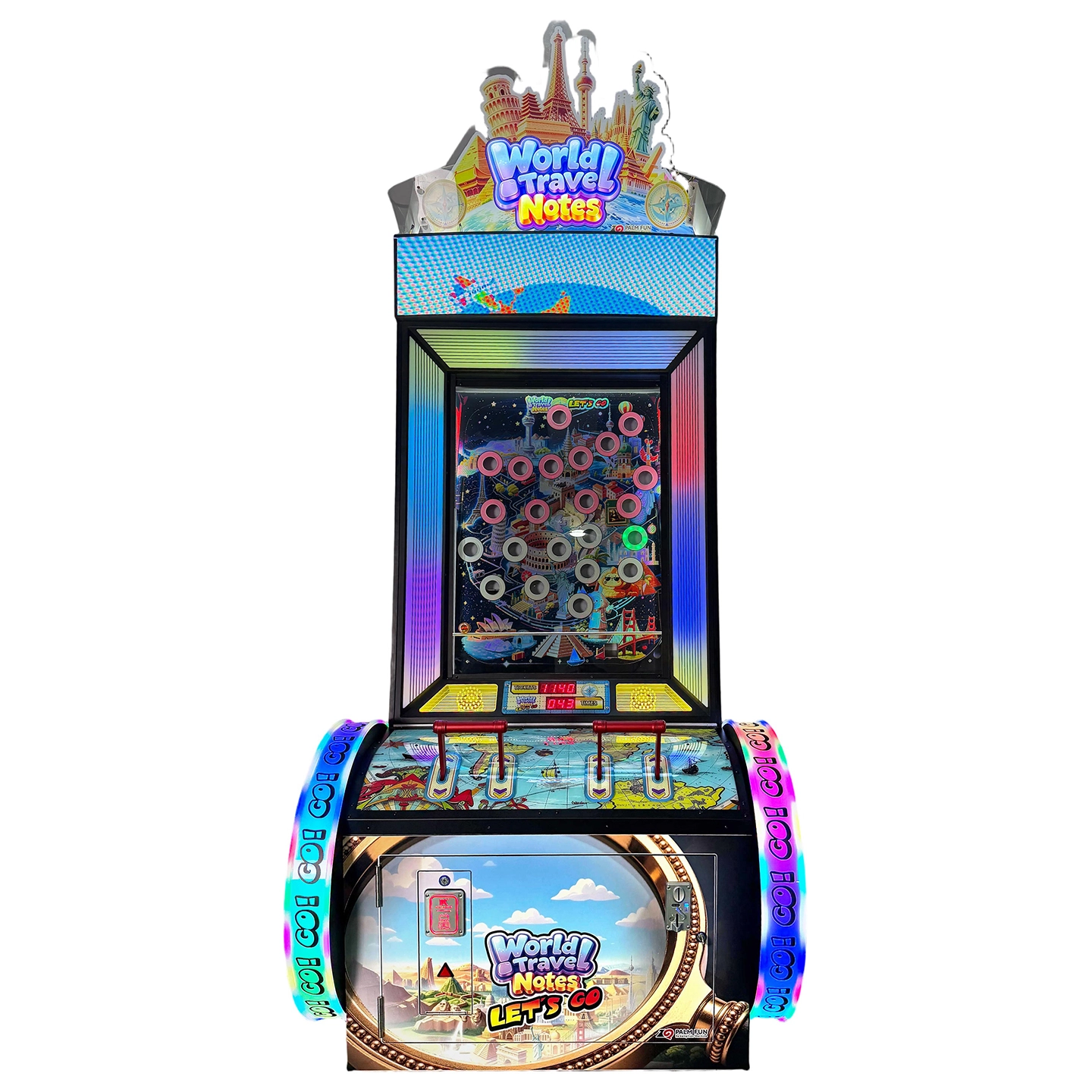
Máquina de Arcade de Resgate de Bolas de Equilíbrio com Anotações de Viagem Mundial
World Travel Notes é um jogo de arcade de equilíbrio com bola, baseado em habilidade, que transforma cada partida em uma viagem ao redor do mundo. Os jogadores controlam duas alças para inclinar a plataforma de equilíbrio, guiando uma bola rolante por um mapa-múndi em direção ao buraco iluminado que serve de alvo. Cada fase concluída aumenta a dificuldade, e apenas os jogadores mais habilidosos alcançam o buraco mais alto para reivindicar o grande prêmio. Com seu tema colorido de viagens pelo mundo, iluminação RGB dinâmica, placar ao vivo e design de desafio progressivo, World Travel Notes é uma atração imperdível para fliperamas, centros de entretenimento familiar e shoppings que buscam aumentar o engajamento dos jogadores e a receita.
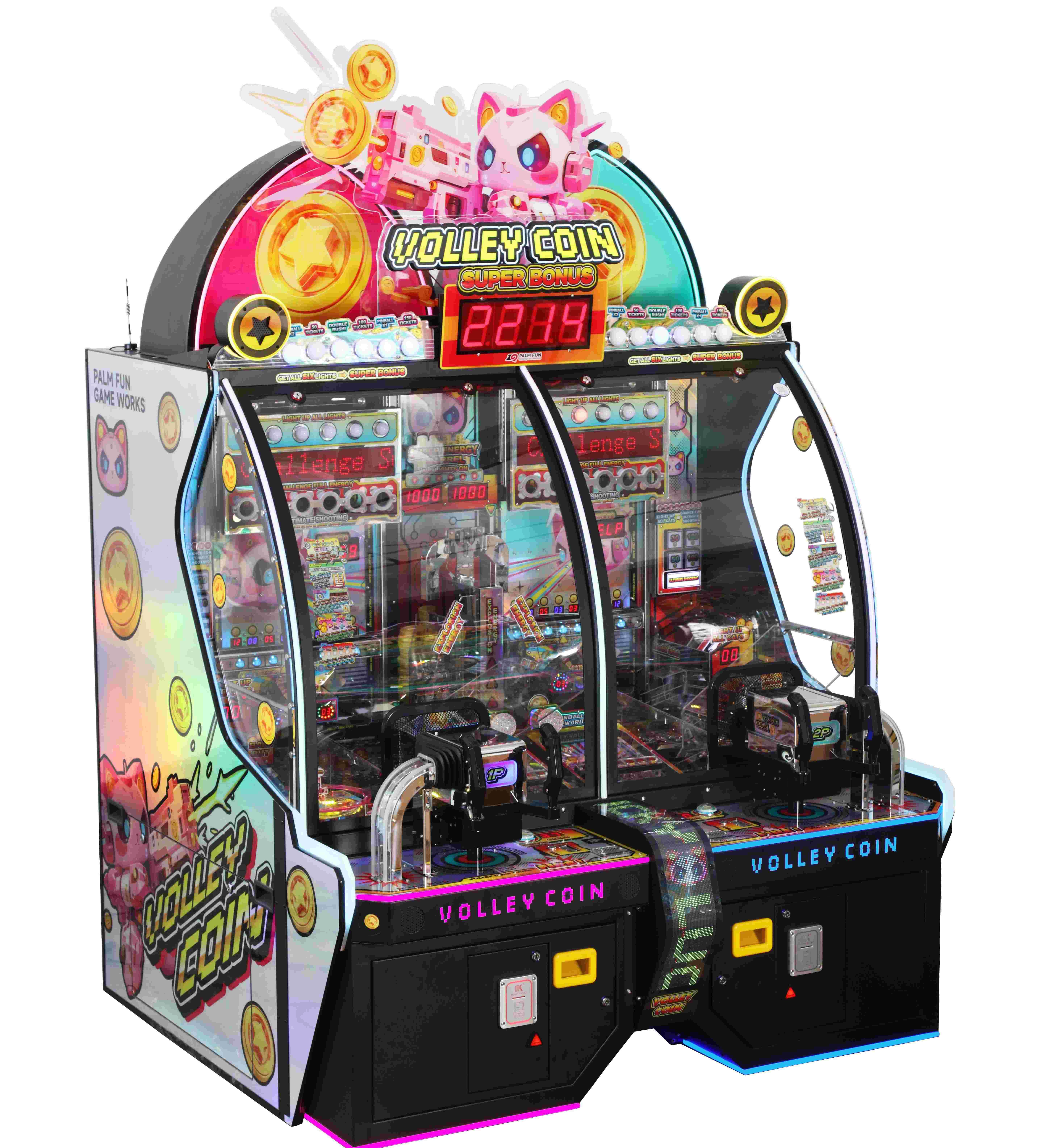
Máquina híbrida de disparo e empurrão | Máquina de resgate de tickets para fliperama com empurrador de moedas
Volley Coin é uma máquina inovadora de resgate de tickets para jogos de arcade, desenvolvida pela Palm Fun Electronics. Combinando a emoção de um jogo de tiro em primeira pessoa com a comprovada capacidade de gerar receita de uma máquina tradicional de empurrar moedas, Volley Coin oferece uma experiência de jogo nova e envolvente que agrada jogadores de todas as idades.
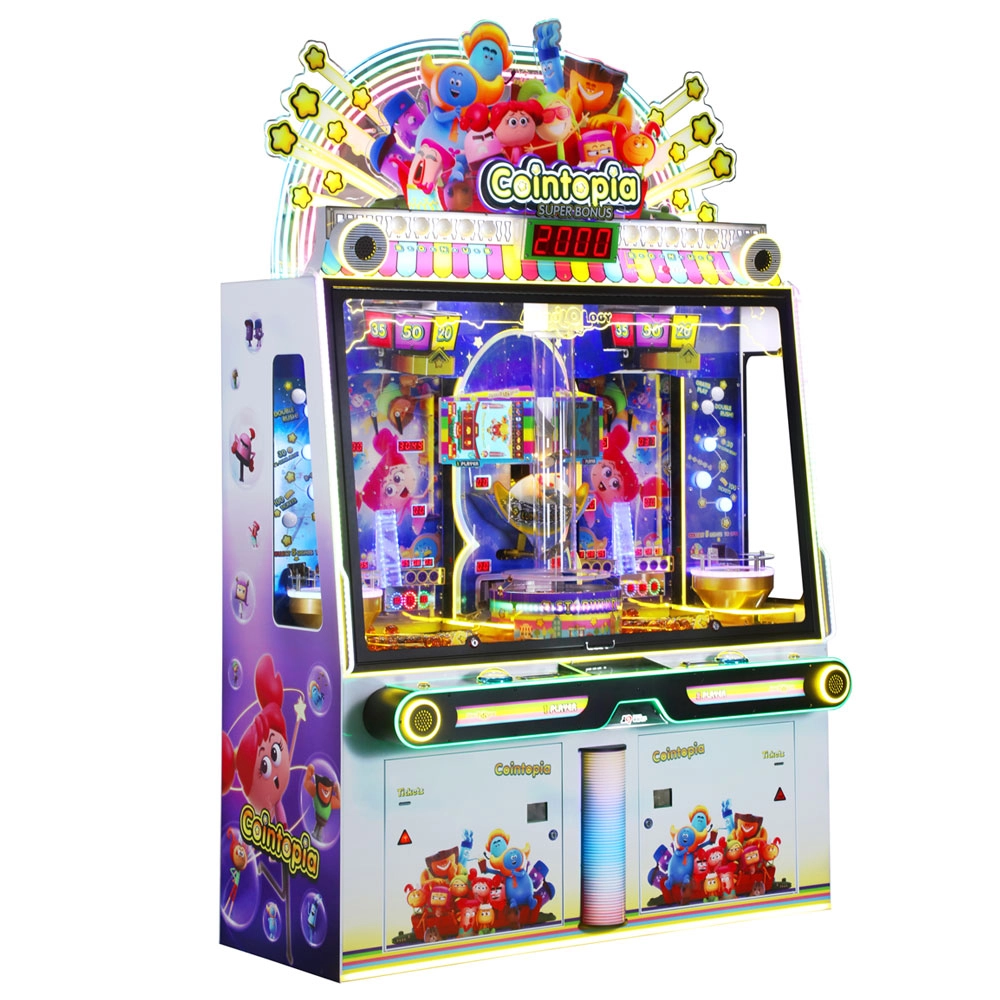
COINTOPIA, Divirta-se com os amigos do Zodíaco em uma Utopia
COINTOPIA da PALM FUN é uma emocionante máquina de resgate onde os jogadores se divertem com amigos do zodíaco em um cenário utópico. Esta máquina de resgate de bilhetes oferece uma jogabilidade envolvente e experiências gratificantes, perfeita para centros de entretenimento familiar e fliperamas que buscam jogos de resgate de alta qualidade.

Copyright © 2026 PALM FUN Todos os direitos reservados. |política de Privacidade•Termos e Condições|Mapa do site
palmfunarcade
Jogo de arcade Palm Fun
WhatsApp: +8618126837443
PalmFun Arcade
PalmFun_Arcade
Máquina de Redenção PALM FUN