


Best Arcade Ball Games for Family Entertainment Centers
- How to Choose Arcade Ball Games for an FEC
- Start with the player experience
- Match the game to your audience and layout
- Assess value beyond novelty
- Arcade Ball Game Types: What to Compare
- Compare clarity, challenge, and replay appeal
- Review redemption and operating details
- A New Track-and-Drop Option for Family Entertainment
- What makes the concept distinctive
- Plan placement and staff readiness
- Measure fit after launch
- Frequently Asked Questions

For family entertainment centers (FECs), the best arcade ball games combine easy-to-learn play, visible action, age-inclusive appeal, and a reward model that fits the venue’s operating plan. A balanced selection can include classic skill games, familiar sports-style challenges, and newer concepts such as An redemption arcade ball game your’ve never played before, in which players slide a large ball along parallel tracks and aim for a hole to earn a reward. Compare games by player experience, floor-space needs, throughput, prize handling, and maintenance—not novelty alone—then test the game with your audience before committing to a larger rollout.
How to Choose Arcade Ball Games for an FEC
Arcade ball games can attract different kinds of guests: children looking for a simple activity, adults joining in with family, and groups seeking a short challenge between other attractions. The best mix gives those visitors clear choices without making the arcade floor feel repetitive. When evaluating a game, consider how quickly a first-time player understands it, how much room players need, whether the action is easy to follow from nearby, and how the redemption system works.
Start with the player experience
For a family audience, clear instructions and a visible objective matter. Guests should be able to see what to do, understand how a turn begins, and recognize what counts as a successful play. A ball rolling toward a target communicates the challenge naturally, while simple controls can help reduce the learning curve for younger players and first-time visitors. That accessibility does not mean every game has to be effortless: well-calibrated difficulty can still create suspense and encourage repeat play.
Look at the whole experience, not just the headline feature. Is the ball easy to handle? Can players see the target from a comfortable position? Does a turn move at a pace that suits your expected traffic? These questions help operators assess whether a game will fit their audience and placement. The broader arcade category spans many formats, as outlined in the Wikipedia overview of arcade games; for an FEC, the useful distinction is how a specific game performs in your setting.
Match the game to your audience and layout
Map likely players to the games already on your floor. If you have many younger guests, prioritize understandable play and comfortable access. If families tend to play together, look for games that make turns easy to share and watching enjoyable. For group visits, consider whether the game can support a natural queue without blocking neighboring attractions. Review the manufacturer’s footprint, clearance, power, delivery, and service requirements before finalizing a placement.
Inclusive planning should extend beyond the game itself. Leave clear routes around machines, avoid creating pinch points near queues, and consider how visitors with different mobility needs approach the play area. The U.S. Access Board’s ADA design standards provide a reference for accessible routes and spaces. Confirm applicable requirements for your venue and consult qualified professionals when planning a new layout.
Assess value beyond novelty
A new concept can draw attention, but the operational fit determines whether it remains useful after launch. Ask suppliers about routine cleaning, replacement parts, service access, warranty coverage, and training. Check whether the game’s reward setup is compatible with the way your center manages prizes and customer expectations. Redemption play is a recognized arcade format; the overview of redemption games describes the general relationship between play and ticket or prize rewards. Your own game settings, prize policies, and local requirements should be confirmed with the supplier and venue team.
Arcade Ball Game Types: What to Compare
There is no single best arcade ball game for every FEC. A strong lineup usually offers variety in theme, physical interaction, challenge, and reward experience. Use the table below as a practical comparison framework, then verify specific dimensions, operating details, and commercial terms with each manufacturer. It is a selection guide, not a guarantee of performance or revenue.
| Game type | Typical player appeal | What to evaluate | Potential role in a lineup |
|---|---|---|---|
| Classic ball roll or target game | Familiar physical challenge with an easy-to-see goal | Skill balance, ball handling, lane clearance, and play pace | A recognizable option for guests who enjoy aiming and timing |
| Sports-style ball game | Competitive play inspired by familiar athletic activities | Turn length, scoring clarity, noise, and space for spectators | A social choice for friends and families who like head-to-head play |
| Track-and-drop redemption game | A simple physical action paired with a visible target and reward outcome | Target visibility, ball movement, instructions, prize settings, and service access | A distinctive format that can complement more familiar games |
| Digital or hybrid ball challenge | Physical input combined with screen-based feedback | Screen readability, controls, software support, and accessibility | A choice for venues seeking a mix of physical and digital interaction |
Compare clarity, challenge, and replay appeal
For each candidate, observe a first-time player rather than relying only on a product demonstration. Can the visitor work out the objective without lengthy explanation? Does the game provide enough feedback to make success or failure understandable? Is a repeat attempt appealing because the player can adjust their timing or aim? Those observations are more useful than a machine’s novelty in isolation.
Also consider the experience of people waiting nearby. A game with a readable target and visible action can invite spectators, but a queue that obstructs circulation can frustrate guests and staff. Test proposed placement during a busy period if possible. Track play activity and staff feedback after installation, and review whether the game supports the mix of experiences you intended to offer.
Review redemption and operating details
Redemption settings influence both guest expectations and day-to-day operations. Before purchase, clarify how rewards are triggered, what prize or ticket systems are supported, which settings the operator can adjust, and what procedures staff need to follow. Do not assume a game’s reward configuration or economics from its category description. Ask the supplier for documentation and confirm that the setup aligns with your center’s prize policy and applicable local rules.
Serviceability deserves the same attention as gameplay. Confirm how staff access common service points, what routine checks are recommended, and how replacement parts are ordered. A well-planned operating process can help keep the experience consistent, reduce avoidable downtime, and make it easier for employees to explain the game to guests.
A New Track-and-Drop Option for Family Entertainment
An redemption arcade ball game your’ve never played before offers a different take on ball-based redemption play. The concept uses a large ball that players slide along a pair of parallel tracks, aiming to let it drop into a hole to receive a reward. Its central action is straightforward to describe, while the moving ball and target give players a clear focus. Because the product profile identifies it as a 100% rewards redemption game suitable for all ages, it may be worth considering for operators seeking an option that families can understand and try together.
What makes the concept distinctive
The defining feature is the physical interaction: instead of relying on a familiar sports throw or a conventional roll toward pins, the player slides a large ball along parallel tracks and watches its path toward the hole. That difference can add variety to a floor already featuring traditional ball games. The outcome is easy to follow, and the action gives spectators a visible moment of anticipation.
For operators, the value is not simply that the game is new. Its role depends on whether the play style complements existing attractions, whether guests can approach and use it comfortably, and whether its footprint suits the intended location. Review the product specifications, installation requirements, and prize operation with the supplier before making a purchasing decision. The product description states that it is a 100% rewards redemption game; confirm exactly how that reward model is configured and administered for your venue.
Plan placement and staff readiness
Place the game where the ball’s movement and target can be seen without obstructing walkways or nearby activities. Allow enough room for players to stand, take turns, and step away safely. Ensure signage or on-machine instructions explain the basic action and reward outcome in language your guests can understand. Staff should know how to start a session, answer common questions, and follow the venue’s prize procedures.
Before opening the game to guests, test it as part of the complete floor setup. Check that the ball and tracks operate as intended, the target is visible from the player position, and the reward process is clear to employees. Establish a simple routine for cleaning and visual checks based on supplier guidance. General usability is often discussed in terms of effectiveness, efficiency, and satisfaction; ISO 9241-11 provides a framework for usability in context. For an arcade installation, use that as a broad planning lens rather than as a claim that a particular machine is certified to the standard.
Measure fit after launch
Give a new game a fair evaluation period and gather evidence from more than one source. Staff can report whether guests need help understanding the rules, while operators can review play activity and prize usage using the systems available at their venue. Guest comments and direct observation can reveal whether families play together, whether queues form comfortably, and whether visitors notice the game among nearby attractions.
Use those findings to make practical adjustments, such as improving wayfinding, moving nearby queue barriers, or updating staff explanations. If the game attracts attention but confuses new players, clearer instructions may help. If it is easy to understand but poorly placed, visibility could be the issue. This measured approach helps distinguish a gameplay problem from a layout or communication problem, and supports better decisions about future equipment purchases.
For FEC operators comparing the best arcade ball games, An redemption arcade ball game your’ve never played before is a distinctive redemption candidate rather than a universal replacement for established favorites. Its parallel-track, large-ball action offers an easy-to-explain alternative, while the all-ages positioning makes it relevant to family-oriented venues. Compare its specifications, reward setup, accessibility, and service requirements against your actual floor plan and audience, then use real guest and staff feedback to judge its long-term fit.
Explore An redemption arcade ball game your’ve never played before or contact our team at luobin@palm-fun.com to discuss whether it suits your family entertainment center.
Frequently Asked Questions
What should an FEC consider when choosing an arcade ball game?
Evaluate how quickly first-time players understand the objective, the game’s age and audience appeal, footprint and clearance needs, reward setup, service access, and fit with the existing lineup. Confirm operating and installation details with the supplier.
How does the new track-and-drop redemption game work?
Players slide a large ball along a pair of parallel tracks and aim to let it drop into a hole to receive a reward. The product is described as a 100% rewards redemption game suitable for all ages; operators should confirm its exact reward configuration with the supplier.
How can an operator assess whether a new arcade game is successful?
Observe first-time players, gather staff and guest feedback, and review available play activity and prize usage. Check whether guests understand the rules, whether queues and circulation work, and whether the game complements the venue’s attractions.
What should be checked before installing a redemption arcade game?
Confirm the game’s dimensions, clearance, power, delivery and service requirements, accessibility and placement, prize-system compatibility, reward settings, and staff procedures. Follow supplier guidance and applicable venue requirements.
Recommended for you
Wholesale arcade game cabinets manufacturer and supplier in Asia

Volley Coin Pusher Arcade Ticket Redemption Machine — Boost Foot Traffic & Revenue
Top 5 coin operated arcade game Company List and Products Compared
Mitigating Shipping and Lead-Time Risks with Coin Pusher Factories
FAQs
How to perform daily maintenance and servicing on redemption machines?
1. New machine entry performance, as it is relatively unstable in operation at this stage, requires dedicated supervision, timely follow-up, and improvements.
2. Redemption machines are relatively prone to collecting dust, which can lead to mechanical wear and corrosion. Dust can also cause issues with circuit boards, such as conductivity and optical sensor malfunctions. Thus, both internal and external cleanliness of redemption machines are equally important. Regular cleaning schedules for internal and daily cleaning for external components should be established.
3. Timely inspect the quality and durability of certain components. If issues are detected with imaging equipment, for example, replacements are necessary. A thorough understanding and mastery of the machine's performance can help extend its lifespan and ensure normal usage rates. Critical inspection areas include vulnerable parts such as motors, drive belts, gears of ticket dispensers, and sensors.
4. Frequent changes in prize point settings and payout rates are discouraged. Improvements in winning odds should be pursued through other methods and approaches.
5. All machines should have procedures for ticket removal and shredding to protect the ticket dispensers from damage.
6. Monitor changes in payout rates closely, as it directly impacts the cost control of the entire redemption machine system.
7. When employees add tickets, they should verify if the ticket sensors are unobstructed (blocked sensors can prevent ticket dispensing).
8. Have the protective paper on redemption machine's adhesive tape been removed? (Leaving it on can obstruct the ticket slot and ticket dispenser).
9. Responsible personnel should periodically and discreetly check the addition of tickets inside the redemption machines, ensuring that the added tickets match the registered ones.
Why redemption ticket machines are popular?
2.Redemption machines are becoming the most important breakthrough to enhance the sustainable operation of indoor arcade game halls.
3.Players are of all ages and they continue to expand.
How to guide the players to recognize tickets at the beginning setup of the redemption machines?
Never assume that your players already understand the purpose of lottery tickets(reward points). Even in venues that have been in operation for many years, it is still discovered during on-site interviews with players that many of them are not aware. Don't believe it? Just ask consumers at the venue. The machines, redemption counters, materials hung above the venue, and announcements by staff, among others, can all be channels for informing players about the purpose of lottery tickets(reward points). It is essential to do more promotion, create large displays and large cards, and clearly communicate the purpose of lottery tickets(reward points) to the players.
What is the character of mechanical redemption machine?
The revenue proportion of redemption machines
You may also like
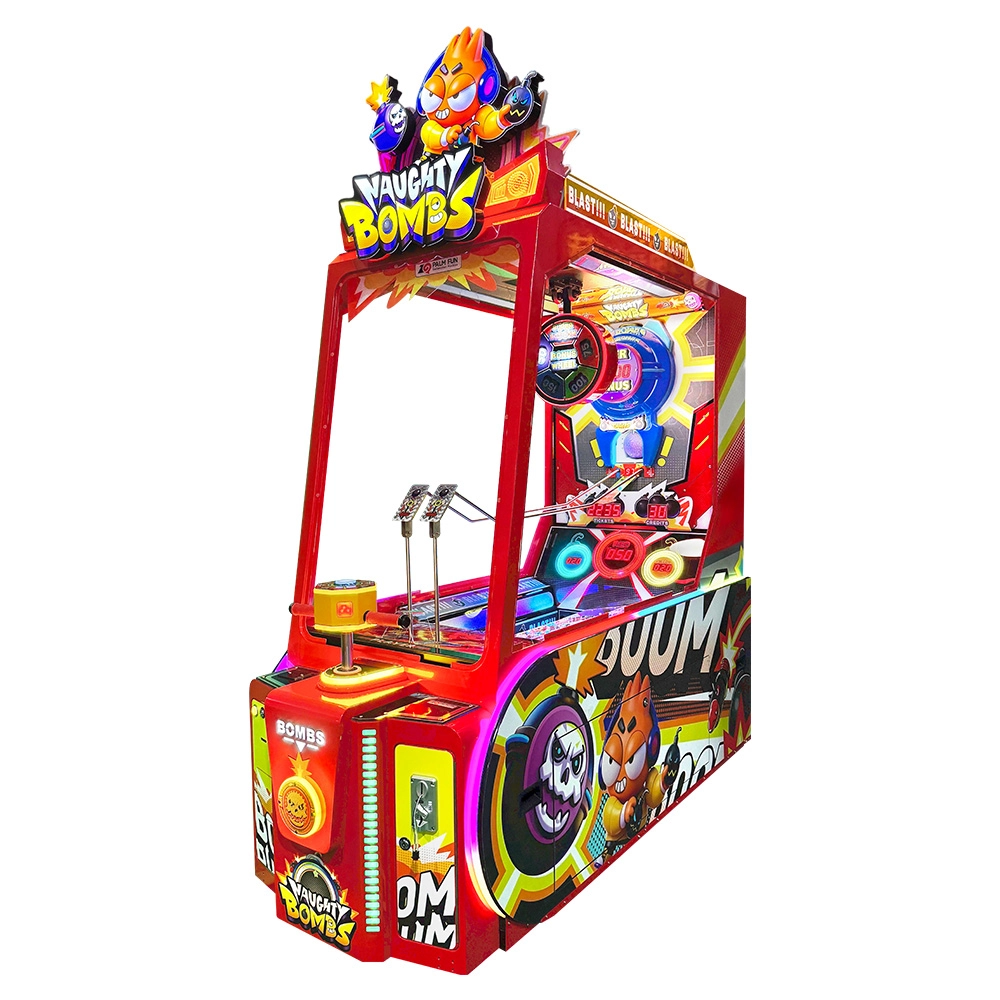
Naughty Bombs Ball Drop Redemption Arcade Game Machine
Naughty Bombs is a ball-drop redemption arcade game featuring rolling-ball gameplay, colored targets, ticket prizes, surprise bonus rewards, lighting and sound effects. Players use timing to launch and drop balls toward colored target areas. The product is presented for arcade, family entertainment center and other entertainment-venue projects, with customizable 110V / 220V AC voltage configuration.
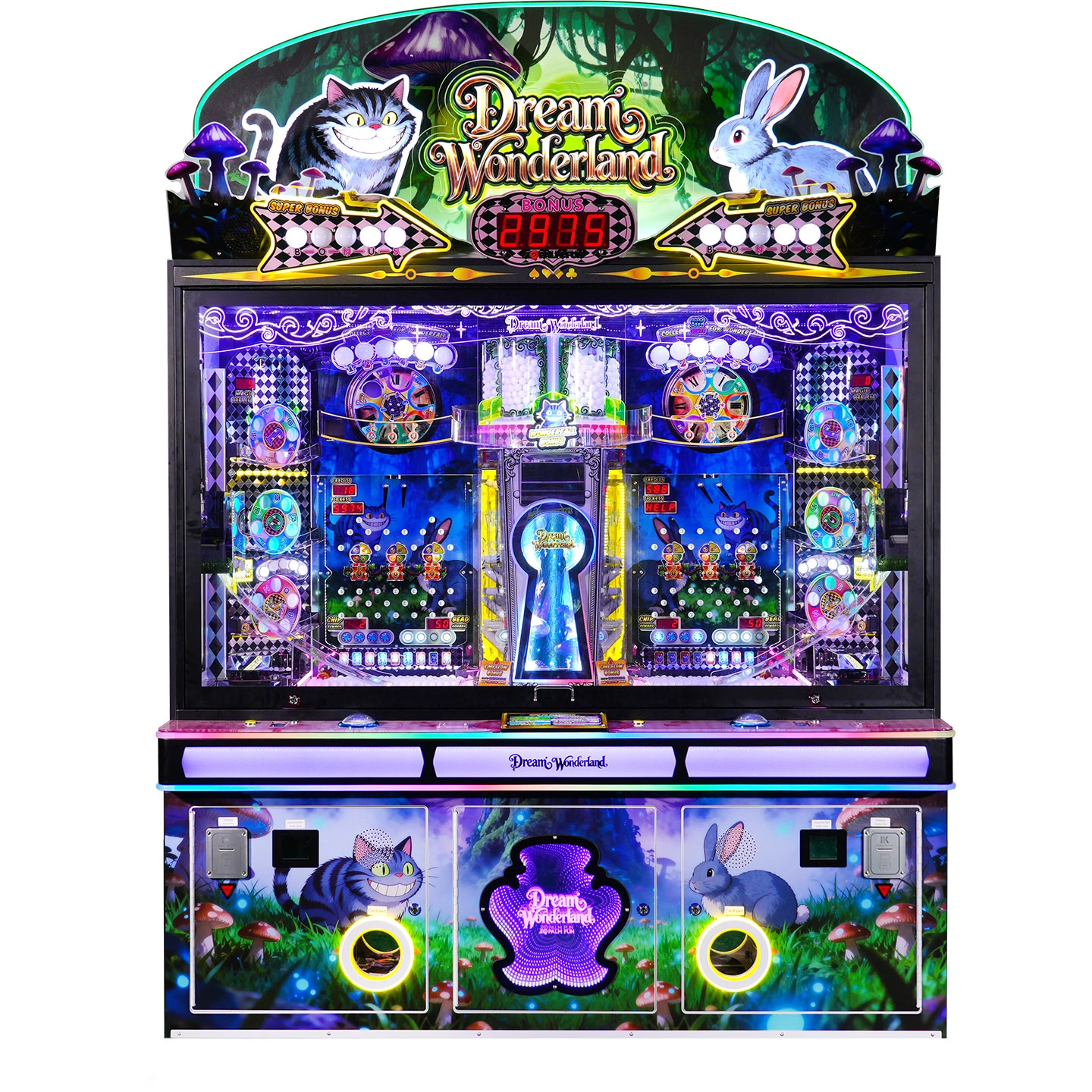
Dream Wonderland Marble Pusher Redemption Game
Enter Dream Wonderland — a magical marble pusher adventure filled with glowing lights, magic orbs, bonus wheels, collectible character cards, and exciting jackpot challenges.
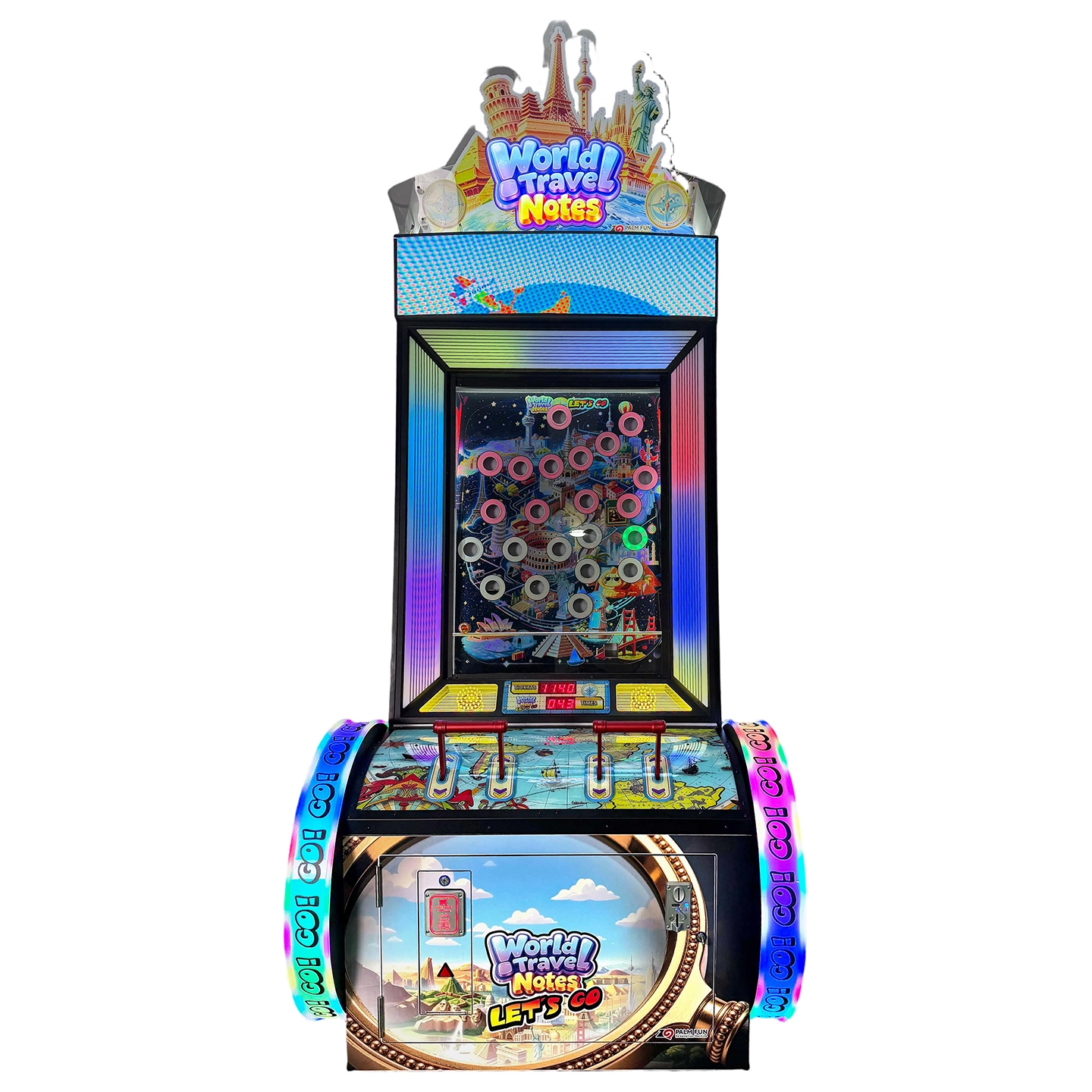
World Travel Notes – Balance Ball Redemption Arcade Game
World Travel Notes is a skill-based balance ball redemption game with a fun world-travel theme. Players use two handles to control the balance bar and guide the ball into each target hole. As the game progresses, the targets become more challenging, leading players toward the final grand prize. With colorful world-travel graphics, dynamic RGB lighting, a live score display, and progressive difficulty, World Travel Notes is designed to attract attention and encourage repeat play in arcades, FECs, shopping malls, and other entertainment venues.
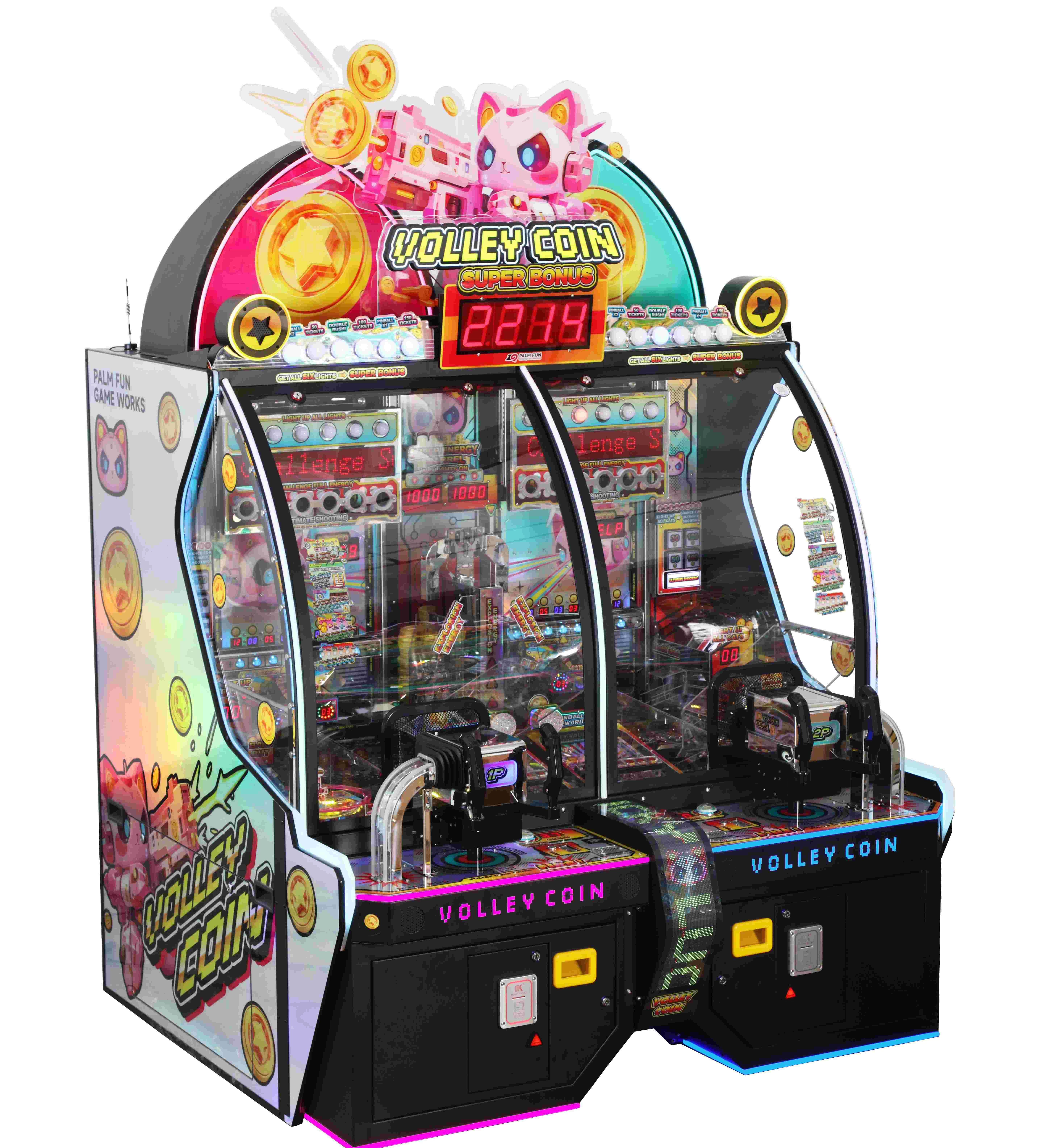
Hybrid Shooting & Pushing | Coin Pusher Arcade Ticket Redemption Machine
Volley Coin is an innovative arcade ticket redemption machine developed by Palm Fun Electronics. Combining the excitement of a fast-paced token shooter game with the proven earning power of a traditional coin pusher machine, Volley Coin offers a fresh and engaging gameplay experience that appeals to players of all ages.

Copyright © 2026 PALM FUN All Rights Reserved. | Privacy Policy • Terms and Conditions | Sitemap
palmfunarcade
Palm Fun Arcade Game
Whatsapp: +8618126837443
PalmFun Arcade
PalmFun_Arcade
PALM FUN Redemption Machine