








Bulk pricing & lead time benchmarks for redemption arcade ball game
- Commercial Benchmarks for Bulk Redemption Ball Games
- How order volume changes the quoted unit price
- Indicative factory price bands and what they include
- Comparison table for procurement planning
- Lead Time Drivers from Purchase Order to Venue
- Production stages buyers should schedule
- Customization, approvals, and factory acceptance testing
- Shipping, customs, and site readiness
- How to Evaluate Total Cost, Quality, and Commercial Risk
- Beyond the invoice: total cost of ownership
- Quality systems and documentation
- Game design, customer appeal, and category positioning
- Why PALM FUN Supports Scalable Redemption Game Projects
- Engineering and manufacturing foundation
- Product portfolio for different venue strategies
- Global service orientation and supplier credibility
- Frequently Asked Questions
- What is a realistic bulk lead time for redemption arcade ball games?
- How many units are usually needed to obtain a bulk discount?
- What costs should be added to the factory price?
- What should be included in a pre-shipment inspection?
- How can an operator estimate return on investment?
- Why does customization increase both price and lead time?
Bulk pricing for redemption arcade ball games is usually determined by order quantity, cabinet configuration, game mechanics, display technology, customization level, packaging requirements, destination, and after-sales support. For preliminary procurement planning, standard units commonly require approximately 30–60 calendar days for production after deposit and final approval, while customized projects may require 60–120 days or more. Indicative factory pricing can range from about US$1,200–US$3,500 per standard unit and approximately US$3,500–US$8,000 or higher for larger, branded, multi-player, or heavily customized systems; these are planning benchmarks rather than universal market prices. Buyers should compare the complete landed cost, including tooling, spare parts, freight, duties, installation, payment terms, warranty coverage, and compliance documentation, rather than selecting a supplier solely by unit price.
Commercial Benchmarks for Bulk Redemption Ball Games
How order volume changes the quoted unit price
Manufacturers generally calculate a volume quotation by separating one-time engineering expenses from recurring production costs. A small commercial order may carry higher per-unit costs because design review, purchasing, testing, packing, and export documentation are distributed across fewer machines. Larger orders can improve purchasing efficiency for cabinets, ticket dispensers, motors, sensors, control boards, lighting components, and packaging materials.
As a practical budgeting framework, buyers may request separate quotations for 1–4 units, 5–19 units, 20–49 units, and 50 or more units. The discount is not guaranteed to increase in a straight line. A project requiring unique artwork, a new control program, special voltage, multilingual software, or a new mold can remain expensive even at higher quantities. A clear request for quotation should therefore show the base machine price, customization fee, tooling fee, spare-parts package, packing method, and shipping terms as separate lines.
Indicative factory price bands and what they include
Standard mechanical ball-drop or ticket-redemption cabinets often occupy the lower end of the planning range when they use established designs, common electrical specifications, and standard colorways. Mid-range equipment may add animated lighting, a digital scoring display, multiple play stations, upgraded prize logic, or a more robust cabinet structure. High Quality installations can include large-format visual effects, synchronized sound, custom fabrication, proprietary software, and destination-specific engineering.
Price comparisons should identify whether the quotation is EXW, FOB, CIF, or DDP. The ICC Incoterms 2020 rules explain how costs, transport responsibilities, insurance, and risk are allocated between seller and buyer. An apparently low EXW quote may become more expensive after inland transport, export handling, ocean freight, customs clearance, and local delivery are added. For an investment committee or distributor, the most useful number is the landed cost per operating unit, not merely the ex-factory figure.
Comparison table for procurement planning
The following ranges are practical budgeting benchmarks for early-stage sourcing. They are not fixed industry tariffs, and a written quotation remains necessary before purchase approval.
| Order or project type | Indicative production lead time | Indicative factory price per unit | Typical commercial characteristics |
|---|---|---|---|
| Sample or 1–4 standard units | 30–60 days | US$1,200–US$3,500 | Standard design, limited customization, basic spare parts |
| Small batch of 5–19 units | 30–60 days | US$1,100–US$3,300 | Improved purchasing efficiency and repeatable configuration |
| Commercial batch of 20–49 units | 45–75 days | US$1,000–US$3,100 | More efficient production planning and possible volume discount |
| 50 or more standard units | 45–90 days | US$900–US$2,900 | Best suited to distributors, chains, and multi-site rollouts |
| Customized or new-design project | 60–120+ days | US$3,500–US$8,000+ | Engineering review, artwork, software, tooling, and approval stages |
Lead Time Drivers from Purchase Order to Venue
Production stages buyers should schedule
A reliable delivery plan normally includes technical confirmation, deposit receipt, bill-of-materials preparation, component purchasing, cabinet fabrication, electrical assembly, software configuration, factory testing, packing, and dispatch. The quoted lead time should state when the clock begins. Some suppliers count from deposit receipt; others count from artwork approval, final specification confirmation, or receipt of a balance payment.
For a standard redemption game machine, component availability is often the difference between a predictable schedule and an avoidable delay. Custom displays, ticket systems, coin mechanisms, molded plastic parts, specialized motors, and branded metal panels may have longer procurement cycles than common cabinet materials. Buyers should ask whether critical components are in stock, allocated to the project, or subject to a new purchasing cycle.
Customization, approvals, and factory acceptance testing
Customization is a frequent source of schedule variance. A new cabinet shape can require structural drawings and prototype review. New artwork may require print proofs. A revised prize algorithm or ticket payout setting may need software validation. Multilingual screens should be checked for character support, translations, and user-interface consistency before mass production.
Factory acceptance testing should be treated as a formal milestone rather than an informal promise. The inspection plan can cover cabinet dimensions, grounding, power input, lighting, sound, ball tracking, sensor response, ticket dispensing, coin or card acceptance, game reset behavior, safety labeling, and packaging condition. Buyers should approve photographs, videos, or an inspection report before balance payment where the contract permits this procedure.
Shipping, customs, and site readiness
Production completion is not the same as venue delivery. Ocean freight schedules, port congestion, customs review, destination handling, and inland transportation can add several weeks. Air freight is faster but may materially increase the landed cost, especially for bulky cabinets. A project schedule should include a logistics buffer and should distinguish calendar days from working days.
Before dispatch, facility owners should confirm door widths, elevator capacity, floor loading, power outlets, network requirements, storage space, and installation access. A machine that reaches the country on time can still miss an opening date if the venue is not ready for unloading and commissioning. For large rollouts, staged delivery may reduce storage pressure and allow the operator to validate one pilot location before releasing the remaining units.
How to Evaluate Total Cost, Quality, and Commercial Risk
Beyond the invoice: total cost of ownership
The purchase price is only one part of the financial model. Total cost of ownership may include freight, tariffs, payment processing, insurance, installation, staff training, replacement boards, ticket rolls, balls, locks, lamps, sensors, preventive maintenance, software updates, and downtime. A lower-priced cabinet can produce a weaker return if it requires frequent service or has limited access to replacement components.
Operators should model expected plays per day, average price per play, ticket payout, prize cost, staffing, floor-space value, and service interruptions. The commercial objective is not simply to minimize acquisition cost; it is to achieve reliable revenue generation and manageable maintenance over the operating life of the equipment. A coin pusher machine, ball-drop cabinet, and skill-based ticket game may have different revenue profiles, so each should be evaluated against the venue’s customer demographic and prize strategy.
Quality systems and documentation
Supplier due diligence should include factory ownership or operating status, production photographs, engineering resources, export history, warranty terms, spare-parts availability, and references from comparable projects. A documented quality process is more useful than a generic marketing claim. Buyers can ask for incoming inspection records, assembly checklists, electrical test results, final inspection criteria, and a corrective-action process.
ISO 9001 quality management principles provide a recognized framework for consistent processes, customer focus, documented control, and continual improvement. Certification alone does not guarantee that every machine will perform perfectly, but it gives procurement teams a useful structure for evaluating process maturity. Depending on the destination and electrical configuration, buyers should also confirm applicable local requirements for electrical safety, electromagnetic compatibility, labeling, and commercial amusement equipment.
Game design, customer appeal, and category positioning
Redemption equipment performs best when the play cycle is easy to understand, visually engaging, and aligned with the venue’s reward system. A ball-launch or ball-drop game can create a short, repeatable interaction, while a single-player skill cabinet may appeal to customers seeking personal challenge. A traditional pinball arcade format can complement redemption products by broadening the entertainment mix, although its scoring and maintenance model differs from ticket-based equipment.
Operators should review cabinet visibility, queue behavior, sound levels, lighting intensity, accessibility, service-panel access, and prize-counter integration. A compact unit may generate strong revenue per square meter, whereas a larger attraction may function as a destination piece that increases dwell time. The right configuration depends on venue format, available floor area, age profile, local pricing, and the operator’s ability to maintain a consistent prize experience.
Why PALM FUN Supports Scalable Redemption Game Projects
Engineering and manufacturing foundation
PALM FUN was founded in 2015 and specializes in high-quality mechanical lottery machines, coin pusher machines, raffle machines, and innovative gaming and lottery equipment. Our work covers research and development, product design, production, and sales, allowing project owners to coordinate technical and commercial requirements through one experienced manufacturing partner.
Our state-of-the-art factory covers 3,000 square meters and is staffed by skilled development engineers focused on advancing technology and improving user experience. This engineering foundation supports practical decisions involving cabinet construction, mechanical reliability, control systems, visual presentation, and service access. For buyers sourcing arcade games machines or arcade machines for sale, the ability to discuss configuration details directly with a capable supplier can reduce specification gaps and late-stage revisions.
Product portfolio for different venue strategies
Our portfolio includes redemption games designed for amusement centers, family entertainment centers, shopping malls, arcades, and distributor programs. The Coin Pusher Arcade Ticket Redemption Machine combines coin-pusher interaction with ticket-redemption potential, creating a format suited to operators seeking a familiar mechanical play pattern with an additional reward mechanism.
The Larva Series Coin Pusher Arcade adds ball-drop and ticket-redemption elements that can support a more visual, family-oriented attraction. Buyers considering a single player arcade can also use a focused skill game to diversify the floor and serve customers who prefer individual play. Product selection should be matched to the venue’s payment system, prize policy, maintenance capability, and floor plan.
Global service orientation and supplier credibility
PALM FUN products are recognized and popular in more than 50 countries worldwide. Our objective is to build long-term partnerships by providing product support, communication, and service assistance for clients operating in competitive gaming markets. We aim to become the world’s leading manufacturer of redemption game machines, while maintaining a practical focus on quality, innovation, and customer success.
For distributors and multi-location operators, our High Quality Redemption Arcade MachinesManufacturer profile provides additional information about our company and capabilities. A structured project discussion can cover target quantity, preferred delivery term, destination, voltage, payment method, artwork, software language, spare-parts requirements, warranty expectations, and required launch date. That information enables a more accurate quotation than a generic request for a single unit price.
Frequently Asked Questions
What is a realistic bulk lead time for redemption arcade ball games?
Standard units commonly require approximately 30–60 calendar days after deposit and final specification approval. Larger orders may require 45–90 days, while customized or new-design projects can require 60–120 days or more depending on tooling, software, artwork, component availability, and approval speed.
How many units are usually needed to obtain a bulk discount?
Buyers can request tiered pricing for 1–4, 5–19, 20–49, and 50 or more units. Discounts depend on the repeatability of the configuration and the supplier’s purchasing plan; a customized machine may not receive the same reduction as a standard model even at a higher quantity.
What costs should be added to the factory price?
Important additions may include tooling, artwork, spare parts, packaging upgrades, inland transport, export handling, freight, insurance, customs duties, destination charges, installation, taxes, and payment fees. The buyer should compare landed cost under clearly stated Incoterms instead of comparing only ex-factory prices.
What should be included in a pre-shipment inspection?
A pre-shipment inspection should cover cabinet dimensions, power input, grounding, lighting, sound, sensors, ball movement, ticket dispensing, coin or card acceptance, software settings, reset functions, safety labels, accessories, and packaging. Photos, videos, or a formal inspection report can document acceptance before final payment where contract terms allow.
How can an operator estimate return on investment?
The model should include plays per day, price per play, ticket payout, prize costs, floor-space value, staffing, maintenance, freight, installation, and expected downtime. The most useful comparison is operating profit and payback period over the expected service life, not the lowest initial purchase price.
Why does customization increase both price and lead time?
Customization may require engineering review, new artwork, special components, tooling, software changes, prototypes, translation, and additional testing. These activities create one-time costs and add approval milestones before mass production can begin.
Contact PALM FUN through our official website to discuss bulk pricing, lead time, product selection, and a tailored redemption equipment proposal.
Recommended for you
How to Evaluate Video Game Machine Durability and Warranty
Wholesale ticket arcade games manufacturer and supplier
The Best Redemption Arcade Games: A Complete Guide to Fun and Entertainment
What Are Arcade Redemption Games: A Complete Guide
FAQs
Research & Development, how hard is the birth of one new redemption machines?
The revenue proportion of redemption machines
How to choose the exchange gifts of the tickets(reward points)?
2. Gifts should be diverse. This refers to the variety of items available, providing players with more choices. Everyone's preferences are different, especially adults who have higher expectations for gifts. The venue should strive to meet the diverse needs of these players.
3. Gifts should be fashionable. The younger generation that follows trends is very interested in the hottest items of the moment. If the venue can keep up with the latest trends, it can attract the majority of consumers.
4. Gifts should be innovative. Especially during holidays and seasons, it's a good idea to try out new approaches, creating a competitive advantage with unique offerings. For example, the current trend of combining pop culture and blind box culture.
How to guide the players to recognize tickets at the beginning setup of the redemption machines?
Never assume that your players already understand the purpose of lottery tickets(reward points). Even in venues that have been in operation for many years, it is still discovered during on-site interviews with players that many of them are not aware. Don't believe it? Just ask consumers at the venue. The machines, redemption counters, materials hung above the venue, and announcements by staff, among others, can all be channels for informing players about the purpose of lottery tickets(reward points). It is essential to do more promotion, create large displays and large cards, and clearly communicate the purpose of lottery tickets(reward points) to the players.
How to place the redemption machines in a right place?
1,Ensure that the placement and layout of the equipment are distinct and centralized.
2,Keep noise levels low and avoid having a line of sight that spans too far to prevent players from easily taking in everything, which may slow down their movement.
3,Avoid clustering high-ticket payout machines and disperse machines of the same style.
4,Mix popular machines with less popular ones and avoid placing all popular machines together.
You may also like
Naughty Bombs Ball Drop Redemption Arcade Game Machine
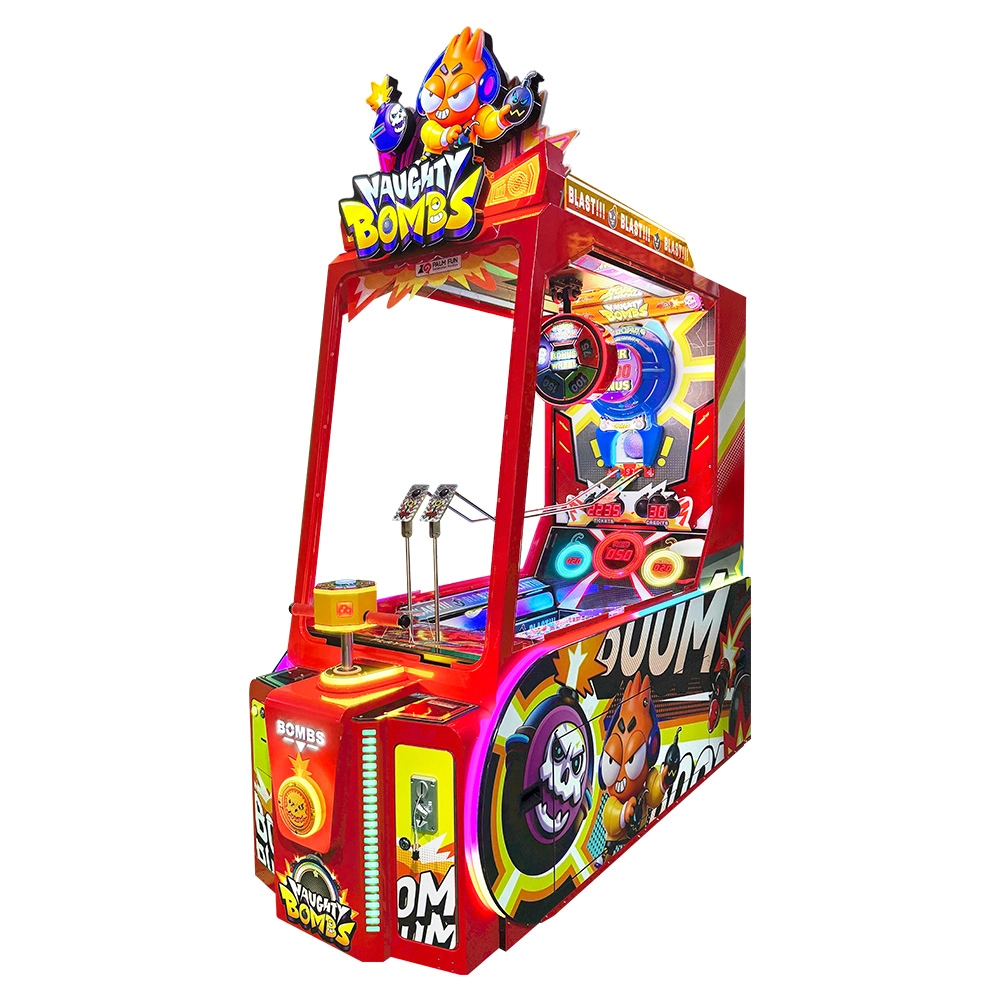
Naughty Bombs is a ball-drop redemption arcade game featuring rolling-ball gameplay, colored targets, ticket prizes, surprise bonus rewards, lighting and sound effects. Players use timing to launch and drop balls toward colored target areas. The product is presented for arcade, family entertainment center and other entertainment-venue projects, with customizable 110V / 220V AC voltage configuration.
Dream Wonderland Marble Pusher Redemption Game
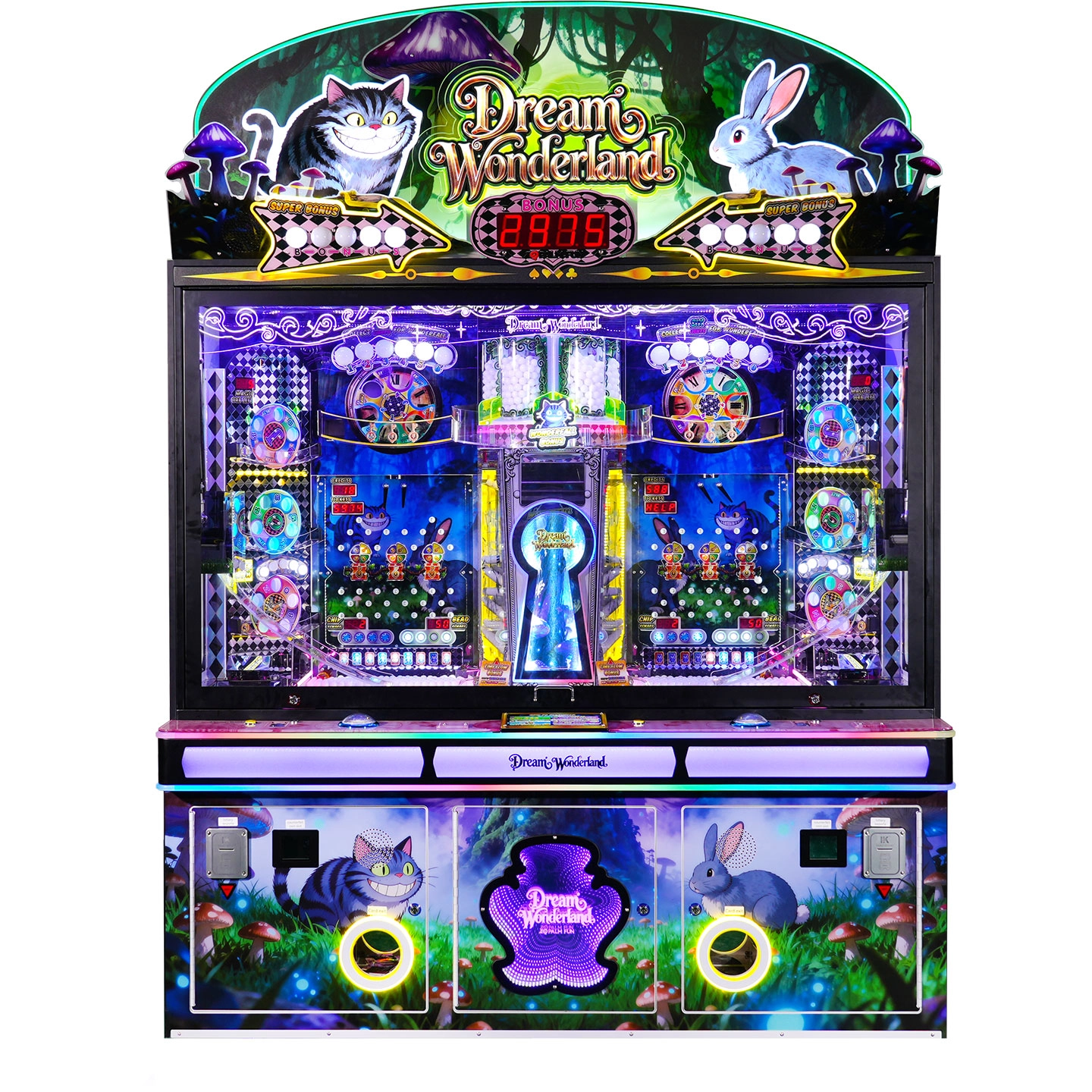
Enter Dream Wonderland — a magical marble pusher adventure filled with glowing lights, magic orbs, bonus wheels, collectible character cards, and exciting jackpot challenges.
World Travel Notes – Balance Ball Redemption Arcade Game
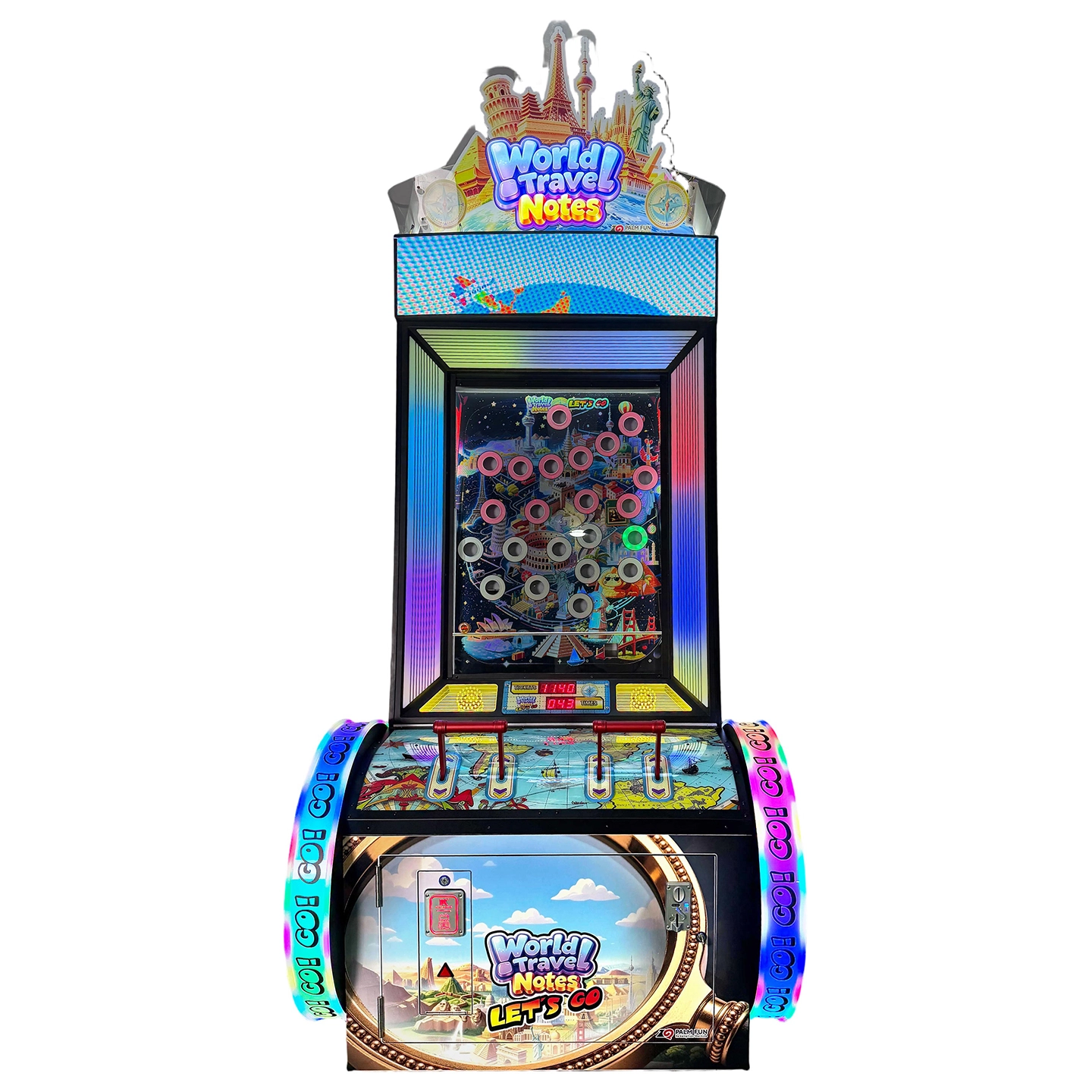
World Travel Notes is a skill-based balance ball redemption game with a fun world-travel theme. Players use two handles to control the balance bar and guide the ball into each target hole. As the game progresses, the targets become more challenging, leading players toward the final grand prize. With colorful world-travel graphics, dynamic RGB lighting, a live score display, and progressive difficulty, World Travel Notes is designed to attract attention and encourage repeat play in arcades, FECs, shopping malls, and other entertainment venues.
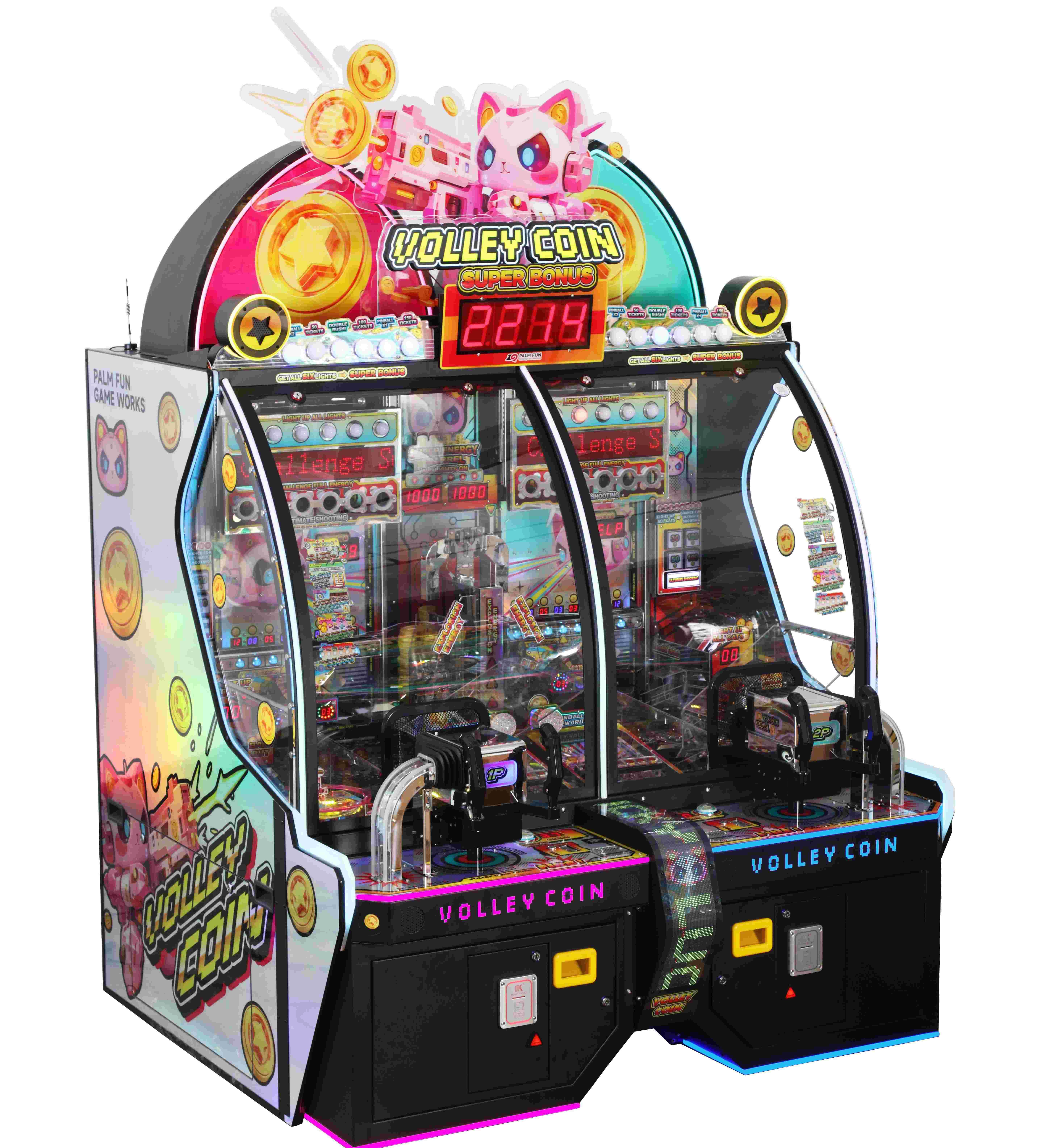
Hybrid Shooting & Pushing | Coin Pusher Arcade Ticket Redemption Machine
Volley Coin is an innovative arcade ticket redemption machine developed by Palm Fun Electronics. Combining the excitement of a fast-paced token shooter game with the proven earning power of a traditional coin pusher machine, Volley Coin offers a fresh and engaging gameplay experience that appeals to players of all ages.

Copyright © 2026 PALM FUN All Rights Reserved. | Privacy Policy • Terms and Conditions | Sitemap
palmfunarcade
Palm Fun Arcade Game
Whatsapp: +8618126837443
PalmFun Arcade
PalmFun_Arcade
PALM FUN Redemption Machine