


How to Choose a Profitable Ticket Redemption Game
- Start with Your Venue’s Players and Business Goals
- Match the game to your audience
- Define what “profitable” means for your site
- Check local requirements before ordering
- Compare the Economics, Footprint, and Operating Model
- Build a realistic comparison, not a sales-only shortlist
- Plan the floor position and guest flow
- Understand ticket and prize economics
- Verify the Product and Manage Performance After Launch
- Ask suppliers for evidence and practical support
- Position the Palm Fun upgrade accurately
- Use a measured launch and review cycle
- Frequently Asked Questions
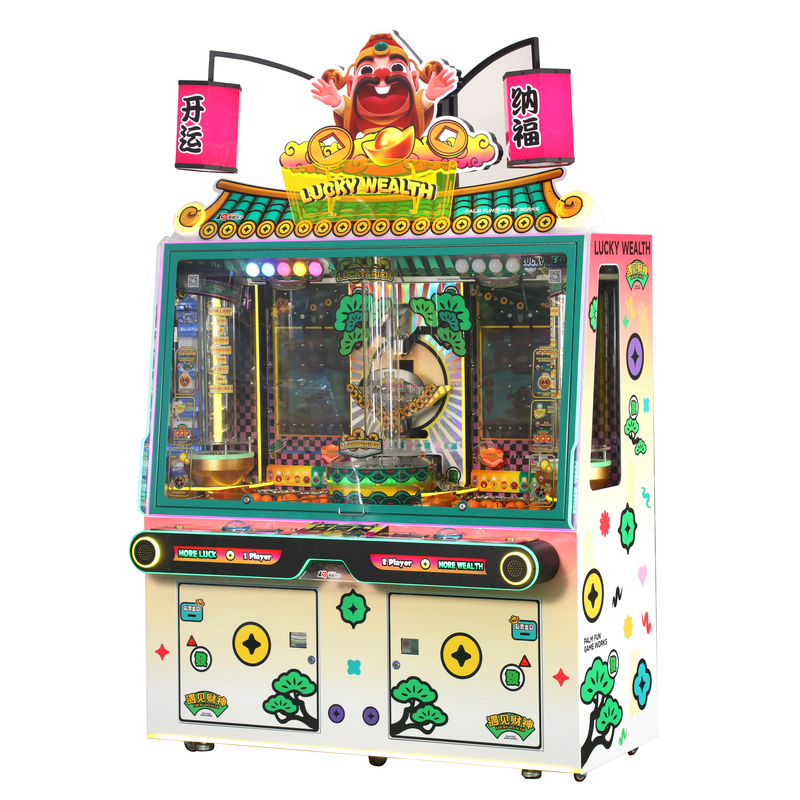
At a glance: A profitable ticket redemption game should attract the right players, encourage repeat visits, fit your floor plan, support a sustainable prize strategy, and be practical to maintain. Before purchasing, compare the machine’s footprint, capacity, ticket operation, service needs, supplier support, and expected contribution with your venue’s actual data. The all-new upgraded coin pusher arcade ticket redemption arcade is Palm Fun’s 2024 upgrade of Lucky Wealth, offering operators a refreshed coin-pusher option to evaluate against these commercial criteria—not a guaranteed return.
Start with Your Venue’s Players and Business Goals
Match the game to your audience
Begin by defining who will play the game and why. A family entertainment center with children and parents may value easy-to-understand play, visible movement, and a shared experience. A mall arcade may depend more on quick engagement and strong visual presence, while a bowling center may need games that work for mixed-age groups during short breaks. Observe your current floor: which games draw attention, which are played repeatedly, and which attract queues? Ask staff what guests request and review available play and redemption records.
Coin pushers can be especially engaging because players watch coins move and build anticipation as pieces approach the edge. That visual feedback can help a game communicate its appeal from a distance. However, a lively display alone does not prove profitability. Check whether the game’s play style suits the age range, spending habits, and visit patterns of your guests. The all-new upgraded coin pusher arcade ticket redemption arcade may suit venues seeking a familiar pusher format with an updated presentation, but operators should verify the game’s details and suitability with the supplier.
Define what “profitable” means for your site
Profitability is not simply the number of tickets issued or coins played. Assess the game’s contribution after considering the purchase or lease cost, payment and ticket-system expenses, prizes, labor, maintenance, downtime, and floor-space opportunity cost. A machine with strong play volume may still underperform if its prize liability is poorly controlled, service is difficult, or it occupies a high-value location better suited to a stronger performer.
Set a practical review period and baseline before installation. Track plays, revenue, ticket payouts, prize-counter redemptions, uptime, and service calls. Compare the game with similar machines in comparable locations, adjusting for seasonality, promotions, and changes in traffic. Avoid relying on a supplier’s best-case estimate as a forecast for your own venue. The all-new upgraded coin pusher arcade ticket redemption arcade should be assessed using the same site-specific metrics as any other candidate.
Check local requirements before ordering
Ticket redemption rules, amusement-device classifications, taxes, permits, and consumer disclosures vary by jurisdiction. Confirm requirements with the relevant local authorities and qualified legal or compliance advisers before purchase, installation, or promotion. Make sure the game’s operating model and prize system are appropriate for the location where it will be used. The general category of arcade entertainment is described in Wikipedia’s overview of amusement arcades, but that background is not a substitute for local regulatory advice.
Compare the Economics, Footprint, and Operating Model
Build a realistic comparison, not a sales-only shortlist
Use a consistent checklist for every machine under consideration. Ask suppliers for the machine dimensions, electrical requirements, operating and ticketing details, recommended clearance, shipping information, warranty terms, and parts availability. Confirm whether the quoted price includes installation, commissioning, payment-device integration, or staff training. These details can change the total cost and the time it takes to put a game into service.
| Evaluation factor | Questions to ask | Why it matters |
|---|---|---|
| Player appeal | Can guests understand the play quickly? Does the display attract attention? | Supports discovery, initial play, and repeat engagement. |
| Commercial performance | What local data will you track for revenue, tickets, prizes, and uptime? | Shows contribution after operating costs rather than popularity alone. |
| Floor fit | What are the footprint, access, power, and service-clearance needs? | Protects circulation, accessibility, and efficient use of space. |
| Prize operation | How are tickets recorded and reconciled, and how will prize cost be monitored? | Helps maintain a transparent, sustainable redemption program. |
| Support and maintenance | What warranty, documentation, parts, and technical support are available? | Reduces avoidable downtime and supports predictable upkeep. |
Use the table to compare the all-new upgraded coin pusher arcade ticket redemption arcade with other redemption options, such as video redemption games or ball-drop skill games. Request current product specifications rather than assuming that an earlier model’s dimensions, controls, or service procedures apply to an upgraded version. If you are importing equipment, include freight, duties, customs documentation, local electrical compatibility, and installation arrangements in the landed-cost estimate.
Plan the floor position and guest flow
A game needs more than a space matching its cabinet dimensions. Allow room for players to stand, companions to watch, staff to access service panels, and guests to move safely around the area. Avoid blocking exits, accessible routes, prize-counter lines, or sightlines to other attractions. Consider lighting, noise, nearby games, and whether the display can be seen from a natural approach path. Test the proposed position on a floor plan and, where possible, observe guest movement before committing to a permanent installation.
Think about the game as part of a redemption zone rather than an isolated purchase. A mix of game types can serve different ages and play preferences, while a clear route to the prize counter helps guests understand what tickets are for. Coordinate ticket settings and prize values with your broader redemption strategy. The all-new upgraded coin pusher arcade ticket redemption arcade can be considered as one component in that mix; its location and performance should be reviewed alongside neighboring games, not in isolation.
Understand ticket and prize economics
Ticket redemption creates a direct connection between play and prizes, so operators need reliable controls. Establish who can change settings, how changes are documented, how tickets are reconciled, and how prize inventory is monitored. Review the actual cost of prizes redeemed, not only their displayed value. Make sure staff can explain redemption rules clearly and consistently, and ensure the game’s ticketing arrangement is compatible with your venue’s system.
Do not set ticket awards solely to make a game appear generous. The right approach depends on local rules, game configuration, customer expectations, and a sustainable prize budget. Monitor the relationship between play activity, ticket issuance, and redemption over time. A supplier can explain the machine’s functions, but the operator remains responsible for setting a compliant and financially workable program. Ask Palm Fun how the all-new upgraded coin pusher arcade ticket redemption arcade integrates with your intended operating and ticket-management setup before finalizing a purchase.
Verify the Product and Manage Performance After Launch
Ask suppliers for evidence and practical support
Good procurement is a process of verification. Request a written specification, clear photos or a demonstration, user and maintenance documentation, warranty conditions, and a list of recommended spare parts. Confirm what support is available in your market, typical response channels, and how replacement parts are ordered. If you need customization, clarify the scope, schedule, minimum order quantity, approval process, and any effect on warranty or delivery.
Quality systems can help buyers frame questions about consistency and supplier processes. For context, ISO’s overview of quality management and ISO 9001 explains a widely used approach to managing quality; it does not by itself establish that a particular machine is certified or suitable. Ask for documentation relevant to the exact model and destination market, and independently confirm any compliance claims that matter to your operation.
Likewise, a structured risk review can help teams consider installation, electrical compatibility, service access, staff procedures, and operational interruptions. ISO’s guidance on risk management offers a general framework for identifying and addressing risks, not a product approval. Use it as a prompt for due diligence, alongside applicable local codes and professional advice.
Position the Palm Fun upgrade accurately
Palm Fun describes its product as “Continuing the Classic, Creating New Surprises!” The All-New upgraded coin pusher arcade ticket Redemption Arcade is the all-new upgraded version of Lucky Wealth brought to you by Palm Fun in 2024. That history gives operators a clear starting point for a product conversation: ask what has changed from Lucky Wealth, which components or features are updated, and what those changes mean for installation, player experience, service, and parts. Do not infer unprovided specifications or performance guarantees from the word “upgraded.”
The all-new upgraded coin pusher arcade ticket redemption arcade may be worth shortlisting if your venue already has an audience for coin pushers or wants to test a mechanical redemption format. Request the current model information, discuss the intended market and operating environment, and compare its total cost and support terms with alternatives. A product’s commercial value comes from the fit between its real capabilities and your venue’s requirements—not from its name alone.
Use a measured launch and review cycle
Before opening, document the game’s condition, test its operation, confirm payment and ticket functions, and train staff on routine checks and escalation procedures. Keep a log for faults, cleaning, adjustments, and service visits. Establish a baseline for performance during the first operating period, then review results at regular intervals. Separate temporary effects—such as a launch promotion or school holiday—from sustained demand.
When results disappoint, investigate before moving or removing the game. Check visibility, queue behavior, game availability, ticket settings, prize appeal, and whether staff can resolve common issues. If performance is strong, verify that the game remains reliable and that ticket and prize costs stay within the operating plan. The all-new upgraded coin pusher arcade ticket redemption arcade should be evaluated over time using evidence from your own floor, with decisions documented so the next purchase benefits from what you learn.
To evaluate the All-New upgraded coin pusher arcade ticket Redemption Arcade for your venue, request current product information or contact Palm Fun at luobin@palm-fun.com.
Frequently Asked Questions
What makes a ticket redemption game profitable?
Profitability depends on player appeal and repeat play, balanced against the full cost of purchase or lease, prizes, ticket systems, labor, maintenance, downtime, and floor space. Track venue-specific revenue, tickets, prize redemptions, and uptime rather than relying on best-case sales estimates.
What should I ask a supplier before buying a coin pusher redemption game?
Ask for current specifications, dimensions, power requirements, operating and ticketing details, warranty terms, maintenance documentation, spare-parts availability, and support arrangements. Confirm any installation, integration, customization, shipping, or compliance requirements for your market.
How should I plan a redemption game’s location?
Allow space for players, spectators, staff service access, and safe guest circulation. Check power, visibility, lighting, nearby queues, accessibility, exits, and the route to the prize counter. Consider the game’s role in the redemption zone and how it works alongside neighboring attractions.
What is the All-New upgraded coin pusher arcade ticket Redemption Arcade?
Palm Fun describes it as the all-new upgraded version of Lucky Wealth brought to you in 2024, with the message “Continuing the Classic, Creating New Surprises!” Operators should request current specifications and verify how the upgrade fits their venue and operating needs.
Recommended for you
Everything You Need to Know About commercial arcade games for sale
Wholesale coin pusher locator manufacturer and supplier in Asia
How to start a arcade machines business in China
How Single Player Arcade Games Boost Redemption Revenue
The revenue proportion of redemption machines
Why redemption ticket machines are popular?
2.Redemption machines are becoming the most important breakthrough to enhance the sustainable operation of indoor arcade game halls.
3.Players are of all ages and they continue to expand.
How to select and match redemption machines?
2. the number of redemption game configuration: according to the characteristics of redemption machine, the proportion of redemption game configuration generally accounts for 30±5% of the whole field.
3. there are a lot of equipment on the market now, but less innovative, so the choice should be targeted in management and planning. We can divide redemption machines into children's, adults's, families, etc., according to different standards, with complete varieties and many styles, so as to give guests more choices and more changes. Specific can refer to the following:
① Inserting tokens in high frequency (mainly in mechanical redemption machines)
② Skill based games (mainly in mechanical redemption machines)
③ Games with edutainment significance (mainly in video redemption machines)
④ Entertaining games (mainly in video redemption machines)
How to guide the players to recognize tickets at the beginning setup of the redemption machines?
Never assume that your players already understand the purpose of lottery tickets(reward points). Even in venues that have been in operation for many years, it is still discovered during on-site interviews with players that many of them are not aware. Don't believe it? Just ask consumers at the venue. The machines, redemption counters, materials hung above the venue, and announcements by staff, among others, can all be channels for informing players about the purpose of lottery tickets(reward points). It is essential to do more promotion, create large displays and large cards, and clearly communicate the purpose of lottery tickets(reward points) to the players.
How to guides works?
For example:
1. Proactively inquire and add tickets when a customer's machine is running low on tickets.
2. Assist players in organizing tickets when they are dispensed unevenly.
3. Offer storage tools such as storage bags and rubber bands when customers are arranging their tickets.
4. Provide free USB interfaces for charging near popular machines and rest areas.
5. Implement warm and clear reminders, guidance on ticket redemption, and directional signage, all designed to be straightforward. The more of these you provide, the more players will appreciate your thoughtfulness, without finding it bothersome.
You may also like
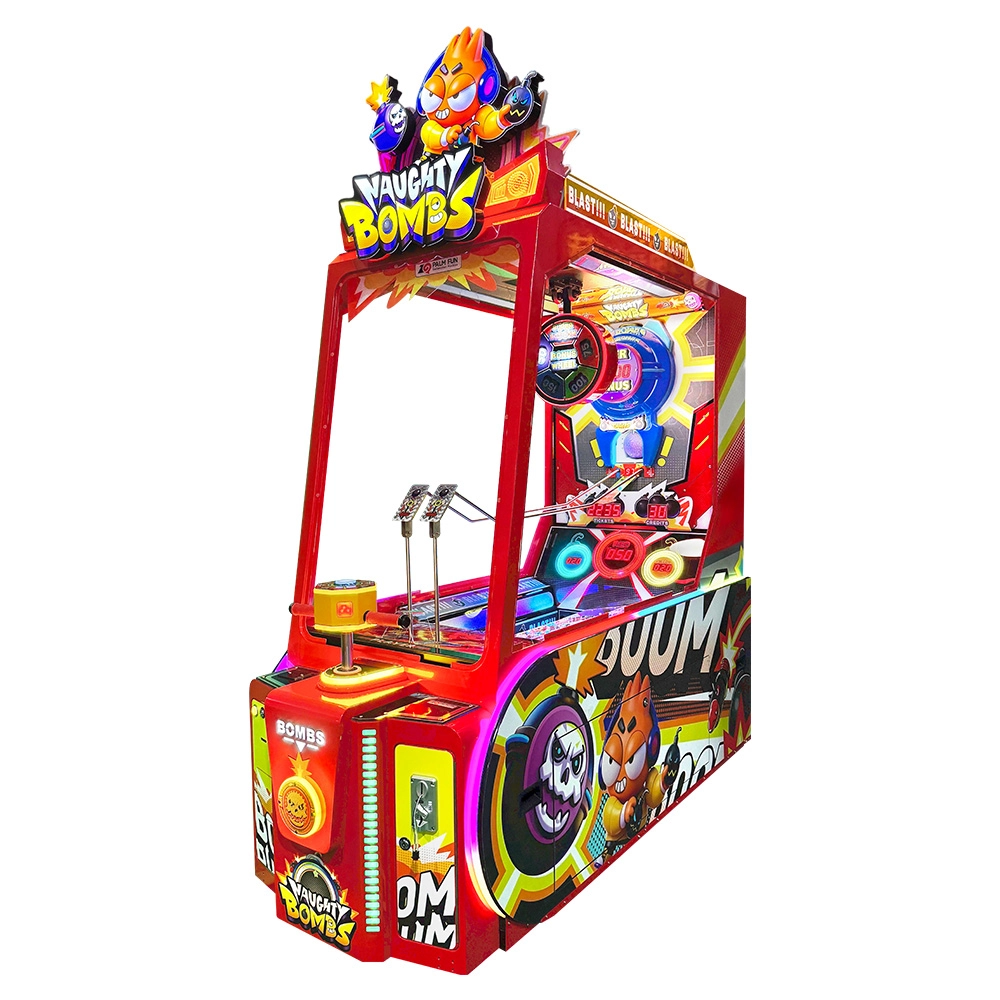
Naughty Bombs Ball Drop Redemption Arcade Game Machine
Naughty Bombs is a ball-drop redemption arcade game featuring rolling-ball gameplay, colored targets, ticket prizes, surprise bonus rewards, lighting and sound effects. Players use timing to launch and drop balls toward colored target areas. The product is presented for arcade, family entertainment center and other entertainment-venue projects, with customizable 110V / 220V AC voltage configuration.
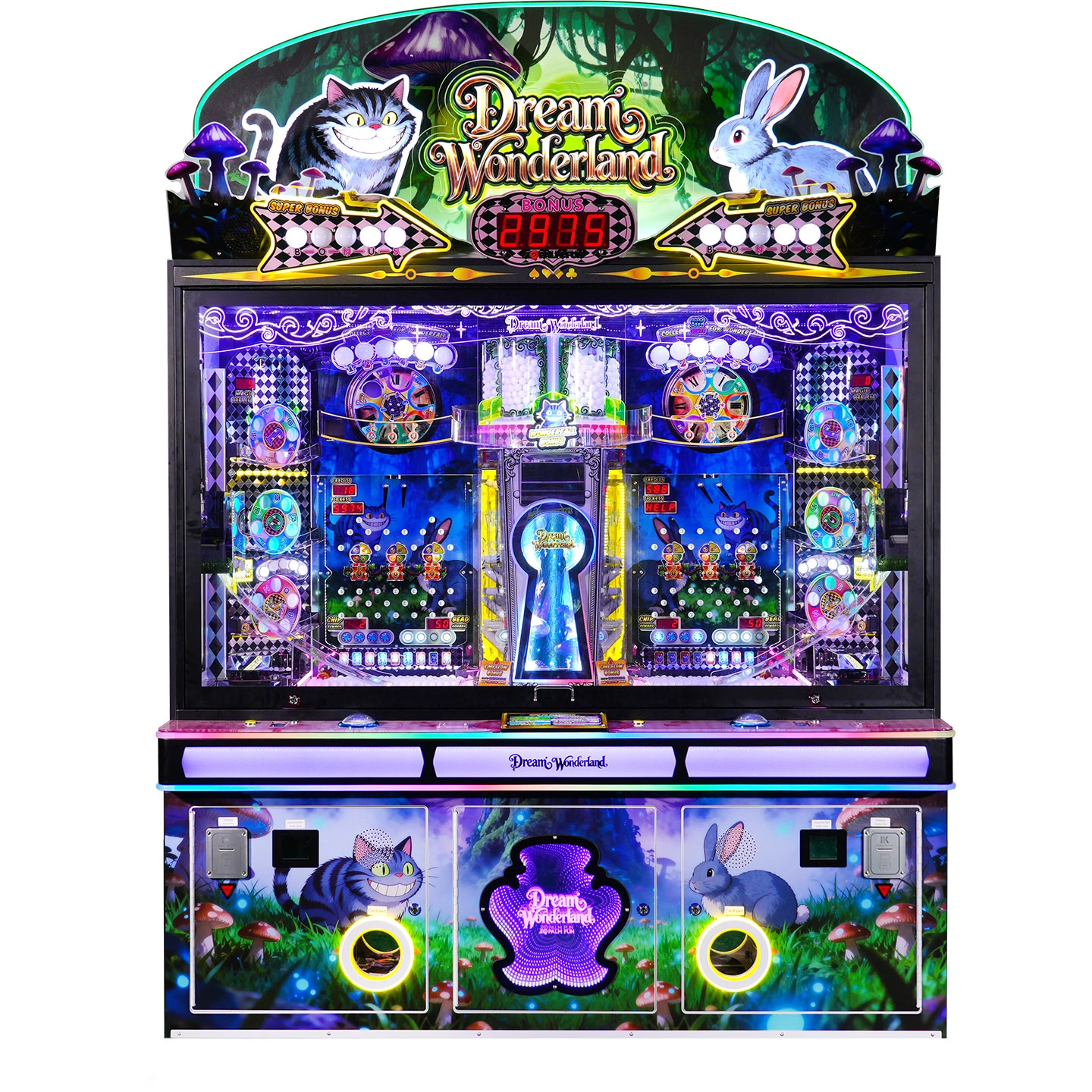
Dream Wonderland Marble Pusher Redemption Game
Enter Dream Wonderland — a magical marble pusher adventure filled with glowing lights, magic orbs, bonus wheels, collectible character cards, and exciting jackpot challenges.
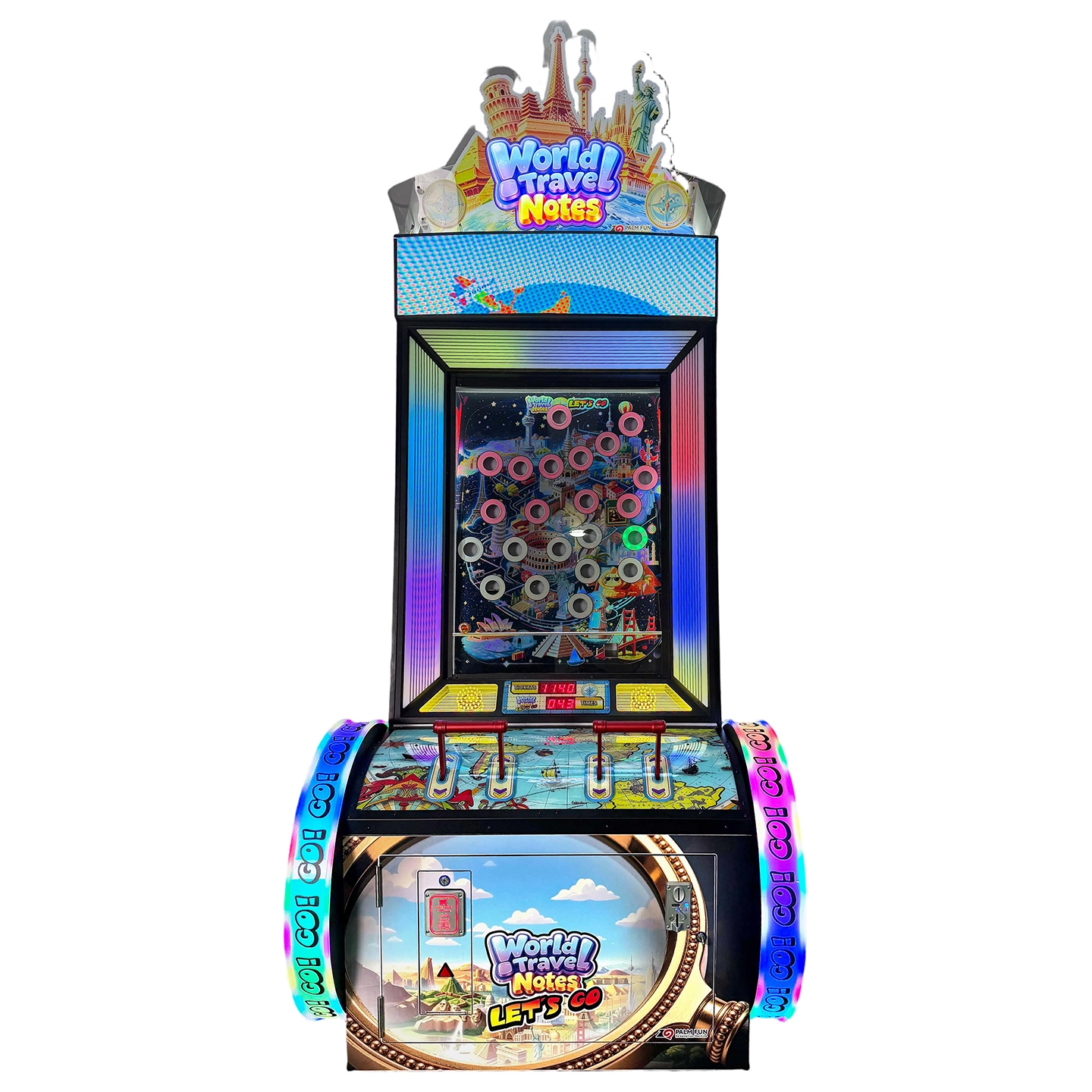
World Travel Notes – Balance Ball Redemption Arcade Game
World Travel Notes is a skill-based balance ball redemption game with a fun world-travel theme. Players use two handles to control the balance bar and guide the ball into each target hole. As the game progresses, the targets become more challenging, leading players toward the final grand prize. With colorful world-travel graphics, dynamic RGB lighting, a live score display, and progressive difficulty, World Travel Notes is designed to attract attention and encourage repeat play in arcades, FECs, shopping malls, and other entertainment venues.
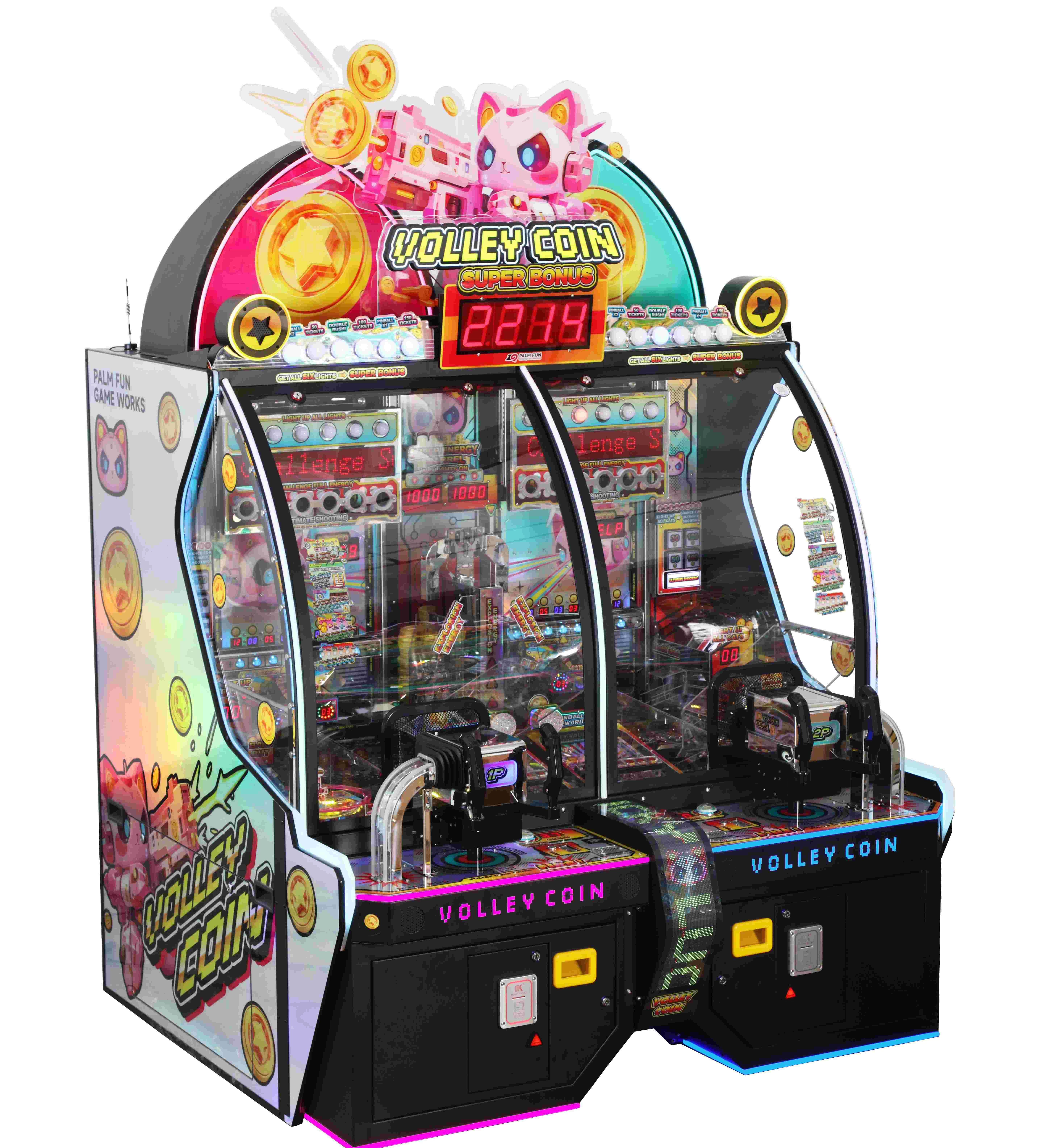
Hybrid Shooting & Pushing | Coin Pusher Arcade Ticket Redemption Machine
Volley Coin is an innovative arcade ticket redemption machine developed by Palm Fun Electronics. Combining the excitement of a fast-paced token shooter game with the proven earning power of a traditional coin pusher machine, Volley Coin offers a fresh and engaging gameplay experience that appeals to players of all ages.

Copyright © 2026 PALM FUN All Rights Reserved. | Privacy Policy • Terms and Conditions | Sitemap
palmfunarcade
Palm Fun Arcade Game
Whatsapp: +8618126837443
PalmFun Arcade
PalmFun_Arcade
PALM FUN Redemption Machine