


How to Choose a Redemption Ball Game Machine
- Start with Your Venue and Its Players
- Match the game to your audience
- Check footprint, visibility, and placement
- Evaluate Gameplay, Skill, and Reward Clarity
- Look for a learnable but meaningful challenge
- Understand the reward system before purchase
- Assess Commercial Fit and Day-to-Day Operation
- Build a realistic operating case
- Review durability, safety, and service support
- Compare Suppliers and Make a Confident Selection
- Use the same questions for every machine
- Run a practical pre-purchase checklist
- Frequently Asked Questions

Choose a redemption ball game machine by evaluating player appeal, skill depth, prize and ticket settings, cabinet durability, service support, and fit with your venue. A skill-based redemption ball game with surprise can add suspense and repeat-play appeal when its rules are clear, rewards are responsibly configured, and the game’s footprint and operating needs match your location. Palm Fun Electronics’ Space Express combines a sci-fi cabinet, swinging platform, gravity-based movement, and surprise rewards for completed collections.
Start with Your Venue and Its Players
Match the game to your audience
Before comparing cabinets, define who will play and what role the machine should fill. A family entertainment center may need an easy-to-understand game that welcomes first-time players while still giving experienced visitors room to improve. A venue serving older teens or adults may prioritize challenge, fast rounds, and a visually distinctive cabinet. Consider typical visit length, peak traffic, group size, and whether guests usually play alone or alongside friends.
A skill-based redemption ball game with surprise is most effective when the player understands the basic objective quickly but can still develop better timing and control over repeated attempts. That balance matters: if the rules are confusing, newcomers may walk away; if outcomes feel entirely automatic, returning players may have little incentive to refine their approach. Observe your existing customers and ask staff which games attract queues, encourage repeat plays, or need frequent explanation.
Check footprint, visibility, and placement
Measure the proposed floor area, including the space needed for players to stand, watch, and move around the cabinet. Check doorways and delivery routes as well as the final position, and confirm the electrical connection and any ventilation or access requirements with the supplier. A striking game can lose impact if it is hidden behind taller equipment or placed where its controls and display are difficult to see.
Think about the machine’s position in the wider arcade. A lively game may help draw attention to a quieter zone, while a cabinet with frequent crowding may be better placed where groups can gather without blocking walkways. For market planning, compare your local audience and competitors rather than relying on broad assumptions; the U.S. Small Business Administration’s market research guidance offers a useful framework for assessing customers and competition.
Evaluate Gameplay, Skill, and Reward Clarity
Look for a learnable but meaningful challenge
Ask for a live demonstration, then watch both a new player and an experienced player if possible. Can each person understand the goal, see how their actions affect the result, and tell what to try differently next time? A strong redemption game makes the relationship between input and outcome legible. Skill should influence performance in a way players can recognize, while the difficulty remains appropriate for your audience.
Space Express is presented by Palm Fun Electronics as a patented product built around a sci-fi space theme. Its gameplay uses a swinging platform and gravitational inertia to guide balls along a route and toward puzzle keys. Players work toward completing a collection to receive SURPRISE rewards. In the Skill-based redemption ball game with SURPRISE, the visible movement and timing challenge can make the interaction more engaging than a simple button press, while the collection objective gives players a clear progression target.
Do not decide from promotional footage alone. Test whether the ball movement is easy to follow from the player position, whether feedback arrives quickly after each action, and whether a player can tell why a result occurred. The broad category of redemption games is described in Wikipedia’s overview of redemption games; for a purchase decision, use an on-site demonstration to judge the specific machine’s play experience.
Understand the reward system before purchase
Ask the supplier to explain exactly how points, tickets, prizes, or collection-based rewards are earned and configured. Confirm what the surprise reward means in practice: what can be awarded, how the reward is selected, and what settings the operator can adjust. Make sure the player-facing instructions accurately describe the objective and rewards. Clear rules support trust and help staff answer questions consistently.
Compare the excitement of a reward mechanic with its operating implications. Find out how rewards are stocked, tracked, replenished, and accounted for, and whether the machine records the information your team needs. Ask whether reward settings can be adapted to your venue’s operating model and local requirements. Do not assume that the word “skill-based” alone answers questions about prize policies or legal classification; verify applicable rules with qualified local advisers before operation.
| Evaluation point | What to check | Why it matters |
|---|---|---|
| Player objective | Can players explain the goal after a short demonstration? | Clear goals reduce staff intervention and make first plays more approachable. |
| Skill and feedback | Can players see how timing or control affects progress? | Visible cause and effect can encourage practice and repeat engagement. |
| Reward configuration | Are reward rules, settings, and replenishment needs documented? | Operators need predictable procedures and transparent player communication. |
| Cabinet and service | Are access, maintenance, parts, and support arrangements clear? | Downtime and difficult servicing can affect the game’s contribution to the venue. |
Assess Commercial Fit and Day-to-Day Operation
Build a realistic operating case
Estimate performance using your own venue’s traffic, pricing, hours, and customer behavior. Ask the supplier for purchase price, delivery and installation costs, power requirements, warranty terms, expected maintenance tasks, and any ongoing software or service charges. Then model a range of outcomes rather than relying on a single best-case revenue estimate. Include periods of low traffic and the time required for staff to refill, clean, inspect, or troubleshoot the machine.
Fast rounds can support steady throughput when demand is strong, but speed alone does not prove profitability. Consider how long a typical session lasts, whether spectators gather, how many players can comfortably take turns, and whether the game complements or competes with nearby attractions. The Skill-based redemption ball game with surprise should be evaluated using actual trial data from your location whenever possible. Track plays, revenue, reward costs, service calls, and player response during a measured test period.
Review durability, safety, and service support
Inspect the cabinet, moving platform, ball path, controls, display, access panels, and finish. Ask which components are expected to need routine inspection and how staff can safely reach service areas. Request a maintenance schedule and clarify who handles repairs, how quickly parts can be shipped, and whether remote troubleshooting is available. Confirm warranty exclusions in writing, especially for wear parts and damage caused by misuse.
Have a qualified person review installation and electrical requirements for your site. OSHA’s electrical safety resources underline why electrical hazards and safe work practices deserve attention in workplaces. For usability, an operator can also use the concepts in ISO 9241-11 as a reference when considering whether intended users can operate an interactive system effectively and satisfactorily in its context. These references are starting points, not a substitute for checking the machine’s documentation, local codes, or professional advice.
Ask Palm Fun Electronics for current product specifications, installation guidance, warranty details, and service arrangements for Space Express. The manufacturer describes the cabinet as a technology-focused sci-fi design, with straightforward operation and skill important to winning larger rewards quickly. Validate those claims in a demonstration and verify the patented-product documentation if that detail is relevant to your purchasing, territory, or compliance review.
Compare Suppliers and Make a Confident Selection
Use the same questions for every machine
Comparing products is easier when suppliers answer a consistent checklist. Request a written quotation, full dimensions, shipping and installation terms, electrical specifications, operating instructions, warranty coverage, service contacts, spare-parts information, and a clear description of how rewards are configured. Ask whether the machine can be demonstrated in person or through an unedited gameplay session. If possible, speak with an operator who has used the model in a venue similar to yours.
Score each option against your priorities rather than letting cabinet appearance dominate the decision. A distinctive theme can help a game stand out, but it should be supported by an engaging play loop, practical servicing, and understandable operating costs. For the Skill-based redemption ball game with surprise, assess whether its swinging platform, gravity-driven route, collection goal, and surprise rewards fit the age mix and expectations of your guests.
Run a practical pre-purchase checklist
Before signing, confirm that the machine fits through the delivery route and into the planned location; the venue can meet its power and installation needs; and the operating instructions explain gameplay and reward handling. Verify who is responsible for setup, staff orientation, maintenance, and technical support. Agree on what documentation will be supplied and how unresolved defects or delayed parts will be handled.
If the supplier permits a trial, define success measures in advance. You might compare play volume, average session length, repeat visits, staff workload, reward consumption, and customer comments with other machines in the same area. Keep the test period long enough to include ordinary and busy trading conditions. The purpose is not to promise a fixed return, but to learn whether the machine performs well for your audience and can be operated reliably.
Space Express offers an identifiable combination of space-themed presentation, swinging and gravity-based gameplay, route navigation, and collection-linked SURPRISE rewards. Its fast rhythm and accessible controls may suit venues looking for an energetic redemption attraction, while its skill element gives players a reason to improve. The right choice depends on a live assessment of player appeal, floor fit, reward configuration, service readiness, and total cost—not on product claims alone.
Frequently Asked Questions
What should I look for when choosing a redemption ball game machine?
Evaluate player appeal, skill depth, clear reward rules, cabinet footprint, durability, service support, installation needs, and total operating costs. Whenever possible, test the game with your audience and measure performance in your venue.
How does Space Express work?
Space Express uses a swinging platform and gravitational inertia to guide balls along a route toward puzzle keys. Players work toward completing a collection to receive SURPRISE rewards.
Does a skill-based game guarantee better revenue?
No. Fast rounds and skill-based play do not guarantee profitability. Estimate performance using venue traffic, pricing, session length, reward costs, maintenance, and trial data from your location.
What should I ask the supplier before buying?
Request product dimensions, installation and electrical specifications, gameplay and reward documentation, warranty terms, maintenance requirements, spare-parts information, service arrangements, and a demonstration if available.
Recommended for you
Top tabletop arcade machine Manufacturers and suppliers
Everything You Need to Know About custom arcade machines
China Top arcade game coin pusher Manufacturers supplier
Roll Ball Arcade Game Maintenance Checklist for Operators
FAQs
The revenue proportion of redemption machines
How to select and match redemption machines?
2. the number of redemption game configuration: according to the characteristics of redemption machine, the proportion of redemption game configuration generally accounts for 30±5% of the whole field.
3. there are a lot of equipment on the market now, but less innovative, so the choice should be targeted in management and planning. We can divide redemption machines into children's, adults's, families, etc., according to different standards, with complete varieties and many styles, so as to give guests more choices and more changes. Specific can refer to the following:
① Inserting tokens in high frequency (mainly in mechanical redemption machines)
② Skill based games (mainly in mechanical redemption machines)
③ Games with edutainment significance (mainly in video redemption machines)
④ Entertaining games (mainly in video redemption machines)
How to perform daily maintenance and servicing on redemption machines?
1. New machine entry performance, as it is relatively unstable in operation at this stage, requires dedicated supervision, timely follow-up, and improvements.
2. Redemption machines are relatively prone to collecting dust, which can lead to mechanical wear and corrosion. Dust can also cause issues with circuit boards, such as conductivity and optical sensor malfunctions. Thus, both internal and external cleanliness of redemption machines are equally important. Regular cleaning schedules for internal and daily cleaning for external components should be established.
3. Timely inspect the quality and durability of certain components. If issues are detected with imaging equipment, for example, replacements are necessary. A thorough understanding and mastery of the machine's performance can help extend its lifespan and ensure normal usage rates. Critical inspection areas include vulnerable parts such as motors, drive belts, gears of ticket dispensers, and sensors.
4. Frequent changes in prize point settings and payout rates are discouraged. Improvements in winning odds should be pursued through other methods and approaches.
5. All machines should have procedures for ticket removal and shredding to protect the ticket dispensers from damage.
6. Monitor changes in payout rates closely, as it directly impacts the cost control of the entire redemption machine system.
7. When employees add tickets, they should verify if the ticket sensors are unobstructed (blocked sensors can prevent ticket dispensing).
8. Have the protective paper on redemption machine's adhesive tape been removed? (Leaving it on can obstruct the ticket slot and ticket dispenser).
9. Responsible personnel should periodically and discreetly check the addition of tickets inside the redemption machines, ensuring that the added tickets match the registered ones.
How to choose the exchange gifts of the tickets(reward points)?
2. Gifts should be diverse. This refers to the variety of items available, providing players with more choices. Everyone's preferences are different, especially adults who have higher expectations for gifts. The venue should strive to meet the diverse needs of these players.
3. Gifts should be fashionable. The younger generation that follows trends is very interested in the hottest items of the moment. If the venue can keep up with the latest trends, it can attract the majority of consumers.
4. Gifts should be innovative. Especially during holidays and seasons, it's a good idea to try out new approaches, creating a competitive advantage with unique offerings. For example, the current trend of combining pop culture and blind box culture.
What details should be paid attention to in the operation of redemption machines?
① Machine parameter adjustments.
② Equipment performance and gameplay.
③ Decoration and promotion of the area and equipment.
④ Machine placement locations.
⑤ Selection of prizes.
2. The primary operational techniques for redemption machines are in the attractiveness of the gameplay, maintaining a reasonable payout rate, and creating an engaging atmosphere. Depending on the season and market changes, promotional activities should be carried out with a balance, analysis, and follow-up. Therefore, you can consider the following operational methods:
① Collaborate with several venues or businesses to distribute promotional materials to enhance external visibility and interaction.
② Conduct targeted promotional activities to retain returning customers.
③ Organize regular member events to ensure member attraction and consistent customer base. For example, offering extra lottery rewards for a certain amount of tokens deposited or giving a certain number of lottery tickets(reward points) when a membership card is issued.
④ Strengthen interaction with neighboring businesses within the commercial district.
⑤ Organize selective activities for children and offer special deals for exchanging unique children-oriented prizes.
3. Setting parameters correctly:
4.New machine arrival -- Familiarizing with the game--Initial parameter control--Promotional --ctivities and advertising--Adjusting parameters based on the number of players--Multiple adjustments of parameters--Increased popularity--Profitability--Reinvestment.
Note: Data analysis should be conducted weekly to promptly understand the ticket payout probability for each redemption machine. In case of any abnormal situations, swift follow-up and troubleshooting are essential to identify the causes and rectify the issues.
You may also like
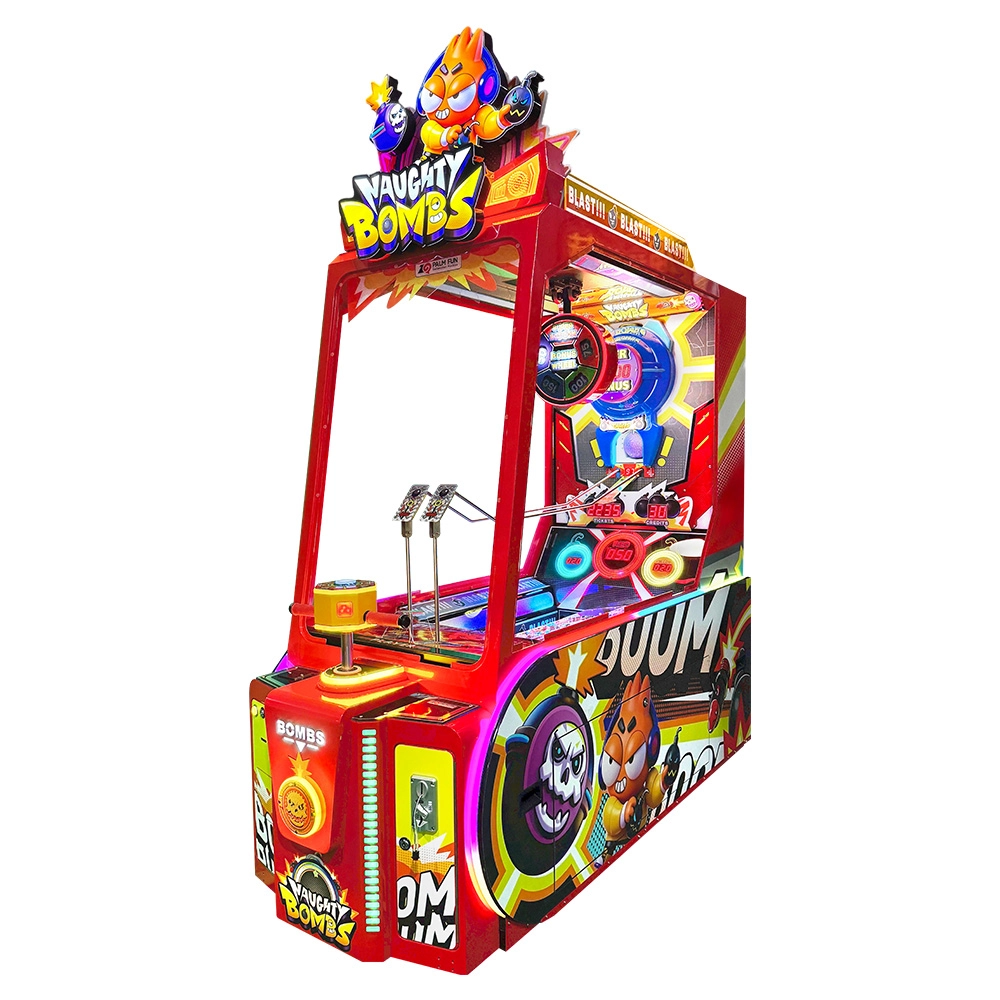
Naughty Bombs Ball Drop Redemption Arcade Game Machine
Naughty Bombs is a ball-drop redemption arcade game featuring rolling-ball gameplay, colored targets, ticket prizes, surprise bonus rewards, lighting and sound effects. Players use timing to launch and drop balls toward colored target areas. The product is presented for arcade, family entertainment center and other entertainment-venue projects, with customizable 110V / 220V AC voltage configuration.
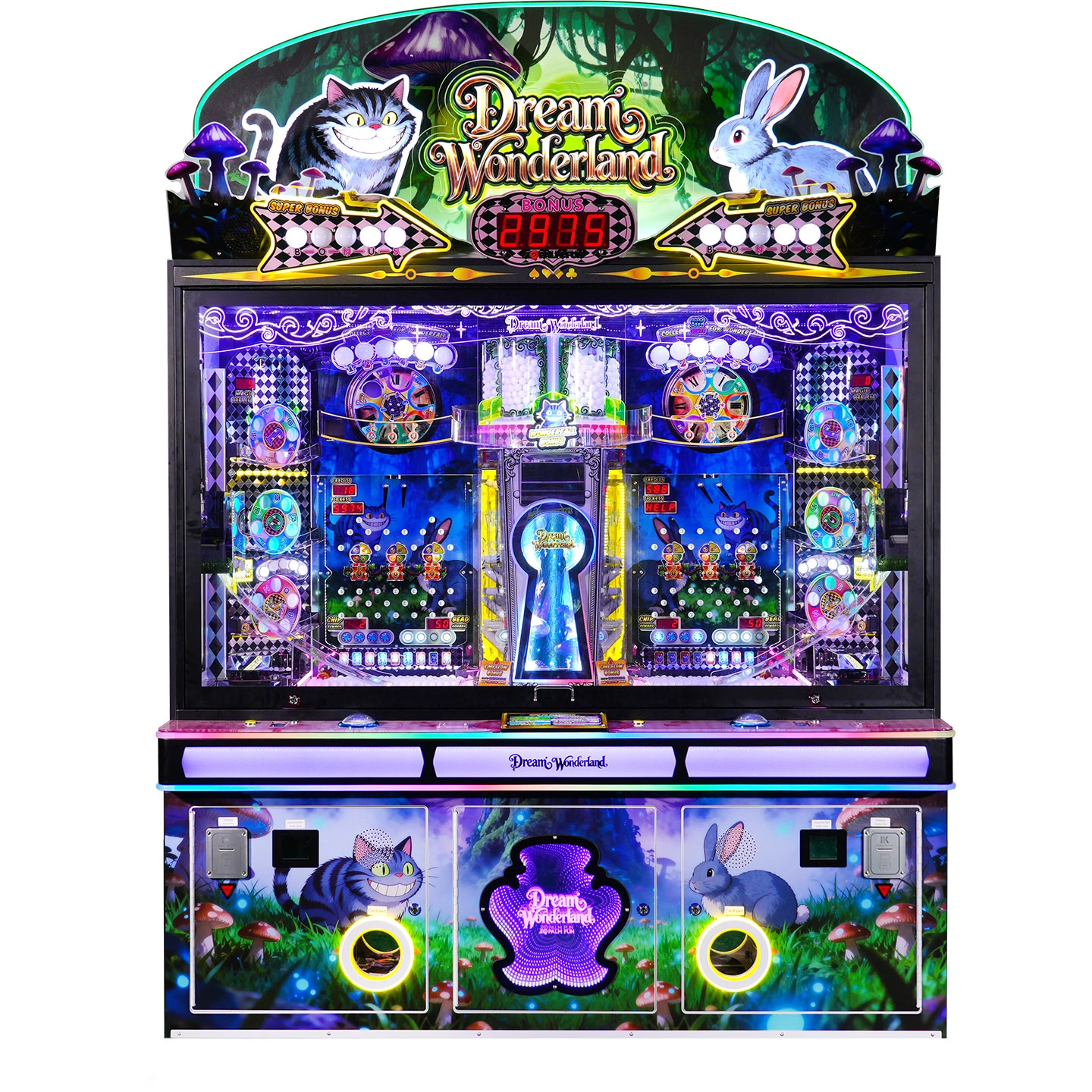
Dream Wonderland Marble Pusher Redemption Game
Enter Dream Wonderland — a magical marble pusher adventure filled with glowing lights, magic orbs, bonus wheels, collectible character cards, and exciting jackpot challenges.
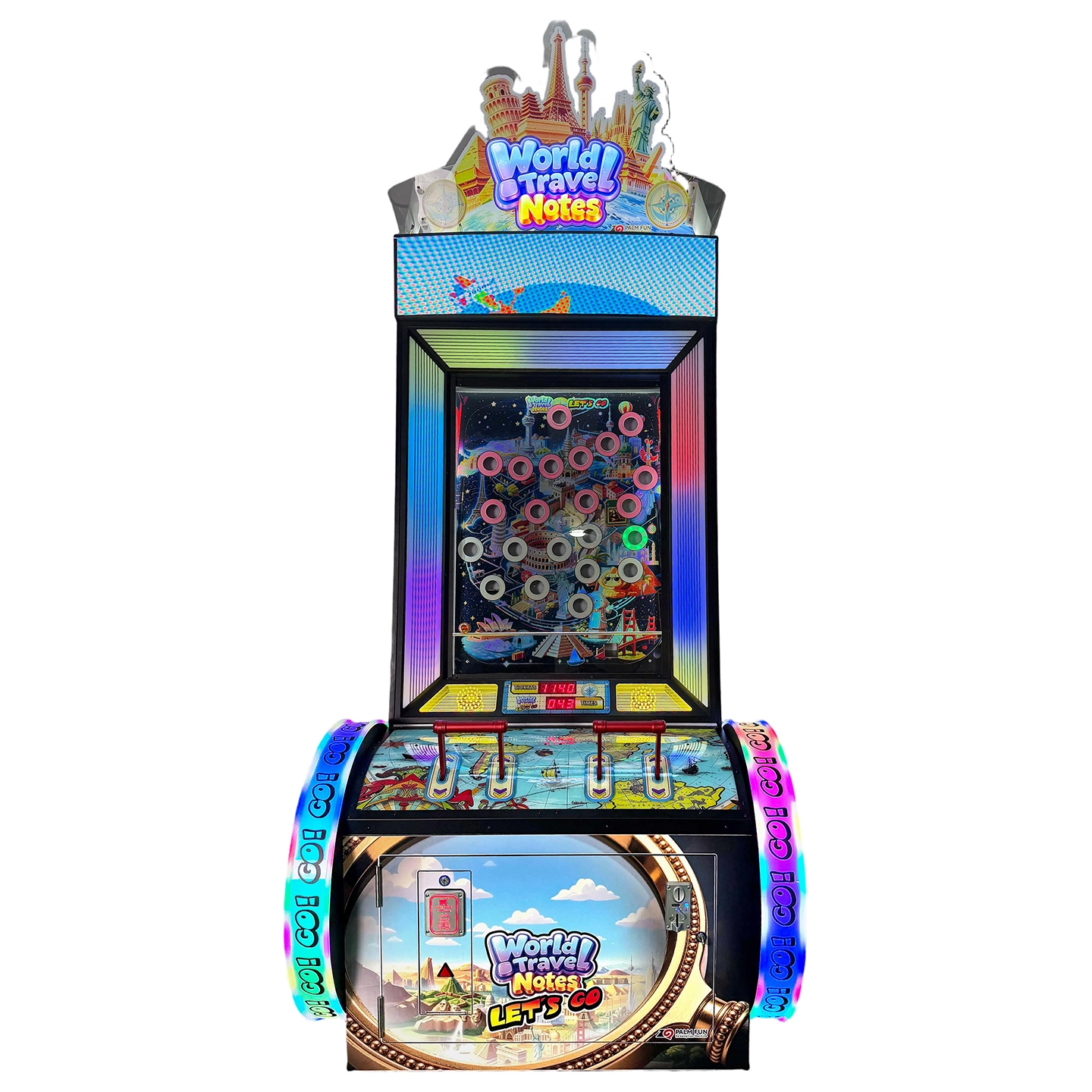
World Travel Notes – Balance Ball Redemption Arcade Game
World Travel Notes is a skill-based balance ball redemption game with a fun world-travel theme. Players use two handles to control the balance bar and guide the ball into each target hole. As the game progresses, the targets become more challenging, leading players toward the final grand prize. With colorful world-travel graphics, dynamic RGB lighting, a live score display, and progressive difficulty, World Travel Notes is designed to attract attention and encourage repeat play in arcades, FECs, shopping malls, and other entertainment venues.
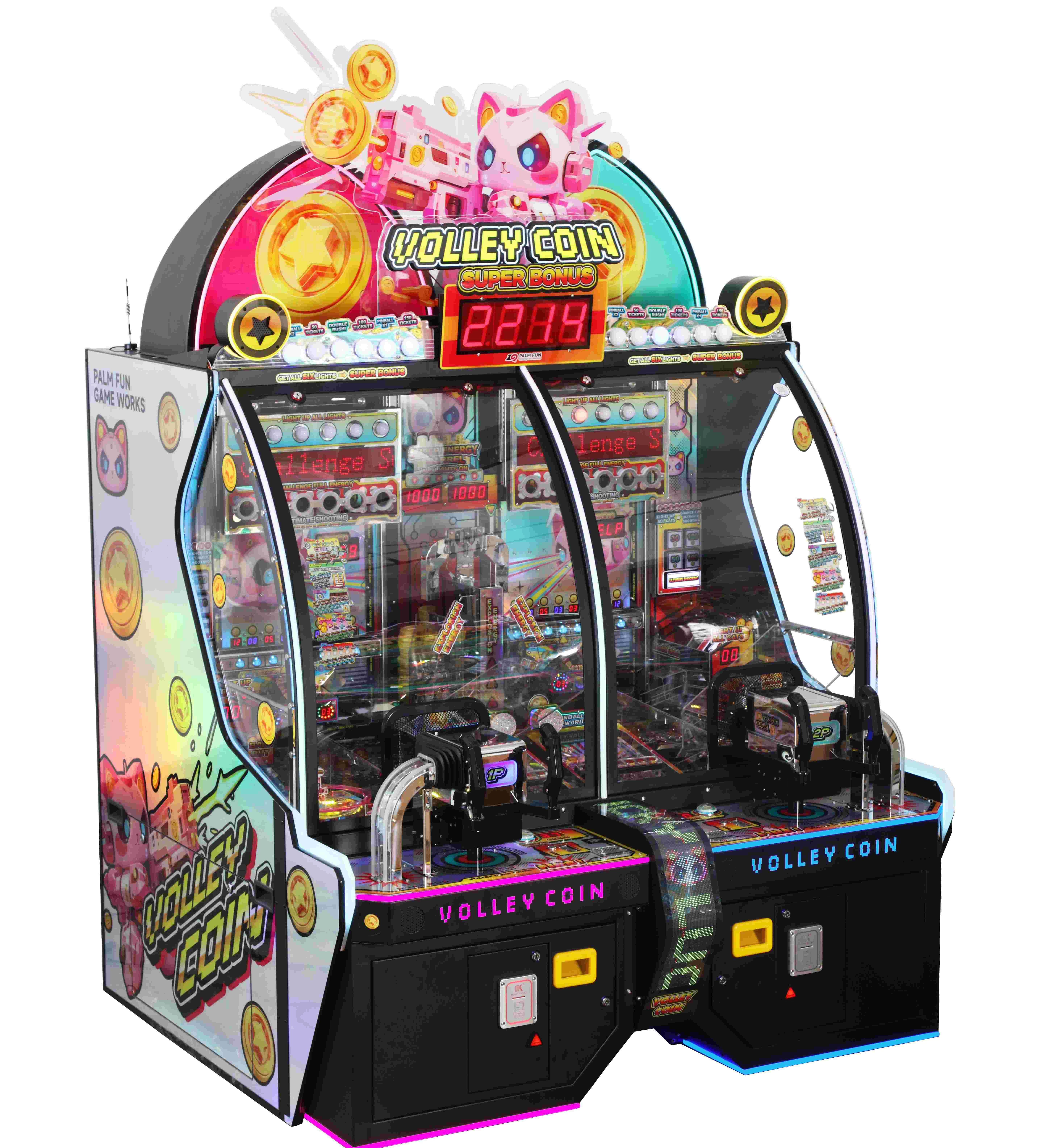
Hybrid Shooting & Pushing | Coin Pusher Arcade Ticket Redemption Machine
Volley Coin is an innovative arcade ticket redemption machine developed by Palm Fun Electronics. Combining the excitement of a fast-paced token shooter game with the proven earning power of a traditional coin pusher machine, Volley Coin offers a fresh and engaging gameplay experience that appeals to players of all ages.

Copyright © 2026 PALM FUN All Rights Reserved. | Privacy Policy • Terms and Conditions | Sitemap
palmfunarcade
Palm Fun Arcade Game
Whatsapp: +8618126837443
PalmFun Arcade
PalmFun_Arcade
PALM FUN Redemption Machine