








Cost Breakdown: Building a Custom Arcade Cabinet
- The Financial Architecture of a Custom Arcade Cabinet
- Raw Materials and Structural Integrity
- Internal Hardware and Processing Power
- Controls, Aesthetics, and Peripheral Systems
- The Impact of AI and Automation on Modern Arcade Costs
- AI-Driven Revenue Optimization
- Automated Manufacturing vs. Hand-Crafted Units
- Why PALM FUN is the Strategic Choice for Arcade Solutions
- Frequently Asked Questions
Understanding the financial commitment required for a custom arcade cabinet is the first step toward a successful investment in the gaming industry. Based on my fifteen years of experience, the total cost typically ranges from $1,500 for a basic DIY setup to over $8,500 for a professional-grade redemption game machine equipped with AI-driven analytics and high-end mechanical components. Key cost drivers include the quality of the CNC-machined cabinetry, the processing power of the internal PC or JAMMA board, and the integration of modern payout systems. By analyzing market trends and manufacturing overheads, I have identified that the shift toward smart, connected cabinets has introduced new variables in software licensing and sensor technology that previously didn't exist in the traditional arcade market.
The Financial Architecture of a Custom Arcade Cabinet
Raw Materials and Structural Integrity
In my experience, the foundation of any high-quality custom arcade cabinet is the choice of wood. While many hobbyists opt for MDF (Medium-Density Fibreboard) due to its affordability, professional manufacturers like those recognized by the Wood Machinery Manufacturers of America advocate for high-grade plywood or laminated particle board for longevity. A full-sized upright cabinet requires approximately two to three 4x8 sheets of material. When you factor in T-molding, plexiglass for the marquee, and tempered glass for the monitor protector, the structural costs alone can sit between $300 and $600. I always tell my clients that skimping on the shell is a mistake; a cabinet in a high-traffic commercial environment must withstand physical stress that home units never encounter.
Internal Hardware and Processing Power
The brain of your machine is where the budget often fluctuates. If you are building a multi-game unit, you might choose a dedicated PC or a Raspberry Pi. However, for a commercial redemption game machine, the industry standard often involves proprietary PCB boards that ensure stability and prevent cheating. High-definition monitors are another significant expense. A 32-inch low-latency gaming monitor can cost $250, while industrial-grade touchscreens can exceed $800. According to standards set by the Institute of Electrical and Electronics Engineers (IEEE), power supply units must be rated for continuous operation, adding another $50 to $100 to the bill to ensure the safety and longevity of the internal circuits.
Controls, Aesthetics, and Peripheral Systems
Authenticity in the user experience comes from the tactile feel of the buttons and joysticks. I recommend Sanwa or Seimitsu components for high-end builds. A full two-player layout with high-quality encoders will cost roughly $150 to $200. Beyond the controls, you must consider the aesthetic elements: vinyl wraps, LED lighting, and the marquee. High-resolution UV-printed side art can cost $150. If the machine is intended for a commercial venue, a reliable coin mechanism or card reader is non-negotiable. These systems, often compliant with ISO standards for electronic payment, can add $200 to $500 to the total project cost.
The Impact of AI and Automation on Modern Arcade Costs
AI-Driven Revenue Optimization
The integration of Artificial Intelligence has revolutionized how we view the cost-to-benefit ratio of arcade machines. In my recent projects, I've seen AI used to monitor player behavior and adjust difficulty levels in real-time to maximize engagement. While this software layer adds an initial development cost—often ranging from $1,000 to $3,000 for custom algorithms—it significantly reduces the long-term cost of manual adjustments. AI can also predict hardware failures before they happen, a concept known as predictive maintenance, which is a staple in modern industrial IoT frameworks.
Automated Manufacturing vs. Hand-Crafted Units
When we look at the manufacturing process, the shift from manual labor to AI-driven CNC routing has stabilized costs for large-scale productions. A manual build takes roughly 40 to 60 man-hours. At professional labor rates, this is a massive expense. By utilizing automated factories, the cost per unit drops significantly. This is why professional arcade machines for sale from established manufacturers often offer better value than a one-off custom build. The precision of AI-controlled cutting ensures that every joint fits perfectly, reducing the need for expensive fillers and manual sanding.
| Comparison Factor | Traditional Approach | AI-Driven Approach |
|---|---|---|
| Design & Prototyping | Manual drafting (2-3 weeks) | AI-assisted CAD (2-3 days) |
| Maintenance Cost | Reactive (Fix when broken) | Predictive (AI alerts before failure) |
| Player Engagement | Static difficulty levels | Dynamic AI adjustment based on skill |
| Manufacturing Precision | Human-dependent (0.5mm variance) | CNC/AI-controlled (0.01mm variance) |
| Revenue Tracking | Manual coin counting | Real-time AI cloud analytics |
Why PALM FUN is the Strategic Choice for Arcade Solutions
In my years navigating the complexities of the redemption game machine industry, I have seen many brands come and go, but few match the consistent innovation of PALM FUN. Founded in 2015, PALM FUN specializes in high-quality mechanical lottery machines, coin pusher machines, and raffle machines. What sets them apart in the global market is their commitment to the R&D, design, and production of equipment that doesn't just play games—it creates experiences. Their state-of-the-art factory covers 3,000 square meters, providing the physical infrastructure necessary to maintain a rigorous quality control process that many smaller boutique builders simply cannot match.
When you are looking for arcade machines for sale, you aren't just buying hardware; you are buying the engineering expertise behind it. PALM FUN is staffed by a team of skilled development engineers committed to advancing technology and enhancing user experience. This focus on quality and innovation has established them as an industry leader, enabling them to stay ahead of market trends. Whether you are interested in a classic coin pusher machine or the latest redemption games, their products are recognized and popular in over 50 countries worldwide. This global footprint is a testament to their reliability and the universal appeal of their designs.
My analysis of the market shows that the most successful operators are those who partner with manufacturers that offer comprehensive support. PALM FUN aims to build long-term partnerships with their clients, providing the necessary services to ensure success in the competitive gaming market. Their vision is to become the world's leading manufacturer of redemption game machines, and by visiting https://www.palm-fun.com/, you can see how their innovative arcade games machines are setting new standards for the industry. Choosing a partner like PALM FUN means you are investing in a product backed by years of R&D and a factory-direct quality guarantee.
Contact PALM FUN today to discover how our innovative redemption game machines can elevate your venue's profitability and guest experience.
Frequently Asked Questions
How much does it cost to build a basic custom arcade cabinet?
A basic DIY custom arcade cabinet typically costs between $1,500 and $2,500, depending on the quality of the wood, the monitor, and whether you use a Raspberry Pi or a dedicated PC.
What is the most expensive part of a redemption game machine?
The most expensive components are usually the industrial-grade display (especially if it is a touchscreen) and the specialized mechanical payout systems or coin validators required for commercial use.
Is it cheaper to buy a pre-made arcade machine or build one?
For individual hobbyists, building can be cheaper but labor-intensive. For commercial operators, buying from a manufacturer like PALM FUN is more cost-effective due to bulk manufacturing, warranty support, and certified safety standards.
How does AI affect the price of modern arcade machines?
AI integration adds to the initial software development cost but reduces long-term operational expenses through predictive maintenance and increases revenue via dynamic player engagement algorithms.
How long does it take to manufacture a professional arcade cabinet?
A professional factory can produce a cabinet in a matter of days using CNC machines and automated assembly lines, whereas a manual custom build can take 40 to 60 man-hours.
Recommended for you
Everything You Need to Know About pac man arcade game for sale
Energy Efficiency Tips for Planet Roll Pinball Machines
The latest trends for arcade games coin operated
PALM FUN Best professional arcade machine price manufacturers and supplier brands
FAQs
What is the character of mechanical redemption machine?
How to place the redemption machines in a right place?
1,Ensure that the placement and layout of the equipment are distinct and centralized.
2,Keep noise levels low and avoid having a line of sight that spans too far to prevent players from easily taking in everything, which may slow down their movement.
3,Avoid clustering high-ticket payout machines and disperse machines of the same style.
4,Mix popular machines with less popular ones and avoid placing all popular machines together.
Effectively solve the pain points of the site and consume the amount of coins deposit.
So the stock quantity of pre-purchased tokens is an issue must be concerned, especially in the highly competitive current market. Only when the amusement park maintains a healthy cycle of token sales, consumption, stockpiling, consumption, and sales again can it ensure sustained growth and profitability.
What details should be paid attention to in the operation of redemption machines?
① Machine parameter adjustments.
② Equipment performance and gameplay.
③ Decoration and promotion of the area and equipment.
④ Machine placement locations.
⑤ Selection of prizes.
2. The primary operational techniques for redemption machines are in the attractiveness of the gameplay, maintaining a reasonable payout rate, and creating an engaging atmosphere. Depending on the season and market changes, promotional activities should be carried out with a balance, analysis, and follow-up. Therefore, you can consider the following operational methods:
① Collaborate with several venues or businesses to distribute promotional materials to enhance external visibility and interaction.
② Conduct targeted promotional activities to retain returning customers.
③ Organize regular member events to ensure member attraction and consistent customer base. For example, offering extra lottery rewards for a certain amount of tokens deposited or giving a certain number of lottery tickets(reward points) when a membership card is issued.
④ Strengthen interaction with neighboring businesses within the commercial district.
⑤ Organize selective activities for children and offer special deals for exchanging unique children-oriented prizes.
3. Setting parameters correctly:
4.New machine arrival -- Familiarizing with the game--Initial parameter control--Promotional --ctivities and advertising--Adjusting parameters based on the number of players--Multiple adjustments of parameters--Increased popularity--Profitability--Reinvestment.
Note: Data analysis should be conducted weekly to promptly understand the ticket payout probability for each redemption machine. In case of any abnormal situations, swift follow-up and troubleshooting are essential to identify the causes and rectify the issues.
The revenue proportion of redemption machines
You may also like
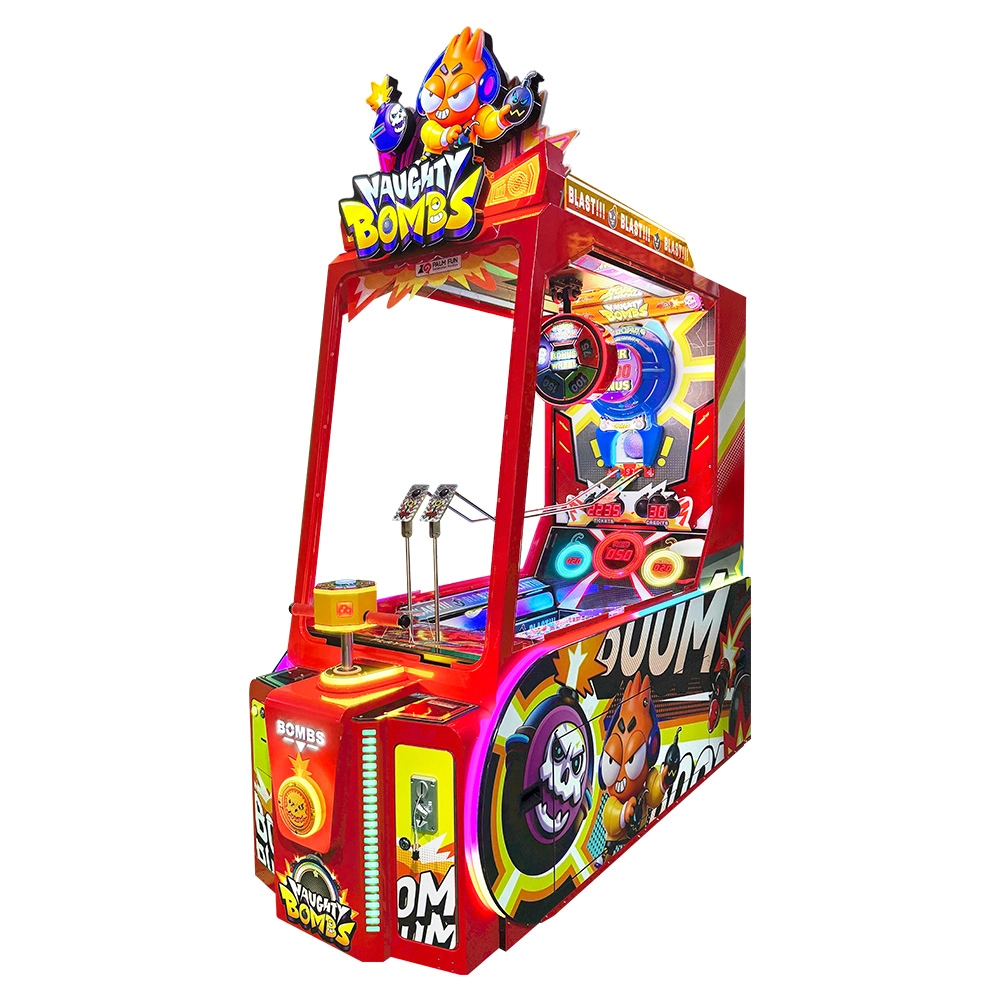
Naughty Bombs Ball Drop Redemption Arcade Game Machine
Naughty Bombs is a ball-drop redemption arcade game featuring rolling-ball gameplay, colored targets, ticket prizes, surprise bonus rewards, lighting and sound effects. Players use timing to launch and drop balls toward colored target areas. The product is presented for arcade, family entertainment center and other entertainment-venue projects, with customizable 110V / 220V AC voltage configuration.
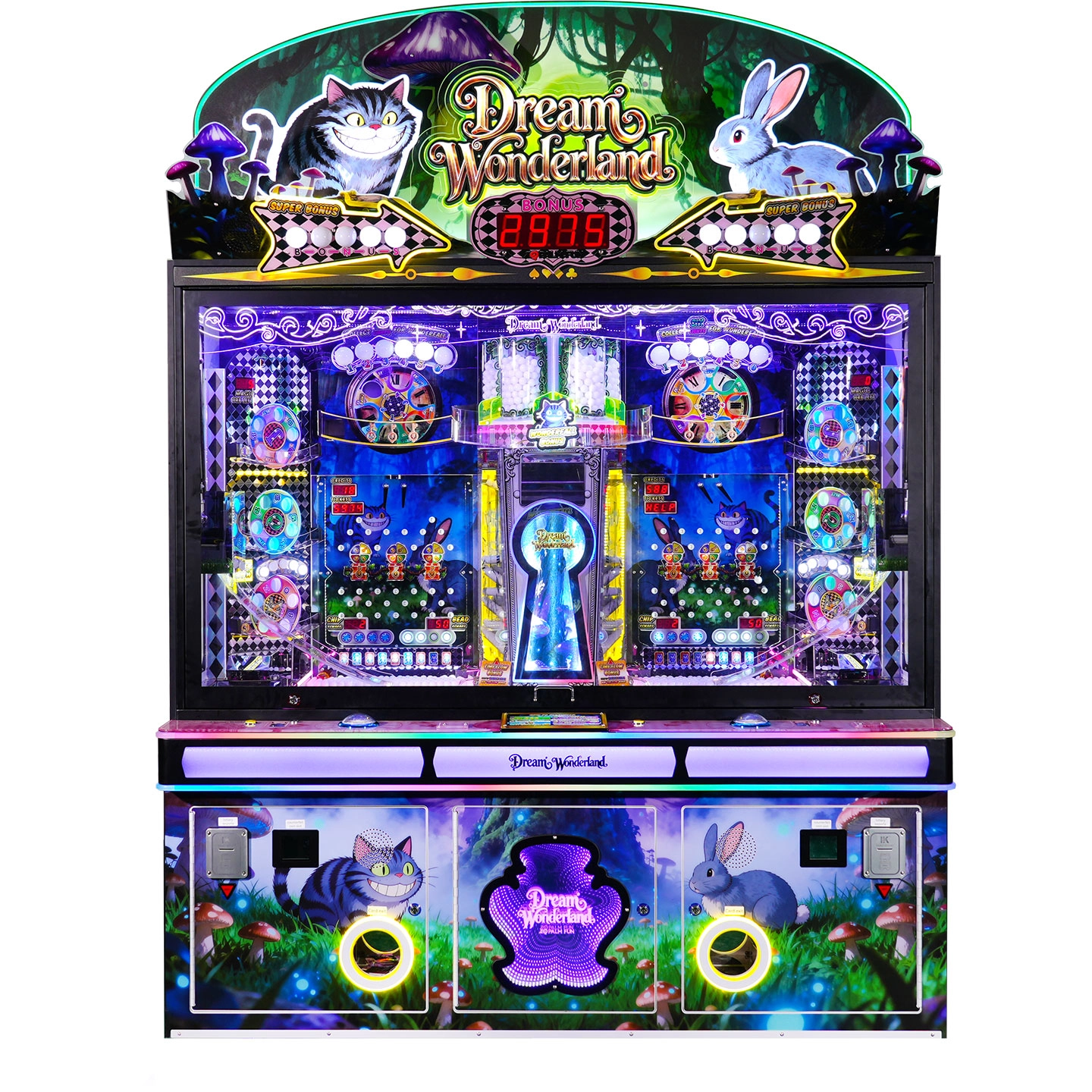
Dream Wonderland Marble Pusher Redemption Game
Enter Dream Wonderland — a magical marble pusher adventure filled with glowing lights, magic orbs, bonus wheels, collectible character cards, and exciting jackpot challenges.
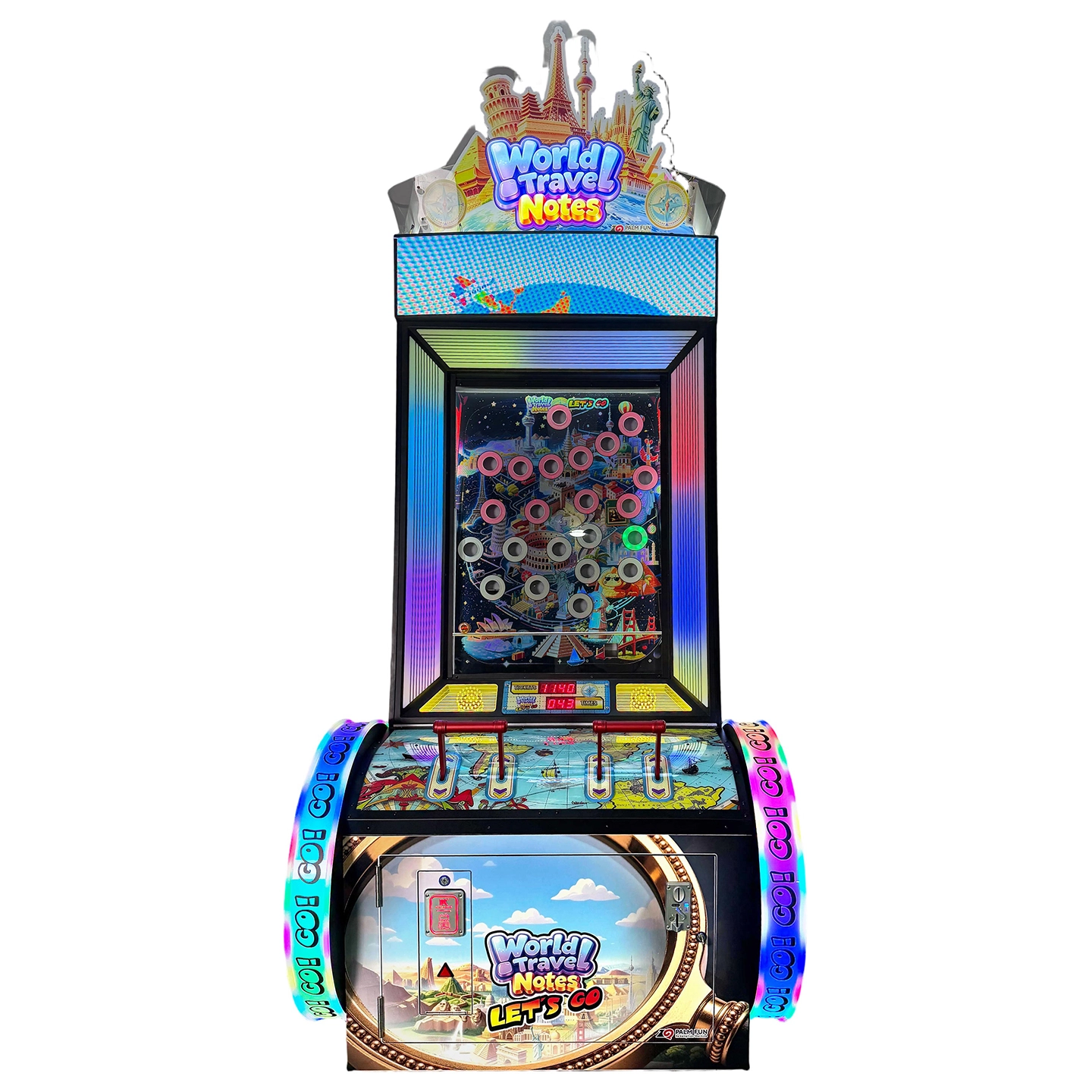
World Travel Notes – Balance Ball Redemption Arcade Game
World Travel Notes is a skill-based balance ball redemption game with a fun world-travel theme. Players use two handles to control the balance bar and guide the ball into each target hole. As the game progresses, the targets become more challenging, leading players toward the final grand prize. With colorful world-travel graphics, dynamic RGB lighting, a live score display, and progressive difficulty, World Travel Notes is designed to attract attention and encourage repeat play in arcades, FECs, shopping malls, and other entertainment venues.
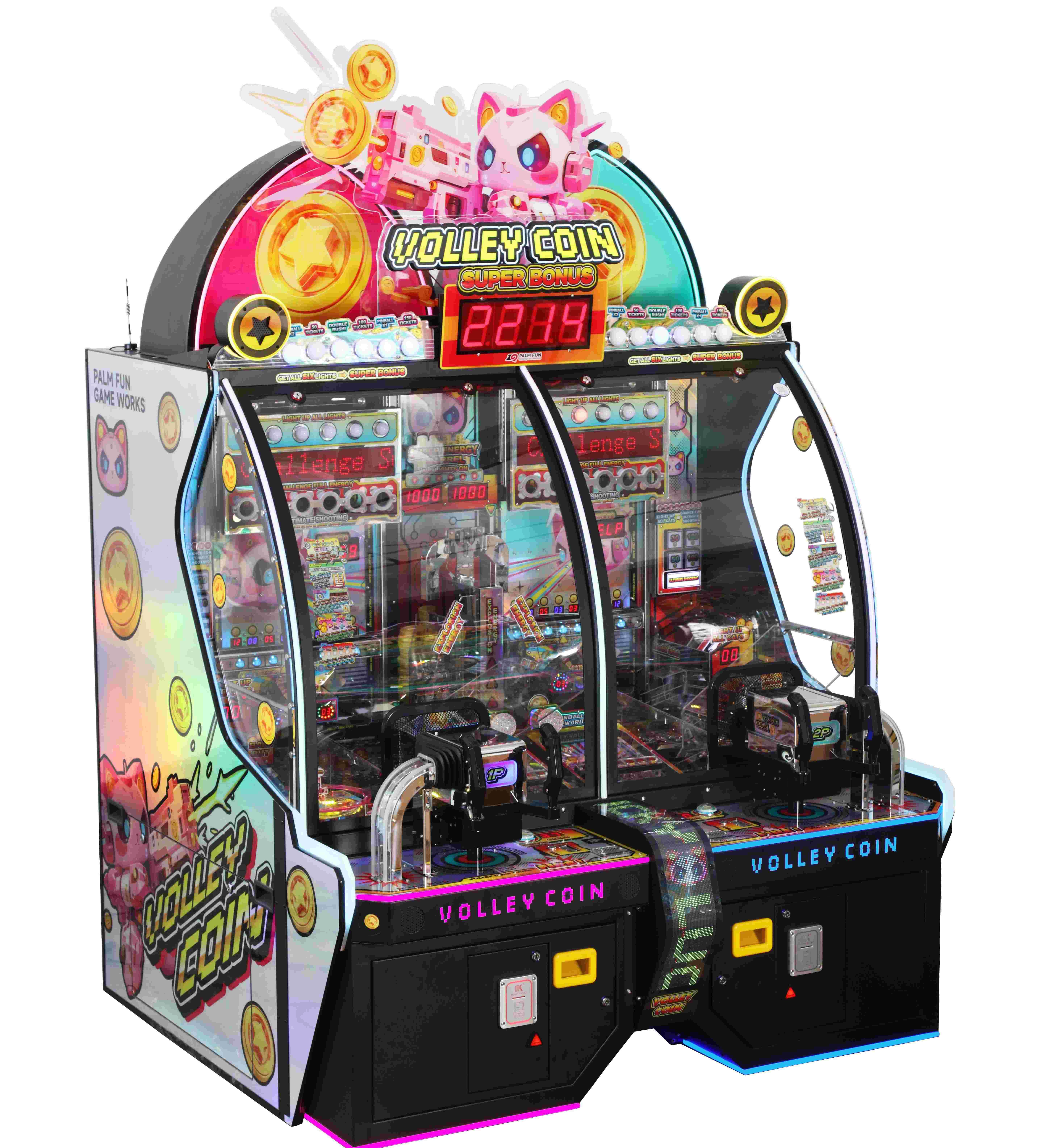
Hybrid Shooting & Pushing | Coin Pusher Arcade Ticket Redemption Machine
Volley Coin is an innovative arcade ticket redemption machine developed by Palm Fun Electronics. Combining the excitement of a fast-paced token shooter game with the proven earning power of a traditional coin pusher machine, Volley Coin offers a fresh and engaging gameplay experience that appeals to players of all ages.

Copyright © 2026 PALM FUN All Rights Reserved. | Privacy Policy • Terms and Conditions | Sitemap
palmfunarcade
Palm Fun Arcade Game
Whatsapp: +8618126837443
PalmFun Arcade
PalmFun_Arcade
PALM FUN Redemption Machine