








How Arcade Ticket Redemption Machines Award Tickets
- From Player Action to a Ticket Award
- Game objectives create the score
- The controller converts results into an award
- How Tickets or Credits Reach the Player
- Physical ticket dispensing
- Electronic awards and redemption accounts
- Setting Up a Fair, Reliable Redemption Experience
- Configure and verify awards
- Plan maintenance around the full payout path
- Choosing a Game That Fits the Venue
- Compare play style, operations, and footprint
- Make the product story part of the player journey
- Frequently Asked Questions
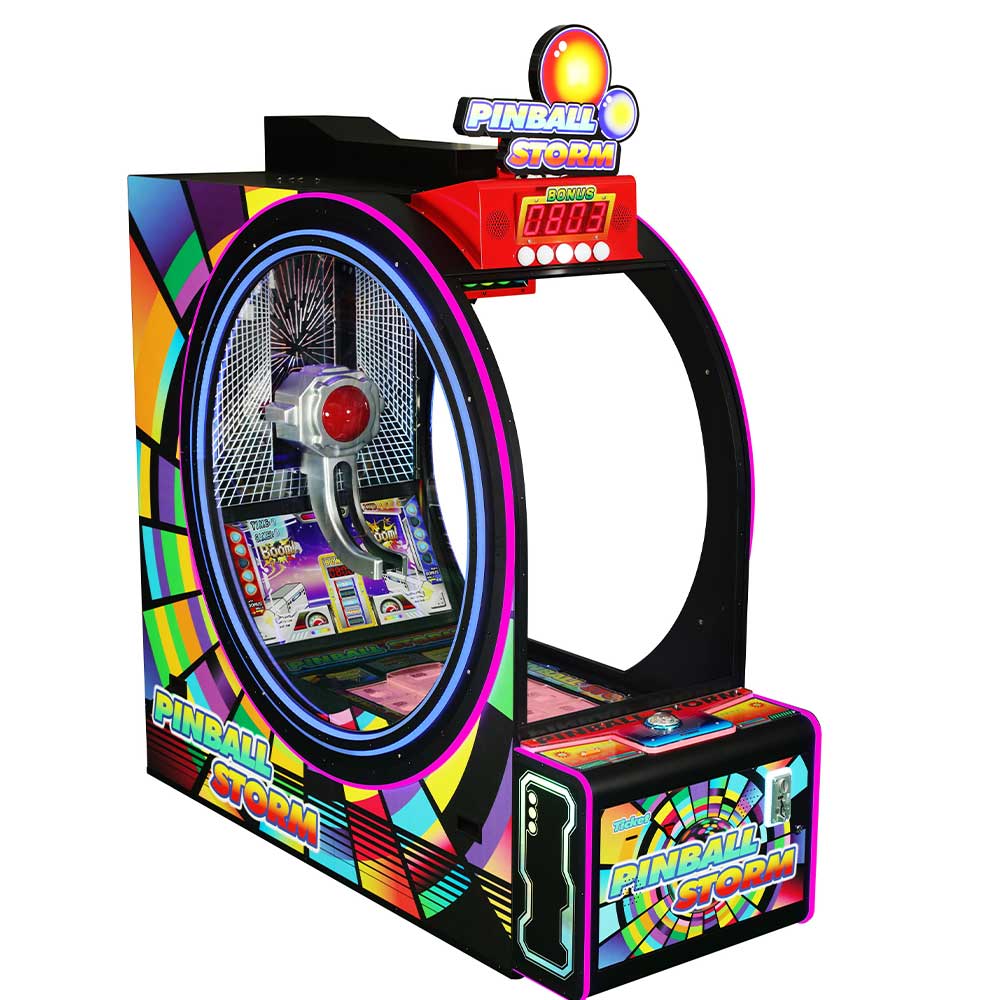
Arcade ticket redemption machines award tickets or electronic credits when a player reaches a defined game result. In a typical setup, sensors detect actions or outcomes, the game controller applies programmed scoring rules, and a ticket dispenser or cashless system delivers the award. The Pinball Storm Ball Dropping Arcade Ticket Redemption Machine combines this familiar redemption model with pinball-inspired ball play: players hit and bounce balls, aim for game objectives, and can trigger a multi-ball feature. For operators, understanding the complete path from player action to recorded award helps support fair play, reliable payouts, and a prize counter that matches the venue’s operating plan.
From Player Action to a Ticket Award
Game objectives create the score
A redemption game begins with a defined objective. Depending on the cabinet, players may aim, time a shot, guide a ball, press a target, or complete a sequence. The game translates those actions into a score or award using programmed rules. In a ball-based game, a sensor or switch can register a target event, while the controller determines whether that event contributes points, advances a feature, or ends the round. The precise rules vary by machine, so operators should use the manufacturer’s documentation rather than assume that similar-looking games score in the same way.
Pinball-style play makes the connection between action and result easy for players to understand: hit a target, watch the ball bounce, and see the game respond. The Pinball Storm Ball Dropping Arcade Ticket Redemption Machine is presented as classic pinball reimagined, with an opportunity to trigger an exciting multi-ball blast. That theme gives the player visible feedback during play, while the programmed scoring system remains responsible for calculating any redemption award. Operators should display the game’s objective and award information clearly so first-time players know what they are trying to accomplish.
The controller converts results into an award
Once the game registers an outcome, its control system applies the machine’s award rules. A cabinet might award based on points, successful events, a completed feature, or another programmed condition. The controller then sends a payout instruction to the ticket dispenser or electronic redemption system. In practical terms, a player sees a result on the game, but the award depends on the logic configured inside the machine and the hardware that carries out that instruction.
This distinction matters when troubleshooting. If the displayed score appears correct but no tickets are delivered, the problem may be in the payout path rather than the scoring process. If the award itself seems inconsistent, staff should first check the game settings and documented rules before replacing parts. Keep a record of approved settings and changes so a technician can compare the current configuration with the intended operating plan. Consistent recordkeeping is a useful quality practice; ISO 9001 quality management principles provide a broader framework for controlled processes and continual improvement.
How Tickets or Credits Reach the Player
Physical ticket dispensing
In a traditional ticket system, the controller signals a dispenser to feed a calculated number of paper tickets. The player collects them at the cabinet and exchanges them for prizes at the redemption counter. The basic sequence is straightforward: game outcome, award calculation, dispenser activation, and ticket delivery. Yet each step needs to work. A jam, empty ticket roll, damaged ticket path, loose connection, or incorrect dispenser setting can interrupt delivery even when the game itself is operating normally.
Staff can reduce avoidable downtime by checking ticket stock, inspecting the visible feed path, and testing a payout after service or a settings change. Follow the machine’s manual for safe access and maintenance; do not reach into powered mechanisms or bypass a safety interlock. Keep spare consumables and approved replacement parts available where practical, and record recurring faults. For a venue with several games, a brief opening checklist can help staff spot a low ticket supply or an abnormal payout before it affects a busy session.
Electronic awards and redemption accounts
Some venues use electronic tickets, often called e-tickets or credits, instead of paper. In that arrangement, the game communicates an award to a card, account, or central redemption system. The player still earns an award through game play, but the value is recorded digitally rather than printed at the cabinet. Electronic systems can reduce paper handling, but they require reliable communication between the game and the venue’s network or account platform. Operators should test both the game-side award and the player-facing balance display.
Whichever method a venue uses, the operator should make the award path understandable: where the player collects tickets or views credits, how prizes are selected, and what to do if a payout appears incomplete. Keep signage consistent with the actual settings and redemption policy. A well-run ticket system is not just a dispenser; it is the joined-up experience from game result to prize choice. The general idea of games that award tickets for redemption is described in Wikipedia’s overview of ticket redemption games, though the rules and hardware of a specific cabinet should always be confirmed with its manufacturer.
Setting Up a Fair, Reliable Redemption Experience
Configure and verify awards
Ticket settings influence a game’s operating economics and player perception. Operators should choose settings in line with the venue’s business model, prize costs, local requirements, and the experience they want to offer. Do not rely on a generic ticket-per-play assumption: award patterns can differ by game, configuration, and player performance. Before opening, verify that the displayed instructions, programmed settings, and actual payout agree. After a change, run a controlled test and document the result.
For the Pinball Storm Ball Dropping Arcade Ticket Redemption Machine, the product description emphasizes interactive pinball-style play and a multi-ball moment. Those elements can help create a memorable experience, but operators should avoid promising a particular ticket quantity unless it is supported by the machine’s configured rules. Treat the game’s play experience and ticket economy as connected but separate decisions: the first shapes player engagement, while the second determines the award settings and prize cost. Obtain the machine’s current technical specifications and recommended setup from the supplier before finalizing a floor plan or operating projection.
Plan maintenance around the full payout path
Reliable ticket awards require attention to the complete system: game sensors, controller, wiring, dispenser or card interface, and the redemption counter process. When a complaint occurs, note the game, time, player-reported issue, display result, and whether tickets or credits arrived. That information helps staff distinguish a one-off user misunderstanding from a repeatable fault. Periodic checks should follow the manufacturer’s service instructions and include a test of the award path, not just a visual inspection of the cabinet.
For amusement equipment, safety and maintenance expectations depend on the equipment type and the jurisdiction where it operates. The ASTM F24 committee on amusement rides and devices develops standards in its area of scope; operators should consult applicable local rules and qualified professionals to determine which standards or requirements apply to their venue and equipment. Keep service records and make sure staff know when to take a machine out of service and escalate a fault. Clear procedures help protect both the guest experience and the equipment.
Choosing a Game That Fits the Venue
Compare play style, operations, and footprint
When selecting a redemption game, consider more than its headline feature. Evaluate the intended player age range, learning time, play duration, visibility from the aisle, service access, ticket or card-system compatibility, and the space available for guests to queue or watch. A visually engaging ball game may attract attention, while a clear objective can make it approachable to new players. Ask the supplier for dimensions, power requirements, setup guidance, warranty terms, recommended spares, and destination-market compliance documentation before purchase.
The following comparison is a planning aid, not a substitute for the manufacturer’s specifications. Actual features and operating requirements vary by model and configuration.
| Planning factor | Questions for operators | Why it matters |
|---|---|---|
| Award method | Does the game use paper tickets, electronic credits, or both? | Confirms compatibility with the venue’s redemption process. |
| Game objective | Can guests understand the goal and award rules quickly? | Clear instructions support confidence and repeat play. |
| Service access | Can staff inspect the payout path and perform approved routine checks? | Practical access can help reduce avoidable downtime. |
| Venue fit | Does the footprint suit the floor plan, traffic flow, and target audience? | Good placement improves visibility without obstructing circulation. |
| Commercial support | Are manuals, parts, warranty details, and local compliance information available? | Supports informed purchasing and ongoing operation. |
Make the product story part of the player journey
The Pinball Storm Ball Dropping Arcade Ticket Redemption Machine can serve venues seeking a ball-based redemption experience with a recognizable pinball feel. Its supplied product description is: “Classic pinball reimagined! Hit, bounce, and win prizes. Trigger the Pinball Storm for an epic multi-ball blast!” This language communicates the central play idea without requiring operators to claim unverified technical details. Pair it with accurate on-machine instructions, visible redemption guidance, and staff who can explain how tickets or credits are collected.
Classic pinball reimagined! Hit, bounce, and win prizes. Trigger the Pinball Storm for an epic multi-ball blast!
For buyers comparing models, ask for a demonstration of the scoring and payout sequence, not only a product video. Confirm how the game connects to your venue’s ticket or cashless system, what routine maintenance is expected, which spare parts are recommended, and what documentation is available for your destination market. These practical checks help determine whether the Pinball Storm Ball Dropping Arcade Ticket Redemption Machine is a suitable addition to an arcade, family entertainment center, or other redemption-focused venue.
In short, arcade ticket redemption machines award tickets by detecting play, applying programmed scoring rules, and sending the resulting award through a physical dispenser or electronic system. Operators support a dependable experience by verifying settings, maintaining the payout path, communicating redemption rules, and choosing games that suit their audience and floor plan. A pinball-inspired option such as the Pinball Storm Ball Dropping Arcade Ticket Redemption Machine adds an interactive ball-play theme to that familiar ticket journey.
Frequently Asked Questions
How does an arcade ticket redemption machine decide how many tickets to award?
The game controller applies the machine’s programmed award rules to the detected player outcome, such as a score, successful event, or completed feature, and sends a payout instruction to the ticket dispenser or electronic redemption system. Settings and award patterns vary by game and configuration.
Why might a game show a score but not dispense tickets?
The scoring process may be working while the payout path has a problem, such as an empty ticket roll, jam, damaged feed path, loose connection, or incorrect dispenser setting. Staff should check the manufacturer’s instructions and settings, then escalate recurring faults to a qualified technician.
Do all arcade ticket redemption machines use paper tickets?
No. Some venues use electronic tickets or credits recorded on a card, account, or central redemption system instead of paper. Operators should verify that the game communicates correctly with the venue’s chosen system.
What should operators check before adding a redemption game?
Evaluate the game objective, audience, footprint, service access, ticket or card-system compatibility, power requirements, warranty, spare parts, and destination-market documentation. Confirm the scoring and payout sequence with the supplier and test the actual award settings before opening.
What is the Pinball Storm Ball Dropping Arcade Ticket Redemption Machine?
It is a pinball-inspired ball-play redemption machine described as featuring hitting and bouncing balls and a multi-ball blast. Operators should confirm the machine’s technical specifications, award settings, and system compatibility with the supplier.
Recommended for you
Top 10 soccer arcade gaming manufacturers and suppliers
China Top ball drop game arcade Manufacturers and suppliers
How to Win Coin Pusher Arcade Game | PALM FUN
Wholesale bowlero arcade prices manufacturer and supplier in Asia
How to place the redemption machines in a right place?
1,Ensure that the placement and layout of the equipment are distinct and centralized.
2,Keep noise levels low and avoid having a line of sight that spans too far to prevent players from easily taking in everything, which may slow down their movement.
3,Avoid clustering high-ticket payout machines and disperse machines of the same style.
4,Mix popular machines with less popular ones and avoid placing all popular machines together.
Research & Development, how hard is the birth of one new redemption machines?
What is the character of mechanical redemption machine?
How to choose the exchange gifts of the tickets(reward points)?
2. Gifts should be diverse. This refers to the variety of items available, providing players with more choices. Everyone's preferences are different, especially adults who have higher expectations for gifts. The venue should strive to meet the diverse needs of these players.
3. Gifts should be fashionable. The younger generation that follows trends is very interested in the hottest items of the moment. If the venue can keep up with the latest trends, it can attract the majority of consumers.
4. Gifts should be innovative. Especially during holidays and seasons, it's a good idea to try out new approaches, creating a competitive advantage with unique offerings. For example, the current trend of combining pop culture and blind box culture.
The revenue proportion of redemption machines
You may also like
Naughty Bombs Ball Drop Redemption Arcade Game Machine
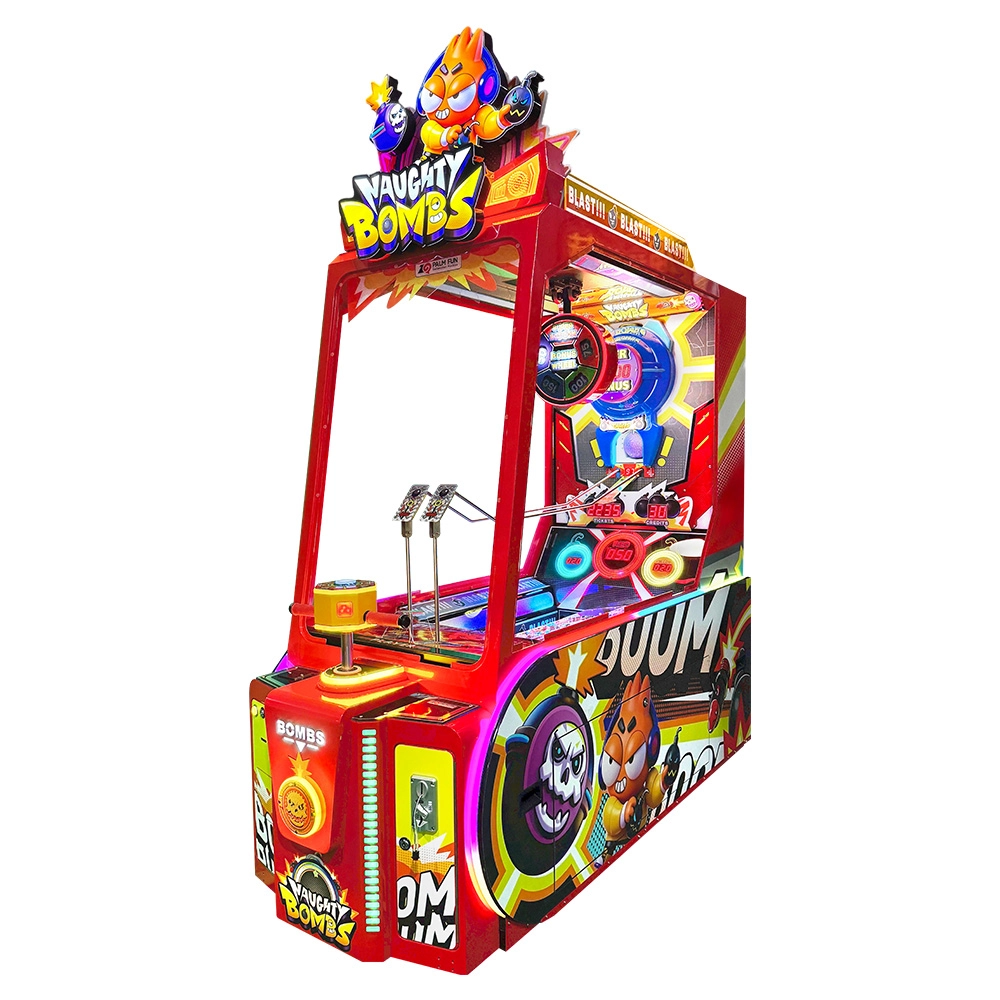
Naughty Bombs is a ball-drop redemption arcade game featuring rolling-ball gameplay, colored targets, ticket prizes, surprise bonus rewards, lighting and sound effects. Players use timing to launch and drop balls toward colored target areas. The product is presented for arcade, family entertainment center and other entertainment-venue projects, with customizable 110V / 220V AC voltage configuration.
Dream Wonderland Marble Pusher Redemption Game
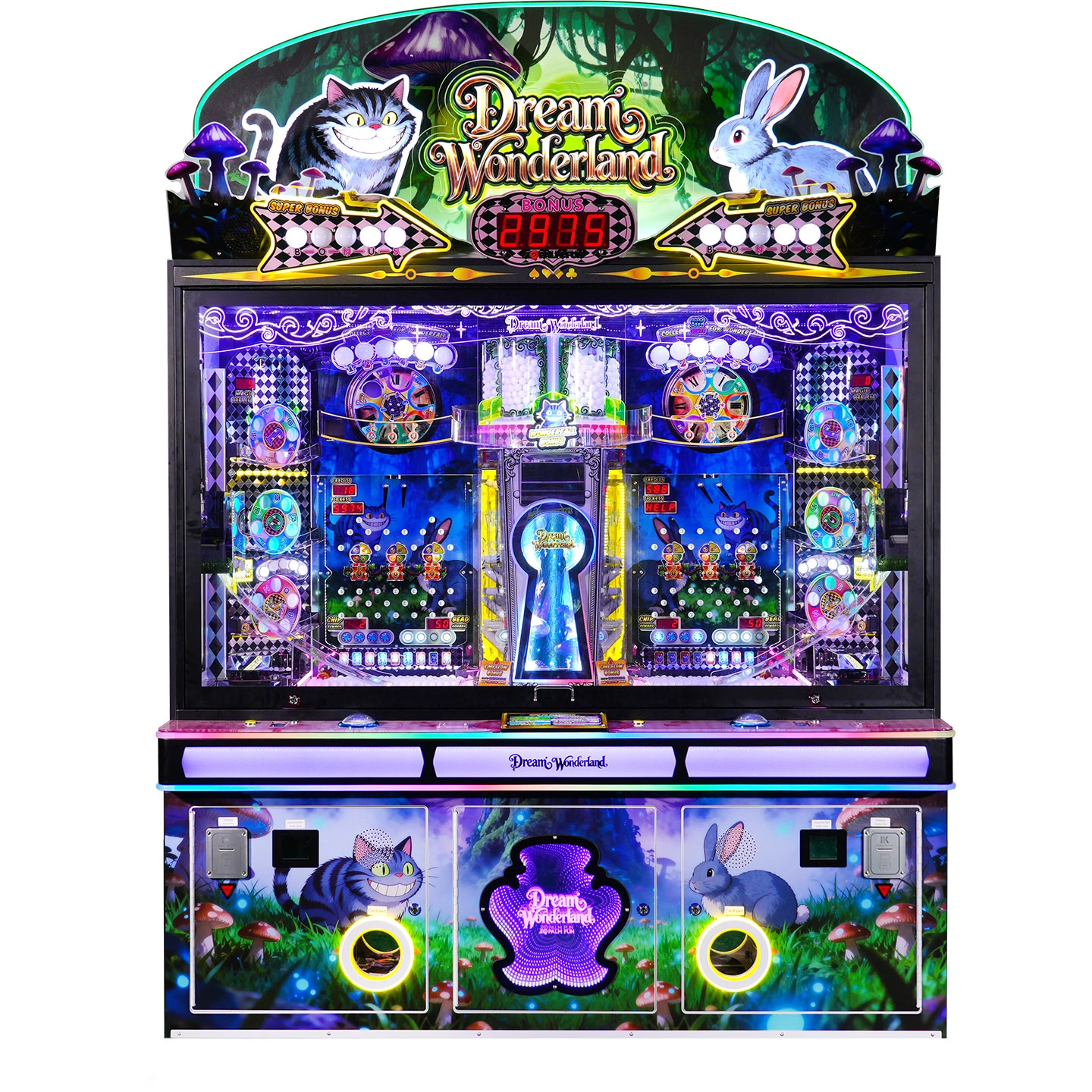
Enter Dream Wonderland — a magical marble pusher adventure filled with glowing lights, magic orbs, bonus wheels, collectible character cards, and exciting jackpot challenges.
World Travel Notes – Balance Ball Redemption Arcade Game
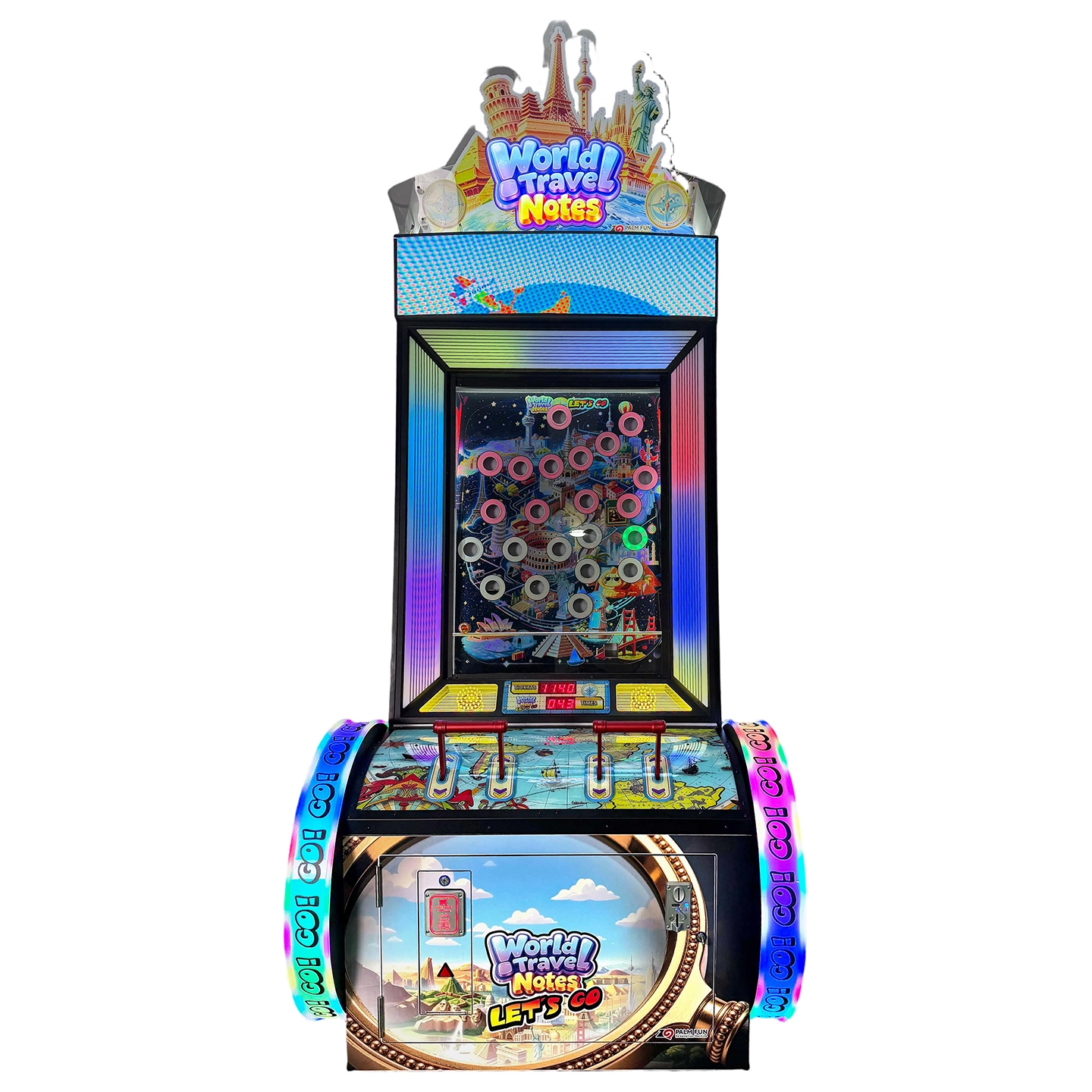
World Travel Notes is a skill-based balance ball redemption game with a fun world-travel theme. Players use two handles to control the balance bar and guide the ball into each target hole. As the game progresses, the targets become more challenging, leading players toward the final grand prize. With colorful world-travel graphics, dynamic RGB lighting, a live score display, and progressive difficulty, World Travel Notes is designed to attract attention and encourage repeat play in arcades, FECs, shopping malls, and other entertainment venues.
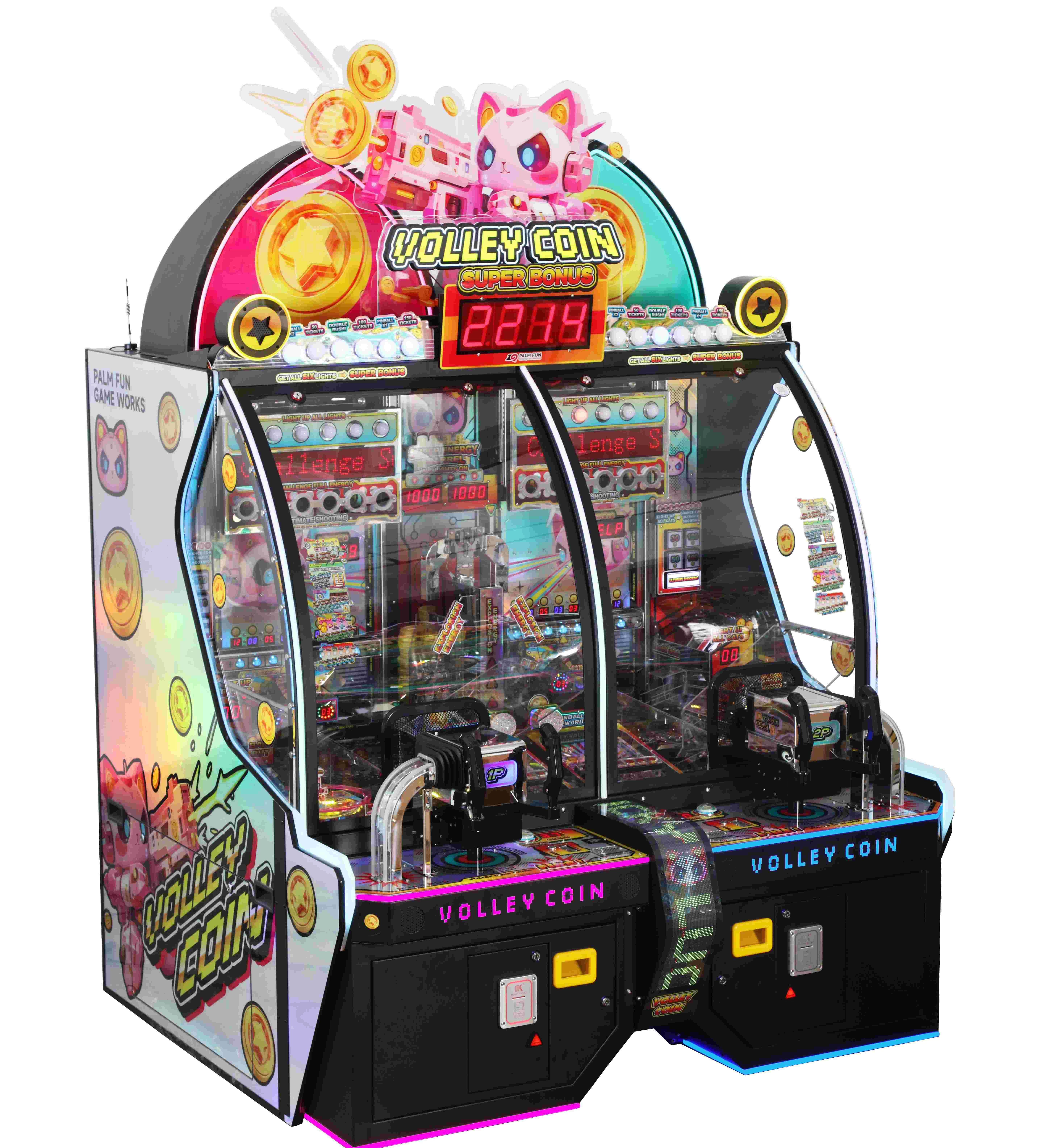
Hybrid Shooting & Pushing | Coin Pusher Arcade Ticket Redemption Machine
Volley Coin is an innovative arcade ticket redemption machine developed by Palm Fun Electronics. Combining the excitement of a fast-paced token shooter game with the proven earning power of a traditional coin pusher machine, Volley Coin offers a fresh and engaging gameplay experience that appeals to players of all ages.

Copyright © 2026 PALM FUN All Rights Reserved. | Privacy Policy • Terms and Conditions | Sitemap
palmfunarcade
Palm Fun Arcade Game
Whatsapp: +8618126837443
PalmFun Arcade
PalmFun_Arcade
PALM FUN Redemption Machine