


How Larva Coin Pusher Ticket Redemption Works
- What Happens During a Coin Pusher Game
- Starting a turn and choosing when to drop
- How the moving shelf creates the push
- How themes, surprises and shared play add interest
- How Play Becomes Tickets and Redeemable Rewards
- Coins and prize events are not the same as tickets
- The usual ticket redemption sequence
- What affects the outcome and the ticket total
- Choosing and Operating a Larva Series Machine
- Assess the format against your venue
- Compare the experience, not unsupported payout claims
- Keep play understandable, accessible and dependable
- Frequently Asked Questions

A coin pusher ticket redemption game combines player-controlled coin drops with a moving playfield: coins advance across a shelf, prizes may move toward the payout edge, and earned tickets can be redeemed under the arcade’s prize rules. The Larva Series Coin Pusher Arcade Ticket Redemption Machine brings that familiar loop to four players with LARVA-themed gameplay, surprise rewards, a rising Super Bonus and competitive prize play. Exact controls, ticket values and award conditions depend on the machine’s configuration and the venue’s redemption policy, so operators should confirm the settings and explain them clearly to guests.
What Happens During a Coin Pusher Game
Starting a turn and choosing when to drop
A typical turn starts when a player uses the machine’s accepted play method, such as inserting a coin or token, or using another payment option configured by the operator. The player then releases a coin onto the upper area of the playfield. Its landing point matters: a coin dropped near the center may push a different group of coins than one dropped toward an edge. The player’s decision is part of the game, but the movement of the pusher and the crowded surface also make each result difficult to predict precisely.
For guests new to the game, the simplest explanation is that a coin drop adds one more object to a moving field; it does not guarantee that a particular coin or prize will fall. Operators should use the instructions displayed on the machine to explain the controls, coin or token requirements, bonus features and any eligibility conditions. This helps prevent confusion about whether a player is purchasing a turn, receiving a reward or qualifying for a special event.
How the moving shelf creates the push
Inside a coin pusher, a motor-driven shelf moves back and forth. When the shelf advances, it presses against the coins and other objects in front of it. When it retracts, items may settle into newly opened spaces. Over many cycles, coins can migrate toward the front edge and eventually fall into a collection area. This basic mechanism is why a small action can affect a wider cluster rather than producing a simple one-coin-in, one-coin-out result. The coin pusher overview describes the general form of the amusement game; individual machines differ in their design and features.
Players often focus on coins that appear close to the edge, but the visible position alone does not determine the outcome. Other coins may support them, a pusher cycle may shift them sideways, or a newly dropped coin may change the balance of the cluster. For this reason, operators should avoid promising that a specific placement will cause a prize to drop. Describing the game as skill-influenced and unpredictable is more accurate than suggesting a guaranteed result.
How themes, surprises and shared play add interest
The Larva Series Coin Pusher Arcade Ticket Redemption Machine is a four-player mechanical game with LARVA-themed gameplay, surprise rewards, a rising Super Bonus and competitive prize gameplay. The theme gives players a recognizable visual setting, while the shared cabinet can turn individual turns into a social activity. Players can watch the same playfield, compare decisions and react together when coins or rewards move near the payout area.
Surprise rewards and a rising bonus can provide additional reasons to follow the game beyond ordinary coin movement. The precise triggers and award rules should be taken from the machine’s operating instructions and the operator’s configuration; they should not be assumed from the theme or from another coin pusher. When explaining the game, staff can point out where the machine communicates the bonus status and how any award is issued, helping guests understand what they are seeing before they play.
How Play Becomes Tickets and Redeemable Rewards
Coins and prize events are not the same as tickets
Coin movement creates the visible game action, but tickets are the redemption value that a player may collect when the machine awards them. Depending on the game’s configuration, a ticket award may be connected to coins reaching a collection area, a special prize event or another programmed condition. The award is not necessarily equal to the number of coins that fall. The operator should consult the machine’s documentation for the actual award logic, ticket settings and any bonus rules before publishing instructions or training staff.
Keep the distinction clear for guests: a coin or token is used to play, coins on the playfield are part of the game, and tickets are redemption credits or printed tickets awarded by the machine. A physical prize may also be a separate type of award, depending on the setup. Simple, visible signage can explain which outcomes produce tickets, where tickets are collected and what to do if a ticket does not print or register correctly.
The usual ticket redemption sequence
Once a play or bonus event meets the machine’s award conditions, the game records or dispenses the corresponding ticket value according to its configuration. In a venue using printed tickets, the player takes the tickets to a redemption counter or ticket-counting station. In a venue using a cashless card system, value may instead be added to the player’s card, if the machine and venue system support that arrangement. The specific method varies; the product profile alone does not establish whether a given installation uses printed tickets, cards or another system.
At the redemption point, the venue’s rules determine how tickets can be exchanged for prizes or other permitted rewards. Those rules can include prize values, age restrictions, claim procedures and what happens if a ticket is lost or damaged. Staff should be able to explain them without implying that tickets have a cash value unless the venue’s policy and local requirements expressly allow that description. Clear rules at both the machine and redemption counter make the whole experience easier to follow.
What affects the outcome and the ticket total
Ticket results can depend on the machine’s programmed settings, the game state, the timing and location of a coin drop, and whether a bonus condition is reached. Playfield arrangement and machine condition also matter: coins that are poorly distributed, an obstructed payout area or a ticket dispenser issue can affect the guest experience. These factors are reasons to rely on the manufacturer’s operating guidance and routine checks rather than trying to infer exact payout behavior from a single play.
Operators should not advertise a guaranteed ticket yield unless the machine documentation and applicable rules support that claim. Instead, describe the main action, explain that outcomes vary, and make any bonus conditions easy to find. A trustworthy description sets realistic expectations and helps players understand that tickets are awarded according to configured game rules, not simply in direct proportion to the number of coins they insert.
| Stage | What the player sees | What the operator should clarify |
|---|---|---|
| Start a turn | A coin or other accepted play method activates a turn. | Accepted payment, play cost and basic controls. |
| Drop a coin | The coin lands among coins and prizes on the playfield. | A coin drop does not guarantee a prize or ticket award. |
| Mechanical push | The moving shelf shifts coins and other objects. | Movement is variable; outcomes depend on the game state. |
| Qualifying event | Coins may fall or a configured reward feature may activate. | Explain the actual award conditions shown in the manual or on the game. |
| Ticket collection | Tickets are dispensed or value is recorded if supported. | Tell guests how to collect and redeem tickets at the venue. |
Choosing and Operating a Larva Series Machine
Assess the format against your venue
A four-player format may suit locations where guests enjoy competing or playing alongside friends and family. Before selecting a machine, consider available floor space, electrical and service requirements, the expected audience, staffing, and how the game fits the venue’s redemption offer. Ask the supplier for current dimensions, installation requirements, manuals, warranty terms and the exact ticket-system compatibility for the version being considered. These practical details should be confirmed directly rather than inferred from a product name or promotional image.
The Larva Series is designed around a recognizable entertainment theme, shared play and reward features. That combination can make it a candidate for arcades seeking a coin-pusher experience with more than one player at a time. A venue should still assess its own traffic patterns and prize operation: a busy location may prioritize easy access and straightforward ticket collection, while a smaller family entertainment center may place greater value on social play and visual appeal.
Compare the experience, not unsupported payout claims
When comparing machines, focus on documented features and operational fit instead of assumptions about earnings or ticket returns. The table below separates experience elements from checks that a buyer should confirm with a supplier. For the Larva Series, the listed four-player mechanical format, LARVA theme, surprise rewards and rising Super Bonus are product-profile features; specific dimensions, ticket rates and payment integrations require confirmation for the offered model.
| Evaluation point | Larva Series profile | Buyer verification |
|---|---|---|
| Player format | Four-player mechanical coin pusher. | Footprint, access around the cabinet and installation needs. |
| Theme and interaction | LARVA-themed gameplay with competitive prize play. | Audience fit, display content and language or signage options. |
| Reward features | Surprise rewards and a rising Super Bonus. | Exact trigger conditions, award handling and configuration details. |
| Redemption workflow | Ticket redemption game. | Printed-ticket or card compatibility, counter process and local rules. |
| Service planning | Mechanical playfield and ticket-related operation. | Maintenance schedule, spare parts, support and troubleshooting guidance. |
Keep play understandable, accessible and dependable
Good operation starts with a readable explanation of how to begin, what each control does and how a player receives an award. The principles in ISO 9241-210 on human-centred design emphasize designing interactive systems around users and their context. For an arcade machine, that is a useful reminder to review instructions from a guest’s perspective: Can a first-time player tell where to insert a coin, see the playfield and understand what happens after a reward is won?
Routine checks should follow the product manual and the venue’s safety procedures. Staff can verify that the playfield is clean, coins move as intended, collection areas are clear, controls respond and the ticket mechanism operates correctly. If the machine behaves unexpectedly, pause use when appropriate and follow the manufacturer’s troubleshooting steps rather than attempting an unapproved repair. A structured approach to identifying and reducing machinery-related risks is also reflected in ISO 12100 on machinery safety; operators should use the applicable instructions and local requirements for their installation.
For a successful guest experience, the machine and the redemption counter need to work as one service. Train staff to answer common questions, resolve ticket issues consistently and explain how a bonus is awarded. Keep the redemption rules visible, record recurring faults and raise service requests with clear details. These small operational habits help preserve trust in the game and make the Larva Series Coin Pusher Arcade Ticket Redemption Machine easier to manage over time.
To explore the Larva Series Coin Pusher Arcade Ticket Redemption Machine or confirm product and installation details, view the product information or contact us at luobin@palm-fun.com.
Frequently Asked Questions
Does every coin dropped into a coin pusher produce tickets?
No. A coin drop adds to the playfield but does not guarantee a ticket or prize. Ticket awards depend on the machine’s configured conditions, which may include coins reaching a collection area or a qualifying reward event.
How do players redeem tickets from a Larva Series coin pusher?
The redemption process depends on the venue and machine setup. Tickets may be printed for collection at a counter or recorded through a supported card system. The venue’s rules determine how tickets can be exchanged for prizes or other permitted rewards.
Does the Larva Series machine support four players?
Yes. The product profile describes the Larva Series as a four-player mechanical coin-pusher ticket redemption game.
Are the Super Bonus conditions and ticket values the same at every venue?
Not necessarily. Operators should confirm the machine’s configuration and documentation for exact bonus triggers, ticket settings and award rules, then explain the applicable rules to guests.
Recommended for you
Best best coin pusher arcade machine manufacturer manufacturers and supplier brands
Everything You Need to Know About coin pusher machine for sale
Penny Pusher Machine ROI: Cost, Revenue and Payback Period
Bundling Shooter Games with Prizes and Redemption Offers
FAQs
Effectively solve the pain points of the site and consume the amount of coins deposit.
So the stock quantity of pre-purchased tokens is an issue must be concerned, especially in the highly competitive current market. Only when the amusement park maintains a healthy cycle of token sales, consumption, stockpiling, consumption, and sales again can it ensure sustained growth and profitability.
How to guides works?
For example:
1. Proactively inquire and add tickets when a customer's machine is running low on tickets.
2. Assist players in organizing tickets when they are dispensed unevenly.
3. Offer storage tools such as storage bags and rubber bands when customers are arranging their tickets.
4. Provide free USB interfaces for charging near popular machines and rest areas.
5. Implement warm and clear reminders, guidance on ticket redemption, and directional signage, all designed to be straightforward. The more of these you provide, the more players will appreciate your thoughtfulness, without finding it bothersome.
How to place the redemption machines in a right place?
1,Ensure that the placement and layout of the equipment are distinct and centralized.
2,Keep noise levels low and avoid having a line of sight that spans too far to prevent players from easily taking in everything, which may slow down their movement.
3,Avoid clustering high-ticket payout machines and disperse machines of the same style.
4,Mix popular machines with less popular ones and avoid placing all popular machines together.
Research & Development, how hard is the birth of one new redemption machines?
How to choose the exchange gifts of the tickets(reward points)?
2. Gifts should be diverse. This refers to the variety of items available, providing players with more choices. Everyone's preferences are different, especially adults who have higher expectations for gifts. The venue should strive to meet the diverse needs of these players.
3. Gifts should be fashionable. The younger generation that follows trends is very interested in the hottest items of the moment. If the venue can keep up with the latest trends, it can attract the majority of consumers.
4. Gifts should be innovative. Especially during holidays and seasons, it's a good idea to try out new approaches, creating a competitive advantage with unique offerings. For example, the current trend of combining pop culture and blind box culture.
You may also like
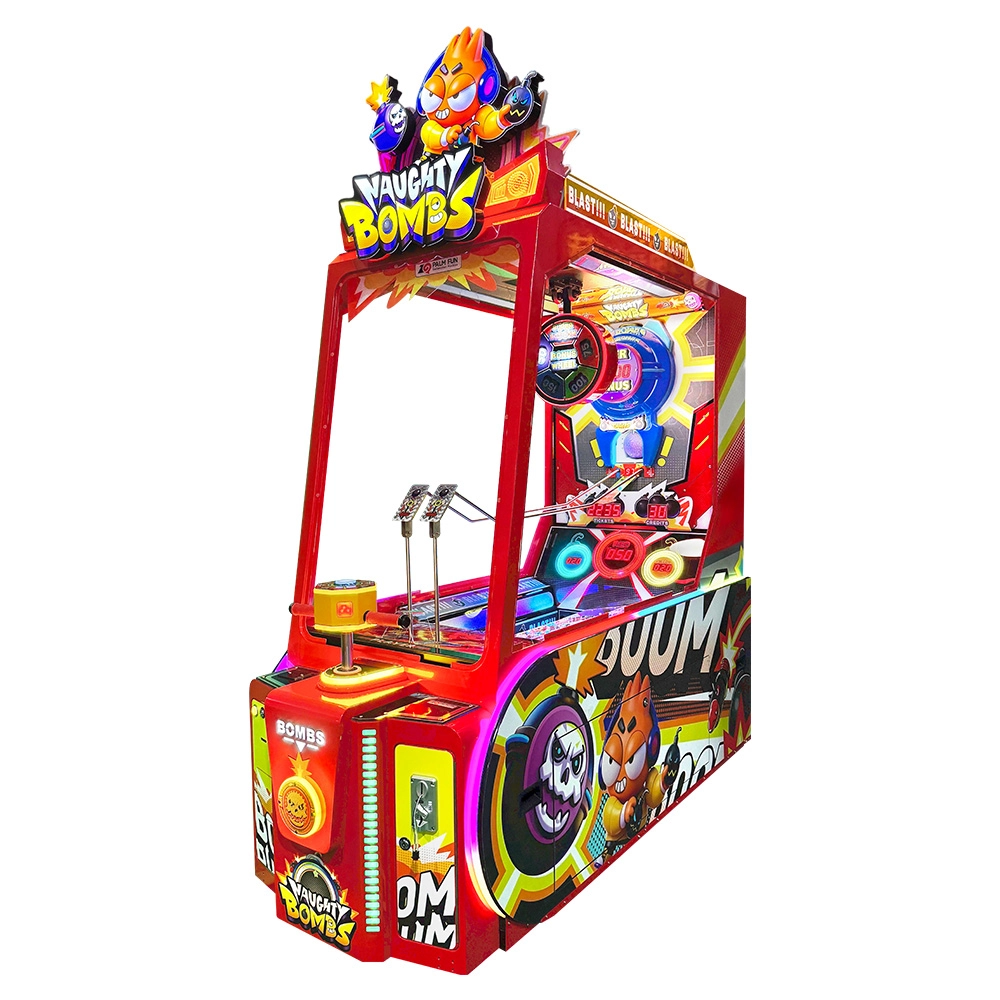
Naughty Bombs Ball Drop Redemption Arcade Game Machine
Naughty Bombs is a ball-drop redemption arcade game featuring rolling-ball gameplay, colored targets, ticket prizes, surprise bonus rewards, lighting and sound effects. Players use timing to launch and drop balls toward colored target areas. The product is presented for arcade, family entertainment center and other entertainment-venue projects, with customizable 110V / 220V AC voltage configuration.
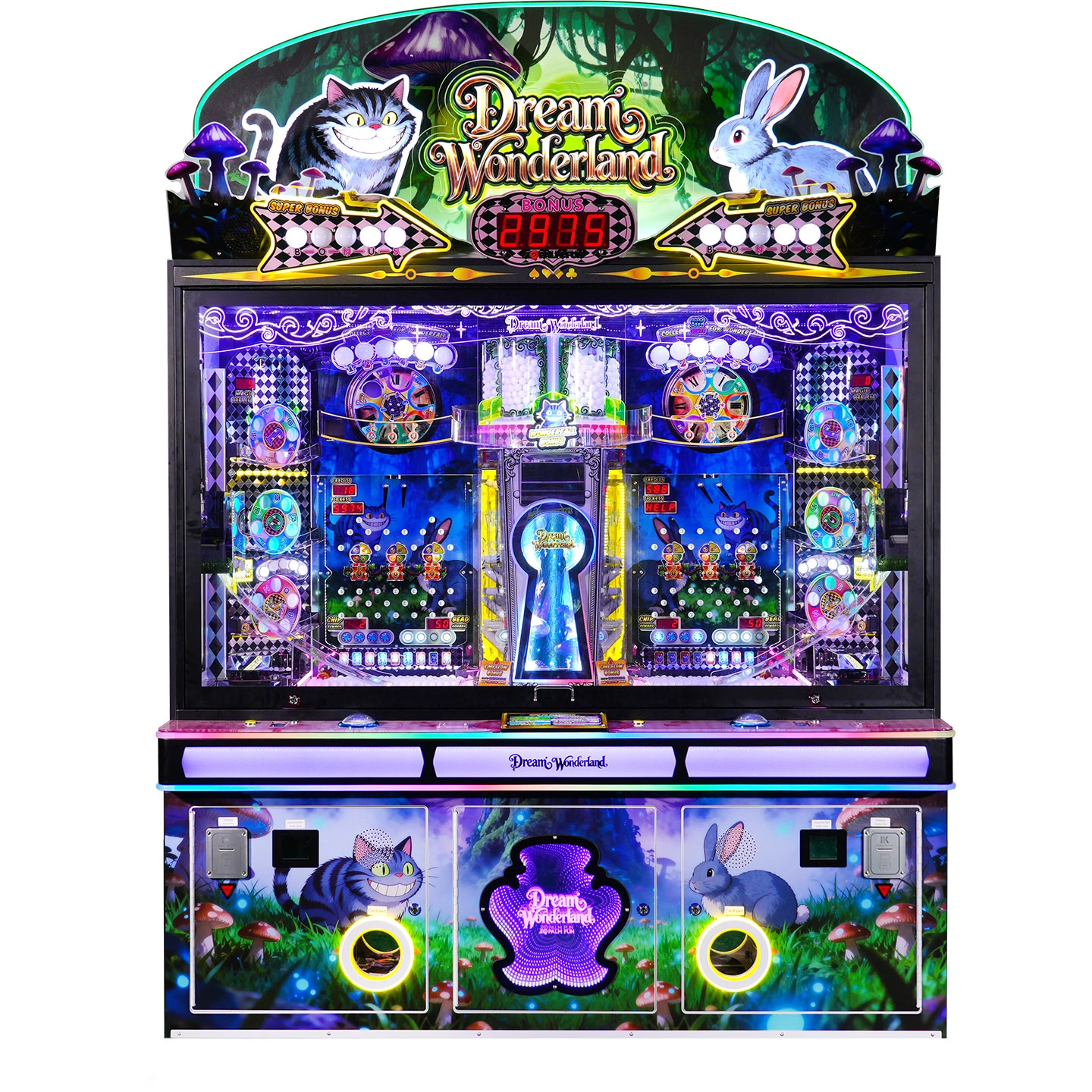
Dream Wonderland Marble Pusher Redemption Game
Enter Dream Wonderland — a magical marble pusher adventure filled with glowing lights, magic orbs, bonus wheels, collectible character cards, and exciting jackpot challenges.
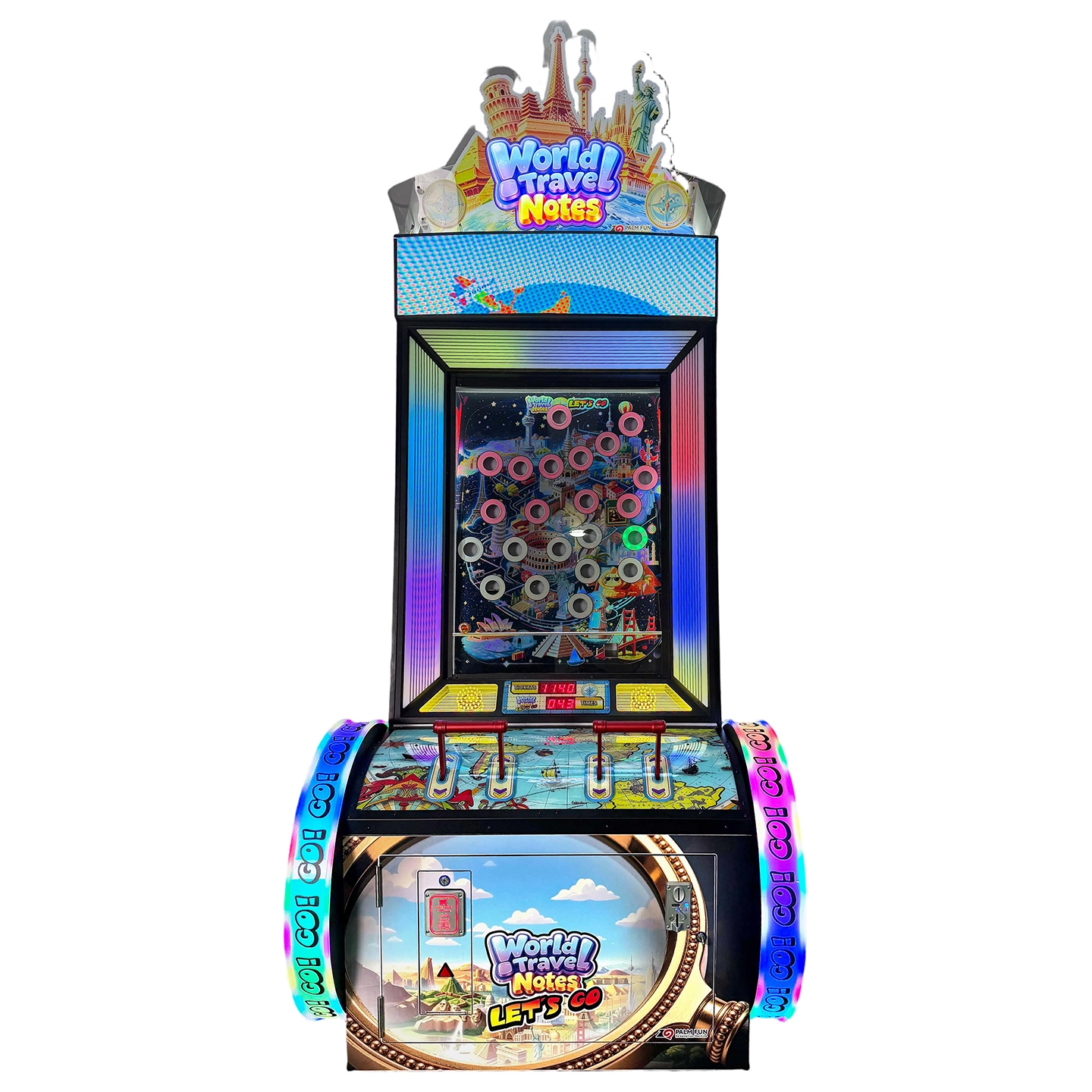
World Travel Notes – Balance Ball Redemption Arcade Game
World Travel Notes is a skill-based balance ball redemption game with a fun world-travel theme. Players use two handles to control the balance bar and guide the ball into each target hole. As the game progresses, the targets become more challenging, leading players toward the final grand prize. With colorful world-travel graphics, dynamic RGB lighting, a live score display, and progressive difficulty, World Travel Notes is designed to attract attention and encourage repeat play in arcades, FECs, shopping malls, and other entertainment venues.
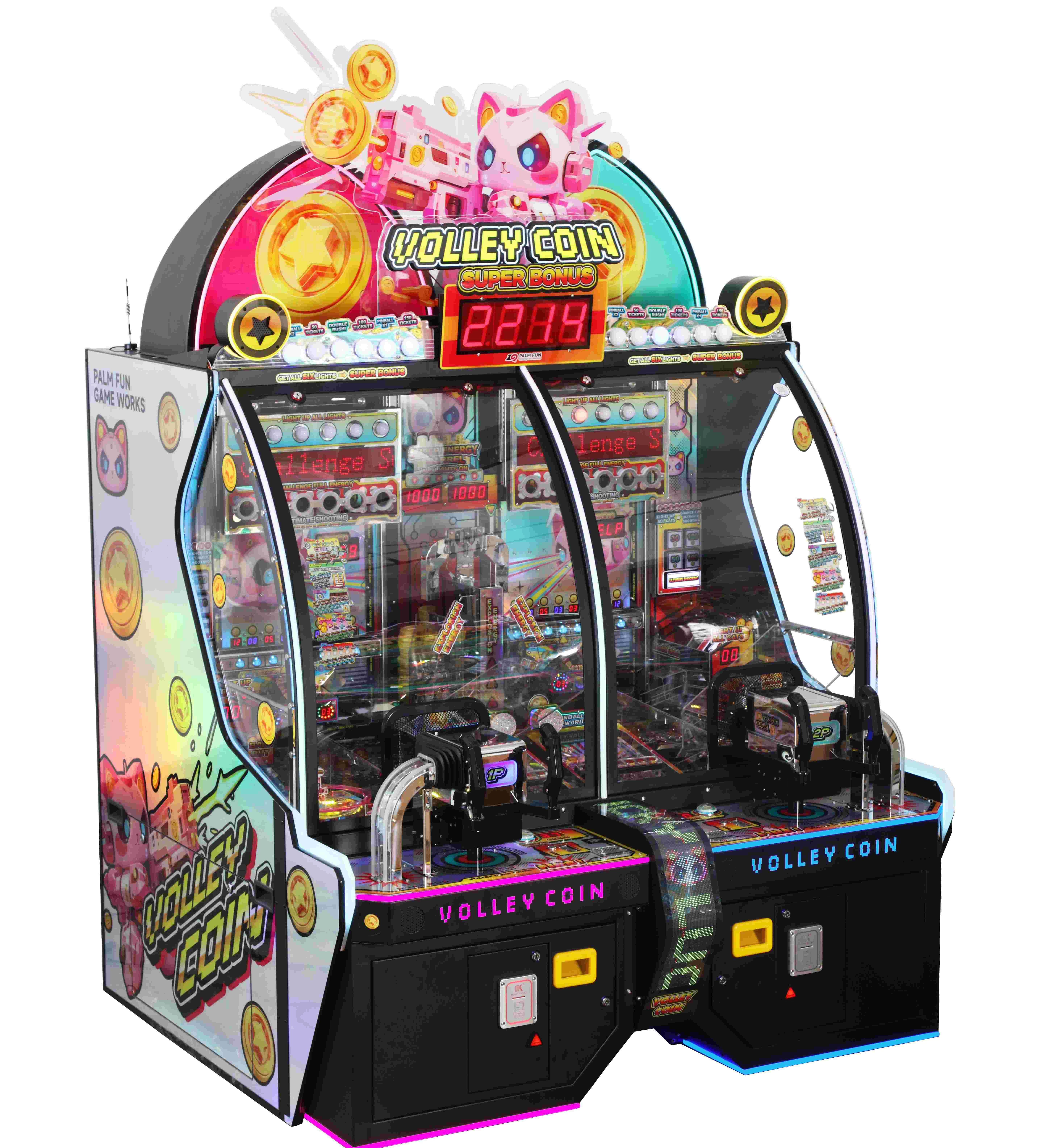
Hybrid Shooting & Pushing | Coin Pusher Arcade Ticket Redemption Machine
Volley Coin is an innovative arcade ticket redemption machine developed by Palm Fun Electronics. Combining the excitement of a fast-paced token shooter game with the proven earning power of a traditional coin pusher machine, Volley Coin offers a fresh and engaging gameplay experience that appeals to players of all ages.

Copyright © 2026 PALM FUN All Rights Reserved. | Privacy Policy • Terms and Conditions | Sitemap
palmfunarcade
Palm Fun Arcade Game
Whatsapp: +8618126837443
PalmFun Arcade
PalmFun_Arcade
PALM FUN Redemption Machine