








How Pinball Storm Ball Dropping Arcade Machines Work
- From paid start to ticket award: the game cycle
- 1. The player starts and puts a ball in play
- 2. Targets and sensors turn movement into a score
- 3. The game ends, calculates tickets, and resets
- How ball drops, multi-ball, and redemption work together
- Ball movement creates the skill challenge
- Multi-ball builds excitement, but needs clear feedback
- Ticket settings connect play to the redemption counter
- Choosing and operating the machine in a venue
- Compare features before selecting a game
- Plan placement and staff procedures
- Use safety and compliance checks appropriate to the market
- Maintenance and troubleshooting for dependable play
- Start with simple, repeatable checks
- Keep service and payout records
- Frequently Asked Questions
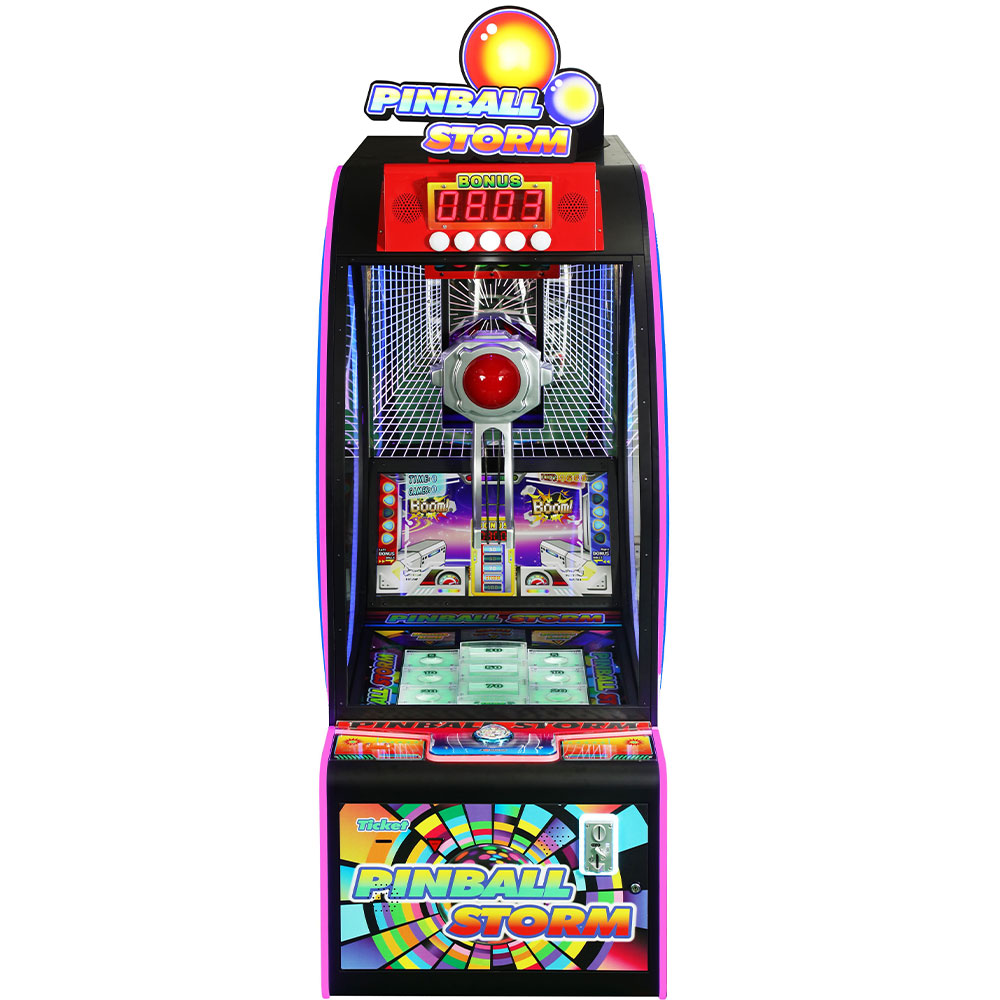
A pinball storm ball dropping arcade ticket redemption machine turns a familiar pinball-style challenge into a ticket game: a player starts a paid play, launches or releases balls onto a playfield, aims for scoring targets, and earns tickets according to the game’s configured rules. Sensors and control electronics register events, while the ball-return and multi-ball features keep the action moving. Operators should confirm the exact ball path, ticket settings, service access, and local requirements with the manufacturer before installation.
From paid start to ticket award: the game cycle
1. The player starts and puts a ball in play
Play begins when the machine accepts an authorized payment method, such as a coin, token, or compatible cashless system. The control system starts the game and enables the ball-release or launch mechanism. Depending on the cabinet design, a ball may be launched by a player-operated control or released into a starting position. The precise arrangement varies by model, so operators should use the supplied operating instructions rather than assume that all ball-dropping games work alike.
Once in play, the ball moves across a sloped or otherwise shaped field under gravity and the influence of the game’s physical features. A player may try to guide its path with buttons, flippers, or another control, depending on the machine. This mix of skill, timing, and uncertainty is central to the appeal of pinball. For a general overview of the game’s development and familiar mechanics, see Wikipedia’s pinball overview.
2. Targets and sensors turn movement into a score
When a ball reaches a scoring area, a switch, optical sensor, or another detection method may register the event. The control board interprets the signal according to the game’s software and displays a score or progress indication. Some machines use targets, lanes, bumpers, holes, or other playfield features to create different scoring opportunities. The machine’s technical documentation is the best source for identifying the sensors used in a particular cabinet.
Detection matters operationally as well as for gameplay. A missed sensor can make a successful target appear not to count; a stuck or repeatedly triggered sensor can distort scoring. If a machine produces inconsistent results, compare what the player sees with the displayed score, inspect the relevant area for an obstructed or misaligned part, and follow the manufacturer’s diagnostic steps. Avoid bypassing safety devices or making electrical adjustments without an authorized technician.
3. The game ends, calculates tickets, and resets
At the end of a play, the controller applies the game’s programmed scoring and redemption rules. A ticket dispenser then issues the corresponding number of tickets, if the game is configured for ticket payout. The ticket result may depend on score, targets reached, bonus features, or other rules set for that model. Staff should check that the displayed result, programmed settings, and actual ticket output agree during commissioning and routine checks.
Afterward, balls are collected or returned to the starting area and the game resets for the next player. A dependable reset helps avoid delays and gives players a clear transition between turns. When evaluating a pinball storm ball dropping arcade ticket redemption machine, ask how balls are recovered, how jams are cleared, and whether the operator can access service points without removing major cabinet components.
How ball drops, multi-ball, and redemption work together
Ball movement creates the skill challenge
“Ball dropping” describes a style of play in which balls enter or descend through a playfield and interact with scoring features. Their movement is governed by the cabinet’s layout, gravity, and any controls or mechanisms the design provides. The player’s decisions can influence the outcome, but the precise degree of control depends on the game. This makes it important to watch a demonstration before choosing the machine: a product name alone does not explain its launch method, ball speed, target layout, or learning curve.
Operators should assess whether the action is easy to understand from the player position. Clear instructions, visible scoring feedback, and an obvious start control can help new visitors participate without staff assistance. The cabinet should also allow players to see the critical playfield features and the result of their actions. A practical test is to observe first-time players: can they understand how to begin, what to aim for, and when a round has ended?
Multi-ball builds excitement, but needs clear feedback
A multi-ball feature adds more than one ball to the action, increasing activity and creating a memorable moment. In Pinball Storm, the product profile highlights a multi-ball blast as a signature feature. This can help the game feel energetic and reward players with a change of pace. For smooth operation, however, the machine must keep balls contained, register events consistently, and return the playfield to its ready state after the feature ends.
During a site test, check that players can follow the action when multiple balls are present. Confirm that the score display remains readable, the game does not accept a new round before the previous one is complete, and all balls return correctly. Ask the supplier how to verify ball count and what to do if a ball is missing from play. These checks are especially useful in busy arcades, where small delays can quickly become a queue or a service call.
Ticket settings connect play to the redemption counter
Ticket redemption is not simply a mechanical add-on: it is part of the game’s operating economics and customer experience. Operators should understand which settings control ticket awards, whether the payout is score-based or uses another rule, and who is authorized to change those settings. Any adjustment should be recorded and tested so that the displayed score, ticket count, and actual dispenser output remain consistent.
Ticket strategy should fit the venue’s audience, prize mix, and operating goals. A payout that feels disconnected from the effort required can disappoint players, while unclear rules create questions for staff. Set expectations with visible instructions and check dispenser performance at opening and during service rounds. If the game supports alternate payout or operating modes, confirm the available options and their intended use with the manufacturer instead of assuming they are present.
Choosing and operating the machine in a venue
Compare features before selecting a game
A pinball storm ball dropping arcade ticket redemption machine may suit an FEC, mall arcade, or other venue looking for active, easy-to-watch gameplay. Before ordering, compare the player interaction, footprint, power requirements, payment options, ticket system, service access, and spare-parts support. Request the machine’s dimensions and installation requirements, along with information about warranties, operator training, and the process for obtaining replacement parts.
| Evaluation area | Questions for the supplier | Why it matters |
|---|---|---|
| Gameplay | How are balls launched, controlled, scored, and returned? | Confirms that the experience matches your audience and staff’s expectations. |
| Multi-ball | How is the feature triggered, and how does the game confirm all balls are recovered? | Helps assess excitement, clarity, and reset reliability. |
| Redemption | How are ticket settings configured, tested, and protected from unauthorized changes? | Supports consistent payouts and straightforward venue procedures. |
| Service | Which areas can an operator access, and what parts are commonly replaced? | Helps estimate routine downtime and maintenance needs. |
| Installation | What are the cabinet dimensions, electrical needs, and destination-market requirements? | Reduces the risk of delivery, placement, or compliance surprises. |
Plan placement and staff procedures
Place the game where players can approach and watch without blocking entrances, queues, or adjacent attractions. Consider sightlines, player circulation, power access, and space for routine service. In a mixed game floor, its visual action may help draw attention, but the cabinet should not obstruct accessible routes or create a pinch point around the controls. Test the planned location with the actual cabinet dimensions rather than relying on a product photo.
Give staff a short operating checklist: confirm the machine is powered and ready, test a paid start, observe one scoring event, verify the ticket dispenser, and check that the playfield resets. Train team members to identify a ball-return issue, a ticket jam, or an error message and to follow the correct escalation process. A clear log of faults, resets, and service visits can help identify recurring problems and support warranty discussions.
Use safety and compliance checks appropriate to the market
Requirements for amusement equipment, electrical installations, payments, and prize redemption differ by country and locality. Ask the manufacturer or importer for the documentation applicable to the destination market, and confirm local obligations with qualified authorities or advisers. ISO 12100 provides a general framework for machinery risk assessment and risk reduction; it is a reference point, not proof that any specific arcade machine is certified or compliant. See the ISO 12100 standard page and confirm which requirements actually apply to your installation.
For control-system safety considerations, the relevant parts of ISO 13849 may also be worth discussing with the supplier and your technical adviser. The ISO 13849-1 standard page describes safety-related parts of control systems; citing the standard does not establish that a particular product has been assessed against it. Use the manufacturer’s documentation, local electrical rules, and qualified inspection procedures to make decisions for your venue.
Maintenance and troubleshooting for dependable play
Start with simple, repeatable checks
Routine care can prevent avoidable interruptions. Keep the cabinet and player-facing surfaces clean using methods approved by the manufacturer. Check the ball path for foreign objects, confirm that balls move and return as expected, and inspect the ticket outlet for a jam or empty supply. Look for loose external parts, damaged controls, unusual sounds, or error messages. Record the date and symptoms before resetting a fault, since repeated resets can conceal a developing issue.
When a ball does not register, note the target and whether the score changed. When tickets do not dispense, check the approved operator-level items, such as the ticket roll and visible outlet obstruction, before moving to deeper diagnostics. If a fault persists, take the machine out of service as appropriate and contact the supplier or authorized technician. Never reach into a powered mechanism or defeat an interlock to keep the game running.
Keep service and payout records
Track the machine’s game counts, ticket usage, faults, parts replaced, and maintenance visits. These records help operators distinguish an isolated jam from a repeated sensor or return-path issue, and they make it easier to review whether ticket settings remain consistent with venue policy. They also provide useful information when requesting technical support: include the model and serial number, a clear description of the fault, any displayed error, and the steps already taken.
Pinball Storm brings classic pinball-inspired action together with ball dropping, ticket redemption, and the excitement of a multi-ball feature. Its profile describes the experience as “Classic pinball reimagined! Hit, bounce, and win prizes. Trigger the Pinball Storm for an epic multi-ball blast!” For an operator, the value depends on more than the attraction of the theme: clear gameplay, reliable ball recovery, understandable ticket rules, practical service access, and support for the destination market all matter. Ask for a demonstration and technical details before confirming a purchase.
Frequently Asked Questions
How does a pinball storm ball dropping arcade ticket redemption machine work?
A player starts a paid game, launches or releases balls onto the playfield, and aims for scoring features. Sensors register events, the controller applies the game’s rules, and the ticket dispenser awards tickets if the machine is configured for redemption. Balls are then collected or returned as the game resets.
How does the multi-ball feature affect gameplay?
Multi-ball adds more than one ball to the action, creating a faster, more energetic play experience. Operators should test that players can follow the score, balls remain contained, and all balls return correctly when the feature ends.
What should an operator check before buying the machine?
Confirm the gameplay and ball-return process, multi-ball operation, ticket settings, cabinet dimensions, power requirements, payment options, service access, warranty, spare-parts support, and destination-market requirements with the supplier.
What should staff do if a ball or ticket does not register correctly?
Record what happened and check only approved operator-level items, such as a visible obstruction or ticket supply. Follow the manufacturer’s diagnostic instructions, avoid reaching into powered mechanisms or bypassing safety devices, and contact an authorized technician if the fault continues.
Does reference to an ISO standard mean the machine is certified?
No. Mentioning ISO 12100 or ISO 13849-1 provides context for general machinery risk or control-system considerations; it does not establish that a particular arcade machine has been assessed, certified, or found compliant. Confirm applicable requirements and product documentation for the destination market.
Recommended for you
Energy-Efficient Video Game Machines to Cut Operating Costs
Your Ultimate Guide to Buying Custom Arcade Machines | PALM FUN
Does Coin Pusher Really Pay Out? Unveiling the Truth Behind the Exciting Redemption Game
Wholesale arcade buy manufacturer and supplier in Asia
Why redemption ticket machines are popular?
2.Redemption machines are becoming the most important breakthrough to enhance the sustainable operation of indoor arcade game halls.
3.Players are of all ages and they continue to expand.
How to perform daily maintenance and servicing on redemption machines?
1. New machine entry performance, as it is relatively unstable in operation at this stage, requires dedicated supervision, timely follow-up, and improvements.
2. Redemption machines are relatively prone to collecting dust, which can lead to mechanical wear and corrosion. Dust can also cause issues with circuit boards, such as conductivity and optical sensor malfunctions. Thus, both internal and external cleanliness of redemption machines are equally important. Regular cleaning schedules for internal and daily cleaning for external components should be established.
3. Timely inspect the quality and durability of certain components. If issues are detected with imaging equipment, for example, replacements are necessary. A thorough understanding and mastery of the machine's performance can help extend its lifespan and ensure normal usage rates. Critical inspection areas include vulnerable parts such as motors, drive belts, gears of ticket dispensers, and sensors.
4. Frequent changes in prize point settings and payout rates are discouraged. Improvements in winning odds should be pursued through other methods and approaches.
5. All machines should have procedures for ticket removal and shredding to protect the ticket dispensers from damage.
6. Monitor changes in payout rates closely, as it directly impacts the cost control of the entire redemption machine system.
7. When employees add tickets, they should verify if the ticket sensors are unobstructed (blocked sensors can prevent ticket dispensing).
8. Have the protective paper on redemption machine's adhesive tape been removed? (Leaving it on can obstruct the ticket slot and ticket dispenser).
9. Responsible personnel should periodically and discreetly check the addition of tickets inside the redemption machines, ensuring that the added tickets match the registered ones.
How to place the redemption machines in a right place?
1,Ensure that the placement and layout of the equipment are distinct and centralized.
2,Keep noise levels low and avoid having a line of sight that spans too far to prevent players from easily taking in everything, which may slow down their movement.
3,Avoid clustering high-ticket payout machines and disperse machines of the same style.
4,Mix popular machines with less popular ones and avoid placing all popular machines together.
How to choose the exchange gifts of the tickets(reward points)?
2. Gifts should be diverse. This refers to the variety of items available, providing players with more choices. Everyone's preferences are different, especially adults who have higher expectations for gifts. The venue should strive to meet the diverse needs of these players.
3. Gifts should be fashionable. The younger generation that follows trends is very interested in the hottest items of the moment. If the venue can keep up with the latest trends, it can attract the majority of consumers.
4. Gifts should be innovative. Especially during holidays and seasons, it's a good idea to try out new approaches, creating a competitive advantage with unique offerings. For example, the current trend of combining pop culture and blind box culture.
Research & Development, how hard is the birth of one new redemption machines?
You may also like
Naughty Bombs Ball Drop Redemption Arcade Game Machine
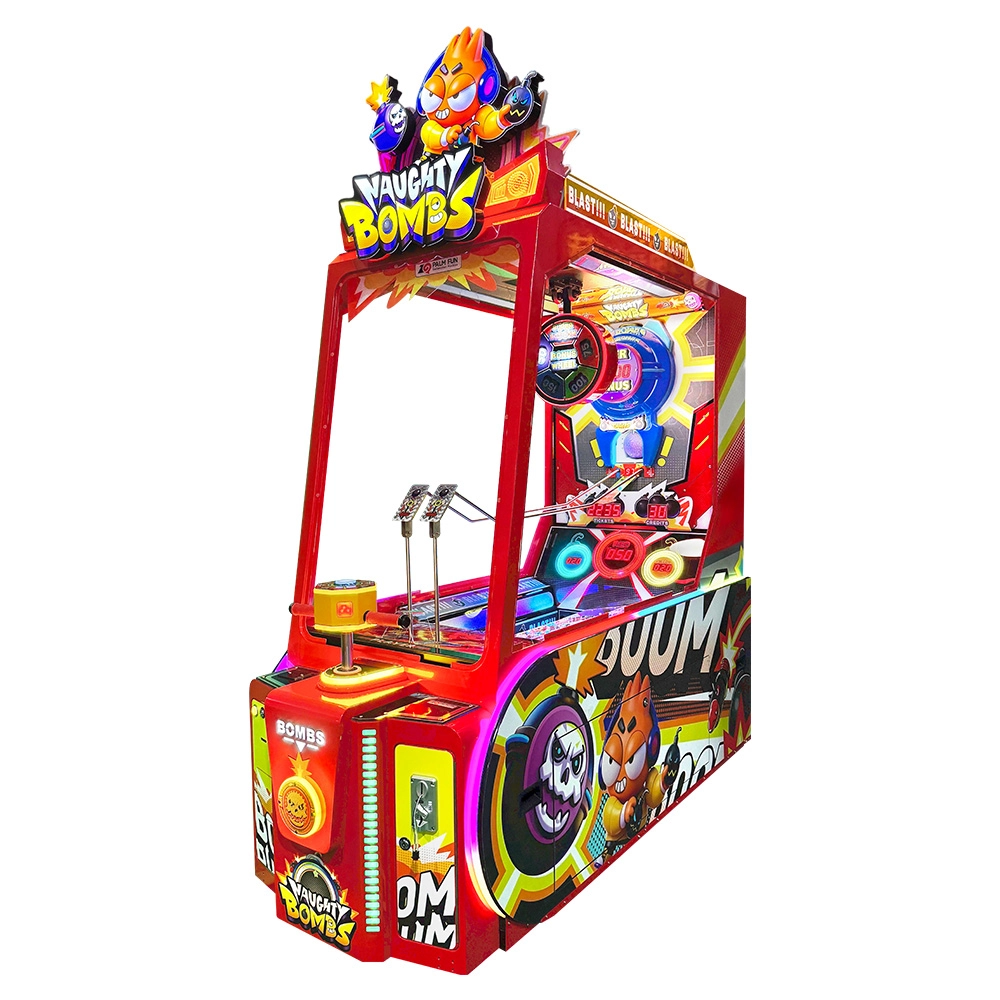
Naughty Bombs is a ball-drop redemption arcade game featuring rolling-ball gameplay, colored targets, ticket prizes, surprise bonus rewards, lighting and sound effects. Players use timing to launch and drop balls toward colored target areas. The product is presented for arcade, family entertainment center and other entertainment-venue projects, with customizable 110V / 220V AC voltage configuration.
Dream Wonderland Marble Pusher Redemption Game
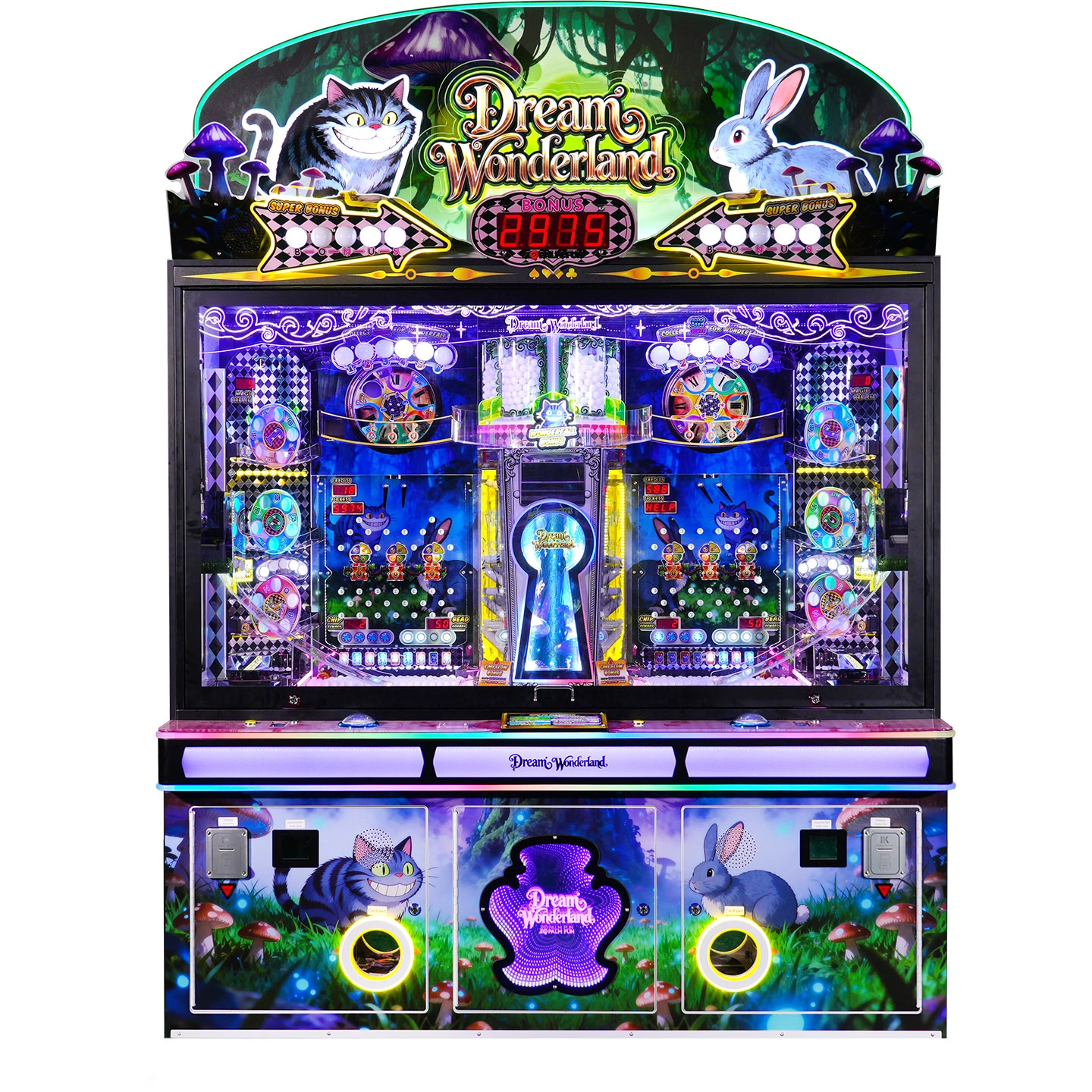
Enter Dream Wonderland — a magical marble pusher adventure filled with glowing lights, magic orbs, bonus wheels, collectible character cards, and exciting jackpot challenges.
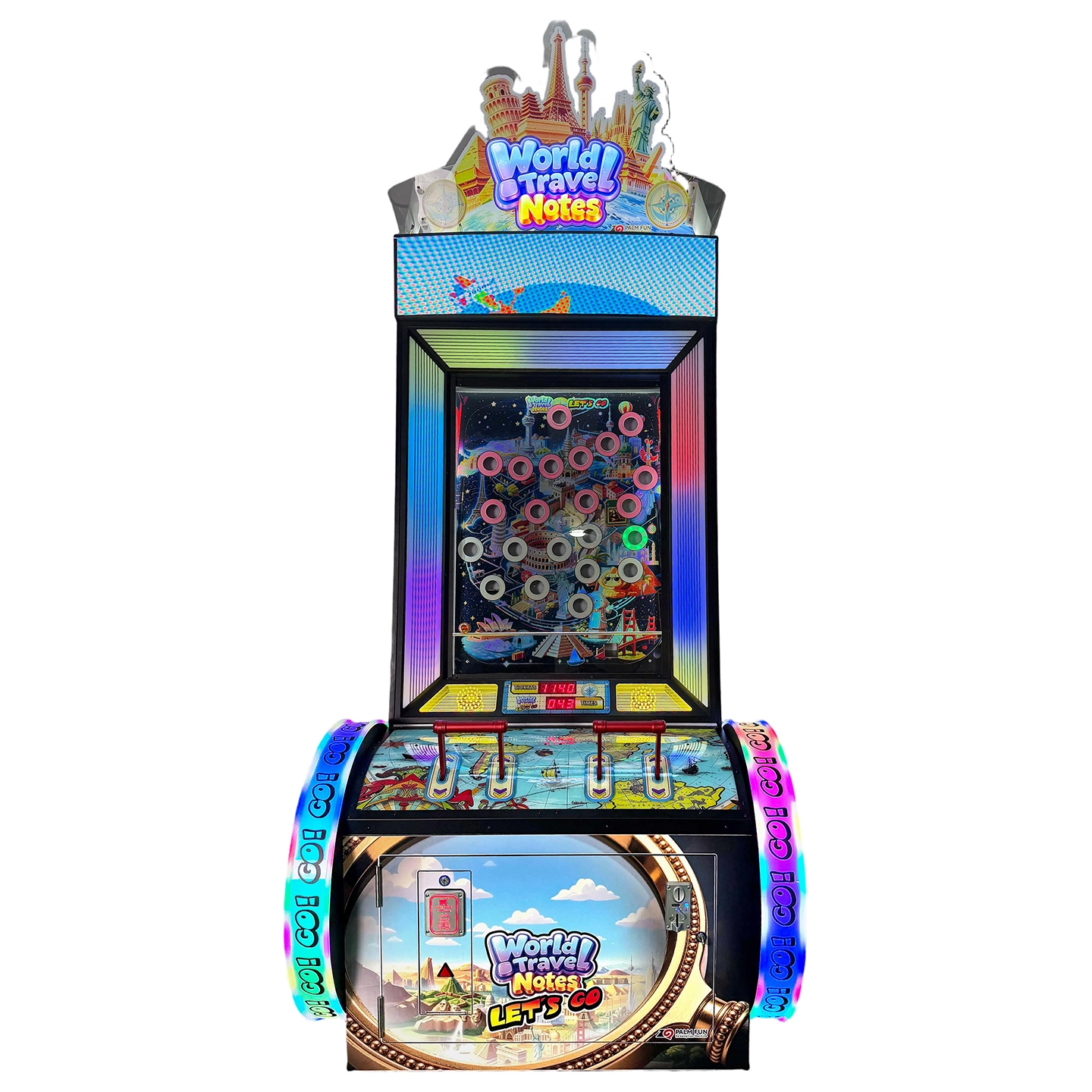
World Travel Notes – Balance Ball Redemption Arcade Game
World Travel Notes is a skill-based balance ball redemption game with a fun world-travel theme. Players use two handles to control the balance bar and guide the ball into each target hole. As the game progresses, the targets become more challenging, leading players toward the final grand prize. With colorful world-travel graphics, dynamic RGB lighting, a live score display, and progressive difficulty, World Travel Notes is designed to attract attention and encourage repeat play in arcades, FECs, shopping malls, and other entertainment venues.
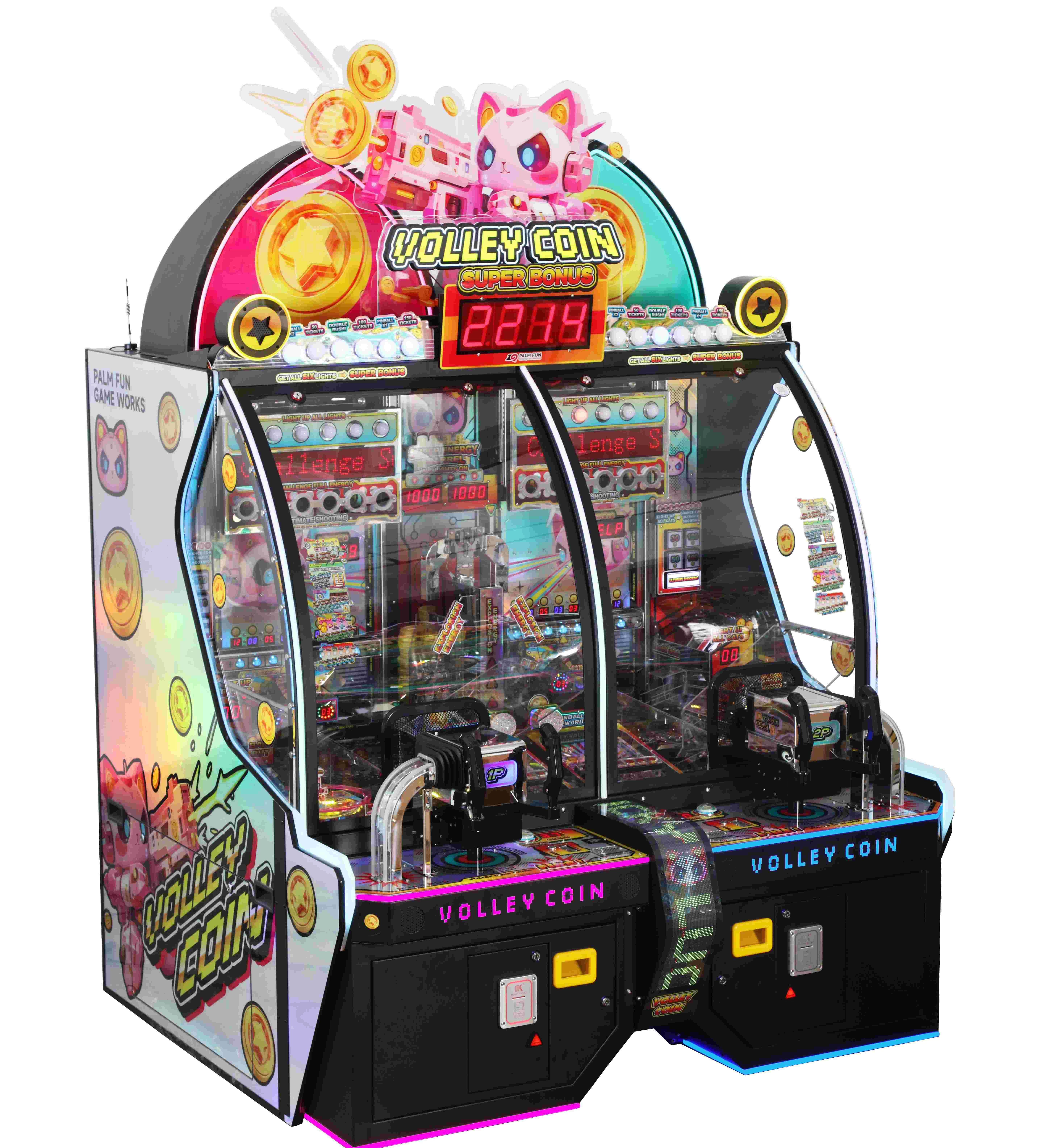
Hybrid Shooting & Pushing | Coin Pusher Arcade Ticket Redemption Machine
Volley Coin is an innovative arcade ticket redemption machine developed by Palm Fun Electronics. Combining the excitement of a fast-paced token shooter game with the proven earning power of a traditional coin pusher machine, Volley Coin offers a fresh and engaging gameplay experience that appeals to players of all ages.

Copyright © 2026 PALM FUN All Rights Reserved. | Privacy Policy • Terms and Conditions | Sitemap
palmfunarcade
Palm Fun Arcade Game
Whatsapp: +8618126837443
PalmFun Arcade
PalmFun_Arcade
PALM FUN Redemption Machine