


How to Choose a Skill-Based Ball Game
- Start with the venue, audience, and business goal
- Match the game to the people who will play it
- Set measurable purchasing criteria
- Evaluate the gameplay, skill, and reward structure
- Look for a clear objective with meaningful control
- Check the learning curve, pace, and repeat appeal
- Compare commercial fit before placing an order
- Use a consistent comparison checklist
- Assess footprint, visibility, and installation needs
- Plan for compliance, service, and long-term operation
- Verify destination-market rules and documentation
- Confirm maintenance, parts, and supplier support
- Frequently Asked Questions

Choosing a skill-based ball game for an arcade or family entertainment center means balancing player appeal with practical operating needs: understandable rules, meaningful player control, replay value, a suitable footprint, adjustable redemption settings, dependable support, and compliance with local requirements. A skill-based redemption ball game with surprise can add anticipation to a clear collection objective, but buyers should assess its mechanics, audience fit, prize model, service needs, and real-world performance before committing to a location or order.
Start with the venue, audience, and business goal
Match the game to the people who will play it
Begin with your venue’s audience rather than a machine’s visual appeal. A mall arcade may serve families, groups of teenagers, and casual visitors, while a destination entertainment center may attract repeat guests who actively seek competitive challenges. Consider typical player ages, group size, visit length, and whether guests are likely to play once or return to improve their results. For younger or first-time players, the objective and controls should be easy to grasp. For repeat players, timing, precision, or route choices can provide room to develop skill.
Look at the surrounding game mix, too. If your floor already has several fast, simple redemption games, a ball game with a distinctive physical mechanic may add variety. If the area is mainly focused on competitive games, a machine with a visible skill element and a quick rematch cycle may fit better. The goal is not simply to add another cabinet; it is to give guests a different reason to stop, watch, participate, and play again.
Set measurable purchasing criteria
Before requesting a quotation, decide what success should look like for your operation. Useful criteria include cabinet dimensions, power requirements, expected player throughput, the time needed to learn the game, ticket or prize configuration, service access, and the investment your business can support. Ask potential suppliers for operating information and available settings, then compare it with your own location’s play and redemption data.
Do not base a purchase on a broad promise of earnings. Revenue depends on factors such as placement, local pricing, traffic, game mix, machine settings, and ongoing maintenance. Where possible, test the game on your floor or obtain references from operators with a comparable venue. Track plays, repeat plays, prize costs, downtime, and customer response over a representative period before making assumptions about performance.
Evaluate the gameplay, skill, and reward structure
Look for a clear objective with meaningful control
In a strong skill-based ball game, players should be able to understand what they are trying to achieve and recognize how their actions influence the result. Watch several rounds: Can a new player follow the objective without a long explanation? Are controls responsive and visible? Does timing, aiming, or decision-making matter, or does the outcome appear almost entirely automatic? A useful balance lets beginners participate while giving experienced players a reason to refine their approach.
For a skill-based redemption ball game with surprise, ask the supplier to explain exactly how the ball moves, what actions affect its route, and what players must collect to reach the reward stage. The surprise element should add anticipation without obscuring the rules or making the result feel arbitrary. Demonstrations should include both successful and unsuccessful rounds so your team can judge whether the challenge feels understandable and fair across different player skill levels.
Check the learning curve, pace, and repeat appeal
A short play cycle can suit busy locations because guests can quickly decide whether to play again. Yet speed alone does not create lasting appeal. Look for a satisfying rhythm: players should have enough time to make a choice, see the ball’s movement, and understand the result. Visual feedback, sound, and a clear end-of-round state help spectators follow the action and can make the game engaging for groups waiting nearby.
Ask how the game maintains interest after the first attempt. Does improved timing or route selection give players a reason to try again? Can the operator adjust settings to suit the venue while keeping outcomes transparent? Review the available settings with your supplier and document the configuration chosen for each location. If the machine awards tickets or prizes, evaluate the relationship between challenge, reward, and your operation’s redemption policy rather than assuming that one setting will suit every market.
Palm Fun Electronics’ Skill-based redemption ball game with SURPRISE, also called Space Express, is built around movement and collection. Its sci-fi cabinet presents swinging platforms and gravitational inertia as part of the puzzle, and completing the collection leads to a SURPRISE reward. The concept combines a straightforward goal with skill-dependent play: players can enjoy swing, gravity, and route choices while trying to improve their results. Ask for a live demonstration to see how those mechanics work in practice and whether the pace fits your floor.
Compare commercial fit before placing an order
Use a consistent comparison checklist
Compare candidate machines against the same requirements rather than relying on appearance or a single feature. Record what each supplier confirms, what needs testing, and what is not included. The table below offers a practical starting point; tailor it to your venue, local regulations, and purchasing process.
| Evaluation area | Questions for the buyer | Why it matters |
|---|---|---|
| Player experience | Is the objective clear? Does player timing or choice affect play? | Supports accessibility and gives players a reason to improve. |
| Reward configuration | What collection, ticket, or prize settings are available? | Helps align the game with local rules and the venue’s redemption model. |
| Footprint and placement | What are the cabinet dimensions, access clearances, and power needs? | Reduces installation surprises and helps protect traffic flow. |
| Operations and upkeep | Which parts need routine inspection, and how are spares obtained? | Supports uptime and makes maintenance planning more predictable. |
| Supplier support | Are manuals, setup guidance, warranty terms, and technical contacts available? | Clarifies what help operators can expect after delivery. |
Assess footprint, visibility, and installation needs
Measure the intended location, including the route from receiving to the final position. Check the cabinet’s full dimensions, doorway and elevator clearances, access needed to open service panels, electrical requirements, ventilation guidance, and visibility from nearby player paths. A dramatic cabinet can attract attention, but it should not block circulation, emergency access, or sightlines for staff. Confirm installation requirements in writing with the supplier and your site team before shipment.
For equipment involving moving parts and electrical systems, use a documented review process rather than making assumptions based on appearance. The ISO 12100 overview describes machinery safety risk assessment and risk-reduction principles. It can help inform questions for your technical and compliance teams; it does not establish that a particular game has been certified. Confirm which standards and approvals apply to the equipment and destination market with the manufacturer and appropriate local professionals.
Plan for compliance, service, and long-term operation
Verify destination-market rules and documentation
Rules for amusement equipment, ticket redemption, prizes, and games involving skill or chance can differ by country, state, or municipality. Before buying, ask the supplier for available technical documentation, operating instructions, electrical information, and details of applicable testing or certifications. Then verify requirements with the relevant local authority or qualified compliance adviser. Do not assume that a product’s description as skill-based determines how regulators classify it in your market.
In the United States, the U.S. Consumer Product Safety Commission’s amusement-ride guidance is one example of an official resource operators can review when researching safety responsibilities. The relevant rules depend on the equipment and jurisdiction, so use applicable local guidance rather than treating a general resource as a product approval. Keep purchase records, manuals, inspection notes, and configuration details accessible to the people responsible for operating the game.
Confirm maintenance, parts, and supplier support
Ask who handles setup, troubleshooting, and warranty claims, and how operators can order replacement parts. Request a maintenance schedule and identify components that require routine cleaning, inspection, or adjustment. For a ball game, clarify how to access the play area safely, how to check the ball path and moving mechanisms, and what staff should do if play is interrupted. A written escalation process can reduce confusion during busy operating hours.
Also ask whether training materials and remote technical support are available in a language your team can use. A supplier’s response before the purchase is useful evidence of how clearly it communicates, but confirm service terms in the contract rather than relying on informal assurances. Palm Fun Electronics designed and produced Space Express as a patented product, with a technology-forward cabinet and a fast playing rhythm. Discuss the documentation, parts availability, setup requirements, and after-sales support for your specific order directly with the manufacturer.
Choose the game only after the player experience and operating plan both make sense. The right skill-based redemption ball game with surprise should be engaging to play, easy for staff to explain, appropriate for the space, and supported by settings and service information that your team can manage. A structured comparison, a hands-on demonstration, and a review of local requirements help turn an appealing concept into a more informed purchasing decision.
Frequently Asked Questions
What should I look for when choosing a skill-based ball game?
Assess whether the objective is clear, player timing or choices meaningfully affect play, the game suits your audience, and its footprint, reward settings, service needs, and local compliance requirements fit your operation.
How does the Skill-based redemption ball game with SURPRISE work?
Palm Fun Electronics’ Space Express uses swinging platforms and gravitational inertia as part of its puzzle. Players aim to complete a collection, which leads to a SURPRISE reward; a demonstration can show how movement and route choices affect play.
Does a skill-based game guarantee higher arcade revenue?
No. Revenue depends on placement, local pricing, traffic, game mix, settings, and maintenance. Review relevant operating data or test the game in your venue rather than relying on a general earnings promise.
What should arcade operators check before installation?
Confirm cabinet dimensions, delivery access, service-panel clearance, electrical requirements, ventilation guidance, traffic flow, and any local safety or regulatory requirements with the supplier and site team.
What support should I ask the supplier about?
Ask about manuals, setup guidance, warranty terms, maintenance schedules, replacement parts, staff training, troubleshooting, and technical support, and confirm the agreed service terms in writing.
Recommended for you
Top 5 Coin operated arcade games Company List and Products Compared
Wholesale tickets galore manufacturer and supplier in Asia
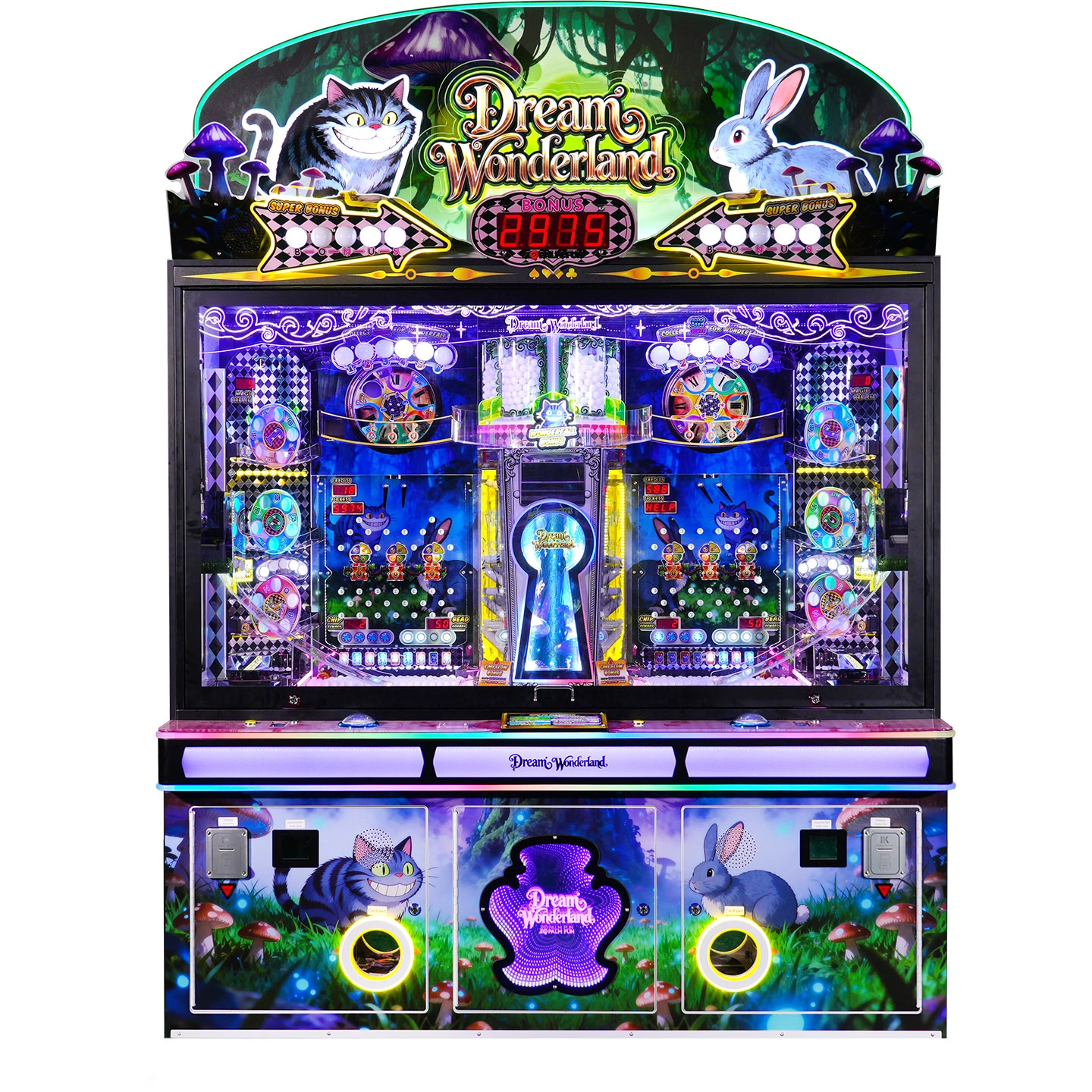
Dream Wonderland Marble Pusher Game Features
Market Signals: High-Margin Coin Pusher Models for Importers
How to choose the exchange gifts of the tickets(reward points)?
2. Gifts should be diverse. This refers to the variety of items available, providing players with more choices. Everyone's preferences are different, especially adults who have higher expectations for gifts. The venue should strive to meet the diverse needs of these players.
3. Gifts should be fashionable. The younger generation that follows trends is very interested in the hottest items of the moment. If the venue can keep up with the latest trends, it can attract the majority of consumers.
4. Gifts should be innovative. Especially during holidays and seasons, it's a good idea to try out new approaches, creating a competitive advantage with unique offerings. For example, the current trend of combining pop culture and blind box culture.
How to select and match redemption machines?
2. the number of redemption game configuration: according to the characteristics of redemption machine, the proportion of redemption game configuration generally accounts for 30±5% of the whole field.
3. there are a lot of equipment on the market now, but less innovative, so the choice should be targeted in management and planning. We can divide redemption machines into children's, adults's, families, etc., according to different standards, with complete varieties and many styles, so as to give guests more choices and more changes. Specific can refer to the following:
① Inserting tokens in high frequency (mainly in mechanical redemption machines)
② Skill based games (mainly in mechanical redemption machines)
③ Games with edutainment significance (mainly in video redemption machines)
④ Entertaining games (mainly in video redemption machines)
How to perform daily maintenance and servicing on redemption machines?
1. New machine entry performance, as it is relatively unstable in operation at this stage, requires dedicated supervision, timely follow-up, and improvements.
2. Redemption machines are relatively prone to collecting dust, which can lead to mechanical wear and corrosion. Dust can also cause issues with circuit boards, such as conductivity and optical sensor malfunctions. Thus, both internal and external cleanliness of redemption machines are equally important. Regular cleaning schedules for internal and daily cleaning for external components should be established.
3. Timely inspect the quality and durability of certain components. If issues are detected with imaging equipment, for example, replacements are necessary. A thorough understanding and mastery of the machine's performance can help extend its lifespan and ensure normal usage rates. Critical inspection areas include vulnerable parts such as motors, drive belts, gears of ticket dispensers, and sensors.
4. Frequent changes in prize point settings and payout rates are discouraged. Improvements in winning odds should be pursued through other methods and approaches.
5. All machines should have procedures for ticket removal and shredding to protect the ticket dispensers from damage.
6. Monitor changes in payout rates closely, as it directly impacts the cost control of the entire redemption machine system.
7. When employees add tickets, they should verify if the ticket sensors are unobstructed (blocked sensors can prevent ticket dispensing).
8. Have the protective paper on redemption machine's adhesive tape been removed? (Leaving it on can obstruct the ticket slot and ticket dispenser).
9. Responsible personnel should periodically and discreetly check the addition of tickets inside the redemption machines, ensuring that the added tickets match the registered ones.
How to guides works?
For example:
1. Proactively inquire and add tickets when a customer's machine is running low on tickets.
2. Assist players in organizing tickets when they are dispensed unevenly.
3. Offer storage tools such as storage bags and rubber bands when customers are arranging their tickets.
4. Provide free USB interfaces for charging near popular machines and rest areas.
5. Implement warm and clear reminders, guidance on ticket redemption, and directional signage, all designed to be straightforward. The more of these you provide, the more players will appreciate your thoughtfulness, without finding it bothersome.
Why redemption ticket machines are popular?
2.Redemption machines are becoming the most important breakthrough to enhance the sustainable operation of indoor arcade game halls.
3.Players are of all ages and they continue to expand.
You may also like
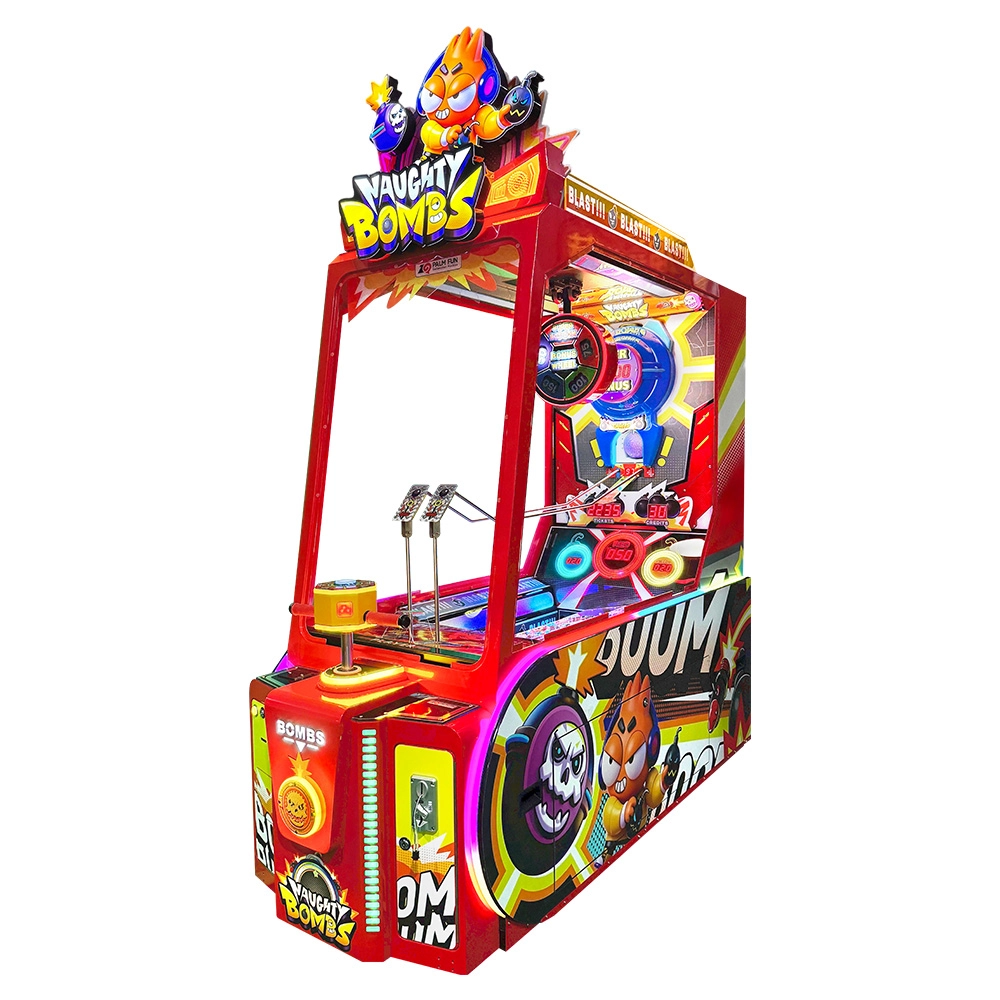
Naughty Bombs Ball Drop Redemption Arcade Game Machine
Naughty Bombs is a ball-drop redemption arcade game featuring rolling-ball gameplay, colored targets, ticket prizes, surprise bonus rewards, lighting and sound effects. Players use timing to launch and drop balls toward colored target areas. The product is presented for arcade, family entertainment center and other entertainment-venue projects, with customizable 110V / 220V AC voltage configuration.
Dream Wonderland Marble Pusher Redemption Game
Enter Dream Wonderland — a magical marble pusher adventure filled with glowing lights, magic orbs, bonus wheels, collectible character cards, and exciting jackpot challenges.
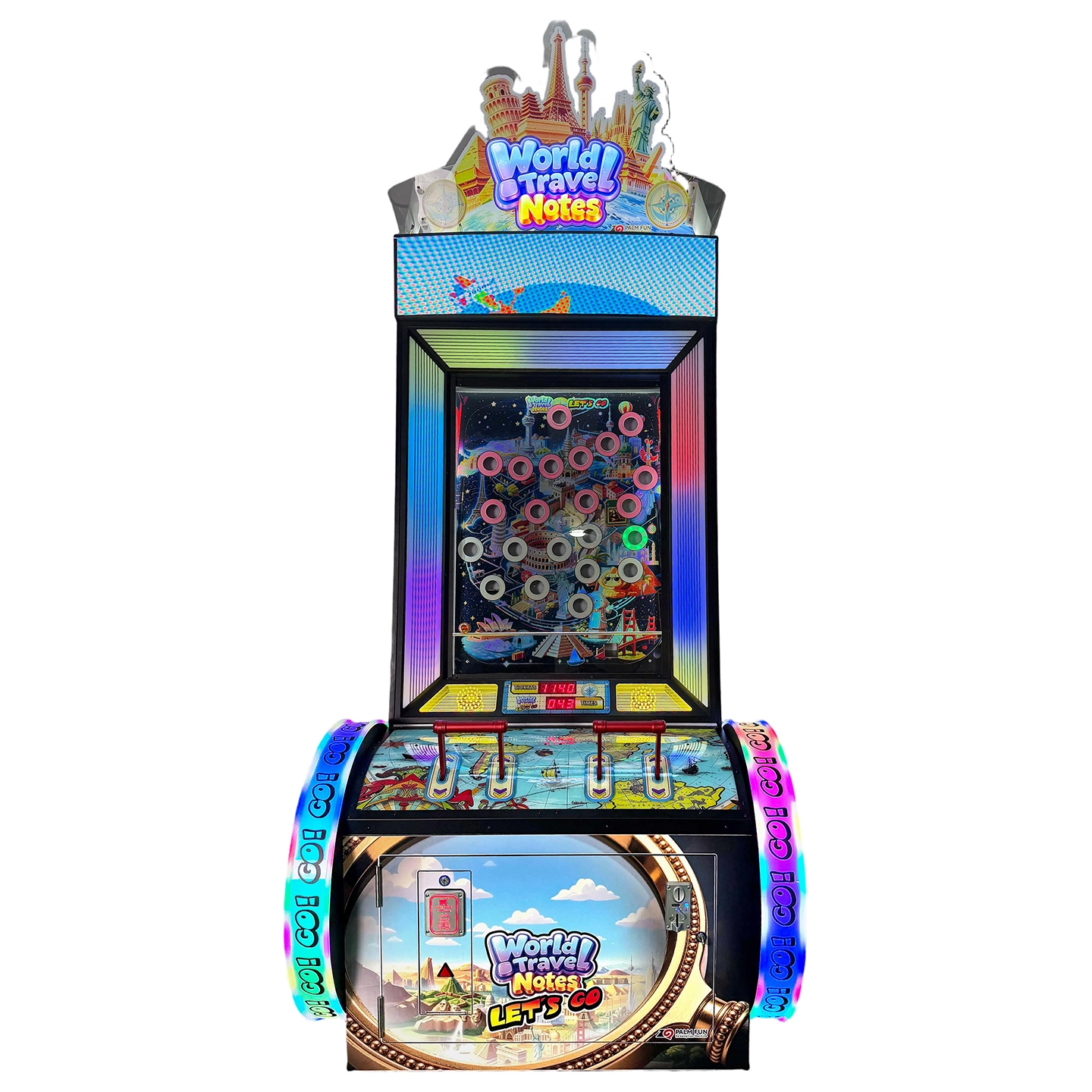
World Travel Notes – Balance Ball Redemption Arcade Game
World Travel Notes is a skill-based balance ball redemption game with a fun world-travel theme. Players use two handles to control the balance bar and guide the ball into each target hole. As the game progresses, the targets become more challenging, leading players toward the final grand prize. With colorful world-travel graphics, dynamic RGB lighting, a live score display, and progressive difficulty, World Travel Notes is designed to attract attention and encourage repeat play in arcades, FECs, shopping malls, and other entertainment venues.
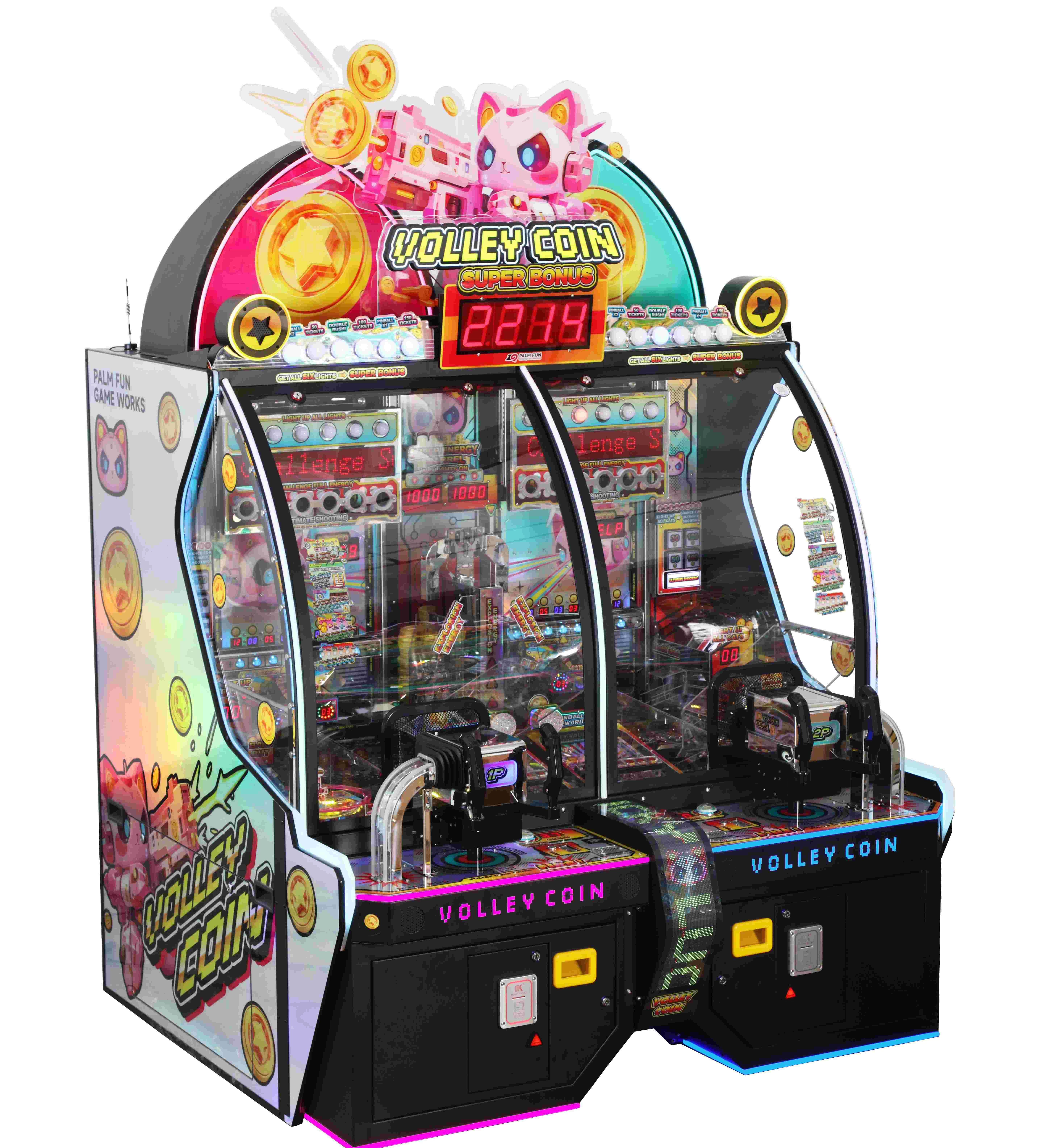
Hybrid Shooting & Pushing | Coin Pusher Arcade Ticket Redemption Machine
Volley Coin is an innovative arcade ticket redemption machine developed by Palm Fun Electronics. Combining the excitement of a fast-paced token shooter game with the proven earning power of a traditional coin pusher machine, Volley Coin offers a fresh and engaging gameplay experience that appeals to players of all ages.

Copyright © 2026 PALM FUN All Rights Reserved. | Privacy Policy • Terms and Conditions | Sitemap
palmfunarcade
Palm Fun Arcade Game
Whatsapp: +8618126837443
PalmFun Arcade
PalmFun_Arcade
PALM FUN Redemption Machine