








Inspection checklist: accepting bulk shipments of single player arcade
Comprehensive acceptance checklist and standardized inspection protocol for bulk deliveries of single-player amusement cabinets, covering packaging verification, component and electrical testing, cosmetic assessment, software validation, documentation and compliance records, logistics sampling plans, and corrective-action workflows—designed to reduce downtime, limit chargebacks, and improve lifecycle ROI for operators and distributors of redemption and arcade entertainment equipment. Includes comparison of manual vs. structured factory acceptance testing, links to industry best-practice references (Pinball - Wikipedia, ISO 9001 quality management, UL safety standards), a practical HTML inspection table, and a PALM FUN implementation framework for procurement teams.
- Pre-receipt preparation: procurement controls and documentation
- Purchase order and specification alignment
- Shipping documentation and compliance records
- Receiving-area readiness and staging
- Inbound inspection steps: physical, electrical, and software verification
- Visual and mechanical checks
- Electrical and functional validation
- Firmware integrity and gameplay validation
- Sampling plans, acceptance criteria, and corrective workflows
- Statistically defensible sampling
- Acceptance, hold, and rejection thresholds
- Nonconformance handling and supplier feedback loops
- Operational considerations: logistics, warranty, and lifecycle ROI
- Packaging, transport damage prevention, and unpacking protocol
- Warranty registration, spare parts and field-support readiness
- Data-driven lifecycle management
- Implementation checklist: step-by-step acceptance protocol
- Day 0: container arrival and quarantine
- Day 1: open and inspect sample units
- Day 2+: complete FAT for lot and authorize release
- Supplier and brand integration: why standardized acceptance matters for redemption game machines
- Protecting venue uptime and player experience
- Reducing total cost of ownership
- PALM FUN capability and partnership approach
- Frequently Asked Questions
Comprehensive acceptance checklist and standardized inspection protocol for bulk deliveries of single-player amusement cabinets, covering packaging verification, component and electrical testing, cosmetic assessment, software validation, documentation and compliance records, logistics sampling plans, and corrective-action workflows—designed to reduce downtime, limit chargebacks, and improve lifecycle ROI for operators and distributors of redemption and arcade entertainment equipment. Includes comparison of manual vs. structured factory acceptance testing, links to industry best-practice references (Pinball - Wikipedia, ISO 9001 quality management, UL safety standards).
Pre-receipt preparation: procurement controls and documentation
Purchase order and specification alignment
Buyers should ensure purchase orders include explicit acceptance criteria: serial-number ranges, firmware build numbers, approved cosmetic artwork files, approved component vendors, and packing instructions. A master acceptance matrix aligned to contract terms prevents disputes over minor cosmetic defects versus functional failures and clarifies chargeback thresholds.
Shipping documentation and compliance records
Require complete paperwork accompanying each container: packing lists, commercial invoices, certificate of conformity, regulatory declarations, and UL/CE compliance documentation where applicable. For branded mechanical tables, insist on traceability sheets that map PCB lot numbers to firmware images and test logs to satisfy downstream auditing.
Receiving-area readiness and staging
Prepare a quarantine staging area with sufficient rack space, anti-static flooring for electronics, calibrated test equipment, and a documented process for sealed-container inspection. A standardized log sheet should capture container seal numbers, carrier waybill, and arrival condition photos to support claims for transport damage.
Inbound inspection steps: physical, electrical, and software verification
Visual and mechanical checks
On opening, perform a structured cosmetic audit: cabinet paint, playfield artwork, glass condition, fastener torque, and bezel alignment. Use a predefined scoring rubric to categorize defects as critical (affecting operation or safety), major (affecting player experience), or minor (cosmetic blemishes). Document with timestamped photos for each failed criteria.
Electrical and functional validation
Execute a functional run list: power-on sequence, fuse and ground verification, lamp and solenoid activation, switch matrix scans, coin or ticket mechanism cycle, and any peripheral sensors. Record measured voltages at key points and log results. Fault isolation procedures should map failed tests to replaceable modules to accelerate rework.
Firmware integrity and gameplay validation
Confirm installed firmware matches the approved build and perform regression test plays using a standard scenario checklist to validate scoring, mechanical timing, and event triggers. For networked cabinets, verify connectivity, authentication, and remote telemetry channels to prevent onsite surprises at launch.
Sampling plans, acceptance criteria, and corrective workflows
Statistically defensible sampling
Use ANSI/ASQ Z1.4-inspired sampling levels or an agreed AQL table for large shipments to balance inspection effort and risk. For high-value entertainment units, increase acceptance sample size for the first production lot, then move to a lower routine inspection rate after supplier performance stabilizes.
Acceptance, hold, and rejection thresholds
Define explicit thresholds for immediate acceptance, conditional acceptance (repair at buyer or supplier location), and rejection. Conditional acceptance should require a documented corrective action plan with defined lead times and re-inspection clauses to protect operating schedules.
Nonconformance handling and supplier feedback loops
Implement a nonconformance report (NCR) workflow that assigns severity, containment actions, root-cause analysis, and 8D corrective actions where appropriate. Maintain a supplier scorecard that tracks on-time delivery, first-pass yield, and corrective-action closure times to inform future purchase decisions.
Operational considerations: logistics, warranty, and lifecycle ROI
Packaging, transport damage prevention, and unpacking protocol
Inspect outer packaging integrity, internal bracing, humidity barrier presence, and desiccant placement. For gravity-based entertainment equipment, assess shock indicators or data loggers when available. Proper packaging reduces immediate field failures and long-term warranty claims.
Warranty registration, spare parts and field-support readiness
Verify supplier provides warranty certificates, recommended spare-part lists, and field-service manuals. Establish a receiving-yard spares kit to reduce mean time to repair (MTTR) for popular failures such as power supplies, lamps, or actuator assemblies.
Data-driven lifecycle management
Capture acceptance-test data into the asset-management system and link each unit’s serial number to service history and revenue performance. This data-driven approach enables ROI modeling for different game types (mechanical lottery cabinets, coin-driven tables, hybrid ticket redemption units) and informs refresh cycles.
| Inspection Aspect | Traditional Manual Acceptance | Structured Factory Acceptance Testing (FAT) |
|---|---|---|
| Throughput | Dependent on technician availability; variable daily rate | Standardized procedures increase consistent throughput and enable parallel testing |
| Traceability | Limited; often photo logs and paper checklists | Full digital records per unit, supporting ISO-aligned quality audits |
| Defect detection consistency | Variable; subject to human factors | Repeatable test scripts and calibrated equipment improve repeatability |
| Regulatory focus | Basic compliance checks (labels, warnings) | Comprehensive safety and EMC test points referencing UL/CE/EN standards |
| Documentation | Paper-based reports, limited archives | Structured reports with serial-linked PDFs for warranty and audit |
Implementation checklist: step-by-step acceptance protocol
Day 0: container arrival and quarantine
Verify seals and document external damage. Record carrier data and photo-evidence. Move intact containers to the quarantine zone until initial verification is complete.
Day 1: open and inspect sample units
Open according to the sampling plan. Perform the visual checklist, execute power-on and basic gameplay tests, and validate firmware. Create NCRs for any failures with remedial owner identified.
Day 2+: complete FAT for lot and authorize release
After sample validation, perform full acceptance runs on remaining units per contract. Release units to inventory with serial-number tags and digital acceptance certificates. Any conditional releases must have rework timelines and supplier responsibility clearly recorded.
Supplier and brand integration: why standardized acceptance matters for redemption game machines
Protecting venue uptime and player experience
For operators and venue owners, minimizing first-week failures is essential. A rigorous acceptance process improves player satisfaction by ensuring product reliability and consistent payout mechanics on redemption devices and ticket-issuing systems.
Reducing total cost of ownership
When acceptance criteria include spare-part kits and supplier-led training, lifetime maintenance costs fall. Clear warranty terms and documented FAT records reduce dispute cycles and improve supply-chain predictability.
PALM FUN capability and partnership approach
Founded in 2015, PALM FUN specializes in high-quality mechanical lottery machines, coin pusher machines, and raffle machines and is dedicated to the R&D, design, production, and sales of innovative gaming and lottery equipment. Our state-of-the-art factory covers 3,000 square meters and is staffed by a team of skilled development engineers committed to advancing technology and enhancing user experience. Our focus on quality and innovation has established us as an industry leader, enabling us to stay ahead of market trends and customer demands.
Operational buyers can request product-specific acceptance templates for our core lines—coin-operated skill games, hybrid ticket dispensers, and ticket-redemption cabinets. Examples of product solutions include pinball arcade cabinets for family entertainment centers and the single player arcade variant for standalone venues.
For projects requiring ticket redemption platforms, PALM FUN supplies modular machines like the Coin Pusher Arcade Ticket Redemption Machine and themed runs such as the Larva Series Coin Pusher Arcade. Buyers seeking supplier background and accreditation are directed to our corporate overview at High Quality Redemption Arcade MachinesManufacturer.
PALM FUN products are recognized and popular in over 50 countries worldwide. Our procurement-facing services include pre-shipment FAT, sealed firmware images, spare-part kits, and supplier scorecards. This structured approach helps distributors and operators reduce field failures, shorten time-to-revenue, and lower lifecycle service costs. Our vision is to become the world's leading manufacturer of redemption game machines. Visit us at https://www.palm-fun.com/ to learn more about product options, factory tours, and partnership programs.
To implement the checklist above, project owners should embed acceptance criteria in purchase orders, mandate digital FAT reports, and require supplier corrective-action SLAs to protect venue uptime and ensure consistent guest experiences.
Contact PALM FUN for standardized acceptance templates, FAT scheduling, and commercial terms tailored for bulk shipments of arcade and redemption equipment.
Frequently Asked Questions
What are the first steps upon container arrival for bulk arcade equipment?
Inspect container seals and document external condition with photos; record carrier waybill and move containers to a quarantine staging area. Verify accompanying shipping documents such as packing lists, commercial invoices, and certificates of conformity before opening containers.
How should buyers sample units for inspection in large shipments?
Adopt a statistically defensible sampling plan such as ANSI/ASQ Z1.4-inspired levels or an agreed AQL table. Increase sample sizes for initial production lots and reduce frequency as supplier performance stabilizes. Capture test data digitally and link it to serial numbers.
Which functional tests are essential during acceptance of single-player cabinets?
Execute a standardized run list including power-on verification, fuse and grounding checks, lamp and actuator activation, switch matrix scans, coin/ticket mechanism cycles, and gameplay regression tests to validate scoring, timing, and event triggers. Record voltage measurements and firmware versions.
What documentation should be required from suppliers at delivery?
Require packing lists, traceability sheets mapping PCB and firmware lots, certificate of conformity, regulatory declarations, warranty certificates, spare-part lists, and field-service manuals. These documents support warranty claims and regulatory audits.
How should nonconforming units be handled to protect venue uptime?
Use a formal nonconformance report (NCR) workflow that assigns severity, documents containment actions, and specifies root-cause analysis and corrective actions. For conditional acceptance, require a supplier-provided remedial plan with defined timelines and re-inspection clauses to minimize downtime.
Recommended for you
Custom Arcade Cabinets vs Standard Units: ROI Comparison
PALM FUN Best professional arcade slot machines manufacturers and supplier brands
How to start a arcade coin pusher business in China
Top 10 Coin Pusher Arcade Machines for Ticket Redemption 2026
FAQs
How to place the redemption machines in a right place?
1,Ensure that the placement and layout of the equipment are distinct and centralized.
2,Keep noise levels low and avoid having a line of sight that spans too far to prevent players from easily taking in everything, which may slow down their movement.
3,Avoid clustering high-ticket payout machines and disperse machines of the same style.
4,Mix popular machines with less popular ones and avoid placing all popular machines together.
The revenue proportion of redemption machines
How to guide the players to recognize tickets at the beginning setup of the redemption machines?
Never assume that your players already understand the purpose of lottery tickets(reward points). Even in venues that have been in operation for many years, it is still discovered during on-site interviews with players that many of them are not aware. Don't believe it? Just ask consumers at the venue. The machines, redemption counters, materials hung above the venue, and announcements by staff, among others, can all be channels for informing players about the purpose of lottery tickets(reward points). It is essential to do more promotion, create large displays and large cards, and clearly communicate the purpose of lottery tickets(reward points) to the players.
How to choose the exchange gifts of the tickets(reward points)?
2. Gifts should be diverse. This refers to the variety of items available, providing players with more choices. Everyone's preferences are different, especially adults who have higher expectations for gifts. The venue should strive to meet the diverse needs of these players.
3. Gifts should be fashionable. The younger generation that follows trends is very interested in the hottest items of the moment. If the venue can keep up with the latest trends, it can attract the majority of consumers.
4. Gifts should be innovative. Especially during holidays and seasons, it's a good idea to try out new approaches, creating a competitive advantage with unique offerings. For example, the current trend of combining pop culture and blind box culture.
How to perform daily maintenance and servicing on redemption machines?
1. New machine entry performance, as it is relatively unstable in operation at this stage, requires dedicated supervision, timely follow-up, and improvements.
2. Redemption machines are relatively prone to collecting dust, which can lead to mechanical wear and corrosion. Dust can also cause issues with circuit boards, such as conductivity and optical sensor malfunctions. Thus, both internal and external cleanliness of redemption machines are equally important. Regular cleaning schedules for internal and daily cleaning for external components should be established.
3. Timely inspect the quality and durability of certain components. If issues are detected with imaging equipment, for example, replacements are necessary. A thorough understanding and mastery of the machine's performance can help extend its lifespan and ensure normal usage rates. Critical inspection areas include vulnerable parts such as motors, drive belts, gears of ticket dispensers, and sensors.
4. Frequent changes in prize point settings and payout rates are discouraged. Improvements in winning odds should be pursued through other methods and approaches.
5. All machines should have procedures for ticket removal and shredding to protect the ticket dispensers from damage.
6. Monitor changes in payout rates closely, as it directly impacts the cost control of the entire redemption machine system.
7. When employees add tickets, they should verify if the ticket sensors are unobstructed (blocked sensors can prevent ticket dispensing).
8. Have the protective paper on redemption machine's adhesive tape been removed? (Leaving it on can obstruct the ticket slot and ticket dispenser).
9. Responsible personnel should periodically and discreetly check the addition of tickets inside the redemption machines, ensuring that the added tickets match the registered ones.
You may also like
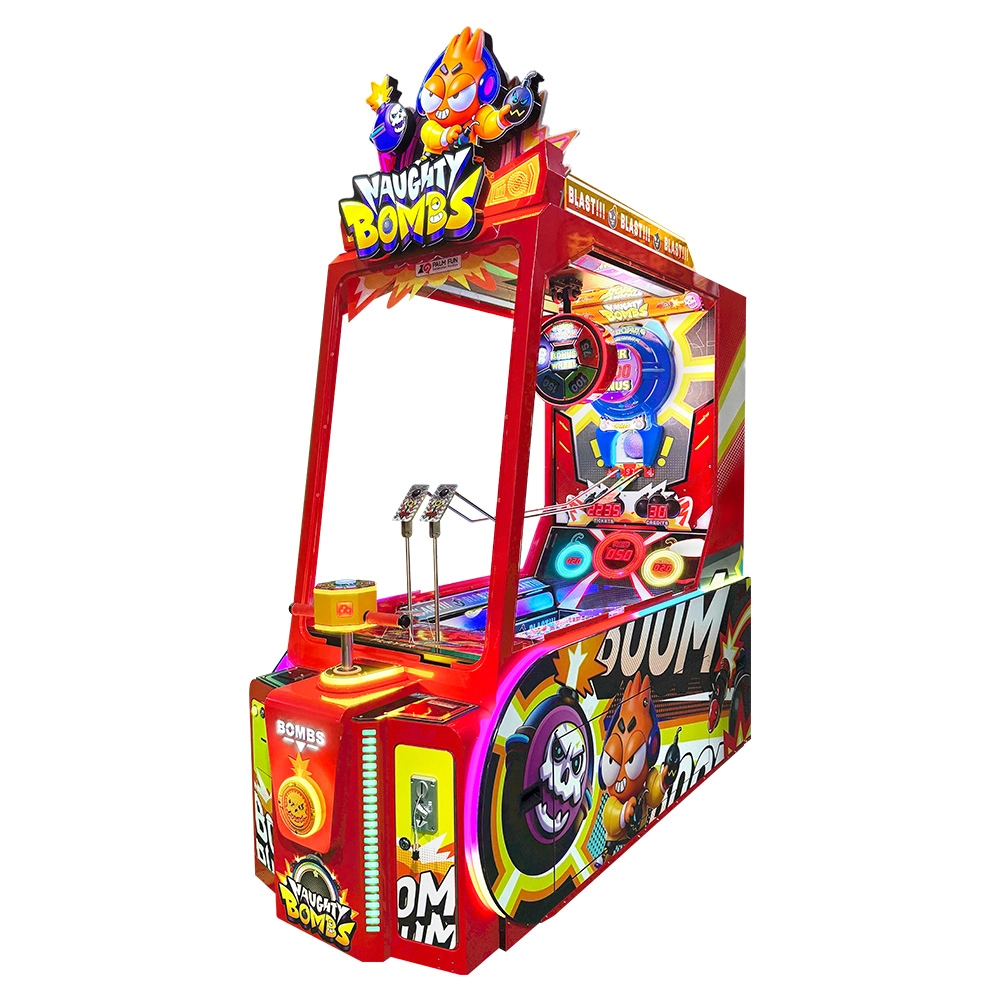
Naughty Bombs Ball Drop Redemption Arcade Game Machine
Naughty Bombs is a ball-drop redemption arcade game featuring rolling-ball gameplay, colored targets, ticket prizes, surprise bonus rewards, lighting and sound effects. Players use timing to launch and drop balls toward colored target areas. The product is presented for arcade, family entertainment center and other entertainment-venue projects, with customizable 110V / 220V AC voltage configuration.
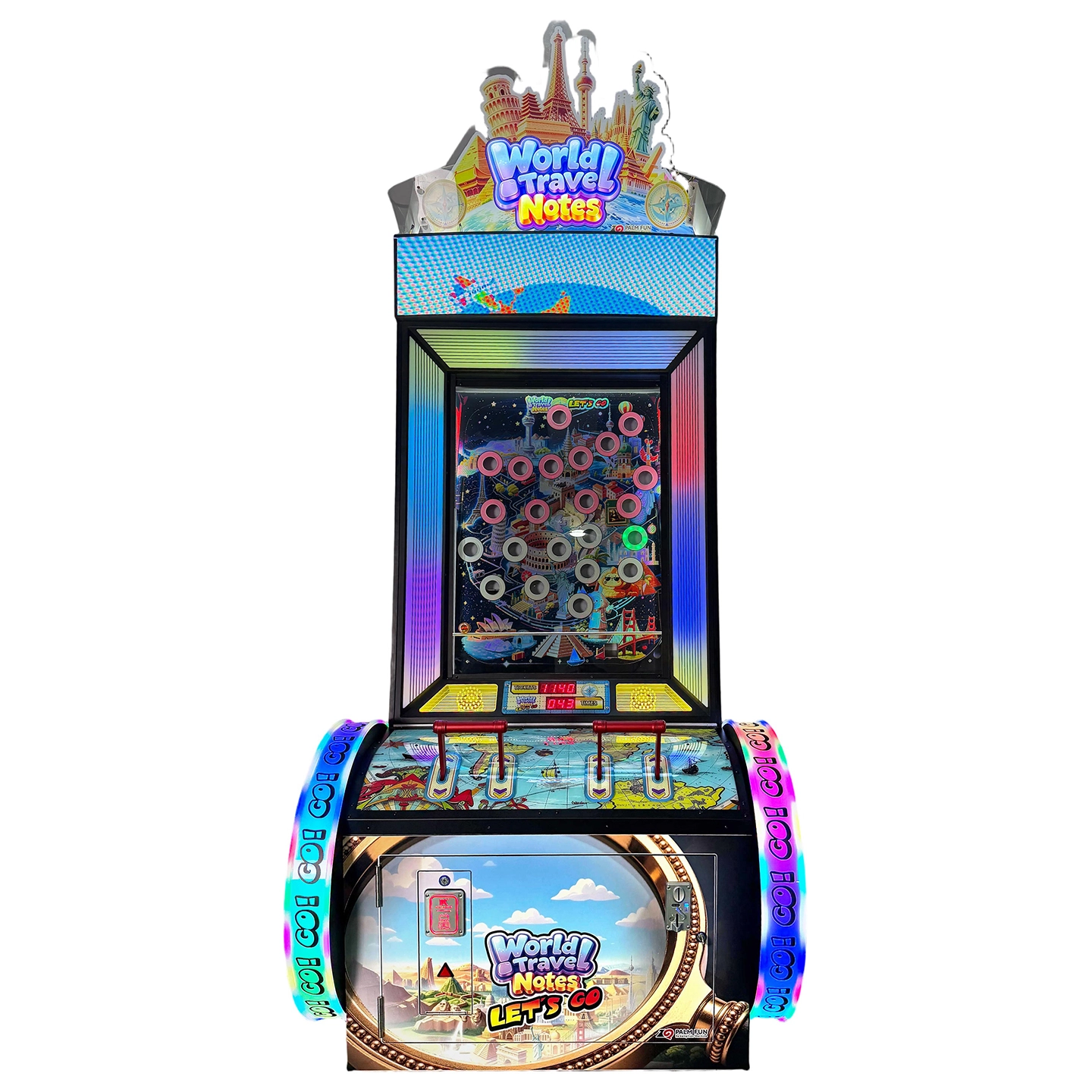
World Travel Notes – Balance Ball Redemption Arcade Game
World Travel Notes is a skill-based balance ball redemption game with a fun world-travel theme. Players use two handles to control the balance bar and guide the ball into each target hole. As the game progresses, the targets become more challenging, leading players toward the final grand prize. With colorful world-travel graphics, dynamic RGB lighting, a live score display, and progressive difficulty, World Travel Notes is designed to attract attention and encourage repeat play in arcades, FECs, shopping malls, and other entertainment venues.
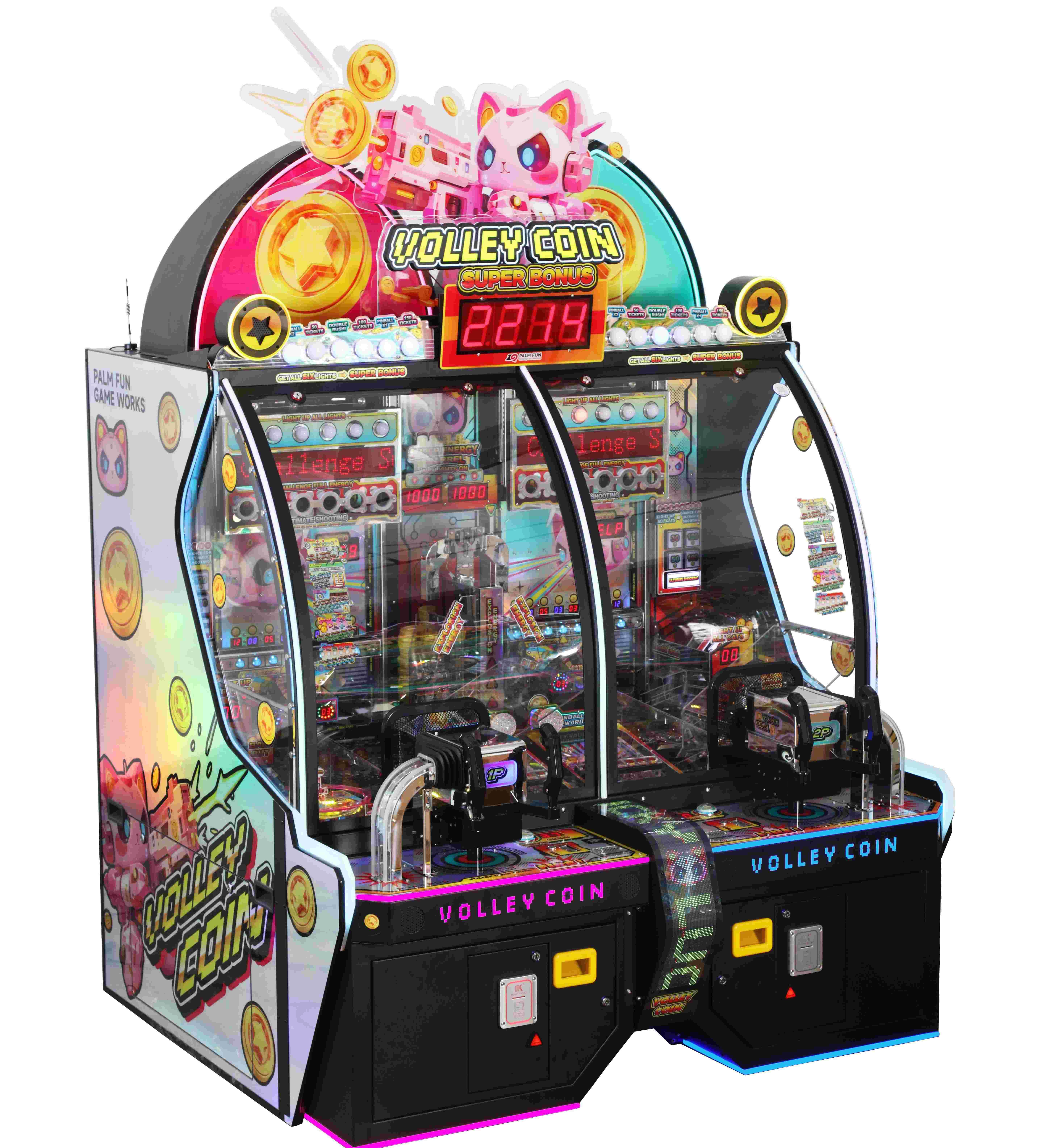
Hybrid Shooting & Pushing | Coin Pusher Arcade Ticket Redemption Machine
Volley Coin is an innovative arcade ticket redemption machine developed by Palm Fun Electronics. Combining the excitement of a fast-paced token shooter game with the proven earning power of a traditional coin pusher machine, Volley Coin offers a fresh and engaging gameplay experience that appeals to players of all ages.
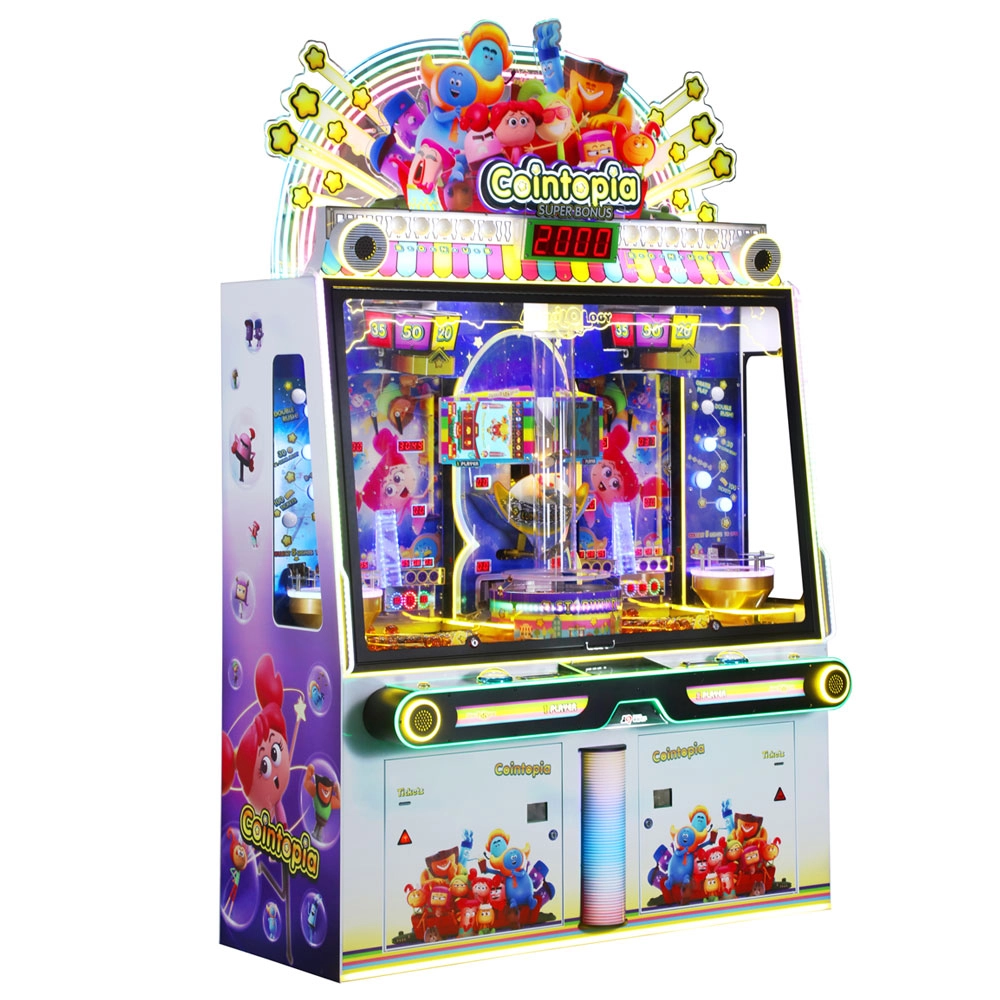
COINTOPIA, Have Fun Together With The Zodiac Buddies in an Utopia
COINTOPIA by PALM FUN is an exciting redemption game machine where players enjoy fun with zodiac buddies in a utopia setting. This ticket redemption machine offers engaging gameplay and rewarding experiences, perfect for family entertainment centers and arcades seeking top-quality redemption games.

Copyright © 2026 PALM FUN All Rights Reserved. | Privacy Policy • Terms and Conditions | Sitemap
palmfunarcade
Palm Fun Arcade Game
Whatsapp: +8618126837443
PalmFun Arcade
PalmFun_Arcade
PALM FUN Redemption Machine