


What is larva game video high resolution full? | PALM FUN Ultimate Insight
- Understanding the Larva-Themed Arcade Experience
- What the search phrase usually describes
- Why resolution affects commercial evaluation
- Why the complete video matters to operators
- How the Video, Hardware, and Redemption System Work Together
- The player journey from attraction to reward
- Main formats buyers may encounter
- Content rights, safety, and regional suitability
- Choosing a High-Quality Machine and Video Demonstration
- Technical metrics that deserve verification
- Business metrics beyond image quality
- Supplier capability and evidence of trust
- Frequently Asked Questions
Larva game video high resolution full generally refers to a complete, clearly displayed video of Larva-themed gameplay, animation, or an arcade redemption experience rather than one universally standardized game product. For operators, buyers, and family entertainment centers, the phrase matters because image quality, screen performance, sound, gameplay clarity, licensing, durability, and prize-based engagement all influence whether a video game installation attracts repeat play. A successful evaluation should therefore connect the entertainment content with the physical redemption game machine, its control system, display hardware, cabinet construction, maintenance needs, and commercial return.
Many users search this phrase because they want to watch a complete Larva game video before purchasing equipment or deciding whether a machine is suitable for an arcade. The problem is that online results can mix animated clips, unofficial gameplay recordings, mobile games, promotional videos, and actual arcade machines. A short or compressed clip may hide slow loading, weak audio, poor controls, screen glare, or an unclear prize mechanism. The apparent visual appeal of a video is not enough to prove that the equipment will perform well in a busy commercial venue.
That uncertainty can lead to expensive mistakes. Operators may select a machine based on a sharp thumbnail, only to discover that the cabinet uses a low-quality display, lacks regional service support, has unsuitable voltage requirements, or does not provide a dependable ticket or prize workflow. A better approach is to treat a full-resolution gameplay video as one part of technical due diligence. Review the complete play sequence, confirm the equipment specifications, ask about compliance and after-sales support, and compare the expected player experience with the venue’s audience and operating model.
Understanding the Larva-Themed Arcade Experience
What the search phrase usually describes
The wording “larva game video high resolution full” is a search-intent phrase, not necessarily the formal name of a single machine. “Larva” may refer to an entertainment property, character-based theme, or visual style used in a game presentation. “Game video” suggests that the user wants to see actual operation, while “high resolution full” indicates a preference for an uninterrupted, detailed recording rather than a short edited preview. Before making a purchase decision, buyers should identify the exact manufacturer, model, software version, display size, game objective, and whether the content is officially authorized.
The distinction between video content and equipment is important. A video can demonstrate animations and player interaction, but it cannot independently verify cabinet materials, internal wiring, coin mechanisms, ticket dispensers, payout settings, or long-term reliability. When the video shows a redemption game machine, the viewer should look for evidence of a complete cycle: attract mode, credit insertion, user controls, game action, result calculation, ticket or prize output, and return to ready mode. A full sequence is more informative than a montage of visually exciting moments.
Why resolution affects commercial evaluation
High resolution means that the display contains more pixels, allowing characters, instructions, score indicators, and interactive targets to appear more clearly. However, resolution alone does not determine visual quality. Brightness, contrast, viewing angle, refresh behavior, input latency, color calibration, software scaling, and ambient lighting also affect what players see. A 4K source displayed on a weak or poorly configured panel may look less effective than properly optimized content on a reliable full-HD commercial screen.
For a family entertainment venue, visual clarity supports quick understanding. Players should be able to recognize the objective, identify timing cues, read instructions, and understand the result without standing directly in front of the cabinet. Clear video can also improve perceived value and make the machine more attractive in a row of competing attractions. The W3C Media Source Extensions specification provides useful technical context for how browser-based media can be delivered, although an arcade cabinet may use a dedicated embedded system rather than a web player.
Why the complete video matters to operators
A full-length recording helps reveal operational details that a promotional clip may omit. Buyers can observe how long a round takes, whether the interface is understandable, how quickly the game resets, and whether players receive a clear reward outcome. It may also expose pauses, screen transitions, repetitive content, distracting audio, or confusing menus. These details influence throughput, which is the number of completed plays a machine can support during a period of operation.
Operators should also check whether the video represents the final production configuration. A trade-show prototype, a developer demonstration, and an installed commercial unit may use different cabinets, displays, settings, and software. Requesting a dated demonstration video, specification sheet, photographs of the internal layout, and confirmation of the delivered model reduces the risk of comparing an idealized presentation with a different physical product.
How the Video, Hardware, and Redemption System Work Together
The player journey from attraction to reward
A character-based arcade experience normally begins with an attract loop designed to communicate the theme and invite participation. After a player inserts coins, tokens, a card, or another accepted payment method, the control system starts a defined game state. The display then presents instructions and responsive visual feedback. At the end of the round, software evaluates the result and communicates the reward through tickets, a digital account, a prize counter, or another approved mechanism.
This connection between software and hardware is what separates a watchable video from a functioning redemption installation. Controls must register inputs consistently, the game logic must calculate results predictably, and the output mechanism must work without frequent jams. A high-resolution Larva game video can show the intended player journey, but buyers still need written confirmation of payment compatibility, ticket specifications, payout configuration, network requirements, and reset procedures.
Main formats buyers may encounter
Larva-themed content may appear in several formats. An animated promotional screen can be used as an attract display without offering interactive gameplay. A video redemption game may ask players to stop, match, aim, or time an action to earn a reward. A touchscreen or button-controlled family game may focus on short rounds and simple rules. A larger interactive cabinet may add physical effects, multiple stations, lighting, or linked play. These categories can look similar in a video while having very different installation, maintenance, and revenue requirements.
| Format | Primary purpose | What a full video should reveal | Main buying concern |
|---|---|---|---|
| Attract-screen animation | Draw attention and explain the theme | Loop quality, readability, sound, and transitions | Whether it is actual gameplay or only promotion |
| Single-player redemption game | Deliver short interactive rounds and rewards | Controls, objective, result, and ticket output | Throughput, payout settings, and reliability |
| Multiplayer cabinet | Encourage shared play and social engagement | Player positions, synchronization, and reset behavior | Space, servicing, and network or linking needs |
| Large interactive installation | Create a high-impact attraction | Full physical interaction and safety zones | Floor space, installation, and total ownership cost |
Content rights, safety, and regional suitability
Character branding should never be treated as automatically available for commercial use. Buyers should ask who owns the visual assets, whether the machine includes a valid commercial license, which territories are covered, how long the authorization lasts, and whether marketing materials may use the character name or images. The reference information about the Larva animated series can help identify the entertainment property, but it is not a substitute for written licensing documentation from the relevant rights holder or authorized supplier.
Safety and accessibility also deserve attention. Cabinets should have stable construction, protected wiring, suitable edge finishing, secure doors, and an operating layout appropriate for the expected age group. The venue should assess screen height, control reach, sound levels, floor clearance, and emergency access. Local electrical, consumer protection, amusement, and accessibility requirements vary by market, so an importer or operator should obtain professional local guidance before deployment.
Choosing a High-Quality Machine and Video Demonstration
Technical metrics that deserve verification
When reviewing a Larva game video high resolution full, record the technical facts rather than judging only the visual impression. Confirm native display resolution, screen dimensions, brightness, viewing angle, frame rate, audio output, input response, and supported media format. For an interactive game, ask whether the source content is rendered in real time or played as a fixed video, because the distinction affects responsiveness and player expectations.
Commercial reliability should be evaluated through measurable specifications and documented testing. Relevant questions include expected operating hours, component replacement intervals, warranty coverage, spare-parts availability, software update procedures, and fault-diagnosis methods. A supplier should be able to explain how technicians access the control board, ticket mechanism, power supply, display, and payment system without unnecessary disassembly. These details have a direct effect on downtime and service cost.
Business metrics beyond image quality
Operators should estimate revenue using realistic assumptions rather than relying on the excitement of a promotional video. Important variables include plays per hour, average price per play, expected utilization, prize or ticket cost, maintenance expense, floor-space value, and seasonal demand. A shorter round can support more plays, but a longer and more engaging experience may produce stronger repeat participation. The correct balance depends on the venue, audience, pricing model, and competing attractions.
Redemption economics should be transparent. Ask how the result is determined, whether payout settings are adjustable within permitted limits, how tickets are counted, and whether the machine can integrate with the venue’s existing card or accounting system. A responsible supplier should not promise a guaranteed return because performance depends on location and management. Instead, the supplier should provide specifications, operating guidance, installation support, and enough information for the buyer to build a local forecast.
Supplier capability and evidence of trust
Supplier evaluation is as important as cabinet evaluation. Look for a documented company history, identifiable engineering and production capability, clear contact information, export experience, quality-control procedures, and responsive after-sales service. Industry context can be checked through organizations such as IAAPA, the global association for the attractions industry, which provides industry resources and professional networking for amusement and entertainment businesses.
PALM FUN was founded in 2015 and specializes in mechanical lottery machines, coin pusher machines, raffle machines, and other innovative gaming and lottery equipment. Its 3,000-square-meter factory is supported by development engineers focused on technology and user experience. The company reports that its products are used in more than 50 countries and emphasizes long-term partnerships, comprehensive support, research and development, design, production, and sales. These claims should still be matched with model-specific documentation, commercial terms, certifications where applicable, and references suitable for the buyer’s market.
A practical supplier checklist includes a complete demonstration video, a model datasheet, cabinet dimensions, net and gross weight, power requirements, packing details, warranty terms, spare-parts policy, installation instructions, software support, payment-system compatibility, and licensing evidence for branded content. Buyers should also ask for photographs or video of the actual production unit rather than accepting only computer-rendered images. The ISO 9001 quality management overview offers general background on quality-management principles, although certification status must be verified directly for the specific manufacturer and facility.
Ultimately, the best interpretation of larva game video high resolution full is not simply “find the sharpest clip.” It is “inspect the complete player experience in enough detail to judge whether the underlying commercial equipment is suitable.” Watch the entire sequence, verify that the displayed unit matches the quoted model, separate licensed content from unofficial uploads, and evaluate the hardware, reward process, service network, and operating economics together. This method protects buyers from attractive but incomplete demonstrations and supports more dependable arcade investment decisions.
PALM FUN’s experience in redemption game machines, mechanical lottery equipment, coin pushers, and raffle machines provides a foundation for customers seeking innovative products backed by engineering, manufacturing, and international market support. Its stated vision is to become a leading global manufacturer of redemption game machines while helping operators build durable, engaging entertainment businesses. For any branded or character-based project, the final decision should be based on verified specifications, authorized content, local compliance, and a clear plan for installation and maintenance.
Contact PALM FUN through the official PALM FUN website to discuss a suitable redemption game machine, request product details, and evaluate the right solution for your market.
Frequently Asked Questions
What does larva game video high resolution full mean?
Larva game video high resolution full generally refers to a complete, clearly displayed video of Larva-themed gameplay, animation, or an arcade redemption experience rather than one universally standardized game product. It indicates that users want to see the full operation in detailed visual quality.
Does a high-resolution Larva game video prove that an arcade machine is high quality?
No. A high-resolution video can demonstrate visual clarity, animations, controls, and the player journey, but it cannot independently verify cabinet construction, wiring, ticket mechanisms, payout settings, licensing, or long-term reliability. Buyers should request technical documents and model-specific evidence.
What should a full Larva game video show before a purchase?
A useful full demonstration should show attract mode, credit insertion, instructions, user controls, game action, result calculation, ticket or prize output, and the return to ready mode. It should also represent the final production model rather than only a prototype or promotional animation.
How does display resolution affect a redemption game machine?
Higher resolution can make characters, instructions, score indicators, and interactive targets clearer, but resolution is only one factor. Brightness, contrast, viewing angle, refresh behavior, input latency, color calibration, software scaling, and venue lighting also affect the player experience.
How can buyers verify whether Larva-themed content is licensed?
Buyers should identify the rights holder, confirm that the supplier has commercial authorization, check the territories and duration covered, and ask whether the license permits use of the character name and images in advertising. Public information about the Larva entertainment property is not a substitute for written licensing documentation.
What should operators ask a supplier before buying a Larva-themed redemption machine?
Operators should request a complete demonstration video, model datasheet, cabinet dimensions, power requirements, warranty terms, spare-parts policy, installation instructions, software support, payment-system compatibility, licensing evidence, service arrangements, and information about ticket or prize configuration.
Recommended for you
Everything You Need to Know About commercial arcade games for sale
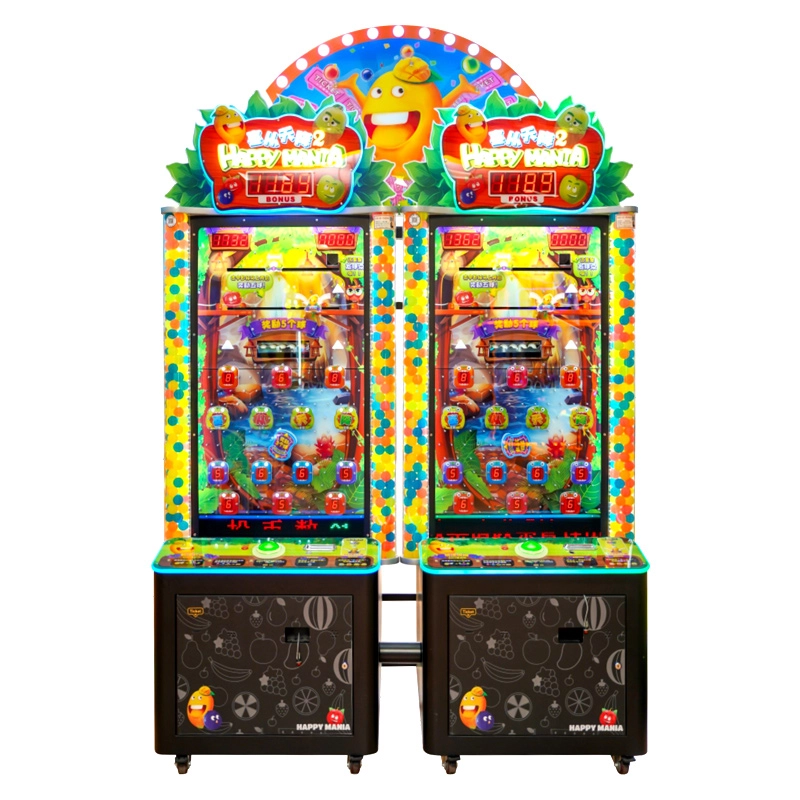
The Complete Guide to Arcade Cabinet Skill Games: Everything You Need to Know
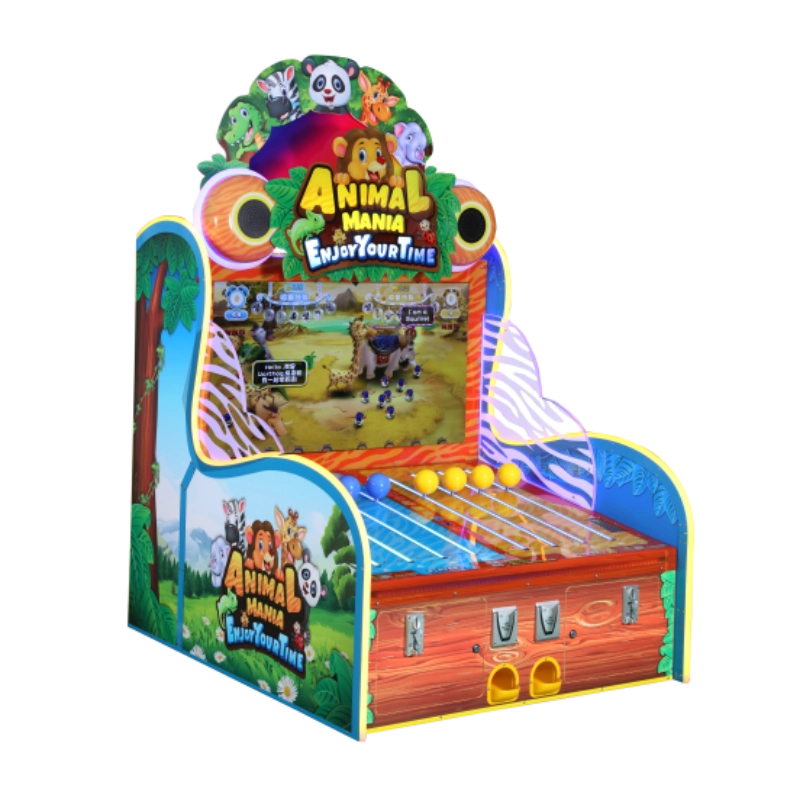
The Science of Winning a Claw Machine Prize
How to Choose the commercial coin pusher supplier for arcades manufacturer and supplier ?
FAQs
How to perform daily maintenance and servicing on redemption machines?
1. New machine entry performance, as it is relatively unstable in operation at this stage, requires dedicated supervision, timely follow-up, and improvements.
2. Redemption machines are relatively prone to collecting dust, which can lead to mechanical wear and corrosion. Dust can also cause issues with circuit boards, such as conductivity and optical sensor malfunctions. Thus, both internal and external cleanliness of redemption machines are equally important. Regular cleaning schedules for internal and daily cleaning for external components should be established.
3. Timely inspect the quality and durability of certain components. If issues are detected with imaging equipment, for example, replacements are necessary. A thorough understanding and mastery of the machine's performance can help extend its lifespan and ensure normal usage rates. Critical inspection areas include vulnerable parts such as motors, drive belts, gears of ticket dispensers, and sensors.
4. Frequent changes in prize point settings and payout rates are discouraged. Improvements in winning odds should be pursued through other methods and approaches.
5. All machines should have procedures for ticket removal and shredding to protect the ticket dispensers from damage.
6. Monitor changes in payout rates closely, as it directly impacts the cost control of the entire redemption machine system.
7. When employees add tickets, they should verify if the ticket sensors are unobstructed (blocked sensors can prevent ticket dispensing).
8. Have the protective paper on redemption machine's adhesive tape been removed? (Leaving it on can obstruct the ticket slot and ticket dispenser).
9. Responsible personnel should periodically and discreetly check the addition of tickets inside the redemption machines, ensuring that the added tickets match the registered ones.
How to guides works?
For example:
1. Proactively inquire and add tickets when a customer's machine is running low on tickets.
2. Assist players in organizing tickets when they are dispensed unevenly.
3. Offer storage tools such as storage bags and rubber bands when customers are arranging their tickets.
4. Provide free USB interfaces for charging near popular machines and rest areas.
5. Implement warm and clear reminders, guidance on ticket redemption, and directional signage, all designed to be straightforward. The more of these you provide, the more players will appreciate your thoughtfulness, without finding it bothersome.
What is the character of mechanical redemption machine?
The revenue proportion of redemption machines
Why redemption ticket machines are popular?
2.Redemption machines are becoming the most important breakthrough to enhance the sustainable operation of indoor arcade game halls.
3.Players are of all ages and they continue to expand.
You may also like
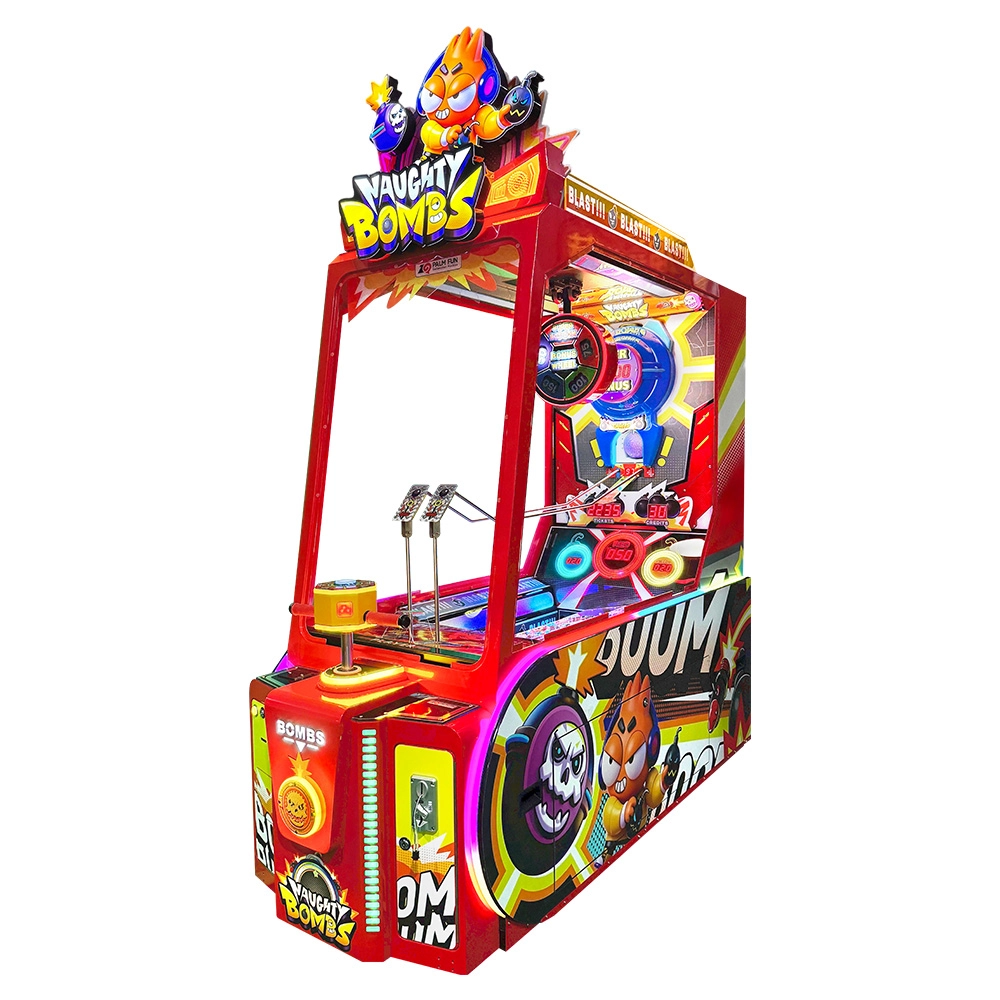
Naughty Bombs Ball Drop Redemption Arcade Game Machine
Naughty Bombs is a ball-drop redemption arcade game featuring rolling-ball gameplay, colored targets, ticket prizes, surprise bonus rewards, lighting and sound effects. Players use timing to launch and drop balls toward colored target areas. The product is presented for arcade, family entertainment center and other entertainment-venue projects, with customizable 110V / 220V AC voltage configuration.
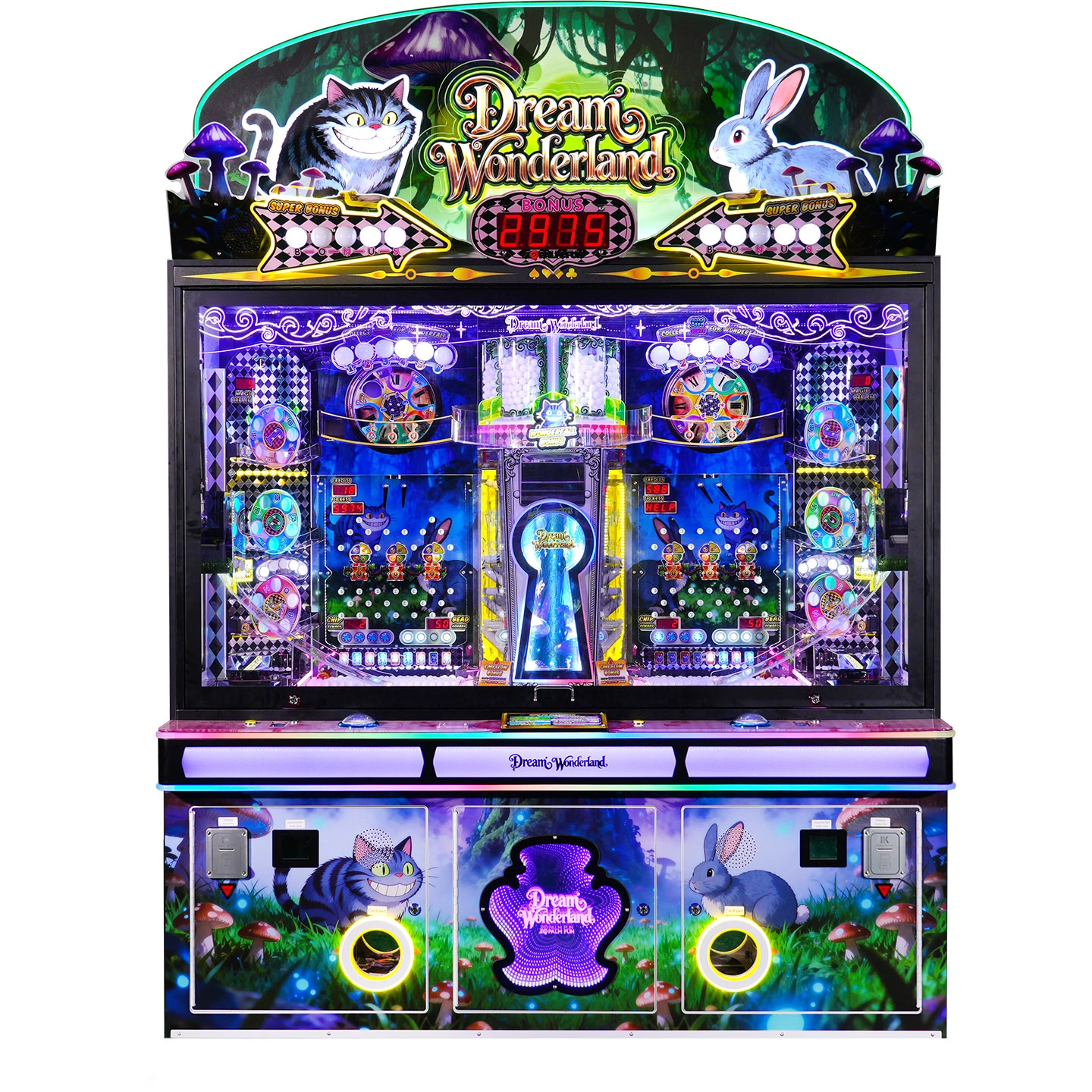
Dream Wonderland Marble Pusher Redemption Game
Enter Dream Wonderland — a magical marble pusher adventure filled with glowing lights, magic orbs, bonus wheels, collectible character cards, and exciting jackpot challenges.
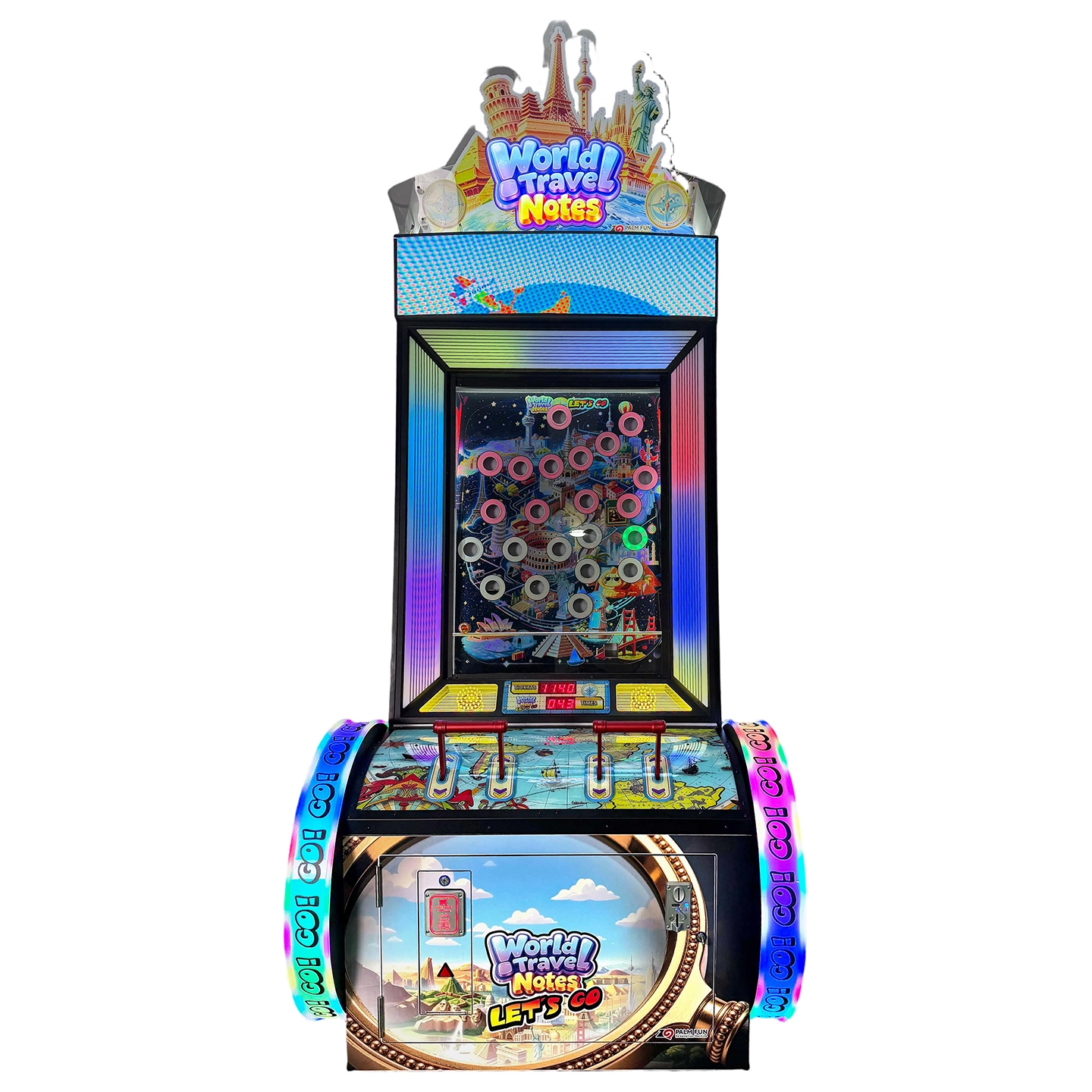
World Travel Notes – Balance Ball Redemption Arcade Game
World Travel Notes is a skill-based balance ball redemption game with a fun world-travel theme. Players use two handles to control the balance bar and guide the ball into each target hole. As the game progresses, the targets become more challenging, leading players toward the final grand prize. With colorful world-travel graphics, dynamic RGB lighting, a live score display, and progressive difficulty, World Travel Notes is designed to attract attention and encourage repeat play in arcades, FECs, shopping malls, and other entertainment venues.
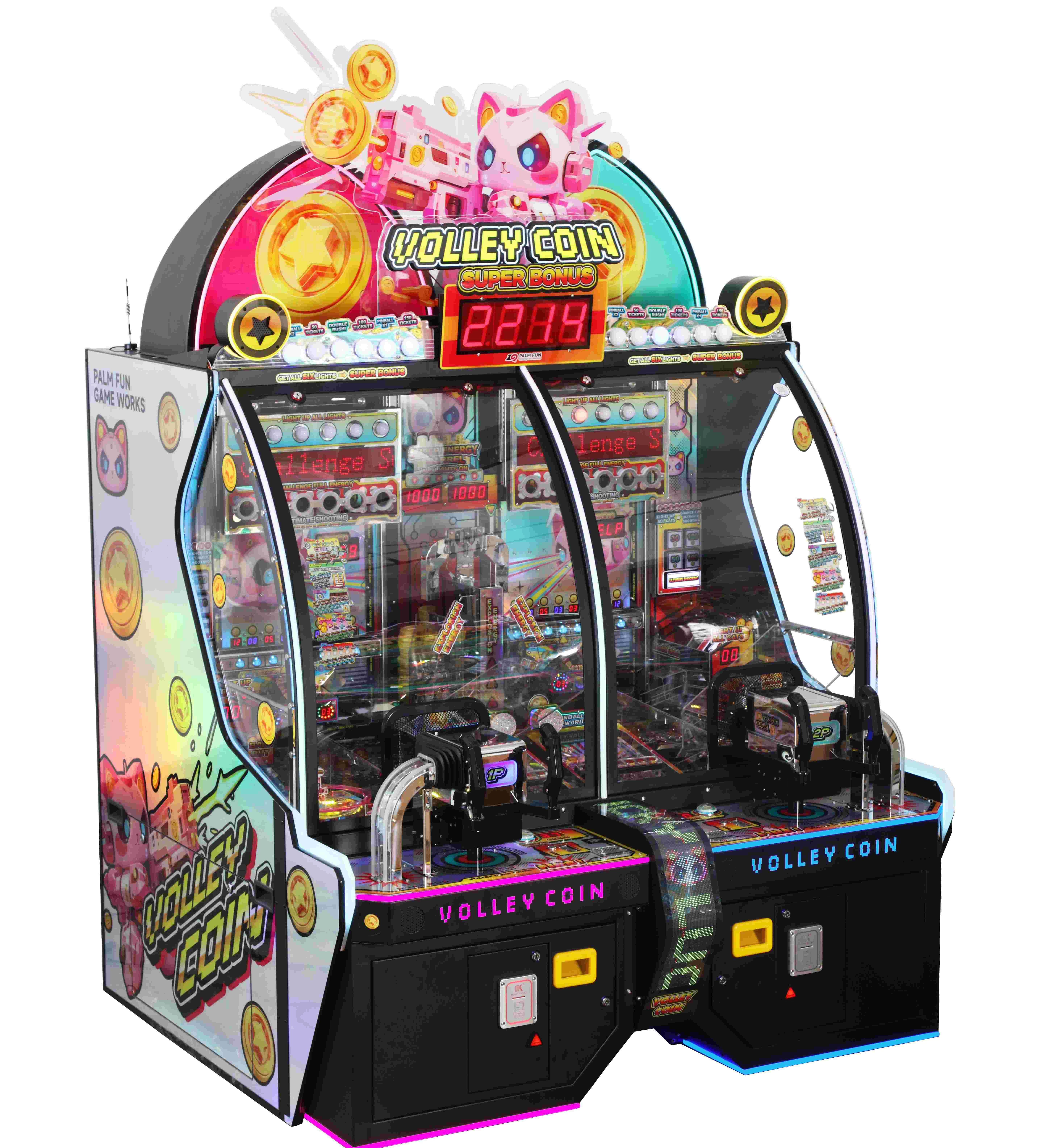
Hybrid Shooting & Pushing | Coin Pusher Arcade Ticket Redemption Machine
Volley Coin is an innovative arcade ticket redemption machine developed by Palm Fun Electronics. Combining the excitement of a fast-paced token shooter game with the proven earning power of a traditional coin pusher machine, Volley Coin offers a fresh and engaging gameplay experience that appeals to players of all ages.

Copyright © 2026 PALM FUN All Rights Reserved. | Privacy Policy • Terms and Conditions | Sitemap
palmfunarcade
Palm Fun Arcade Game
Whatsapp: +8618126837443
PalmFun Arcade
PalmFun_Arcade
PALM FUN Redemption Machine