


Lovely Marble Pusher Ticket Redemption Payouts
- How Marble Pusher Payouts Work in Practice
- Distinguish ticket payout from the player’s perceived reward
- Use a transparent, repeatable calculation
- Set Ticket Values Without Undermining the Experience
- Balance ticket economics with perceived fairness
- Change settings methodically
- Compare Payout Planning Approaches and Choose a Suitable Game
- Use a consistent scorecard
- Consider footprint, theme and venue fit
- Build a Reliable Payout and Maintenance Routine
- Track performance and investigate unusual results
- Protect trust, safety and commercial value
- Frequently Asked Questions

Lovely Marble Pusher ticket redemption payouts depend on how often guests play, how many tickets the machine awards, the real cost of prizes and how consistently the game is configured. Operators can plan a sustainable return by measuring tickets issued per play, converting tickets into prize cost, and reviewing results alongside revenue and player satisfaction. The lovely marble pusher redemption arcade game should be evaluated as an interactive attraction as well as a redemption product: a clear display, appealing presentation, dependable operation and an appropriate prize range all influence repeat play. No payout figure guarantees a particular profit; actual results vary with location, settings, traffic, operating costs and local rules.
How Marble Pusher Payouts Work in Practice
Distinguish ticket payout from the player’s perceived reward
A ticket redemption payout is the value of tickets a machine awards relative to the money or credits played. It is not necessarily a fixed return for every guest or every session. Marble and pusher games typically involve changing positions, timing and outcomes, so a short observation period can produce misleading results. One player may win a noticeable ticket award while another receives fewer tickets; the operator needs to judge the average across a representative volume of plays.
It is also useful to separate the ticket payout rate from the prize redemption cost. The machine may issue tickets, while the redemption counter determines what those tickets can purchase. If a prize costs the venue $4 wholesale and requires 800 tickets, the approximate wholesale cost per ticket is $0.005. That conversion helps estimate the merchandise cost of tickets issued, but it does not include labor, rent, payment processing, maintenance or other operating expenses.
Redemption games are designed around both chance and player interaction, and guests often value anticipation and visible progress as part of the experience. For general background on the category, see Wikipedia’s overview of redemption games. The lovely marble pusher redemption arcade game should therefore be assessed on more than a single payout number: observe whether guests understand the play, stay engaged, and feel the ticket result matches the experience offered.
Use a transparent, repeatable calculation
Start with a defined measurement window and record total plays, total credits or revenue, and total tickets issued. Calculate average tickets per play by dividing tickets issued by plays. Then multiply the average ticket count by your estimated cost per ticket to estimate the redemption merchandise cost per play. Compare that estimate with revenue per play to see the ticket cost as a share of revenue. Use actual local pricing, including discounts or bundle pricing, rather than relying on a theoretical coin value.
For example, if a venue records 1,000 plays and 12,000 tickets, the observed average is 12 tickets per play. If its internal prize cost is half a cent per ticket, estimated merchandise liability is six cents per play. These figures are an illustration of the method, not a recommended setting or expected performance for a particular machine. Collect data across different days and busy periods before changing settings, because isolated jackpots, quiet sessions or unusual player behavior can distort the average.
Set Ticket Values Without Undermining the Experience
Balance ticket economics with perceived fairness
A low ticket award can help control prize expense, but a setting that feels unrewarding may reduce repeat play. Conversely, a generous ticket configuration may attract attention while creating a cost that the location cannot support. The goal is not to minimize every award: it is to establish a payout that fits the venue’s pricing, prize mix and guest expectations while remaining financially manageable.
Review the whole redemption journey. Are the available prizes desirable and clearly labeled? Can guests understand how many tickets they need? Are small rewards available so that occasional players can redeem without waiting for a large balance? A well-matched prize ladder can make modest ticket accumulations feel useful, while clear ticket values reduce confusion at the counter. The lovely marble pusher redemption arcade game can be more satisfying when its play, ticket display and redemption choices make sense together.
Do not present an estimated average as a guaranteed result for an individual player. Explain the rules and ticket values in plain language, and ensure on-screen instructions agree with the machine’s actual configuration. This is a practical trust measure as well as a customer-service safeguard. Where rules or disclosures are regulated, confirm local requirements with the relevant authority or qualified advisor before opening or changing the game.
Change settings methodically
Before adjusting tickets per play or other available settings, save the existing configuration and record the reason for the change. Change one variable at a time, then measure again over a comparable period. If several settings change at once, it becomes difficult to identify which change affected play volume, ticket cost or guest response. Keep a written log with dates, settings, ticket totals, revenue and maintenance events.
Ask the supplier for the machine’s approved configuration options and operating guidance rather than assuming every model supports the same adjustments. Check that ticket dispensers, sensors, displays and game mechanisms are functioning correctly before interpreting payout data. A jam, sensor issue or incorrect ticket count can make an otherwise sound payout review inaccurate. The lovely marble pusher redemption arcade game should be monitored with the same attention to reliable operation as to ticket economics.
Compare Payout Planning Approaches and Choose a Suitable Game
Use a consistent scorecard
Comparing games becomes easier when the operator uses the same measures for each candidate. Payout alone is not enough: footprint, visibility, player dwell time, reliability, parts support and the fit with the venue’s audience all affect commercial suitability. The following framework is a starting point; fill it with supplier specifications and your own operating data rather than treating it as a forecast.
| Measure | What to record | Why it matters |
|---|---|---|
| Ticket payout | Tickets issued, plays, average tickets per play | Shows the observed ticket output over a defined period |
| Prize liability | Internal prize cost per ticket and estimated cost per play | Connects ticket awards to merchandise expense |
| Revenue performance | Credits or revenue, play volume, and time period | Provides context for payout and operating costs |
| Guest response | Repeat plays, queue observations, questions and complaints | Highlights whether the experience feels understandable and worthwhile |
| Operational fit | Floor area, access for service, parts availability and uptime | Helps assess the machine’s practical value at the venue |
This disciplined approach reflects a broader operational principle: define the process, capture dependable information and review it consistently. The ISO 9001 quality management overview emphasizes process-based quality management; operators can apply that mindset by documenting settings, inspection routines and corrective actions. For equipment risk and safe work practices, consult applicable local requirements and resources such as ISO 12100 on machinery safety risk assessment. These references do not replace the manufacturer’s instructions or local compliance checks.
Consider footprint, theme and venue fit
A machine’s earning potential depends partly on whether guests notice it and whether it suits the location. A compact footprint may help a mall arcade or family entertainment center make use of a constrained floor plan, but operators should also allow suitable clearance for circulation, access, servicing and any required safety measures. Verify the final installation dimensions and site requirements with the supplier before allocating floor space.
Palm Fun Electronics’ product information describes AstroLOLogy as an original product developed by Palm Fun in collaboration with the copyright holder of the animation IP of the same name. It lists a footprint of 1750mm × 1100mm × 2650mm and states that the product is designed to combine a small footprint with high earning potential and popularity. These are product-profile claims, not a guarantee of results at every site. Operators should validate the audience fit, placement, commercial terms and performance assumptions for their own market.
When assessing the lovely Marble Pusher Redemption Arcade game, compare its visual appeal and play pattern with neighboring attractions. A recognizable theme can help draw attention, while a compact format can make placement more flexible; neither replaces a measured business case. IAAPA, the global association for the attractions industry, offers broader sector information through its industry resources. Use supplier specifications and site testing to confirm that a themed machine supports your floor plan and operating goals.
Build a Reliable Payout and Maintenance Routine
Track performance and investigate unusual results
Set a review cadence that matches your play volume. A high-traffic location may review results weekly, while a smaller site may need a longer collection period to build a useful sample. Track machine revenue, plays, tickets dispensed, ticket inventory, downtime and guest feedback together. If ticket output changes unexpectedly, first inspect the machine and verify the settings; do not immediately make a payout adjustment based on a possible mechanical or counting fault.
Use a simple exception process. Record the date and symptom, take the machine out of service if continued operation could worsen damage or create a safety issue, and follow the manufacturer’s troubleshooting instructions. Confirm the cause, document the repair and verify ticket counts before returning the game to normal operation. Keeping commonly needed consumables and approved spare parts available can reduce avoidable downtime, but parts should be specified for the model and sourced through appropriate channels.
Protect trust, safety and commercial value
Cleanliness, working lights, legible instructions and a dependable ticket dispenser are visible parts of the guest experience. Include these checks in routine opening and closing procedures, and train staff to recognize common problems and escalate technical issues. Maintain service records and keep payout settings restricted to authorized personnel so that accidental changes do not undermine the accuracy of performance data.
Before importing, installing or operating a redemption game, confirm electrical, labeling, customs, consumer-protection and amusement-device requirements that apply in the destination market. Requirements differ by jurisdiction and by equipment classification, so obtain current guidance rather than assuming one region’s rules apply elsewhere. The lovely marble pusher redemption arcade game can support a strong arcade mix when its payout plan is measurable, its operation is maintained and its presentation gives guests a clear, enjoyable reason to play.
Frequently Asked Questions
How do I calculate a marble pusher’s average ticket payout?
Divide the total tickets issued during a defined measurement period by the number of plays in that period. Measure across representative sessions and compare the result with revenue and prize cost per ticket.
Does a higher ticket payout always make a marble pusher more profitable?
No. A higher payout may increase prize expense, while an overly low payout may weaken guest satisfaction and repeat play. Review ticket cost, revenue, guest response and operating expenses together.
How often should operators review payout performance?
Choose a review cadence appropriate to play volume. High-traffic venues may review weekly; lower-volume locations may need a longer period to collect a useful sample. Investigate unusual results and verify machine operation before changing settings.
What should I check before installing the AstroLOLogy product?
Confirm the site’s available floor area, service access, circulation and applicable local requirements. The product profile lists dimensions of 1750mm × 1100mm × 2650mm; verify final installation specifications and commercial assumptions with the supplier.
Recommended for you
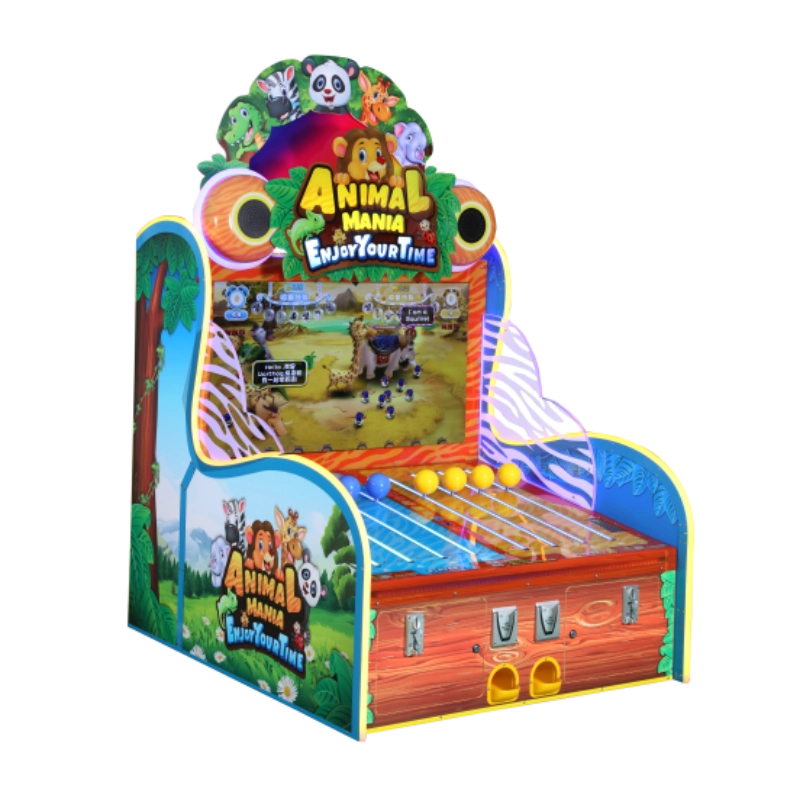
The Complete Guide to Arcade Machine Costs and Factors to Consider Before Buying
PALM FUN Best professional coin pusher game machine manufacturers and supplier brands
PALM FUN Best professional vintage arcades manufacturers and supplier brands
How to Choose Right coin push machine manufacturer and supplier ?
How to guides works?
For example:
1. Proactively inquire and add tickets when a customer's machine is running low on tickets.
2. Assist players in organizing tickets when they are dispensed unevenly.
3. Offer storage tools such as storage bags and rubber bands when customers are arranging their tickets.
4. Provide free USB interfaces for charging near popular machines and rest areas.
5. Implement warm and clear reminders, guidance on ticket redemption, and directional signage, all designed to be straightforward. The more of these you provide, the more players will appreciate your thoughtfulness, without finding it bothersome.
The revenue proportion of redemption machines
How to guide the players to recognize tickets at the beginning setup of the redemption machines?
Never assume that your players already understand the purpose of lottery tickets(reward points). Even in venues that have been in operation for many years, it is still discovered during on-site interviews with players that many of them are not aware. Don't believe it? Just ask consumers at the venue. The machines, redemption counters, materials hung above the venue, and announcements by staff, among others, can all be channels for informing players about the purpose of lottery tickets(reward points). It is essential to do more promotion, create large displays and large cards, and clearly communicate the purpose of lottery tickets(reward points) to the players.
Research & Development, how hard is the birth of one new redemption machines?
How to place the redemption machines in a right place?
1,Ensure that the placement and layout of the equipment are distinct and centralized.
2,Keep noise levels low and avoid having a line of sight that spans too far to prevent players from easily taking in everything, which may slow down their movement.
3,Avoid clustering high-ticket payout machines and disperse machines of the same style.
4,Mix popular machines with less popular ones and avoid placing all popular machines together.
You may also like
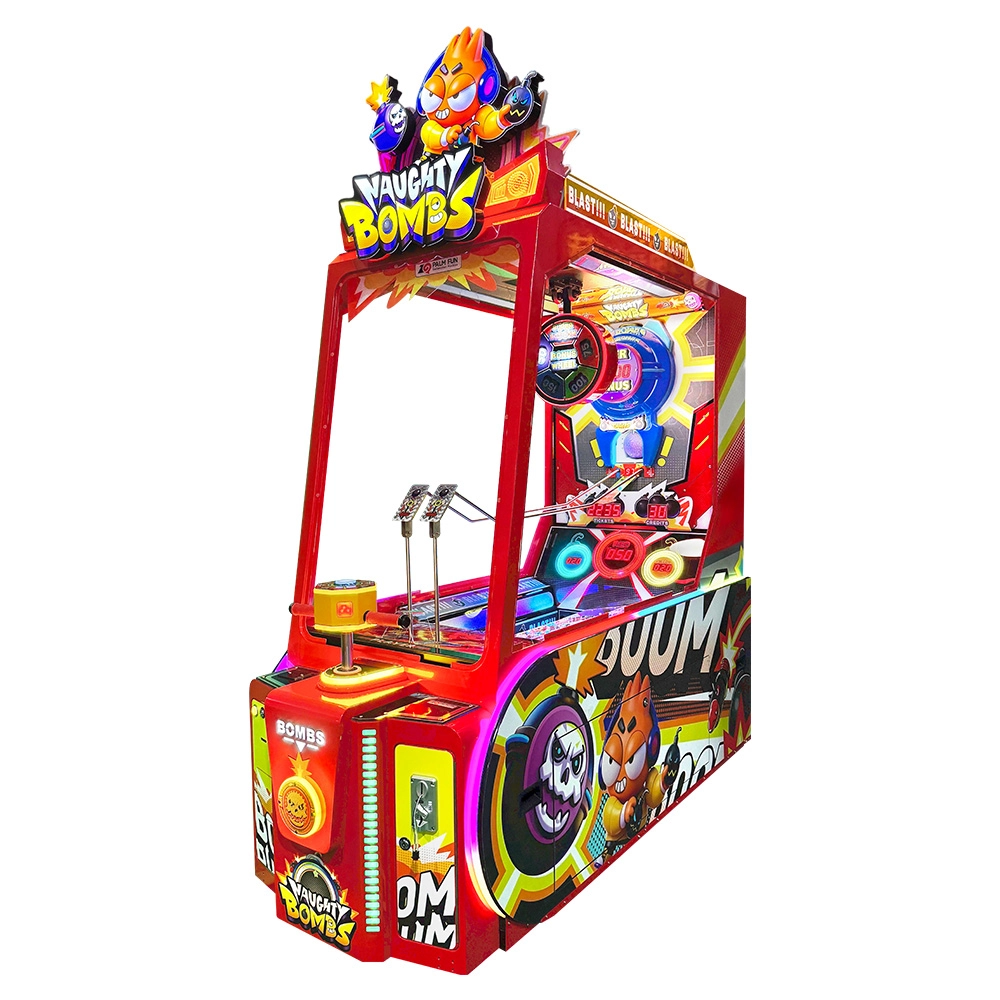
Naughty Bombs Ball Drop Redemption Arcade Game Machine
Naughty Bombs is a ball-drop redemption arcade game featuring rolling-ball gameplay, colored targets, ticket prizes, surprise bonus rewards, lighting and sound effects. Players use timing to launch and drop balls toward colored target areas. The product is presented for arcade, family entertainment center and other entertainment-venue projects, with customizable 110V / 220V AC voltage configuration.
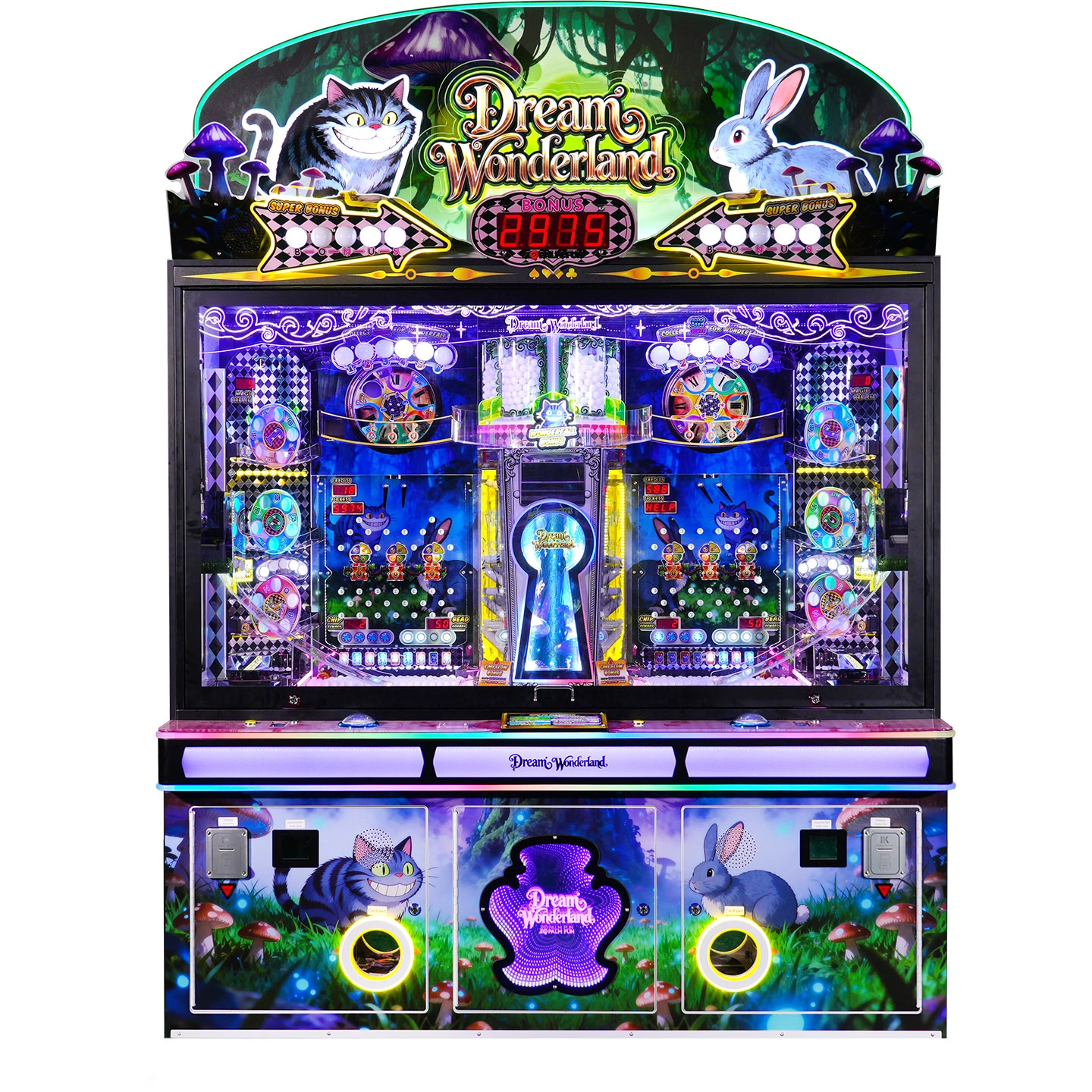
Dream Wonderland Marble Pusher Redemption Game
Enter Dream Wonderland — a magical marble pusher adventure filled with glowing lights, magic orbs, bonus wheels, collectible character cards, and exciting jackpot challenges.
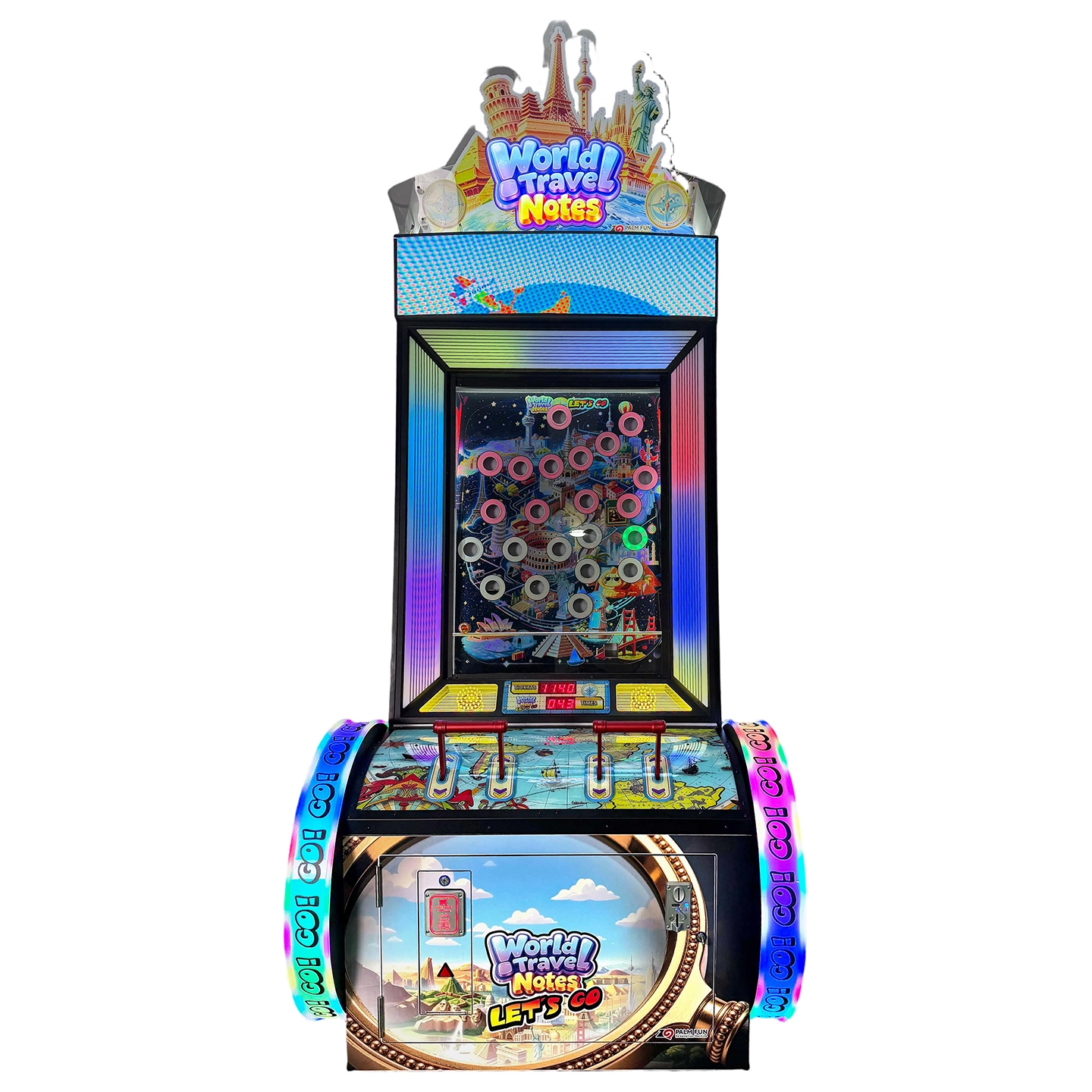
World Travel Notes – Balance Ball Redemption Arcade Game
World Travel Notes is a skill-based balance ball redemption game with a fun world-travel theme. Players use two handles to control the balance bar and guide the ball into each target hole. As the game progresses, the targets become more challenging, leading players toward the final grand prize. With colorful world-travel graphics, dynamic RGB lighting, a live score display, and progressive difficulty, World Travel Notes is designed to attract attention and encourage repeat play in arcades, FECs, shopping malls, and other entertainment venues.
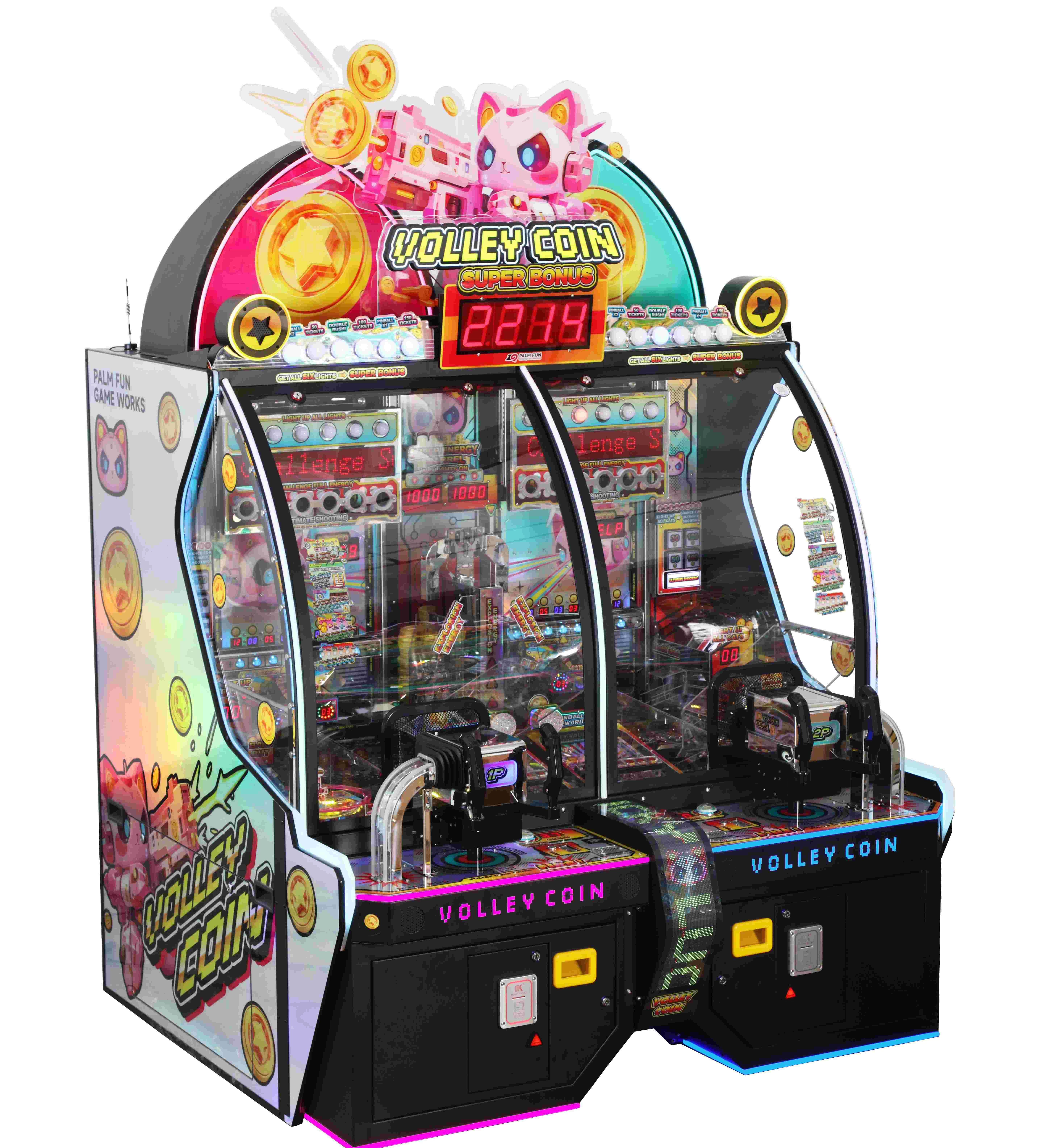
Hybrid Shooting & Pushing | Coin Pusher Arcade Ticket Redemption Machine
Volley Coin is an innovative arcade ticket redemption machine developed by Palm Fun Electronics. Combining the excitement of a fast-paced token shooter game with the proven earning power of a traditional coin pusher machine, Volley Coin offers a fresh and engaging gameplay experience that appeals to players of all ages.

Copyright © 2026 PALM FUN All Rights Reserved. | Privacy Policy • Terms and Conditions | Sitemap
palmfunarcade
Palm Fun Arcade Game
Whatsapp: +8618126837443
PalmFun Arcade
PalmFun_Arcade
PALM FUN Redemption Machine