








Market trends: single player arcade demand and sourcing opportunities
- Shifts in small-footprint amusement demand and operational implications
- Demographic and experiential drivers
- Placement strategy and venue-fit analysis
- Serviceability and lifecycle cost
- Product categories, technical specs, and revenue models for solo-play cabinets
- Mechanical flippers and modern pinball-style cabinets
- Solo redemption units and coin-driven prize machines
- Control electronics, telemetry and cashless interfaces
- Comparative KPIs and sourcing tradeoffs for procurement teams
- Unit economics: acquisition, running cost, and ROI
- Quality assurance and compliance expectations
- Sourcing models: direct manufacturing vs distributor partnerships
- Procurement playbook: specifications, vendor evaluation and pilot testing
- Specification checklist for purchase orders
- Vendor due diligence and performance proof points
- Pilot deployment strategy
- PALM FUN capabilities: sourcing, manufacturing, and global delivery (brand integration)
- Manufacturing scale and R&D competence
- Product range and demonstrable supply solutions
- Quality systems, global footprint and partnership approach
- Procurement models and customization pathways
- Frequently Asked Questions
- What are the primary benefits of choosing single-user flipper cabinets over multiplayer attractions?
- Which technical specs should be non-negotiable in an RFP for solo redemption machines?
- How should a buyer evaluate supplier quality and after-sales support?
- What pilot metrics indicate a successful roll-out?
- Can mechanical redemption machines be integrated with cashless systems and venue loyalty platforms?
Demand for compact, single-user entertainment cabinets is accelerating across family entertainment centers, barcades, and retail leisure precincts as facility owners favor lower-footprint, higher-turnover devices that combine mechanical nostalgia with digital telemetry; procurement logic now centers on unit reliability, spare-part availability, configurable ticket/redemption integration, and predictable payback timelines—buyers should prioritize machines with modular components, ISO-aligned quality processes, and proven field-service networks to minimize downtime and maximize lifetime revenue.
Shifts in small-footprint amusement demand and operational implications
Demographic and experiential drivers
Facilities report that single-user amusement cabinets appeal to both retro-seeking adults and families seeking short-session entertainment. This trend is supported by the resurgence of tabletop and upright flipper cabinets alongside modernized mechanical lottery units, creating stable per-play revenues in mixed-use venues. Operators should map customer demographics and average dwell time to machine selection—short-session devices with quick turnover optimize revenue-per-square-meter in high-traffic corridors.
Placement strategy and venue-fit analysis
Placement decisions require a site-level evaluation: proximity to F&B increases impulse plays, while clustering with other redemption attractions can lift cross-play rates. For compact flipper-style units, a 1.5–2.0 m2 footprint is typical; coin-operated pushers and ball-drop tubes may require wider staging for queuing. Buyers should model expected transactions per hour and average ticket yield to determine the ideal mix between solo-play cabinets and multi-user attractions.
Serviceability and lifecycle cost
Procurement teams must evaluate mean time between failures (MTBF) and spare-part lead times. Machines with mechanical assemblies that allow field-replaceable modules reduce vendor service calls and onsite labor costs. Preference should be given to suppliers demonstrating documented quality systems such as ISO 9001 alignment and published spare-parts catalogs to ensure predictable lifecycle expenditure.
Product categories, technical specs, and revenue models for solo-play cabinets
Mechanical flippers and modern pinball-style cabinets
The resurgence of single-player flipper cabinets blends analog playfields with digital scoring and ticket redemption options. When referencing this category, include at least one showpiece such as a classic-style pinball arcade cabinet on the procurement short-list. Specify expected play cycle, input voltage, and accepted payment methods (coin, bill, card, or cashless) to avoid costly retrofits.
Solo redemption units and coin-driven prize machines
Single-user redemption devices range from ball-drop lottery towers to precision coin pushers; buyers should request factory test reports on dispense accuracy and ticketing reliability. Hybrid units that combine shooting elements with push mechanics improve dwell time and offer differentiated price points. A recommended first purchase is a small batch for A/B testing across venue micro-locations.
Control electronics, telemetry and cashless interfaces
Modern solo cabinets increasingly include networked back-ends for telemetry, remote diagnostics, and cashless wallet integration. These capabilities enable real-time performance monitoring and predictive maintenance. Procurement RFPs should require API access or standardized telemetry protocols so operators can integrate machine KPIs into venue management dashboards.
Comparative KPIs and sourcing tradeoffs for procurement teams
Unit economics: acquisition, running cost, and ROI
Buyers must assess total cost of ownership (TCO) including initial capital, shipping and customs, installation, spare parts, and service agreements. Single-player mechanical devices typically have lower per-unit purchase prices and faster payback in high-turnover sites compared with large-scale multiplayer installations, but suppliers should provide verifiable uptime metrics and field references.
Quality assurance and compliance expectations
Request production process documentation, paint and electrical safety test results, and, where applicable, EMC/CE conformity certificates. Public quality transparency reduces onboarding risk for multinational deployments and eases local compliance checks; authoritative standards information is available from bodies such as industry overviews and corporate quality portals.
Sourcing models: direct manufacturing vs distributor partnerships
Direct procurement from manufacturers can reduce per-unit cost and enable product customization, while authorized distributors add local spare-parts stocks and service coverage. The optimal approach often mixes both: purchase key models directly for flagship sites and utilize distributors for expansion and maintenance logistics.
| Metric | Compact solo flipper cabinet | Single-player coin pusher / redemption | Hybrid ticket-dispensing unit |
|---|---|---|---|
| Typical footprint | 1.5–2.0 m2 | 1.8–2.5 m2 | 2.0–3.0 m2 |
| Average play cycle | 1.5–4 minutes | 2–6 minutes | 2–5 minutes |
| Typical new unit price (USD) | $3,000–$12,000 | $1,500–$6,000 | $4,000–$10,000 |
| Maintenance interval | Monthly preventive, parts-as-needed | Monthly preventive, higher wear on moving parts | Monthly preventive with electronic diagnostics |
| Typical ROI timeline | 6–18 months (high-traffic sites) | 3–12 months | 9–24 months depending on customization |
Procurement playbook: specifications, vendor evaluation and pilot testing
Specification checklist for purchase orders
Include mechanical drawings, electrical schematics, accepted payment interfaces, ticketing and redemption channel details, and a spare-parts list with lead times. Mandate warranty terms, service-level agreements (SLAs) for response times, and acceptance test procedures to avoid ambiguity at deployment.
Vendor due diligence and performance proof points
Vetting should include factory audits, sample performance logs, and customer references in similar venue types. Publicly accessible resources like manufacturer pages and independent repositories provide background; for historical context on mechanical gaming devices see pinball history and evolution.
Pilot deployment strategy
Run a controlled pilot with 2–5 machines across representative micro-locations to collect transactional data and guest feedback. Use telemetry to capture utilization curves, average coins per play, and ticket-redemption ratios. Adjust pricing, play-timers, and payout tables before committing to large-volume orders.
PALM FUN capabilities: sourcing, manufacturing, and global delivery (brand integration)
Manufacturing scale and R&D competence
PALM FUN was founded in 2015 and specializes in high-quality mechanical lottery machines, coin pusher machines, and raffle machines. Our team is dedicated to the R&D, design, production, and sales of innovative gaming and lottery equipment. Our state-of-the-art factory covers 3,000 square meters and is staffed by a team of skilled development engineers committed to advancing technology and enhancing user experience.
Product range and demonstrable supply solutions
For procurement teams seeking compact flipper-style units and redemption formats, the catalog includes single-player cabinets and mechanically robust ticket dispensers. Buyers looking for hybrid solutions can evaluate the Coin Pusher Arcade Ticket Redemption Machine and themed series such as the Larva Series Coin Pusher Arcade. Our product development focuses on modular designs to reduce service time and extend MTBF.
Quality systems, global footprint and partnership approach
Our focus on quality and innovation has established PALM FUN as an industry leader, enabling the company to stay ahead of market trends and customer demands. Products are recognized and popular in over 50 countries worldwide. We aim to build long-term partnerships with clients, providing comprehensive support and services to ensure their success in the competitive gaming market. For buyers seeking a strategic manufacturer partner, PALM FUN offers configurable SKUs, spare-parts programs, and technical training to in-house technicians.
Procurement models and customization pathways
We offer direct factory sales and distributor partnerships depending on the scope of deployment. Small-batch pilots, white-label branding, and OEM components are available. Buyers should request a formal quote including freight terms, acceptance testing, and post-delivery service options to finalize TCO calculations.
Further information on our corporate profile and manufacturing capabilities is available at our company page: High Quality Redemption Arcade MachinesManufacturer.
References and standards to support procurement decisions include industry overviews and quality frameworks such as arcade game summaries, the historical record for mechanical play at pinball, and broader quality management principles via ISO 9001 and technical governance at IEEE.
Operational recommendation: run a staged procurement with a three-site pilot, require factory acceptance testing, secure a spare-parts kit for the first 12 months, and mandate telemetry access for centralized KPI monitoring.
Frequently Asked Questions
What are the primary benefits of choosing single-user flipper cabinets over multiplayer attractions?
Single-user cabinets offer lower capital outlay per unit, smaller footprints, faster turnover in high-traffic lanes, and simpler maintenance. They can monetize transient footfall more effectively and are suited to venues where space and staff are constrained.
Which technical specs should be non-negotiable in an RFP for solo redemption machines?
Non-negotiables include: documented MTBF, spare-parts list with lead times, required input voltage and power consumption, accepted payment interfaces, remote telemetry capability, and factory-provided acceptance testing procedures.
How should a buyer evaluate supplier quality and after-sales support?
Request factory audit reports, check for quality management certifications such as ISO 9001, obtain multiple client references in similar markets, and confirm SLA terms for service response and parts replacement.
What pilot metrics indicate a successful roll-out?
Key pilot metrics are average plays per day, average revenue per play, utilization rate during peak hours, ticket-redemption ratios, and unscheduled downtime. Compare these against forecasted KPIs to decide on scaling.
Can mechanical redemption machines be integrated with cashless systems and venue loyalty platforms?
Yes. Most modern units provide API access or standard card readers for cashless wallets and loyalty integration; buyers should require protocol documentation and test credentials during acceptance testing.
Contact PALM FUN to discuss product specifications, pilot orders, or to view our full catalog of arcade games machines and redemption games products.
Recommended for you
How to start a amusement machine supplier business in China
Wholesale burger mania coin pusher manufacturer and supplier
PALM FUN Best professional redemption arcade games manufacturers and supplier brands
What Are Redemption Arcade Games? | PALM FUN
FAQs
The revenue proportion of redemption machines
How to choose the exchange gifts of the tickets(reward points)?
2. Gifts should be diverse. This refers to the variety of items available, providing players with more choices. Everyone's preferences are different, especially adults who have higher expectations for gifts. The venue should strive to meet the diverse needs of these players.
3. Gifts should be fashionable. The younger generation that follows trends is very interested in the hottest items of the moment. If the venue can keep up with the latest trends, it can attract the majority of consumers.
4. Gifts should be innovative. Especially during holidays and seasons, it's a good idea to try out new approaches, creating a competitive advantage with unique offerings. For example, the current trend of combining pop culture and blind box culture.
Why redemption ticket machines are popular?
2.Redemption machines are becoming the most important breakthrough to enhance the sustainable operation of indoor arcade game halls.
3.Players are of all ages and they continue to expand.
Research & Development, how hard is the birth of one new redemption machines?
Effectively solve the pain points of the site and consume the amount of coins deposit.
So the stock quantity of pre-purchased tokens is an issue must be concerned, especially in the highly competitive current market. Only when the amusement park maintains a healthy cycle of token sales, consumption, stockpiling, consumption, and sales again can it ensure sustained growth and profitability.
You may also like
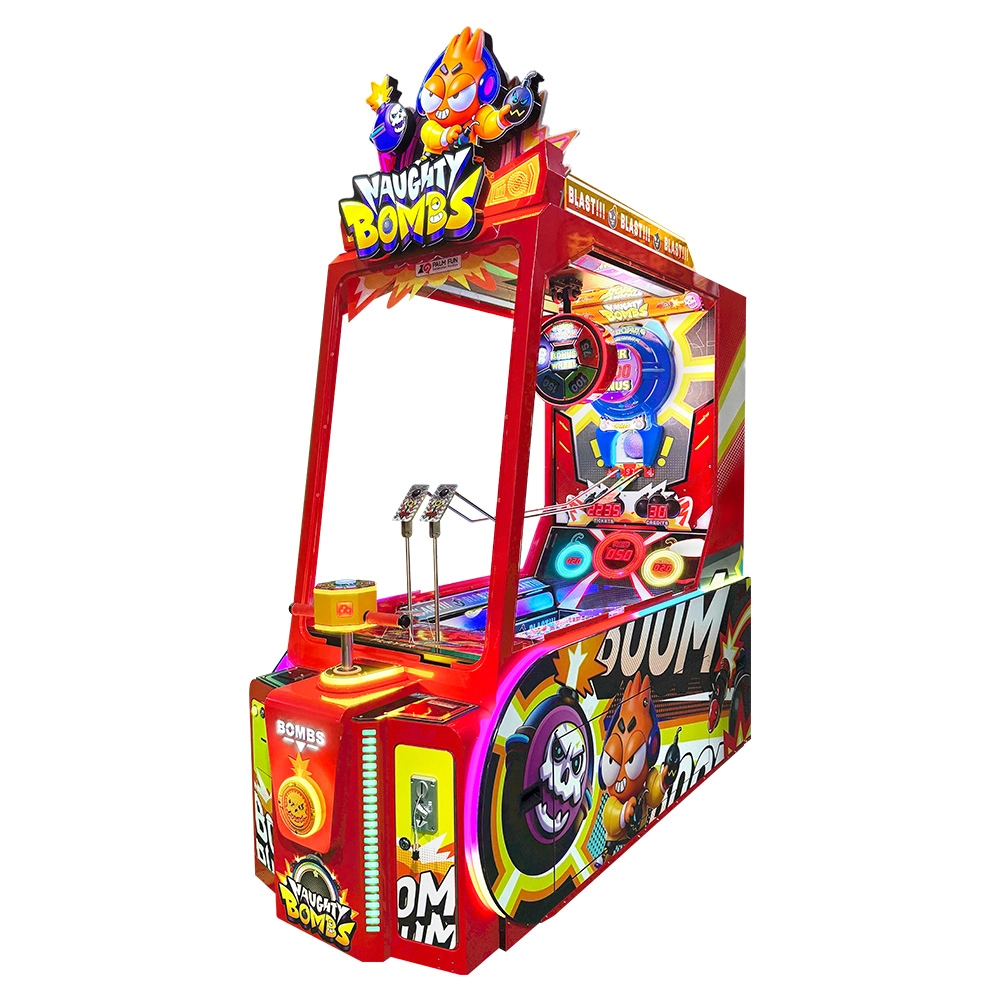
Naughty Bombs Ball Drop Redemption Arcade Game Machine
Naughty Bombs is a ball-drop redemption arcade game featuring rolling-ball gameplay, colored targets, ticket prizes, surprise bonus rewards, lighting and sound effects. Players use timing to launch and drop balls toward colored target areas. The product is presented for arcade, family entertainment center and other entertainment-venue projects, with customizable 110V / 220V AC voltage configuration.
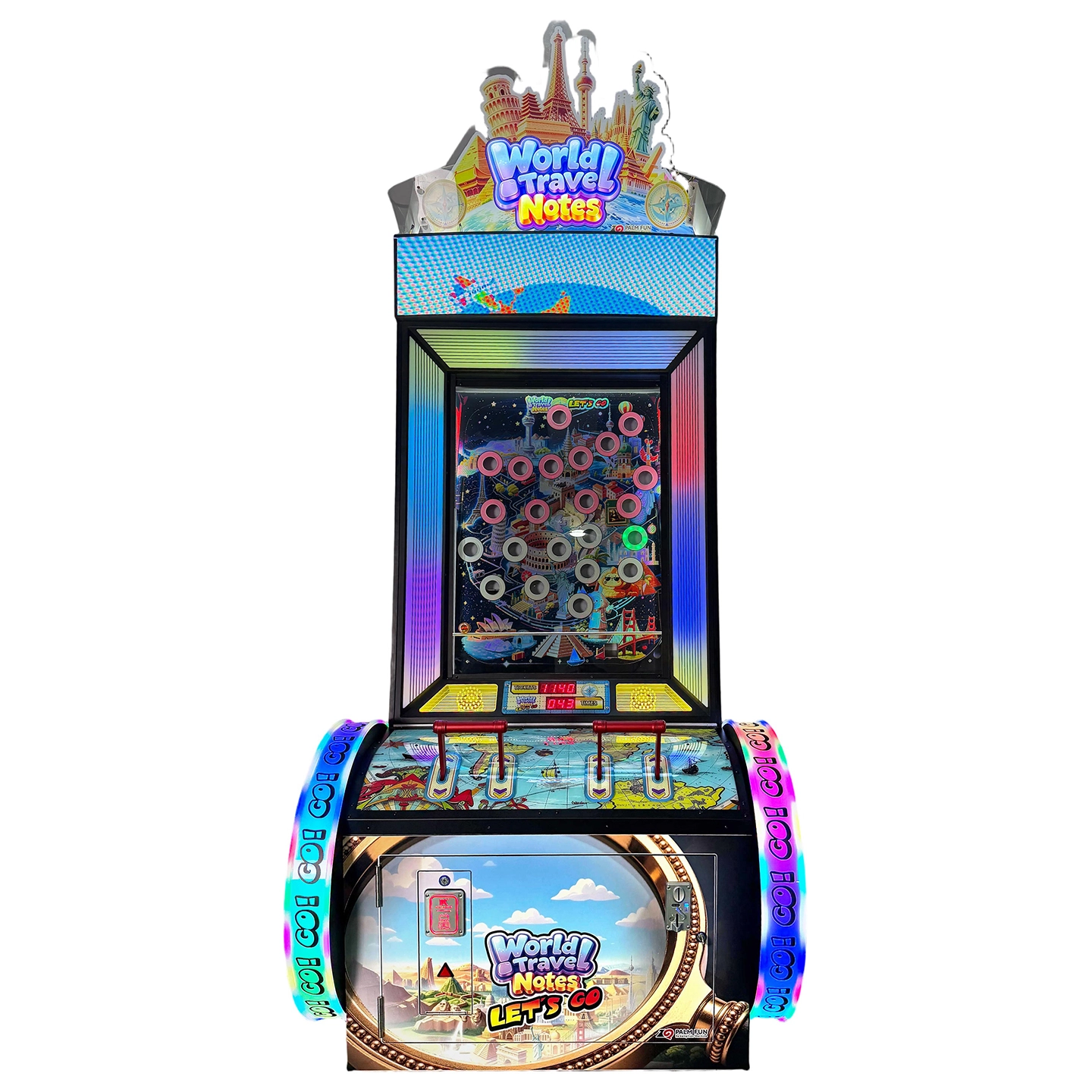
World Travel Notes – Balance Ball Redemption Arcade Game
World Travel Notes is a skill-based balance ball redemption game with a fun world-travel theme. Players use two handles to control the balance bar and guide the ball into each target hole. As the game progresses, the targets become more challenging, leading players toward the final grand prize. With colorful world-travel graphics, dynamic RGB lighting, a live score display, and progressive difficulty, World Travel Notes is designed to attract attention and encourage repeat play in arcades, FECs, shopping malls, and other entertainment venues.
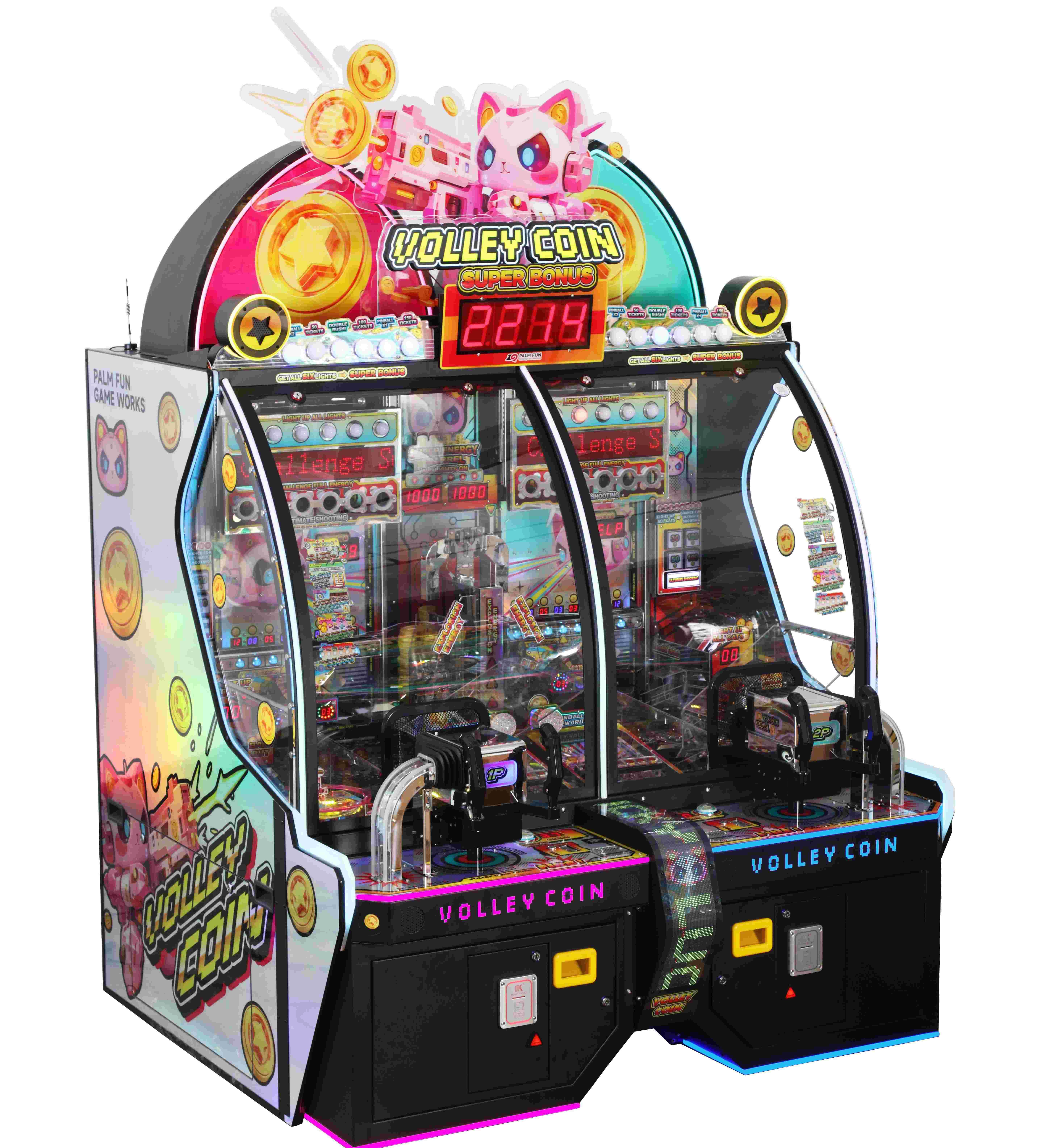
Hybrid Shooting & Pushing | Coin Pusher Arcade Ticket Redemption Machine
Volley Coin is an innovative arcade ticket redemption machine developed by Palm Fun Electronics. Combining the excitement of a fast-paced token shooter game with the proven earning power of a traditional coin pusher machine, Volley Coin offers a fresh and engaging gameplay experience that appeals to players of all ages.
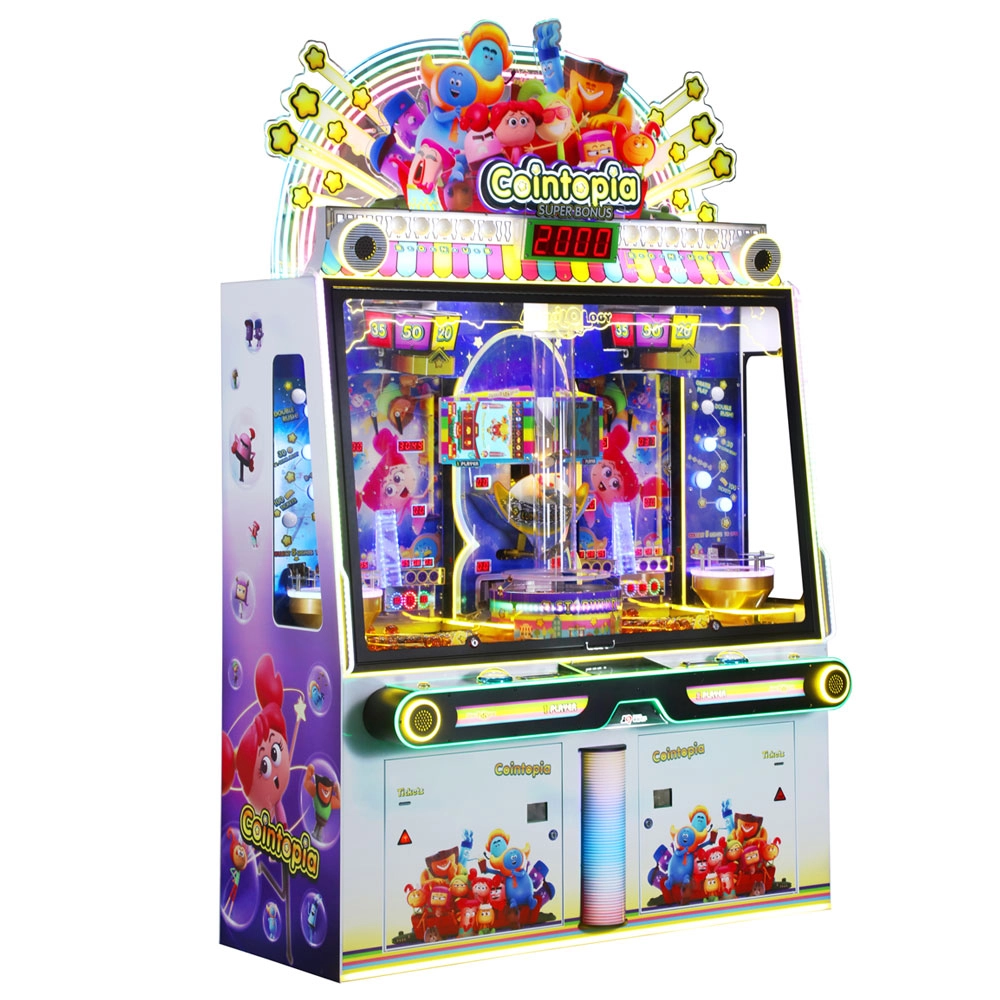
COINTOPIA, Have Fun Together With The Zodiac Buddies in an Utopia
COINTOPIA by PALM FUN is an exciting redemption game machine where players enjoy fun with zodiac buddies in a utopia setting. This ticket redemption machine offers engaging gameplay and rewarding experiences, perfect for family entertainment centers and arcades seeking top-quality redemption games.

Copyright © 2026 PALM FUN All Rights Reserved. | Privacy Policy • Terms and Conditions | Sitemap
palmfunarcade
Palm Fun Arcade Game
Whatsapp: +8618126837443
PalmFun Arcade
PalmFun_Arcade
PALM FUN Redemption Machine