







OEM & ODM Customization Options for Larva Game Cabinets
- Design and specification pathways for Larva-series machines
- Mechanical architecture and modularity
- Electronics platforms and control systems
- Regulatory compliance, testing and certifications
- Production pathways: OEM vs. ODM and manufacturing trade-offs
- Lead time, minimums and procurement rhythm
- Cost drivers: tooling, materials and electronics
- Quality assurance workflows and acceptance criteria
- User experience, revenue optimization and deployment planning
- Branding, finish and guest engagement features
- Ticketing, cashless options and telemetry
- Floor layout, service access and lifecycle costs
- Partner selection criteria and PALM FUN capabilities
- Manufacturing scale and R&D competency
- Quality systems, after-sales and global logistics
- Product portfolio and customizable platforms
- Frequently Asked Questions
High-level buyers and project owners evaluating redemption-floor hardware need an actionable roadmap for configurable coin-pusher cabinets that balances technical compliance, lifecycle cost, and guest engagement—this guide distills specification decisions from enclosure and playfield mechanics through electronics and serviceability, compares off-the-shelf modules with full OEM/ODM builds, and surfaces procurement checkpoints that reduce time-to-revenue for venues ranging from family entertainment centers to a pinball arcade integration.
Design and specification pathways for Larva-series machines
Mechanical architecture and modularity
Cabinet engineering should prioritize modular subsystems: a separable coin-pusher deck, interchangeable front fascia, and a replaceable back-box that houses scoring and ticket dispensers. Buyers should require exploded-part BOMs (bill of materials) and CAD files to assess interchangeability and aftermarket service costs. Specifying standard fastener groups and connector families reduces mean time to repair and keeps spare inventory predictable for large circuits.
Electronics platforms and control systems
Decision-makers must evaluate single-board control solutions vs. modular I/O stacks. A modular control architecture permits field upgrades (LED lighting, upgraded ticket validators, cashless payment kits) without full cabinet replacement. Ensure supplier proposals include firmware rollback procedures and clear ESD handling processes. For reference on electronics safety and compliance expectations, consult IEC guidance and component-level best practices published by IEEE.
Regulatory compliance, testing and certifications
International deployments require pre-qualification against recognized frameworks: electrical safety (IEC/EN standards), electromagnetic compatibility (EMC), and factory quality systems such as ISO 9001. Buyers should request test reports and production inspection plans; manufacturers must include risk assessments and labeling plans. See ISO quality management details at ISO - Quality Management.
Production pathways: OEM vs. ODM and manufacturing trade-offs
Lead time, minimums and procurement rhythm
Procurement teams should budget longer lead-times for bespoke tooling—typical custom cabinet tooling cycles run 8–16 weeks for new molds, while configured builds using existing toolsets can ship in 4–8 weeks depending on material sourcing. Negotiated minimum order quantities (MOQs) may be tiered: prototype run (1–5 units), pilot batch (20–100 units), and production lots (500+ units) with per-unit cost reductions at each tier.
Cost drivers: tooling, materials and electronics
Primary cost drivers are injection molds or sheet-metal dies, custom LED/graphic packages, and proprietary firmware development. Buyers should request a cost-breakdown that separates one-time engineering/tooling from recurring BOM costs. To optimize unit economics, evaluate hybrid approaches: use an OEM mechanical platform with ODM-branded artwork and minor feature changes.
Quality assurance workflows and acceptance criteria
Robust incoming inspection (IQC), in-line production checks, and final acceptance testing (FAT) reduce field failures. Contract terms should define acceptance criteria, burn-in durations, and warranty terms. Operators frequently require single-point test jigs and shipping checklists to validate coin-handling, ticketing accuracy, and mechanical push cycles prior to acceptance.
| Attribute | Off-the-shelf | OEM/ODM Custom |
|---|---|---|
| Typical lead time | 2–6 weeks | 8–16 weeks (new tooling), 4–8 weeks (platform-config) |
| Minimum Order Quantity | 1–50 | Prototype: 1–5; Pilot: 20–100; Production: 500+ |
| Unit cost drivers | Standardized BOM, lower NRE | Tooling, custom electronics, artwork, firmware |
| Customization depth | Color, decals, minor add-ons | Full cabinet geometry, playfield mechanics, electronics |
| Regulatory support | Basic documentation | Full test reports and certification support |
User experience, revenue optimization and deployment planning
Branding, finish and guest engagement features
Artwork, programmable lighting sequences and tactile finishes influence dwell time and per-play revenue. Integrated sound profiles, multi-level jackpots and visible ticket stacks are proven to increase perceived value. For scalable deployments, specify replaceable graphic panels and modular lighting controllers so venue teams can refresh attractions seasonally without major capex.
Ticketing, cashless options and telemetry
Modern redemption cabinets should support both traditional ticket dispensers and cashless wallets or card readers. Ensure the supplier provides API documentation for telemetry and revenue reporting so operators can integrate machine-level KPIs into venue analytics. When considering payment retrofit kits, verify EMV and local payment certification needs.
Floor layout, service access and lifecycle costs
Effective floor planning accounts for machine service clearances, spare parts staging, and circulation routes for guest lines. Request serviceability diagrams and mean time to repair estimates during vendor evaluation. Lifecycle cost modeling should include spare parts pricing, technician training packages, and scheduled maintenance intervals.
Partner selection criteria and PALM FUN capabilities
Manufacturing scale and R&D competency
When selecting a partner, prioritize manufacturers with demonstrable engineering resources, transparent factory capacity, and a history of global deployments. With a 3,000 m2 factory footprint and a team of development engineers, our organization provides dedicated R&D, iterative prototyping workflows, and in-house tooling—factors that reduce iteration cycles and help bring custom Larva-series builds to market faster.
Quality systems, after-sales and global logistics
Buyers should confirm a supplier’s quality management practices (ISO-aligned) and global after-sales infrastructure. Our production lines implement standardized IQC and FAT procedures, and we support international shipping documentation and consolidation for multi-site rollouts. For regulatory context on manufacturing quality expectations, consult Wikipedia - Pinball for historical product categories and ISO for management systems.
Product portfolio and customizable platforms
PALM FUN offers a spectrum of redemption and mechanical lottery equipment including coin pusher machine families and raffle machines. Buyers seeking platform examples can review the Larva platform and hybrid ticketing models: Larva Series Coin Pusher Arcade and the hybrid pushing shooter variant Coin Pusher Arcade Ticket Redemption Machine. Our production approach supports both small-format single-cabinet trials and high-volume arcade bank rollouts with modular control and artwork packages.
Founded in 2015, PALM FUN specializes in high-quality mechanical lottery machines, coin pusher machines, and raffle machines. We are dedicated to the R&D, design, production, and sales of innovative gaming and lottery equipment. Our state-of-the-art factory covers 3,000 square meters and is staffed by a team of skilled development engineers committed to advancing technology and enhancing user experience. Our focus on quality and innovation has established us as an industry leader, enabling us to stay ahead of market trends and customer demands.
Our products are recognized and popular in over 50 countries worldwide. At PALM FUN, we aim to build long-term partnerships with our clients, providing comprehensive support and services to ensure their success in the competitive gaming market. Our vision is to become the world\'s leading manufacturer of redemption game machines. Visit us at https://www.palm-fun.com/ to review technical specifications, platform options and dealer programs.
For procurement teams evaluating mid- to large-scale rollouts, request prototype test reports, acceptance test plans, and a structured warranty and spare-parts program prior to contract signature. Effective vendor terms combine clear NRE allocations, milestone-based deliveries and jointly agreed KPIs for uptime and payout accuracy—this approach protects capital while enabling operators to measure ROI reliably.
Next steps for buyers: assemble a technical RFP that lists mechanical tolerances, electronic interfaces, artwork files, warranty expectations, and acceptance criteria; request floor-plan simulations and a pilot deployment schedule; and insist on source inspection and single-unit FAT prior to mass shipment to reduce deployment risk and protect revenue timelines.
Contact the PALM FUN sales engineering team to request CAD packages, prototype quotations and extended warranty options.
Frequently Asked Questions
What is the typical lead time for an OEM Larva-series custom cabinet?
Lead time depends on scope: platform-configured builds can ship in approximately 4–8 weeks, while fully bespoke cabinets requiring new tooling typically need 8–16 weeks; buyers should confirm component availability and tooling schedules in the supplier proposal.
What minimum order quantities should buyers expect for custom runs?
MOQs vary by supplier and manufacturing model; common tiers are prototype (1–5), pilot (20–100), and production (500+). Contracts can include staggered pricing and phased deliveries to accommodate smaller initial investments.
Which certifications and quality documents should be requested from manufacturers?
Request ISO-aligned quality procedures, factory inspection reports, and test reports for electrical safety and EMC (per IEC/EN standards). Also require a defined acceptance test plan, burn-in criteria, and warranty terms.
Can Larva cabinets be integrated with cashless payment and telemetry systems?
Yes—modern Larva platform variants support ticket dispensers, cashless wallets, and telemetry APIs. Buyers should request API documentation, data export formats, and any regional payment certification responsibilities during contract negotiation.
How are spare parts and after-sales service typically handled for customized machines?
Manufacturers should provide spare-parts lists, recommended stocking levels, and trained technician programs. For multi-location deployments, consider negotiated spare-part kits and scheduled service contracts to preserve uptime and accelerate mean time to repair.
Recommended for you
How to start a arcade ticket games business
Custom coin pusher machine for sale Manufacturers and suppliers in China
PALM FUN Best professional coin arcade games manufacturers and supplier brands
Wholesale custom arcade cabinets manufacturer and supplier in Asia
FAQs
How to guide the players to recognize tickets at the beginning setup of the redemption machines?
Never assume that your players already understand the purpose of lottery tickets(reward points). Even in venues that have been in operation for many years, it is still discovered during on-site interviews with players that many of them are not aware. Don't believe it? Just ask consumers at the venue. The machines, redemption counters, materials hung above the venue, and announcements by staff, among others, can all be channels for informing players about the purpose of lottery tickets(reward points). It is essential to do more promotion, create large displays and large cards, and clearly communicate the purpose of lottery tickets(reward points) to the players.
Why redemption ticket machines are popular?
2.Redemption machines are becoming the most important breakthrough to enhance the sustainable operation of indoor arcade game halls.
3.Players are of all ages and they continue to expand.
How to guides works?
For example:
1. Proactively inquire and add tickets when a customer's machine is running low on tickets.
2. Assist players in organizing tickets when they are dispensed unevenly.
3. Offer storage tools such as storage bags and rubber bands when customers are arranging their tickets.
4. Provide free USB interfaces for charging near popular machines and rest areas.
5. Implement warm and clear reminders, guidance on ticket redemption, and directional signage, all designed to be straightforward. The more of these you provide, the more players will appreciate your thoughtfulness, without finding it bothersome.
Research & Development, how hard is the birth of one new redemption machines?
How to place the redemption machines in a right place?
1,Ensure that the placement and layout of the equipment are distinct and centralized.
2,Keep noise levels low and avoid having a line of sight that spans too far to prevent players from easily taking in everything, which may slow down their movement.
3,Avoid clustering high-ticket payout machines and disperse machines of the same style.
4,Mix popular machines with less popular ones and avoid placing all popular machines together.
You may also like
Naughty Bombs Ball Drop Redemption Arcade Game Machine
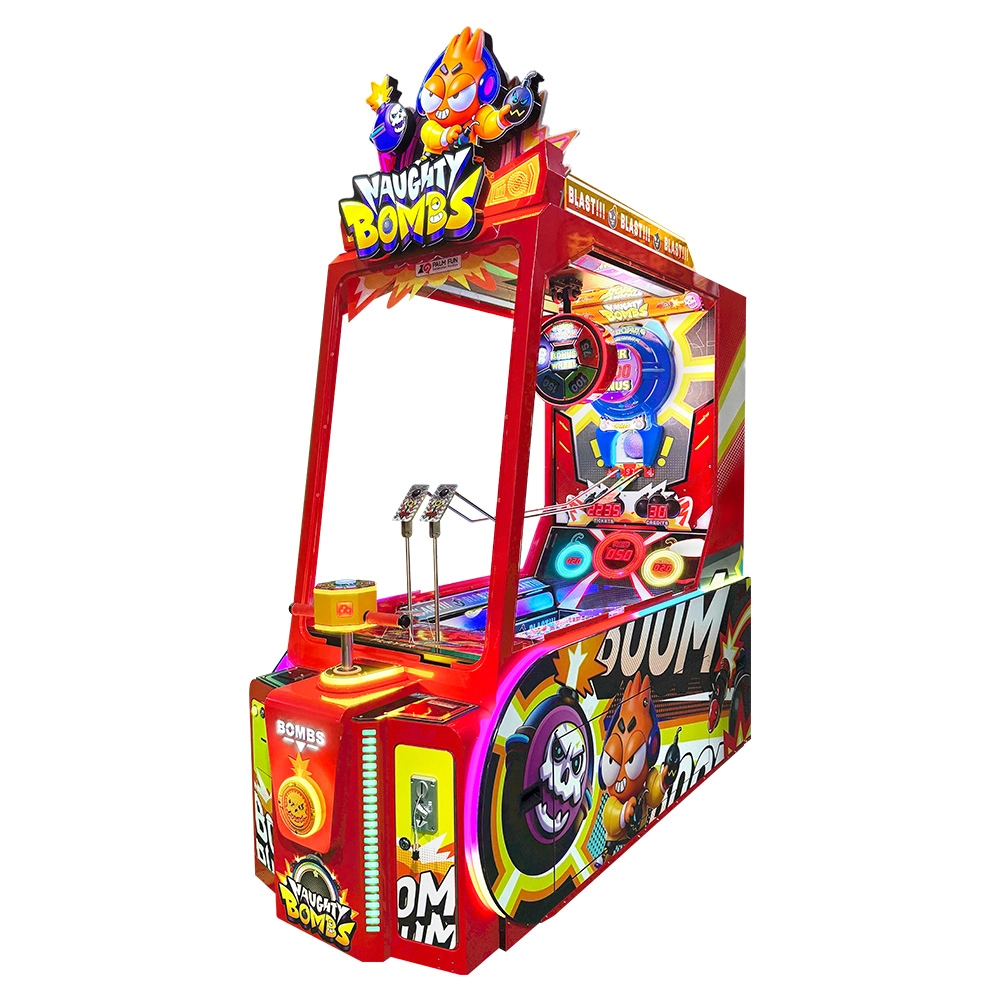
Naughty Bombs is a ball-drop redemption arcade game featuring rolling-ball gameplay, colored targets, ticket prizes, surprise bonus rewards, lighting and sound effects. Players use timing to launch and drop balls toward colored target areas. The product is presented for arcade, family entertainment center and other entertainment-venue projects, with customizable 110V / 220V AC voltage configuration.
World Travel Notes – Balance Ball Redemption Arcade Game
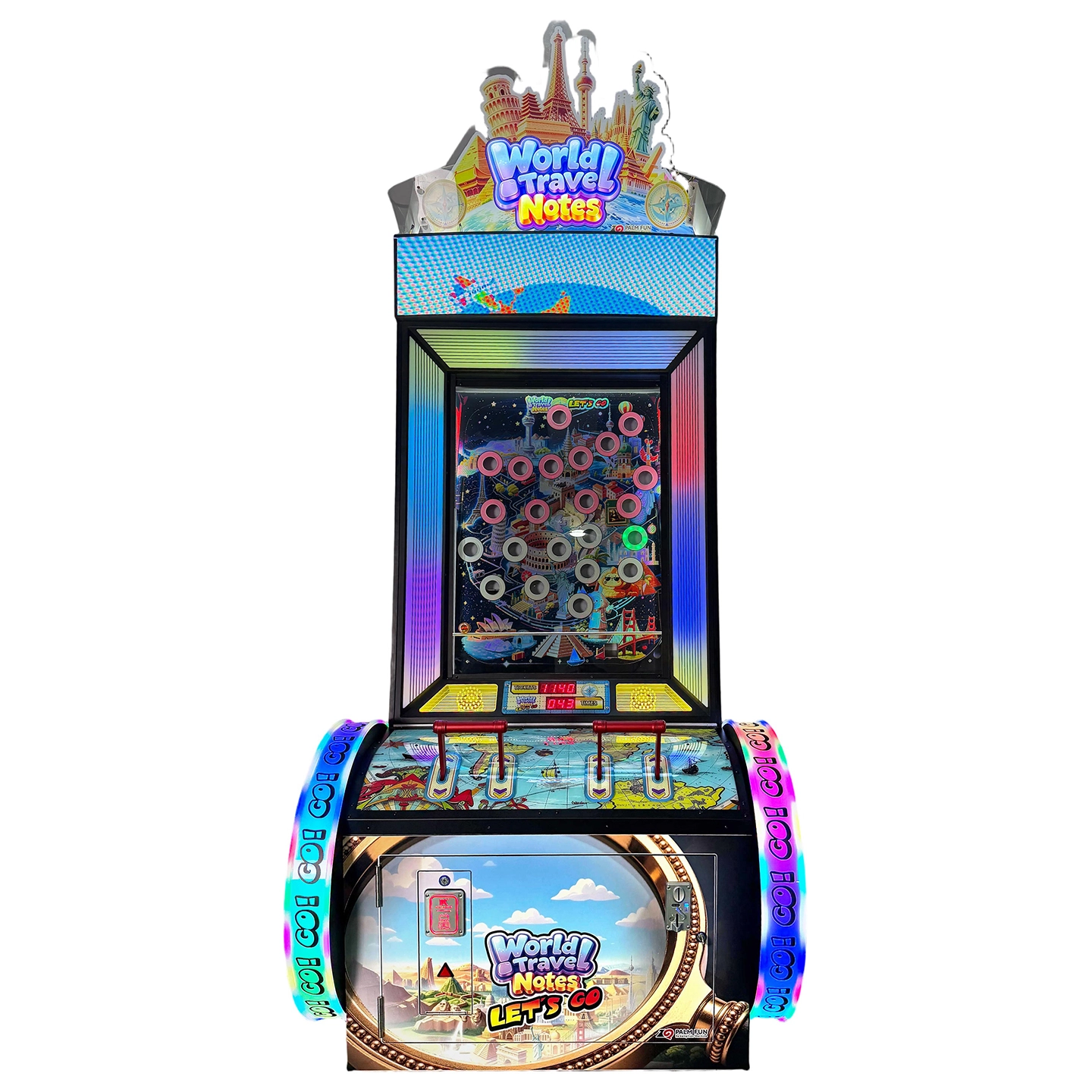
World Travel Notes is a skill-based balance ball redemption game with a fun world-travel theme. Players use two handles to control the balance bar and guide the ball into each target hole. As the game progresses, the targets become more challenging, leading players toward the final grand prize. With colorful world-travel graphics, dynamic RGB lighting, a live score display, and progressive difficulty, World Travel Notes is designed to attract attention and encourage repeat play in arcades, FECs, shopping malls, and other entertainment venues.
Hybrid Shooting & Pushing | Coin Pusher Arcade Ticket Redemption Machine
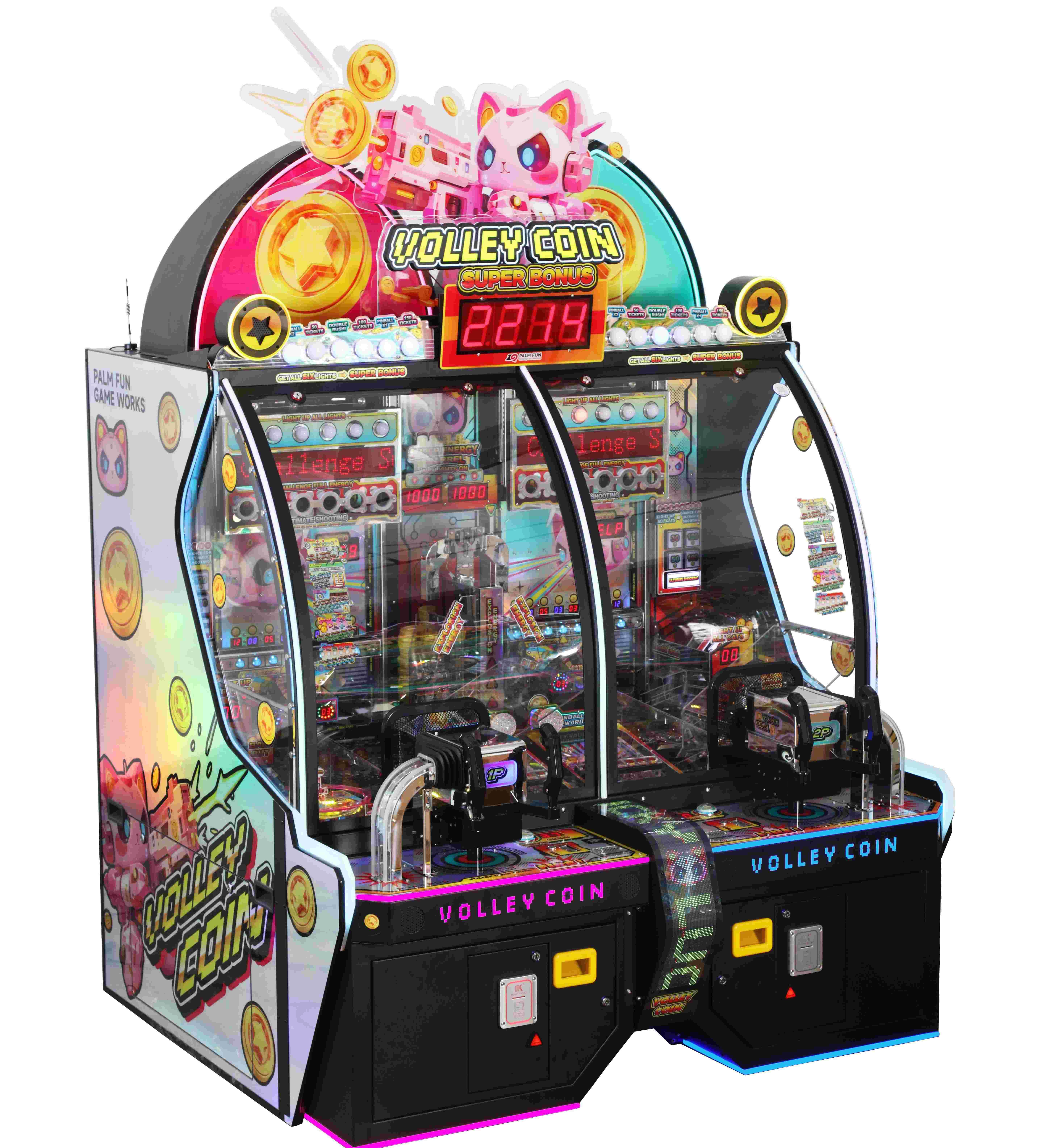
Volley Coin is an innovative arcade ticket redemption machine developed by Palm Fun Electronics. Combining the excitement of a fast-paced token shooter game with the proven earning power of a traditional coin pusher machine, Volley Coin offers a fresh and engaging gameplay experience that appeals to players of all ages.
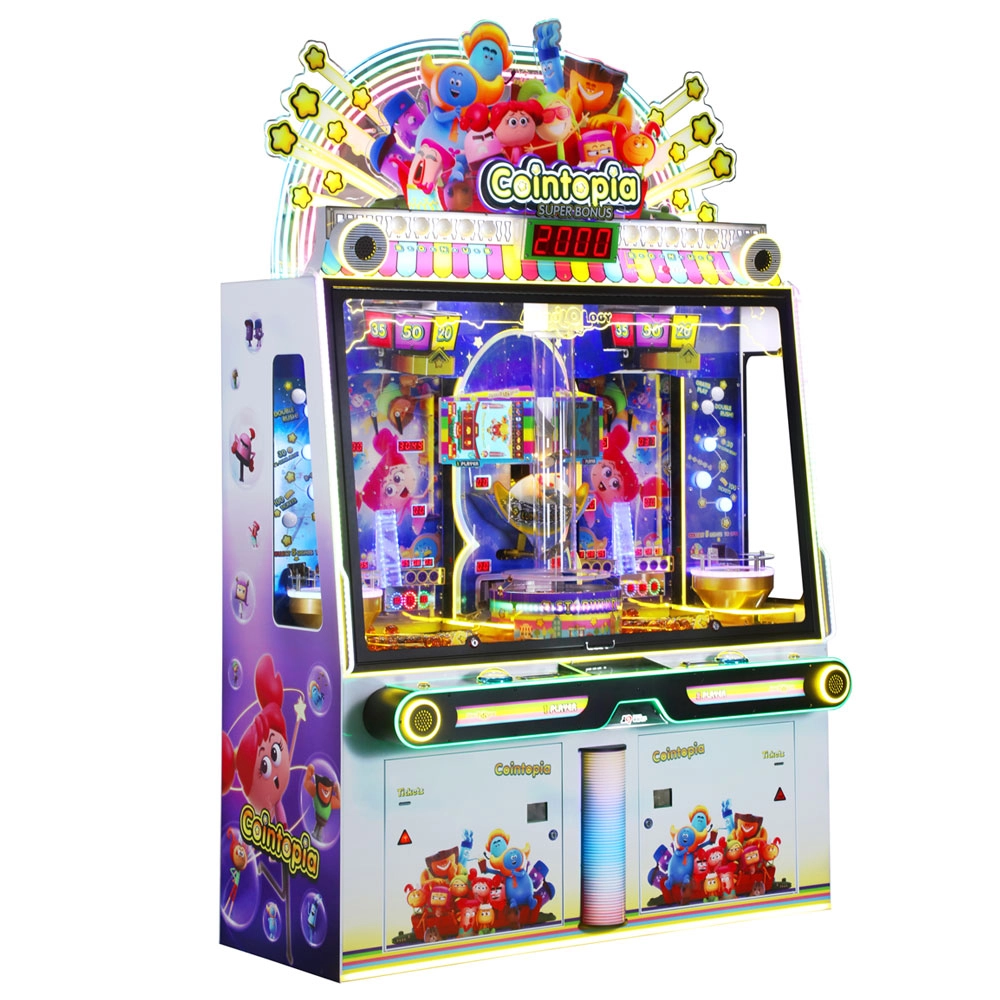
COINTOPIA, Have Fun Together With The Zodiac Buddies in an Utopia
COINTOPIA by PALM FUN is an exciting redemption game machine where players enjoy fun with zodiac buddies in a utopia setting. This ticket redemption machine offers engaging gameplay and rewarding experiences, perfect for family entertainment centers and arcades seeking top-quality redemption games.

Copyright © 2026 PALM FUN All Rights Reserved. | Privacy Policy • Terms and Conditions | Sitemap
palmfunarcade
Palm Fun Arcade Game
Whatsapp: +8618126837443
PalmFun Arcade
PalmFun_Arcade
PALM FUN Redemption Machine