






OEM vs ODM: Private-Label Strategies with Coin Pusher Suppliers
- Choosing a Private-Label Route for Coin-Operated Entertainment Equipment
- OEM: maximum control and stronger differentiation
- ODM: faster deployment through a proven platform
- How the two approaches affect procurement economics
- Technical and Commercial Due Diligence Before Signing
- Turn the concept into a measurable specification
- Assess quality systems, not only product photographs
- Protect the launch with commercial controls
- Operating and Scaling a Branded Redemption Portfolio
- Match the machine to venue economics
- Build a service and spare-parts program
- Use a staged rollout to reduce risk
- Why PALM FUN Fits Private-Label Coin Pusher Programs
- Integrated development and manufacturing capability
- Product options for branded arcade portfolios
- International experience and partnership support
- Frequently Asked Questions
- What is the main difference between OEM and ODM for a coin pusher supplier?
- Which private-label model is better for a new arcade venue?
- What should buyers request before approving a branded machine?
- How can operators estimate the return on a redemption cabinet?
- Why are spare parts and service documents important in private-label projects?
- Can PALM FUN support a product mix beyond coin pushers?
OEM and ODM private-label strategies allow arcade operators, distributors, family entertainment centers, and regional investors to commercialize branded coin-operated entertainment equipment without treating every supplier relationship as a simple catalog purchase. In the redemption game machine sector, OEM usually means manufacturing to the buyer’s own drawings, specifications, cabinet concept, electronics requirements, or software brief. ODM generally means adapting a supplier’s existing platform with new artwork, colors, user-interface elements, packaging, selected functions, and commercial branding. The most suitable route depends on product differentiation, capital availability, launch timing, intellectual-property ownership, service infrastructure, and forecast volume.
Choosing a Private-Label Route for Coin-Operated Entertainment Equipment
OEM: maximum control and stronger differentiation
An OEM project is appropriate when a brand owner wants a distinctive player experience, a proprietary cabinet footprint, a special prize or ticket logic, or a coordinated product family. The buyer can define the control panel, coin mechanism, display, lighting, sound, access doors, payout behavior, safety features, and external dimensions. This level of control can help a distributor build a defensible product range instead of competing only on price.
However, customization creates engineering responsibility. A buyer must provide a clear product requirement document covering electrical input, regional plug standards, payment interface, game duration, attract mode, ticket or reward logic, operator settings, service access, and environmental conditions. Drawings should identify tolerances and service clearances rather than showing only visual concepts. A supplier should also confirm which design files, firmware elements, molds, tooling, and test fixtures belong to the customer after payment.
ODM: faster deployment through a proven platform
ODM is often more practical for a new venue, a distributor testing a territory, or a brand seeking a rapid seasonal launch. The supplier starts with an existing mechanical structure and production process, then applies approved visual identity and selected functional changes. This reduces engineering lead time and may lower the initial development burden because the cabinet, coin path, motor system, lighting architecture, and service procedures have already been evaluated in production.
The trade-off is that similar products may be available to other buyers. Private labeling therefore requires a detailed exclusivity discussion. Contract language should define the protected territory, duration, artwork ownership, customer-specific components, resale limitations, and the consequences of using substantially similar graphics or game presentation. Trademark protection should be planned before mass production; the World Intellectual Property Organization trademark guidance provides a useful reference for brand owners reviewing registration and protection options.
How the two approaches affect procurement economics
OEM development normally involves higher non-recurring engineering costs, longer sample approval, and greater project-management effort. ODM can reduce time to market, but the buyer may accept less control over the base architecture and may need to negotiate minimum order quantities for artwork, packaging, or dedicated components. Neither model is automatically cheaper over the full lifecycle. Total cost should include tooling, prototype freight, testing, import duties, installation, spare parts, software changes, warranty handling, and lost revenue caused by delayed deployment.
| Procurement factor | Typical OEM profile | Typical ODM profile | Buyer implication |
|---|---|---|---|
| Product architecture | Designed around buyer specifications | Adapted from an existing platform | OEM offers differentiation; ODM reduces technical uncertainty |
| Development timeline | Usually longer because design validation is required | Usually shorter when the base model is production-ready | Choose according to launch deadline and venue commitments |
| Upfront engineering cost | Higher, especially with new molds or electronics | Lower when changes remain within the standard platform | Compare development cost with expected sales volume |
| Brand exclusivity | Can be stronger if designs and specifications are proprietary | Requires explicit contractual controls | Define territory, duration, artwork, and derivative-product rights |
| Service complexity | May require dedicated training and spare parts | Often benefits from an established service structure | Confirm manuals, diagnostic access, and replacement-part availability |
Technical and Commercial Due Diligence Before Signing
Turn the concept into a measurable specification
Visual mockups are useful for brand alignment but insufficient for manufacturing approval. The specification should state cabinet materials, coating method, glass or acrylic type, illumination components, power consumption, operating voltage, sound level targets, coin or token compatibility, and the expected duty cycle. For a redemption cabinet, the document should also describe ticket dispensing, prize-credit logic, reset controls, operator menus, jam recovery, and the behavior of the machine when a sensor fails.
Mechanical reliability deserves special attention in coin-pushing equipment. High-contact areas include the pusher plate, coin shelf, coin entry, motor assembly, belt or gear transmission, sensors, ticket outlet, and access hinges. Buyers should request a test protocol that measures repeated cycles, coin-flow consistency, sensor response, electrical protection, and recovery after a simulated jam. The ISO 12100 machinery safety principles are a useful reference for identifying hazards and reducing risks through design, guarding, and operating instructions.
Assess quality systems, not only product photographs
A polished showroom image does not demonstrate production consistency. Buyers should examine incoming-material controls, assembly inspection, wiring verification, firmware version control, final functional testing, and packaging inspection. Ask whether each unit receives a serial number and whether test records can be traced to a production batch. The ISO 9001 quality management framework explains the value of documented processes, continual improvement, customer focus, and evidence-based decision-making; it should be treated as a quality-system reference rather than assumed proof that a particular supplier is certified.
Factory verification should include production capacity, engineering staffing, subcontracted processes, warehouse conditions, and the ability to maintain the same bill of materials after the first order. A video call can verify basic capability, but an on-site audit or independent inspection offers stronger evidence. For larger programs, buyers should schedule pre-production approval, first-article inspection, in-line inspection, and pre-shipment inspection with clearly defined acceptance criteria.
Protect the launch with commercial controls
A private-label agreement should specify the approved artwork, technical annex, sample sign-off procedure, warranty period, response time, spare-parts pricing, software support, change-notification process, and remedies for nonconforming units. It should also state the governing Incoterm, packaging requirements, loading method, shipping documents, and responsibility for destination regulations. A low unit quotation without these controls can create expensive disputes later.
Brand owners should separate cosmetic approval from functional approval. A cabinet may look correct while using an incorrect coin acceptor, unsuitable power supply, weak hinges, or unapproved software. Final payment milestones should be connected to objective deliverables, including approved samples, inspection results, manuals, packing lists, and replacement-part kits. This approach aligns supplier incentives with operational readiness.
Operating and Scaling a Branded Redemption Portfolio
Match the machine to venue economics
Placement strategy should guide the specification. A compact cabinet may suit a small amusement center, bowling venue, cinema, or retail entertainment zone, while a larger multi-player unit may require more floor space but create stronger visual attraction. Operators should estimate plays per day, average price per play, prize or ticket cost, payment processing fees, maintenance labor, electricity, floor rent, and downtime. A simple payback model should use conservative utilization rather than peak holiday performance.
Merchandising and player flow also matter. Machines with bright attract lighting and clear reward communication can support visibility, but excessive sound or light may conflict with venue rules. Controls should be reachable for the intended age group, while service doors should remain secure and accessible to authorized staff. A redemption game machine is a commercial asset, so placement, uptime, cleaning, replenishment, and fault response are as important as cabinet appearance.
Build a service and spare-parts program
Before ordering, buyers should ask for exploded parts diagrams, wiring diagrams, troubleshooting procedures, recommended consumables, and a list of failure-prone components. A sensible initial spare-parts package may include coin mechanisms, motors, sensors, fuses, power supplies, belts, gears, lamps or LED modules, ticket dispensers, locks, and control boards, depending on the design. Parts should be labeled by model and revision to avoid compatibility errors.
Remote technical support is valuable only when communication is structured. Suppliers should provide contact channels, response targets, diagnostic videos, and escalation procedures. For distributors, a train-the-trainer model can reduce service costs across multiple locations. A standardized service manual also helps preserve the customer experience when local technicians, rather than factory personnel, perform repairs.
Use a staged rollout to reduce risk
A staged rollout is safer than sending a large order directly into every location. Start with a pilot group, collect data on play frequency, coin jams, ticket consumption, player complaints, cleaning effort, and operator interventions, then revise the specification or service plan. The pilot should run long enough to capture normal weekday and weekend use. Once the design performs consistently, distributors can expand inventory with better confidence.
For payment and player data, the project should follow applicable local requirements and minimize unnecessary collection. If a connected feature is proposed, define who controls account access, updates, logs, and cybersecurity responsibilities. The ISO/IEC 27001 information security standard offers a recognized framework for managing information-security risks, although the practical requirements for an arcade deployment depend on the actual data and network architecture.
Why PALM FUN Fits Private-Label Coin Pusher Programs
Integrated development and manufacturing capability
PALM FUN was founded in 2015 and specializes in high-quality mechanical lottery machines, coin pusher machines, and raffle machines. Our work covers research and development, industrial design, production, and sales, allowing project owners to coordinate product discussions with a supplier that understands both mechanical operation and commercial presentation.
Our 3,000-square-meter factory is supported by skilled development engineers focused on technology advancement and user experience. This structure helps our team evaluate cabinet construction, gameplay interaction, lighting, mechanisms, and service access as connected parts of one product. For buyers comparing High Quality Redemption Arcade MachinesManufacturer options, factory capability and engineering communication are central evaluation criteria, not secondary details.
Product options for branded arcade portfolios
PALM FUN supports buyers seeking a focused coin pusher machine program as well as a broader mix of redemption games and arcade games machines. Our portfolio can help venues create product variety across mechanical play, ticket redemption, ball-drop interaction, and competitive entertainment. Buyers evaluating Coin Pusher Arcade Ticket Redemption Machine configurations can assess how shooting interaction and pushing mechanics fit their target audience and floor plan.
For operators wanting a themed attraction, the Larva Series Coin Pusher Arcade demonstrates how character-led presentation and mechanical reward interaction can work together. Buyers building a mixed entertainment zone may also compare a pinball arcade cabinet or a single player arcade format with coin-pushing units to balance footprint, play style, and revenue opportunity.
International experience and partnership support
PALM FUN products are recognized and popular in more than 50 countries worldwide. Our international orientation helps buyers discuss packaging, documentation, product presentation, and market-specific requirements at an early stage. We aim to build long-term partnerships by providing comprehensive support for product selection, manufacturing coordination, delivery preparation, and post-sale service.
For distributors and investors reviewing arcade machines for sale, the strongest supplier relationship is one that remains useful after the shipment arrives. PALM FUN’s vision is to become a leading global manufacturer of redemption game machines, supported by continuous innovation, quality-focused production, and attention to user experience. Buyers can review the company and product range at PALM FUN before preparing a private-label brief.
Frequently Asked Questions
What is the main difference between OEM and ODM for a coin pusher supplier?
OEM manufacturing follows the buyer’s own technical design or detailed specification, offering greater control and differentiation. ODM adapts an existing supplier platform, usually enabling faster launch and lower development effort but requiring clearer agreements on exclusivity and intellectual property.
Which private-label model is better for a new arcade venue?
ODM is often suitable when the venue needs a proven product quickly and has limited development resources. OEM may be better when the venue has a distinctive brand concept, larger forecast volume, or a long-term strategy based on proprietary gameplay and cabinet design.
What should buyers request before approving a branded machine?
Buyers should request a technical specification, approved artwork files, prototype or first-article samples, test procedures, wiring diagrams, user and service manuals, warranty terms, spare-parts pricing, packaging details, and written confirmation of software, tooling, artwork, and exclusivity rights.
How can operators estimate the return on a redemption cabinet?
Estimate conservative plays per day, price per play, ticket or prize cost, payment fees, floor rent, electricity, maintenance, shipping, and expected downtime. Compare the resulting contribution margin with the complete installed cost rather than evaluating only the factory purchase price.
Why are spare parts and service documents important in private-label projects?
Private-label branding does not eliminate mechanical wear or field failures. Correct spare parts, diagrams, diagnostic instructions, and response procedures reduce downtime, help local technicians work accurately, and protect the operator’s revenue and customer experience.
Can PALM FUN support a product mix beyond coin pushers?
Yes. PALM FUN specializes in mechanical lottery machines, coin pusher machines, and raffle machines, and its product portfolio also supports broader redemption and arcade entertainment programs for buyers planning multiple machine categories.
Contact PALM FUN to discuss an OEM or ODM brief, or review our coin pusher and redemption product range for your next arcade deployment.
Recommended for you
Arcade Game Manufacturers USA | Discover Quality with PALM FUN
Everything You Need to Know About punching arcade machine
Market Signals: High-Margin Coin Pusher Models for Importers
How to Choose Right buy arcade games manufacturer and supplier ?
FAQs
What is the character of mechanical redemption machine?
Research & Development, how hard is the birth of one new redemption machines?
What details should be paid attention to in the operation of redemption machines?
① Machine parameter adjustments.
② Equipment performance and gameplay.
③ Decoration and promotion of the area and equipment.
④ Machine placement locations.
⑤ Selection of prizes.
2. The primary operational techniques for redemption machines are in the attractiveness of the gameplay, maintaining a reasonable payout rate, and creating an engaging atmosphere. Depending on the season and market changes, promotional activities should be carried out with a balance, analysis, and follow-up. Therefore, you can consider the following operational methods:
① Collaborate with several venues or businesses to distribute promotional materials to enhance external visibility and interaction.
② Conduct targeted promotional activities to retain returning customers.
③ Organize regular member events to ensure member attraction and consistent customer base. For example, offering extra lottery rewards for a certain amount of tokens deposited or giving a certain number of lottery tickets(reward points) when a membership card is issued.
④ Strengthen interaction with neighboring businesses within the commercial district.
⑤ Organize selective activities for children and offer special deals for exchanging unique children-oriented prizes.
3. Setting parameters correctly:
4.New machine arrival -- Familiarizing with the game--Initial parameter control--Promotional --ctivities and advertising--Adjusting parameters based on the number of players--Multiple adjustments of parameters--Increased popularity--Profitability--Reinvestment.
Note: Data analysis should be conducted weekly to promptly understand the ticket payout probability for each redemption machine. In case of any abnormal situations, swift follow-up and troubleshooting are essential to identify the causes and rectify the issues.
Why redemption ticket machines are popular?
2.Redemption machines are becoming the most important breakthrough to enhance the sustainable operation of indoor arcade game halls.
3.Players are of all ages and they continue to expand.
How to guide the players to recognize tickets at the beginning setup of the redemption machines?
Never assume that your players already understand the purpose of lottery tickets(reward points). Even in venues that have been in operation for many years, it is still discovered during on-site interviews with players that many of them are not aware. Don't believe it? Just ask consumers at the venue. The machines, redemption counters, materials hung above the venue, and announcements by staff, among others, can all be channels for informing players about the purpose of lottery tickets(reward points). It is essential to do more promotion, create large displays and large cards, and clearly communicate the purpose of lottery tickets(reward points) to the players.
You may also like
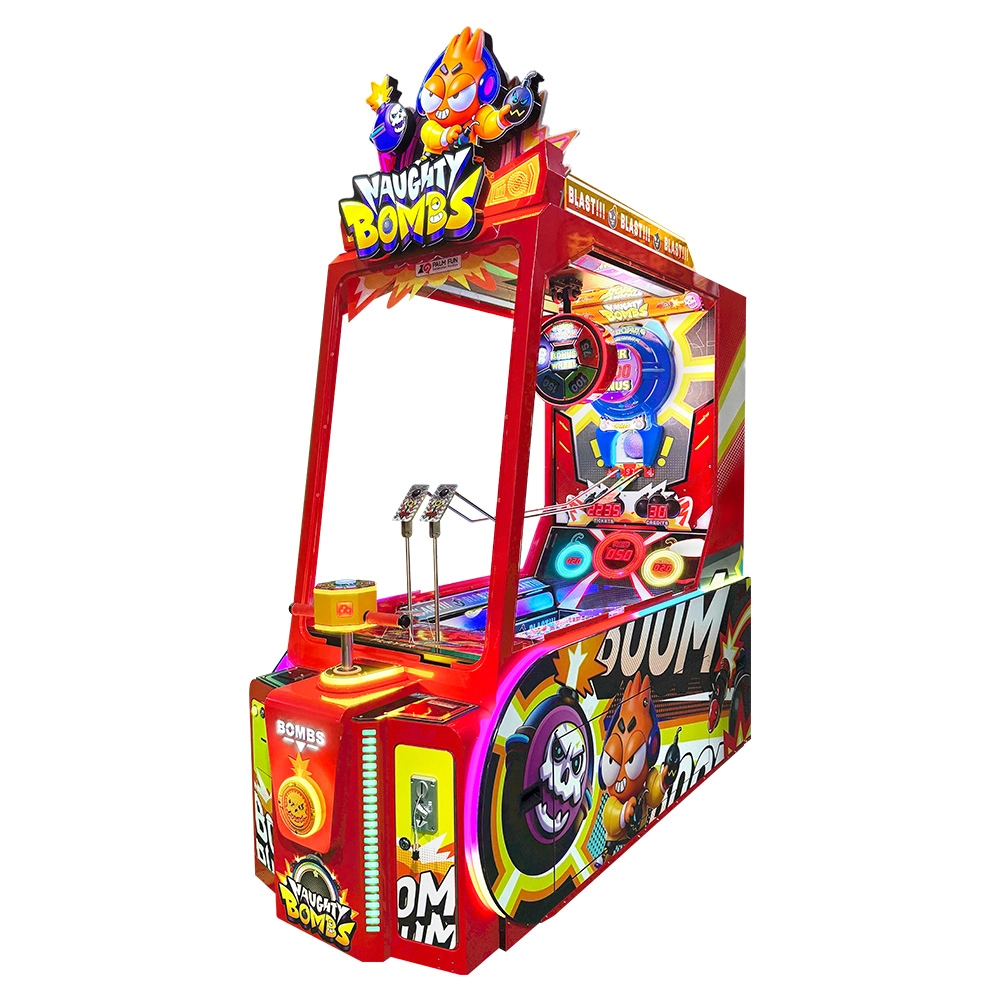
Naughty Bombs Ball Drop Redemption Arcade Game Machine
Naughty Bombs is a ball-drop redemption arcade game featuring rolling-ball gameplay, colored targets, ticket prizes, surprise bonus rewards, lighting and sound effects. Players use timing to launch and drop balls toward colored target areas. The product is presented for arcade, family entertainment center and other entertainment-venue projects, with customizable 110V / 220V AC voltage configuration.
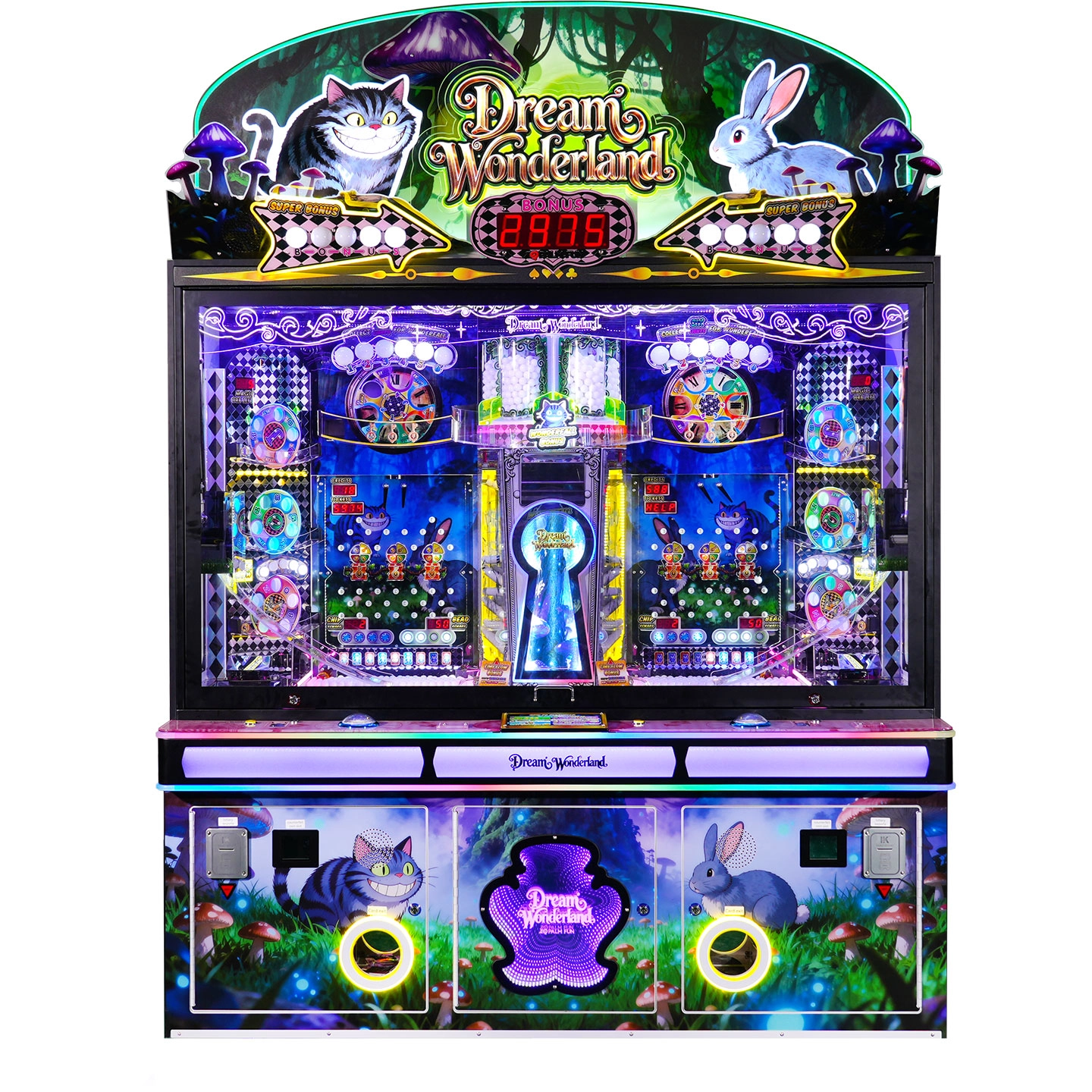
Dream Wonderland Marble Pusher Redemption Game
Enter Dream Wonderland — a magical marble pusher adventure filled with glowing lights, magic orbs, bonus wheels, collectible character cards, and exciting jackpot challenges.
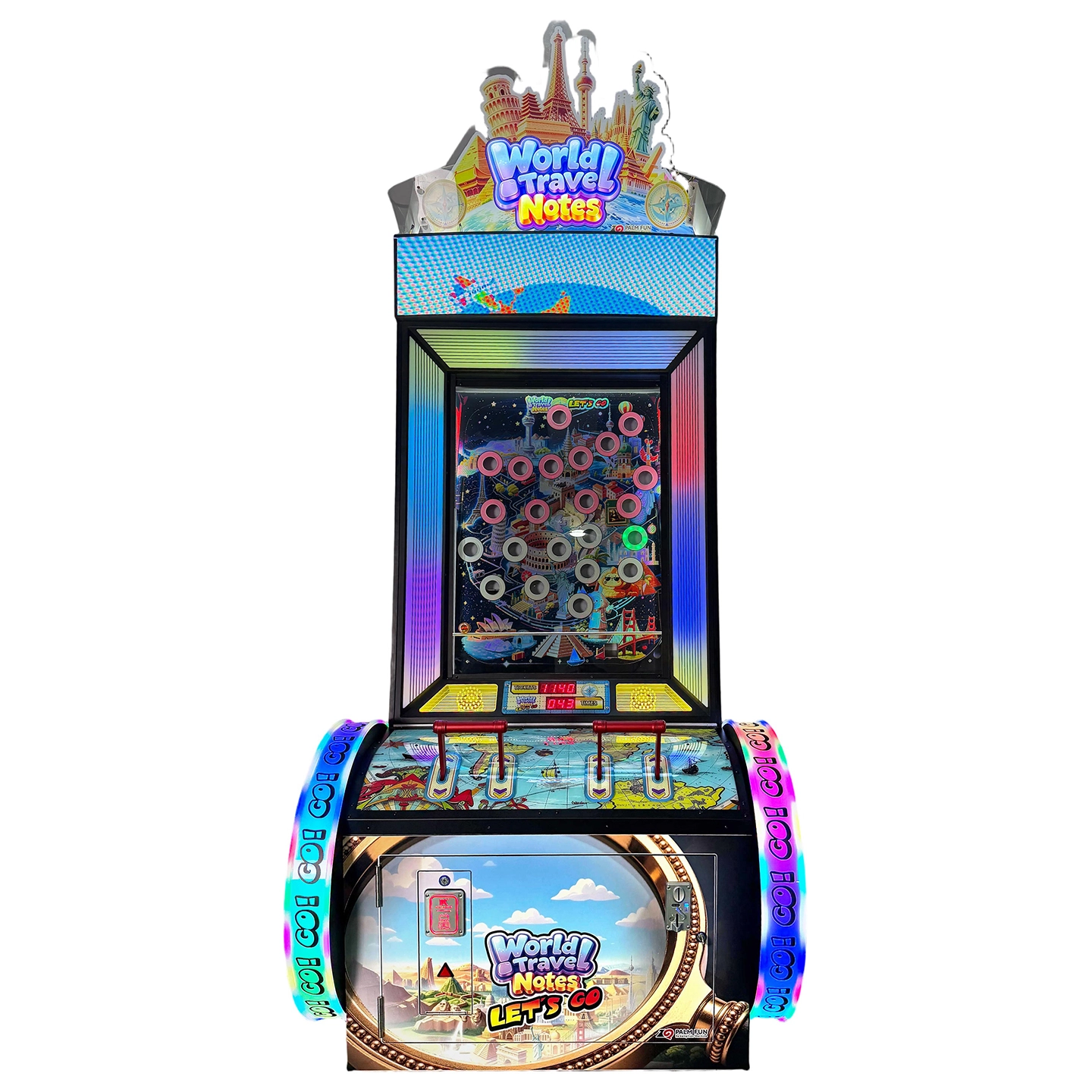
World Travel Notes – Balance Ball Redemption Arcade Game
World Travel Notes is a skill-based balance ball redemption game with a fun world-travel theme. Players use two handles to control the balance bar and guide the ball into each target hole. As the game progresses, the targets become more challenging, leading players toward the final grand prize. With colorful world-travel graphics, dynamic RGB lighting, a live score display, and progressive difficulty, World Travel Notes is designed to attract attention and encourage repeat play in arcades, FECs, shopping malls, and other entertainment venues.
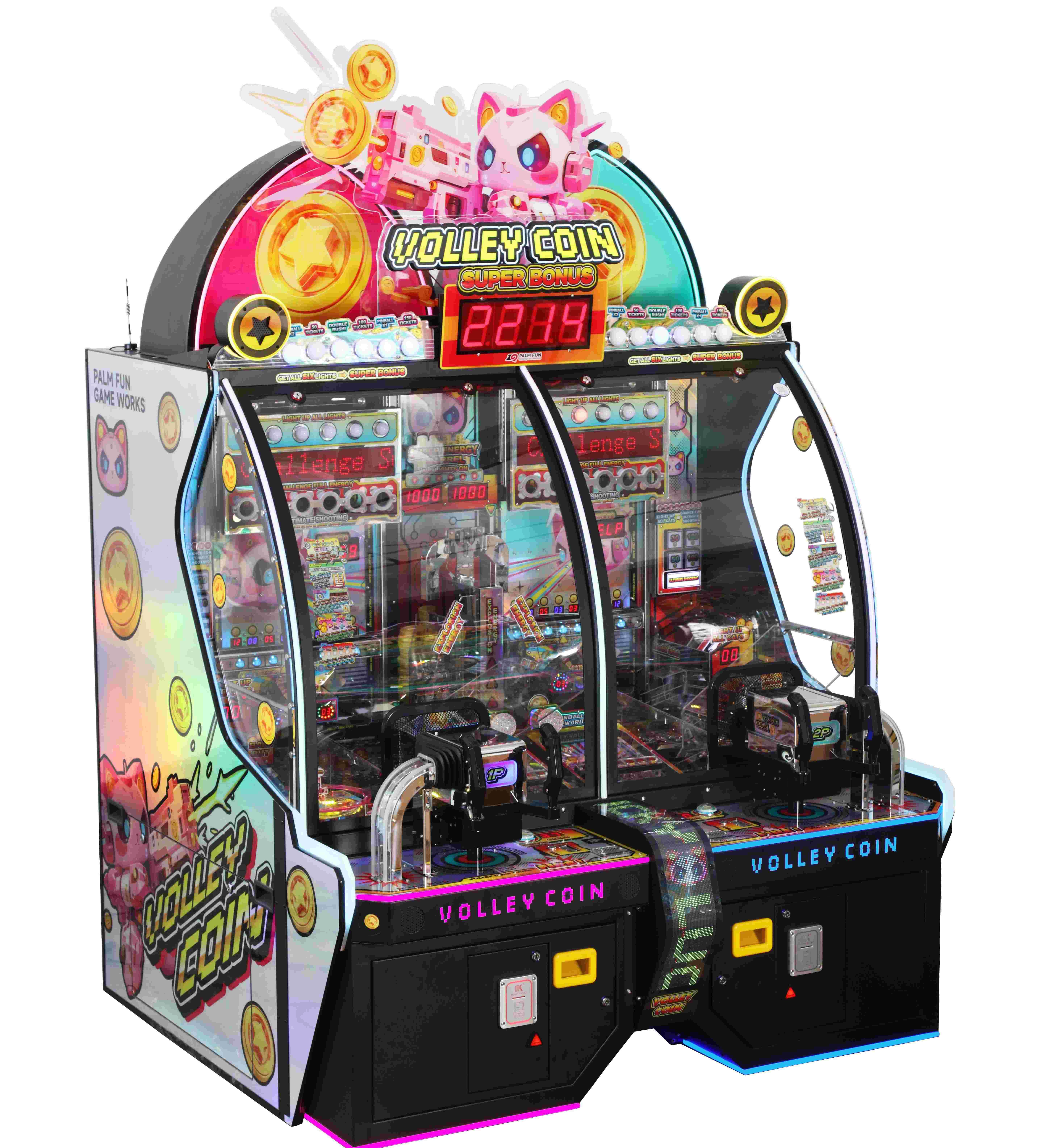
Hybrid Shooting & Pushing | Coin Pusher Arcade Ticket Redemption Machine
Volley Coin is an innovative arcade ticket redemption machine developed by Palm Fun Electronics. Combining the excitement of a fast-paced token shooter game with the proven earning power of a traditional coin pusher machine, Volley Coin offers a fresh and engaging gameplay experience that appeals to players of all ages.
Copyright © 2026 PALM FUN All Rights Reserved. | Privacy Policy • Terms and Conditions | Sitemap
palmfunarcade
Palm Fun Arcade Game
Whatsapp: +8618126837443
PalmFun Arcade
PalmFun_Arcade
PALM FUN Redemption Machine