








How to Play the Parallel Universe Ball Drop Arcade Game: A Step-by-Step Guide for First-Time Players
- Getting Started with a Ball-Drop Redemption Arcade
- Read the cabinet instructions before inserting credits
- Identify the playfield, ball path, and scoring zones
- Start with a controlled first attempt
- A Step-by-Step Method for Better Timing and Scoring
- Step one: watch a complete target cycle
- Step two: choose one timing cue and use it consistently
- Step three: use feedback to adjust one variable
- What Arcade Operators and Equipment Buyers Should Evaluate
- Assess learnability, throughput, and audience fit
- Review service access, safety, and operating information
- Consider the machine within the wider redemption mix
- Connecting Game Choice with a Practical Arcade Portfolio
- Match product categories to the venue’s objectives
- Build a decision around evidence and lifecycle value
- Frequently Asked Questions
The parallel universe ball drop arcade game is a skill-based redemption experience in which players release or guide balls and try to land them in scoring zones, trigger features, or earn tickets. Because controls and scoring can vary between cabinets, first-time players should read the on-screen instructions, identify how a ball is launched, watch the target’s movement, and make one deliberate play at a time. For operators and buyers, understanding this play sequence helps assess whether a machine is easy to learn, engaging to replay, and practical to maintain in a commercial arcade.
Getting Started with a Ball-Drop Redemption Arcade
Read the cabinet instructions before inserting credits
Before starting, look for the instruction panel, screen prompts, and any labels beside the controls. These explain how to begin a round, how the ball is released, what the targets represent, and how tickets or points are awarded. A cabinet may use a button, lever, or another control, so do not assume that a familiar-looking machine works the same way as another model. If instructions are unclear, ask an attendant before spending credits. That simple check prevents avoidable confusion and gives new players a fair chance to understand the objective.
Check the credit display and the cost of a turn as well. Some machines distinguish between a single play and a multi-ball or bonus option. Confirm what each selection costs before choosing it, and pay attention to whether a successful target hit awards tickets immediately or contributes to a larger bonus. For venue owners, clear instructions and visible pricing reduce disputes at the cabinet and help staff spend less time explaining basic operation.
Identify the playfield, ball path, and scoring zones
Take a moment to follow the visible route from the ball release point to the targets and collection area. Look for zones marked with different values, moving elements, bonus indicators, or a feature that appears to start only after a particular target is reached. Some designs rely mainly on timing; others combine timing with aiming or a sequence of targets. The cabinet’s own instructions are the best guide to its specific rules, because game layouts and scoring systems are not universal.
Notice which elements move and which remain fixed. If a target sweeps across the playfield, the ball’s release timing may matter more than a quick reaction after the ball is already in motion. If the target is stationary, the main challenge may be choosing the correct lane or release point. Observing one complete cycle before playing can make the first attempt more informed and helps players avoid treating a skill game as a random button-mashing exercise.
Start with a controlled first attempt
Once the objective is clear, begin with one ball and use the control exactly as described. Avoid making several rapid inputs unless the instructions specifically call for them. Watch where the ball travels, whether the target was moving, and what the display reports afterward. Even a miss provides useful information about timing, route, and the relationship between the release action and the result.
Keep hands, drinks, and personal items away from openings and moving parts. Players should use only the provided controls and never reach into the cabinet. For operators, the general principles in ISO 12100, Safety of machinery provide a framework for identifying hazards and reducing risk during equipment design and use; the applicable requirements for a specific installation should be confirmed with qualified professionals and local authorities.
A Step-by-Step Method for Better Timing and Scoring
Step one: watch a complete target cycle
Before releasing the ball, observe the target or moving platform long enough to understand its pattern. Look for a repeatable cue, such as a target passing a marked point or a light indicating the scoring window. Do not presume that a visual effect guarantees a successful result; use the cabinet’s stated rules to determine what counts. If the motion appears irregular, focus on the moment the ball enters the playfield rather than trying to predict an exact landing from appearance alone.
Step two: choose one timing cue and use it consistently
Select one visible reference point and use it to guide the release. For example, a player may choose to act when a target reaches a particular position, provided the instructions and control layout make that strategy relevant. Changing the cue after every attempt makes it difficult to tell whether a different result came from improved timing or simply from chance. A consistent method turns each play into a small test: observe, act, and compare the outcome.
Do not assume that faster play means better play. If the game allows time between turns, use it to review the score display and reset attention before trying again. In family entertainment centers and other busy venues, a calm, understandable pace is often more welcoming to first-time users than controls that appear to demand immediate reactions.
Step three: use feedback to adjust one variable
After each ball, note whether it landed short, passed the target, entered a low-value zone, or triggered a bonus. Then adjust one factor, such as release timing, rather than changing several things at once. The display may show points, tickets, remaining balls, or progress toward a feature. Read those signals instead of relying only on sound effects or flashing lights, which may celebrate an event without explaining its scoring consequence.
Set a spending limit before continuing. Redemption play is entertainment, and ticket outcomes can depend on both player actions and the rules configured for a particular cabinet. Operators should display credit costs and prize terms clearly, and players should consult staff if the result or ticket count appears inconsistent with the posted instructions.
| Play stage | What the player does | What to observe | Why it matters |
|---|---|---|---|
| Before play | Read prompts and confirm the credit cost | Controls, scoring rules, and ticket display | Prevents avoidable errors and clarifies the objective |
| Target observation | Watch a full movement cycle where possible | Target position, speed, and visual cues | Helps establish a repeatable timing reference |
| Ball release | Use the stated control once and deliberately | Ball path and target interaction | Connects the action to the result |
| After the attempt | Review the score and adjust one factor | Points, tickets, bonus progress, or remaining balls | Makes the next attempt more informed |
What Arcade Operators and Equipment Buyers Should Evaluate
Assess learnability, throughput, and audience fit
For a venue, a ball-drop redemption cabinet should be assessed as both a game and an operating asset. Watch representative players approach it without coaching: can they understand the objective, identify the control, and interpret the result? A short learning curve can support casual participation, while a clear scoring loop can encourage repeat play. Buyers should also consider queue behavior, footprint, sightlines, age suitability, and how easily staff can explain the game during peak periods.
Compare the intended audience with the game’s physical and visual design. A cabinet installed in a family venue may need readable instructions, intuitive controls, and a play position that accommodates different users. The U.S. Department of Justice provides design requirements and guidance through its 2010 ADA Standards for Accessible Design. Operators should assess the standards that apply to their facility and installation rather than assume that a single game feature ensures accessibility.
Review service access, safety, and operating information
Before purchasing, request the operator and maintenance documentation, electrical requirements, warranty terms, spare-parts information, and recommended inspection schedule. Confirm who is responsible for installation, commissioning, and staff training. A supplier should be able to explain how the cabinet is opened for authorized servicing, how routine cleaning is performed, and which components require periodic checks. These details affect uptime and total cost of ownership as much as the purchase price.
Ask how tickets or other rewards are configured and reconciled, and whether the machine provides useful fault messages for staff. Electrical installation and repair should be handled by qualified personnel in line with applicable local rules. The U.S. Occupational Safety and Health Administration’s electrical safety guidance emphasizes the importance of controlling electrical hazards at work; it is a useful reference point for venue safety planning, not a substitute for equipment-specific instructions or local code review.
Use a consistent comparison process when evaluating arcade games machines. Review the actual game rules, demonstration unit, footprint drawing, service access, payment and ticket interfaces, and parts availability. Ask for written answers where specifications affect the site plan or financial model. A machine that attracts attention but is difficult to service or confusing to play can create avoidable operating costs and a weaker guest experience.
Consider the machine within the wider redemption mix
A ball-drop title can complement other redemption attractions, but the best mix depends on the venue’s audience, floor space, prize strategy, and operating model. Buyers may compare its role with a coin pusher machine, other redemption games, and different arcade machines for sale. The relevant question is not simply which game looks most dramatic; it is whether the combination offers varied play styles, manageable service needs, and a clear reason for guests to move through the arcade.
Estimate performance using the venue’s own assumptions and observed results rather than relying on unsupported industry averages. Track plays per day, average spend, ticket redemption, downtime, service calls, and guest feedback after launch. A measured review helps operators identify whether placement, signage, pricing, or staff instruction needs adjustment. It also gives procurement teams a more reliable basis for future purchasing decisions.
Connecting Game Choice with a Practical Arcade Portfolio
Match product categories to the venue’s objectives
Our product discussions can cover the wider categories buyers commonly compare, including coin pusher machines, redemption games, arcade games machines, and arcade machines for sale. Each category serves a different role in an entertainment space, so selection should start with the project brief: target visitors, available floor area, desired play duration, prize strategy, and service capacity. For a specific ball-drop cabinet, buyers should request its current specification and operating materials rather than infer features from the name or from another version of the game.
When comparing suppliers, ask for clear product information, installation requirements, available configuration options, warranty coverage, and after-sales support terms. Confirm whether the quoted model is the same unit shown in demonstrations and promotional material. A documented comparison supports better budgeting and reduces the risk of a mismatch between the machine ordered and the venue’s operational needs. If a supplier offers multiple redemption formats, evaluate them against the same project criteria instead of treating a broad catalog as proof of suitability.
Build a decision around evidence and lifecycle value
Procurement teams can strengthen due diligence by requesting videos of actual play, a live demonstration where feasible, a parts and service plan, and references relevant to the intended market. Verify import, electrical, labeling, and accessibility requirements with the parties responsible for local compliance. The final decision should account for purchase cost, installation, staff time, anticipated maintenance, consumables, and the effect of downtime—not just headline price or visual appeal.
A first-time player succeeds by learning the rules, watching the target, choosing a consistent timing cue, and using each result to inform the next attempt. A venue succeeds when that accessible play experience is supported by clear instructions, appropriate maintenance, responsible operation, and a product mix aligned with its visitors. These same principles give buyers a practical foundation for evaluating a ball-drop redemption cabinet and planning a dependable arcade floor.
Contact our team to discuss arcade product options and request information aligned with your venue’s requirements.
Frequently Asked Questions
How do you play a ball-drop redemption arcade game?
Read the cabinet instructions, confirm the credit cost, identify the release control and scoring zones, then release one ball deliberately. Review the score or ticket display after the attempt before playing again.
How can a first-time player improve timing?
Watch a complete target cycle where possible, choose one visible timing cue, and use it consistently. After each attempt, review the ball path and result, then adjust one factor rather than changing several at once.
Do all ball-drop arcade games use the same controls and scoring rules?
No. Controls, target layouts, and scoring systems can vary between cabinets. Players should follow the instructions on the specific machine rather than assume it works like another game.
What should arcade operators check before buying a redemption cabinet?
Review the game rules, footprint, audience fit, service access, electrical requirements, warranty, spare-parts availability, maintenance schedule, and ticket configuration. Confirm installation and compliance requirements for the venue.
How should a venue evaluate whether a redemption game is performing well?
Track plays per day, average spend, ticket redemption, downtime, service calls, and guest feedback using the venue’s own operating data. These measures can help identify whether placement, signage, pricing, or staff guidance needs adjustment.
How can a ball-drop game fit into a broader arcade mix?
Compare its audience, footprint, play style, service needs, and prize strategy with other options such as coin pusher machines and different redemption games. Choose a mix that suits the venue’s visitors and operating capacity.
Recommended for you
Wholesale best multi game arcade machine manufacturer and supplier in Asia
Top Revenue-Generating Pinball Arcade Titles for 2026
Unlock the Nostalgia with Arcade Classics Machine from PALM FUN
Unlocking Arcade Gold: The Definitive Guide to Coin Pusher Arcade Machines
FAQs
Effectively solve the pain points of the site and consume the amount of coins deposit.
So the stock quantity of pre-purchased tokens is an issue must be concerned, especially in the highly competitive current market. Only when the amusement park maintains a healthy cycle of token sales, consumption, stockpiling, consumption, and sales again can it ensure sustained growth and profitability.
How to select and match redemption machines?
2. the number of redemption game configuration: according to the characteristics of redemption machine, the proportion of redemption game configuration generally accounts for 30±5% of the whole field.
3. there are a lot of equipment on the market now, but less innovative, so the choice should be targeted in management and planning. We can divide redemption machines into children's, adults's, families, etc., according to different standards, with complete varieties and many styles, so as to give guests more choices and more changes. Specific can refer to the following:
① Inserting tokens in high frequency (mainly in mechanical redemption machines)
② Skill based games (mainly in mechanical redemption machines)
③ Games with edutainment significance (mainly in video redemption machines)
④ Entertaining games (mainly in video redemption machines)
What details should be paid attention to in the operation of redemption machines?
① Machine parameter adjustments.
② Equipment performance and gameplay.
③ Decoration and promotion of the area and equipment.
④ Machine placement locations.
⑤ Selection of prizes.
2. The primary operational techniques for redemption machines are in the attractiveness of the gameplay, maintaining a reasonable payout rate, and creating an engaging atmosphere. Depending on the season and market changes, promotional activities should be carried out with a balance, analysis, and follow-up. Therefore, you can consider the following operational methods:
① Collaborate with several venues or businesses to distribute promotional materials to enhance external visibility and interaction.
② Conduct targeted promotional activities to retain returning customers.
③ Organize regular member events to ensure member attraction and consistent customer base. For example, offering extra lottery rewards for a certain amount of tokens deposited or giving a certain number of lottery tickets(reward points) when a membership card is issued.
④ Strengthen interaction with neighboring businesses within the commercial district.
⑤ Organize selective activities for children and offer special deals for exchanging unique children-oriented prizes.
3. Setting parameters correctly:
4.New machine arrival -- Familiarizing with the game--Initial parameter control--Promotional --ctivities and advertising--Adjusting parameters based on the number of players--Multiple adjustments of parameters--Increased popularity--Profitability--Reinvestment.
Note: Data analysis should be conducted weekly to promptly understand the ticket payout probability for each redemption machine. In case of any abnormal situations, swift follow-up and troubleshooting are essential to identify the causes and rectify the issues.
Research & Development, how hard is the birth of one new redemption machines?
The revenue proportion of redemption machines
You may also like
Naughty Bombs Ball Drop Redemption Arcade Game Machine
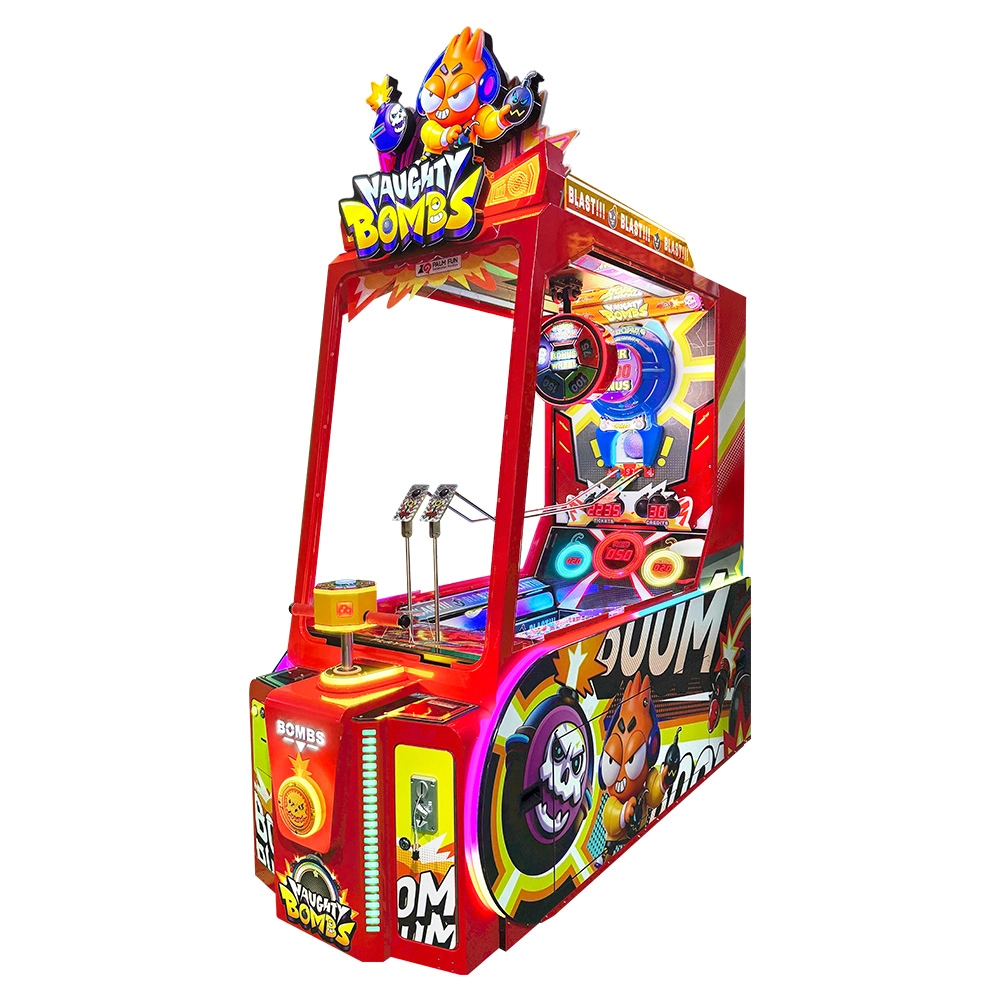
Naughty Bombs is a ball-drop redemption arcade game featuring rolling-ball gameplay, colored targets, ticket prizes, surprise bonus rewards, lighting and sound effects. Players use timing to launch and drop balls toward colored target areas. The product is presented for arcade, family entertainment center and other entertainment-venue projects, with customizable 110V / 220V AC voltage configuration.
World Travel Notes – Balance Ball Redemption Arcade Game
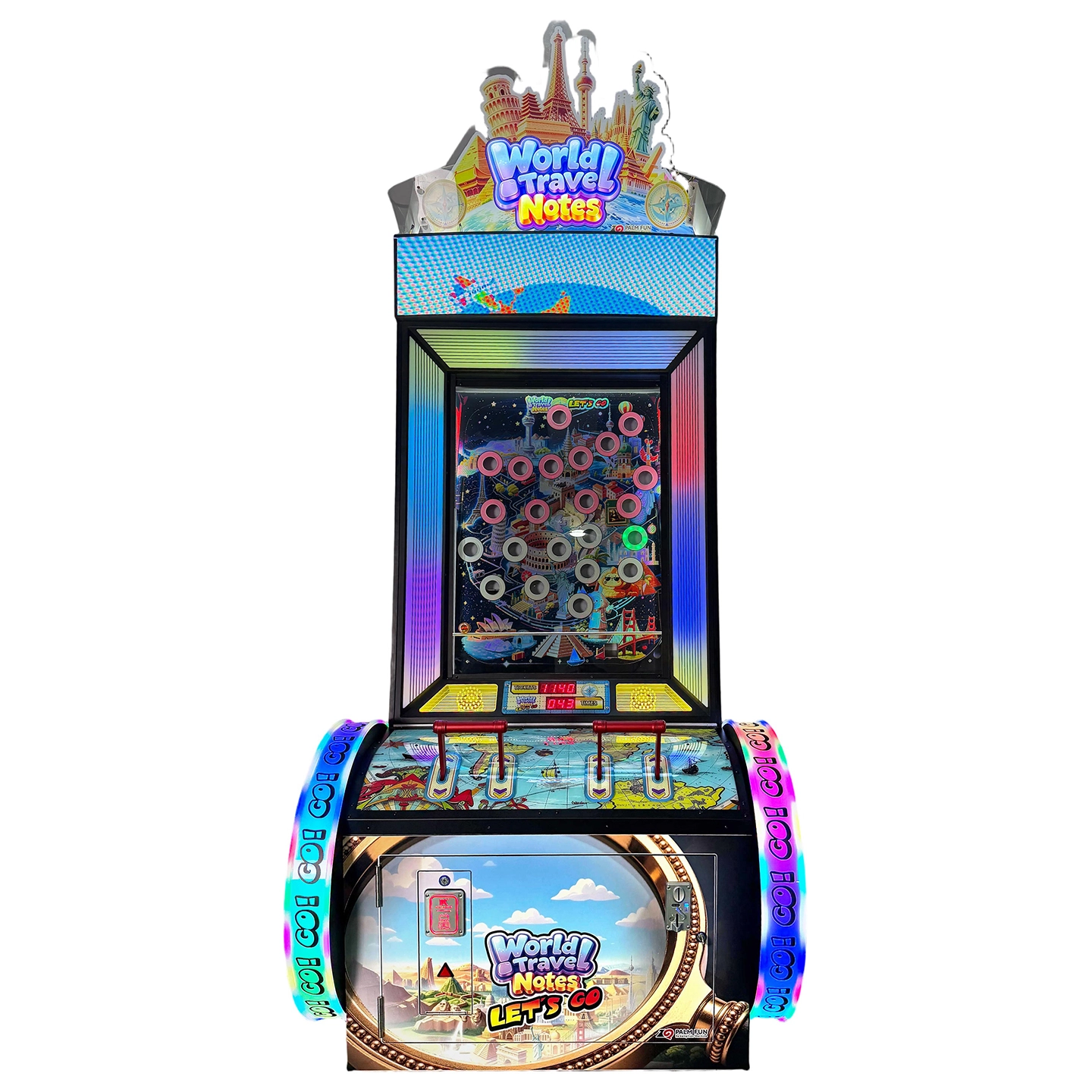
World Travel Notes is a skill-based balance ball redemption game with a fun world-travel theme. Players use two handles to control the balance bar and guide the ball into each target hole. As the game progresses, the targets become more challenging, leading players toward the final grand prize. With colorful world-travel graphics, dynamic RGB lighting, a live score display, and progressive difficulty, World Travel Notes is designed to attract attention and encourage repeat play in arcades, FECs, shopping malls, and other entertainment venues.
Hybrid Shooting & Pushing | Coin Pusher Arcade Ticket Redemption Machine
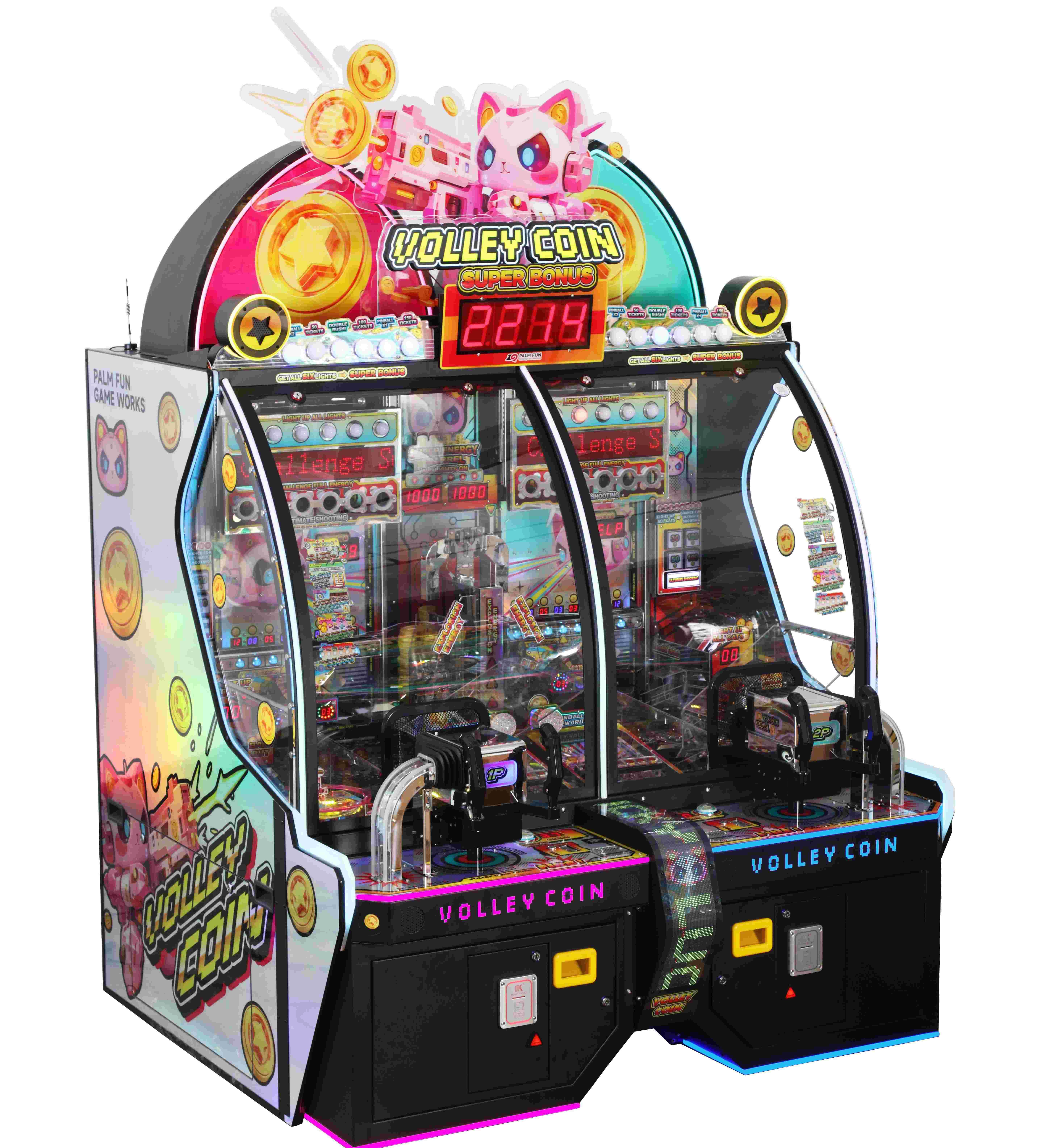
Volley Coin is an innovative arcade ticket redemption machine developed by Palm Fun Electronics. Combining the excitement of a fast-paced token shooter game with the proven earning power of a traditional coin pusher machine, Volley Coin offers a fresh and engaging gameplay experience that appeals to players of all ages.
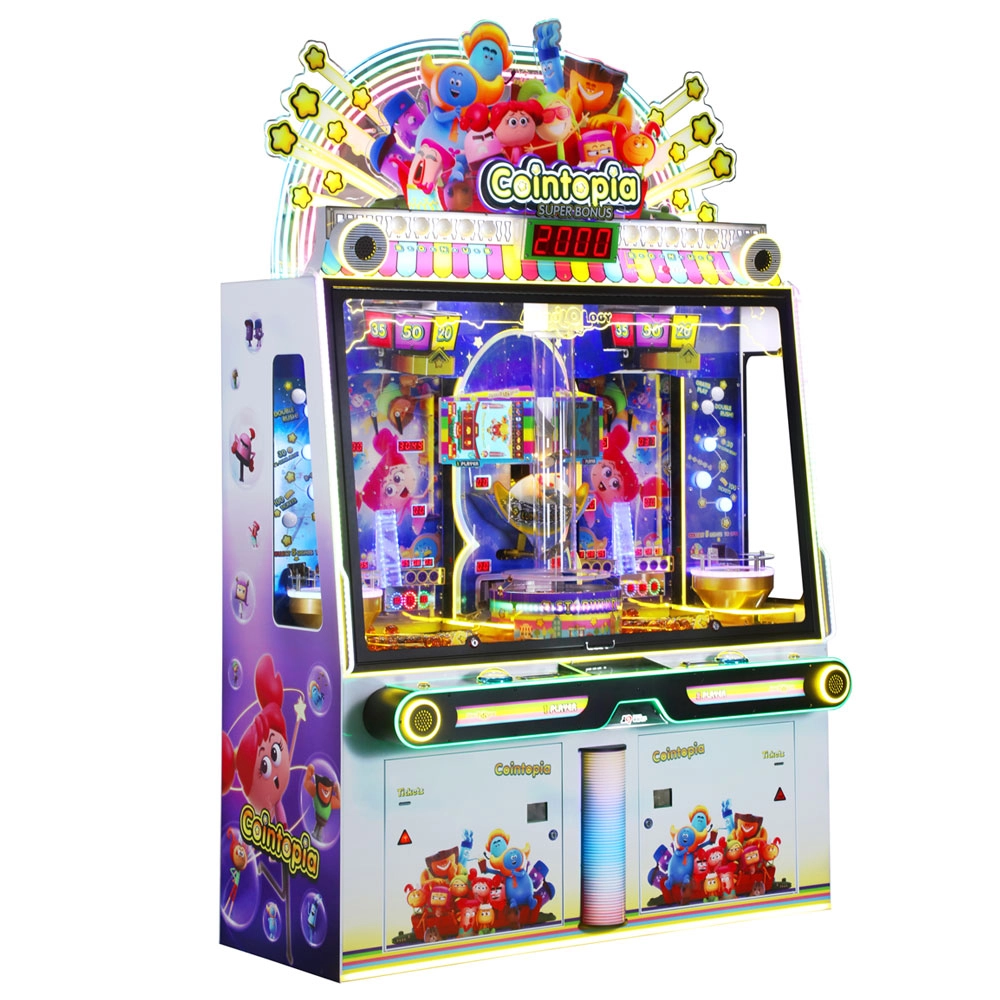
COINTOPIA, Have Fun Together With The Zodiac Buddies in an Utopia
COINTOPIA by PALM FUN is an exciting redemption game machine where players enjoy fun with zodiac buddies in a utopia setting. This ticket redemption machine offers engaging gameplay and rewarding experiences, perfect for family entertainment centers and arcades seeking top-quality redemption games.

Copyright © 2026 PALM FUN All Rights Reserved. | Privacy Policy • Terms and Conditions | Sitemap
palmfunarcade
Palm Fun Arcade Game
Whatsapp: +8618126837443
PalmFun Arcade
PalmFun_Arcade
PALM FUN Redemption Machine