







Why choose PALM FUN as your pinball storm supplier manufacturer supplier
- What B2B Buyers Need from a Pinball Equipment Partner
- Specifications that reduce ambiguity before production
- Quality systems and product conformity evidence
- Operational fit and lifecycle support
- How to Verify Manufacturing and Supply-Chain Reliability
- Production capacity, lead-time assumptions, and order controls
- Inspection, samples, and nonconformance procedures
- Shipping terms, packaging, and disruption planning
- Compare Supplier Proposals on Evidence and Total Value
- A responsible comparison without invented benchmarks
- Calculate total cost of ownership, not just purchase price
- Build a decision record that procurement can defend
- Frequently Asked Questions
A reliable pinball storm supplier manufacturer should be able to demonstrate how its products are specified, inspected, packed, shipped, and supported after delivery. For B2B buyers, the decision is not simply about the quoted unit price: it also involves production consistency, supply continuity, product compliance in the destination market, clear commercial terms, and the cost of operating and maintaining the equipment. No company profile, factory records, certifications, or product specifications were provided for this supplier, so company-specific capabilities cannot responsibly be confirmed here. Use the criteria below to establish what a prospective supplier can substantiate before you place an order.
What B2B Buyers Need from a Pinball Equipment Partner
Specifications that reduce ambiguity before production
Pinball equipment can involve mechanical assemblies, electrical components, displays, software, cabinet finishes, and optional accessories. A purchase order should identify the exact model and configuration, supported voltage and plug type, dimensions, included components, packaging, and any agreed branding or customization. Ask the pinball storm supplier manufacturer to provide a controlled specification sheet and confirm which version governs the quotation, sample, production run, and final inspection. Clear documentation helps prevent costly disagreements when a product delivered matches a broad product description but not the buyer’s intended configuration.
Where software, language settings, or region-specific components are relevant, record them as acceptance requirements rather than leaving them to informal email discussions. If products will be sold under PALM FUN, establish ownership and approval procedures for artwork, logos, packaging files, and any custom tooling. Buyers should also clarify whether replacement parts are standard items, custom-made components, or subject to minimum order quantities. These details determine how easily a distributor can support operators and manage inventory after launch.
Quality systems and product conformity evidence
Ask for evidence of the supplier’s quality process: incoming-material checks, in-process inspections, final functional testing, traceability, defect handling, and corrective action. A supplier may describe a quality system, but procurement should confirm its scope, current status, and applicability to the site and products involved. The ISO 9001 quality management standard provides a recognized framework for quality management; an ISO certificate, if offered, should be independently checked and should not be treated as proof that every individual product is defect-free.
Product compliance depends on the product design and the countries where it will be placed on the market. Request the applicable test reports, declarations, labels, and technical documents for the exact model and configuration being purchased. In the European Union, for example, the European Commission’s CE marking guidance explains that CE marking relates to applicable EU product rules; it is not a general-purpose quality award. Confirm with an appropriately qualified compliance professional which laws and standards apply to the equipment and its components in each destination market.
Operational fit and lifecycle support
For an operator, venue, distributor, or entertainment business, the purchase decision continues after the machine arrives. Ask how the supplier handles troubleshooting, warranty claims, spare-parts requests, technical documentation, and product updates. Establish in writing the warranty duration, covered parts and labor, exclusions, response channels, and process for resolving disputed claims. Ask whether support is available in your working hours and language, and whether service information can be shared with your technicians or local service partner.
Lifecycle planning affects total cost of ownership. A low purchase price may be less attractive if a critical component is difficult to source, repair instructions are unavailable, or warranty responsibilities are unclear. Before committing, request a recommended spare-parts list and confirm availability, pricing basis, and expected replenishment process. A capable pinball storm supplier manufacturer should be prepared to discuss these practical points and identify any limits rather than leaving service assumptions unstated.
How to Verify Manufacturing and Supply-Chain Reliability
Production capacity, lead-time assumptions, and order controls
Do not evaluate a quoted lead time without understanding what it includes. Ask when the clock starts, whether it begins after deposit, approved artwork, sample sign-off, or receipt of all technical requirements, and whether it covers production only or also export preparation. Request a milestone plan showing material procurement, assembly, inspection, packing, and dispatch. If the order is time-sensitive, agree on update frequency and escalation contacts before production begins.
Capacity claims should be connected to the specific order, not just a general statement about factory size. Ask whether production is performed at the supplier’s own facility or by subcontractors, which stages are outsourced, and how changes are controlled. For repeat purchases, discuss forecast sharing, order cut-off dates, minimum quantities, and allocation procedures during peak demand. These steps help a buyer understand whether the supplier can support a launch schedule and subsequent replenishment without assuming that capacity is unlimited.
Inspection, samples, and nonconformance procedures
Agree on how an approval sample relates to mass production. The contract or purchase order should state the sample version, inspection criteria, permitted tolerances, required packaging, and who pays for corrective work if production does not meet the agreed requirements. A pre-shipment inspection can be useful, but it should follow a written checklist and should not replace the supplier’s own quality controls. Define what evidence the buyer will receive, such as test records, photographs, serial-number lists, or an inspection report.
Ask how nonconforming units are identified and contained, how root causes are investigated, and how corrective actions are verified. Establish a practical remedy in the contract, which could include repair, replacement, rework, credit, or another negotiated solution. The right remedy depends on the product, jurisdiction, and commercial relationship, so legal review is appropriate for material orders. This process gives both parties a fair route to resolve defects without relying on vague assurances.
Shipping terms, packaging, and disruption planning
International delivery involves more than selecting a freight price. Confirm who arranges transport, insurance, export documentation, import clearance, duties, and delivery to the final location. Use a named delivery rule and place, with the applicable version, rather than relying on phrases such as “shipping included.” The International Chamber of Commerce Incoterms rules explain standardized trade terms that allocate certain costs, tasks, and risks between sellers and buyers; they do not replace a full sales contract.
Request packaging details suited to the transport mode and handling conditions, and clarify how damage in transit will be documented and reported. Confirm carton or crate markings, pallet requirements, packing lists, commercial invoices, and any destination-specific documentation. Buyers should also ask what the supplier will do if a component shortage, port disruption, or production delay affects the agreed schedule. A useful contingency discussion identifies notification timing, alternative plans, and the decision-maker authorized to approve changes.
Compare Supplier Proposals on Evidence and Total Value
A responsible comparison without invented benchmarks
There is no single public industry-average figure that can reliably represent lead time, defect rate, certification coverage, or warranty performance for every pinball equipment supplier and product configuration. Those measures vary with order size, customization, destination, inspection method, and contract terms. Instead of treating an unsupported number as a benchmark, ask each bidder to provide comparable evidence using the same definitions. The table below is a procurement framework, not a claim that any named company meets a particular performance level.
| Evaluation area | Pinball Storm supplier manufacturer: evidence to request | Industry-average comparison |
|---|---|---|
| Lead time | Written milestone schedule, start-point definition, and recent performance evidence for comparable orders | No universal average; compare like-for-like product, quantity, and delivery scope |
| Quality assurance | Inspection plan, test records, traceability method, defect process, and any applicable quality-system certificate | Practices vary; there is no single standard defect rate applicable to all suppliers |
| Compliance | Model-specific reports, declarations, labels, and destination-market documentation, verified for scope and validity | Requirements depend on product design and market; a certificate alone does not establish universal conformity |
| Warranty and service | Written coverage, exclusions, claim steps, response arrangements, and spare-parts terms | Terms differ by seller, product, market, and negotiated contract |
| Delivered cost | Itemized price, packaging, freight responsibilities, insurance, taxes or duties allocation, and payment terms | Compare a consistent landed-cost scope rather than unit price alone |
Calculate total cost of ownership, not just purchase price
A meaningful comparison includes the purchase price, freight, import charges, installation or setup, expected maintenance, spare parts, downtime exposure, and warranty administration. The buyer may not be able to quantify every cost before launch, but can identify assumptions and ask suppliers to confirm them. Separate confirmed amounts from estimates, and compare bids using the same currency, delivery point, payment schedule, and configuration. This reveals whether a low quotation depends on excluded items or a narrower support commitment.
Commercial terms should also match the buyer’s risk controls. Confirm deposit and balance milestones, inspection rights, cancellation or change procedures, ownership of approved design files, and remedies for late or nonconforming delivery. For repeat orders, discuss how price changes are communicated and whether the supplier can quote critical spare parts in advance. A pinball storm supplier manufacturer should be evaluated not only on promises but on the clarity and consistency of the documents it is willing to put behind those promises.
Build a decision record that procurement can defend
For a final supplier review, score each bidder against requirements that matter to your operation: product fit, evidence quality, delivery feasibility, service readiness, commercial clarity, and total cost. Record unresolved questions and assign owners and deadlines. For high-value or strategic orders, consider a sample evaluation, a factory or virtual process review, independent inspection, and legal or compliance review as appropriate. The level of diligence should be proportionate to the order value, product risk, and consequences of disruption.
Environmental and operational practices may also matter to a buyer’s sourcing policy. If environmental management is part of your qualification process, request evidence that is relevant to the facility and scope under review; ISO 14001 environmental management information can help explain the framework, but does not independently verify an individual supplier’s environmental performance. Check certificates with the issuing body where possible and distinguish a formal certification from a supplier’s self-reported policy.
The strongest reason to select a pinball storm supplier manufacturer is therefore not an unverified superlative; it is a documented match between your product requirements and the supplier’s demonstrated ability to deliver, support, and resolve issues under agreed terms. If the supplier can provide complete, consistent answers across specifications, quality, compliance, schedule, logistics, and service, procurement has a sound basis for moving forward. If important evidence is missing, treat that gap as a decision risk and resolve it before signing rather than assuming it will be addressed after the order is placed.
Contact the supplier to request a model-specific quotation, production and inspection plan, compliance documents, delivery terms, and written after-sales commitments so you can assess a partnership against your procurement requirements.
Frequently Asked Questions
What documents should I request before placing an order?
Request a controlled product specification, itemized quotation, written production and delivery schedule, inspection and testing information, applicable model-specific compliance documents, packaging details, warranty terms, spare-parts information, and clearly stated shipping and payment terms.
How can I verify a supplier’s quality claims?
Ask for details of incoming-material checks, in-process and final inspections, functional testing, traceability, defect handling, and corrective actions. Verify any quality-system certificate with its issuer and confirm that its scope applies to the facility and activities involved. A certificate does not guarantee that every individual product is defect-free.
How do I compare quoted lead times fairly?
Confirm when the lead-time clock starts and whether the quote includes only production or also inspection, export preparation, and dispatch. Compare suppliers using the same product configuration, quantity, approval milestones, shipping scope, and delivery destination.
What should a pinball equipment warranty cover?
The written terms should state the warranty duration, covered parts and labor, exclusions, claim process, response channels, and remedies. Ask how replacement parts are ordered and whether technical information is available to your service team or local partner.
How should I compare supplier prices?
Compare the same model and configuration using a consistent delivered-cost scope. Include the item price, packaging, freight responsibilities, insurance, import duties and taxes allocation, payment terms, support, spare parts, and other costs relevant to your operation.
What should I do if a supplier cannot provide compliance documents?
Do not assume that a general certificate or product description establishes compliance. Identify the destination-market requirements for the specific product and configuration, request the relevant reports and declarations, and consult a qualified compliance professional before purchase if documentation remains incomplete.
Recommended for you
Wholesale ticket arcade games manufacturer and supplier
How Much is a Coin Pusher Machine? - PALM FUN
How New Arcade Machines Increase Foot Traffic and Sales
PALM FUN Best professional coin arcade games manufacturers and supplier brands
FAQs
The revenue proportion of redemption machines
How to place the redemption machines in a right place?
1,Ensure that the placement and layout of the equipment are distinct and centralized.
2,Keep noise levels low and avoid having a line of sight that spans too far to prevent players from easily taking in everything, which may slow down their movement.
3,Avoid clustering high-ticket payout machines and disperse machines of the same style.
4,Mix popular machines with less popular ones and avoid placing all popular machines together.
Why redemption ticket machines are popular?
2.Redemption machines are becoming the most important breakthrough to enhance the sustainable operation of indoor arcade game halls.
3.Players are of all ages and they continue to expand.
How to guides works?
For example:
1. Proactively inquire and add tickets when a customer's machine is running low on tickets.
2. Assist players in organizing tickets when they are dispensed unevenly.
3. Offer storage tools such as storage bags and rubber bands when customers are arranging their tickets.
4. Provide free USB interfaces for charging near popular machines and rest areas.
5. Implement warm and clear reminders, guidance on ticket redemption, and directional signage, all designed to be straightforward. The more of these you provide, the more players will appreciate your thoughtfulness, without finding it bothersome.
Effectively solve the pain points of the site and consume the amount of coins deposit.
So the stock quantity of pre-purchased tokens is an issue must be concerned, especially in the highly competitive current market. Only when the amusement park maintains a healthy cycle of token sales, consumption, stockpiling, consumption, and sales again can it ensure sustained growth and profitability.
You may also like
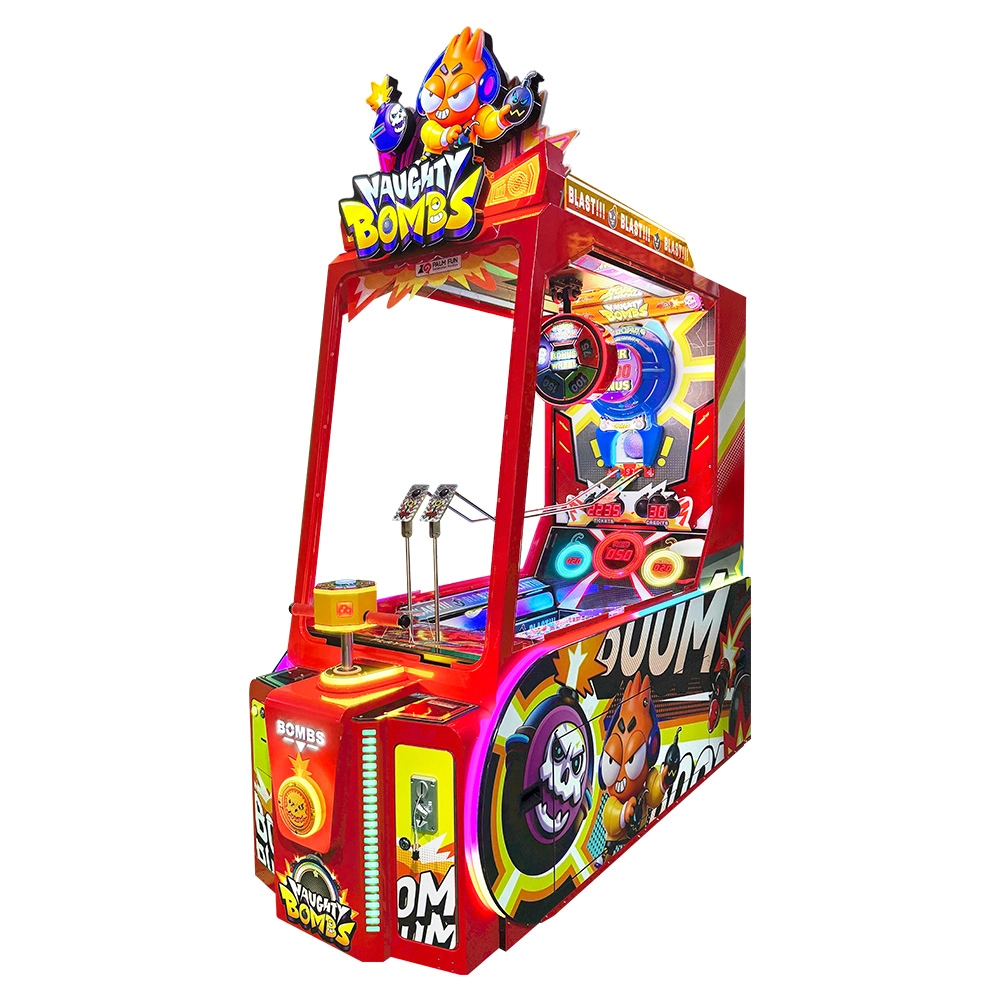
Naughty Bombs Ball Drop Redemption Arcade Game Machine
Naughty Bombs is a ball-drop redemption arcade game featuring rolling-ball gameplay, colored targets, ticket prizes, surprise bonus rewards, lighting and sound effects. Players use timing to launch and drop balls toward colored target areas. The product is presented for arcade, family entertainment center and other entertainment-venue projects, with customizable 110V / 220V AC voltage configuration.
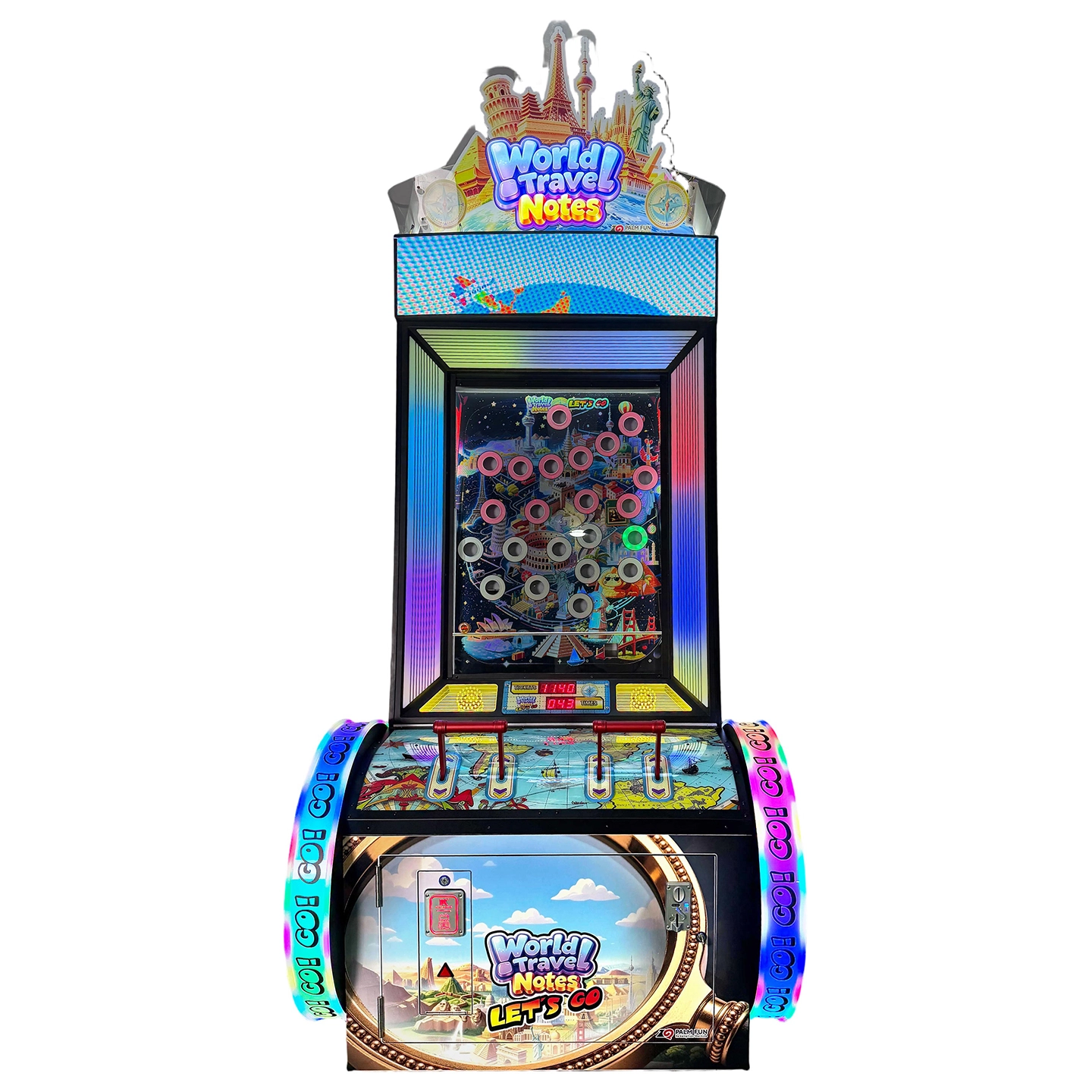
World Travel Notes – Balance Ball Redemption Arcade Game
World Travel Notes is a skill-based balance ball redemption game with a fun world-travel theme. Players use two handles to control the balance bar and guide the ball into each target hole. As the game progresses, the targets become more challenging, leading players toward the final grand prize. With colorful world-travel graphics, dynamic RGB lighting, a live score display, and progressive difficulty, World Travel Notes is designed to attract attention and encourage repeat play in arcades, FECs, shopping malls, and other entertainment venues.
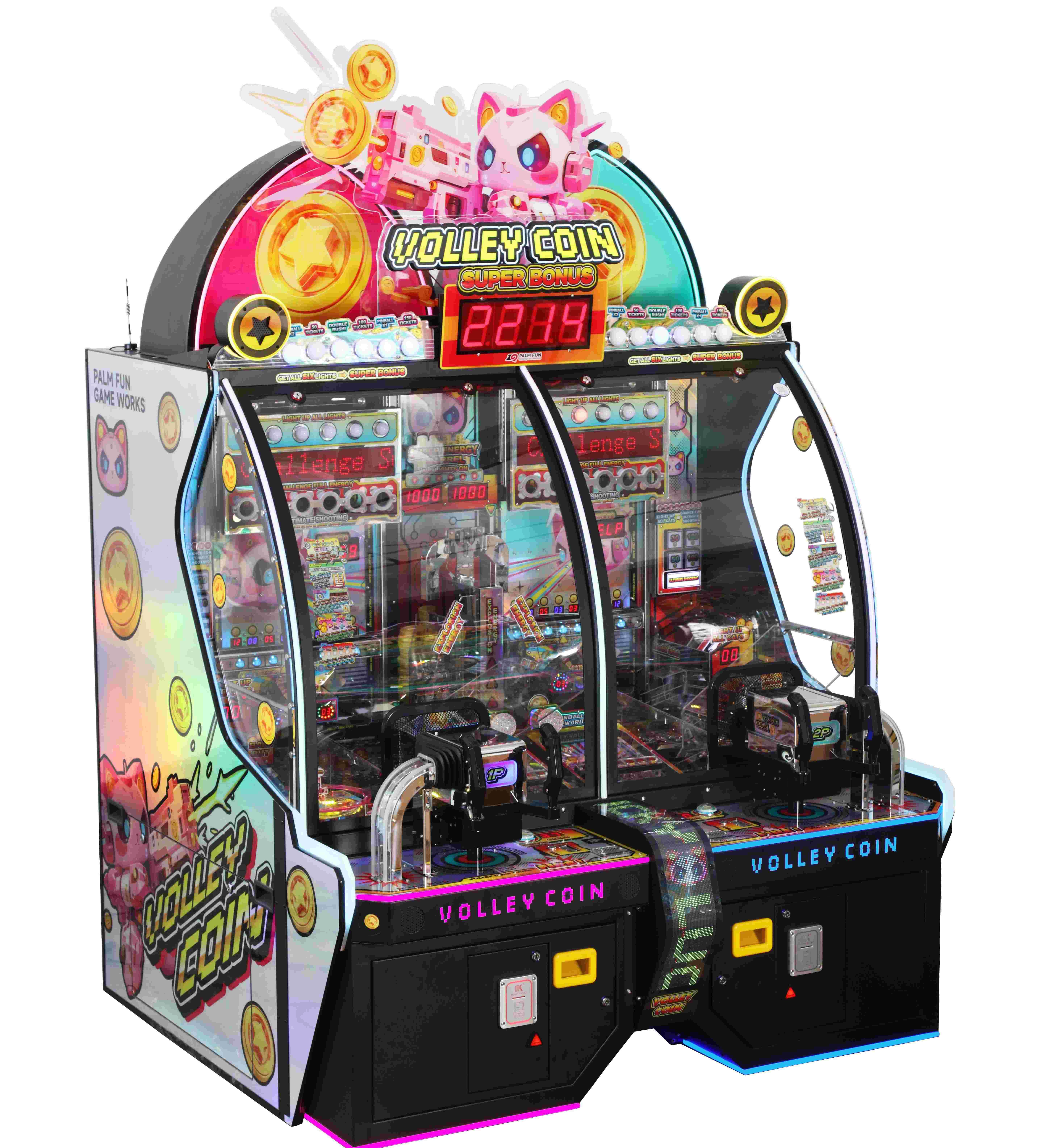
Hybrid Shooting & Pushing | Coin Pusher Arcade Ticket Redemption Machine
Volley Coin is an innovative arcade ticket redemption machine developed by Palm Fun Electronics. Combining the excitement of a fast-paced token shooter game with the proven earning power of a traditional coin pusher machine, Volley Coin offers a fresh and engaging gameplay experience that appeals to players of all ages.
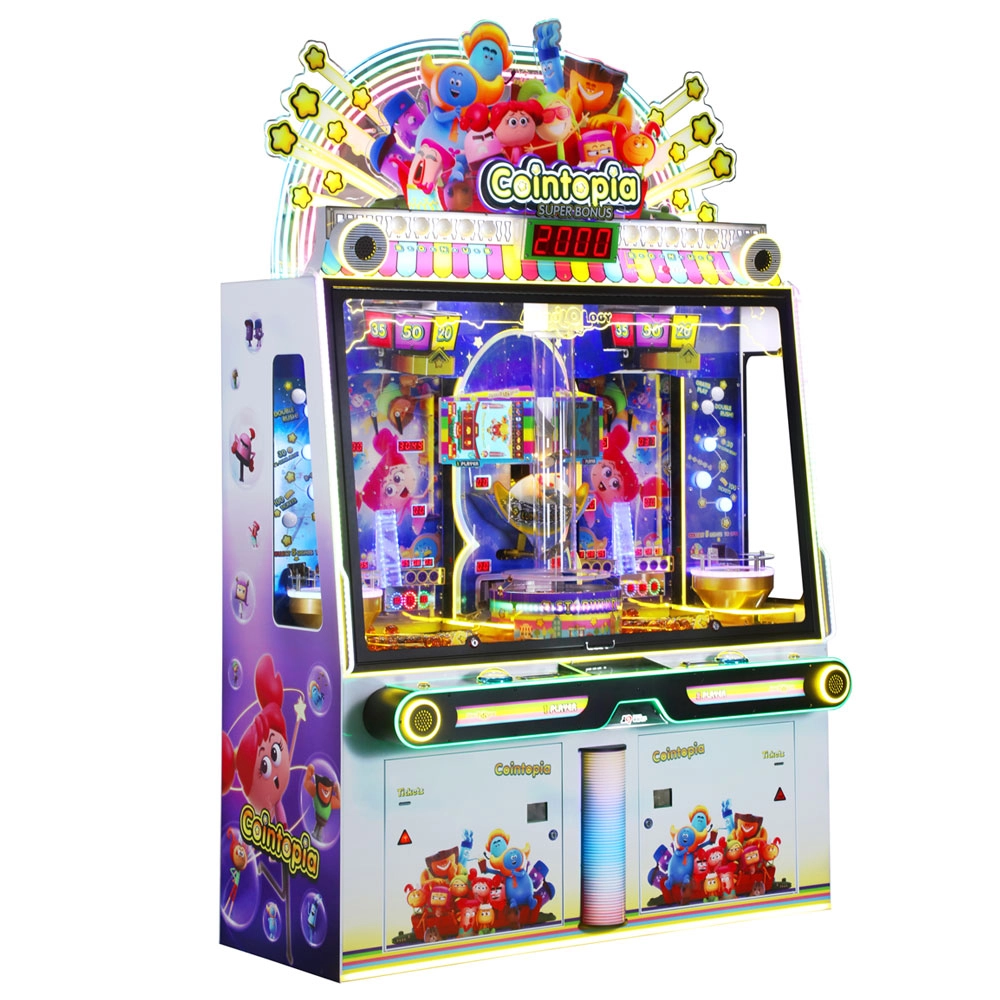
COINTOPIA, Have Fun Together With The Zodiac Buddies in an Utopia
COINTOPIA by PALM FUN is an exciting redemption game machine where players enjoy fun with zodiac buddies in a utopia setting. This ticket redemption machine offers engaging gameplay and rewarding experiences, perfect for family entertainment centers and arcades seeking top-quality redemption games.
Copyright © 2026 PALM FUN All Rights Reserved. | Privacy Policy • Terms and Conditions | Sitemap
palmfunarcade
Palm Fun Arcade Game
Whatsapp: +8618126837443
PalmFun Arcade
PalmFun_Arcade
PALM FUN Redemption Machine