






The pirate coin pusher game machine Cost Guide | PALM FUN Ultimate Insights
- How the Arcade Equipment Market Shapes Pricing
- Cabinet size, player capacity, and commercial duty
- Theme, materials, and production choices
- What to verify in a supplier quote
- Price Ranges, Cost Breakdown, and Value
- Illustrative equipment tiers
- Total installed cost and hidden expenses
- Quality versus purchase price
- Budget Planning, ROI, and Purchase Optimization
- Model revenue using venue-specific assumptions
- Ways to control the purchase budget
- Procurement checks before signing
- Frequently Asked Questions
A pirate coin pusher game machine may cost approximately $3,000 to more than $40,000 before delivery, installation, and operating expenses; the final price depends on cabinet scale, player capacity, construction, electronics, payment options, and custom theming. For B2B buyers, the useful comparison is total cost of ownership: purchase price plus freight, import charges where applicable, site preparation, payment setup, prize inventory, maintenance, and downtime. The figures below are indicative USD budgeting ranges rather than a universal price list; request a written, itemized quote for your market, configuration, and delivery terms.
How the Arcade Equipment Market Shapes Pricing
Cabinet size, player capacity, and commercial duty
Size is one of the first cost drivers. A compact cabinet designed for a limited footprint generally uses less material and has fewer illuminated or interactive features than a large, multi-player attraction. A larger pirate coin pusher game machine may accommodate more players at once, include a broader playfield, and need a stronger frame, more complex coin delivery, and additional service access. Those differences can raise the initial cost, but they may also make the machine more suitable for a high-traffic family entertainment center, bowling venue, or amusement location.
Ask suppliers to state the intended operating duty and the service life assumptions behind their warranty. A machine intended for continuous commercial play should be assessed differently from a low-cost unit built for occasional use. Review access to the coin mechanism, sensors, motors, wiring, and commonly replaced components. A cabinet that is easier to inspect and repair can reduce labor and downtime over its useful life, even if its purchase price is higher.
Theme, materials, and production choices
Pirate styling can range from applied graphics to custom molded details, sculpted features, themed lighting, and a bespoke cabinet finish. Custom art, localized language, branded content, and special colors may add design and production charges or increase minimum order quantities. Buyers should ask whether artwork setup, sample approval, and future replacement panels are included. Confirm that the quoted machine is the same configuration shown in product images; promotional images may show optional accessories or upgraded lighting.
Materials and finish affect both appearance and resilience. Inspect the cabinet construction, playfield surfaces, protective panels, and access doors, and request close-up images or a pre-shipment inspection process. Safety and risk-management expectations vary by jurisdiction and product type; ISO 12100 principles for machinery risk assessment offer a useful general reference for thinking about hazards and safeguards, but they do not replace local legal review or machine-specific certification.
What to verify in a supplier quote
A low headline price is not comparable with a delivered, tested, and supported offer unless the inclusions match. Request a line-item quote covering the exact model, included game features, payment hardware, warranty period, spare parts, packaging, and delivery terms. Clarify whether the price is EXW, FOB, CIF, or delivered to your site; these trade terms allocate costs and responsibilities differently. The U.S. International Trade Administration’s Incoterms guidance is a helpful starting point for understanding the distinction, though buyers should confirm the specific contract wording with their logistics provider.
For imported equipment, confirm the tariff classification and applicable duties with a customs broker rather than assuming a general rate. The U.S. International Trade Commission’s Harmonized Tariff Schedule is an official U.S. tariff reference; other destinations have their own customs systems and rules. Also confirm the destination voltage, plug type, language, coin or token configuration, and required documentation before authorizing production.
Price Ranges, Cost Breakdown, and Value
Illustrative equipment tiers
The following ranges are practical planning bands for comparing configurations, not audited industry averages. Actual offers vary by country of manufacture, order quantity, exchange rates, customization, shipping terms, and current component availability. A pirate coin pusher game machine quote should be evaluated against a detailed specification and not against a broad category label alone.
| Configuration | Illustrative equipment price (USD) | Common considerations |
|---|---|---|
| Entry-level or compact commercial unit | $3,000–$8,000 | Smaller footprint, simpler theming, fewer optional features; verify commercial-duty design and service access. |
| Mid-range themed cabinet | $8,000–$18,000 | More substantial cabinet and lighting, potentially more player positions or payment choices. |
| Large or High Quality attraction | $18,000–$40,000+ | Large-format presentation, extensive customization, advanced effects, or complex multi-player configuration. |
| Delivery, setup, and commissioning | Allow approximately $500–$5,000+ | Highly dependent on destination, freight method, access conditions, installation scope, and import requirements. |
Delivery and setup are deliberately shown as a broad allowance: a nearby shipment and a straightforward placement are not comparable with an international shipment requiring customs clearance, lift-gate delivery, rigging, or technician travel. Ask whether the carrier delivers to the curb, loading dock, or final operating position. For a new location, budget separately for electrical work, floor protection, network access if needed, and any venue-specific inspection.
Total installed cost and hidden expenses
Build a landed-cost worksheet before approving a purchase. Include the machine, freight, insurance, import duties and taxes where applicable, brokerage, unloading, assembly, payment-system configuration, and initial spare parts. Payment hardware can be included, optional, or incompatible with local cashless systems; obtain the exact make and model and confirm who handles transaction processing. A buyer should also clarify whether coins, tokens, tickets, redemption components, or prize accessories are included.
Plan for operating costs after opening. Prize inventory and replenishment can materially affect gross margin, while cleaning, repairs, payment processing, local labor, rent, revenue share, and utilities influence net contribution. A sensible internal reserve for maintenance may be modeled as a percentage of equipment cost, but the right amount depends on play volume, parts availability, warranty coverage, and staff capability. Treat any reserve as a budgeting assumption—not a guarantee of actual annual expenditure.
Quality versus purchase price
Compare machines on expected cost per operating hour, ease of service, warranty terms, and the availability of replacement parts—not just initial price. Ask for warranty exclusions, response times, remote troubleshooting arrangements, and the process for shipping a failed component. A warranty with unclear labor or freight coverage may leave the operator paying meaningful costs even when a part is technically covered.
Trade-show and amusement operators can use resources from IAAPA, the global association for the attractions industry, to explore sector resources and operational topics. Association membership or general industry information does not certify a specific machine, so independently verify supplier credentials, references, safety documentation, and local compliance. Request a demonstration or operating video showing the actual model, and, where practical, inspect a sample before placing a large order.
Budget Planning, ROI, and Purchase Optimization
Model revenue using venue-specific assumptions
Revenue depends on location, pricing, visitor mix, machine visibility, play experience, and seasonality. Build a conservative model with paid plays per day, price per play, open days, prize cost, venue share, payment fees, maintenance, and downtime. Do not use a supplier’s best-case play-volume claim as a forecast unless you can validate it against comparable locations and your own footfall.
For illustration, suppose a machine is purchased and delivered for $15,000, earns 60 paid plays per day at $1 each, and operates 30 days per month. That produces $1,800 in monthly gross receipts before expenses. If prizes consume 20% of receipts, a venue share consumes 30% of the remaining amount, and an additional $100 is reserved for maintenance and downtime, the modeled monthly contribution is about $908. A simple payback estimate is then roughly 16.5 months ($15,000 divided by $908). This is only a scenario: taxes, labor, rent, financing, seasonality, and actual play volume can make the result materially different.
Ways to control the purchase budget
Match the machine to the site instead of paying for specifications the location cannot monetize. A compact pirate coin pusher game machine can be the better choice where floor space is constrained, while a High Quality unit may be justified where it can serve as a visible anchor attraction. Get comparable quotes using a shared specification sheet that states dimensions, player capacity, included features, payment requirements, warranty, delivery destination, and commissioning scope.
Consider the full cost of customization before requesting bespoke artwork or electronics. Standard colors and proven configurations may reduce setup complexity and lead time, while a unique theme can support a stronger venue identity if the additional investment has a clear commercial purpose. Ask suppliers to separate one-time design charges from per-unit costs and to explain whether future orders can reuse the approved artwork.
Procurement checks before signing
Before paying a deposit, verify the seller’s legal identity, bank details, production schedule, acceptance criteria, and cancellation terms. Specify the model and options in the contract, including voltage, payment configuration, language, finish, accessories, packaging, and documentation. Agree on how defects will be recorded, who pays return freight, and whether replacement parts or remote support are available in your region.
For multiple units, use a staged purchasing plan when possible: inspect one production sample or first article, approve it against written criteria, and only then release the balance of the order. Confirm freight insurance and the process for documenting transit damage at delivery. A careful buying process will not eliminate operational risk, but it can prevent avoidable surprises that make an apparently inexpensive pirate coin pusher game machine costly to operate.
Contact our team to discuss your site requirements and request a tailored quote for a pirate coin pusher game machine, including configuration, delivery, and support options.
Frequently Asked Questions
How much does a pirate coin pusher game machine cost?
Illustrative equipment prices range from about $3,000 to $8,000 for an entry-level or compact commercial unit, $8,000 to $18,000 for a mid-range themed cabinet, and $18,000 to more than $40,000 for a large or premium attraction. These are planning ranges, not guaranteed market prices; delivery, customization, and configuration affect the final quote.
What costs should I add to the machine price?
Budget for freight, insurance, import duties and taxes where applicable, customs brokerage, unloading, installation, payment-system setup, initial spare parts, and site preparation. Also account for ongoing prizes, payment fees, labor, repairs, and any venue revenue share.
Does the quoted price usually include delivery and installation?
Not necessarily. Ask whether the offer is EXW, FOB, CIF, or delivered to your site, and clarify whether unloading, final placement, assembly, and commissioning are included. Delivery costs depend on distance, freight method, access, and import requirements.
How can I estimate payback for an arcade coin pusher?
Estimate paid plays per day multiplied by price per play and operating days, then subtract prize costs, venue share, payment fees, maintenance, and downtime. Divide the total installed investment by the resulting monthly contribution. Use conservative, location-specific assumptions; the example in this guide is illustrative, not a forecast.
What should I check before paying a deposit?
Confirm the supplier’s identity, exact model and options, delivery terms, production schedule, warranty exclusions, support arrangements, acceptance criteria, and defect or transit-damage procedures. Put voltage, payment configuration, finish, accessories, documentation, and spare-parts terms in writing.
Is a more expensive pirate coin pusher game machine always better value?
No. A higher price may reflect larger capacity, stronger construction, extensive theming, or additional features, but value depends on the site, expected play volume, serviceability, warranty, and total operating cost. Compare equivalent specifications and choose features that have a clear operational or commercial purpose.
Recommended for you
How to Choose a Roll Ball Arcade Game Supplier
PALM FUN best professional redemption arcade Manufacturers supplier brand
Top coin pusher machine in vegas Manufacturers and suppliers
Tips for Wholesale table top arcade machine in China
FAQs
How to select and match redemption machines?
2. the number of redemption game configuration: according to the characteristics of redemption machine, the proportion of redemption game configuration generally accounts for 30±5% of the whole field.
3. there are a lot of equipment on the market now, but less innovative, so the choice should be targeted in management and planning. We can divide redemption machines into children's, adults's, families, etc., according to different standards, with complete varieties and many styles, so as to give guests more choices and more changes. Specific can refer to the following:
① Inserting tokens in high frequency (mainly in mechanical redemption machines)
② Skill based games (mainly in mechanical redemption machines)
③ Games with edutainment significance (mainly in video redemption machines)
④ Entertaining games (mainly in video redemption machines)
Research & Development, how hard is the birth of one new redemption machines?
How to place the redemption machines in a right place?
1,Ensure that the placement and layout of the equipment are distinct and centralized.
2,Keep noise levels low and avoid having a line of sight that spans too far to prevent players from easily taking in everything, which may slow down their movement.
3,Avoid clustering high-ticket payout machines and disperse machines of the same style.
4,Mix popular machines with less popular ones and avoid placing all popular machines together.
How to choose the exchange gifts of the tickets(reward points)?
2. Gifts should be diverse. This refers to the variety of items available, providing players with more choices. Everyone's preferences are different, especially adults who have higher expectations for gifts. The venue should strive to meet the diverse needs of these players.
3. Gifts should be fashionable. The younger generation that follows trends is very interested in the hottest items of the moment. If the venue can keep up with the latest trends, it can attract the majority of consumers.
4. Gifts should be innovative. Especially during holidays and seasons, it's a good idea to try out new approaches, creating a competitive advantage with unique offerings. For example, the current trend of combining pop culture and blind box culture.
What is the character of mechanical redemption machine?
You may also like
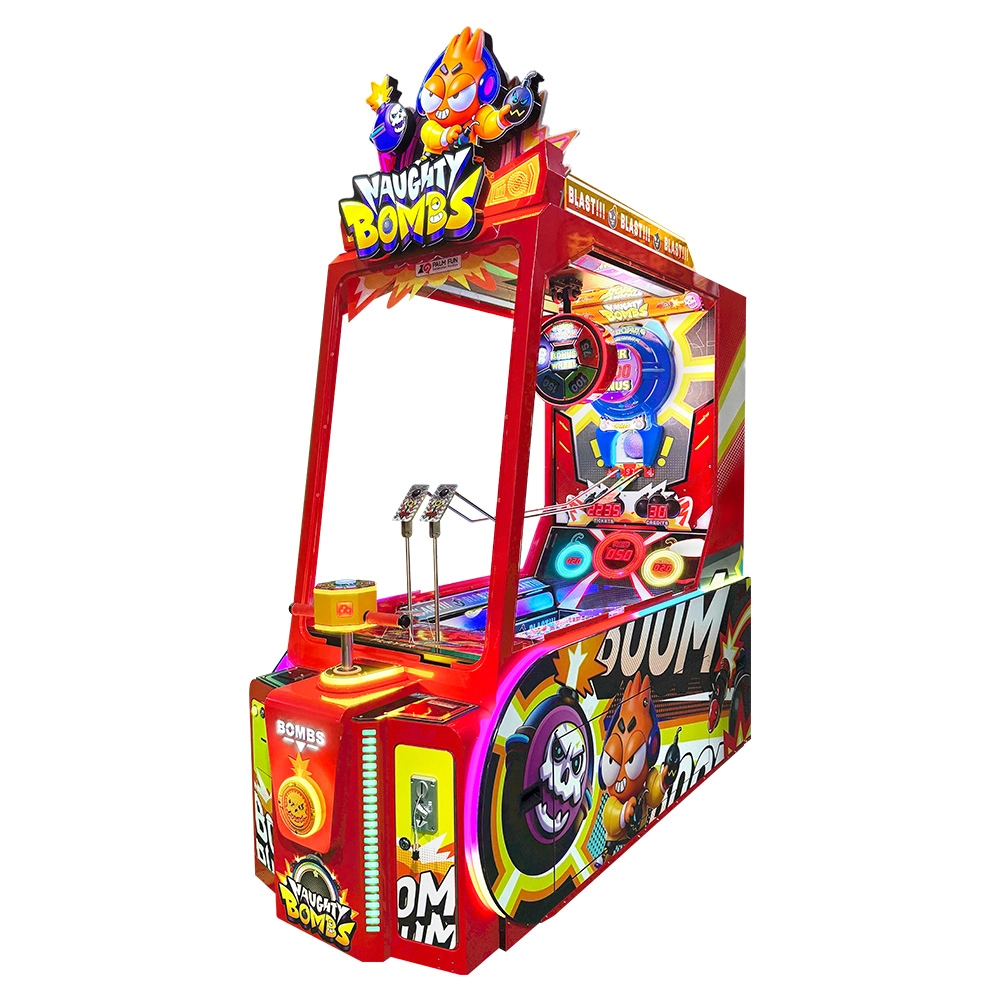
Naughty Bombs Ball Drop Redemption Arcade Game Machine
Naughty Bombs is a ball-drop redemption arcade game featuring rolling-ball gameplay, colored targets, ticket prizes, surprise bonus rewards, lighting and sound effects. Players use timing to launch and drop balls toward colored target areas. The product is presented for arcade, family entertainment center and other entertainment-venue projects, with customizable 110V / 220V AC voltage configuration.
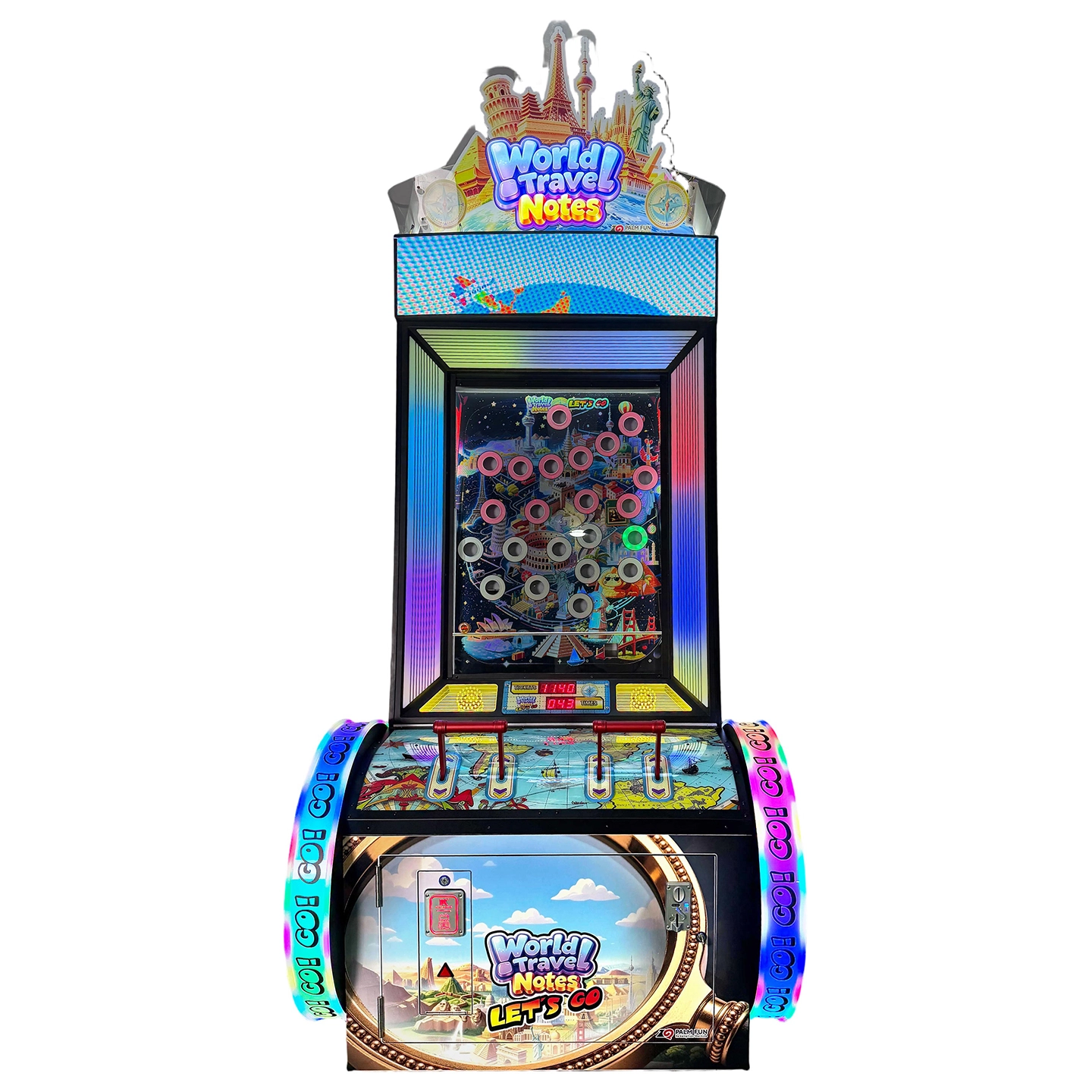
World Travel Notes – Balance Ball Redemption Arcade Game
World Travel Notes is a skill-based balance ball redemption game with a fun world-travel theme. Players use two handles to control the balance bar and guide the ball into each target hole. As the game progresses, the targets become more challenging, leading players toward the final grand prize. With colorful world-travel graphics, dynamic RGB lighting, a live score display, and progressive difficulty, World Travel Notes is designed to attract attention and encourage repeat play in arcades, FECs, shopping malls, and other entertainment venues.
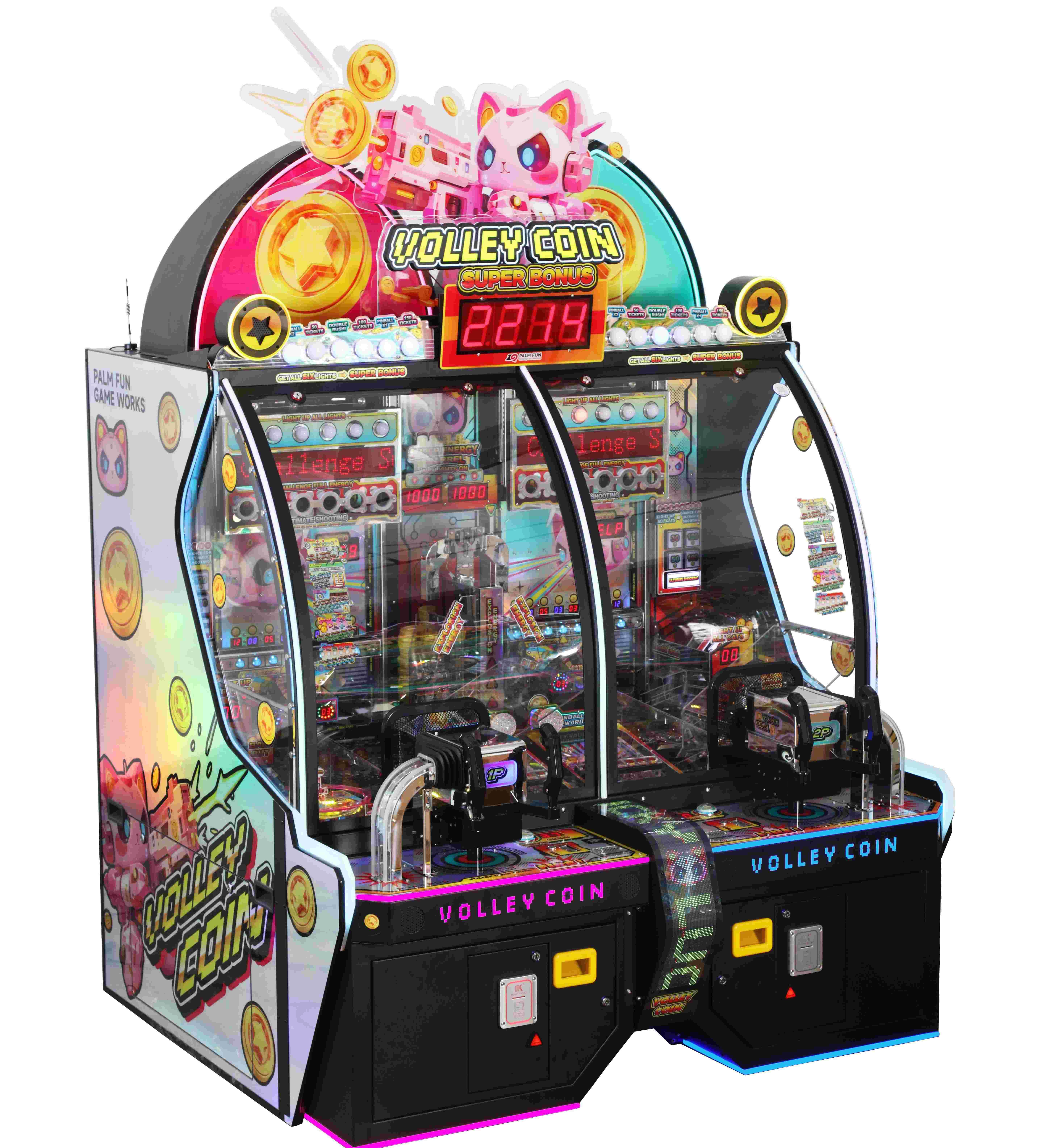
Hybrid Shooting & Pushing | Coin Pusher Arcade Ticket Redemption Machine
Volley Coin is an innovative arcade ticket redemption machine developed by Palm Fun Electronics. Combining the excitement of a fast-paced token shooter game with the proven earning power of a traditional coin pusher machine, Volley Coin offers a fresh and engaging gameplay experience that appeals to players of all ages.
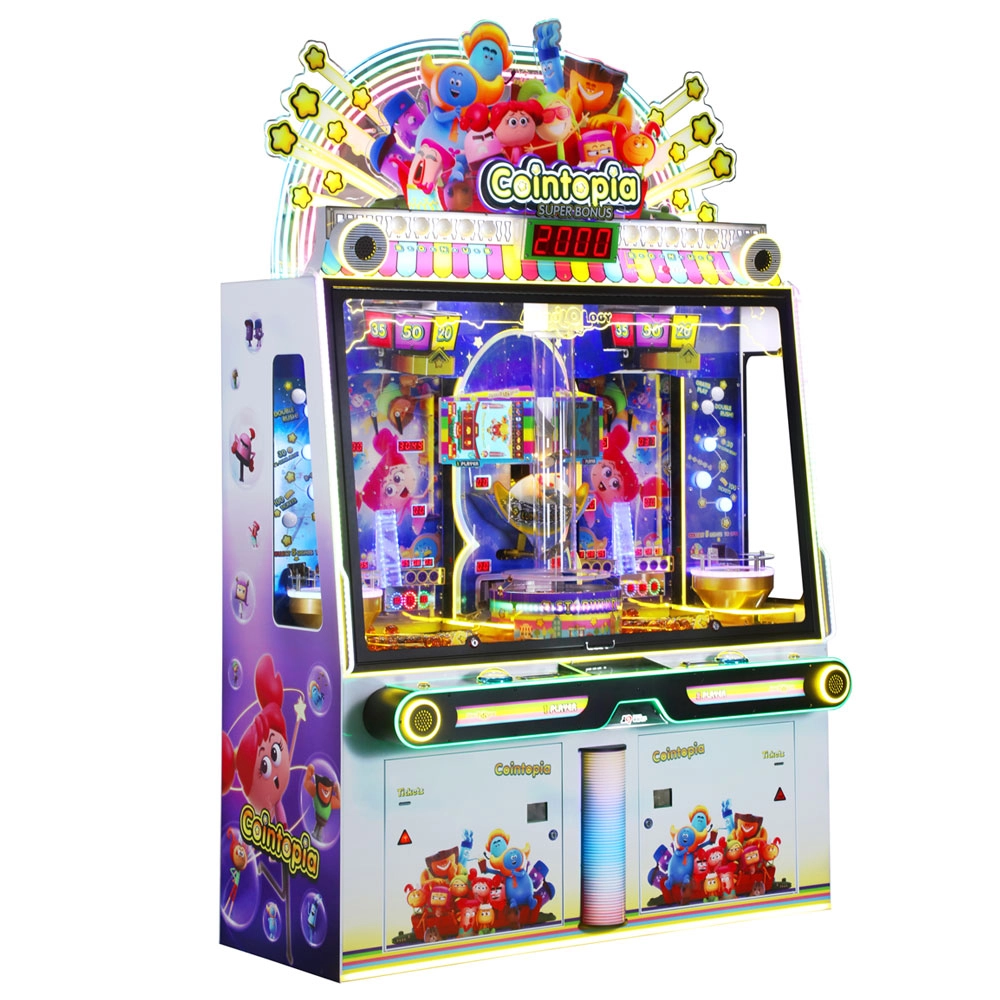
COINTOPIA, Have Fun Together With The Zodiac Buddies in an Utopia
COINTOPIA by PALM FUN is an exciting redemption game machine where players enjoy fun with zodiac buddies in a utopia setting. This ticket redemption machine offers engaging gameplay and rewarding experiences, perfect for family entertainment centers and arcades seeking top-quality redemption games.
Copyright © 2026 PALM FUN All Rights Reserved. | Privacy Policy • Terms and Conditions | Sitemap
palmfunarcade
Palm Fun Arcade Game
Whatsapp: +8618126837443
PalmFun Arcade
PalmFun_Arcade
PALM FUN Redemption Machine