







Pre-order Sample Testing Checklist for Coin Pusher Suppliers
- How to Evaluate a Coin Pusher Prototype Before Purchase
- Confirm the sample matches the commercial specification
- Inspect the cabinet, playfield, and player contact areas
- Run repeatability tests instead of relying on a single demonstration
- Mechanical, Electrical, and Redemption Function Checklist
- Measure the moving mechanism and operating cycle
- Verify electrical safety and service access
- Validate coins, tokens, tickets, and accounting logic
- Commercial Validation, Documentation, and Factory Acceptance
- Test the player experience and venue fit
- Review serviceability and ownership cost
- Use a signed acceptance protocol
- Why PALM FUN Is a Practical Supplier Evaluation Partner
- Integrated development and manufacturing capability
- Product range aligned with venue and distribution requirements
- International experience and long-term support
- Frequently Asked Questions
- What should be tested before ordering coin pusher machines in bulk?
- How many operating cycles are appropriate for a supplier sample?
- How can buyers verify ticket payout accuracy?
- What documents should a coin pusher supplier provide?
- Why is serviceability important when comparing redemption game machines?
- Can a sample approval guarantee every production unit will be identical?
Pre-order sample testing for a coin pusher machine should verify mechanical reliability, electrical safety, player engagement, ticket or prize accuracy, serviceability, documentation, and production consistency before a buyer approves a larger order. For arcade operators, family entertainment centers, distributors, and investors, a sample is not merely a demonstration unit; it is evidence that the proposed redemption game machine can perform repeatedly under commercial operating conditions. A structured inspection should therefore combine measured tests, simulated player use, safety checks, commercial validation, and written corrective actions. This approach helps buyers compare suppliers objectively, protect capital expenditure, and select arcade games machines that support stable revenue over the intended operating life.
How to Evaluate a Coin Pusher Prototype Before Purchase
Confirm the sample matches the commercial specification
Before testing begins, the buyer should freeze a written specification covering cabinet dimensions, voltage and frequency, coin or token requirements, display configuration, lighting, sound, moving assemblies, ticket dispenser, prize shelf, branding, and optional features. The tested sample must have a traceable model number and revision status. Photographs, videos, or a sales presentation should not replace a physical comparison against the quotation and approved drawings.
Record the manufacturer, sample serial number, production date, firmware version, component list, and declared rated power. Any substitution involving motors, sensors, power supplies, control boards, wiring, acrylic panels, or structural materials should require written approval. This matters because a highly attractive prototype may contain upgraded components that are not included in the mass-production configuration.
Inspect the cabinet, playfield, and player contact areas
Examine the frame for uneven gaps, sharp edges, unstable feet, loose fasteners, exposed wiring, poor paint adhesion, and vibration during operation. Acrylic or glass surfaces should be clear, securely retained, and free from cracks or stress marks. Doors, locks, hinges, coin access panels, service openings, and prize trays should open smoothly while resisting unauthorized access.
Pay particular attention to the pusher plate, coin bed, side walls, ramps, drop zones, and collection areas. Coins should not routinely bridge across corners or become trapped beneath moving parts. The playfield should provide a predictable flow without requiring an operator to reposition tokens after ordinary use. For a family entertainment venue, accessible surfaces must also be easy to clean, because dust, syrup, fingerprints, and metal debris can affect sensors and moving mechanisms.
Run repeatability tests instead of relying on a single demonstration
A supplier demonstration normally shows the best operating sequence. Buyers should conduct repeated cycles with the intended coin, token, or card-triggered input. Measure successful starts, motor response, pusher travel, coin movement, ticket release, sound activation, and recovery after an interruption. Test the equipment when the playfield is lightly loaded, normally loaded, and heavily loaded within the supplier’s stated limits.
Document jams, missed inputs, irregular movement, delayed tickets, abnormal noise, heat buildup, and control-board resets. A useful sample report identifies the test condition, number of cycles, failure count, suspected cause, and corrective action. The purpose is not to demand a laboratory-level reliability claim from a sample but to reveal design weaknesses before they become service calls across multiple locations.
Mechanical, Electrical, and Redemption Function Checklist
Measure the moving mechanism and operating cycle
Use a stopwatch or test logger to record cycle time, idle behavior, start-up response, and recovery after a jam. Confirm that the motor, gearbox, cam, belt, rail, and pusher assembly remain aligned throughout the test. Listen for grinding, repeated impact, belt slip, or increasing noise after continuous operation. Check whether fasteners loosen and whether lubrication points are identified in the maintenance manual.
Where the design includes ball drops, shooting elements, rotating parts, or interactive controls, test each input independently and in combination. The operator should verify that the control panel remains responsive and that simultaneous player actions do not create unintended states. Product examples such as the Coin Pusher Arcade Ticket Redemption Machine and the Larva Series Coin Pusher Arcade should be evaluated against the same operating criteria rather than judged only by cabinet appearance.
Verify electrical safety and service access
Inspect the mains inlet, fuse or circuit protection, grounding path, power supply enclosure, cable routing, connectors, strain relief, and emergency isolation procedure. The nameplate should clearly state electrical ratings. Buyers should request applicable test records and assess whether the wiring layout allows technicians to replace common parts without dismantling the entire cabinet.
Electrical conformity depends on the destination market and product configuration. A supplier should identify the standards and certification pathway used for the buyer’s region rather than applying a generic logo to every order. The ISO 9001 quality management standard is useful for assessing process control, but it is not itself a product safety certificate. Buyers should distinguish factory quality-system evidence from market-specific electrical compliance.
Validate coins, tokens, tickets, and accounting logic
Test every accepted denomination or token type stated in the specification. Confirm rejection of incorrect objects, reliable credit registration, and correct behavior after power interruption. If the machine supports a ticket dispenser, run a large quantity of ticket cycles and compare the programmed payout with the physical count. Inspect the ticket path for curling, tearing, double feeding, and sensor errors.
Check audit menus, counters, free-play settings, operator keys, reset procedures, and access permissions. The accounting system should allow operators to distinguish plays, tickets issued, errors, and maintenance events where such functions are advertised. If a prize or ticket ratio is configurable, obtain the final parameter table in writing and confirm that unauthorized changes are restricted.
| Test area | Sample procedure | Evidence to retain | Commercial risk controlled |
|---|---|---|---|
| Mechanical movement | Repeat normal and heavy-load cycles; record jams and abnormal noise | Cycle log, video, corrective-action report | Downtime and field service cost |
| Electrical system | Inspect ratings, grounding, protection, connectors, and heat after operation | Photos, test records, wiring diagram | Safety incidents and import delays |
| Input and payout | Test coins, tokens, controls, tickets, and recovery after interruption | Count sheet, firmware revision, settings record | Revenue leakage and customer disputes |
| Durability | Conduct extended operation with planned inspections | Maintenance observations and failure log | Premature component replacement |
| Documentation | Review manuals, parts list, troubleshooting, and packing instructions | Approved document package | Slow installation and poor serviceability |
Commercial Validation, Documentation, and Factory Acceptance
Test the player experience and venue fit
Technical performance alone does not establish commercial value. Place the sample in a simulated arcade layout and evaluate visibility from the customer approach, control height, lighting balance, sound level, queue behavior, and ease of cleaning. In a family entertainment center, the machine should be understandable without lengthy staff instruction. Confirm that the visual theme complements nearby redemption games, video cabinets, racing products, and a pinball arcade attraction without creating excessive noise or obstructing circulation.
Ask representative users to explain the objective after a brief glance, operate the controls, and identify how tickets or prizes are earned. This informal usability check can reveal confusing instructions, poor button placement, glare, or a payout presentation that fails to communicate value. Operators should also evaluate whether the unit encourages repeat play without creating a perception of unfair or unexplained outcomes.
Review serviceability and ownership cost
Request a recommended spare-parts list for the first operating period, including motors, sensors, belts, fuses, buttons, ticket modules, power supplies, control boards, locks, and cosmetic panels. Confirm lead times, warranty coverage, exclusions, remote troubleshooting procedures, and whether replacement parts are proprietary. A low purchase price can become expensive when ordinary wear parts are unavailable or require international shipment for every minor repair.
Estimate total cost of ownership using purchase price, freight, duties, installation, consumables, ticket expense, electricity, preventive maintenance, spare parts, and expected downtime. The Occupational Safety and Health Administration machine-guarding guidance provides a useful reference for identifying accessible hazards, although local regulations remain controlling. Buyers should also review the destination market’s requirements for electrical equipment, consumer safety, fire protection, and amusement operation.
Use a signed acceptance protocol
The pre-order approval should define pass and fail criteria, sample retention, approved materials, packaging requirements, inspection rights, and the process for closing nonconformities. A factory acceptance test can include cabinet inspection, functional operation, endurance sampling, ticket-count verification, electrical checks, and final configuration review. Each open issue should receive an owner and deadline before production release.
Packaging deserves its own inspection. Check internal bracing, moisture protection, shock protection, spare-part packing, lifting points, carton markings, and installation instructions. The ISO 9001 quality management principles emphasize documented processes and continual improvement; buyers can apply the same logic by requiring inspection records and controlled corrective actions rather than relying on informal assurances.
Why PALM FUN Is a Practical Supplier Evaluation Partner
Integrated development and manufacturing capability
PALM FUN was founded in 2015 and specializes in high-quality mechanical lottery machines, coin pusher machines, and raffle machines. Our work covers research and development, industrial design, production, and sales of innovative gaming and lottery equipment. This integrated structure helps project owners discuss cabinet design, mechanism performance, control logic, branding, and production feasibility with a coordinated supplier rather than managing disconnected vendors.
Our factory covers 3,000 square meters and includes a skilled development engineering team focused on advancing technology and improving user experience. During sample evaluation, our engineering approach is centered on practical operating questions: how the mechanism performs under repeated play, how technicians access wear parts, how the control system responds to interruptions, and how the final design can be transferred consistently into production.
Product range aligned with venue and distribution requirements
Our product portfolio includes coin pusher machine models, mechanical lottery equipment, raffle machines, redemption games, and arcade machines for sale. Buyers can compare cabinet formats and gameplay concepts for family entertainment centers, amusement arcades, shopping malls, resorts, and distributor networks. Where a project requires complementary attractions, our single player arcade product and other amusement formats can be considered alongside the main ticket-redemption installation.
For procurement teams, product breadth is valuable when it supports a coherent venue mix rather than isolated purchases. A supplier that understands mechanical play, ticket redemption, operator access, and visual merchandising can help reduce integration friction during rollout. Buyers can review PALM FUN’s broader capabilities through the High Quality Redemption Arcade MachinesManufacturer information page and compare the available solutions with the approved testing checklist.
International experience and long-term support
PALM FUN products are recognized and used in more than 50 countries worldwide. Our objective is to build long-term partnerships by providing comprehensive support and services for clients competing in a demanding gaming market. International distribution requires attention to packaging, documentation, voltage configuration, spare parts, communication, and after-sales response—not only the initial machine quotation.
Our vision is to become the world’s leading manufacturer of redemption game machines. Buyers should still apply independent due diligence, conduct sample testing, and define acceptance criteria. However, a supplier’s R&D capability, manufacturing infrastructure, export experience, and willingness to document corrective actions are meaningful indicators of project readiness. The ISO guidance on risk-based thinking offers a relevant framework for prioritizing the failures most likely to affect safety, revenue, delivery, or customer satisfaction.
Frequently Asked Questions
What should be tested before ordering coin pusher machines in bulk?
Buyers should test cabinet construction, moving parts, cycle repeatability, coin or token acceptance, ticket payout, controls, electrical protection, heat, noise, service access, documentation, packaging, and recovery after power interruption. The sample should match the proposed production specification and all unresolved issues should be recorded before approval.
How many operating cycles are appropriate for a supplier sample?
There is no universal cycle count for every cabinet design or market. A practical protocol should include repeated normal-load and heavy-load operation, planned inspections, and documented failures. The supplier and buyer should agree on the duration, load conditions, pass criteria, and treatment of any jam or component replacement before testing begins.
How can buyers verify ticket payout accuracy?
Run a known number of paid plays using the approved settings, collect every ticket, and compare the physical count with the programmed result. Repeat the test after a pause, a ticket roll change, and a power interruption where relevant. Record firmware, payout parameters, ticket type, and counter readings so the result can be reproduced.
What documents should a coin pusher supplier provide?
The standard document package should include a product specification, electrical ratings, user and maintenance manuals, wiring information, parts list, troubleshooting guide, warranty terms, packing instructions, test records, and applicable market-specific compliance evidence. Buyers should also request the final firmware version and a controlled list of approved substitutions.
Why is serviceability important when comparing redemption game machines?
Serviceability affects downtime, labor cost, spare-parts inventory, and the speed of recovery after a fault. Operators should confirm that technicians can reach common wear parts, identify error conditions, clean the playfield, replace tickets, and reset the system without excessive dismantling or specialized tools.
Can a sample approval guarantee every production unit will be identical?
A sample approval cannot eliminate all manufacturing variation, but it can reduce risk when supported by controlled drawings, approved bills of materials, inspection plans, and batch-level quality checks. Purchase terms should define how production units are compared with the approved sample and what remedy applies when an unauthorized deviation is found.
Recommended for you
OEM/ODM arcade pinball game machine Manufacturers and supplier in China
The Ultimate Guide to Winning Redemption Arcade Prizes
Discover Top Arcade Game Manufacturers in China | PALM FUN
Wholesale arcade game full size manufacturer and supplier in Asia
FAQs
Research & Development, how hard is the birth of one new redemption machines?
Effectively solve the pain points of the site and consume the amount of coins deposit.
So the stock quantity of pre-purchased tokens is an issue must be concerned, especially in the highly competitive current market. Only when the amusement park maintains a healthy cycle of token sales, consumption, stockpiling, consumption, and sales again can it ensure sustained growth and profitability.
How to guide the players to recognize tickets at the beginning setup of the redemption machines?
Never assume that your players already understand the purpose of lottery tickets(reward points). Even in venues that have been in operation for many years, it is still discovered during on-site interviews with players that many of them are not aware. Don't believe it? Just ask consumers at the venue. The machines, redemption counters, materials hung above the venue, and announcements by staff, among others, can all be channels for informing players about the purpose of lottery tickets(reward points). It is essential to do more promotion, create large displays and large cards, and clearly communicate the purpose of lottery tickets(reward points) to the players.
How to choose the exchange gifts of the tickets(reward points)?
2. Gifts should be diverse. This refers to the variety of items available, providing players with more choices. Everyone's preferences are different, especially adults who have higher expectations for gifts. The venue should strive to meet the diverse needs of these players.
3. Gifts should be fashionable. The younger generation that follows trends is very interested in the hottest items of the moment. If the venue can keep up with the latest trends, it can attract the majority of consumers.
4. Gifts should be innovative. Especially during holidays and seasons, it's a good idea to try out new approaches, creating a competitive advantage with unique offerings. For example, the current trend of combining pop culture and blind box culture.
How to guides works?
For example:
1. Proactively inquire and add tickets when a customer's machine is running low on tickets.
2. Assist players in organizing tickets when they are dispensed unevenly.
3. Offer storage tools such as storage bags and rubber bands when customers are arranging their tickets.
4. Provide free USB interfaces for charging near popular machines and rest areas.
5. Implement warm and clear reminders, guidance on ticket redemption, and directional signage, all designed to be straightforward. The more of these you provide, the more players will appreciate your thoughtfulness, without finding it bothersome.
You may also like
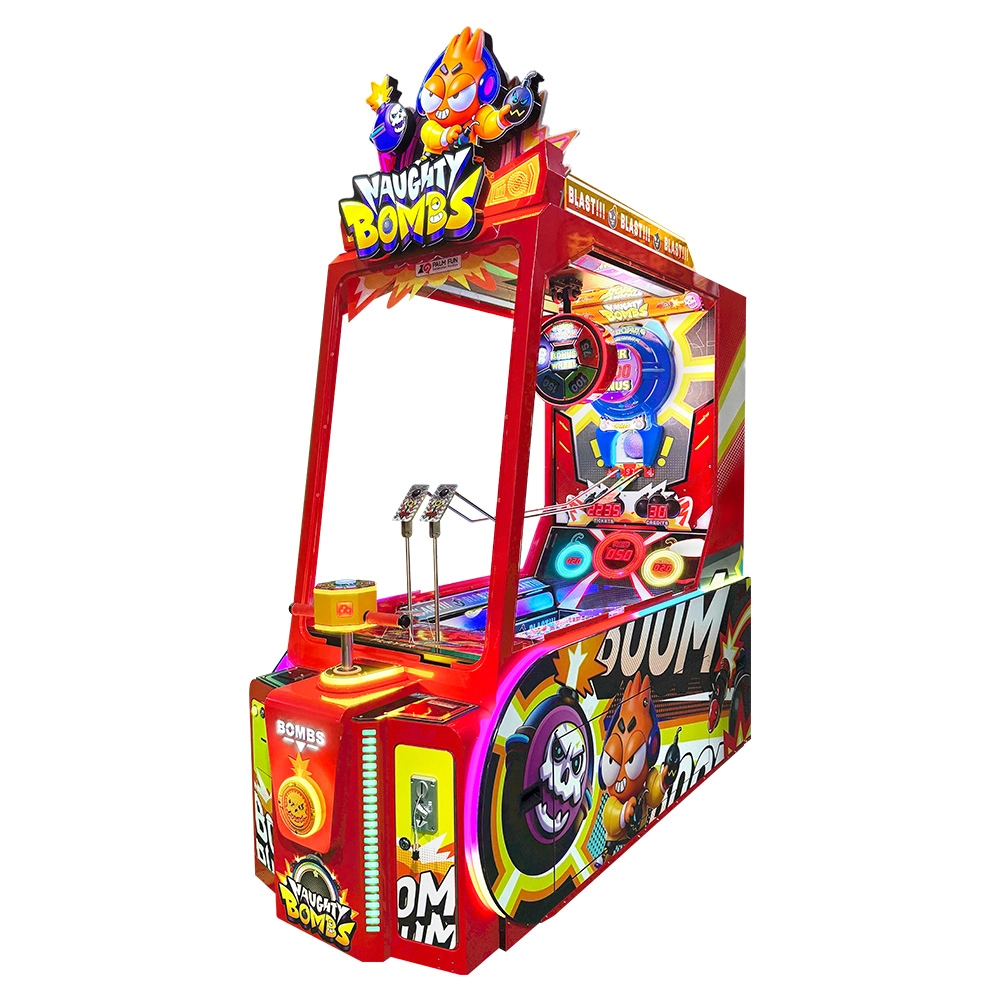
Naughty Bombs Ball Drop Redemption Arcade Game Machine
Naughty Bombs is a ball-drop redemption arcade game featuring rolling-ball gameplay, colored targets, ticket prizes, surprise bonus rewards, lighting and sound effects. Players use timing to launch and drop balls toward colored target areas. The product is presented for arcade, family entertainment center and other entertainment-venue projects, with customizable 110V / 220V AC voltage configuration.
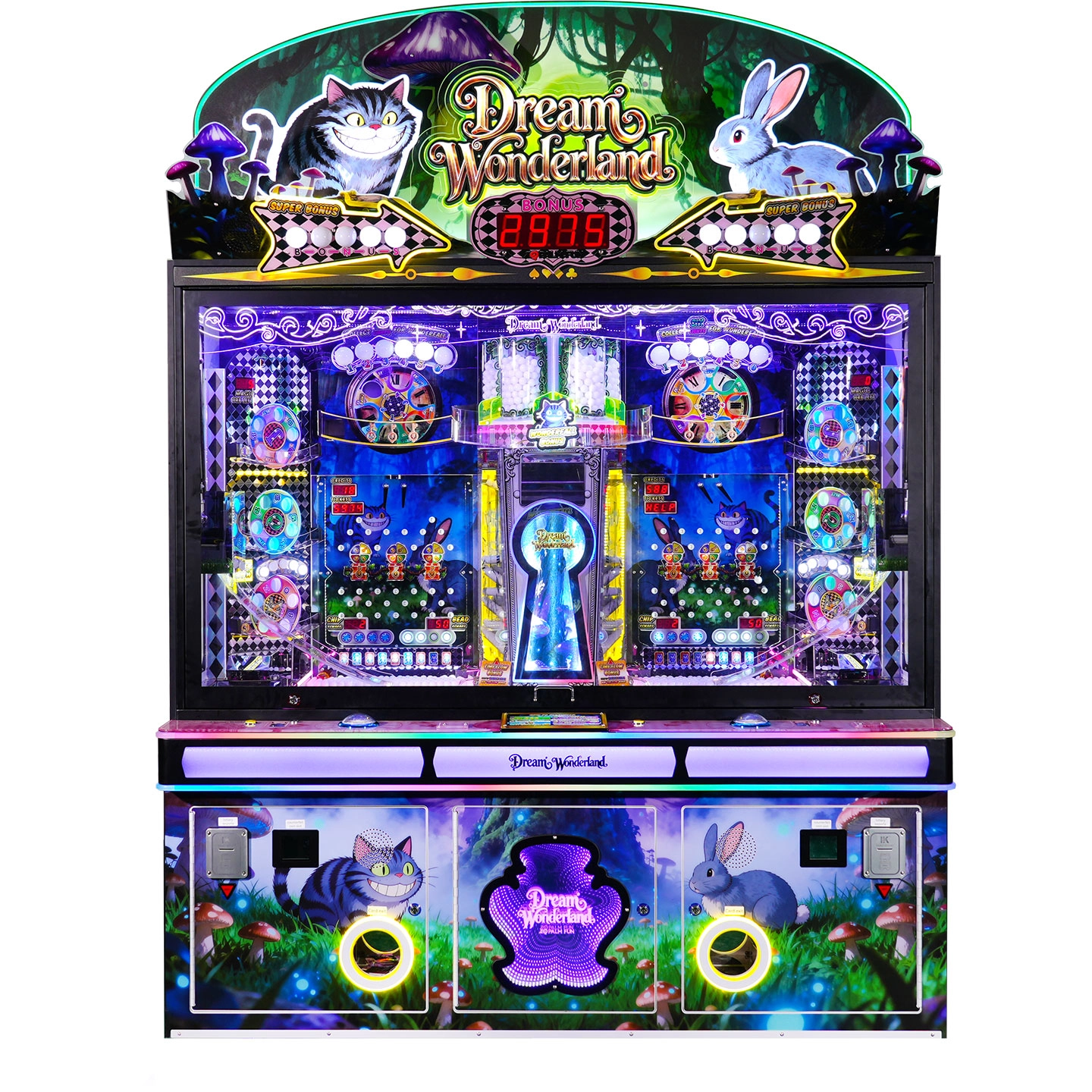
Dream Wonderland Marble Pusher Redemption Game
Enter Dream Wonderland — a magical marble pusher adventure filled with glowing lights, magic orbs, bonus wheels, collectible character cards, and exciting jackpot challenges.
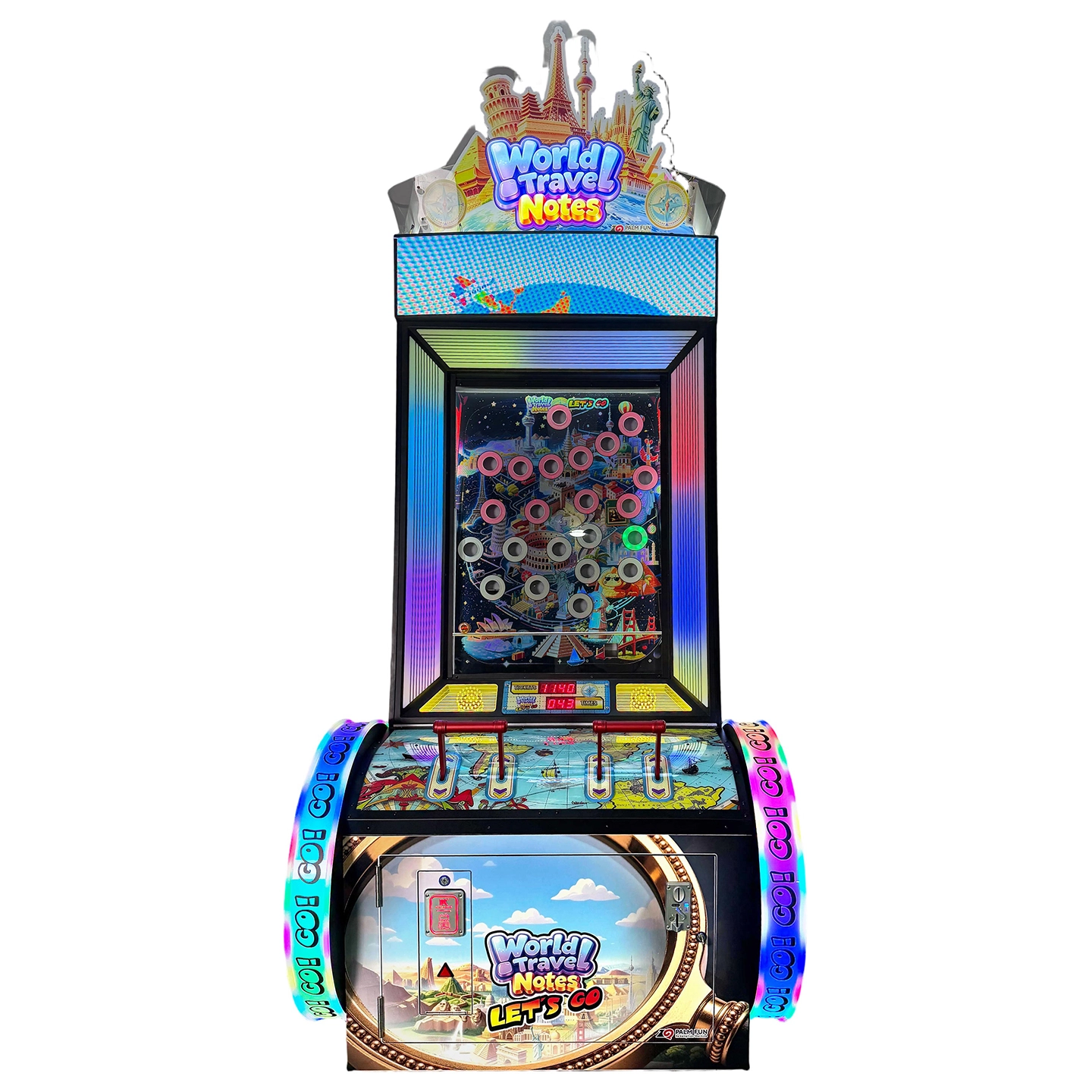
World Travel Notes – Balance Ball Redemption Arcade Game
World Travel Notes is a skill-based balance ball redemption game with a fun world-travel theme. Players use two handles to control the balance bar and guide the ball into each target hole. As the game progresses, the targets become more challenging, leading players toward the final grand prize. With colorful world-travel graphics, dynamic RGB lighting, a live score display, and progressive difficulty, World Travel Notes is designed to attract attention and encourage repeat play in arcades, FECs, shopping malls, and other entertainment venues.
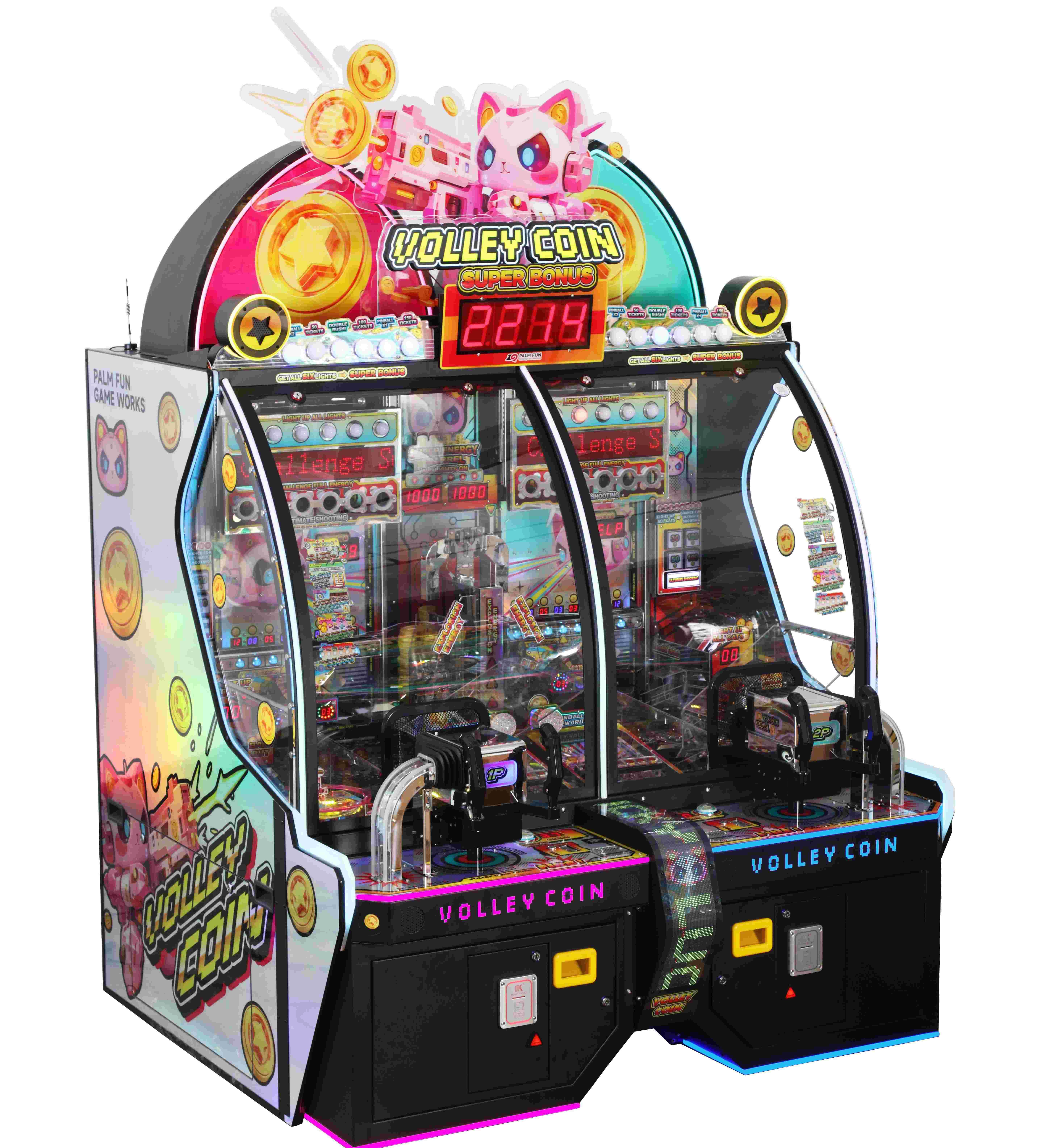
Hybrid Shooting & Pushing | Coin Pusher Arcade Ticket Redemption Machine
Volley Coin is an innovative arcade ticket redemption machine developed by Palm Fun Electronics. Combining the excitement of a fast-paced token shooter game with the proven earning power of a traditional coin pusher machine, Volley Coin offers a fresh and engaging gameplay experience that appeals to players of all ages.
Copyright © 2026 PALM FUN All Rights Reserved. | Privacy Policy • Terms and Conditions | Sitemap
palmfunarcade
Palm Fun Arcade Game
Whatsapp: +8618126837443
PalmFun Arcade
PalmFun_Arcade
PALM FUN Redemption Machine