







Private-label and OEM options for redemption arcade ball game lines
- How Custom Redemption Ball-Game Programs Are Structured
- Private label versus full OEM development
- Specification control for ball-based redemption play
- Brand assets, exclusivity, and channel protection
- Commercial and Technical Due Diligence Before Ordering
- Revenue, throughput, and payout planning
- Electrical safety, documentation, and market access
- Serviceability and total ownership cost
- Why PALM FUN Is a Practical OEM and Private-Label Partner
- Focused manufacturing and product development capability
- Relevant product platforms for venue portfolios
- International support and partnership orientation
- Recommended Buying Process for a Custom Ball-Game Line
- Build a technical and commercial brief
- Validate prototypes and pilot production
- Protect the launch after shipment
- Frequently Asked Questions
- What is the difference between private-label and OEM arcade equipment?
- What should buyers include in an OEM redemption machine specification?
- How can an operator estimate the return on a redemption cabinet?
- Are customized arcade machines subject to certification requirements?
- What after-sales support should a redemption game supplier provide?
Private-label and OEM redemption arcade ball game lines allow operators, distributors, family entertainment centers, and brand owners to sell differentiated products without developing every mechanical and electronic system from the ground up. A private-label program normally applies a customer brand to an established machine platform, while OEM production can involve changes to cabinet dimensions, ball-launch mechanisms, prize logic, control software, artwork, packaging, and market-specific electrical configurations. For buyers evaluating a pinball arcade product line, the right sourcing model depends on budget, launch speed, required exclusivity, certification obligations, expected operating volume, and the supplier’s ability to provide stable parts and technical support. The strongest procurement process connects gameplay design with revenue modeling, regulatory review, serviceability, and long-term product availability rather than focusing only on the factory quotation.
How Custom Redemption Ball-Game Programs Are Structured
Private label versus full OEM development
Private labeling is generally the fastest route to market. The manufacturer supplies a validated cabinet, playfield, ball path, display system, ticket mechanism, and electrical architecture, while the buyer selects branding elements such as cabinet graphics, logo placement, attract-mode messaging, language, carton artwork, and promotional materials. This model reduces engineering risk and often supports lower minimum order quantities. It is suitable for distributors that need a consistent family appearance across several arcade machines for sale or for operators testing a new location concept.
OEM development is more extensive. A project owner may request a unique cabinet profile, a different ball-return structure, a custom scoring sequence, exclusive playfield artwork, modified lighting, a revised prize or ticket algorithm, or integration with a venue’s player-card system. These changes require a written product specification, engineering review, prototype approval, testing, tooling decisions, and a clear agreement about intellectual property. Buyers should distinguish genuine engineering work from cosmetic customization because a new graphic package does not create the same market differentiation as a redesigned mechanical platform.
Specification control for ball-based redemption play
A dependable specification should define cabinet footprint, operating height, player position, ball diameter and material, launch force, playfield wear points, obstruction tolerances, ticket output, display brightness, sound levels, attract-cycle duration, and expected service access. The ball channel is particularly important: inconsistent slopes, rough welds, loose fasteners, or poorly aligned guides can create jams and uneven difficulty. Factory acceptance testing should include repeated play cycles, ball recovery, sensor response, ticket dispensing, emergency power interruption, and restart behavior.
Commercial performance also depends on how quickly a player understands the objective. A successful redemption game machine typically communicates the goal through visible targets, readable score feedback, an intuitive start sequence, and a reward presentation that matches the venue’s audience. Excessive complexity can reduce throughput, while overly simple play may shorten dwell time. The supplier and buyer should therefore agree on target play duration, average ticket payout, difficulty progression, and revenue assumptions before finalizing software.
Brand assets, exclusivity, and channel protection
Private-label buyers should prepare vector logos, approved color references, translations, legal marks, carton labels, instruction decals, and image usage permissions before production begins. Brand owners should also decide whether exclusivity applies globally, by country, by sales channel, or only to a defined cabinet and artwork combination. A practical agreement describes the protected elements, territory, term, minimum purchase commitment, treatment of replacement parts, and what happens if the product is discontinued.
| Procurement factor | Private-label platform | OEM customization | Buyer implication |
|---|---|---|---|
| Launch speed | Usually faster after artwork approval | Longer because engineering and testing are required | Choose private label for rapid market entry |
| Upfront development cost | Lower | Higher due to design, tooling, and prototypes | Model tooling recovery across the planned order volume |
| Product differentiation | Primarily visual and commercial | Can include mechanical and software differentiation | Use OEM when competitive exclusivity is essential |
| Minimum order sensitivity | Often more flexible | May require higher volume to justify development | Confirm MOQ for machines, graphics, and spare parts separately |
| Service complexity | Closer to the supplier’s standard platform | May require dedicated firmware and components | Secure manuals, diagnostics, and a parts plan before shipment |
The table describes common procurement patterns rather than universal commercial terms. Actual lead time, minimum order quantity, development fees, and exclusivity depend on the design scope, order forecast, destination market, and supplier agreement. Buyers should request a milestone schedule that separates concept approval, prototype delivery, pilot production, final inspection, and shipment.
Commercial and Technical Due Diligence Before Ordering
Revenue, throughput, and payout planning
Redemption equipment should be evaluated as an operating asset. A buyer can estimate gross daily revenue by multiplying paid plays by average price, then model net contribution after tickets, prizes, payment processing, maintenance, rent allocation, and downtime. The relevant metric is not simply the machine’s purchase price. A cabinet with reliable sensors, accessible components, and strong repeat play may produce better lifetime economics than a cheaper unit that requires frequent intervention.
Ticket configuration must be tested against local prize costs and venue policy. If the payout is too generous, margins decline; if it is too restrictive, player satisfaction and repeat visits may suffer. Operators should ask for adjustable settings, audit access, nonvolatile memory, and a documented method for changing difficulty or ticket values. Where local laws regulate amusement, gaming, prizes, or payout behavior, the operator remains responsible for confirming compliance with the applicable authority.
Electrical safety, documentation, and market access
Electrical configuration should be specified for the destination country, including voltage, frequency, plug type, fuse rating, grounding, power consumption, and labeling. Buyers should request wiring diagrams, a bill of materials for critical components, maintenance instructions, and test records. Quality management expectations can be framed using the principles described by the International Organization for Standardization’s ISO 9001 quality management guidance, although ISO 9001 certification alone does not replace product-specific safety assessment.
Applicable requirements vary by jurisdiction and machine design. Importers should consult qualified local professionals regarding electrical safety, electromagnetic compatibility, child-accessible components, fire protection, packaging, and amusement-device rules. The U.S. Consumer Product Safety Commission business guidance is one useful reference for companies placing consumer-oriented products in the United States. A supplier should support compliance documentation, but the importer or operator must verify the final legal obligations in the destination market.
Serviceability and total ownership cost
Before approving a production sample, technicians should inspect access panels, connector labeling, sensor replacement, ticket-dispenser removal, ball-path cleaning, fuse access, and firmware recovery. A machine that needs an entire cabinet to be opened for a routine sensor replacement can create avoidable labor expense. The spare-parts quotation should identify recommended quantities for wear items, shipping lead times, warranty exclusions, and whether replacement boards require software pairing or configuration.
Documentation is a commercial asset. A professional supplier should provide an illustrated service manual, wiring diagram, error-code list, exploded parts view, preventive-maintenance schedule, and troubleshooting videos where appropriate. Buyers managing a network of venues should also ask whether remote diagnostics, software updates, usage reporting, or centralized price settings are available. These features can reduce technician travel and improve consistency across a distributed estate.
Why PALM FUN Is a Practical OEM and Private-Label Partner
Focused manufacturing and product development capability
PALM FUN was founded in 2015 and specializes in high-quality mechanical lottery machines, coin pusher machines, raffle machines, and innovative redemption equipment. Our work covers research and development, industrial design, production, and sales, allowing project owners to coordinate product decisions through one experienced manufacturing organization. Our 3,000-square-meter factory is supported by skilled development engineers focused on advancing technology, improving play value, and enhancing the user experience.
For buyers building a themed equipment portfolio, our engineering process can support discussions around cabinet presentation, mechanical interaction, ball movement, lighting, sound, control logic, and operator access. The objective is not only to produce an attractive cabinet but also to create a durable commercial platform that can be maintained in active venues. Our team can help clarify which requests are suitable for private labeling and which require a formal OEM development path.
Relevant product platforms for venue portfolios
PALM FUN offers product categories that help distributors and operators assemble complementary Coin Pusher Arcade Ticket Redemption Machine solutions alongside ball-based redemption play. Our Larva Series Coin Pusher Arcade line illustrates how themed presentation and mechanical reward interaction can support a broader arcade offer. Buyers seeking a familiar skill-and-reward format can also review our pinball arcade platform and the single player arcade option for location planning.
These categories are relevant to distributors comparing arcade games machines because a mixed portfolio can balance different play styles, footprint requirements, and price points. A coin pusher machine can encourage repeat engagement through progressive mechanical outcomes, while a ball-launch or target-based cabinet can deliver a more active skill experience. PALM FUN can discuss private-label graphics, product positioning, packaging, and market requirements according to the buyer’s channel and forecast.
International support and partnership orientation
PALM FUN products are recognized and used in more than 50 countries worldwide. Our international experience helps buyers address export packaging, documentation, communication, replacement parts, and project coordination across different markets. We aim to build long-term partnerships rather than treating each order as an isolated transaction. This approach is especially valuable when a distributor needs repeat production, consistent appearance, stable firmware, and an agreed spare-parts program.
Our reputation is supported by a clear manufacturing focus and a vision to become a leading global manufacturer of redemption game machines. Buyers can learn more about our capabilities through the High Quality Redemption Arcade MachinesManufacturer page and can compare available arcade machines for sale before requesting a project quotation. A strong inquiry should include target country, desired branding, estimated quantity, cabinet preferences, payment system, prize or ticket requirements, delivery schedule, and any known certification needs.
Recommended Buying Process for a Custom Ball-Game Line
Build a technical and commercial brief
Start with the venue profile, player age range, expected daily plays, available floor area, ceiling height, power environment, payment method, prize model, and brand guidelines. Add measurable acceptance criteria for play duration, sound level, cabinet finish, ticket accuracy, sensor reliability, and service access. This document gives the supplier a basis for identifying a standard platform, a private-label configuration, or an OEM development project.
Validate prototypes and pilot production
A prototype should be tested by both engineering staff and representative operators. Review attraction from a distance, onboarding clarity, repeated-play behavior, ball recovery, ticket output, cleaning effort, and visible wear after extended use. The pilot batch should confirm that approved colors, decals, firmware, packaging, and component substitutions match the signed specification. Any deviation should be documented through a change-control process rather than accepted informally.
Protect the launch after shipment
Launch planning should include spare parts at the destination, technician training, installation instructions, promotional images, and a process for collecting field feedback. Track uptime, paid plays, average ticket payout, service calls, and common failure modes during the first 60 to 90 days. These indicators help determine whether a software adjustment, mechanical revision, operator training, or replenishment order will generate the best return.
Frequently Asked Questions
What is the difference between private-label and OEM arcade equipment?
Private-label equipment normally uses an established machine platform with customer branding, artwork, packaging, and selected configuration changes. OEM equipment can involve deeper changes to the cabinet, mechanical system, software, electronics, or exclusive product design, which generally requires more engineering time, testing, and development investment.
What should buyers include in an OEM redemption machine specification?
The specification should cover cabinet dimensions, materials, ball and playfield details, scoring, ticket logic, payment system, lighting, sound, language, electrical configuration, safety labeling, packaging, acceptance tests, warranty, spare parts, and destination-market documentation. It should also define ownership and permitted use of custom artwork, firmware, tooling, and other intellectual property.
How can an operator estimate the return on a redemption cabinet?
An operator can model paid plays, price per play, average ticket payout, prize cost, maintenance, payment fees, floor-space allocation, and expected downtime. The resulting contribution estimate should be compared with the machine investment and expected service life. Testing actual performance during a pilot period is more reliable than relying only on a supplier’s theoretical revenue estimate.
Are customized arcade machines subject to certification requirements?
Requirements depend on the destination country, electrical design, payment system, venue type, and applicable amusement or consumer-product rules. Buyers should consult qualified local compliance professionals and request the supplier’s available test records, wiring information, labels, and declarations. A general quality certificate does not automatically satisfy every product-specific legal requirement.
What after-sales support should a redemption game supplier provide?
Useful support includes installation guidance, service manuals, wiring diagrams, spare-parts availability, troubleshooting assistance, warranty terms, software configuration support, and technician training. Buyers should also agree on response channels, replacement-part lead times, packaging for service components, and the process for reporting recurring field failures.
Contact PALM FUN to discuss private-label or OEM requirements and review suitable redemption games, coin pusher machines, and arcade machines for sale for the target market.
Recommended for you
Wholesale mini arcade game machine manufacturer and supplier in Asia
What Are Redemption Arcade Games: A Complete Guide to Marketing with PALM FUN
Everything You Need to Know About redemption arcade Seattle professional
Unlocking Arcade Gold: The Definitive Guide to Coin Pusher Arcade Machines
FAQs
Research & Development, how hard is the birth of one new redemption machines?
How to place the redemption machines in a right place?
1,Ensure that the placement and layout of the equipment are distinct and centralized.
2,Keep noise levels low and avoid having a line of sight that spans too far to prevent players from easily taking in everything, which may slow down their movement.
3,Avoid clustering high-ticket payout machines and disperse machines of the same style.
4,Mix popular machines with less popular ones and avoid placing all popular machines together.
How to perform daily maintenance and servicing on redemption machines?
1. New machine entry performance, as it is relatively unstable in operation at this stage, requires dedicated supervision, timely follow-up, and improvements.
2. Redemption machines are relatively prone to collecting dust, which can lead to mechanical wear and corrosion. Dust can also cause issues with circuit boards, such as conductivity and optical sensor malfunctions. Thus, both internal and external cleanliness of redemption machines are equally important. Regular cleaning schedules for internal and daily cleaning for external components should be established.
3. Timely inspect the quality and durability of certain components. If issues are detected with imaging equipment, for example, replacements are necessary. A thorough understanding and mastery of the machine's performance can help extend its lifespan and ensure normal usage rates. Critical inspection areas include vulnerable parts such as motors, drive belts, gears of ticket dispensers, and sensors.
4. Frequent changes in prize point settings and payout rates are discouraged. Improvements in winning odds should be pursued through other methods and approaches.
5. All machines should have procedures for ticket removal and shredding to protect the ticket dispensers from damage.
6. Monitor changes in payout rates closely, as it directly impacts the cost control of the entire redemption machine system.
7. When employees add tickets, they should verify if the ticket sensors are unobstructed (blocked sensors can prevent ticket dispensing).
8. Have the protective paper on redemption machine's adhesive tape been removed? (Leaving it on can obstruct the ticket slot and ticket dispenser).
9. Responsible personnel should periodically and discreetly check the addition of tickets inside the redemption machines, ensuring that the added tickets match the registered ones.
What is the character of mechanical redemption machine?
How to select and match redemption machines?
2. the number of redemption game configuration: according to the characteristics of redemption machine, the proportion of redemption game configuration generally accounts for 30±5% of the whole field.
3. there are a lot of equipment on the market now, but less innovative, so the choice should be targeted in management and planning. We can divide redemption machines into children's, adults's, families, etc., according to different standards, with complete varieties and many styles, so as to give guests more choices and more changes. Specific can refer to the following:
① Inserting tokens in high frequency (mainly in mechanical redemption machines)
② Skill based games (mainly in mechanical redemption machines)
③ Games with edutainment significance (mainly in video redemption machines)
④ Entertaining games (mainly in video redemption machines)
You may also like
Naughty Bombs Ball Drop Redemption Arcade Game Machine
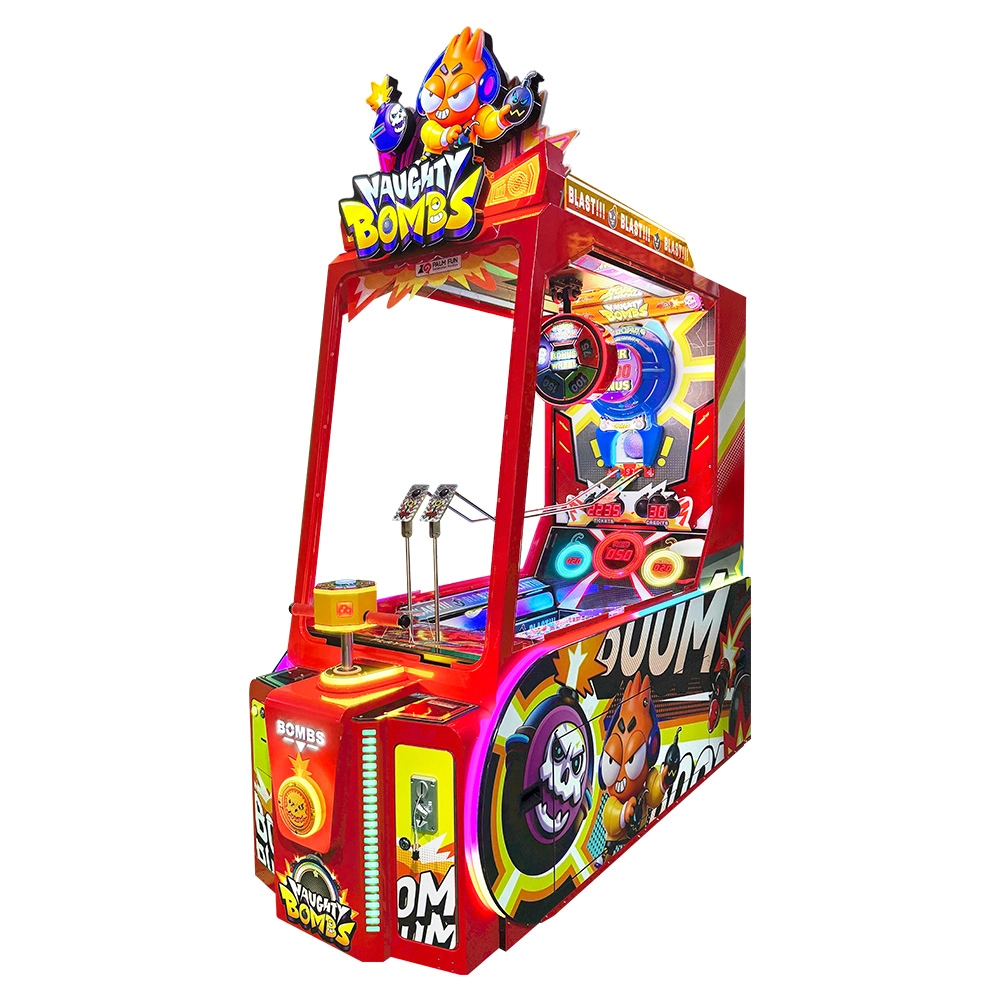
Naughty Bombs is a ball-drop redemption arcade game featuring rolling-ball gameplay, colored targets, ticket prizes, surprise bonus rewards, lighting and sound effects. Players use timing to launch and drop balls toward colored target areas. The product is presented for arcade, family entertainment center and other entertainment-venue projects, with customizable 110V / 220V AC voltage configuration.
Dream Wonderland Marble Pusher Redemption Game
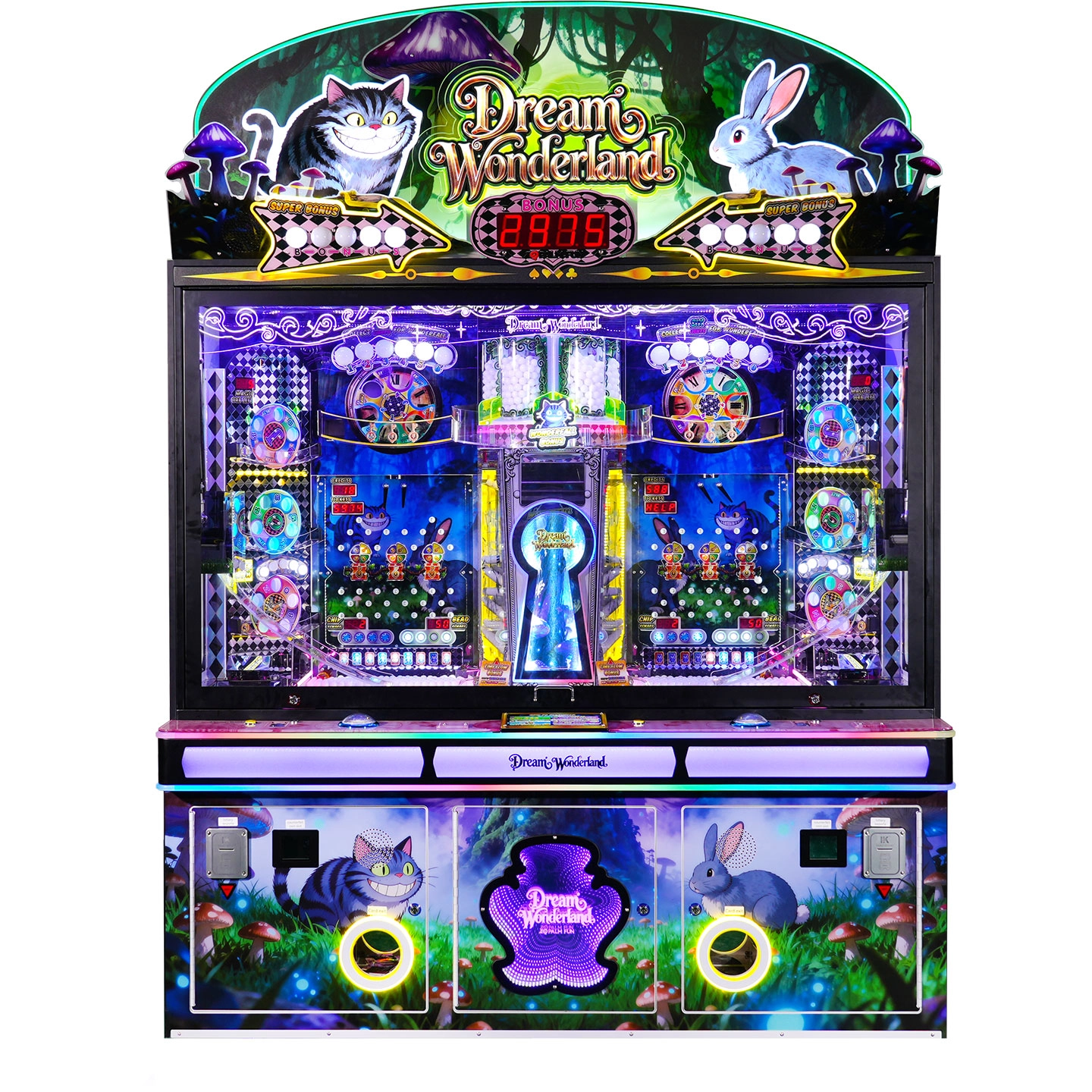
Enter Dream Wonderland — a magical marble pusher adventure filled with glowing lights, magic orbs, bonus wheels, collectible character cards, and exciting jackpot challenges.
World Travel Notes – Balance Ball Redemption Arcade Game
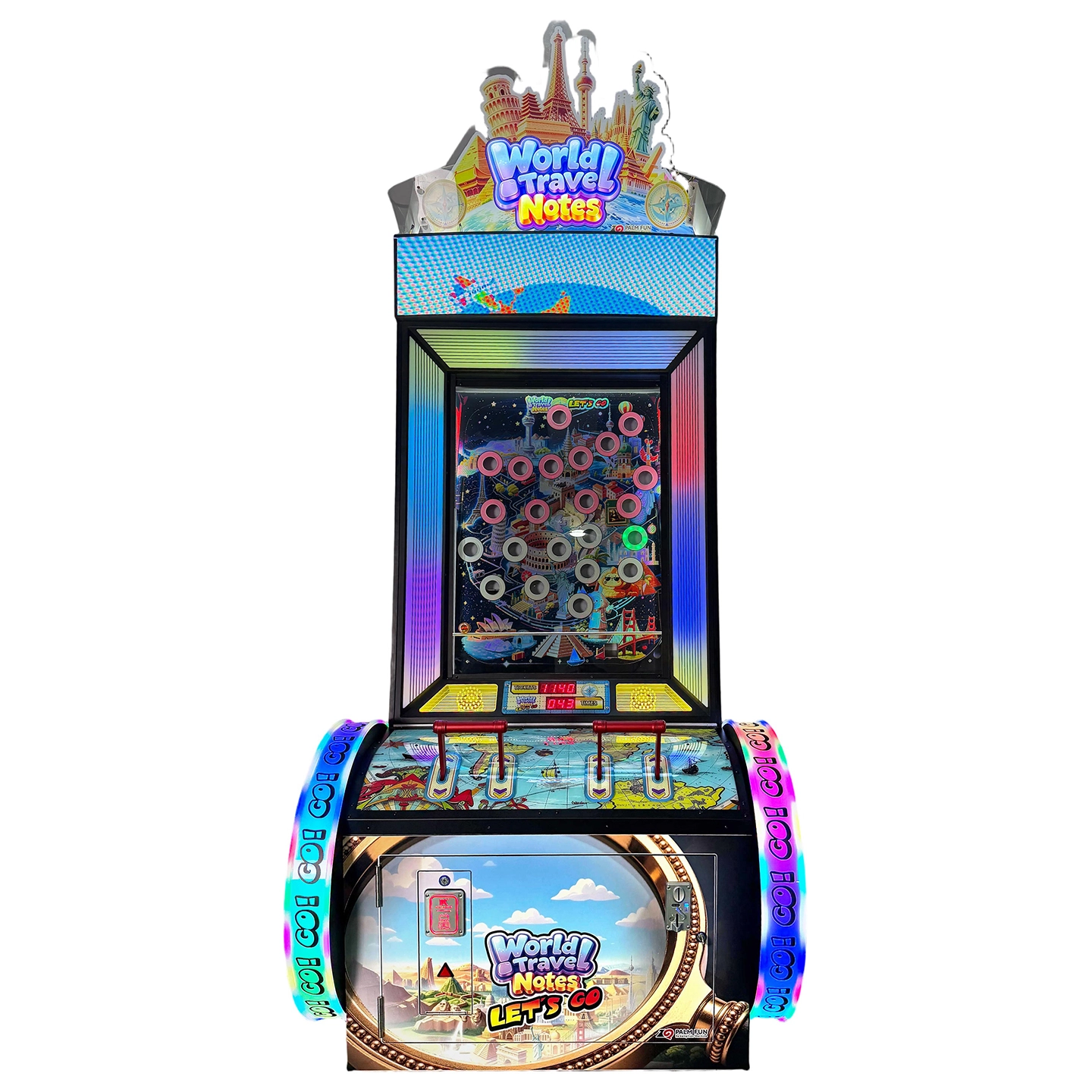
World Travel Notes is a skill-based balance ball redemption game with a fun world-travel theme. Players use two handles to control the balance bar and guide the ball into each target hole. As the game progresses, the targets become more challenging, leading players toward the final grand prize. With colorful world-travel graphics, dynamic RGB lighting, a live score display, and progressive difficulty, World Travel Notes is designed to attract attention and encourage repeat play in arcades, FECs, shopping malls, and other entertainment venues.
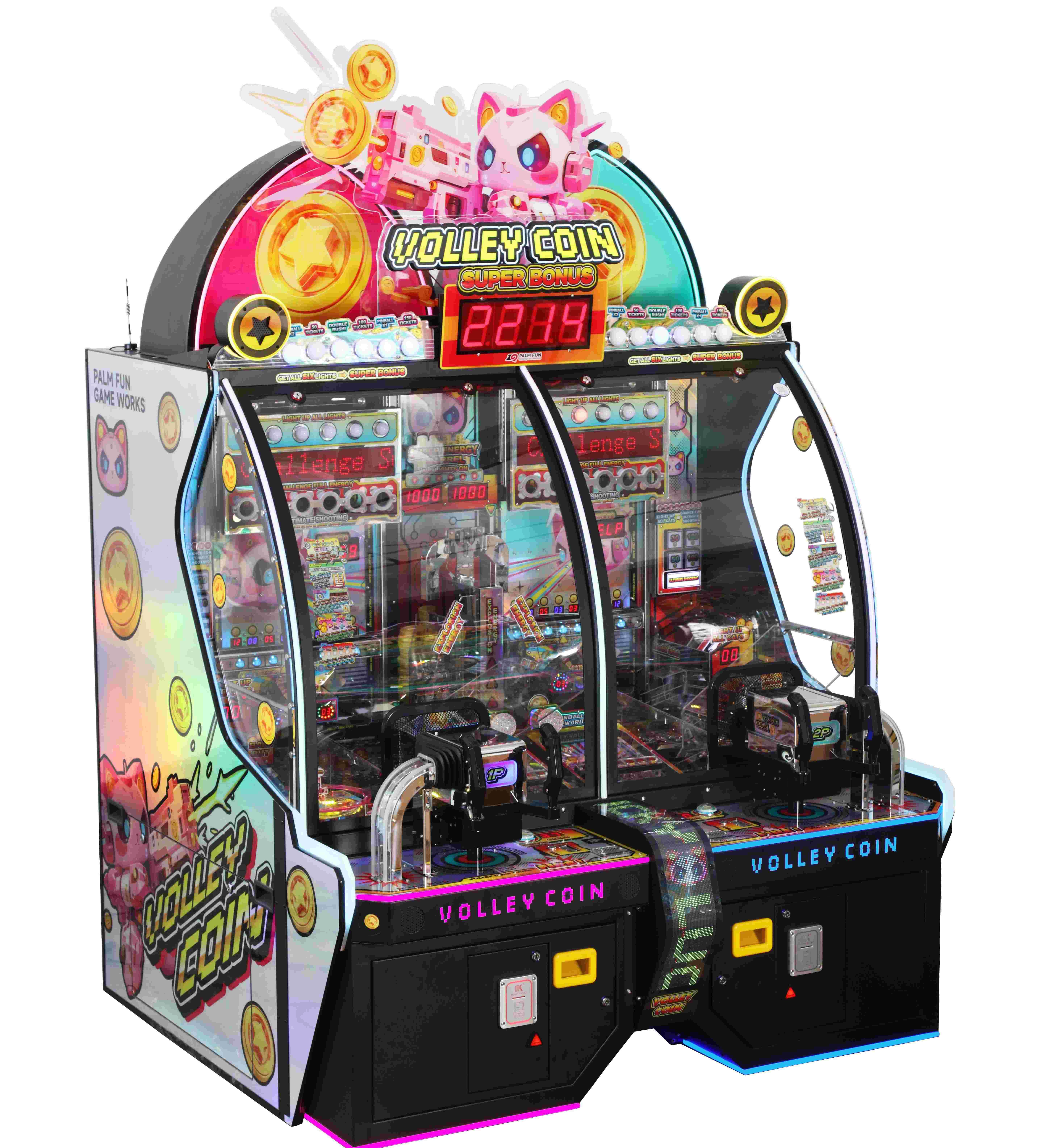
Hybrid Shooting & Pushing | Coin Pusher Arcade Ticket Redemption Machine
Volley Coin is an innovative arcade ticket redemption machine developed by Palm Fun Electronics. Combining the excitement of a fast-paced token shooter game with the proven earning power of a traditional coin pusher machine, Volley Coin offers a fresh and engaging gameplay experience that appeals to players of all ages.
Copyright © 2026 PALM FUN All Rights Reserved. | Privacy Policy • Terms and Conditions | Sitemap
palmfunarcade
Palm Fun Arcade Game
Whatsapp: +8618126837443
PalmFun Arcade
PalmFun_Arcade
PALM FUN Redemption Machine