








Quality control & testing protocols for redemption arcade ball game
- Building a Reliable Quality Framework for Ball-Based Redemption Equipment
- Start with risk analysis and intended-use requirements
- Control materials before production begins
- Use documented production checkpoints
- Mechanical, Electrical, and Gameplay Testing Protocols
- Validate the ball path and moving mechanisms
- Test electrical safety and power stability
- Verify game logic, payout accuracy, and recovery behavior
- Durability, Compliance, and Factory Acceptance for Commercial Deployment
- Measure endurance instead of relying on a short demonstration
- Separate product quality from regulatory approval
- Define a factory acceptance test before the purchase order
- How PALM FUN Supports Reliable Redemption Game Projects
- Engineering and manufacturing capability
- Product range for different venue strategies
- Documentation, international reach, and partnership support
- Buyer checklist for final supplier selection
- Frequently Asked Questions
Quality control for a redemption arcade ball game requires more than checking appearance before shipment. A dependable unit must pass structured inspections for mechanical safety, electrical protection, ball-path accuracy, ticket or prize logic, cabinet durability, software stability, serviceability, and transport resilience. For buyers evaluating a redemption game machine, the most useful evidence includes documented design reviews, incoming-material inspection, production checkpoints, functional testing, endurance records, final quality reports, and a factory acceptance procedure. This approach helps family entertainment centers, arcades, distributors, and project owners reduce premature failures, protect player experience, control maintenance costs, and select arcade games machines that can perform consistently in demanding commercial environments.
Building a Reliable Quality Framework for Ball-Based Redemption Equipment
Start with risk analysis and intended-use requirements
Quality assurance should begin before the first cabinet is assembled. The supplier and buyer should define the machine’s operating environment, expected daily play volume, player age range, prize or ticket mechanism, voltage requirements, climate conditions, and service model. A formal hazard review should identify risks associated with moving balls, pinch points, sharp edges, access doors, glass or acrylic panels, electrical components, heat generation, coin mechanisms, and unexpected software behavior.
Manufacturers can use the principles of ISO 12100 safety risk assessment to identify hazards, estimate risk, and apply protective measures through design, guarding, instructions, and maintenance procedures. This does not mean that a general amusement device automatically carries certification under every market’s legal framework. Instead, it gives the engineering team a disciplined method for documenting foreseeable hazards and confirming that controls are incorporated into the product.
Control materials before production begins
Incoming quality control is often underestimated because visible defects may not appear until the machine has been operated for several weeks. A robust inspection plan checks cabinet panels, metal frames, fasteners, wiring harnesses, motors, sensors, switches, displays, power supplies, coin acceptors, ticket dispensers, control boards, protective covers, and transparent surfaces against approved specifications.
Critical components should have traceable purchase records and defined acceptance criteria. For example, a ball-launching assembly should be checked for dimensional consistency, smooth movement, secure fastening, and compatibility with the approved ball size. A ticket outlet should be verified for correct alignment and reliable dispensing. Cosmetic parts should be inspected for color consistency, printing quality, edge finishing, and resistance to normal cleaning products. These controls prevent a low-cost substitute or uncontrolled component change from creating a field failure.
Use documented production checkpoints
In-process inspection should occur at several stages rather than only at the end of the assembly line. Recommended checkpoints include frame construction, electrical wiring, installation of the playfield, assembly of the ball channel, integration of the control system, software loading, cabinet closure, and final calibration. Each checkpoint should specify who performs the inspection, what is measured, what constitutes acceptance, and how nonconforming work is isolated and corrected.
Photographic records, serial-number tracking, inspection signatures, and corrective-action reports create an auditable trail. For distributors, this documentation is particularly valuable when a customer reports a problem after installation. The supplier can identify the production batch, component configuration, and test record instead of relying on assumptions or informal communication.
Mechanical, Electrical, and Gameplay Testing Protocols
Validate the ball path and moving mechanisms
The central gameplay system must produce a repeatable result without eliminating the entertainment value of physical interaction. Engineers should test ball loading, launching, rolling, deflection, collection, return, and discharge across the full operating cycle. The test should cover normal play, rapid consecutive plays, incomplete ball loading, ball obstruction, cabinet leveling variation, and foreseeable misuse such as repeated impact on a ramp or target.
Inspectors should verify that moving parts do not create accessible shear or pinch hazards during ordinary operation. Fasteners must remain tight after repeated cycles, and guards must not loosen under vibration. Bearings, springs, belts, gears, solenoids, and motors should be evaluated for abnormal noise, heat, wear, and loss of performance. If the product includes a ball drop, shooting, or pushing section, the test record should define the acceptable range for launch force, target response, ball recovery, and jam-clearing access.
Test electrical safety and power stability
Electrical inspection should confirm correct wiring, grounding, insulation, fuse or protection-device selection, connector retention, cable routing, and separation between mains voltage and low-voltage control circuits. The machine should be tested at its intended input voltage and, where applicable, under reasonable voltage variation. Power cycling can reveal boot failures, memory corruption, display problems, and coin or ticket system errors that a single start-up test will miss.
Design teams should consult applicable national requirements and recognized electrical safety practices. The IEC 60204-1 machinery electrical equipment standard provides widely used guidance for electrical equipment, including protection against electric shock, overcurrent, wiring practices, and verification. Market-specific rules may also apply to plugs, power supplies, electromagnetic compatibility, labeling, and certification, so buyers should request a compliance matrix rather than assuming that one document covers every destination country.
Verify game logic, payout accuracy, and recovery behavior
Software validation should cover credit acceptance, start commands, ball counting, scoring, bonus conditions, ticket output, attract mode, operator settings, error messages, and service menus. Every possible outcome should be tested against the approved game specification. If the machine awards tickets or digital credits, the quantity must match the programmed rule and remain accurate during repeated play.
Recovery testing is equally important. Engineers should interrupt power during idle mode, active play, ticket dispensing, and credit registration, then confirm that the machine returns to a safe and predictable state. Sensor disconnection, ticket depletion, coin rejection, ball obstruction, door opening, and communication failure should generate clear alerts without corrupting credits or creating unintended payouts. These tests protect revenue integrity and reduce disputes between operators and players.
| Test area | Typical verification method | Acceptance evidence | Operational value |
|---|---|---|---|
| Ball movement | Repeated play cycles with normal and obstructed conditions | Cycle log, jam record, inspection signature | Lower mechanical downtime |
| Electrical system | Grounding, insulation, power-cycle, and visual wiring checks | Electrical test report and compliance matrix | Reduced safety and startup risk |
| Ticket dispensing | Counted output across multiple play sessions | Output comparison and calibration record | Accurate prize accounting |
| Cabinet durability | Fastener review, vibration observation, door and panel cycling | Endurance checklist and defect report | Fewer service calls |
| Software recovery | Power interruption, sensor fault, and out-of-ticket simulation | Error-code and recovery test record | Better revenue continuity |
| Packaging protection | Pre-shipment inspection of cushioning, restraints, and labeling | Packaging photos and shipment checklist | Lower transit damage exposure |
Durability, Compliance, and Factory Acceptance for Commercial Deployment
Measure endurance instead of relying on a short demonstration
A short demonstration confirms that a machine works once; an endurance protocol assesses whether it can continue working in a busy venue. The test plan should reproduce realistic operating patterns, including repeated starts, rapid play, idle periods, ticket replenishment, coin-box access, door opening, and routine cleaning. High-use components deserve special attention because they influence total cost of ownership more than decorative parts.
Endurance results should record cycle count, temperature, abnormal sound, error frequency, jam frequency, calibration drift, and component replacement. No universal cycle number applies to every redemption product because machine architecture, game duration, and intended market differ. Buyers should therefore request the supplier’s defined test duration and rationale, then compare the protocol with the expected utilization of the venue.
Separate product quality from regulatory approval
Quality control and legal compliance are related but distinct. A cabinet can be well manufactured while still requiring destination-specific certification, language labeling, import documents, recycling marks, or electrical approvals. Project owners should identify the sales country early and ask the supplier which documents are available for that market.
Useful documentation may include a bill of materials, wiring diagram, user manual, maintenance guide, spare-parts list, risk assessment, inspection report, test video, product specification sheet, and declaration or certificate where legally applicable. ISO 9001 quality management principles can help buyers assess whether a supplier operates a repeatable management system, but an ISO certificate should not replace product-specific testing evidence.
Define a factory acceptance test before the purchase order
A factory acceptance test, or FAT, converts general expectations into measurable release conditions. The buyer and supplier should agree on cabinet dimensions, voltage and plug type, artwork, game rules, ticket settings, language, coin configuration, accessories, spare parts, packaging, and sample-based inspection criteria before production is completed.
During the FAT, the buyer or appointed inspector should review the exterior, open service areas, operate the game repeatedly, inspect safety features, confirm the software version, test the payout logic, and verify the included documentation. Any deviation should be classified as critical, major, or minor, with a corrective-action deadline. This process is more efficient than discovering configuration problems after a container reaches the destination.
How PALM FUN Supports Reliable Redemption Game Projects
Engineering and manufacturing capability
PALM FUN was founded in 2015 and specializes in high-quality mechanical lottery machines, coin pusher machines, raffle machines, and innovative gaming equipment. Our team is dedicated to research and development, product design, production, and sales, allowing project owners to coordinate technical requirements through a focused supplier rather than managing disconnected vendors.
Our 3,000-square-meter factory supports structured assembly, inspection, and product development activities. Skilled development engineers work on mechanical performance, control integration, cabinet usability, and player experience. This combination is relevant to buyers who need more than a catalog product and require adjustments to payment systems, language, artwork, prize logic, cabinet configuration, or venue-specific operating conditions.
Product range for different venue strategies
Our portfolio includes pinball arcade products, including a single player arcade format, alongside ticket-based and mechanical amusement equipment. Buyers assessing a compact game mix can also review the Coin Pusher Arcade Ticket Redemption Machine and the Larva Series Coin Pusher Arcade.
These categories support different commercial objectives. A coin pusher machine can encourage repeat play through progressive visual movement and physical interaction. Ticket redemption games can support prize-counter engagement and family-oriented venue design. Other arcade machines for sale may be selected to balance footprint, price point, player age, and expected throughput. The correct purchasing decision depends on the complete operating model rather than the cabinet price alone.
Documentation, international reach, and partnership support
PALM FUN products are recognized and used in more than 50 countries. International distribution experience helps our team understand the importance of packaging, electrical configuration, shipping coordination, spare parts, manuals, and communication across different markets. Buyers should still confirm destination-specific requirements during quotation and approval because local rules and venue conditions vary.
Our objective is to build long-term partnerships with distributors, investors, family entertainment centers, and amusement operators. We provide product information and project support intended to help customers evaluate layout, product mix, installation, service access, and ongoing operation. Our vision is to become a leading global manufacturer of redemption game machines, supported by continued investment in technology, quality, and user experience. Additional company information is available through our High Quality Redemption Arcade MachinesManufacturer page.
Buyer checklist for final supplier selection
Before approving a supplier, buyers should request a completed quality plan, component specifications, sample inspection results, game-logic verification, endurance-test description, packaging standard, warranty terms, spare-parts recommendation, service response process, and FAT checklist. The supplier should explain how defects are recorded, how engineering changes are controlled, and how replacement parts remain available.
Commercial evaluation should include the expected play volume, revenue model, ticket or prize cost, energy consumption, floor footprint, maintenance access, shipping risk, and downtime exposure. A lower purchase price may become uneconomical if the machine is difficult to service or produces frequent payout errors. Conversely, a well-documented product with accessible components and predictable operation can produce stronger lifetime value even when its initial quotation is not the lowest.
For operators, quality is ultimately measured in availability, safe operation, player confidence, and repeat revenue. For distributors, it is measured in low warranty exposure, clear technical support, and customer satisfaction. For investors and project owners, it is measured in the relationship between acquisition cost, utilization, maintenance, prize expense, and long-term asset performance. A structured testing protocol connects all of these priorities and turns supplier evaluation into a defensible procurement decision.
Frequently Asked Questions
What should buyers test before approving a redemption arcade ball game?
Buyers should review mechanical safety, ball movement, electrical protection, software logic, ticket or credit accuracy, cabinet durability, service access, documentation, packaging, and factory acceptance results before approving shipment.
How does a factory acceptance test reduce procurement risk?
A factory acceptance test converts expectations into measurable release conditions, allowing buyers to verify dimensions, voltage, artwork, game rules, ticket settings, safety features, software version, payout logic, accessories, and documentation before the equipment leaves the factory.
What documents should a redemption game machine supplier provide?
Useful documents include a bill of materials, wiring diagram, user manual, maintenance guide, spare-parts list, risk assessment, inspection report, test evidence, product specification sheet, packaging checklist, and destination-market compliance documents where applicable.
Why is endurance testing important for commercial arcade equipment?
Endurance testing reproduces realistic operating patterns and records cycle count, temperature, abnormal sound, error frequency, jams, calibration drift, and component replacement, helping operators estimate downtime risk and total cost of ownership.
Does ISO 9001 certification prove that every arcade machine is compliant?
No. ISO 9001 describes quality management principles and does not replace product-specific safety testing or destination-country approvals. Buyers should request both quality-system evidence and documentation relevant to the exact product and market.
What factors should operators consider besides the purchase price?
Operators should evaluate expected play volume, revenue model, ticket or prize cost, energy use, floor footprint, maintenance access, shipping risk, warranty support, spare-parts availability, downtime exposure, and the machine’s long-term operating value.
Recommended for you
Coin Pusher Arcade Machine Setup and Profitable Placement Tips
Custom arcade ticket games Manufacturers and suppliers
Marketing Tips to Promote Quarter Pushing Machines in Your Arcade
PALM FUN Best professional arcade machines to buy manufacturers and supplier brands
FAQs
Research & Development, how hard is the birth of one new redemption machines?
How to choose the exchange gifts of the tickets(reward points)?
2. Gifts should be diverse. This refers to the variety of items available, providing players with more choices. Everyone's preferences are different, especially adults who have higher expectations for gifts. The venue should strive to meet the diverse needs of these players.
3. Gifts should be fashionable. The younger generation that follows trends is very interested in the hottest items of the moment. If the venue can keep up with the latest trends, it can attract the majority of consumers.
4. Gifts should be innovative. Especially during holidays and seasons, it's a good idea to try out new approaches, creating a competitive advantage with unique offerings. For example, the current trend of combining pop culture and blind box culture.
What is the character of mechanical redemption machine?
How to guide the players to recognize tickets at the beginning setup of the redemption machines?
Never assume that your players already understand the purpose of lottery tickets(reward points). Even in venues that have been in operation for many years, it is still discovered during on-site interviews with players that many of them are not aware. Don't believe it? Just ask consumers at the venue. The machines, redemption counters, materials hung above the venue, and announcements by staff, among others, can all be channels for informing players about the purpose of lottery tickets(reward points). It is essential to do more promotion, create large displays and large cards, and clearly communicate the purpose of lottery tickets(reward points) to the players.
The revenue proportion of redemption machines
You may also like
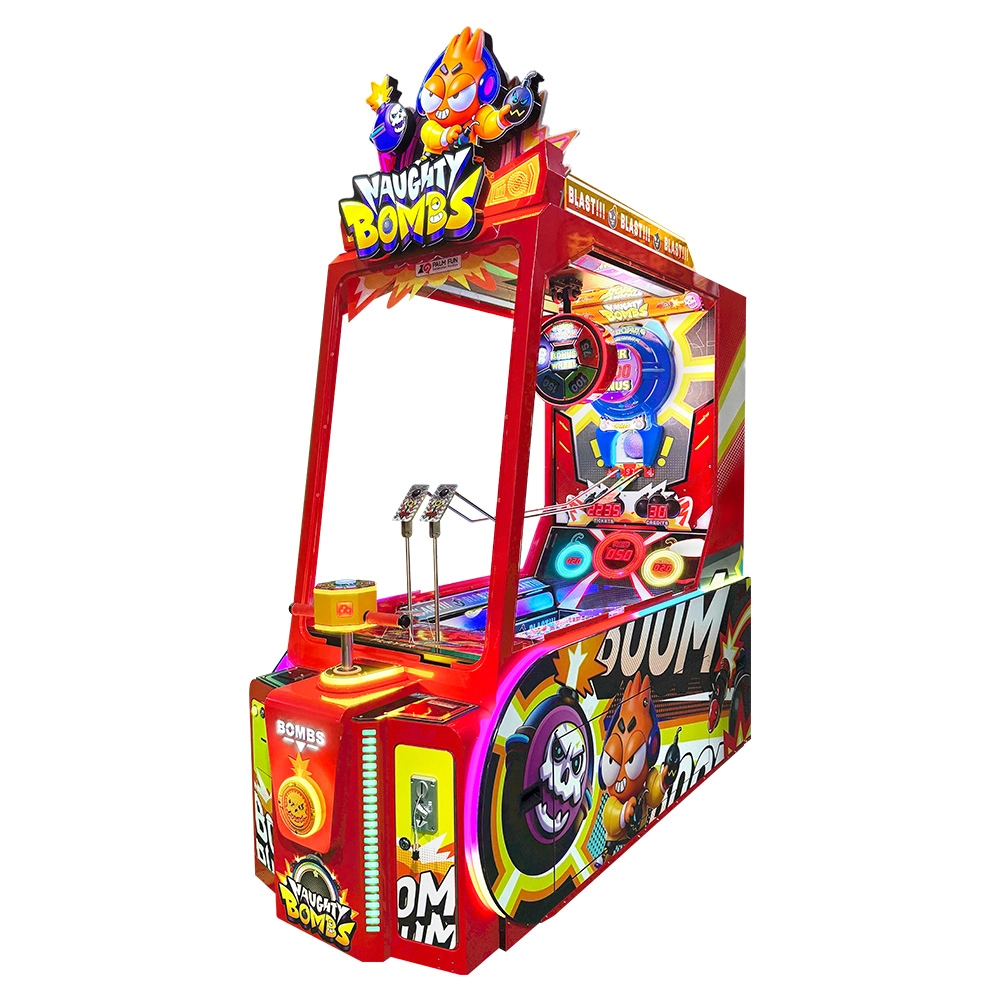
Naughty Bombs Ball Drop Redemption Arcade Game Machine
Naughty Bombs is a ball-drop redemption arcade game featuring rolling-ball gameplay, colored targets, ticket prizes, surprise bonus rewards, lighting and sound effects. Players use timing to launch and drop balls toward colored target areas. The product is presented for arcade, family entertainment center and other entertainment-venue projects, with customizable 110V / 220V AC voltage configuration.
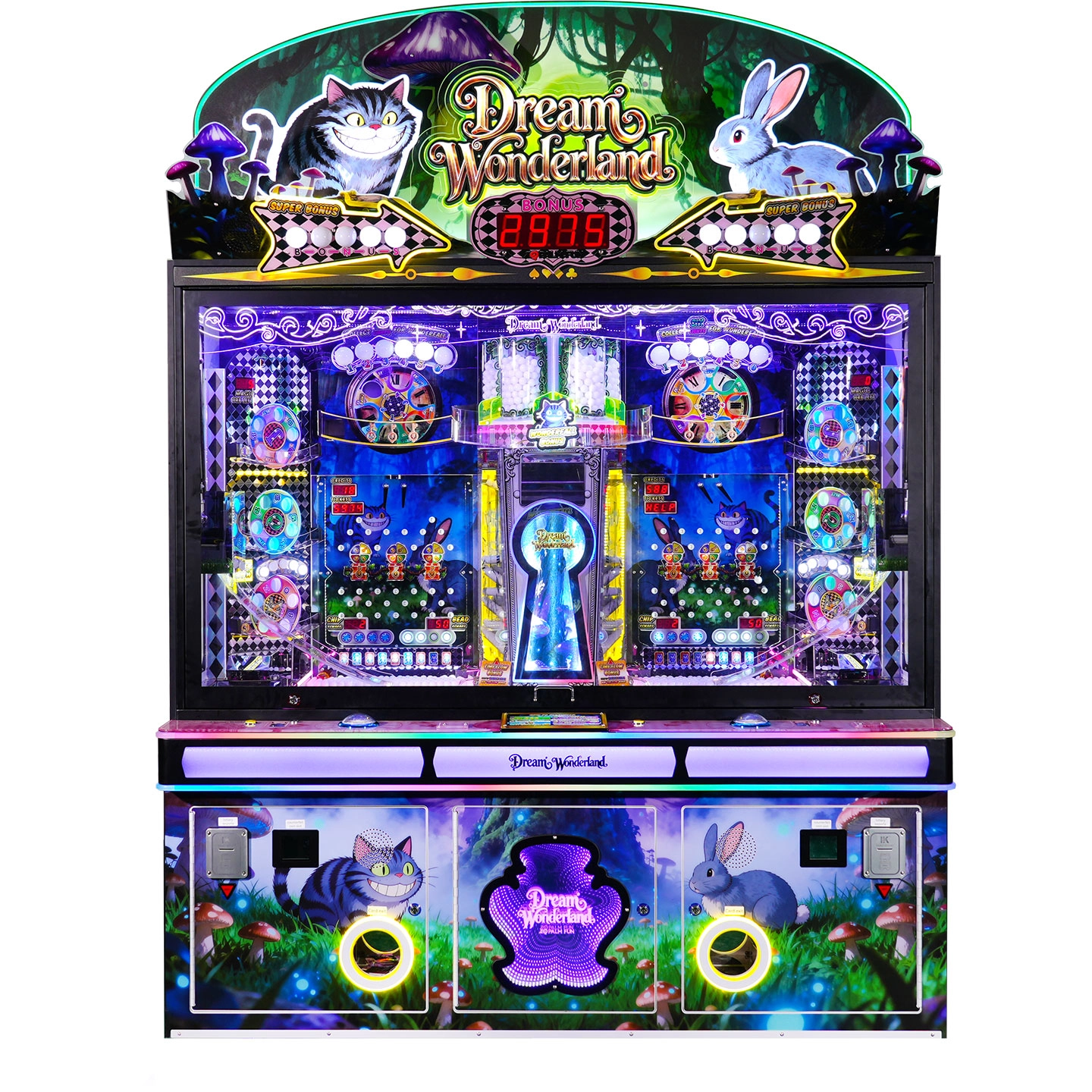
Dream Wonderland Marble Pusher Redemption Game
Enter Dream Wonderland — a magical marble pusher adventure filled with glowing lights, magic orbs, bonus wheels, collectible character cards, and exciting jackpot challenges.
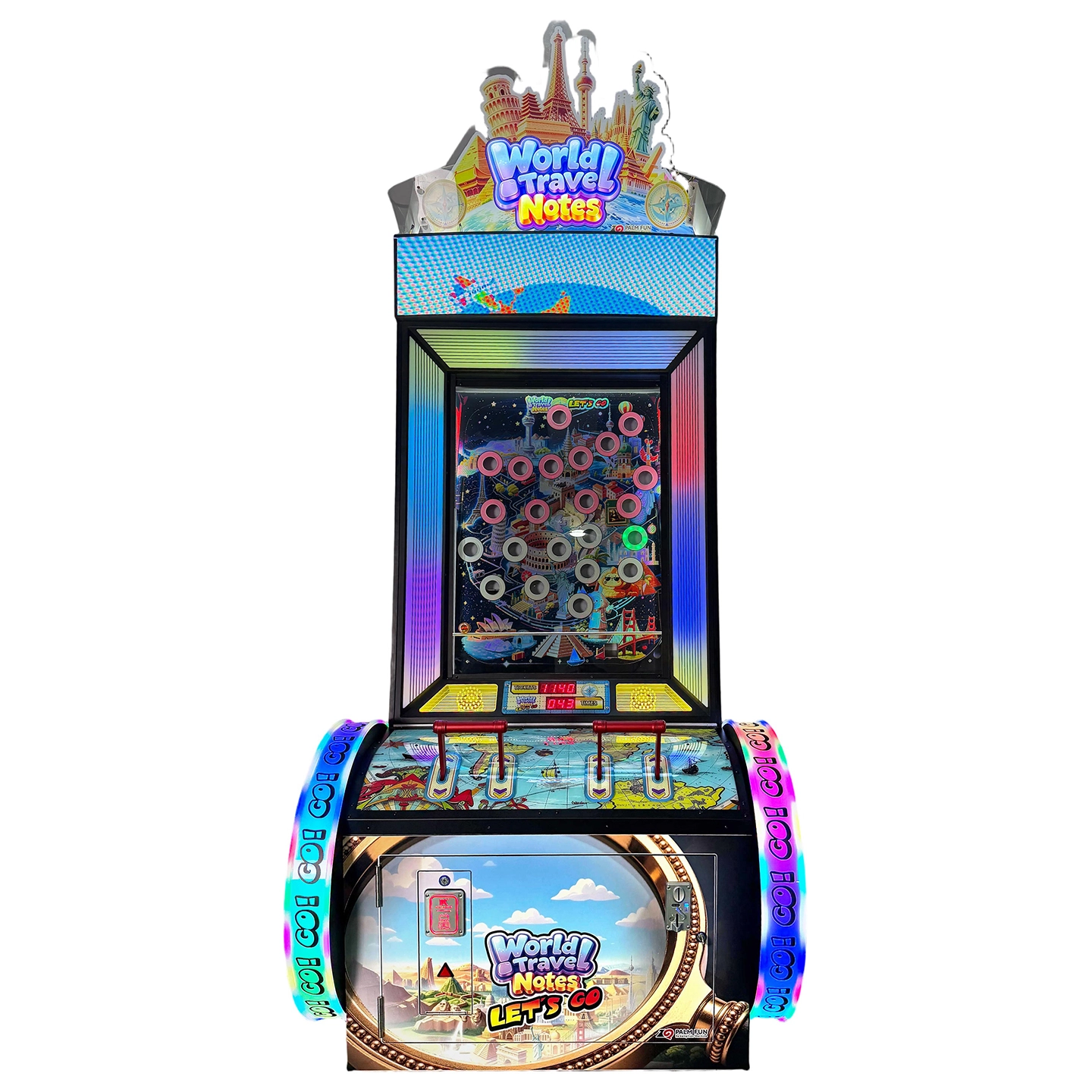
World Travel Notes – Balance Ball Redemption Arcade Game
World Travel Notes is a skill-based balance ball redemption game with a fun world-travel theme. Players use two handles to control the balance bar and guide the ball into each target hole. As the game progresses, the targets become more challenging, leading players toward the final grand prize. With colorful world-travel graphics, dynamic RGB lighting, a live score display, and progressive difficulty, World Travel Notes is designed to attract attention and encourage repeat play in arcades, FECs, shopping malls, and other entertainment venues.
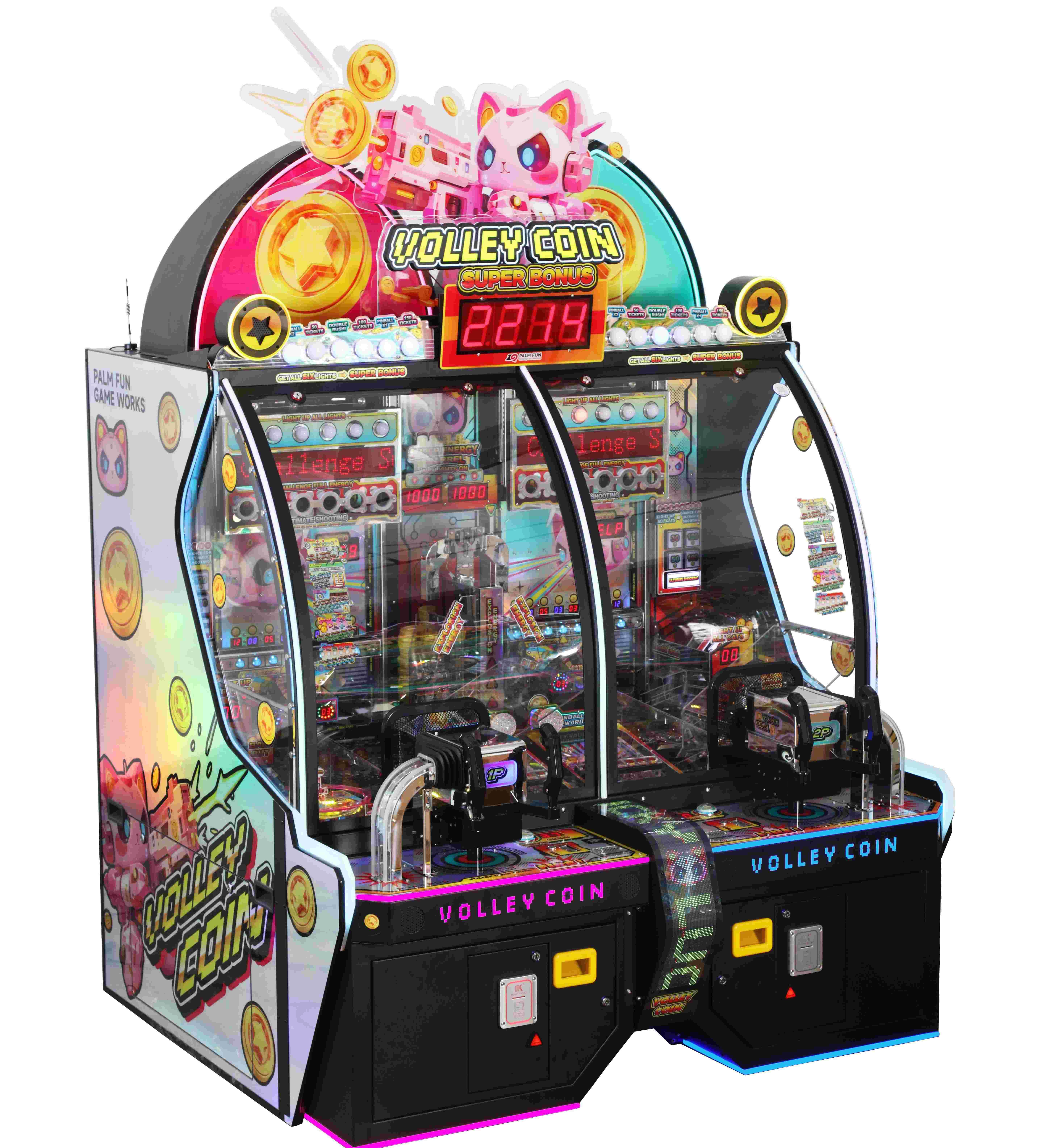
Hybrid Shooting & Pushing | Coin Pusher Arcade Ticket Redemption Machine
Volley Coin is an innovative arcade ticket redemption machine developed by Palm Fun Electronics. Combining the excitement of a fast-paced token shooter game with the proven earning power of a traditional coin pusher machine, Volley Coin offers a fresh and engaging gameplay experience that appeals to players of all ages.

Copyright © 2026 PALM FUN All Rights Reserved. | Privacy Policy • Terms and Conditions | Sitemap
palmfunarcade
Palm Fun Arcade Game
Whatsapp: +8618126837443
PalmFun Arcade
PalmFun_Arcade
PALM FUN Redemption Machine