








Quality control standards and testing for single player arcade machines
- Benchmarks for mechanical and electrical reliability in flipper-style cabinets
- Design validation and materials specification
- Mechanical endurance and lifecycle testing
- Electrical safety, EMC and power integrity
- Standardized testing protocols and inspection workflows for production acceptance
- Incoming materials inspection and supplier control
- In-process verification and poka-yoke assembly controls
- Factory acceptance tests (FAT) and pre-shipment checks
- Measurement methodologies, diagnostics, and field reliability
- Accelerated testing: HALT, HASS and ALT
- Firmware validation and regression management
- Field telemetry, predictive maintenance and ROI
- PALM FUN: quality governance, manufacturing capacity, and product portfolio
- Factory capability and engineering resources
- Traceability, certifications and quality systems
- Product lines and procurement options
- After-sales, spare parts and technical training
- Frequently Asked Questions
High-value buyers and operators require rigorous quality controls and verifiable test protocols when procuring single-player flipper cabinets and coin-operated amusement units; this summary consolidates manufacturing acceptance criteria, compliance pathways (electrical safety, EMC, mechanical fatigue, and software validation), and field diagnostics best practices to minimize downtime and maximize lifetime value while aligning with international quality management guidance from ISO 9001 and safety/electrical consensus standards such as IEC 62368-1, plus industry context from authoritative background on arcade hardware.
Benchmarks for mechanical and electrical reliability in flipper-style cabinets
Design validation and materials specification
Buyers should insist on detailed engineering documentation that specifies material grades, tolerances, and vendor certificates of conformity. Critical subsystems — playfield surface, flipper assemblies, ball return tracks, coin/ticket acceptors, and enclosure panels — must include supplier batch certificates (material composition and finish), coating specifications (to limit abrasion and corrosion), and assembly torque values. A reliable procurement package will include a parts list with approved manufacturer part numbers, lifecycle expectations (MTBF and wear intervals), and maintenance interchangeability notes so facility technicians can service units with predictable mean time to repair (MTTR).
Mechanical endurance and lifecycle testing
Mechanical reliability is a top failure mode for single-user amusement units. Recommended validation tests include cyclical actuation (flipper strike cycles), impact and shock tests for moving parts, and abrasion testing on high-contact surfaces. Typical engineering targets used by manufacturers are in the hundreds of thousands to low millions of actuations for high-wear items; acceptance criteria should specify no functional degradation and defined wear limits at set cycle counts. Accelerated life testing (ALT) enables simulation of multi-year usage in compressed timeframes and should be supplemented with visual and dimensional inspections at interval checkpoints.
Electrical safety, EMC and power integrity
Electrical compliance must be demonstrated through recognized safety standards and electromagnetic compatibility testing. Compliance with IEC/UL/EN harmonized safety norms for audio/video and information technology equipment is required for international deployment; emission and immunity testing should follow regional requirements (CE/EMC for EU, FCC for US). Test reports for mains input tolerances, surge and transient immunity, and earth/ground continuity should be provided. Buyers should also request thermal analysis data for power supplies and cooling schemes to prevent derating under continuous operation.
Standardized testing protocols and inspection workflows for production acceptance
Incoming materials inspection and supplier control
An effective quality program begins with supplier qualification and incoming inspection. Implement an Acceptance Quality Limit (AQL)-based sampling plan for purchased parts and require material test reports (MTRs) for metallic components, RoHS declarations for electronic modules, and certificate of conformance (CoC) for assembly sub-contractors. Supplier scorecards and periodic audits reduce the risk of counterfeit or substandard parts entering the bill of materials.
In-process verification and poka-yoke assembly controls
Manufacturing quality gates must include torque-controlled fastener stations, automated optical inspection (AOI) for PCB population, and fit-check jigs for cabinet alignment. Use poka-yoke (error-proofing) fixtures to ensure connectors and polarity-sensitive components are installed correctly. Maintain inline SPC (statistical process control) to detect drift in critical dimensions and processes; trigger corrective actions before a full batch is affected.
Factory acceptance tests (FAT) and pre-shipment checks
FAT should replicate operator interaction scenarios and include: functional end-to-end verification (coin/ticket flow, scoring, lamps/sound), environmental soak tests (48–72 hours), and shipping vibration simulations per ISTA guidelines. Pre-shipment inspection must verify packaging integrity, inventory of spares, and documentation completeness (user manual, service manual, PCB schematics). Third-party laboratory certification reports should be attached to each lot to facilitate customs and regulatory clearance.
| Metric | Traditional QC (manual) | Automated / AI-enabled QA |
|---|---|---|
| Defect detection rate (typical) | 75–90% (human visual/manual tests) | 95–99% (machine-vision + anomaly detection) |
| Average test time per unit | 30–90 minutes | 10–30 minutes (parallelized diagnostics) |
| Labor cost per test | Higher (skilled operators) | Lower over lifecycle (automation amortized) |
| Coverage (mechanical + electrical + software) | Good mechanical, partial software | Comprehensive with firmware regression + telemetry |
| Initial investment | Low to moderate | Higher (automation + models + sensors) |
Measurement methodologies, diagnostics, and field reliability
Accelerated testing: HALT, HASS and ALT
High-accelerated life testing (HALT) and high-accelerated stress screening (HASS) identify design margins, latent defects, and manufacturing weaknesses before field deployment. These protocols simulate extremes of temperature, vibration, and electrical stress to force failures during development and production validation. Results should feed into corrective design actions and tightened process controls. ALT and fatigue testing data are useful inputs for warranty provisioning and lifecycle cost modeling.
Firmware validation and regression management
Software and firmware are frequent vectors for intermittent failures. Implement CI/CD pipelines for firmware releases, automated regression testing against instrumented test harnesses, and digital signatures for release artifacts to ensure update integrity. Version control and rollback procedures minimize in-field disruptions, and a documented test matrix should map feature tests to acceptance criteria.
Field telemetry, predictive maintenance and ROI
Remote diagnostics and telemetry provide operational data to detect incipient failures (bearing wear, ticket-jam frequencies, power anomalies). Deploy event logging, health scoring, and anomaly detection to enable predictive maintenance strategies that reduce downtime and service visits. Buyers and operators can use telemetry-derived KPIs to compute lifecycle ROI, optimize spare-part stocking, and design payback models for leased installations.
PALM FUN: quality governance, manufacturing capacity, and product portfolio
Factory capability and engineering resources
Founded in 2015, PALM FUN specializes in high-quality mechanical lottery machines, coin pusher machines, and raffle machines. We are dedicated to the R&D, design, production, and sales of innovative gaming and lottery equipment. Our state-of-the-art factory covers 3,000 square meters and is staffed by a team of skilled development engineers committed to advancing technology and enhancing user experience. Our focus on quality and innovation has established us as an industry leader, enabling us to stay ahead of market trends and customer demands. Our products are recognized and popular in over 50 countries worldwide. At PALM FUN, we aim to build long-term partnerships with our clients, providing comprehensive support and services to ensure their success in the competitive gaming market. Our vision is to become the world's leading manufacturer of redemption game machines. Visit us at https://www.palm-fun.com/ to learn more.
Traceability, certifications and quality systems
We maintain an ISO-aligned quality management approach and document traceability at the serial and lot level for critical assemblies. Incoming material records, torque signatures, AOI logs, and final test reports are retained for each production lot. Buyers receive a complete compliance packet for each shipment to facilitate customs, safety auditing, and insurance underwriting. PALM FUN also aligns its electrical and EMC engineering to recognized international norms and engages third-party labs when required for regional approvals.
Product lines and procurement options
Our commercial portfolio includes configurable coin pusher units, innovative redemption games, and compact flipper-style cabinets for single-user entertainment. For buyers who require sample evaluation, the portfolio highlights include a dedicated pinball arcade product and a purpose-built single player arcade model engineered for install-and-play operations. For operators seeking proven ticket redemption performance, review our Coin Pusher Arcade Ticket Redemption Machine and the family-oriented Larva Series Coin Pusher Arcade. Additional corporate and manufacturing information is available on our company page: High Quality Redemption Arcade MachinesManufacturer. PALM FUN offers flexible order quantities, warranty programs, and spare-part kits to align with venue inventory strategies.
After-sales, spare parts and technical training
We support customers with defined warranty terms, configurable spare-part packages, and field technician training programs designed to reduce downtime and repair costs. Remote troubleshooting workflows and replacement part lead-time commitments are part of contractual SLAs for larger deployments. Planning for consumables and wear items, including flipper rubbers, bearings, and ticket printer modules, improves uptime and predictable operating expense modeling for venue operators.
Contact PALM FUN for detailed acceptance test plans, sample evaluation, and turnkey supply options to ensure procurement confidence and operational reliability.
Frequently Asked Questions
What are the essential factory acceptance tests (FAT) for single-player flipper units?
Essential FATs include end-to-end functional verification (coins/tickets, scoring, lights, audio), 48–72 hour soak tests, ingress and vibration simulations for shipping robustness, software regression checks, and a checklist for spare-part kits and documentation completeness.
Which standards should buyers require for electrical safety and EMC compliance?
Buyers should require compliance documentation aligned to recognized safety and EMC standards such as IEC 62368-1 for audio/video and ICT safety, regional EMC/EMI testing (CE/EMC for EU, FCC for US), and any applicable local safety certifications; include third-party lab reports where applicable.
How can operators evaluate mechanical durability before placing a large order?
Request accelerated life test (ALT) and high-cycle mechanical test reports, review failure-mode data and corrective actions, require representative sample units for onsite validation, and define acceptance criteria tied to cycle counts and wear thresholds in the purchase contract.
What traceability and documentation should a reliable supplier provide?
A reliable supplier should provide material test reports, certificates of conformity, production lot records, AOI logs, torque and calibration signatures, final test reports, and serialized traceability to link returned warranty claims to production batches.
How does remote telemetry improve maintenance and reduce downtime for redemption game fleets?
Remote telemetry captures operational events (jams, payment errors, power anomalies), enables trend analysis for predictive maintenance, reduces service call frequency via targeted field interventions, and supports firmware-rollout monitoring; this yields measurable reductions in mean time to repair (MTTR) and increases overall uptime.
Recommended for you
Best commercial coin pusher machine factory manufacturers and supplier brands
Custom redemption game machine Manufacturers and suppliers in China
How to Choose Right stern pinball star trek pro arcade pinball machine manufacturer and supplier in America?
PALM FUN Best professional coin operated arcade game machines manufacturers and supplier brands
FAQs
How to choose the exchange gifts of the tickets(reward points)?
2. Gifts should be diverse. This refers to the variety of items available, providing players with more choices. Everyone's preferences are different, especially adults who have higher expectations for gifts. The venue should strive to meet the diverse needs of these players.
3. Gifts should be fashionable. The younger generation that follows trends is very interested in the hottest items of the moment. If the venue can keep up with the latest trends, it can attract the majority of consumers.
4. Gifts should be innovative. Especially during holidays and seasons, it's a good idea to try out new approaches, creating a competitive advantage with unique offerings. For example, the current trend of combining pop culture and blind box culture.
Effectively solve the pain points of the site and consume the amount of coins deposit.
So the stock quantity of pre-purchased tokens is an issue must be concerned, especially in the highly competitive current market. Only when the amusement park maintains a healthy cycle of token sales, consumption, stockpiling, consumption, and sales again can it ensure sustained growth and profitability.
How to place the redemption machines in a right place?
1,Ensure that the placement and layout of the equipment are distinct and centralized.
2,Keep noise levels low and avoid having a line of sight that spans too far to prevent players from easily taking in everything, which may slow down their movement.
3,Avoid clustering high-ticket payout machines and disperse machines of the same style.
4,Mix popular machines with less popular ones and avoid placing all popular machines together.
What details should be paid attention to in the operation of redemption machines?
① Machine parameter adjustments.
② Equipment performance and gameplay.
③ Decoration and promotion of the area and equipment.
④ Machine placement locations.
⑤ Selection of prizes.
2. The primary operational techniques for redemption machines are in the attractiveness of the gameplay, maintaining a reasonable payout rate, and creating an engaging atmosphere. Depending on the season and market changes, promotional activities should be carried out with a balance, analysis, and follow-up. Therefore, you can consider the following operational methods:
① Collaborate with several venues or businesses to distribute promotional materials to enhance external visibility and interaction.
② Conduct targeted promotional activities to retain returning customers.
③ Organize regular member events to ensure member attraction and consistent customer base. For example, offering extra lottery rewards for a certain amount of tokens deposited or giving a certain number of lottery tickets(reward points) when a membership card is issued.
④ Strengthen interaction with neighboring businesses within the commercial district.
⑤ Organize selective activities for children and offer special deals for exchanging unique children-oriented prizes.
3. Setting parameters correctly:
4.New machine arrival -- Familiarizing with the game--Initial parameter control--Promotional --ctivities and advertising--Adjusting parameters based on the number of players--Multiple adjustments of parameters--Increased popularity--Profitability--Reinvestment.
Note: Data analysis should be conducted weekly to promptly understand the ticket payout probability for each redemption machine. In case of any abnormal situations, swift follow-up and troubleshooting are essential to identify the causes and rectify the issues.
How to guide the players to recognize tickets at the beginning setup of the redemption machines?
Never assume that your players already understand the purpose of lottery tickets(reward points). Even in venues that have been in operation for many years, it is still discovered during on-site interviews with players that many of them are not aware. Don't believe it? Just ask consumers at the venue. The machines, redemption counters, materials hung above the venue, and announcements by staff, among others, can all be channels for informing players about the purpose of lottery tickets(reward points). It is essential to do more promotion, create large displays and large cards, and clearly communicate the purpose of lottery tickets(reward points) to the players.
You may also like
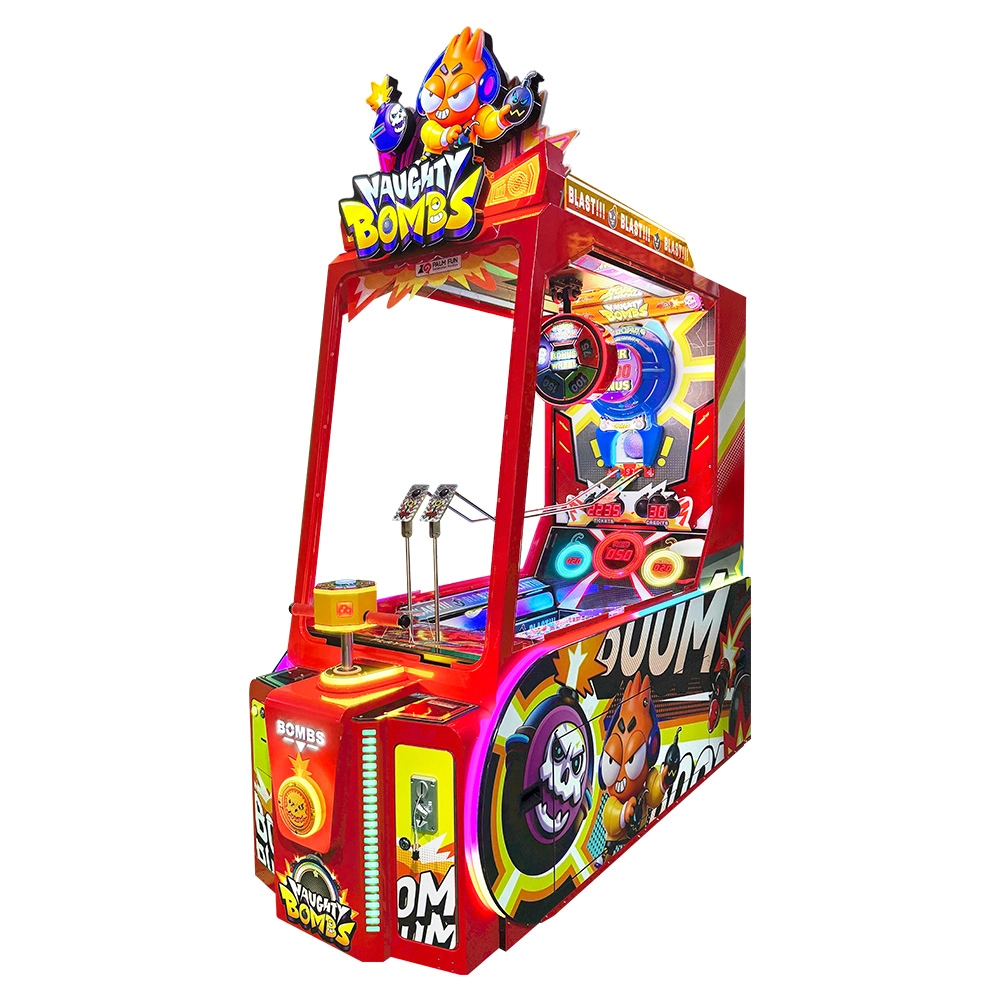
Naughty Bombs Ball Drop Redemption Arcade Game Machine
Naughty Bombs is a ball-drop redemption arcade game featuring rolling-ball gameplay, colored targets, ticket prizes, surprise bonus rewards, lighting and sound effects. Players use timing to launch and drop balls toward colored target areas. The product is presented for arcade, family entertainment center and other entertainment-venue projects, with customizable 110V / 220V AC voltage configuration.
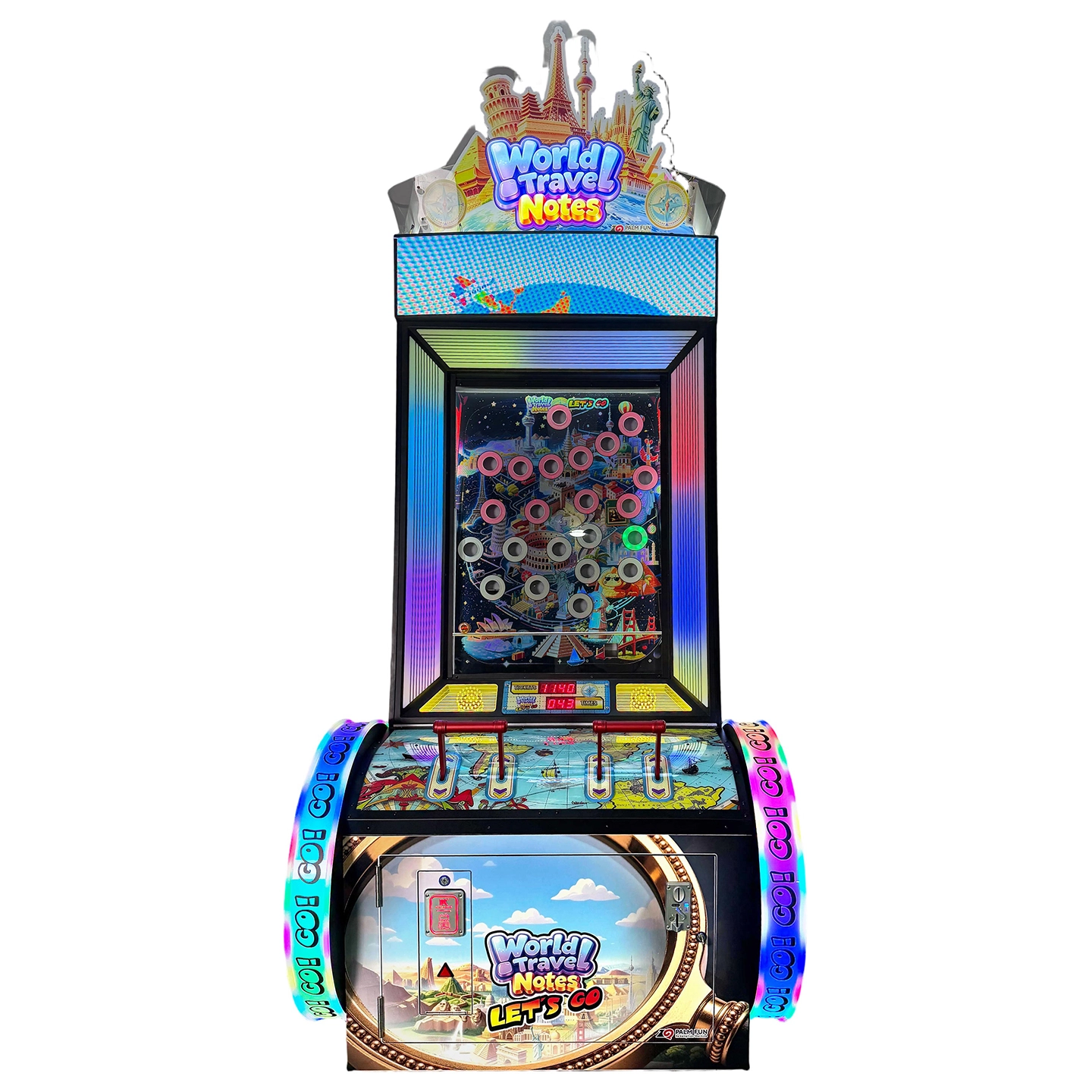
World Travel Notes – Balance Ball Redemption Arcade Game
World Travel Notes is a skill-based balance ball redemption game with a fun world-travel theme. Players use two handles to control the balance bar and guide the ball into each target hole. As the game progresses, the targets become more challenging, leading players toward the final grand prize. With colorful world-travel graphics, dynamic RGB lighting, a live score display, and progressive difficulty, World Travel Notes is designed to attract attention and encourage repeat play in arcades, FECs, shopping malls, and other entertainment venues.
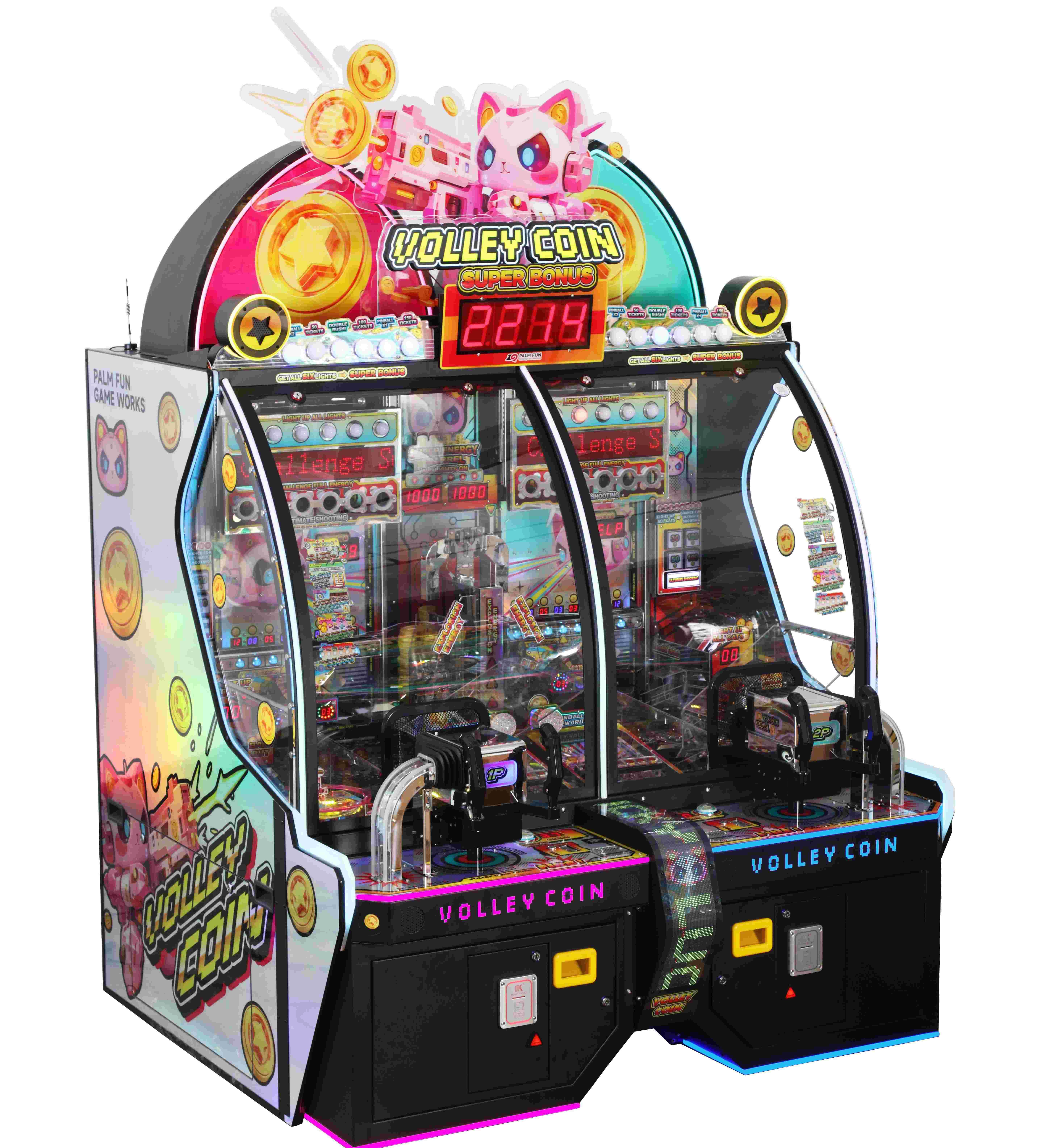
Hybrid Shooting & Pushing | Coin Pusher Arcade Ticket Redemption Machine
Volley Coin is an innovative arcade ticket redemption machine developed by Palm Fun Electronics. Combining the excitement of a fast-paced token shooter game with the proven earning power of a traditional coin pusher machine, Volley Coin offers a fresh and engaging gameplay experience that appeals to players of all ages.
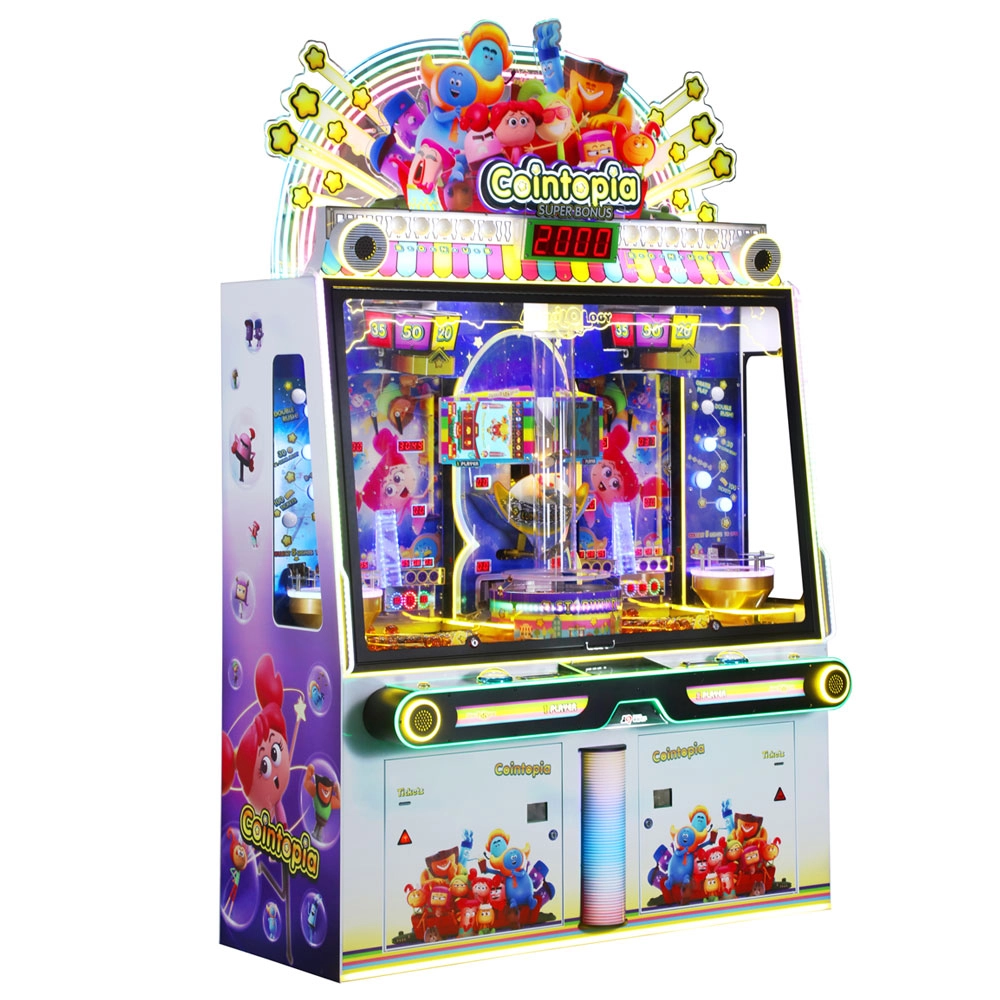
COINTOPIA, Have Fun Together With The Zodiac Buddies in an Utopia
COINTOPIA by PALM FUN is an exciting redemption game machine where players enjoy fun with zodiac buddies in a utopia setting. This ticket redemption machine offers engaging gameplay and rewarding experiences, perfect for family entertainment centers and arcades seeking top-quality redemption games.

Copyright © 2026 PALM FUN All Rights Reserved. | Privacy Policy • Terms and Conditions | Sitemap
palmfunarcade
Palm Fun Arcade Game
Whatsapp: +8618126837443
PalmFun Arcade
PalmFun_Arcade
PALM FUN Redemption Machine