







Risk Mitigation: Common Supply Chain Issues with Coin Pushers
- Where Supply Chain Exposure Begins in Coin-Operated Arcade Equipment
- Component shortages and specification changes
- Production capacity and lead-time uncertainty
- Quality variation across batches
- Practical Controls for Procurement, Shipping, and Installation
- Build supplier qualification into the purchasing process
- Use pre-shipment inspection and acceptance testing
- Protect equipment during international transport
- Operational Resilience After the Machines Arrive
- Maintain a critical-spares strategy
- Standardize maintenance and operator training
- Measure total cost of ownership
- How PALM FUN Helps Buyers Reduce Equipment Supply Risk
- Manufacturing capability and product development
- Relevant equipment for diverse venue concepts
- International support and long-term partnership
- Frequently Asked Questions
- What is the most common supply chain problem with coin pusher machines?
- How can buyers verify a coin pusher supplier before placing an order?
- What should be included in a pre-shipment inspection?
- Which spare parts should an arcade operator keep in stock?
- How does packaging reduce risk during international shipping?
- Why is total cost of ownership important when comparing arcade machines for sale?
Coin pusher machines are high-traffic redemption assets whose profitability depends on reliable components, controlled manufacturing, safe packaging, predictable shipping, spare-parts availability, and responsive after-sales support. Arcade operators, distributors, family entertainment centers, and investors can reduce supply chain risk by qualifying suppliers, documenting technical requirements, verifying electrical and mechanical specifications, planning inventory buffers, inspecting shipments, and selecting a manufacturer with international project experience. This guide explains common procurement risks and shows how PALM FUN supports buyers seeking dependable redemption games, arcade games machines, and arcade machines for sale.
Where Supply Chain Exposure Begins in Coin-Operated Arcade Equipment
Component shortages and specification changes
A coin pusher machine combines metal structures, motors, belts, sensors, control boards, lighting, ticket systems, coin mechanisms, wiring harnesses, acrylic or glass panels, and decorative components. A shortage in any single part can delay an entire production batch. The risk becomes greater when a supplier changes a motor, connector, power supply, or sensor without formal approval. Parts may appear interchangeable while differing in voltage tolerance, mounting dimensions, heat performance, or service life.
Buyers should issue a detailed technical specification before requesting quotations. The document should identify input voltage, frequency, plug type, coin denomination, ticket or card interface, cabinet dimensions, operating environment, safety requirements, artwork files, spare-parts expectations, and acceptance criteria. A controlled bill of materials helps the project owner distinguish an approved alternative from an unreviewed substitution.
Production capacity and lead-time uncertainty
Quoted lead time is not the same as confirmed production capacity. A supplier may have adequate assembly space but limited access to electronic components, trained technicians, packaging materials, or testing personnel. Seasonal demand, factory holidays, port congestion, and concurrent large orders can also affect delivery schedules.
Procurement teams should request a milestone plan covering engineering confirmation, sample approval, material purchasing, assembly, testing, packing, and dispatch. A reliable supplier should identify the critical path and communicate which activities can run in parallel. Contract terms can include approval deadlines, reporting intervals, shipment documentation, and remedies for material delays, while recognizing that force majeure and international logistics remain outside a manufacturer’s complete control.
Quality variation across batches
Inconsistent quality may result from multiple subcontractors, changing materials, rushed assembly, or insufficient end-of-line testing. For amusement equipment, small defects can create operational consequences: a misaligned playfield can affect coin movement, a weak bracket can increase vibration, and an incorrectly calibrated sensor can produce false readings or missed credits.
Quality assurance should cover incoming inspection, in-process checks, electrical testing, mechanical alignment, software or control-function verification, cosmetic review, and final run testing. The internationally recognized ISO 9001 quality management standard provides a useful framework for documented processes, corrective actions, and continual improvement. Certification alone does not guarantee a perfect machine, but a traceable quality system gives buyers stronger evidence that defects are identified and managed systematically.
Practical Controls for Procurement, Shipping, and Installation
Build supplier qualification into the purchasing process
Supplier selection should evaluate more than unit price. Buyers should review factory ownership, engineering capability, production equipment, quality records, export experience, reference markets, warranty terms, spare-parts policy, and communication discipline. A video tour or physical audit can help confirm whether the stated manufacturing capability matches the quotation.
Commercial due diligence should also examine payment stages, intellectual property handling, packaging responsibility, product labeling, shipping terms, and the party responsible for import documentation. The ISO 28000 supply chain security management standard is a useful reference for assessing how an organization identifies and controls security risks across logistics activities.
Use pre-shipment inspection and acceptance testing
Pre-shipment inspection is one of the most effective controls for reducing avoidable receiving problems. A practical inspection plan can verify cabinet quantity, serial numbers, dimensions, paint quality, coin acceptance, playfield operation, lights, sound, ticket dispensing, emergency access, and included accessories. Photographs and short operating videos should be linked to the purchase order or inspection report.
For larger installations, buyers should define a factory acceptance test and a site acceptance test. Factory testing confirms that the equipment meets the agreed specification before dispatch. Site testing confirms that machines operate correctly with the local power supply, network, payment system, flooring, ventilation, and venue workflow. This separation helps identify whether a problem originated in manufacturing, transport, installation, or site conditions.
Protect equipment during international transport
Amusement cabinets can be damaged by impact, moisture, compression, and improper handling. Packaging should be matched to the cabinet’s weight, center of gravity, fragile surfaces, and transport route. Moisture barriers, edge protection, internal bracing, shock-absorbing materials, pallet stability, and clear handling marks can reduce transit exposure. Buyers should confirm whether the shipment uses cartons, wooden cases, or a hybrid solution and whether the materials meet applicable import rules.
Incoterms define important responsibilities between seller and buyer, but they do not replace a logistics plan. The ICC Incoterms 2020 rules clarify cost, risk, delivery, insurance, and customs responsibilities for common trade arrangements. Project owners should still verify cargo insurance, container loading photos, packing lists, commercial invoices, certificates of origin where needed, and the process for reporting concealed damage.
| Supply chain risk | Early warning signal | Recommended control | Buyer evidence to request |
|---|---|---|---|
| Unapproved component substitution | Part numbers change without a revision notice | Freeze the approved bill of materials and require written engineering approval | Component list, revision history, and sample confirmation |
| Production delay | Milestones are missed or progress reports are vague | Use a documented production schedule with milestone reviews | Factory schedule, material status, and assembly photographs |
| Transit damage | Light packaging or unstable palletization | Specify internal bracing, moisture protection, and loading inspection | Packing specification, loading images, and insurance details |
| Installation failure | Unclear power, floor, network, or payment requirements | Complete a site-readiness checklist before dispatch | Installation manual, wiring diagram, and commissioning checklist |
| Extended downtime | No spare-parts list or remote support process | Purchase critical spares and define response procedures | Parts catalog, troubleshooting guide, and warranty policy |
Operational Resilience After the Machines Arrive
Maintain a critical-spares strategy
Downtime costs more than the price of a replacement part because it can reduce player engagement, interrupt revenue, and require technician travel. A sensible spare-parts kit may include fuses, power supplies, motors, belts, sensors, coin mechanisms, switches, lamps or LED modules, ticket dispensers, control components, and commonly used fasteners. The correct list depends on the cabinet design, expected utilization, local service capability, and shipping time to the venue.
Parts should be labeled by machine model and revision. A distributor managing multiple product families should maintain a digital inventory that records part numbers, quantities, supplier lead times, and compatibility. This approach prevents a technically similar component from being installed in an unsuitable cabinet.
Standardize maintenance and operator training
Coin-operated amusement equipment benefits from routine cleaning, coin-path inspection, belt and motor checks, sensor verification, fastener review, ticket-system testing, and cabinet ventilation checks. Operators should receive a concise maintenance schedule with daily, weekly, and monthly tasks. Training should also cover jam recovery, safe power isolation, fault-code recording, and escalation procedures.
Electrical installation must follow local regulations and the venue’s risk assessment. In the United States, buyers can consult the U.S. Consumer Product Safety Commission business guidance for broader product-safety responsibilities, while local authorities and qualified electricians remain responsible for site-specific compliance decisions.
Measure total cost of ownership
A low purchase price can be misleading when a cabinet has high freight costs, poor energy performance, difficult access panels, scarce spare parts, or limited technical support. Total cost of ownership should include purchase price, shipping, duties, installation, payment-system integration, preventive maintenance, consumables, replacement parts, labor, expected downtime, and end-of-life handling.
Revenue modeling should use realistic utilization assumptions rather than peak-day performance. Operators can compare coin throughput, payout configuration, ticket cost, floor-space productivity, service frequency, and player retention. A well-designed redemption game machine should support dependable operation while offering a clear and engaging player objective.
How PALM FUN Helps Buyers Reduce Equipment Supply Risk
Manufacturing capability and product development
PALM FUN was founded in 2015 and specializes in high-quality mechanical lottery machines, coin pusher machines, and raffle machines. Our team is dedicated to research and development, design, production, and sales of innovative gaming and lottery equipment. This integrated capability helps buyers coordinate product requirements, engineering communication, manufacturing, and commercial planning through a more consistent supplier relationship.
Our 3,000-square-meter state-of-the-art factory is supported by skilled development engineers focused on advancing technology and improving user experience. Engineering involvement is especially valuable when a project requires cabinet customization, payment-system compatibility, artwork adaptation, regional electrical specifications, or a particular ticket-redemption workflow.
Relevant equipment for diverse venue concepts
Our product range supports family entertainment centers, amusement arcades, shopping malls, indoor attractions, game zones, and distributor portfolios. Buyers evaluating a Coin Pusher Arcade Ticket Redemption Machine can assess a format that combines physical coin movement with interactive play. The Larva Series Coin Pusher Arcade provides another product direction for operators seeking a themed ball-drop and ticket-redemption experience.
For venues balancing mechanical attractions with competitive cabinet games, our pinball arcade product and single player arcade option can support broader floor planning. Product selection should be based on audience profile, available footprint, power access, expected throughput, maintenance resources, and the desired mix of skill, chance, and redemption mechanics.
International support and long-term partnership
PALM FUN products are recognized and popular in more than 50 countries worldwide. This international presence gives distributors and project owners a useful basis for evaluating export readiness, documentation practices, regional demand, and after-sales coordination. Our objective is not simply to ship cabinets; we aim to build long-term partnerships by providing comprehensive support and services for success in the competitive gaming market.
Buyers seeking a High Quality Redemption Arcade MachinesManufacturer should evaluate how effectively a supplier supports the full project lifecycle. Our approach combines product development, factory production, quality focus, commercial communication, and equipment support. PALM FUN’s vision is to become the world’s leading manufacturer of redemption game machines, with innovation and dependable execution as central priorities.
Frequently Asked Questions
What is the most common supply chain problem with coin pusher machines?
The most common problems are delayed components, unapproved substitutions, inconsistent assembly quality, transit damage, and limited spare-parts availability. A controlled bill of materials, milestone schedule, inspection plan, robust packaging specification, and documented after-sales process can reduce these risks.
How can buyers verify a coin pusher supplier before placing an order?
Buyers should review factory capability, engineering resources, quality procedures, export history, product references, warranty terms, spare-parts support, and communication practices. A virtual or physical factory audit, sample approval, and pre-shipment inspection provide additional evidence before final payment or dispatch.
What should be included in a pre-shipment inspection?
The inspection should verify model and quantity, dimensions, cabinet finish, coin acceptance, playfield movement, motors, sensors, lights, sound, ticket dispensing, safety features, accessories, serial numbers, and packaging condition. Results should be documented with photographs or videos tied to the purchase order.
Which spare parts should an arcade operator keep in stock?
Commonly useful spares include fuses, power supplies, motors, belts, sensors, coin mechanisms, switches, LED modules, ticket dispensers, control components, and fasteners. The final list should be based on the machine model, utilization level, local technician capability, and supplier lead time.
How does packaging reduce risk during international shipping?
Appropriate packaging uses internal bracing, edge protection, moisture barriers, cushioning, stable palletization, and clear handling instructions suited to the cabinet’s weight and fragility. Buyers should also request packing lists, loading photographs, cargo insurance information, and a procedure for reporting damage.
Why is total cost of ownership important when comparing arcade machines for sale?
Total cost of ownership includes the purchase price, freight, duties, installation, payment integration, maintenance, spare parts, labor, energy use, downtime, and end-of-life handling. Reviewing these costs helps buyers avoid selecting equipment that appears inexpensive but creates higher operational expenses over its service life.
Contact PALM FUN to discuss your project requirements or explore our coin pusher machines, redemption games, arcade games machines, and arcade machines for sale at https://www.palm-fun.com/.
Recommended for you
Case Studies: Successful Arcades Using Quarter Pushing Machines
The latest trends for custom coin pusher game supplier | PALM FUN Ultimate Insights
Tips for Wholesale pac man arcade games in China
Top Coin Pusher Machine Suppliers - PALM FUN
FAQs
What is the character of mechanical redemption machine?
What details should be paid attention to in the operation of redemption machines?
① Machine parameter adjustments.
② Equipment performance and gameplay.
③ Decoration and promotion of the area and equipment.
④ Machine placement locations.
⑤ Selection of prizes.
2. The primary operational techniques for redemption machines are in the attractiveness of the gameplay, maintaining a reasonable payout rate, and creating an engaging atmosphere. Depending on the season and market changes, promotional activities should be carried out with a balance, analysis, and follow-up. Therefore, you can consider the following operational methods:
① Collaborate with several venues or businesses to distribute promotional materials to enhance external visibility and interaction.
② Conduct targeted promotional activities to retain returning customers.
③ Organize regular member events to ensure member attraction and consistent customer base. For example, offering extra lottery rewards for a certain amount of tokens deposited or giving a certain number of lottery tickets(reward points) when a membership card is issued.
④ Strengthen interaction with neighboring businesses within the commercial district.
⑤ Organize selective activities for children and offer special deals for exchanging unique children-oriented prizes.
3. Setting parameters correctly:
4.New machine arrival -- Familiarizing with the game--Initial parameter control--Promotional --ctivities and advertising--Adjusting parameters based on the number of players--Multiple adjustments of parameters--Increased popularity--Profitability--Reinvestment.
Note: Data analysis should be conducted weekly to promptly understand the ticket payout probability for each redemption machine. In case of any abnormal situations, swift follow-up and troubleshooting are essential to identify the causes and rectify the issues.
How to place the redemption machines in a right place?
1,Ensure that the placement and layout of the equipment are distinct and centralized.
2,Keep noise levels low and avoid having a line of sight that spans too far to prevent players from easily taking in everything, which may slow down their movement.
3,Avoid clustering high-ticket payout machines and disperse machines of the same style.
4,Mix popular machines with less popular ones and avoid placing all popular machines together.
How to choose the exchange gifts of the tickets(reward points)?
2. Gifts should be diverse. This refers to the variety of items available, providing players with more choices. Everyone's preferences are different, especially adults who have higher expectations for gifts. The venue should strive to meet the diverse needs of these players.
3. Gifts should be fashionable. The younger generation that follows trends is very interested in the hottest items of the moment. If the venue can keep up with the latest trends, it can attract the majority of consumers.
4. Gifts should be innovative. Especially during holidays and seasons, it's a good idea to try out new approaches, creating a competitive advantage with unique offerings. For example, the current trend of combining pop culture and blind box culture.
The revenue proportion of redemption machines
You may also like
Naughty Bombs Ball Drop Redemption Arcade Game Machine
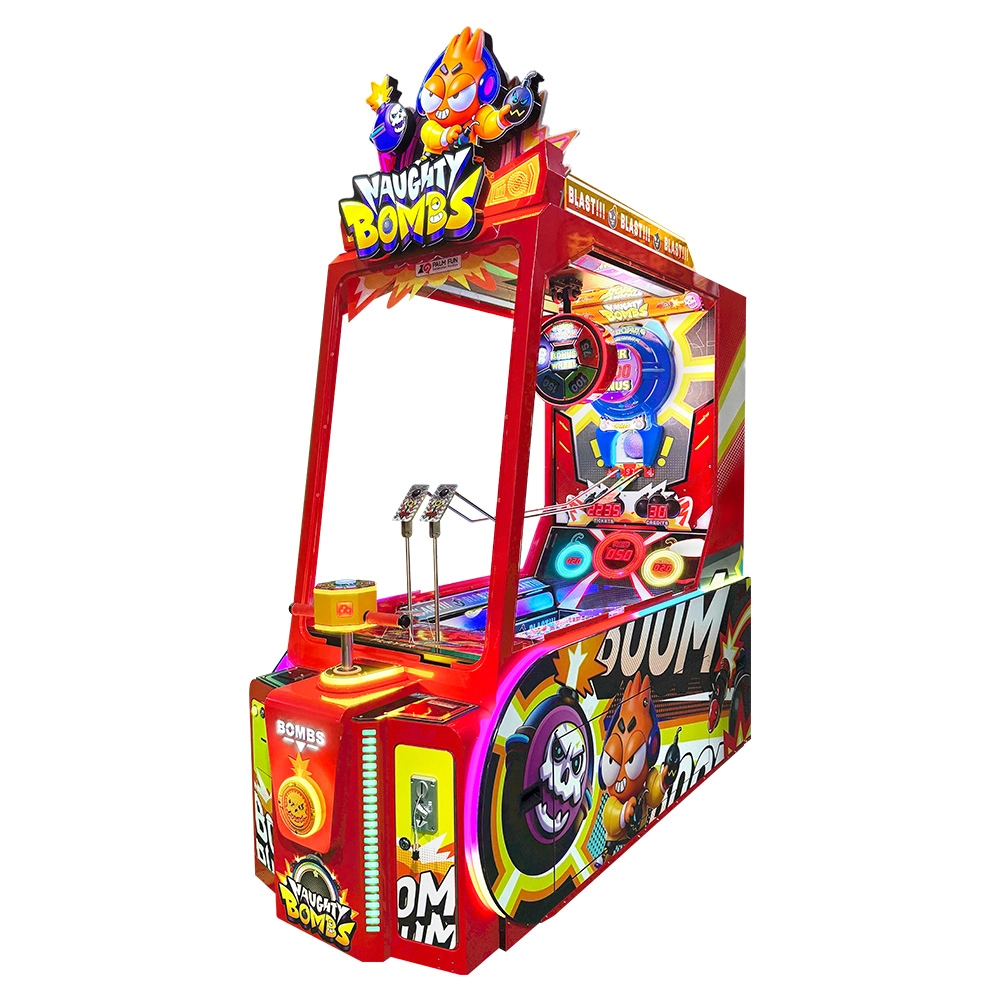
Naughty Bombs is a ball-drop redemption arcade game featuring rolling-ball gameplay, colored targets, ticket prizes, surprise bonus rewards, lighting and sound effects. Players use timing to launch and drop balls toward colored target areas. The product is presented for arcade, family entertainment center and other entertainment-venue projects, with customizable 110V / 220V AC voltage configuration.
Dream Wonderland Marble Pusher Redemption Game
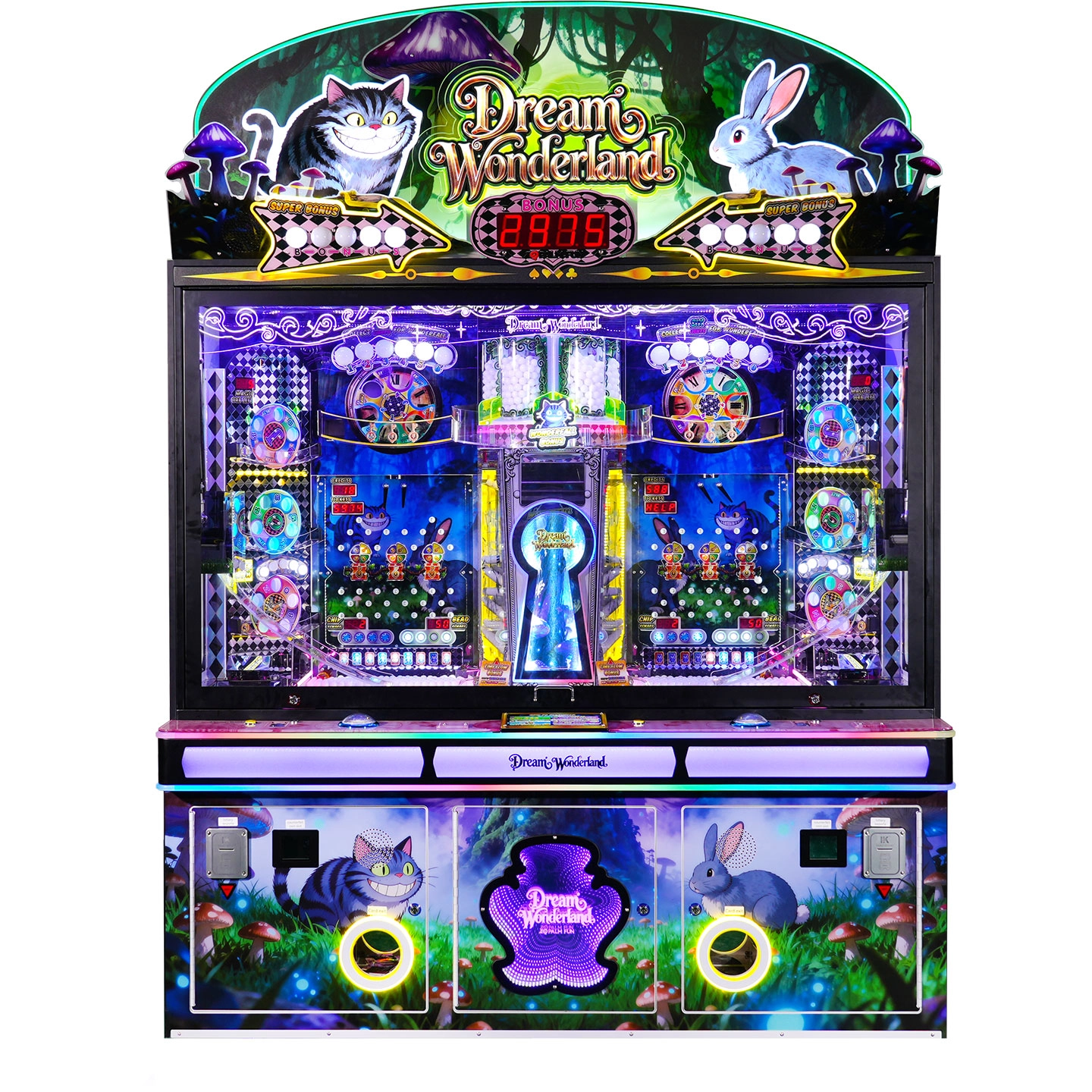
Enter Dream Wonderland — a magical marble pusher adventure filled with glowing lights, magic orbs, bonus wheels, collectible character cards, and exciting jackpot challenges.
World Travel Notes – Balance Ball Redemption Arcade Game
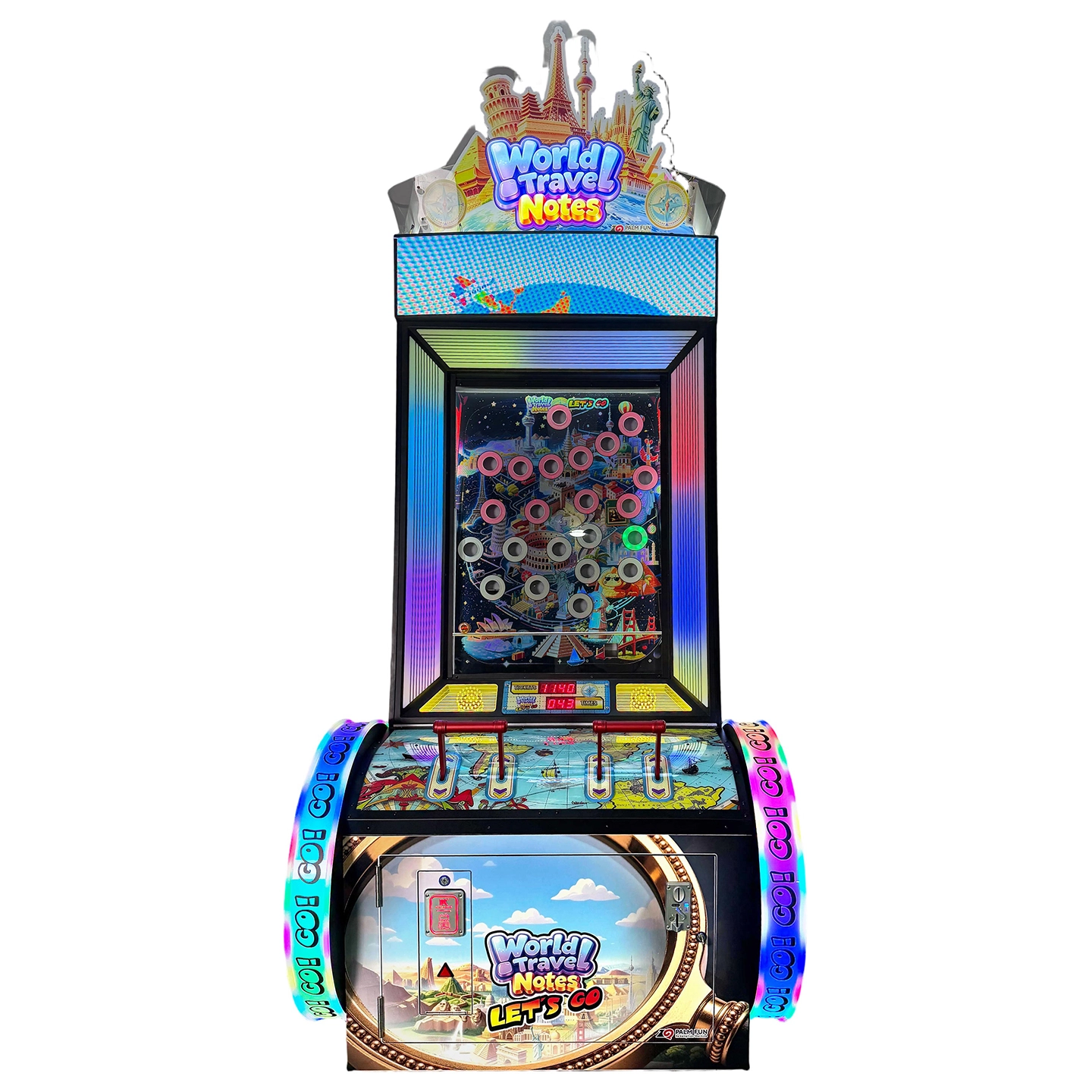
World Travel Notes is a skill-based balance ball redemption game with a fun world-travel theme. Players use two handles to control the balance bar and guide the ball into each target hole. As the game progresses, the targets become more challenging, leading players toward the final grand prize. With colorful world-travel graphics, dynamic RGB lighting, a live score display, and progressive difficulty, World Travel Notes is designed to attract attention and encourage repeat play in arcades, FECs, shopping malls, and other entertainment venues.
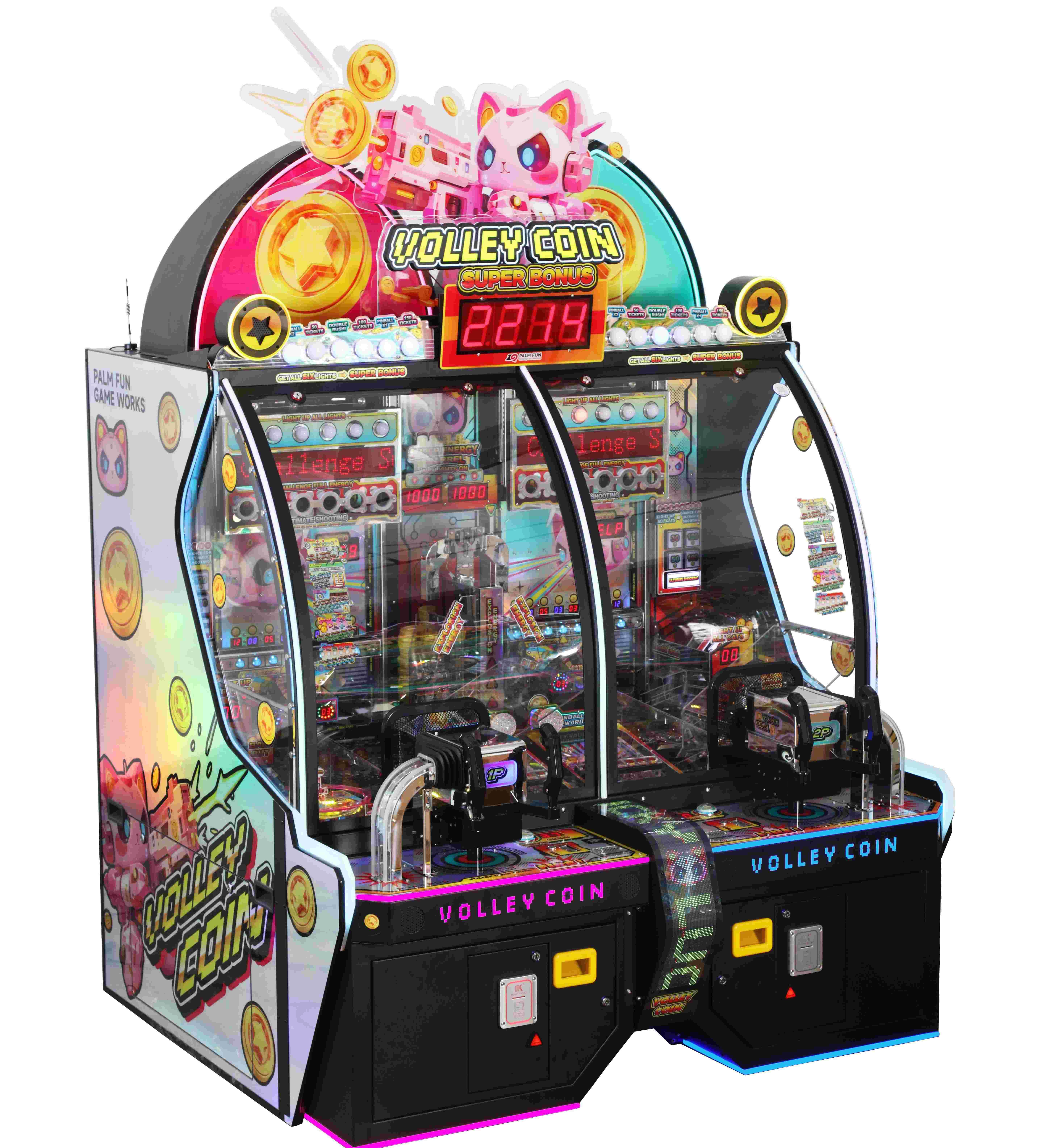
Hybrid Shooting & Pushing | Coin Pusher Arcade Ticket Redemption Machine
Volley Coin is an innovative arcade ticket redemption machine developed by Palm Fun Electronics. Combining the excitement of a fast-paced token shooter game with the proven earning power of a traditional coin pusher machine, Volley Coin offers a fresh and engaging gameplay experience that appeals to players of all ages.
Copyright © 2026 PALM FUN All Rights Reserved. | Privacy Policy • Terms and Conditions | Sitemap
palmfunarcade
Palm Fun Arcade Game
Whatsapp: +8618126837443
PalmFun Arcade
PalmFun_Arcade
PALM FUN Redemption Machine