








Sample inspection & shipping plan for redemption arcade ball game imports
- How to Build a Reliable Import Inspection Workflow
- Define the approved sample as the commercial reference
- Separate visual, mechanical, electrical, and software checks
- Use sampling intelligently instead of inspecting only one unit
- Technical Acceptance Criteria for Ball-Based Redemption Equipment
- Test the complete player and operator journey
- Inspect the components that commonly create service calls
- Match safety and documentation to the destination market
- Shipping Preparation, Container Loading, and Import Control
- Choose the shipping term with responsibility clearly allocated
- Build a loading record that protects against disputes
- Prepare the import file before the vessel departs
- Why PALM FUN Is a Practical Supplier Option
- Engineering and manufacturing support for project procurement
- A portfolio aligned with redemption venue economics
- International reach and long-term partnership model
- Frequently Asked Questions
Importing a redemption arcade ball game requires more than approving product photographs or checking a quoted unit price. A reliable plan connects sample inspection, engineering confirmation, production control, export documentation, container loading, and destination acceptance into one traceable process. Buyers should approve a representative machine before mass production, verify play functions and ticket or prize logic, record electrical and packaging requirements, define an inspection standard in writing, and align the shipment with an agreed Incoterm. This approach helps distributors, family entertainment centers, amusement parks, and arcade operators reduce rework, customs delays, concealed transport damage, and disagreements over warranty responsibility. For procurement teams comparing a (/product/pinball-raiders-pinball-arcade-machine.html) or another redemption game machine, the strongest supplier is not simply the lowest-cost factory; it is the partner that can provide repeatable quality, clear evidence, compliant documentation, and practical after-sales support.
How to Build a Reliable Import Inspection Workflow
Define the approved sample as the commercial reference
The approved sample should become the physical and technical reference for the production order. Its model number, cabinet dimensions, colors, artwork, control layout, software version, prize settings, voltage, frequency, plug type, and accessory list should be recorded in a signed specification sheet. Photographs alone are insufficient because they may not reveal sound behavior, ball-feed consistency, sensor positioning, internal wiring, or the relationship between player actions and redemption output.
Buyers should request a sample video showing startup, attract mode, normal play, error recovery, ticket dispensing or prize output, and a complete reset cycle. If the machine uses a coin mechanism, bill acceptor, card reader, or network interface, each option should be identified as standard, optional, or excluded. The commercial invoice and purchase order should use the same product name and model code as the approved sample to avoid ambiguity during inspection and customs clearance.
Separate visual, mechanical, electrical, and software checks
A professional inspection form divides acceptance criteria into measurable categories. Visual checks include cabinet alignment, paint finish, graphics placement, acrylic or glass condition, LED uniformity, button labeling, edge protection, and the absence of sharp or loose components. Mechanical checks cover ball loading, ramps, flippers, guides, gates, moving parts, coin return, door hinges, locks, leveling feet, and access panels.
Electrical checks should confirm rated input voltage, grounding continuity, fuse or breaker identification, cable routing, connector security, power-up behavior, standby consumption where relevant, and safe shutdown. Software checks should cover game rules, difficulty settings, credit accounting, free-play and operator modes, ticket ratios, audit menus, language options, and recovery after power interruption. Buyers importing into different regions should consult the applicable national requirements rather than assuming that a certificate issued for one market automatically satisfies another.
Use sampling intelligently instead of inspecting only one unit
For a single prototype or small order, a 100% inspection is often practical. For a larger batch, the purchase contract should define the inspection level and the consequences of defects. The ISO 2859-1 sampling standard provides a recognized framework for attribute-based sampling using lot size, inspection level, and acceptance quality limits. It does not decide the acceptable quality level for a buyer; that commercial decision must be agreed before production.
A sensible plan may combine 100% verification of model, voltage, accessories, and shipping marks with statistical sampling of cosmetic and functional characteristics. Critical defects, such as exposed live parts, incorrect voltage, unsafe cabinet instability, or a nonfunctional game board, should normally trigger rejection or corrective action regardless of the sample size. Major defects can include failed ball return, inaccurate credit accounting, or damaged structural panels. Minor defects may include small cosmetic marks that do not affect operation, but the tolerance should still be documented.
| Inspection stage | Recommended evidence | Typical buyer decision | Primary risk controlled |
|---|---|---|---|
| Pre-production review | Signed specification, drawings, software options, approved artwork | Release or revise production | Specification drift |
| During-production inspection | Assembly photographs, component confirmation, wiring and cabinet checks | Continue, correct, or hold | Hidden process defects |
| Pre-shipment inspection | Serial numbers, test records, packing photographs, carton count | Approve shipment or issue corrective action | Nonconforming finished goods |
| Container loading inspection | Container number, seal number, loading sequence, pallet and carton images | Authorize dispatch | Shortage, mix-up, or loading damage |
| Arrival acceptance | Unpacking video, damage report, function test, discrepancy list | Accept, claim, or request replacement parts | Transport and installation losses |
Technical Acceptance Criteria for Ball-Based Redemption Equipment
Test the complete player and operator journey
Functional testing should reproduce how the machine will operate in a real venue. Inspectors should insert credits, start a game, launch or control the ball, observe scoring zones, confirm the display response, complete the round, and verify the redemption result. The test should be repeated enough times to identify intermittent failures rather than relying on one successful play.
Operator functions deserve equal attention. The audit menu should display credible counts for plays, credits, tickets, or prizes where those functions are included. Settings should be protected against accidental changes, and the operator should receive the correct keys, manuals, reset instructions, and spare parts. If the machine is connected to a venue management system, the buyer should test communication, addressing, firmware compatibility, and recovery after network interruption before shipment.
Inspect the components that commonly create service calls
Ball-based amusement equipment often depends on small components that experience repeated impact or friction. Examine ball diameter consistency, feed paths, sensors, switches, solenoids, motors, bearings, belts, ramps, fasteners, and transparent protective panels. The inspection should confirm that balls do not jam under normal loading and that access points allow operators to remove a trapped ball without damaging the cabinet.
Check sound volume, lighting behavior, display readability, control response, and heat buildup during an extended run. A burn-in test can expose loose connectors, thermal shutdown, abnormal noise, unstable power supplies, and software freezes. The duration should be specified by the buyer because a short factory demonstration is not equivalent to a venue simulation. A test log containing date, machine serial number, test conditions, result, and inspector signature creates useful evidence for warranty discussions.
Match safety and documentation to the destination market
Electrical and product compliance is destination-specific. The supplier should provide the documents required by the buyer's market, which may include a declaration of conformity, test reports, component certificates, wiring diagrams, risk information, and user instructions. Buyers should verify whether local rules apply to amusement devices, low-voltage equipment, electromagnetic compatibility, children’s products, accessibility, or fire safety.
The ISO 9001 quality management guidance is useful when evaluating whether a manufacturer has controlled processes, documented responsibilities, and continual improvement practices, but ISO 9001 certification is not a product safety certificate. Likewise, a supplier should not present a general factory certificate as proof that every machine meets the importer's technical obligations. The safest procurement practice is to identify the destination requirements before the purchase order and list the required documents as contractual deliverables.
Shipping Preparation, Container Loading, and Import Control
Choose the shipping term with responsibility clearly allocated
The purchase order should state the agreed Incoterm, named place, currency, insurance responsibility, export clearance responsibility, and transfer point for risk. The International Chamber of Commerce Incoterms 2020 rules explain the allocation of tasks, costs, and risks between seller and buyer. Incoterms do not replace the sales contract, determine product quality, or automatically define warranty procedures.
Before booking, confirm the machine's packed dimensions, gross weight, carton count, pallet requirements, and container utilization. Oversized cabinets may require knock-down packaging or a different loading plan. A freight forwarder should verify whether the cargo can be safely handled through the selected port, whether wooden packaging requires treatment marks, and whether the destination has special rules for batteries, lighting components, electronic devices, or spare parts.
Build a loading record that protects against disputes
Container loading should be photographed from several angles. The record should show the empty container, container number, cleanliness and dryness, packaging condition, loading sequence, bracing materials, moisture protection, carton labels, machine serial numbers, and final seal. Heavy cartons should be placed to maintain stability, and fragile acrylic, glass, displays, and control panels should be protected from concentrated pressure.
Packaging should be selected for the route and handling environment, not merely for factory storage. Appropriate measures may include corner protection, shock-absorbing foam, desiccant, stretch film, reinforced cartons, wooden crates, anti-static bags for sensitive boards, and clear orientation labels. The IMO CTU Code guidance for cargo transport units offers internationally recognized principles for packing and securing cargo. It is especially relevant when multiple cabinet sizes, spare parts, and promotional materials share one container.
Prepare the import file before the vessel departs
The pre-alert package should normally include the commercial invoice, packing list, bill of lading or sea waybill, certificate of origin when required, insurance document when applicable, product specification, serial-number list, installation manual, and conformity documents. Harmonized System classification must be confirmed with a customs broker because classification depends on product design, function, jurisdiction, and local customs interpretation. The World Customs Organization Harmonized System overview explains the global classification framework, but it does not provide a universally guaranteed code for every amusement machine.
Buyers should compare the packing list with the physical loading record and verify that spare boards, coin mechanisms, balls, keys, cables, and manuals are listed correctly. If a shipment contains mixed models, each carton should carry a model code and serial number. This simple control reduces receiving errors and helps the operator identify replacement parts years after installation.
Why PALM FUN Is a Practical Supplier Option
Engineering and manufacturing support for project procurement
PALM FUN was founded in 2015 and specializes in high-quality mechanical lottery machines, coin pusher machines, and raffle machines. Our team is dedicated to the research and development, design, production, and sales of innovative gaming and lottery equipment. This product knowledge is relevant to buyers that need more than a standard cabinet: they may require a defined prize model, customized artwork, regional power configuration, branded user interface, or an installation plan for multiple venues.
Our 3,000-square-meter factory is supported by skilled development engineers focused on technology and user experience. For a procurement team, that capability can improve communication between concept, prototype, production, inspection, and after-sales service. Buyers can use a documented sample approval process to confirm the cabinet, game behavior, electrical configuration, and accessory package before mass production is released.
A portfolio aligned with redemption venue economics
PALM FUN develops products for operators seeking engaging play, repeat visits, manageable maintenance, and a clear redemption proposition. Our portfolio includes Coin Pusher Arcade Ticket Redemption Machine, Larva Series Coin Pusher Arcade, redemption games, and arcade games machines. These categories allow distributors and facility owners to plan a balanced floor that combines mechanical interaction, ticket rewards, visual attraction, and different price points.
For buyers reviewing arcade machines for sale, the evaluation should include not only the purchase price but also footprint, power consumption, operator access, spare-part availability, game throughput, packaging efficiency, and expected service workload. A coin pusher machine may support sustained repeat play, while a ball-based redemption cabinet can add a more active skill element. The right mix depends on venue demographics, local prize rules, floor layout, and revenue objectives.
International reach and long-term partnership model
PALM FUN products are recognized and used in more than 50 countries. Our international focus supports buyers that need consistent export communication, destination-market coordination, and documentation for multi-unit projects. We aim to build long-term partnerships by providing comprehensive support rather than treating shipment departure as the end of the relationship.
Our vision is to become a leading global manufacturer of redemption game machines. Buyers can review our High Quality Redemption Arcade MachinesManufacturer capabilities, compare product configurations, and request a project-specific sample inspection and shipping plan. The strongest result comes when the supplier, buyer, freight forwarder, customs broker, and venue operator agree on acceptance criteria before production begins.
After arrival, the receiving team should record carton condition before opening, photograph any impact or water exposure, compare serial numbers with the packing list, and test every machine before public operation. Defects should be reported with video, photographs, model codes, and clear descriptions. A structured handover file containing manuals, wiring diagrams, settings, spare-part references, and inspection records gives the operator a faster path to commissioning and future maintenance.
Frequently Asked Questions
What should be included in an approved sample inspection for a redemption arcade game?
The approved sample should be documented with its model number, cabinet dimensions, artwork, software version, voltage, frequency, plug type, accessory list, play functions, redemption settings, and photographs or video showing startup, normal play, output, and reset behavior.
Should every imported arcade machine be inspected before shipment?
For a single prototype or small order, 100% inspection is often practical. For larger batches, buyers can combine 100% checks of model, voltage, accessories, and shipping marks with statistical sampling of cosmetic and functional characteristics, using an agreed inspection level and acceptance criteria.
Which shipping documents are normally required for arcade game imports?
A pre-alert package commonly includes the commercial invoice, packing list, bill of lading or sea waybill, certificate of origin when required, insurance document when applicable, product specification, serial-number list, installation manual, and conformity documents. Exact requirements depend on the destination market and customs broker.
How can buyers reduce transport damage to redemption machines?
Buyers should confirm packed dimensions and weights, use packaging suited to the route, protect acrylic, glass, displays, and control panels, add suitable bracing and moisture protection, photograph the loading process, and record the container number and seal number.
Do Incoterms define product quality and warranty responsibility?
No. Incoterms allocate specified tasks, costs, and risks between seller and buyer, but they do not replace the sales contract, determine product quality, or automatically define warranty procedures. Inspection criteria and warranty terms should be stated separately.
What should an operator do when machines arrive at the destination?
The receiving team should photograph carton condition before opening, record impact or water exposure, compare serial numbers with the packing list, test every machine before public operation, and report discrepancies with videos, photographs, model codes, and clear descriptions.
Recommended for you
How Coin Pusher Arcade Machines Work: Mechanics Explained
OEM & ODM Customization Options for Larva Game Cabinets
Factory Audit KPIs for Coin Pusher Arcade Machine Suppliers
PALM FUN Best professional classic arcade cabinet manufacturers and supplier brands
FAQs
How to place the redemption machines in a right place?
1,Ensure that the placement and layout of the equipment are distinct and centralized.
2,Keep noise levels low and avoid having a line of sight that spans too far to prevent players from easily taking in everything, which may slow down their movement.
3,Avoid clustering high-ticket payout machines and disperse machines of the same style.
4,Mix popular machines with less popular ones and avoid placing all popular machines together.
The revenue proportion of redemption machines
How to select and match redemption machines?
2. the number of redemption game configuration: according to the characteristics of redemption machine, the proportion of redemption game configuration generally accounts for 30±5% of the whole field.
3. there are a lot of equipment on the market now, but less innovative, so the choice should be targeted in management and planning. We can divide redemption machines into children's, adults's, families, etc., according to different standards, with complete varieties and many styles, so as to give guests more choices and more changes. Specific can refer to the following:
① Inserting tokens in high frequency (mainly in mechanical redemption machines)
② Skill based games (mainly in mechanical redemption machines)
③ Games with edutainment significance (mainly in video redemption machines)
④ Entertaining games (mainly in video redemption machines)
Why redemption ticket machines are popular?
2.Redemption machines are becoming the most important breakthrough to enhance the sustainable operation of indoor arcade game halls.
3.Players are of all ages and they continue to expand.
How to choose the exchange gifts of the tickets(reward points)?
2. Gifts should be diverse. This refers to the variety of items available, providing players with more choices. Everyone's preferences are different, especially adults who have higher expectations for gifts. The venue should strive to meet the diverse needs of these players.
3. Gifts should be fashionable. The younger generation that follows trends is very interested in the hottest items of the moment. If the venue can keep up with the latest trends, it can attract the majority of consumers.
4. Gifts should be innovative. Especially during holidays and seasons, it's a good idea to try out new approaches, creating a competitive advantage with unique offerings. For example, the current trend of combining pop culture and blind box culture.
You may also like
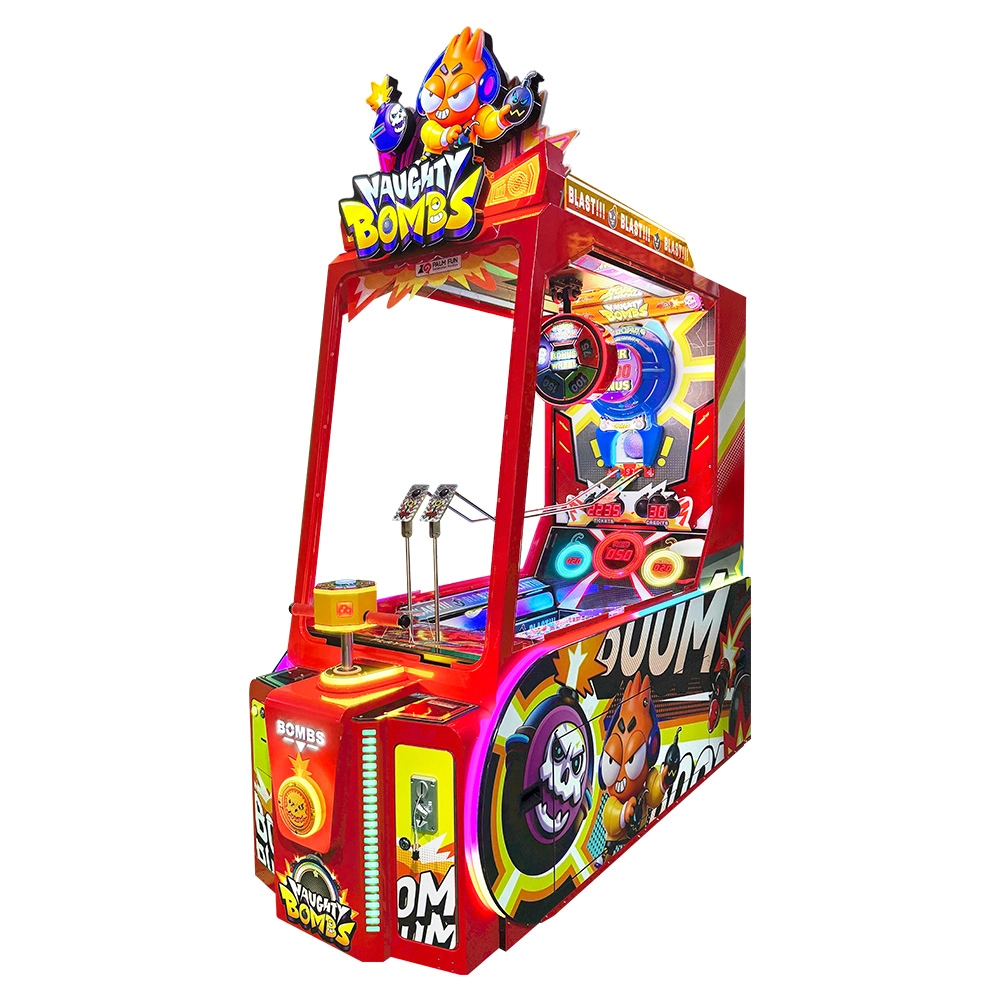
Naughty Bombs Ball Drop Redemption Arcade Game Machine
Naughty Bombs is an exciting redemption arcade game designed to capture attention and keep players coming back for more. Featuring a bright red cabinet, dynamic lighting, fun sound effects, and interactive rolling-ball gameplay, it delivers nonstop excitement in a compact footprint. Players test their timing skills by launching and dropping balls into colored targets to unlock surprise bonus rewards and ticket prizes. With easy-to-learn mechanics, engaging skill-based action, and strong visual appeal, Naughty Bombs is an ideal attraction for arcades, FECs, and entertainment venues looking to boost player engagement and revenue.
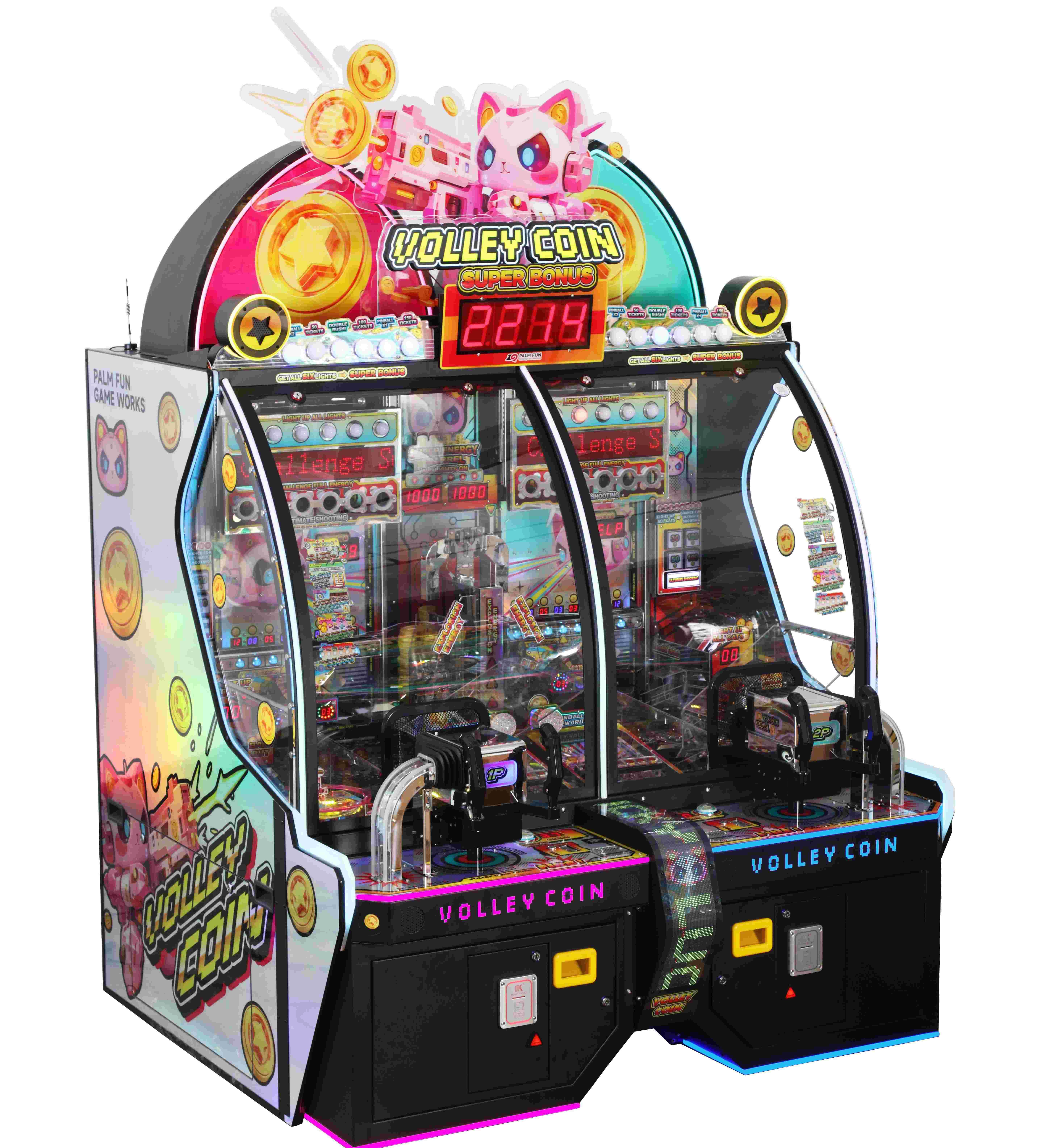
Hybrid Shooting & Pushing | Coin Pusher Arcade Ticket Redemption Machine
Volley Coin is an innovative arcade ticket redemption machine developed by Palm Fun Electronics. Combining the excitement of a fast-paced token shooter game with the proven earning power of a traditional coin pusher machine, Volley Coin offers a fresh and engaging gameplay experience that appeals to players of all ages.
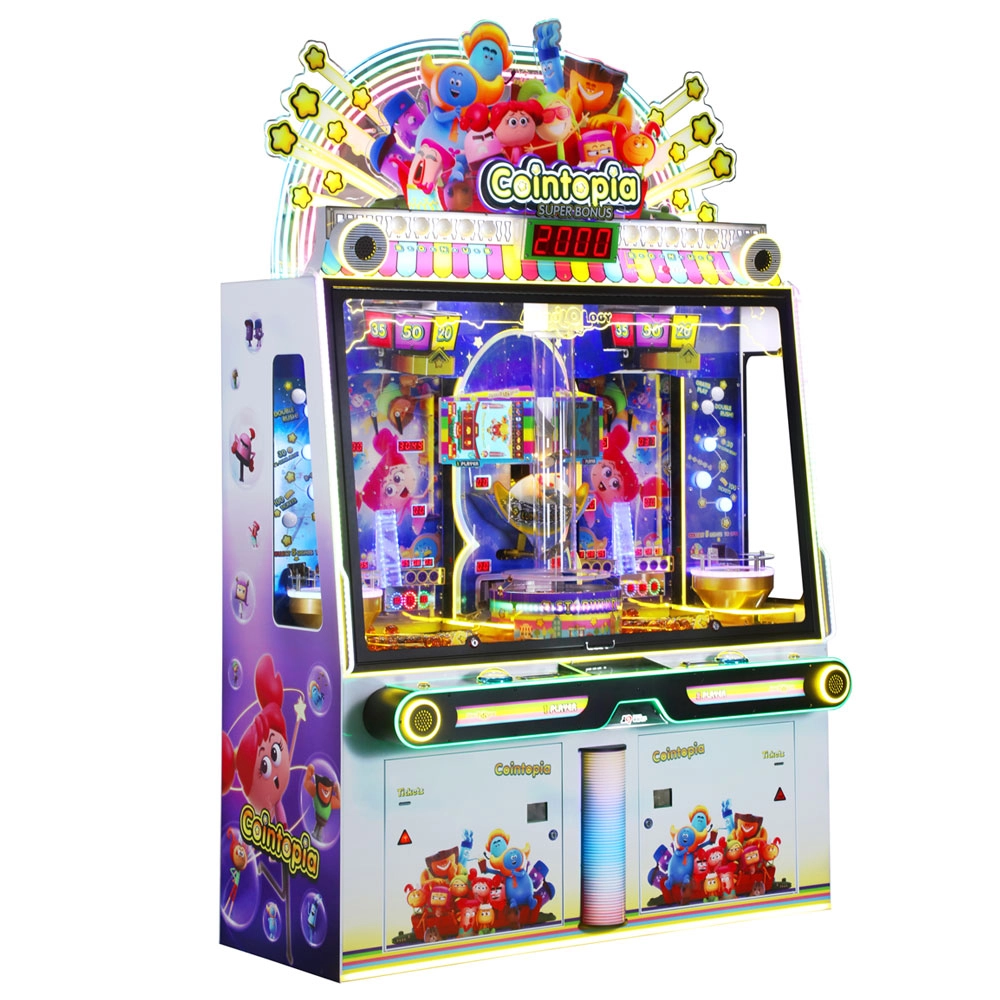
COINTOPIA, Have Fun Together With The Zodiac Buddies in an Utopia
COINTOPIA by PALM FUN is an exciting redemption game machine where players enjoy fun with zodiac buddies in a utopia setting. This ticket redemption machine offers engaging gameplay and rewarding experiences, perfect for family entertainment centers and arcades seeking top-quality redemption games.
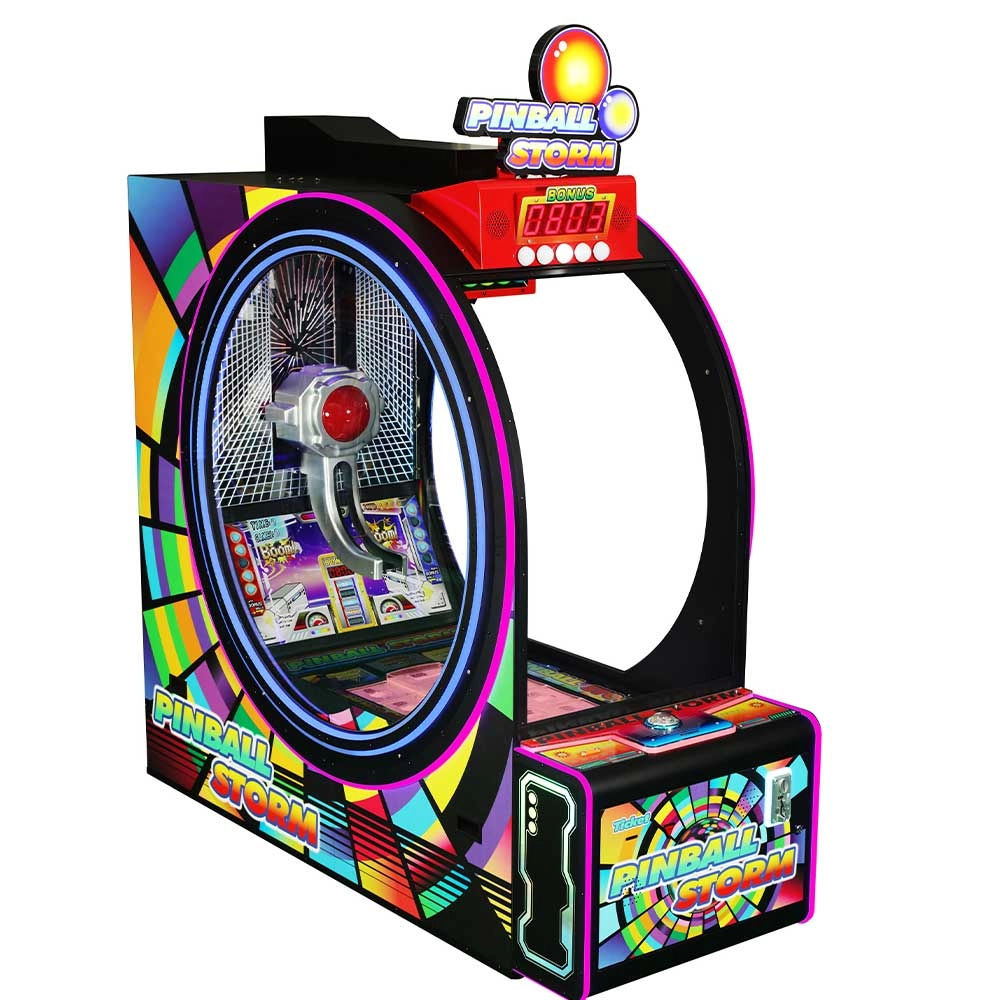
Pinball Storm Ball Dropping Arcade Ticket Redemption Machine
Classic pinball reimagined! Hit, bounce, and win prizes. Trigger the Pinball Storm for an epic multi-ball blast!

Copyright © 2026 PALM FUN All Rights Reserved. | Privacy Policy • Terms and Conditions | Sitemap
palmfunarcade
Palm Fun Arcade Game
Whatsapp: +8618126837443
PalmFun Arcade
PalmFun_Arcade
PALM FUN Redemption Machine