







Supplier Audit Template: Verifying Coin Pusher Factory Capabilities
- How to Assess a Coin Pusher Manufacturer Before Purchase
- Confirm legal identity, ownership, and production scope
- Evaluate engineering and customization capability
- Factory Audit Checklist for Quality, Safety, and Reliability
- Inspect the quality management process
- Verify mechanical and electrical safety controls
- Audit software, payment, and ticket functions
- Commercial Due Diligence and Supplier Performance Evidence
- Compare capacity, lead time, and delivery controls
- Measure total cost of ownership and serviceability
- Why PALM FUN Can Support a Structured Procurement Audit
- Integrated development and manufacturing resources
- Product range aligned with redemption operations
- International reach and partnership support
- Frequently Asked Questions
Supplier auditing is the most reliable way to verify whether a coin pusher factory can deliver safe, durable, compliant, and commercially viable equipment at the required volume. For arcade investors, distributors, family entertainment centers, and operators building a pinball arcade, the audit should examine more than product appearance. A complete review covers legal identity, engineering resources, bill of materials, mechanical testing, electrical safety, quality procedures, production capacity, spare parts, documentation, packaging, logistics, and post-sale service. This supplier audit template helps buyers distinguish a genuine manufacturing partner from a trading company that cannot control design, components, or delivery performance.
How to Assess a Coin Pusher Manufacturer Before Purchase
Confirm legal identity, ownership, and production scope
Begin with corporate verification. Request the supplier’s registered Guangzhou Palm Fun Electronics Co., Ltd., business license, factory address, export history, ownership information, and product scope. The legal entity receiving payment should match the entity named on the quotation, sales contract, commercial invoice, and warranty documentation. A mismatch does not automatically indicate fraud, but it creates additional contractual and warranty risk that should be resolved before a deposit is paid.
Buyers should also determine whether the supplier is an original equipment manufacturer, an integrator, or a reseller. A factory that designs its own mechanical platform normally has stronger control over coin transport, ticket dispensing, cabinet structure, software integration, and replacement parts. A trading company may still offer useful sourcing services, but the audit must identify the actual production site and the party responsible for corrective action.
Ask for a live video tour or an on-site inspection showing incoming material storage, machining or fabrication areas, electrical assembly, software testing, final assembly, quality inspection, finished-goods storage, and packing. A staged showroom cannot substitute for evidence of operational manufacturing.
Evaluate engineering and customization capability
A reliable redemption equipment supplier should be able to explain the machine architecture, not merely demonstrate the cabinet. Review drawings or specifications for the playfield, coin acceptance path, motor and gear system, sensor arrangement, ticket or prize interface, control board, lighting, sound, access doors, and service points. Ask which parts are proprietary, which are standard catalog components, and which are sourced from third parties.
Customization capability should be tested through a structured request. For example, ask whether the factory can adjust cabinet graphics, voltage and frequency, language settings, coin or token compatibility, ticket protocols, prize modes, card-reader interfaces, lighting sequences, and network connectivity. The supplier should define what changes are included in the standard price, what requires a new mold or engineering fee, and how modifications affect lead time and warranty coverage.
Engineering maturity is also visible in revision control. Request a sample product specification, drawing revision, software version record, change notification procedure, and approved component list. Without revision discipline, a buyer may receive a later production batch with a different motor, sensor, controller, or power supply that has not been validated against the original acceptance criteria.
Factory Audit Checklist for Quality, Safety, and Reliability
Inspect the quality management process
Quality should be evaluated as a repeatable process rather than a final visual inspection. Ask for incoming inspection records, in-process checklists, finished-product inspection reports, nonconformance records, corrective-action reports, and sample retention practices. A supplier aligned with the principles of ISO 9001 quality management systems should be able to explain how requirements are documented, measured, reviewed, and improved, even if the specific factory is not certified.
The audit should trace one unit from component receipt to shipment. Check whether motors, bearings, wiring harnesses, power supplies, control boards, acrylic panels, coin mechanisms, and fasteners have identifiable specifications. Verify that inspectors use calibrated tools where measurement matters. For example, cabinet dimensions, door alignment, electrical output, grounding continuity, coin acceptance, sensor response, and ticket dispensing should be measured against defined tolerances.
Request evidence of endurance testing. A suitable test plan may include repeated coin insertions, continuous motor operation, pusher plate cycling, ticket payout trials, lighting operation, door opening and closing, simulated jam recovery, and power restart testing. The exact duration should reflect the intended operating environment, but the important procurement question is whether the factory has written acceptance criteria and records results instead of relying on an informal demonstration.
Verify mechanical and electrical safety controls
Mechanical safety includes stable cabinet construction, guarded moving parts, secure fasteners, smooth edges, controlled access to service areas, safe glass or acrylic retention, and protection against foreseeable misuse. The risk assessment should consider children, frequent public operation, unauthorized access, dropped coins, spilled liquids, and maintenance performed by operators with limited technical training. The principles of hazard identification and risk reduction described in ISO 12100 machinery safety guidance provide a useful benchmark for the audit.
Electrical review should cover input voltage, frequency, fuse ratings, grounding, insulation, wire routing, connector locking, power-supply certification, overheating protection, and emergency isolation during service. Ask for wiring diagrams, component datasheets, dielectric or insulation test records where applicable, and the recommended power conditions. Buyers importing equipment should confirm the requirements of the destination market rather than assuming that one certificate covers every jurisdiction.
Where the equipment includes electronic assemblies, check restricted-substance declarations and market-specific documentation. The European Union’s RoHS Directive is one example of a regional requirement affecting electrical and electronic products. Compliance claims should identify the product model, applicable directive or standard, test laboratory, report date, and component scope. Generic logos without supporting documents should not be accepted as proof.
Audit software, payment, and ticket functions
Modern arcade games machines may include card readers, cashless payment systems, ticket counters, remote monitoring, programmable difficulty, and promotional modes. The audit should document who owns the software, whether firmware updates are controlled, how settings are protected, and what happens if communication with an external payment device fails.
Test coin recognition with the approved denomination or token, coin return behavior, jam clearing, credit registration, play initiation, ticket accounting, and power recovery. If tickets or prizes are part of the business model, verify whether payout settings can be changed securely and whether local regulations impose additional controls. Operators should receive service menus, password policies, error-code definitions, and a clear process for restoring approved settings after maintenance.
Commercial Due Diligence and Supplier Performance Evidence
Compare capacity, lead time, and delivery controls
Production capacity should be validated with evidence, not a large number stated in a sales presentation. Ask for the number of assembly stations, staffing by function, typical monthly output, current order backlog, peak-season planning, and the maximum quantity that can pass final inspection within the required schedule. A factory may have sufficient theoretical capacity but still miss delivery dates when key boards, motors, or cabinets are unavailable.
Request a production schedule showing sample approval, artwork confirmation, component procurement, assembly, testing, packing, and shipment milestones. The contract should define the approved sample, acceptable cosmetic tolerances, inspection rights, late-delivery remedies, spare-parts obligations, warranty response times, and procedures for handling rejected units. For larger projects, a pre-shipment inspection by the buyer or an independent agency can reduce disputes over quantity and conformity.
Packaging deserves a separate review because arcade cabinets can suffer damage from vibration, moisture, compression, and repeated handling. Inspect carton strength, internal foam or molded protection, palletization, moisture control, accessory labeling, shock indicators where appropriate, and loading photographs. Confirm whether the packed dimensions and gross weight match the freight quotation and venue access limitations.
Measure total cost of ownership and serviceability
The lowest unit price is rarely the lowest operating cost. Build a total-cost model covering equipment price, tooling, artwork, freight, import duties, installation, payment-system integration, spare parts, consumables, technician labor, downtime, and disposal. A machine with a slightly higher purchase price may generate stronger return on investment if it has easier access, better component availability, lower jam frequency, and faster troubleshooting.
Serviceability should be tested during the audit. Can an operator replace a motor, sensor, fuse, belt, control board, or ticket dispenser without removing the entire playfield? Are connectors keyed and labeled? Are spare parts stocked for the expected warranty period? Does the supplier provide exploded diagrams, maintenance schedules, troubleshooting videos, and remote technical support? These details directly influence uptime in a busy family entertainment center.
| Audit area | Minimum evidence to request | Higher-confidence evidence | Buyer decision signal |
|---|---|---|---|
| Factory identity | Business license and address | Live production tour, export records, matching contract entity | Low risk when legal and manufacturing identities align |
| Quality control | Final inspection checklist | Incoming, in-process, final, and corrective-action records | Repeatable controls are stronger than visual inspection alone |
| Safety | Product specification and wiring diagram | Risk assessment, test reports, grounding and insulation records | Documentation must match the exact model and market |
| Capacity | Stated monthly output | Production plan, component inventory, backlog data, sample schedule | Capacity is credible when supported by operational records |
| Reliability | Demonstration unit | Endurance test protocol, recorded results, failure analysis | Test evidence supports more predictable uptime |
| After-sales service | Warranty statement | Spare-parts list, response SLA, manuals, remote diagnostics | Clear service infrastructure lowers lifecycle risk |
Why PALM FUN Can Support a Structured Procurement Audit
Integrated development and manufacturing resources
PALM FUN was founded in 2015 and specializes in mechanical lottery machines, coin pusher machines, raffle machines, and other innovative gaming and lottery equipment. Our work covers research and development, industrial design, production, and sales, allowing project owners to discuss product performance and commercial requirements with a supplier that understands the complete equipment lifecycle.
Our factory covers 3,000 square meters and is supported by skilled development engineers focused on technology, reliability, and user experience. This structure is relevant to an audit because buyers can evaluate more than finished cabinets: they can review the supplier’s approach to product development, mechanical design, component selection, assembly, testing, and improvement. For operators comparing Coin Pusher Arcade Ticket Redemption Machine options, engineering discussion should include player flow, payout logic, service access, and venue layout.
Product range aligned with redemption operations
Our product portfolio supports different venue strategies, from compact amusement areas to larger family entertainment centers. Buyers evaluating a coin pusher machine can compare mechanical play, ball-drop features, ticket redemption, visual attraction, and maintenance access according to the site’s audience and revenue model. The Larva Series Coin Pusher Arcade provides an example of how a themed format can combine coin-pushing interaction with ticket-oriented entertainment.
PALM FUN also develops broader High Quality Redemption Arcade MachinesManufacturer solutions for buyers sourcing arcade machines for sale, redemption games, and arcade games machines from one experienced partner. Product selection should still be based on the buyer’s own audit criteria: target country, electrical requirements, venue footprint, payment method, expected utilization, service resources, and local prize or ticket practices.
International reach and partnership support
PALM FUN products are recognized and used in more than 50 countries. International distribution experience can help buyers address export packaging, documentation, communication across time zones, and project coordination. Our objective is to build long-term partnerships by providing product information, technical assistance, spare-parts support, and implementation guidance for competitive gaming venues.
For procurement teams, the appropriate next step is to convert the audit into a scored supplier matrix. Assign weighted values to safety documentation, quality systems, engineering responsiveness, factory transparency, delivery reliability, warranty performance, and projected operating cost. Then compare quotations only after each supplier has responded to the same technical specification. This process reduces the risk of selecting equipment based solely on photographs, promotional claims, or initial price.
For product specifications, factory capability discussions, and project recommendations, contact PALM FUN or review the available redemption equipment at https://www.palm-fun.com/.
Frequently Asked Questions
What documents should buyers request from a coin pusher factory?
Buyers should request the business license, factory address, product specifications, wiring diagrams, component datasheets, quality inspection records, test reports, warranty terms, spare-parts list, packaging details, and market-specific compliance documents.
How can a buyer verify that a supplier is a real manufacturer rather than a trading company?
The buyer should compare the legal entity on the contract with the factory identity, request a live or on-site production tour, inspect assembly and testing areas, ask about engineering ownership, and verify whether the supplier controls drawings, components, quality records, and corrective actions.
What should be tested during a coin pusher machine factory audit?
The audit should test coin recognition, coin return, credit registration, pusher cycling, sensor response, ticket dispensing, lighting, sound, power restart, jam recovery, door access, grounding, and other functions defined in the approved acceptance criteria.
Why is total cost of ownership important when buying redemption equipment?
Total cost of ownership includes the purchase price, tooling, freight, duties, installation, payment integration, spare parts, labor, downtime, and disposal. A machine with a higher initial price can be more profitable if it provides stronger reliability, easier maintenance, and better component availability.
What evidence demonstrates that a factory has adequate production capacity?
Credible evidence includes assembly-station details, staffing, monthly output records, current backlog, component inventory, production schedules, sample approval milestones, and documented final inspection capacity rather than an unsupported monthly production claim.
What after-sales support should an arcade equipment supplier provide?
A supplier should provide clear warranty terms, replacement parts, service manuals, wiring diagrams, troubleshooting guidance, response times, remote technical support, maintenance instructions, and a defined process for handling failures or rejected units.
Recommended for you
Everything You Need to Know About raider redemption Boston customization
The Ultimate Guide to Arcade Ball Drop Game: Tips, Tricks, and Strategies
How to Win Arcade Ticket Games - Tips & Tricks | PALM FUN
Tips for Wholesale pac man arcade games in China
FAQs
Research & Development, how hard is the birth of one new redemption machines?
Effectively solve the pain points of the site and consume the amount of coins deposit.
So the stock quantity of pre-purchased tokens is an issue must be concerned, especially in the highly competitive current market. Only when the amusement park maintains a healthy cycle of token sales, consumption, stockpiling, consumption, and sales again can it ensure sustained growth and profitability.
How to guides works?
For example:
1. Proactively inquire and add tickets when a customer's machine is running low on tickets.
2. Assist players in organizing tickets when they are dispensed unevenly.
3. Offer storage tools such as storage bags and rubber bands when customers are arranging their tickets.
4. Provide free USB interfaces for charging near popular machines and rest areas.
5. Implement warm and clear reminders, guidance on ticket redemption, and directional signage, all designed to be straightforward. The more of these you provide, the more players will appreciate your thoughtfulness, without finding it bothersome.
The revenue proportion of redemption machines
How to place the redemption machines in a right place?
1,Ensure that the placement and layout of the equipment are distinct and centralized.
2,Keep noise levels low and avoid having a line of sight that spans too far to prevent players from easily taking in everything, which may slow down their movement.
3,Avoid clustering high-ticket payout machines and disperse machines of the same style.
4,Mix popular machines with less popular ones and avoid placing all popular machines together.
You may also like
Naughty Bombs Ball Drop Redemption Arcade Game Machine
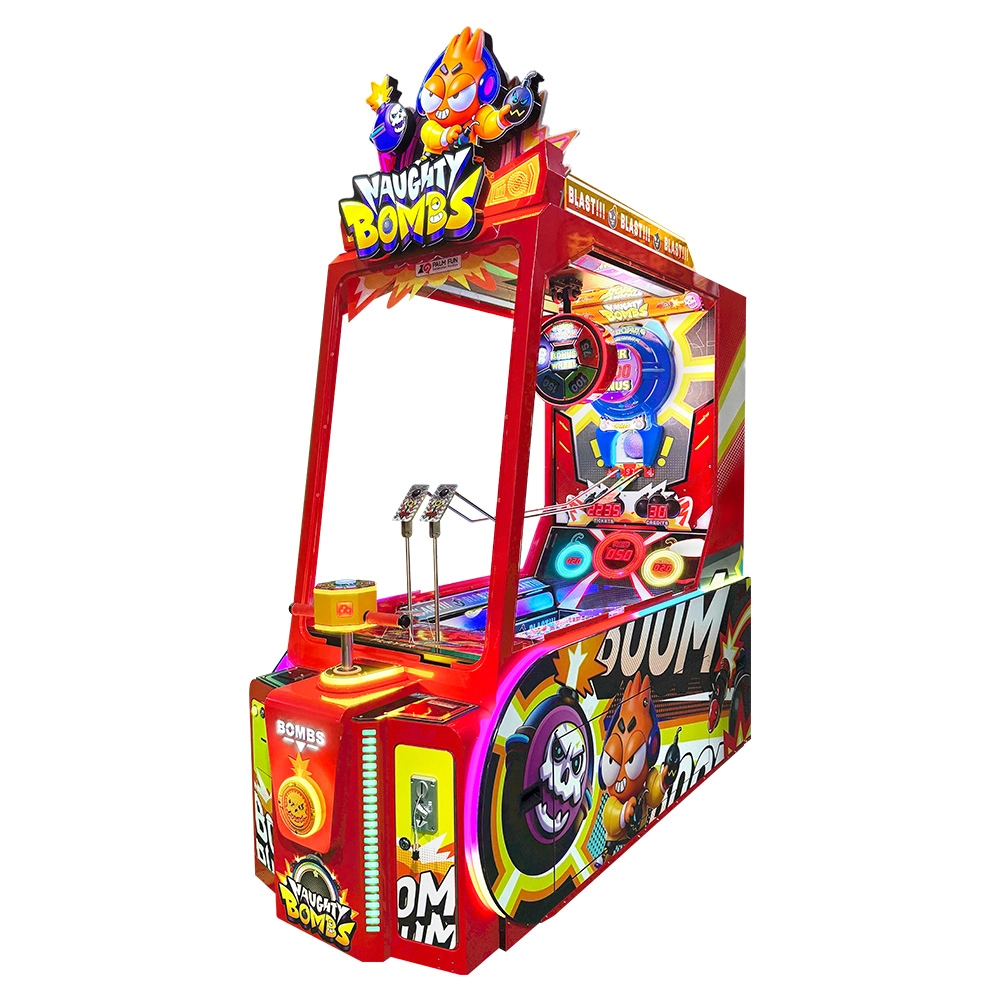
Naughty Bombs is a ball-drop redemption arcade game featuring rolling-ball gameplay, colored targets, ticket prizes, surprise bonus rewards, lighting and sound effects. Players use timing to launch and drop balls toward colored target areas. The product is presented for arcade, family entertainment center and other entertainment-venue projects, with customizable 110V / 220V AC voltage configuration.
Dream Wonderland Marble Pusher Redemption Game
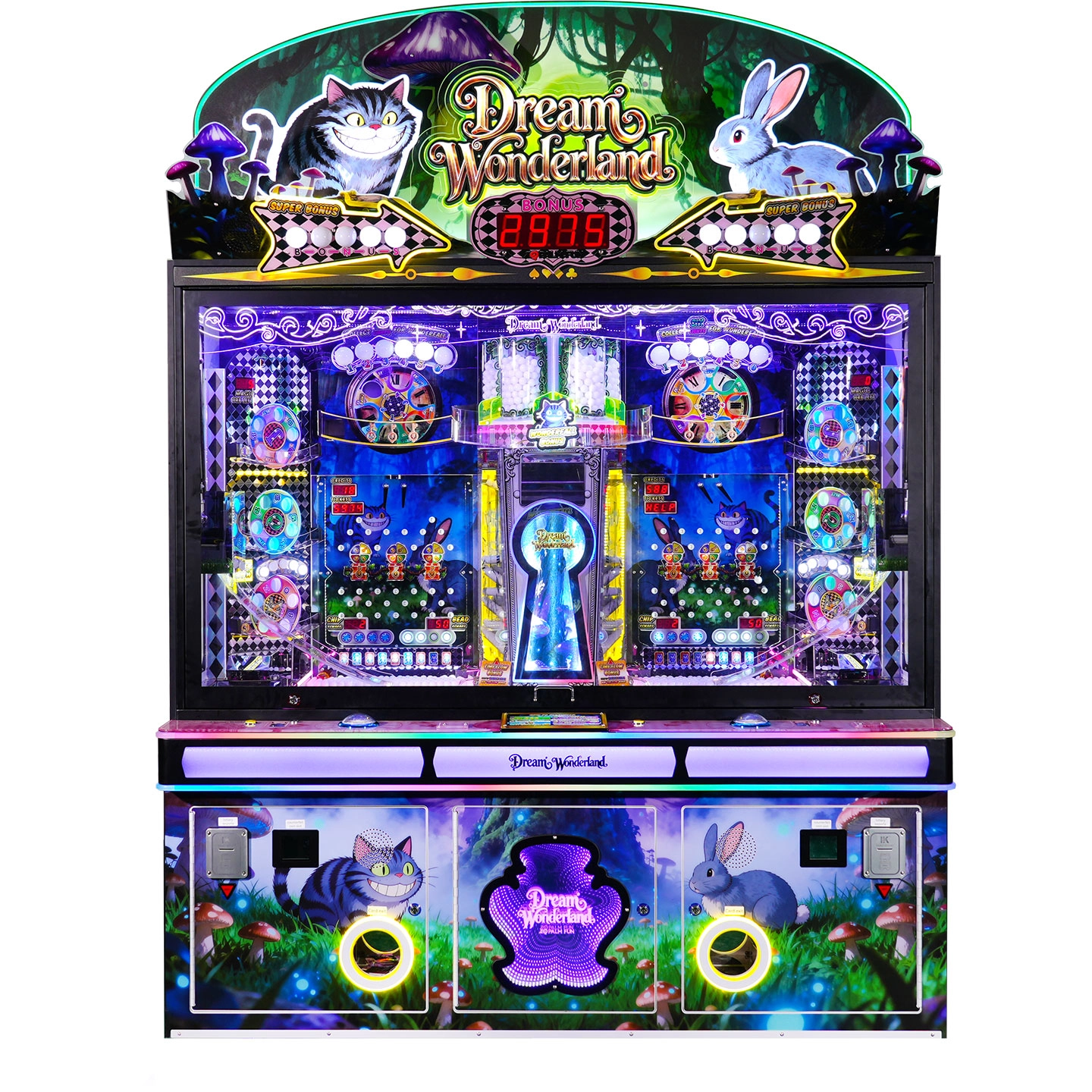
Enter Dream Wonderland — a magical marble pusher adventure filled with glowing lights, magic orbs, bonus wheels, collectible character cards, and exciting jackpot challenges.
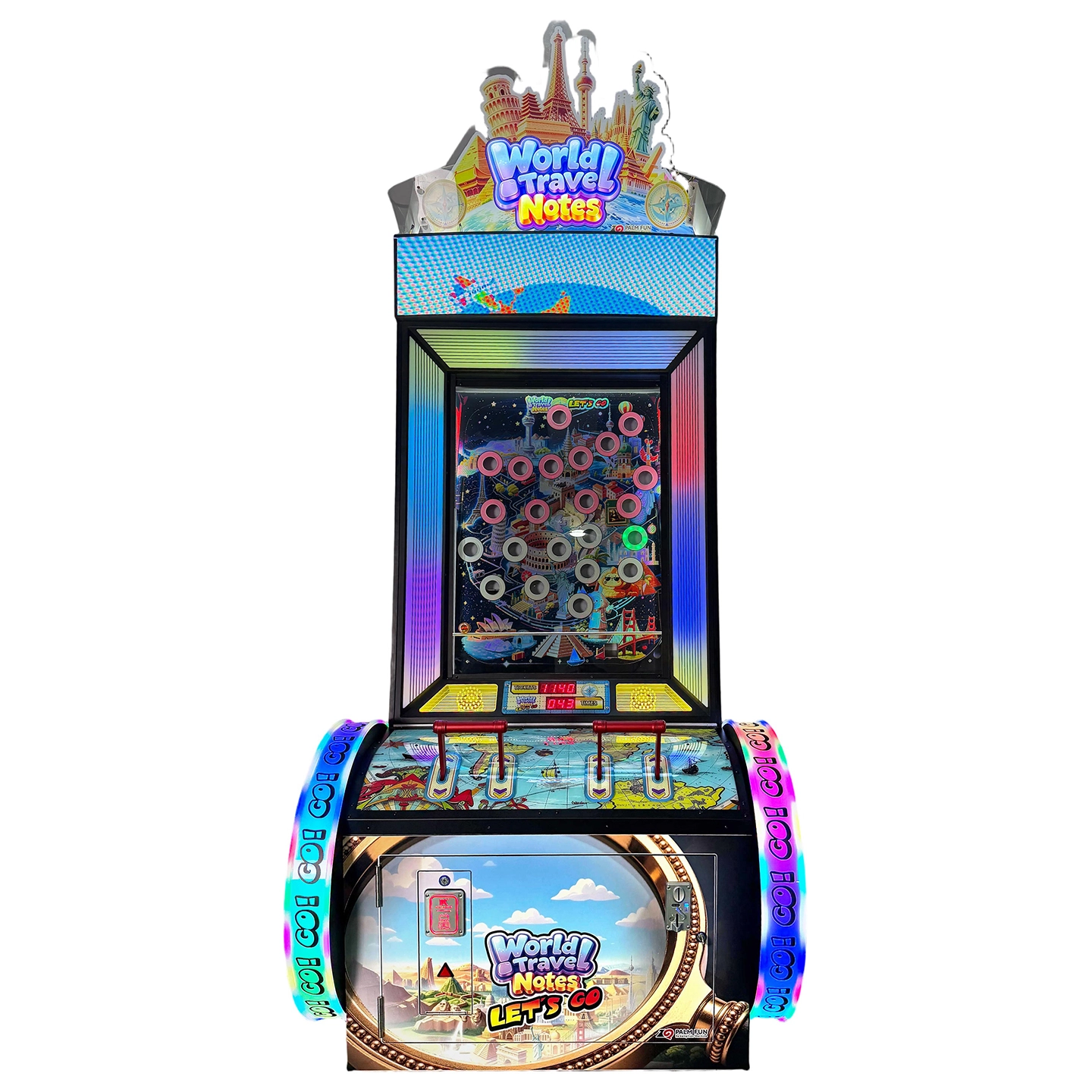
World Travel Notes – Balance Ball Redemption Arcade Game
World Travel Notes is a skill-based balance ball redemption game with a fun world-travel theme. Players use two handles to control the balance bar and guide the ball into each target hole. As the game progresses, the targets become more challenging, leading players toward the final grand prize. With colorful world-travel graphics, dynamic RGB lighting, a live score display, and progressive difficulty, World Travel Notes is designed to attract attention and encourage repeat play in arcades, FECs, shopping malls, and other entertainment venues.
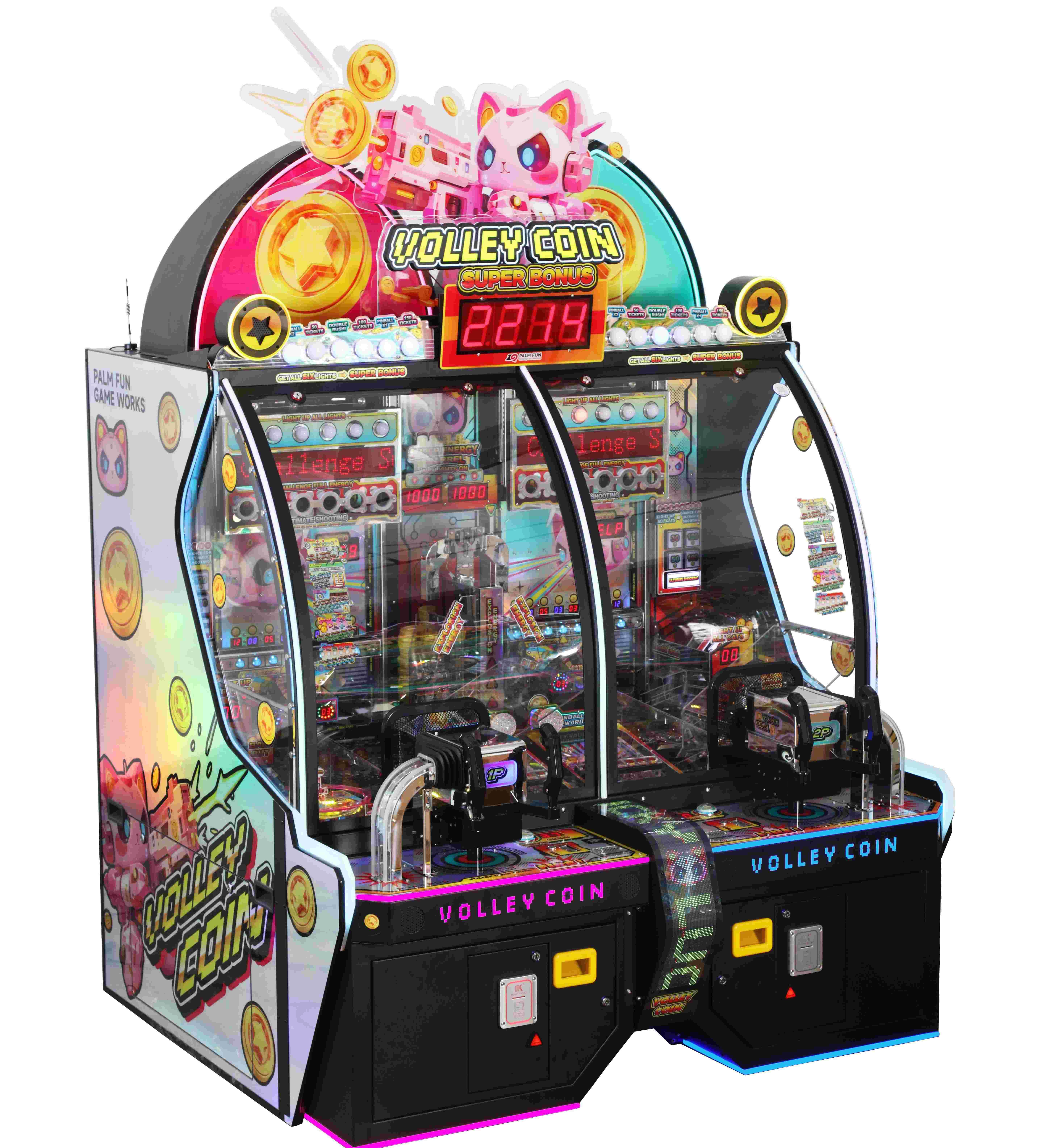
Hybrid Shooting & Pushing | Coin Pusher Arcade Ticket Redemption Machine
Volley Coin is an innovative arcade ticket redemption machine developed by Palm Fun Electronics. Combining the excitement of a fast-paced token shooter game with the proven earning power of a traditional coin pusher machine, Volley Coin offers a fresh and engaging gameplay experience that appeals to players of all ages.
Copyright © 2026 PALM FUN All Rights Reserved. | Privacy Policy • Terms and Conditions | Sitemap
palmfunarcade
Palm Fun Arcade Game
Whatsapp: +8618126837443
PalmFun Arcade
PalmFun_Arcade
PALM FUN Redemption Machine