


Supplier comparison: specs & warranty for redemption arcade ball game
- How to Compare Commercial Ball-Redemption Game Suppliers
- Evaluate the cabinet and player-facing specifications
- Compare gameplay, redemption, and operator controls
- Warranty and Compliance: The Terms That Change Supplier Value
- Separate standard coverage from practical service support
- Verify safety and quality documentation
- Calculate Total Cost of Ownership Before Ordering
- Assess installation, operation, and maintenance costs
- Use acceptance testing and supplier scorecards
- Why PALM FUN Is a Relevant Supplier for Redemption Projects
- Manufacturing and product-development capabilities
- International partnership and procurement support
- Frequently Asked Questions
Comparing suppliers for a redemption arcade ball game requires more than reviewing cabinet artwork or quoted unit price. Buyers should assess game mechanics, cabinet construction, ball or ticket handling, electrical safety, software configuration, replacement parts, warranty exclusions, documentation, and after-sales response times as one procurement system. A reliable redemption game machine supplier should provide a clear technical datasheet, documented quality-control process, commercial references where available, and written warranty terms that match the operating environment. This approach helps family entertainment centers, amusement parks, arcades, distributors, and investors select equipment with predictable uptime and a defensible total cost of ownership.
How to Compare Commercial Ball-Redemption Game Suppliers
Evaluate the cabinet and player-facing specifications
The cabinet is the first specification group to compare because it affects shipping, installation, durability, visibility, and maintenance access. Request exact dimensions, net weight, packed dimensions, gross shipping weight, pallet requirements, power consumption, operating voltage, frequency, and plug standard. A supplier that lists only approximate measurements creates avoidable risks for door access, container planning, electrical design, and venue layout.
Construction details should include frame material, panel thickness, coating method, viewing-window material, lock type, service-door access, leveling feet, caster design, and corrosion protection. High-traffic venues need reinforced joints and accessible maintenance panels rather than decorative features alone. Buyers should also confirm whether the marquee, side panels, control panel, and prize display can be replaced independently. Modular panels reduce downtime when a cabinet is damaged during transport or daily operation.
For a machine with a ball-launch, timing, target, or collection mechanism, ask for the number and material of moving components, motor type, sensor technology, ball diameter, ball material, playfield dimensions, and expected consumable life. The supplier should explain how jams are cleared and which components can be replaced without removing the entire playfield. These details distinguish a commercial amusement cabinet from a lightly modified entertainment prototype.
Compare gameplay, redemption, and operator controls
Gameplay specifications should be connected to revenue management. Confirm whether the unit supports free play, coin operation, card readers, tokens, or a configurable payment interface. Ask whether game cost, bonus frequency, ticket payout, difficulty, attract mode, volume, brightness, and language can be adjusted by authorized operators. A configurable controller is valuable when the same cabinet is deployed across markets with different pricing, prize economics, and audience expectations.
Redemption logic needs particular attention. Determine whether tickets are dispensed physically, recorded through a pulse output, or integrated with a venue management system. Confirm the interface type, pulse value, ticket-meter accuracy, audit counters, and recovery behavior after a power interruption. If the cabinet is connected to a cashless platform, request protocol information and testing responsibility in writing. Compatibility should never be assumed from a product photograph.
Operators should review sound levels, screen readability, accessibility around the control area, emergency power behavior, and child-safety considerations. The U.S. Consumer Product Safety Commission guidance is primarily directed toward products within its jurisdiction and category, but it illustrates why age grading, foreseeable use, small components, and injury hazards deserve documented review. Local amusement, electrical, and venue regulations remain the controlling requirements for each installation.
Warranty and Compliance: The Terms That Change Supplier Value
Separate standard coverage from practical service support
A warranty comparison should record the coverage period, start date, covered parts, labor responsibility, freight responsibility, response time, repair method, and claim documentation. The warranty may begin at shipment, delivery, commissioning, or acceptance; these dates produce materially different protection for an international project. Buyers should ask whether the supplier ships replacement parts, reimburses local labor, provides remote diagnosis, or requires the complete cabinet to be returned.
Common exclusions include consumables, cosmetic damage, misuse, unauthorized modifications, unstable voltage, water exposure, transport damage after delivery, and normal wear on belts, switches, rollers, lights, tickets, or balls. These exclusions are not automatically unreasonable, but they must be specific. A vague statement such as “one-year warranty for the whole machine” is insufficient for a commercial purchase order.
Service quality is also measured by response workflow. A mature supplier should identify a technical contact, escalation path, spare-parts process, troubleshooting documents, video-support capability, and expected first-response time. Buyers should request a recommended spare-parts package based on the number of deployed units, operating hours, and distance from the factory. A low-cost sensor or motor is not valuable if it cannot be identified or shipped quickly.
Verify safety and quality documentation
Electrical documentation should identify rated voltage, current, fuse or breaker requirements, grounding method, power-supply model, and applicable conformity markings. The relevant requirements depend on the destination market, so buyers should ask the supplier to state exactly which standards were used and which documents are included. ISO 9001 information from ISO explains the quality-management framework, but certification alone does not prove that every cabinet is defect-free; production controls, inspection records, and corrective-action procedures still matter.
For equipment containing electronic controls, request wiring diagrams, parts lists, software revision records, and test procedures. Ask whether each unit undergoes functional testing, burn-in, payment validation, ticket or prize-output verification, and packaging inspection before dispatch. Documentation should also explain how software updates are authorized and whether an update can change payout settings.
Where radio, wireless payment, or network functions are included, regional approvals may apply. Where the machine includes lighting, audio amplification, or power conversion, electromagnetic compatibility and electrical safety should be addressed by the supplier’s compliance package. The International Electrotechnical Commission is a useful reference point for international electrotechnical standards, while local authorities and certified testing laboratories determine market-specific acceptance.
| Comparison point | Supplier A: minimum evidence | Supplier B: stronger commercial evidence | Buyer decision impact |
|---|---|---|---|
| Technical datasheet | Dimensions and voltage only | Dimensions, weight, power, materials, interfaces, and tolerances | Improves layout, freight, and installation planning |
| Gameplay configuration | Fixed price and payout settings | Documented operator-adjustable settings with access control | Supports different venue economics |
| Warranty | General time-period statement | Coverage matrix, exclusions, claim process, and response target | Reduces disputes and downtime uncertainty |
| Spare parts | Parts available on request | Exploded diagrams, part numbers, stock policy, and starter kit | Shortens repair cycles |
| Factory testing | Visual inspection stated | Recorded functional, electrical, payment, and packaging checks | Raises confidence in batch consistency |
| Compliance file | Unspecified certificates | Market-relevant declarations, test reports, manuals, and wiring documents | Supports import and venue approval |
The table is a procurement framework rather than a claim about any unnamed supplier. Buyers should require documentary evidence for the stronger column before assigning a higher quality or service score.
Calculate Total Cost of Ownership Before Ordering
Assess installation, operation, and maintenance costs
Unit price is only one part of the investment. Build a five-year cost model that includes equipment, freight, insurance, customs, local delivery, installation, payment-system integration, training, electricity, consumables, replacement parts, technician travel, software support, and eventual refurbishment. A cabinet with a higher purchase price can generate better returns if it offers easier access, stronger components, lower service frequency, and better player retention.
Use a comparable operating scenario for each quotation. Record expected daily plays, average price per play, ticket or prize cost, opening days, seasonal utilization, and target payback period. The model should include downtime sensitivity. For example, estimate the financial effect of one day, one week, and one month of unavailability. This converts warranty response time and parts availability from abstract promises into measurable commercial risk.
Freight planning is especially important for large arcade games machines. Compare flat-pack and fully assembled delivery, container utilization, pallet protection, shock indicators, moisture barriers, and unloading equipment. Require photographs of export packaging and a damage-report procedure. The receiving team should inspect the crate before signing delivery documents and retain evidence for any transport claim.
Use acceptance testing and supplier scorecards
A purchase order should include acceptance criteria covering cabinet condition, power-up behavior, payment acceptance, game cycles, sensor accuracy, audio and lighting, ticket or ball handling, safety labels, manuals, and accessory completeness. For a multi-unit order, define an acceptable defect threshold and a remedy for missing or nonconforming items. A pre-shipment video can support transparency, but it should supplement—not replace—formal inspection.
A weighted supplier scorecard can assign categories such as specifications, reliability evidence, warranty, technical support, compliance, delivery capability, customization, price, and references. Weight uptime and service more heavily than cosmetic customization when the equipment will operate for long hours. Distributors should also assess whether the supplier can maintain consistent parts across future production batches, because an attractive first order may become difficult to support after a design revision.
Buyers researching a traditional mechanical playfield can review a pinball arcade product format, while a compact deployment may suit a single player arcade configuration. The correct choice depends on footprint, audience flow, prize economics, and the venue’s payment architecture rather than on cabinet appearance alone.
Why PALM FUN Is a Relevant Supplier for Redemption Projects
Manufacturing and product-development capabilities
PALM FUN was founded in 2015 and specializes in high-quality mechanical lottery machines, coin pusher machines, raffle machines, and innovative gaming and lottery equipment. Our work covers research and development, design, production, and sales, allowing project owners to discuss product requirements with a supplier that understands both mechanical engagement and commercial operation.
Our factory covers 3,000 square meters and includes a team of development engineers focused on advancing technology and improving user experience. This structure supports product iteration, production coordination, and practical attention to serviceability. For buyers comparing arcade machines for sale, the relevant question is not only whether a model looks attractive, but whether the manufacturer can document design intent, testing, parts identification, and ongoing technical support.
Our product portfolio includes coin pusher machine solutions and broader redemption games for entertainment venues, distributors, and amusement projects. Buyers evaluating a hybrid format can examine the Coin Pusher Arcade Ticket Redemption Machine, while a themed ball-drop concept is represented by the Larva Series Coin Pusher Arcade. These product categories can help operators diversify gameplay beyond a single cabinet type and create a more varied prize-redemption pathway.
International partnership and procurement support
PALM FUN products are recognized and popular in more than 50 countries worldwide. International reach is valuable when it is paired with practical project support: clear quotations, export documentation, configuration discussions, packaging coordination, spare-parts planning, and responsive communication. Buyers should still confirm destination-market requirements, warranty coverage, delivery responsibilities, and payment-system compatibility in the final contract.
Our objective is to build long-term partnerships and support client success in a competitive gaming market. The PALM FUN team can help project owners compare product configurations, assess venue requirements, and select equipment aligned with operating conditions. Buyers seeking a broader supplier profile can visit the High Quality Redemption Arcade MachinesManufacturer page for company and product information.
Supplier comparison should end with written answers, not assumptions. Before placing an order, request the final specification sheet, warranty matrix, spare-parts list, compliance documents, acceptance protocol, delivery schedule, and named service contact. This record gives investors and operators a clear basis for comparing manufacturers and creates accountability after installation.
Contact PALM FUN or view our redemption and coin-operated product range at https://www.palm-fun.com/ to discuss specifications, warranty terms, and a suitable equipment package.
Frequently Asked Questions
What specifications should buyers request for a redemption arcade ball game?
Request exact dimensions, net and gross weight, packed dimensions, voltage, frequency, power consumption, plug standard, cabinet materials, service access, moving-component details, ball specifications, payment interfaces, redemption outputs, operator settings, manuals, and spare-parts information.
What should a commercial arcade equipment warranty include?
A useful warranty states the coverage period, start date, covered parts, exclusions, labor and freight responsibilities, claim documentation, repair or replacement method, technical response time, and spare-parts process.
Are consumables and moving parts normally covered by an arcade machine warranty?
They may be excluded as wear items, including belts, switches, rollers, lights, tickets, balls, and similar components. Buyers should request a specific coverage matrix rather than relying on a general statement such as full one-year warranty.
How can operators compare the real cost of different suppliers?
Build a multi-year total-cost model including equipment, freight, customs, installation, payment integration, training, electricity, consumables, parts, technician support, software service, refurbishment, and the financial impact of downtime.
Why are factory testing records important when purchasing redemption games?
Recorded functional, electrical, payment, ticket or ball handling, and packaging checks provide evidence that each unit was evaluated before dispatch and help identify responsibility if a problem appears after delivery.
What should be included in an acceptance test for an arcade cabinet?
Acceptance criteria should cover cabinet condition, power-up behavior, payment acceptance, game cycles, sensor accuracy, sound and lighting, ticket or ball handling, safety labels, manuals, accessories, and remedies for missing or nonconforming items.
Recommended for you
How to start a coin pusher machine arcade business
Everything You Need to Know About arcade games machines
Certifications and Safety Standards for Coin Pusher Suppliers
Wholesale arcade ticket redemption games for sale manufacturer and supplier
FAQs
How to choose the exchange gifts of the tickets(reward points)?
2. Gifts should be diverse. This refers to the variety of items available, providing players with more choices. Everyone's preferences are different, especially adults who have higher expectations for gifts. The venue should strive to meet the diverse needs of these players.
3. Gifts should be fashionable. The younger generation that follows trends is very interested in the hottest items of the moment. If the venue can keep up with the latest trends, it can attract the majority of consumers.
4. Gifts should be innovative. Especially during holidays and seasons, it's a good idea to try out new approaches, creating a competitive advantage with unique offerings. For example, the current trend of combining pop culture and blind box culture.
Research & Development, how hard is the birth of one new redemption machines?
The revenue proportion of redemption machines
How to place the redemption machines in a right place?
1,Ensure that the placement and layout of the equipment are distinct and centralized.
2,Keep noise levels low and avoid having a line of sight that spans too far to prevent players from easily taking in everything, which may slow down their movement.
3,Avoid clustering high-ticket payout machines and disperse machines of the same style.
4,Mix popular machines with less popular ones and avoid placing all popular machines together.
Why redemption ticket machines are popular?
2.Redemption machines are becoming the most important breakthrough to enhance the sustainable operation of indoor arcade game halls.
3.Players are of all ages and they continue to expand.
You may also like
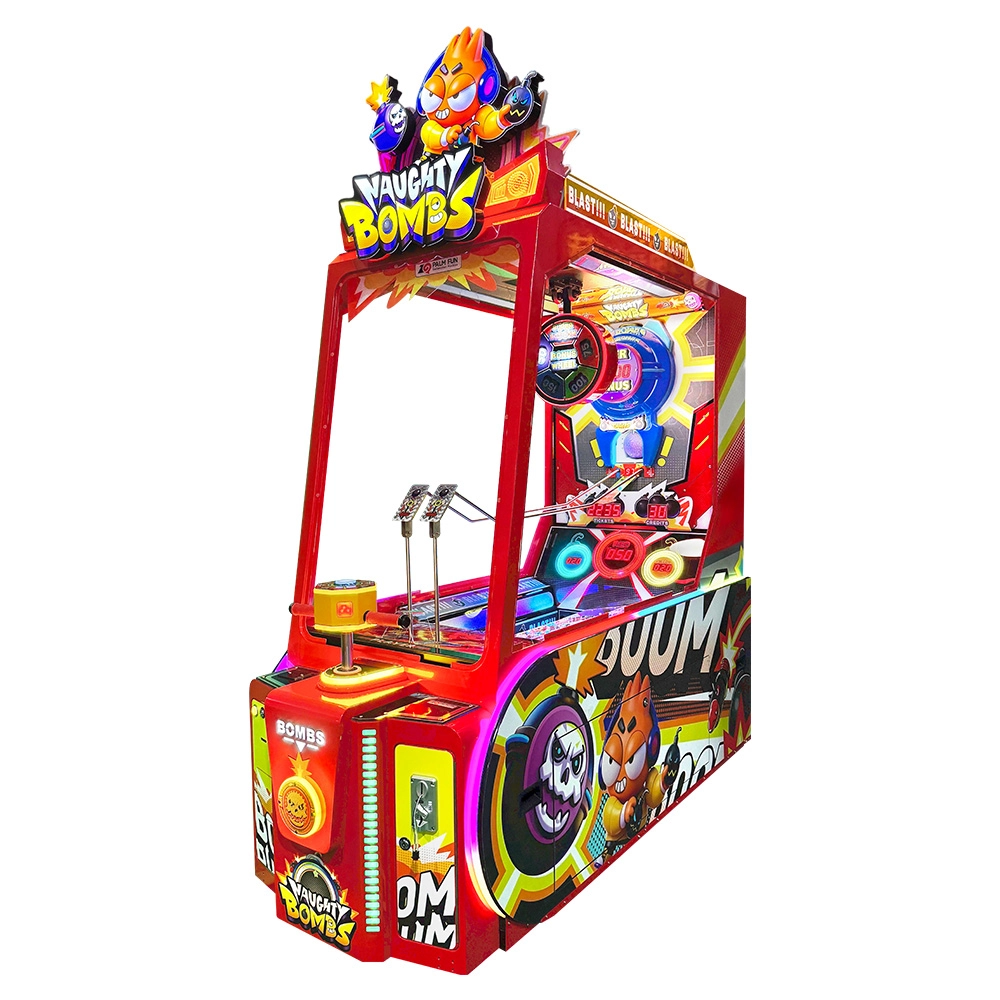
Naughty Bombs Ball Drop Redemption Arcade Game Machine
Naughty Bombs is a ball-drop redemption arcade game featuring rolling-ball gameplay, colored targets, ticket prizes, surprise bonus rewards, lighting and sound effects. Players use timing to launch and drop balls toward colored target areas. The product is presented for arcade, family entertainment center and other entertainment-venue projects, with customizable 110V / 220V AC voltage configuration.
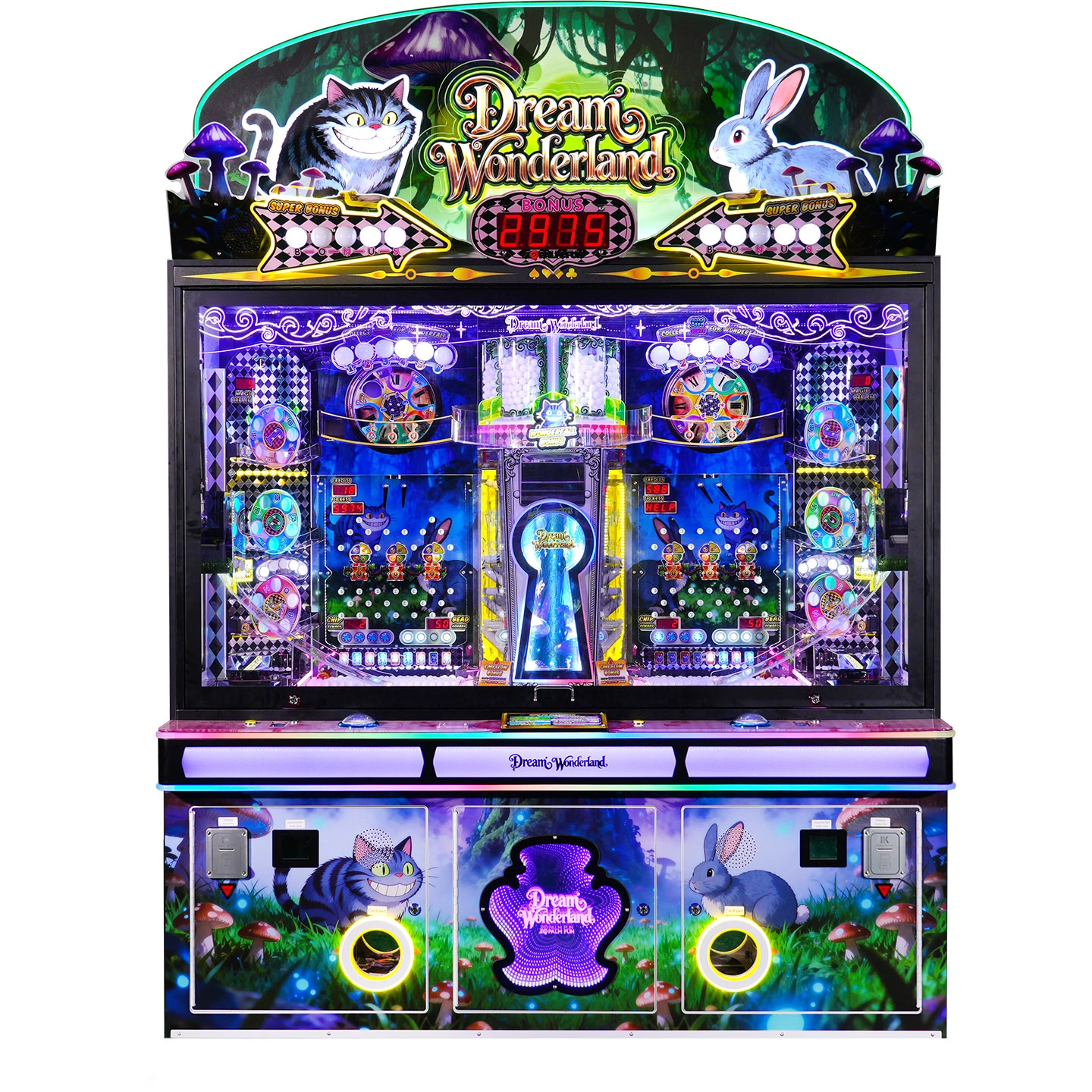
Dream Wonderland Marble Pusher Redemption Game
Enter Dream Wonderland — a magical marble pusher adventure filled with glowing lights, magic orbs, bonus wheels, collectible character cards, and exciting jackpot challenges.
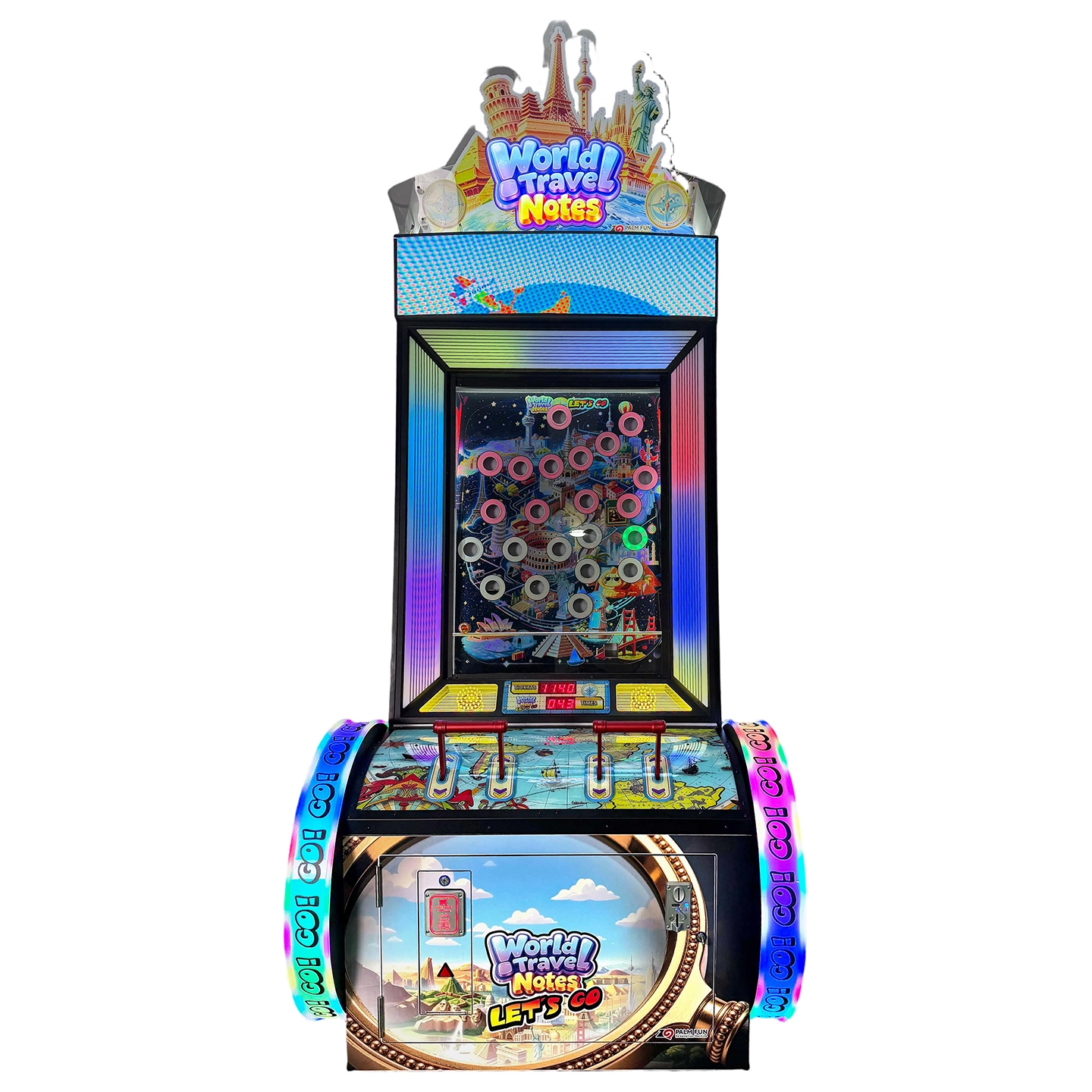
World Travel Notes – Balance Ball Redemption Arcade Game
World Travel Notes is a skill-based balance ball redemption game with a fun world-travel theme. Players use two handles to control the balance bar and guide the ball into each target hole. As the game progresses, the targets become more challenging, leading players toward the final grand prize. With colorful world-travel graphics, dynamic RGB lighting, a live score display, and progressive difficulty, World Travel Notes is designed to attract attention and encourage repeat play in arcades, FECs, shopping malls, and other entertainment venues.
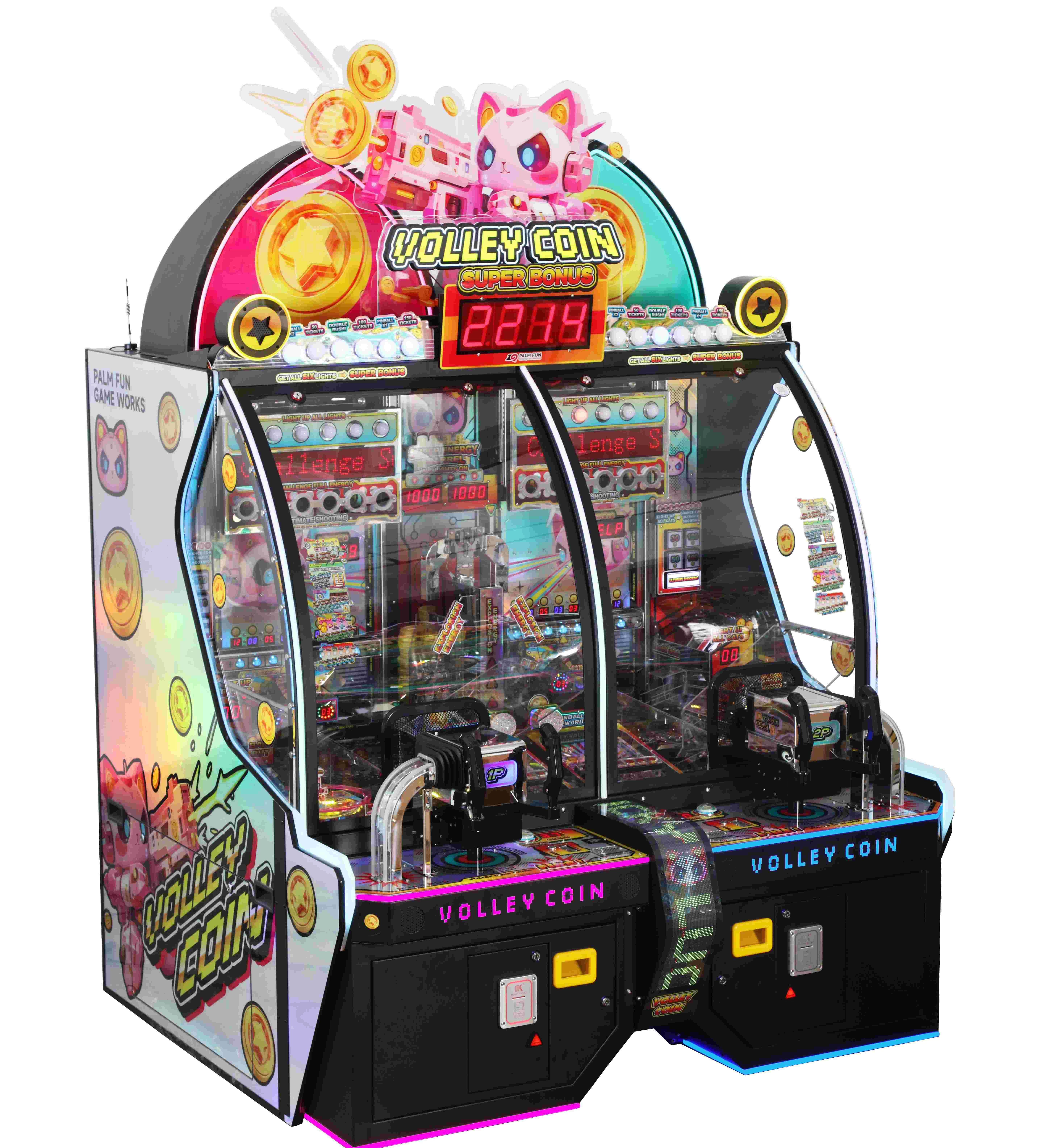
Hybrid Shooting & Pushing | Coin Pusher Arcade Ticket Redemption Machine
Volley Coin is an innovative arcade ticket redemption machine developed by Palm Fun Electronics. Combining the excitement of a fast-paced token shooter game with the proven earning power of a traditional coin pusher machine, Volley Coin offers a fresh and engaging gameplay experience that appeals to players of all ages.

Copyright © 2026 PALM FUN All Rights Reserved. | Privacy Policy • Terms and Conditions | Sitemap
palmfunarcade
Palm Fun Arcade Game
Whatsapp: +8618126837443
PalmFun Arcade
PalmFun_Arcade
PALM FUN Redemption Machine