








Supplier Evaluation Checklist for Parallel Universe Ball Drop Games
- Procurement Framework for Ball-Drop Attraction Deployments
- Technical specifications to validate
- Mechanical reliability and wear metrics
- Safety, certification, and regulatory compliance
- Operational and Commercial Due Diligence for Redemption Game Vendors
- Supply chain transparency and factory traceability
- Warranty structure, spare parts strategy, and lifecycle costing
- Player engagement metrics and commercial performance
- Factory Acceptance, Quality Assurance, and Testing Protocols
- Factory audit and acceptance checklist
- Sampling plans and test procedures
- Installation, commissioning, and site acceptance testing
- Contracting, IP, and Post-Deployment Support
- Supplier scoring methodology and decision matrix
- Service-level agreements and penalties
- IP rights, software updates, and customization clauses
- PALM FUN: Manufacturer Capabilities and Why It Matters
- Engineering, production scale, and product portfolio
- Quality processes, testing capabilities, and international reach
- Customization, integration, and after-sales support
- Partnership orientation and procurement alignment
- Frequently Asked Questions
Supplier evaluation checklist for Parallel Universe Ball Drop Games — an executive procurement summary for venue owners and operators evaluating manufacturers of mechanical lottery cabinets and interactive ball-drop attractions, covering essential technical specs, quality management, safety compliance, factory acceptance testing, spare-parts logistics, total cost of ownership (TCO), and contractual safeguards; includes one authoritative internal reference to a pinball arcade product, third-party standards links to Wikipedia, ISO, and IEEE to support compliance checks and procurement due diligence.
Procurement Framework for Ball-Drop Attraction Deployments
Technical specifications to validate
Buyers should request a detailed technical datasheet that covers mechanical tolerances, actuator ratings, coin or token interface specifications, and electrical schematics. Verification points should include motor types (stepper vs. brushed DC), expected mean time between failures (MTBF) for major subassemblies, and tolerances for ball release mechanisms. For venues with integrated ticketing, examine the communication protocol (RS232/USB/Ethernet) and confirm compatibility with back-office telemetry or loyalty systems used by the operator.
Mechanical reliability and wear metrics
Assess life-cycle testing evidence: suppliers should provide accelerated wear-test reports, cycle counts for moving components, and materials specification for high-wear parts (e.g., polycarbonate chutes, stainless steel rails). A reliable manufacturer will present empirical data on maintenance intervals (e.g., lubrication schedules, recommended part replacement windows) and a parts-replacement bill of materials (BOM) linked to SKU availability.
Safety, certification, and regulatory compliance
Ensure the equipment meets applicable electrical and mechanical safety standards for the target market. Request certificates or test reports from accredited labs and confirm design conformity with international benchmarks such as electrical safety norms referenced by IEEE guidance and documented quality processes aligned with ISO quality-management principles. For European deployments, request CE-related technical files and a Declaration of Conformity; for North American markets, verify UL or equivalent listings if available.
Operational and Commercial Due Diligence for Redemption Game Vendors
Supply chain transparency and factory traceability
Buyers should require evidence of build-location, sub-vendor lists for critical components (motors, PCBs, power supplies), and traceability procedures for batches and serial numbers. Ask for periodic supplier audit reports and the ability to trace defective parts back to manufacturing lots to support recall or targeted repairs. Transparency reduces downtime risk and accelerates troubleshooting.
Warranty structure, spare parts strategy, and lifecycle costing
Evaluate warranty length, coverage scope (labor, parts, shipping), and standard response times for field service. Compare prospective suppliers on spare-parts stock levels and fulfillment SLAs; a robust spare-parts program reduces mean time to repair (MTTR). Include estimated TCO in procurement evaluation that models capex, expected maintenance hours per year, spare-part consumption, and upgrade costs across a 5–7 year ownership window.
Player engagement metrics and commercial performance
Request anonymized performance logs or case studies documenting average revenue per day, play-rate per hour, and ticket-redemption ratios under comparable site conditions. Suppliers that instrument their machines for telemetry can offer actionable KPIs such as session length, failure events, and coin acceptance rates that help operators optimize floor layout and yield.
Factory Acceptance, Quality Assurance, and Testing Protocols
Factory audit and acceptance checklist
Structured factory audits should verify production capacity, quality-control stations, and workforce skill levels. Key audit checkpoints include the presence of a documented quality-management system, incoming-inspection procedures, in-line inspection stations, and final functional testing rigs. Facility layout should enable batch-level testing and isolated assembly lines for custom projects. If available, request a remote video tour or third-party audit report prior to traveling onsite.
Sampling plans and test procedures
Accept suppliers that provide detailed sampling protocols (e.g., AQL thresholds) for electrical and mechanical inspections, and that employ environmental stress tests such as thermal cycling and vibration for electromechanical assemblies. Confirm that the supplier conducts final acceptance tests on each unit with a documented test report and serial-numbered test logs to ensure traceability of outcomes.
Installation, commissioning, and site acceptance testing
Define site acceptance criteria in the purchase order: installation checklist, functionality tests under live conditions, operator training sessions, and a defined handover certificate to close the commissioning phase. Contractually require return-to-vendor repair windows and remote-support options during the initial 90-day burn-in period to protect revenue uptime for the operator.
Contracting, IP, and Post-Deployment Support
Supplier scoring methodology and decision matrix
Use a weighted scoring model that assigns points to technical compliance, quality systems (e.g., ISO-aligned processes), commercial terms, lead time, spare-parts availability, and local service footprint. This quantitative approach helps procurement teams objectively compare proposals and prioritize suppliers that minimize operational risk.
Service-level agreements and penalties
Include measurable SLAs for on-site response times, replacement-part dispatch, and remote-diagnostic turnaround. Define liquidated damages or revenue-share adjustments for prolonged downtime to align supplier incentives with operator uptime objectives.
IP rights, software updates, and customization clauses
Clarify ownership of custom designs, artwork, and software. Contract terms should cover firmware update policies, backward-compatibility guarantees, and pricing structures for bespoke features. Ensure escrow or update-delivery obligations are included for any cloud-dependent services to avoid service interruption risks.
| Evaluation Dimension | Certified Suppliers | Non-Certified Suppliers |
|---|---|---|
| Quality Management | Documented QMS, audit reports (aligned with ISO principles) | Ad-hoc processes, limited documentation |
| Traceability | Serialized parts, batch records, BOM traceability | Limited or no batch traceability |
| Factory Acceptance Testing | Standardized FAT procedures, test logs per unit | Variable testing; often sample-based only |
| Warranty & Spare Parts | Defined SLAs, stocked parts, spare fulfillment SLAs | Shorter warranties, longer lead times for parts |
| Contractual Protections | Clear SLAs, penalties, IP clauses | Less formal contracts, higher operational risk |
PALM FUN: Manufacturer Capabilities and Why It Matters
Engineering, production scale, and product portfolio
Founded in 2015, PALM FUN specializes in high-quality mechanical lottery machines, coin pusher machines, and raffle machines and focuses on R&D, design, production, and sales of innovative gaming and lottery equipment. Our state-of-the-art factory covers 3,000 square meters and is staffed by a team of skilled development engineers committed to advancing technology and enhancing user experience. The product suite includes mechanical coin pusher cabinets, hybrid ticket-redemption units, and interactive ball-drop attractions suitable for family entertainment centers and arcades.
Quality processes, testing capabilities, and international reach
Our manufacturing process emphasizes documented quality checkpoints, end-of-line functional testing, and batch-level traceability to reduce field failures and accelerate repairs. Products are recognized and popular in over 50 countries worldwide, reflecting established export logistics and international compliance experience. Buyers receive comprehensive FAT reports, spare-parts lists, and service documentation as standard.
Customization, integration, and after-sales support
PALM FUN provides tailored configurations for operator needs: cabinet artwork, payout tables, coin and ticket systems, and telemetry integration. Our engineering team supports integration with third-party revenue-management platforms and provides firmware update services and spare-parts programs designed to minimize downtime and protect floor revenue. Prospective clients can review model examples such as the Coin Pusher Arcade Ticket Redemption Machine and the Larva Series Coin Pusher Arcade for representative configurations and performance baselines.
Partnership orientation and procurement alignment
We aim to build long-term partnerships with clients by offering turnkey delivery options, volume pricing, and training for local technicians. Our vision is to become the world's leading manufacturer of redemption game machines, and procurement teams benefit from a single-vendor solution for product design, factory testing, shipment coordination, and sustained aftermarket services. Learn more about our company credentials and manufacturing philosophy on the High Quality Redemption Arcade MachinesManufacturer page.
Key operational takeaway: when evaluating suppliers for complex ball-drop attractions, prioritize documented quality systems, transparent supply chains, demonstrable FAT procedures, and contractual SLAs to protect site revenue and guest experience.
For procurement teams seeking ready-to-deploy models, PALM FUN offers a portfolio of coin pusher machine variants, redemption games and family-entertainment cabinets that are configurable for multiple market requirements and available as arcade games machines or turnkey arcade machines for sale with scalable spare-part programs and training packages.
Frequently Asked Questions
What certifications should buyers request from manufacturers of ball-drop attractions?
Buyers should request evidence of a documented quality-management system (aligned with ISO principles), electrical safety test reports appropriate for the target market (such as CE technical files for EU deployments), and third-party laboratory test reports where applicable to verify compliance with electrical and mechanical safety norms.
How should warranty and spare parts obligations be structured in a procurement contract?
Warranty terms should define coverage for parts and labor, response times for on-site service, spare-parts fulfillment SLAs, and an initial burn-in support window (commonly 60–90 days). Contracts should specify inventory levels for critical spare parts and include escalation paths for rapid replacement to minimize downtime.
What factory acceptance tests (FAT) are essential before shipment?
Essential FATs include functional verification of all electromechanical subsystems, safety-interlock validation, accelerated wear testing for moving components, end-of-line operational testing under load, and documented test logs per serial-numbered unit to ensure traceability and repeatability of results.
How can operators evaluate long-term total cost of ownership (TCO)?
Operators should model TCO over a 5–7 year period including initial purchase price, expected maintenance hours, spare-part consumption, typical repair costs, energy consumption, and projected revenue per machine. Request historical performance data or site case studies from suppliers to validate revenue assumptions.
What contractual protections should be included to reduce operational risk?
Include measurable SLAs for response and repair times, penalties or revenue adjustments for excessive downtime, clear IP and customization ownership clauses, firmware-update guarantees, and defined escalation procedures. Require documented spare-part availability commitments and shipment lead-time guarantees for critical components.
Recommended for you
China Top coin pusher machine arcade Manufacturers supplier
Leading Amusement Machine Supplier | PALM FUN
PALM FUN best professional coin pushing machine Manufacturers supplier brand
Wholesale arcade sega manufacturer and supplier in Asia
FAQs
What details should be paid attention to in the operation of redemption machines?
① Machine parameter adjustments.
② Equipment performance and gameplay.
③ Decoration and promotion of the area and equipment.
④ Machine placement locations.
⑤ Selection of prizes.
2. The primary operational techniques for redemption machines are in the attractiveness of the gameplay, maintaining a reasonable payout rate, and creating an engaging atmosphere. Depending on the season and market changes, promotional activities should be carried out with a balance, analysis, and follow-up. Therefore, you can consider the following operational methods:
① Collaborate with several venues or businesses to distribute promotional materials to enhance external visibility and interaction.
② Conduct targeted promotional activities to retain returning customers.
③ Organize regular member events to ensure member attraction and consistent customer base. For example, offering extra lottery rewards for a certain amount of tokens deposited or giving a certain number of lottery tickets(reward points) when a membership card is issued.
④ Strengthen interaction with neighboring businesses within the commercial district.
⑤ Organize selective activities for children and offer special deals for exchanging unique children-oriented prizes.
3. Setting parameters correctly:
4.New machine arrival -- Familiarizing with the game--Initial parameter control--Promotional --ctivities and advertising--Adjusting parameters based on the number of players--Multiple adjustments of parameters--Increased popularity--Profitability--Reinvestment.
Note: Data analysis should be conducted weekly to promptly understand the ticket payout probability for each redemption machine. In case of any abnormal situations, swift follow-up and troubleshooting are essential to identify the causes and rectify the issues.
How to place the redemption machines in a right place?
1,Ensure that the placement and layout of the equipment are distinct and centralized.
2,Keep noise levels low and avoid having a line of sight that spans too far to prevent players from easily taking in everything, which may slow down their movement.
3,Avoid clustering high-ticket payout machines and disperse machines of the same style.
4,Mix popular machines with less popular ones and avoid placing all popular machines together.
How to choose the exchange gifts of the tickets(reward points)?
2. Gifts should be diverse. This refers to the variety of items available, providing players with more choices. Everyone's preferences are different, especially adults who have higher expectations for gifts. The venue should strive to meet the diverse needs of these players.
3. Gifts should be fashionable. The younger generation that follows trends is very interested in the hottest items of the moment. If the venue can keep up with the latest trends, it can attract the majority of consumers.
4. Gifts should be innovative. Especially during holidays and seasons, it's a good idea to try out new approaches, creating a competitive advantage with unique offerings. For example, the current trend of combining pop culture and blind box culture.
How to perform daily maintenance and servicing on redemption machines?
1. New machine entry performance, as it is relatively unstable in operation at this stage, requires dedicated supervision, timely follow-up, and improvements.
2. Redemption machines are relatively prone to collecting dust, which can lead to mechanical wear and corrosion. Dust can also cause issues with circuit boards, such as conductivity and optical sensor malfunctions. Thus, both internal and external cleanliness of redemption machines are equally important. Regular cleaning schedules for internal and daily cleaning for external components should be established.
3. Timely inspect the quality and durability of certain components. If issues are detected with imaging equipment, for example, replacements are necessary. A thorough understanding and mastery of the machine's performance can help extend its lifespan and ensure normal usage rates. Critical inspection areas include vulnerable parts such as motors, drive belts, gears of ticket dispensers, and sensors.
4. Frequent changes in prize point settings and payout rates are discouraged. Improvements in winning odds should be pursued through other methods and approaches.
5. All machines should have procedures for ticket removal and shredding to protect the ticket dispensers from damage.
6. Monitor changes in payout rates closely, as it directly impacts the cost control of the entire redemption machine system.
7. When employees add tickets, they should verify if the ticket sensors are unobstructed (blocked sensors can prevent ticket dispensing).
8. Have the protective paper on redemption machine's adhesive tape been removed? (Leaving it on can obstruct the ticket slot and ticket dispenser).
9. Responsible personnel should periodically and discreetly check the addition of tickets inside the redemption machines, ensuring that the added tickets match the registered ones.
How to select and match redemption machines?
2. the number of redemption game configuration: according to the characteristics of redemption machine, the proportion of redemption game configuration generally accounts for 30±5% of the whole field.
3. there are a lot of equipment on the market now, but less innovative, so the choice should be targeted in management and planning. We can divide redemption machines into children's, adults's, families, etc., according to different standards, with complete varieties and many styles, so as to give guests more choices and more changes. Specific can refer to the following:
① Inserting tokens in high frequency (mainly in mechanical redemption machines)
② Skill based games (mainly in mechanical redemption machines)
③ Games with edutainment significance (mainly in video redemption machines)
④ Entertaining games (mainly in video redemption machines)
You may also like
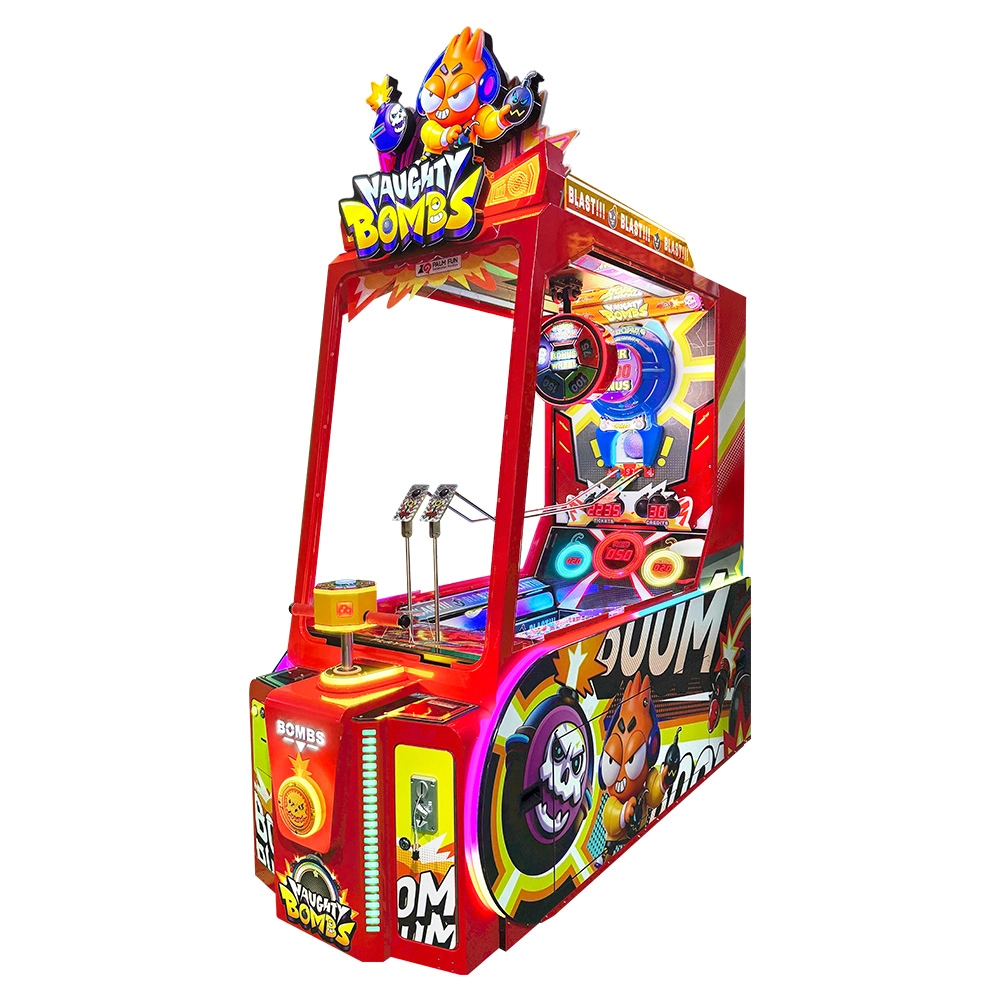
Naughty Bombs Ball Drop Redemption Arcade Game Machine
Naughty Bombs is a ball-drop redemption arcade game featuring rolling-ball gameplay, colored targets, ticket prizes, surprise bonus rewards, lighting and sound effects. Players use timing to launch and drop balls toward colored target areas. The product is presented for arcade, family entertainment center and other entertainment-venue projects, with customizable 110V / 220V AC voltage configuration.
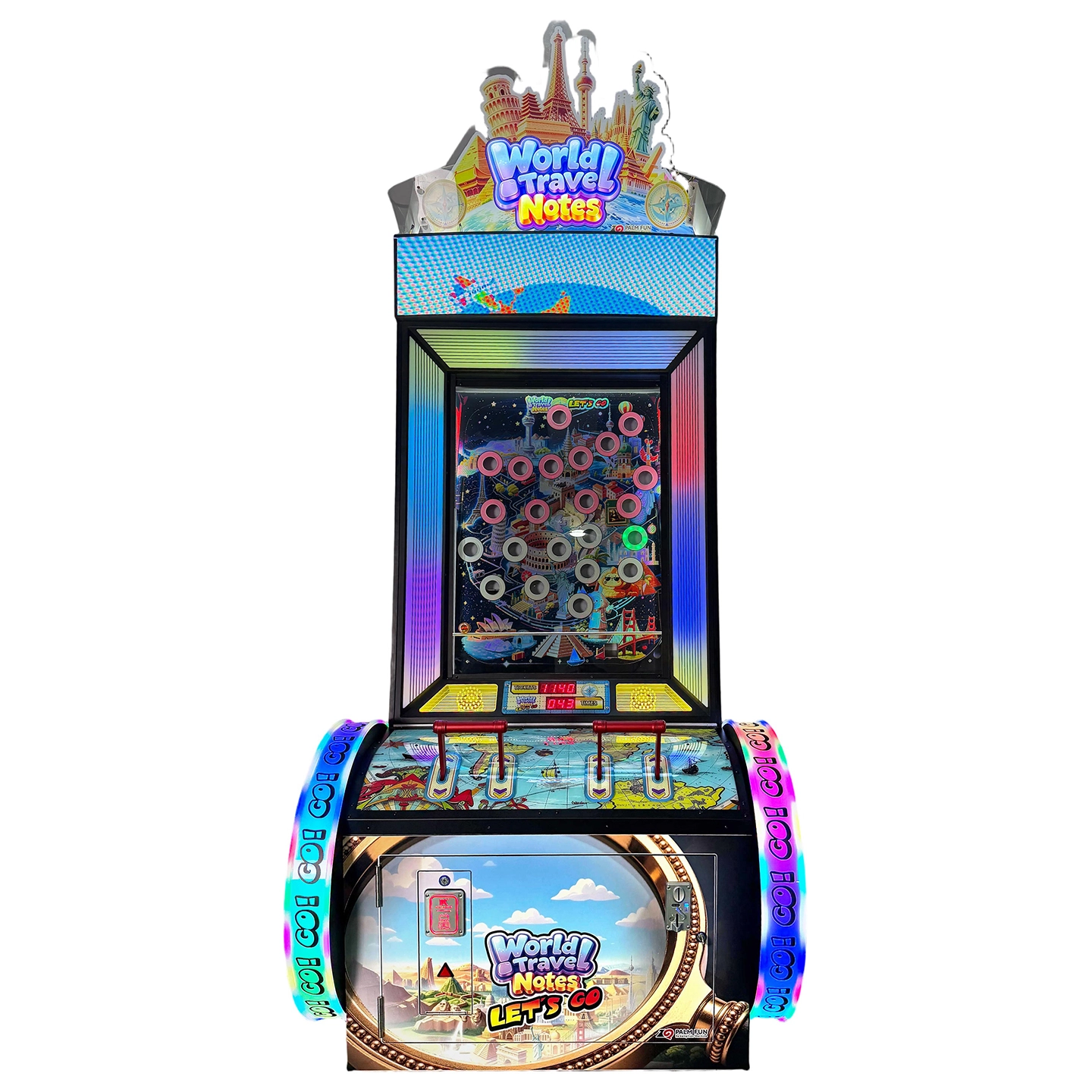
World Travel Notes – Balance Ball Redemption Arcade Game
World Travel Notes is a skill-based balance ball redemption game with a fun world-travel theme. Players use two handles to control the balance bar and guide the ball into each target hole. As the game progresses, the targets become more challenging, leading players toward the final grand prize. With colorful world-travel graphics, dynamic RGB lighting, a live score display, and progressive difficulty, World Travel Notes is designed to attract attention and encourage repeat play in arcades, FECs, shopping malls, and other entertainment venues.
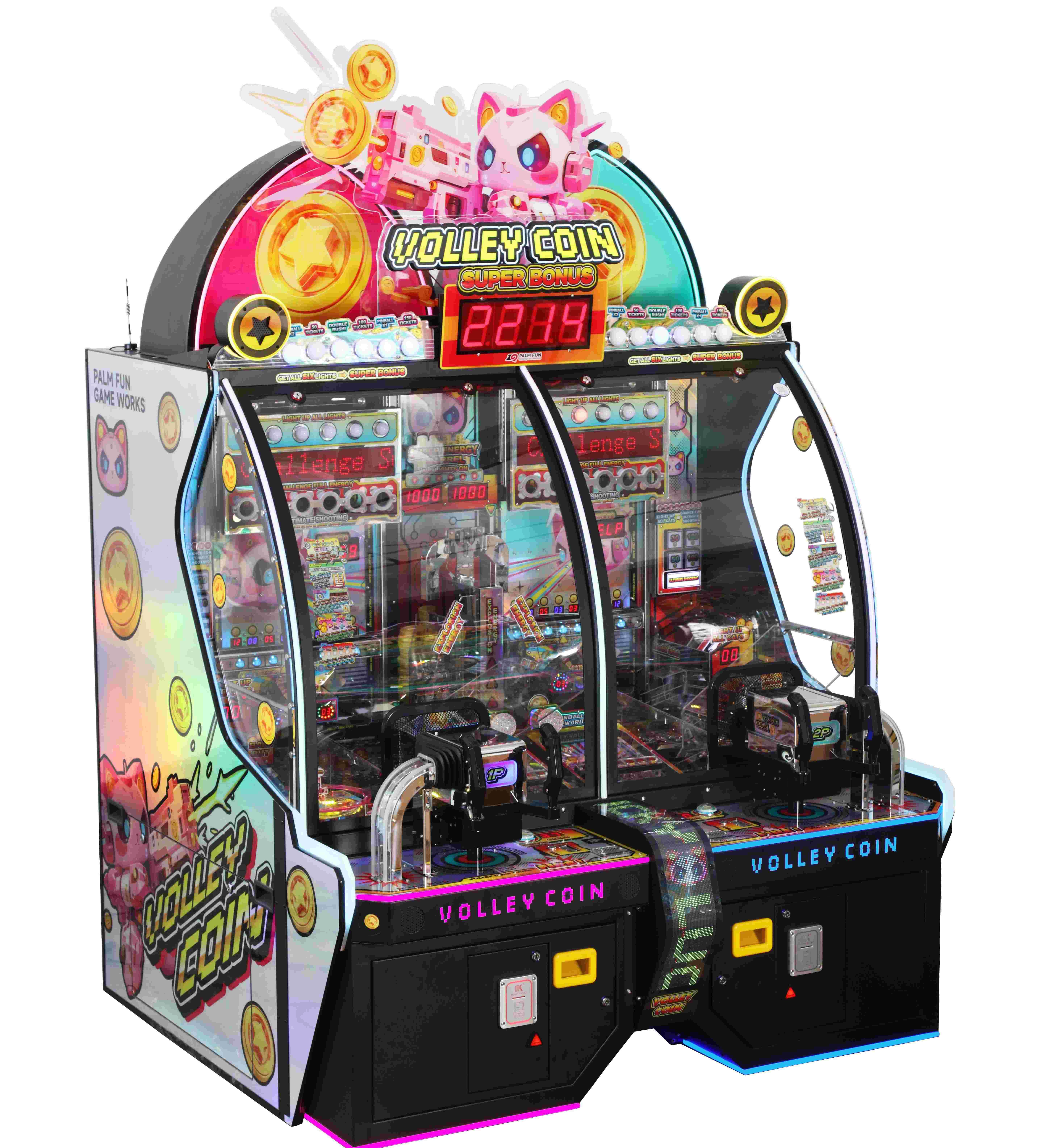
Hybrid Shooting & Pushing | Coin Pusher Arcade Ticket Redemption Machine
Volley Coin is an innovative arcade ticket redemption machine developed by Palm Fun Electronics. Combining the excitement of a fast-paced token shooter game with the proven earning power of a traditional coin pusher machine, Volley Coin offers a fresh and engaging gameplay experience that appeals to players of all ages.
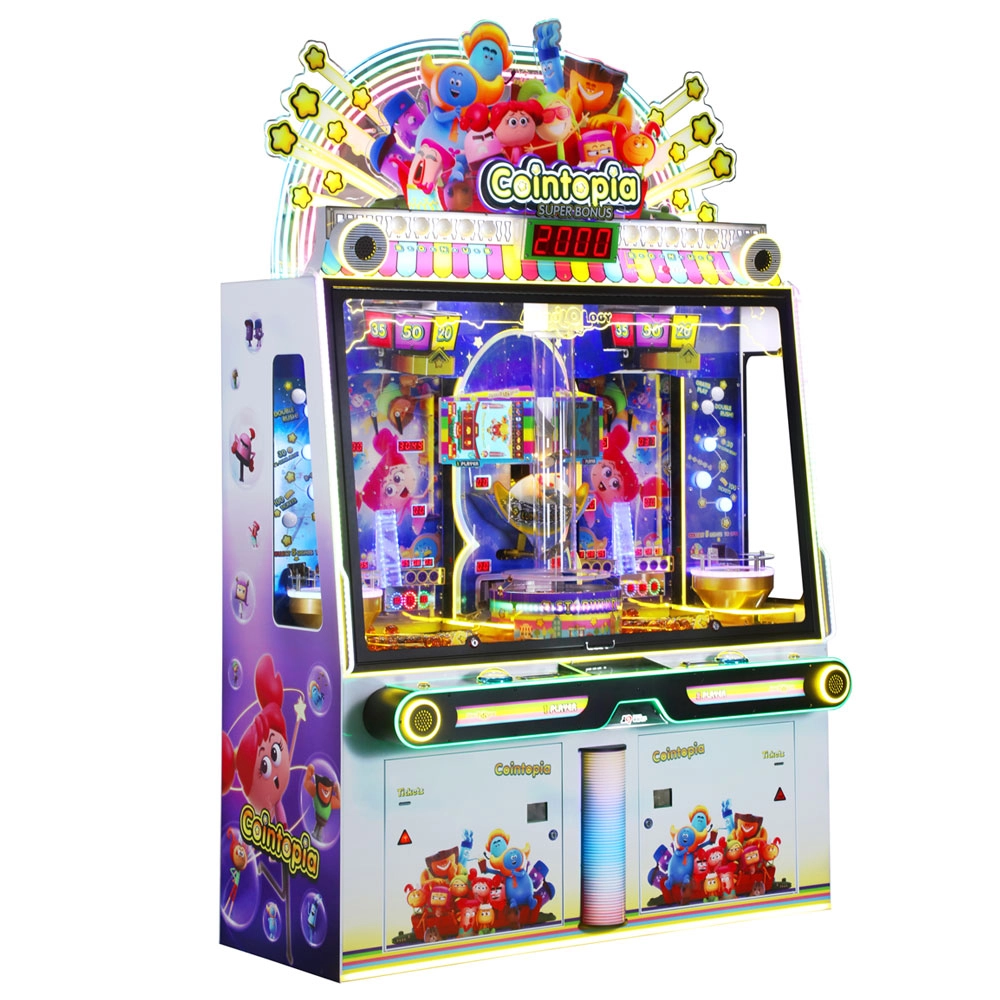
COINTOPIA, Have Fun Together With The Zodiac Buddies in an Utopia
COINTOPIA by PALM FUN is an exciting redemption game machine where players enjoy fun with zodiac buddies in a utopia setting. This ticket redemption machine offers engaging gameplay and rewarding experiences, perfect for family entertainment centers and arcades seeking top-quality redemption games.

Copyright © 2026 PALM FUN All Rights Reserved. | Privacy Policy • Terms and Conditions | Sitemap
palmfunarcade
Palm Fun Arcade Game
Whatsapp: +8618126837443
PalmFun Arcade
PalmFun_Arcade
PALM FUN Redemption Machine