


Top Pirate Arcade Games with Multiplayer Battles
- What makes a pirate arcade battle worth playing?
- Clear competition creates instant participation
- Theme, anticipation, and spectators matter
- How to compare pirate games before choosing one
- Match the difficulty and reward model to your audience
- Check footprint, visibility, and installation needs
- Why the Pirate Strategy Ball Push Game suits multiplayer venues
- Skill zones support a wider range of players
- Plan the attraction as part of the game mix
- Operating and sourcing a pirate arcade attraction
- Prepare a practical maintenance routine
- Use a measured launch and review process
- Frequently Asked Questions

Quick guide: The best pirate arcade games for multiplayer battles combine easy-to-understand turns, meaningful player choices, visible progress, and a theme that attracts families and groups. When comparing a pirate strategy pirate arcade game, check how two players interact, whether skill zones support different experience levels, how prizes or tickets are awarded, and what the venue needs for installation and service. The Pirate Strategy Ball Push Game brings these elements together in a two-player duel: guests navigate traps, pursue hidden prizes, and compete across designated skill zones in a vivid pirate setting.
What makes a pirate arcade battle worth playing?
A multiplayer arcade attraction has to do more than place two players beside one another. It should give both people a clear reason to participate, make the contest easy to follow for spectators, and create a satisfying outcome within a practical play session. A pirate strategy pirate arcade game can deliver this through a shared theme and a skill-based contest in which timing, choices, and attention help distinguish one round from the next.
Clear competition creates instant participation
Guests should be able to understand the basic objective from the cabinet, screen, or playfield without a long explanation. A direct head-to-head setup reduces hesitation: one guest challenges a friend, sibling, or parent, and the other can see where to play and how the contest works. This is especially useful in family entertainment centers, mall arcades, and other locations where players may be encountering the game for the first time.
Strong multiplayer design also keeps both sides relevant. If the play is too complicated, newcomers may feel disadvantaged; if player decisions have no visible effect, experienced guests may lose interest. A pirate strategy pirate arcade game should balance accessible rules with enough uncertainty and skill for guests to want a rematch. Pirate hazards and hidden rewards provide a natural story framework for that tension, while a two-player format makes the competition social rather than solitary.
Theme, anticipation, and spectators matter
Pirate imagery gives operators a recognizable visual hook that can stand out among cabinets with unrelated themes. Treasure, traps, and shipboard adventure help explain the objective before a guest reads instructions. The theme can also draw a small audience: friends and family can watch each turn, follow the changing situation, and encourage the players. That shared viewing experience can make a compact game feel like a group activity.
Theme alone is not a substitute for good play. The attraction should connect its pirate visuals to the actual decisions and rewards players experience. In the Pirate Strategy Ball Push Game, the swashbuckling premise supports a two-player duel in which participants navigate treacherous traps and seek hidden prizes. Designated skill zones offer different levels of challenge, helping the game welcome a broad range of ages and experience without making every round feel identical.
How to compare pirate games before choosing one
Product names and cabinet art do not tell an operator everything needed for a buying decision. Compare the intended player experience with the venue’s audience, operating model, floor plan, and service capacity. The table below provides a practical starting point for assessing a pirate strategy pirate arcade game against other common pirate-themed formats.
| Game format | Player interaction | What to evaluate | Potential venue fit |
|---|---|---|---|
| Two-player ball-push duel | Direct competition with both players active in a shared contest | Clarity of turns, skill zones, ball handling, prize or ticket behavior, and rematch appeal | Family arcades, FECs, and locations seeking a social head-to-head attraction |
| Single-player pirate redemption game | One guest plays while others watch or wait | Replay value, game duration, reward clarity, and queue management | Compact game mixes or areas with varied solo attractions |
| Cooperative pirate game | Players work toward a shared objective | How collaboration is encouraged, whether both players contribute, and how progress is communicated | Family groups and venues emphasizing shared play |
| Competitive video or shooting game | Players compete through screen-based actions | Controls, visibility, sound, difficulty curve, and audience age fit | Arcades with screen-based attractions and sufficient space for viewing |
These formats are not interchangeable. A physical ball-push contest may offer a different kind of tactile, face-to-face interaction from a screen-led battle. Operators should consider how a game complements the existing mix rather than assuming that every pirate cabinet will attract the same guests. For background on arcade entertainment and multiplayer formats, see the overview of arcade games and the definition of multiplayer games.
Match the difficulty and reward model to your audience
Before purchase, confirm how the game accommodates casual players and returning guests. Skill zones can help a pirate strategy pirate arcade game serve a broader audience when the challenge is understandable and guests can see what makes one zone different from another. Ask the supplier how play difficulty is structured, what controls are available to the operator, and how the game communicates outcomes to players.
Clarify the reward model as well. Depending on the specific configuration and destination market, a redemption game may award tickets, prizes, or another outcome. Ask for details about ticket settings, prize-related features, and the intended operating mode rather than assuming that every machine uses the same setup. The reward should feel consistent with the play experience and the venue’s rules. Operators should also review local requirements for amusement devices, electrical installation, age guidance, and prize redemption before opening the game to the public.
Check footprint, visibility, and installation needs
Measure the proposed location, including the space needed for players to stand comfortably and for other guests to pass. A two-player game needs enough room for both participants to approach their stations without blocking a main walkway or nearby attractions. Consider sightlines too: visible play helps spectators understand the contest and may encourage additional guests to queue, but sound and lighting should remain suitable for the wider game floor.
Request the machine’s dimensions, power requirements, shipping details, and installation instructions before finalizing a floor plan. A supplier should also explain access for routine maintenance and replacement parts. For safety planning, operators can consult ISO 12100 guidance on machinery safety and risk assessment as a general reference, while confirming which local standards and regulations apply to their own venue and equipment.
Why the Pirate Strategy Ball Push Game suits multiplayer venues
The Pirate Strategy Ball Push Game is designed as a two-player attraction, so competition is built into the core experience rather than added as a secondary feature. Players enter a pirate-themed duel, work through treacherous traps, and seek hidden prizes. This gives friends and family a shared goal and a clear reason to watch each other’s progress. For operators evaluating a pirate strategy pirate arcade game, that combination can help connect themed presentation with active player interaction.
Skill zones support a wider range of players
Different guests approach arcade games with different levels of confidence. Designated skill zones can make the experience more welcoming by giving players an accessible way to engage while still leaving room for a more challenging contest. The practical value depends on how those zones operate in the actual game, so buyers should request a demonstration and observe how first-time players respond. Check whether instructions are easy to follow, whether both players can understand the challenge, and whether the game remains engaging across repeat plays.
For a venue, a flexible experience can be helpful when family members or mixed-age groups want to play together. The pirate theme provides a common story, while the contest offers a reason to compare outcomes. A pirate strategy pirate arcade game should not be described as guaranteeing a particular revenue result; performance depends on location, pricing, guest mix, uptime, and game settings. Instead, evaluate the product against the venue’s goals and monitor real play data after installation.
Plan the attraction as part of the game mix
A multiplayer machine can contribute a social dimension to a floor that otherwise leans toward individual play. Consider placing it where pairs can stop without obstructing traffic and where spectators can watch briefly. If the venue has a pirate, adventure, or family zone, thematic placement may reinforce the atmosphere. If the rest of the arcade has a varied game mix, the machine can instead act as a distinctive visual feature that encourages guests to try something different.
Think through the full guest journey: how a player notices the game, understands the rules, pays, plays, and receives any applicable reward. Keep the play area tidy, ensure instructions and pricing are legible, and train staff to answer common questions. Accessible design is also worth considering in the broader experience of the venue; ISO 9241-210 on human-centred design offers a general framework for considering people’s needs in interactive systems. Apply relevant local accessibility requirements to the site and equipment.
Operating and sourcing a pirate arcade attraction
A successful launch depends on more than choosing an appealing cabinet. Before ordering, request the product specifications, warranty terms, packing and shipping information, setup guidance, and a clear explanation of available service support. For imported equipment, confirm who handles customs documentation, destination-market compliance, and any local inspection or certification requirements. Requirements vary by market, so obtain advice relevant to the installation country rather than relying on a general product description.
Prepare a practical maintenance routine
Ask the supplier which components require regular inspection, what cleaning methods are recommended, and which spare parts operators should keep available. Staff should know how to identify a fault, safely take a machine out of service when needed, and report the issue with useful details. A simple log of service dates, recurring problems, and downtime can help the venue spot patterns and support more effective communication with the supplier.
For a pirate strategy pirate arcade game, routine checks should follow the manufacturer’s documentation and the venue’s safety procedures. Do not improvise repairs or bypass protective features. Confirm how to contact technical support, how replacement parts are ordered, and whether troubleshooting material is available. Clear answers to these questions can reduce avoidable delays and help operators plan realistic staffing and maintenance responsibilities.
Use a measured launch and review process
When the game arrives, inspect the shipment and installation condition, then verify the operating instructions, pricing, settings, and reward behavior before opening it to guests. Have staff play a few rounds so they can explain the basics and notice any unclear instructions. During the first weeks, observe whether guests understand the objective, whether pairs play together, and whether the machine’s location supports comfortable access.
Review performance using the measures available to your business, such as plays, uptime, service calls, and guest or staff feedback. Compare those observations with the role you intended the machine to serve: a family draw, a head-to-head experience, or a themed addition to a redemption area. Adjust placement or operating settings only within the manufacturer’s guidance and applicable rules. This practical review helps determine whether the pirate strategy pirate arcade game is contributing to the experience you planned, rather than relying on assumptions made before installation.
Frequently Asked Questions
What makes a pirate arcade game suitable for multiplayer battles?
A suitable multiplayer game gives both players a clear role, makes the contest easy to understand, and offers visible progress and replay appeal. Theme and spectator visibility can also help turn a two-player round into a social activity.
What should operators compare before buying a pirate-themed arcade game?
Compare player interaction, difficulty, reward model, footprint, power requirements, installation needs, maintenance access, spare parts, and support. Confirm local compliance and venue requirements before purchase.
How does the Pirate Strategy Ball Push Game support different player skill levels?
It features designated skill zones intended to cater to different levels of experience. Operators should request a demonstration to understand how the zones work and how players respond.
What should a venue check before installing a two-player arcade machine?
Confirm the machine dimensions, power requirements, installation instructions, maintenance access, and space for players and spectators. Review local safety, accessibility, electrical, and amusement-device requirements.
What maintenance information should operators request from a supplier?
Ask about routine inspections, cleaning, recommended spare parts, troubleshooting, warranty coverage, technical support, and procedures for taking a machine out of service when needed.
Recommended for you
Top 10 soccer arcade gaming manufacturers and suppliers
Custom ticket games arcade Manufacturers and suppliers
The latest trends for coin operated arcade games
Top shooting arcade games Manufacturers and Suppliers
Research & Development, how hard is the birth of one new redemption machines?
How to place the redemption machines in a right place?
1,Ensure that the placement and layout of the equipment are distinct and centralized.
2,Keep noise levels low and avoid having a line of sight that spans too far to prevent players from easily taking in everything, which may slow down their movement.
3,Avoid clustering high-ticket payout machines and disperse machines of the same style.
4,Mix popular machines with less popular ones and avoid placing all popular machines together.
The revenue proportion of redemption machines
How to select and match redemption machines?
2. the number of redemption game configuration: according to the characteristics of redemption machine, the proportion of redemption game configuration generally accounts for 30±5% of the whole field.
3. there are a lot of equipment on the market now, but less innovative, so the choice should be targeted in management and planning. We can divide redemption machines into children's, adults's, families, etc., according to different standards, with complete varieties and many styles, so as to give guests more choices and more changes. Specific can refer to the following:
① Inserting tokens in high frequency (mainly in mechanical redemption machines)
② Skill based games (mainly in mechanical redemption machines)
③ Games with edutainment significance (mainly in video redemption machines)
④ Entertaining games (mainly in video redemption machines)
Why redemption ticket machines are popular?
2.Redemption machines are becoming the most important breakthrough to enhance the sustainable operation of indoor arcade game halls.
3.Players are of all ages and they continue to expand.
You may also like
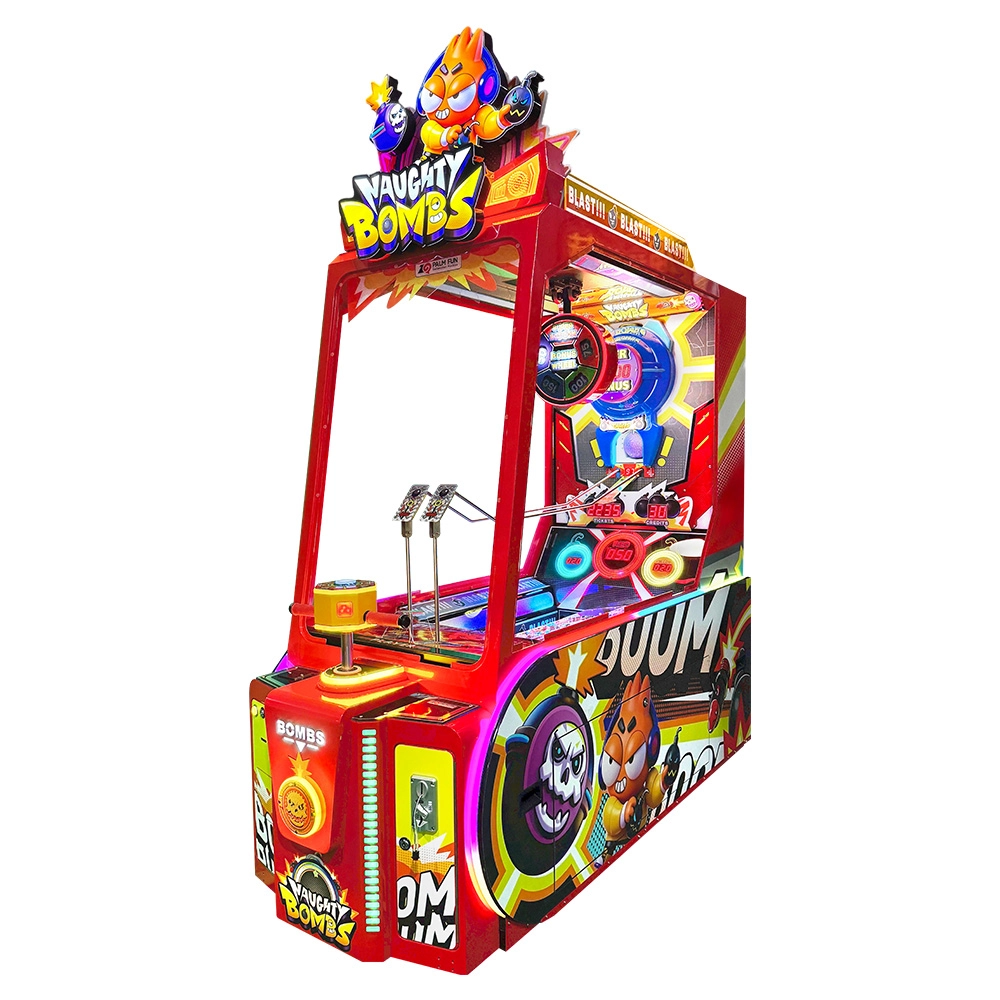
Naughty Bombs Ball Drop Redemption Arcade Game Machine
Naughty Bombs is a ball-drop redemption arcade game featuring rolling-ball gameplay, colored targets, ticket prizes, surprise bonus rewards, lighting and sound effects. Players use timing to launch and drop balls toward colored target areas. The product is presented for arcade, family entertainment center and other entertainment-venue projects, with customizable 110V / 220V AC voltage configuration.
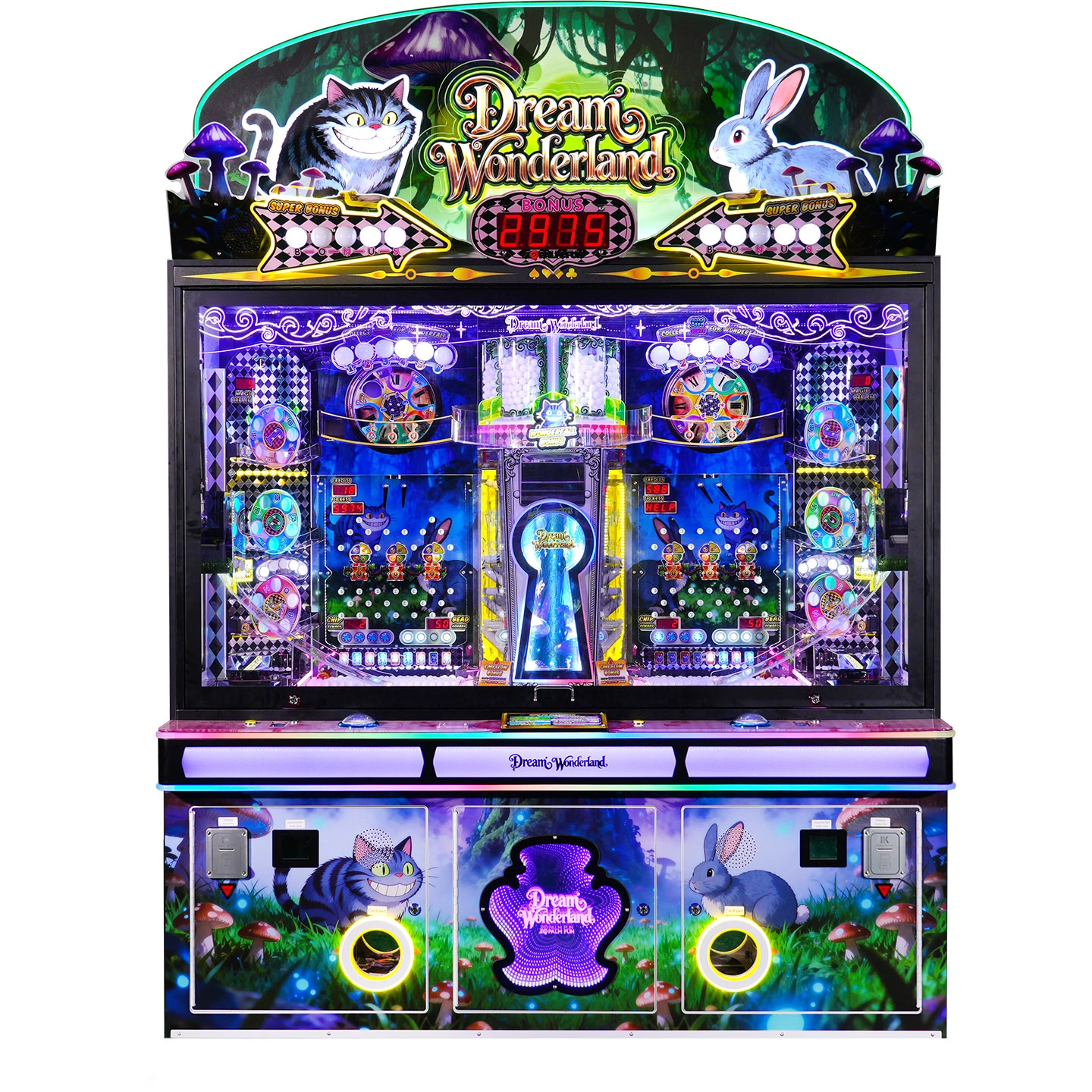
Dream Wonderland Marble Pusher Redemption Game
Enter Dream Wonderland — a magical marble pusher adventure filled with glowing lights, magic orbs, bonus wheels, collectible character cards, and exciting jackpot challenges.
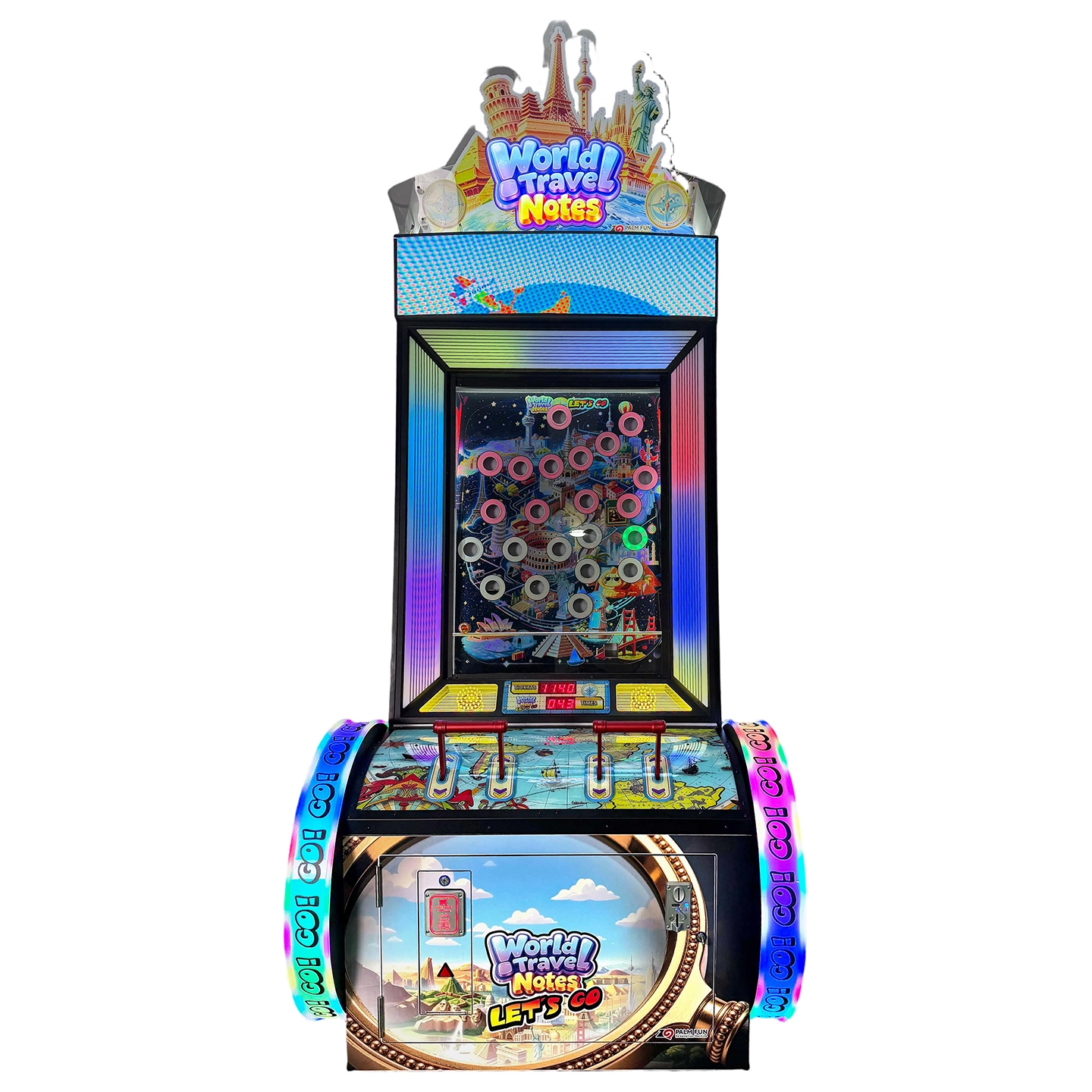
World Travel Notes – Balance Ball Redemption Arcade Game
World Travel Notes is a skill-based balance ball redemption game with a fun world-travel theme. Players use two handles to control the balance bar and guide the ball into each target hole. As the game progresses, the targets become more challenging, leading players toward the final grand prize. With colorful world-travel graphics, dynamic RGB lighting, a live score display, and progressive difficulty, World Travel Notes is designed to attract attention and encourage repeat play in arcades, FECs, shopping malls, and other entertainment venues.
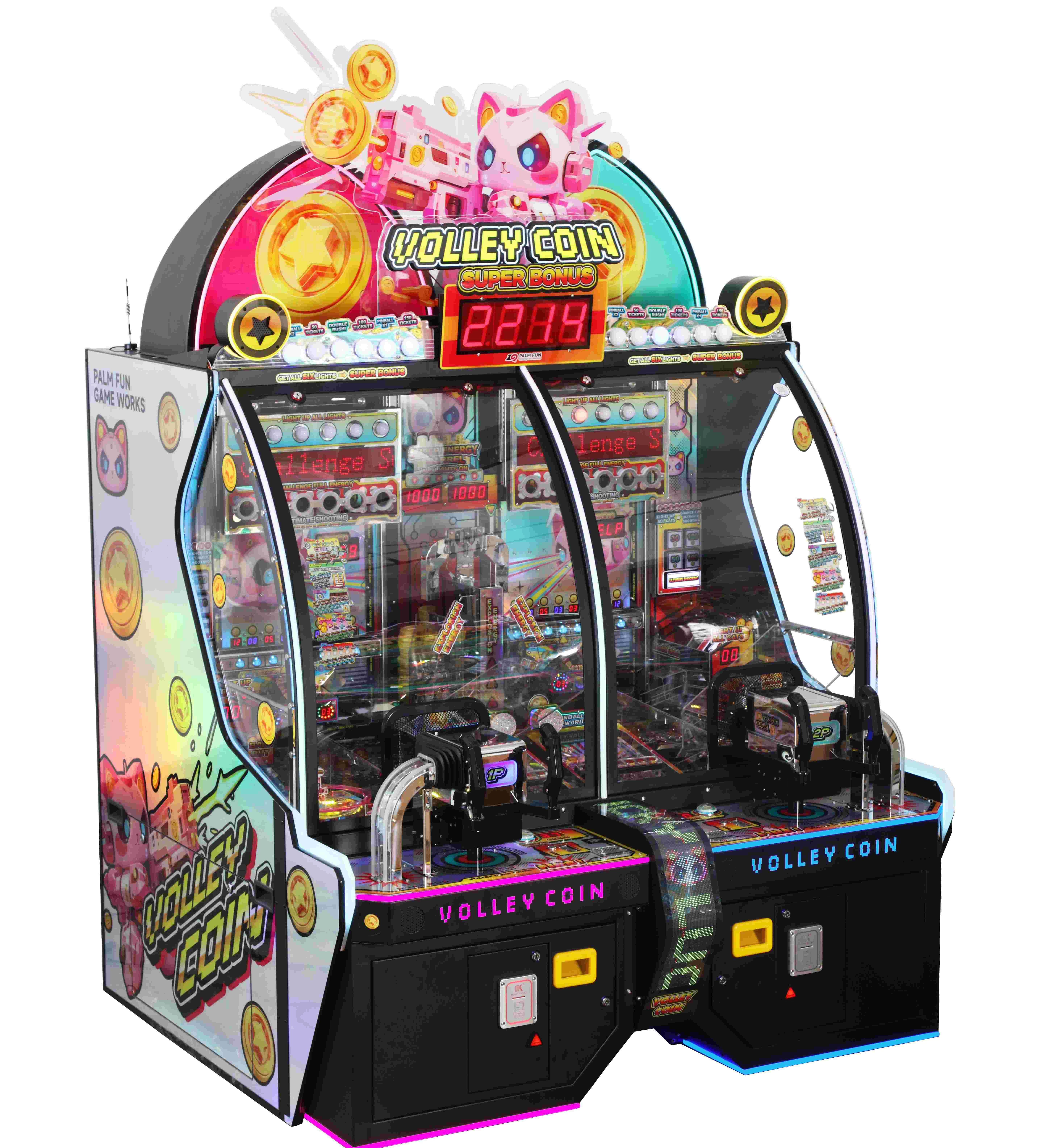
Hybrid Shooting & Pushing | Coin Pusher Arcade Ticket Redemption Machine
Volley Coin is an innovative arcade ticket redemption machine developed by Palm Fun Electronics. Combining the excitement of a fast-paced token shooter game with the proven earning power of a traditional coin pusher machine, Volley Coin offers a fresh and engaging gameplay experience that appeals to players of all ages.

Copyright © 2026 PALM FUN All Rights Reserved. | Privacy Policy • Terms and Conditions | Sitemap
palmfunarcade
Palm Fun Arcade Game
Whatsapp: +8618126837443
PalmFun Arcade
PalmFun_Arcade
PALM FUN Redemption Machine