








What are the different types of buy pinball storm redemption machine?
- How to classify redemption machines before choosing a configuration
- Physical-ball pinball and mechanical play
- Video or screen-based pinball-style games
- Hybrid formats and skill-based redemption
- Compare player capacity, footprint, and venue fit
- Single-player cabinets
- Head-to-head and multiplayer machines
- Compact and full-size cabinets
- Evaluate rewards, operating costs, and long-term support
- Ticket-based redemption
- Prize, points, or other reward configurations
- Durability, safety, and serviceability
- Frequently Asked Questions
Pinball Storm redemption machines can be compared by their physical or screen-based game format, number of players, cabinet size, and method of awarding rewards. “Storm” may be a product or model name, not a universal industry category, so the available configurations and specifications depend on the exact machine. Before you buy pinball storm redemption machine equipment, confirm the model, game mechanics, ticket or prize system, dimensions, electrical requirements, service support, and applicable safety documentation with the supplier.
How to classify redemption machines before choosing a configuration
Physical-ball pinball and mechanical play
A physical-ball machine uses a playfield, one or more metal balls, flippers or other controls, and targets that affect scoring. In a redemption version, the game may connect score or other defined outcomes to tickets or another reward mechanism. This format suits venues that want the tactile action and familiar appearance of traditional pinball. It also brings practical considerations: moving parts, playfield access, ball handling, and the availability of replacement components. Ask the seller which parts are expected to need routine inspection and whether the cabinet is designed for straightforward service.
Traditional pinball and redemption operation are related but not interchangeable terms. A machine may look and play like pinball without awarding tickets, while an arcade redemption machine may use pinball-style controls or a ball-based playfield. When you buy pinball storm redemption machine equipment, check the actual game rules and reward mechanism rather than relying on a product title or promotional image. The history and basic mechanics of pinball provide useful context, but the seller’s documentation must establish what the specific redemption model does.
Video or screen-based pinball-style games
A screen-based configuration presents play on a display and may use buttons, a joystick, touch controls, or other input devices. It can reproduce pinball-inspired movement and scoring without a conventional full-size physical playfield. Buyers may consider this format where cabinet footprint, visual effects, or digital game variation matter more than physical-ball interaction. Confirm whether the advertised machine is a dedicated game or a platform with multiple selectable games, and ask whether the software can be updated or altered by the operator.
Do not assume that a display means the machine is networked, remotely configurable, or equipped with a particular payment system. Those capabilities are model-specific. Request a written list of included games, control types, display specifications, and any licensing or update conditions. If the product is marketed as Pinball Storm, have the supplier identify the exact version and show how its gameplay and redemption functions work in a demonstration or current product manual.
Hybrid formats and skill-based redemption
Some arcade cabinets combine physical controls or moving elements with digital scoring, lights, and ticket accounting. This is best treated as a configuration description, not a guarantee that every product using the word “Storm” has hybrid features. Ask which components are physical, which outcomes are controlled by software, and how the machine determines a score or reward. A clear explanation helps operators assess both player experience and the maintenance skills needed to keep the unit in service.
Redemption rules are important to the purchase decision. Ask whether rewards depend on skill, a fixed game rule, or another mechanism described in the manual, and how tickets are counted or recorded. Do not infer payout behavior from cabinet appearance. Local requirements for amusement devices and prize operations can vary, so operators should check applicable rules with the relevant authorities and qualified advisers before opening the game to customers.
Compare player capacity, footprint, and venue fit
Single-player cabinets
A single-player unit gives one customer control of each game session. It can be a practical choice for a smaller arcade, family entertainment center, or location testing demand for a new game. The main buying questions are not simply how many players the cabinet supports, but how long a typical session lasts, how clearly players understand the objective, and whether the machine can be placed where customers can comfortably approach and leave it.
Measure the full operating footprint, including space for access panels, ventilation, and player movement. Request the packed and assembled dimensions, weight, delivery requirements, and recommended clearance from the manufacturer or seller. A single-player Pinball Storm unit may still need substantial floor area if its cabinet is deep or if the play position requires room around the controls. Compare the actual specification sheet with your floor plan instead of estimating from photos.
Head-to-head and multiplayer machines
A multiplayer cabinet allows two or more customers to compete or take turns, depending on its design. Shared play can add a social element and may suit locations with groups of visitors, but it can also require more floor space and a clear queueing plan. Verify whether players use separate stations, share one playfield, or compete through alternating turns. These arrangements affect throughput, accessibility, and how easily staff can explain the game.
When comparing multiplayer models, ask how simultaneous play works, whether each player has an individual score, and how the machine handles rewards for a match or session. The term “multiplayer” alone does not establish these details. If your venue depends on fast customer turnover, observe a complete game cycle and estimate practical play time. If you buy pinball storm redemption machine equipment for a high-traffic location, also ask about expected service access and the supplier’s recommended inspection schedule.
Compact and full-size cabinets
Cabinet size is a purchasing dimension rather than a distinct game mechanic. Compact units can help buyers work within limited floor space, while larger cabinets may provide room for a broader play area, larger display, or multiple player positions. The trade-off is that compact equipment may have different ergonomics and visibility, while full-size equipment can increase shipping, installation, and space-planning requirements.
Compare cabinet dimensions, player height and reach, display visibility, access-panel placement, and the route from delivery entrance to installation point. Confirm whether the quoted dimensions include a topper, marquee, or other protruding parts. Also ask the seller whether the machine can pass through your doorways without disassembly and whether installation is included. These checks are particularly valuable when purchasing imported or large-format arcade equipment.
Evaluate rewards, operating costs, and long-term support
Ticket-based redemption
Ticket redemption is a common operating approach in which gameplay awards tickets that customers can exchange through a venue’s redemption counter or system. Before choosing a ticket-based Pinball Storm model, confirm how tickets are issued, whether the machine supports the venue’s existing ticket equipment, and whether tickets are included in the price. If electronic ticketing is offered, verify the required interfaces, compatible equipment, and any setup or licensing costs instead of assuming compatibility.
Operators should model rewards as part of the machine’s ongoing economics. Ask the supplier how scoring relates to ticket awards, whether the operator can configure settings, and what controls prevent counting errors. The International Association of Amusement Parks and Attractions offers industry resources for amusement and attractions businesses; use relevant guidance alongside the equipment manual and local requirements when planning operations. A supplier should be able to explain the machine’s intended operating process without relying on vague claims about earning potential.
Prize, points, or other reward configurations
Some redemption operations use points, prize mechanisms, or a venue-managed exchange process rather than a simple paper-ticket setup. These options should be confirmed for the exact model. Ask whether a machine dispenses a physical reward, records a score for staff to redeem, or only issues tickets. Those are different workflows, with different demands for storage, replenishment, staff oversight, and integration with other arcade systems.
For any reward arrangement, request written information about adjustable settings, error handling, and record keeping. If the machine uses a separate counter, card system, or prize device, identify which party supplies and supports each component. A low purchase price may not represent the lowest total cost if essential accessories, software, installation, or replacement parts are excluded. Compare complete, itemized quotations when you buy pinball storm redemption machine products from different sellers.
Durability, safety, and serviceability
Durability depends on the cabinet, controls, playfield or display, usage levels, and the quality of maintenance—not just on a product label. Ask what warranty applies to the complete machine and to components such as screens, sensors, controls, and ticket equipment. Find out where replacement parts are stocked, typical order lead times, and whether the seller provides troubleshooting, technician support, or a service manual. For a venue that operates long hours, support availability can matter as much as initial cost.
Request documentation for electrical requirements, installation, cleaning, routine checks, and any hazards identified by the manufacturer. The U.S. Consumer Product Safety Commission provides consumer product safety information, but its resources are not a substitute for model-specific compliance documents or local legal advice. Where relevant, ask the supplier to identify the standards and certifications that apply to the machine in your market and provide evidence rather than a general assurance.
The following comparison is a buying framework, not a claim that every Storm-branded product is available in each configuration. Performance, price, and service life vary by model, seller, and operating conditions, so obtain current specifications and a written quotation.
| Configuration or type | Typical application | Performance considerations | Relative cost factors | Durability and service checks |
|---|---|---|---|---|
| Physical-ball pinball redemption | Venues seeking tactile, pinball-style play | Check game duration, scoring rules, and ticket operation | Playfield, mechanical parts, and service access affect total cost | Ask about moving-part maintenance, replacement parts, and warranty |
| Screen-based pinball-style game | Locations prioritizing digital presentation or a compact format | Confirm controls, display, game selection, and update policy | Display and software terms may affect purchase and support costs | Check screen, control, software, and technical support coverage |
| Hybrid physical-digital configuration | Operators seeking a combination of physical interaction and digital scoring | Verify which elements are physical and how scores and rewards are calculated | Cost depends on the included hardware and any separate reward equipment | Confirm support responsibilities for both mechanical and electronic parts |
| Single-player cabinet | Smaller venues or locations assessing customer demand | Assess session length, ease of play, and player throughput | Compare complete installed cost and floor-space needs | Check cabinet access and routine service requirements |
| Multiplayer cabinet | Group-oriented arcades and family entertainment venues | Confirm player count, simultaneous or turn-based play, and reward rules | Allow for larger footprint, delivery, and installation | Ask about high-use wear points and service access |
For a reliable shortlist, request the model number, a current specification sheet, a demonstration, a complete price, warranty terms, and a parts and service plan. Compare machines on the same basis: gameplay, player capacity, footprint, reward method, installation needs, and support. This makes it easier to distinguish a suitable purchase from a visually appealing cabinet that does not fit your venue or operating model.
Contact our team to discuss your venue requirements and identify the Pinball Storm redemption machine configuration that best fits your space, audience, and operating needs.
Frequently Asked Questions
Is Pinball Storm a machine category or a specific product name?
“Storm” may be a product or model name rather than a universal industry category. Confirm the exact model and available configurations with the seller.
What is the difference between a physical-ball and a screen-based pinball redemption machine?
A physical-ball machine uses a playfield and physical balls, while a screen-based machine presents pinball-style play on a display using controls such as buttons, a joystick, or touch input. Their maintenance needs and player experiences differ.
Do all Pinball Storm redemption machines award tickets?
No general assumption is safe. Ask the seller whether the specific model issues tickets, uses another reward process, or does not award redemption rewards.
Should I choose a single-player or multiplayer cabinet?
Choose based on your venue’s floor space, customer groups, expected session length, and desired player throughput. Verify how multiplayer play and rewards work on the specific model.
What should I check before buying a Pinball Storm machine for a small arcade?
Confirm assembled dimensions, operating clearance, delivery access, player ergonomics, electrical requirements, reward-system compatibility, warranty, and service support.
How can I compare the total cost of different machines?
Compare itemized quotations that include the machine, required accessories, shipping, installation, software or setup charges, reward equipment, warranty coverage, and expected service needs.
Recommended for you
Arcade Machine Custom Design - Elevate Your Gaming Experience | PALM FUN
The Ultimate Guide to Coin Op Arcade Gaming by PALM FUN
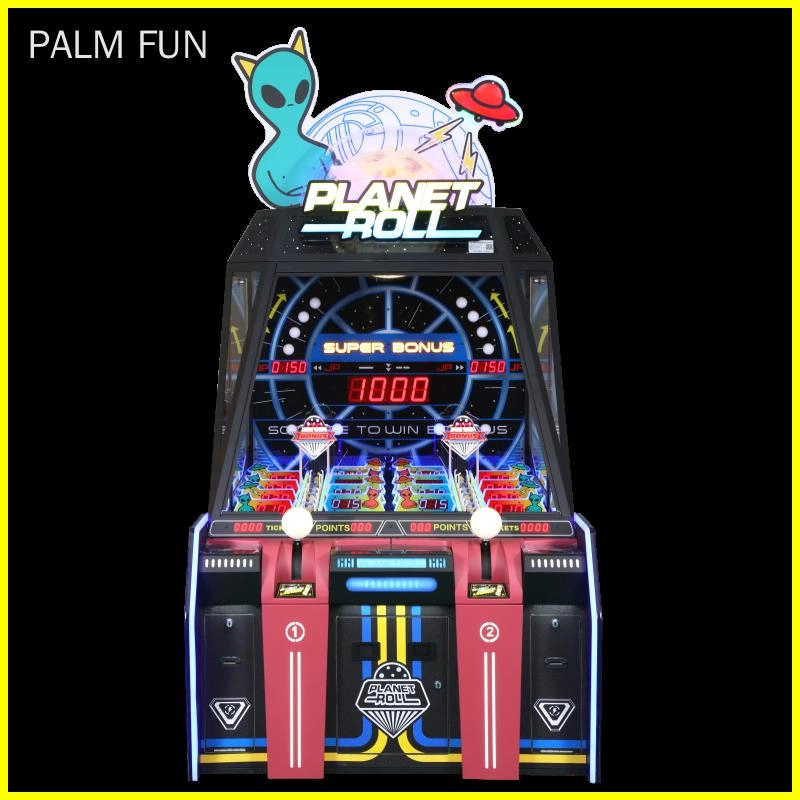
Energy Efficiency Tips for Planet Roll Pinball Machines
Arcade Game Manufacturers USA | Discover Quality with PALM FUN
FAQs
Research & Development, how hard is the birth of one new redemption machines?
Why redemption ticket machines are popular?
2.Redemption machines are becoming the most important breakthrough to enhance the sustainable operation of indoor arcade game halls.
3.Players are of all ages and they continue to expand.
Effectively solve the pain points of the site and consume the amount of coins deposit.
So the stock quantity of pre-purchased tokens is an issue must be concerned, especially in the highly competitive current market. Only when the amusement park maintains a healthy cycle of token sales, consumption, stockpiling, consumption, and sales again can it ensure sustained growth and profitability.
How to place the redemption machines in a right place?
1,Ensure that the placement and layout of the equipment are distinct and centralized.
2,Keep noise levels low and avoid having a line of sight that spans too far to prevent players from easily taking in everything, which may slow down their movement.
3,Avoid clustering high-ticket payout machines and disperse machines of the same style.
4,Mix popular machines with less popular ones and avoid placing all popular machines together.
How to guides works?
For example:
1. Proactively inquire and add tickets when a customer's machine is running low on tickets.
2. Assist players in organizing tickets when they are dispensed unevenly.
3. Offer storage tools such as storage bags and rubber bands when customers are arranging their tickets.
4. Provide free USB interfaces for charging near popular machines and rest areas.
5. Implement warm and clear reminders, guidance on ticket redemption, and directional signage, all designed to be straightforward. The more of these you provide, the more players will appreciate your thoughtfulness, without finding it bothersome.
You may also like
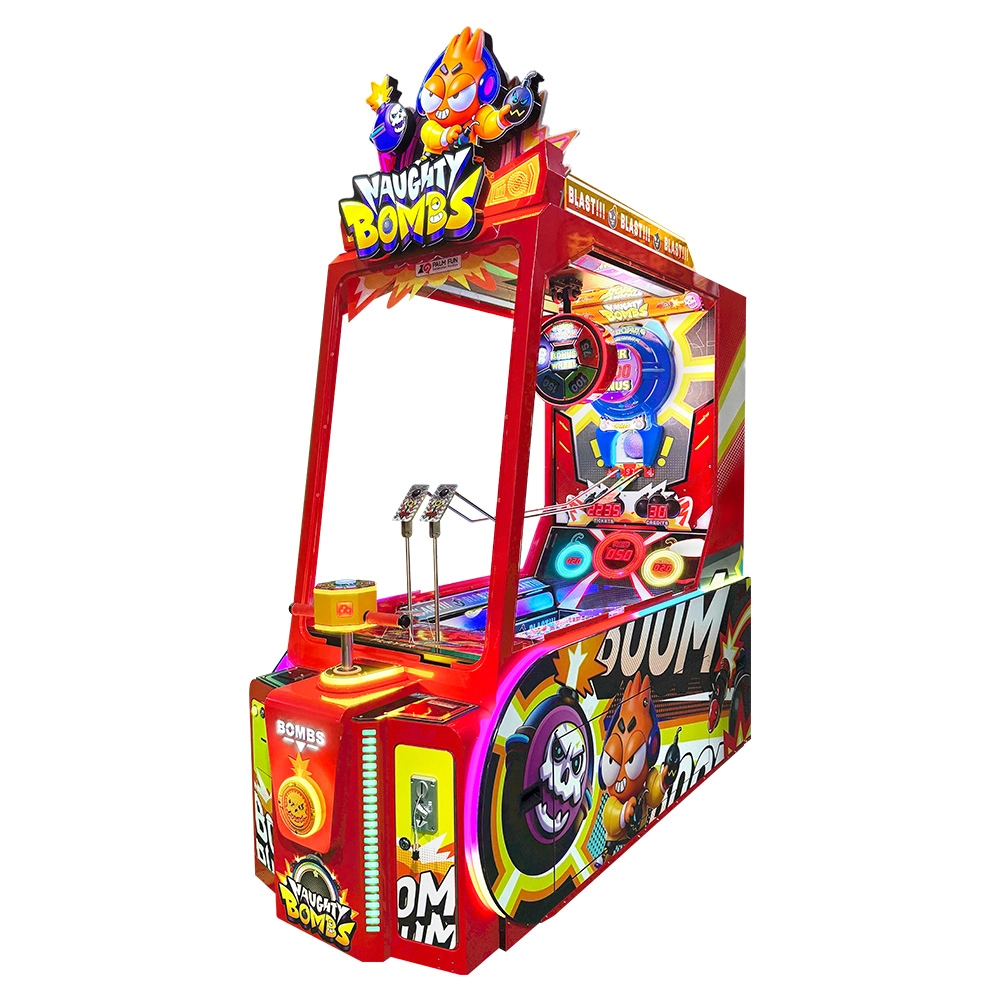
Naughty Bombs Ball Drop Redemption Arcade Game Machine
Naughty Bombs is a ball-drop redemption arcade game featuring rolling-ball gameplay, colored targets, ticket prizes, surprise bonus rewards, lighting and sound effects. Players use timing to launch and drop balls toward colored target areas. The product is presented for arcade, family entertainment center and other entertainment-venue projects, with customizable 110V / 220V AC voltage configuration.
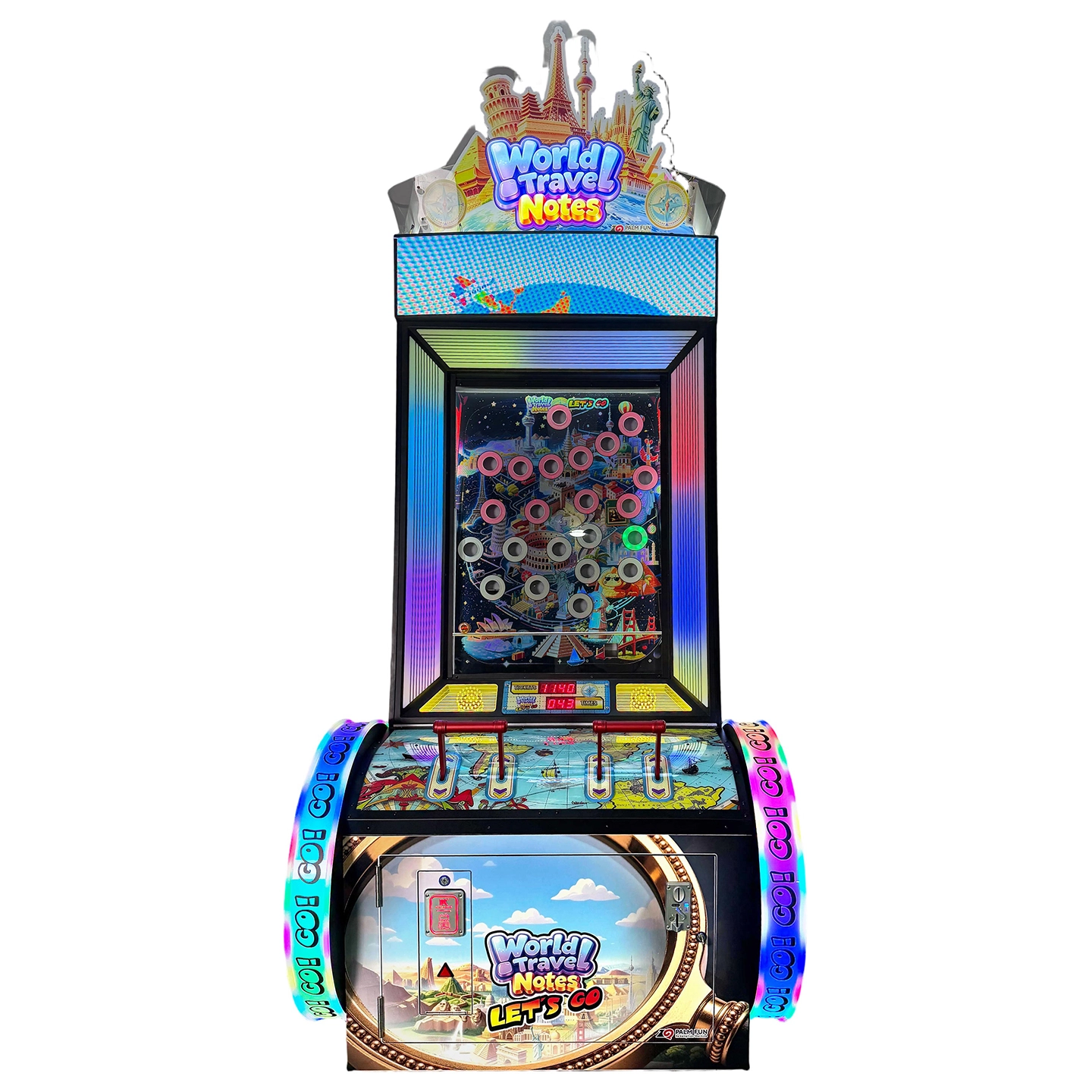
World Travel Notes – Balance Ball Redemption Arcade Game
World Travel Notes is a skill-based balance ball redemption game with a fun world-travel theme. Players use two handles to control the balance bar and guide the ball into each target hole. As the game progresses, the targets become more challenging, leading players toward the final grand prize. With colorful world-travel graphics, dynamic RGB lighting, a live score display, and progressive difficulty, World Travel Notes is designed to attract attention and encourage repeat play in arcades, FECs, shopping malls, and other entertainment venues.
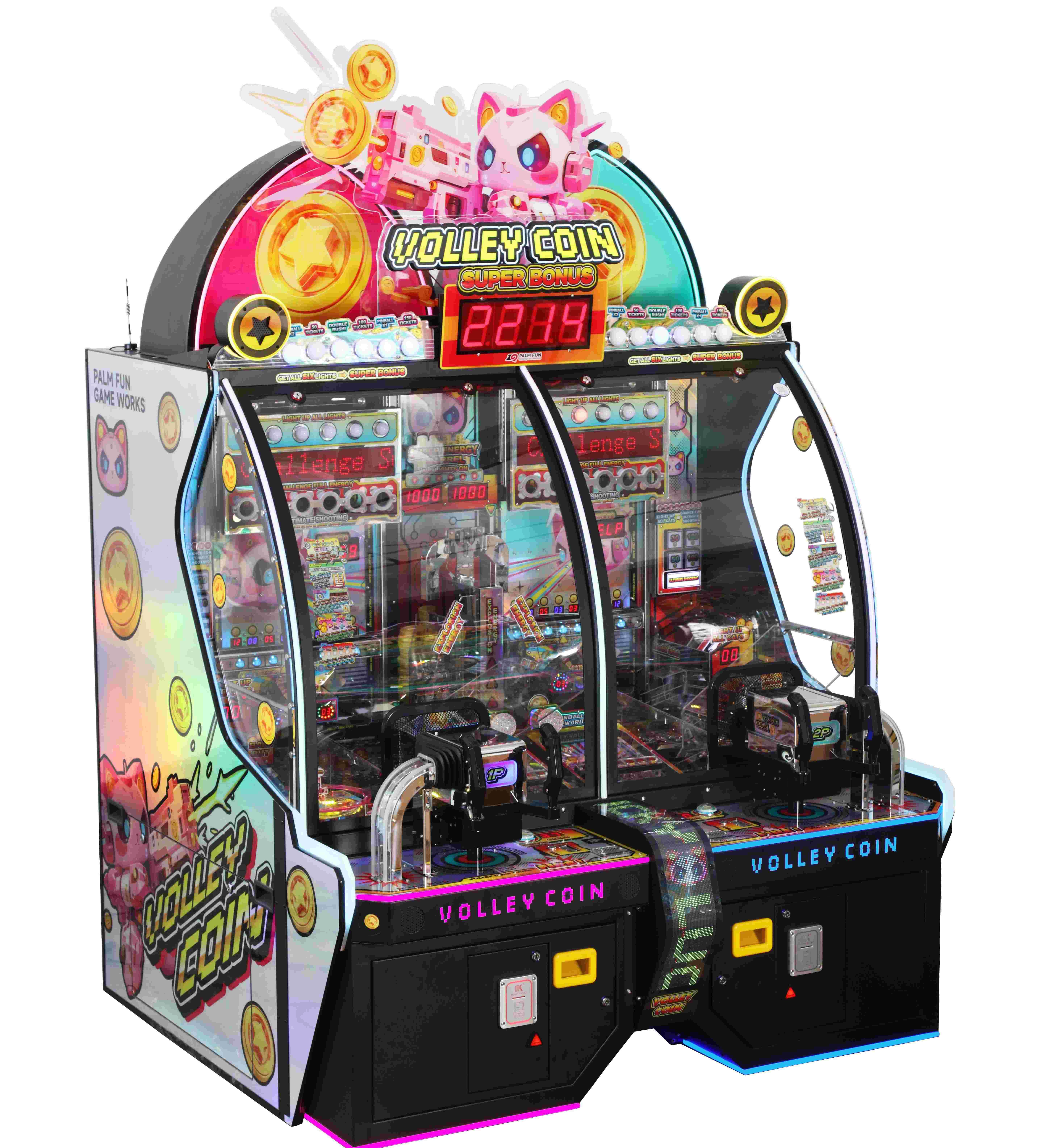
Hybrid Shooting & Pushing | Coin Pusher Arcade Ticket Redemption Machine
Volley Coin is an innovative arcade ticket redemption machine developed by Palm Fun Electronics. Combining the excitement of a fast-paced token shooter game with the proven earning power of a traditional coin pusher machine, Volley Coin offers a fresh and engaging gameplay experience that appeals to players of all ages.
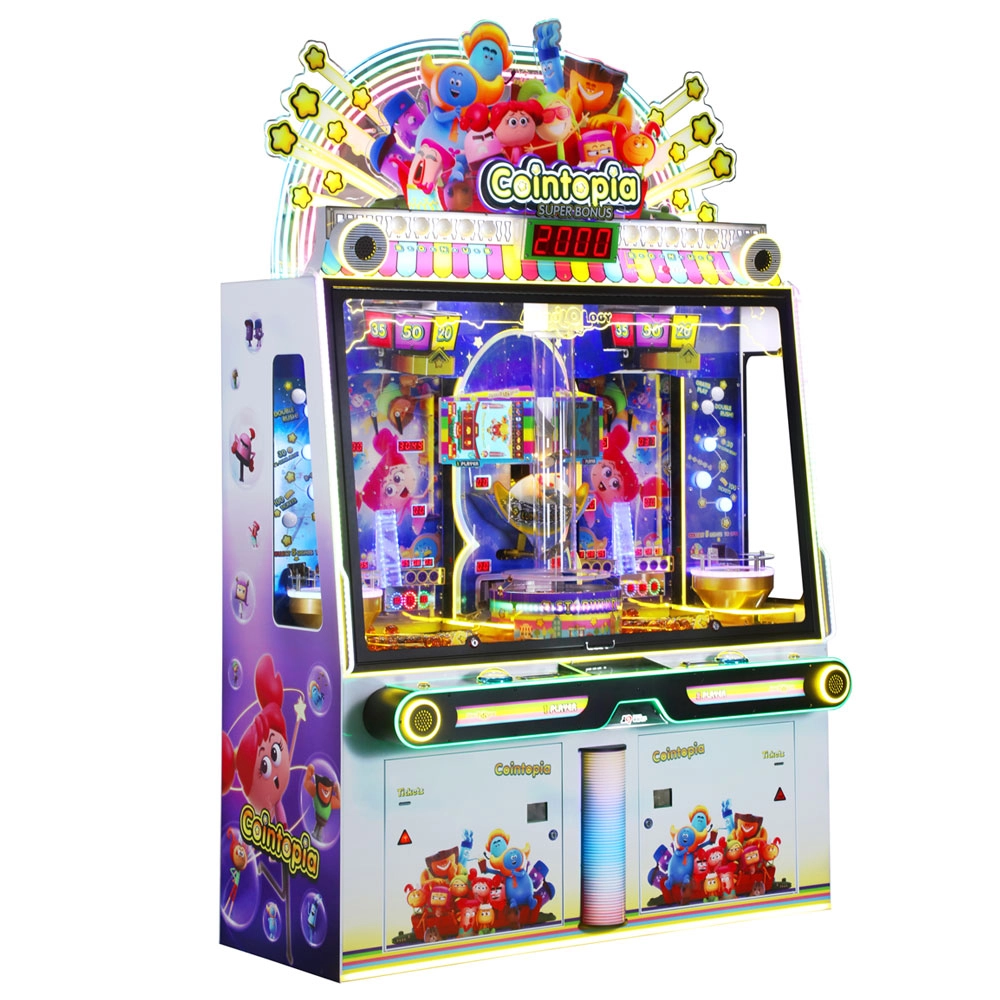
COINTOPIA, Have Fun Together With The Zodiac Buddies in an Utopia
COINTOPIA by PALM FUN is an exciting redemption game machine where players enjoy fun with zodiac buddies in a utopia setting. This ticket redemption machine offers engaging gameplay and rewarding experiences, perfect for family entertainment centers and arcades seeking top-quality redemption games.

Copyright © 2026 PALM FUN All Rights Reserved. | Privacy Policy • Terms and Conditions | Sitemap
palmfunarcade
Palm Fun Arcade Game
Whatsapp: +8618126837443
PalmFun Arcade
PalmFun_Arcade
PALM FUN Redemption Machine