







Warranty, Spare Parts & After-Sales for Coin Pusher Distributors
- Building a Reliable Service Framework for Coin-Operated Redemption Equipment
- What a distributor warranty should cover
- Why service-level agreements matter
- Compliance and technical documentation
- Spare-Parts Planning That Protects Uptime and Margin
- Classifying components by operational risk
- Creating a usable parts catalog
- Balancing local stock with manufacturer supply
- After-Sales Procedures for Higher Machine Availability
- Installation and commissioning controls
- Preventive maintenance and field troubleshooting
- Performance reporting and customer retention
- Why PALM FUN Is a Practical Manufacturing Partner for Distributors
- Engineering, production, and product development capability
- Coin pusher and redemption product solutions
- International reputation and long-term support
- Frequently Asked Questions
Warranty, spare parts, and after-sales support are strategic requirements for coin pusher distributors, not administrative add-ons. A dependable supplier should provide clear warranty coverage, documented exclusions, critical replacement components, technical manuals, remote troubleshooting, and defined response times. For distributors supplying redemption game machines to family entertainment centers, shopping malls, amusement parks, and independent operators, after-sales readiness directly affects machine uptime, operator confidence, revenue continuity, and long-term customer retention. This guide explains how to evaluate support infrastructure, build a practical parts inventory, compare service commitments, and select a manufacturing partner capable of supporting arcade operations across multiple markets.
Building a Reliable Service Framework for Coin-Operated Redemption Equipment
What a distributor warranty should cover
A professional warranty should identify the warranty period, start date, covered assemblies, remedy method, shipping responsibilities, and claims procedure. Coverage commonly needs to address manufacturing defects affecting the cabinet structure, control boards, motors, sensors, lighting systems, wiring harnesses, coin mechanisms, ticket dispensers, and factory-installed software. The document should also distinguish between defects caused by production quality and damage resulting from misuse, unsuitable voltage, unauthorized modification, poor installation, vandalism, water exposure, or normal wear.
Distributors should request a serial-number-based warranty process. Each unit should be traceable to a production batch, inspection record, electrical specification, and shipment date. This documentation makes it easier to determine eligibility and reduces disagreement between the manufacturer, distributor, and venue operator. A reliable supplier should also specify whether replacement parts are supplied free of charge, whether labor is included, and whether the buyer or manufacturer pays international freight.
Why service-level agreements matter
A warranty without a response commitment may leave an operator waiting while a high-traffic redemption cabinet remains offline. Service-level agreements should define acknowledgement time, initial diagnosis time, parts quotation time, and escalation procedures. These targets can be tiered according to severity: a complete machine outage deserves faster attention than a cosmetic issue or nonessential lighting fault.
Support quality is improved when the supplier uses a structured ticketing process. A useful claim should contain the unit serial number, venue location, symptom description, error code, photographs, short video, voltage information, and maintenance history. Distributors can reduce resolution time by training their customers to submit this information consistently. The process also creates a searchable record of recurring failures, helping identify design improvements and forecast parts demand.
Compliance and technical documentation
Electrical safety and documentation should be assessed before purchasing arcade games machines for a new market. Buyers should ask which national approvals apply to the destination country and whether the equipment is supplied with appropriate labels, wiring diagrams, installation instructions, and operating precautions. The ISO 9001 quality management standard provides a useful reference for evaluating whether a manufacturer operates documented quality processes, although certification alone does not guarantee a particular machine’s performance.
For electrically powered equipment, project owners may also need to review applicable machinery, low-voltage, electromagnetic compatibility, and restricted-substance requirements. The European Commission CE marking guidance explains that product conformity obligations depend on the product category and applicable legislation. Distributors should therefore obtain market-specific compliance advice rather than assuming that one certificate applies globally.
Spare-Parts Planning That Protects Uptime and Margin
Classifying components by operational risk
Not every component deserves the same inventory priority. Critical parts can be divided into three practical groups. First, fast-moving consumables include ticket rolls, fuses, lamps, belts, rubber rollers, coin acceptor accessories, and commonly replaced fasteners. Second, failure-sensitive modules include motors, sensors, control boards, power supplies, wiring harnesses, and ticket dispensers. Third, low-frequency structural items include cabinet panels, decorative parts, specialized brackets, and large mechanical assemblies.
The correct inventory mix depends on installed base, shipment lead time, local customs requirements, seasonality, and the consequences of downtime. A distributor serving several hundred units should normally hold more than a distributor launching a pilot project. However, excess stock ties up working capital and creates obsolescence risk when board revisions or electrical specifications change. A parts forecast should combine historical failure data with the supplier’s recommended service intervals and the number of machines deployed in each region.
Creating a usable parts catalog
A parts catalog should use consistent names, item codes, photographs, compatible model references, electrical ratings, and revision numbers. “Motor” or “board” is not sufficient identification for a field technician. The documentation should clarify whether a part is interchangeable across models and whether software configuration, calibration, or mechanical adjustment is required after installation.
Distributors should request exploded diagrams and wiring schematics for every major cabinet configuration. These documents help technicians locate assemblies quickly and avoid incorrect substitutions. Packaging is also important: electronic modules should be protected against electrostatic discharge and moisture, while mechanical components should be secured against impact during international transport. A supplier that can provide labeled service kits reduces picking errors and makes local maintenance more efficient.
Balancing local stock with manufacturer supply
Regional stock is valuable when a venue experiences a complete outage, but local warehousing should be supported by a dependable replenishment system. Buyers should compare standard production lead time, emergency production capacity, minimum order quantities, export documentation, and freight options. It is also useful to ask whether discontinued components have approved successors and how much advance notice is provided before a model reaches end of life.
For distributors offering arcade machines for sale, spare-parts availability can become a competitive differentiator. A buyer may accept a slightly higher equipment price when the supplier demonstrates lower lifecycle risk, faster diagnosis, and predictable parts access. Total cost of ownership should include freight, technician travel, inventory carrying cost, downtime, payment processing disruption, and lost player traffic—not merely the initial purchase price.
| Support element | Basic supplier practice | Distributor-ready practice | Business impact |
|---|---|---|---|
| Warranty document | General coverage statement | Serial-number terms, exclusions, claim steps, and freight responsibility | Fewer disputes and faster approvals |
| Parts identification | Generic names or informal photos | Item codes, revisions, diagrams, and compatibility data | Lower picking and installation errors |
| Technical response | Unscheduled email support | Ticketing, severity levels, response targets, and escalation | Reduced outage duration |
| Inventory strategy | Parts ordered only after failure | Critical-spares list with regional stock and replenishment rules | Higher machine availability |
| Product lifecycle | No formal end-of-life notice | Revision control, successor parts, and advance communication | Better long-term planning |
After-Sales Procedures for Higher Machine Availability
Installation and commissioning controls
Many service problems begin before the unit opens to the public. Commissioning should verify incoming voltage, grounding, cabinet stability, coin acceptance, payout or ticket settings, sensor alignment, motor movement, display operation, sound levels, and emergency isolation procedures. The operator should receive a signed installation checklist and basic training before the machine enters commercial operation.
Venue conditions also affect reliability. Dust, humidity, unstable power, aggressive cleaning chemicals, and inadequate clearance can shorten the life of electrical and mechanical assemblies. The OSHA electrical safety guidance emphasizes the importance of safe electrical practices and qualified handling of electrical hazards. Local regulations may differ, but the operational principle remains relevant: installation and maintenance should be performed by suitably trained personnel.
Preventive maintenance and field troubleshooting
A practical maintenance schedule should cover cleaning the playfield and coin path, checking belts and rollers, inspecting connectors, testing sensors, tightening accessible fasteners, reviewing ticket dispensing, and confirming that software settings remain correct. Operators should record date, technician, symptom, action, and replaced part. This history supports warranty decisions and helps distributors identify whether a failure is isolated or systemic.
Remote troubleshooting should follow a decision tree rather than a sequence of guesses. The technician can begin with observable symptoms, then verify power input, connector seating, error codes, sensor status, mechanical obstruction, and board indicators. Photos and video often reveal misalignment or loose wiring before a replacement is authorized. This approach protects the customer from unnecessary parts purchases and protects the distributor from avoidable warranty costs.
Performance reporting and customer retention
After-sales service should measure more than the number of claims closed. Useful indicators include first-response time, mean time to repair, first-time fix rate, repeat failure rate, parts fill rate, warranty cost per cabinet, and machine availability. These metrics allow distributors to compare suppliers objectively and identify training gaps among local service partners.
The same discipline applies across a wider entertainment portfolio. A venue may combine coin-operated redemption cabinets with a pinball arcade, a single player arcade, and other ticket-based attractions. Standardized reporting makes it easier to evaluate the complete game floor, schedule technicians, and maintain a consistent customer experience even when several equipment categories are installed.
Why PALM FUN Is a Practical Manufacturing Partner for Distributors
Engineering, production, and product development capability
PALM FUN was founded in 2015 and specializes in mechanical lottery machines, coin pusher machines, raffle machines, and innovative gaming and lottery equipment. Our work covers research and development, industrial design, production, and sales, enabling our team to connect product decisions with manufacturing requirements and field-service needs.
Our 3,000-square-meter factory is supported by skilled development engineers focused on technology improvement and user experience. For distributors, this engineering foundation is relevant because maintainability begins during product design. Accessible service areas, standardized assemblies, durable mechanical structures, clear control layouts, and replaceable modules can reduce the time required for diagnosis and repair.
Coin pusher and redemption product solutions
Our portfolio includes coin pusher machines designed for interactive play, visual attraction, and ticket or prize-based entertainment formats. Distributors evaluating a hybrid cabinet can review the Coin Pusher Arcade Ticket Redemption Machine as one example of a product concept combining shooting and pushing interaction. The Larva Series Coin Pusher Arcade represents another format built around ball-drop and ticket redemption engagement.
These products can support diverse redemption games strategies, from compact installations to larger family entertainment centers. Buyers should still confirm regional electrical specifications, coin or token compatibility, ticket standards, cabinet dimensions, shipping configuration, software settings, and service-part availability before placing a production order. PALM FUN’s broader range of arcade games machines allows distributors to consider portfolio balance rather than relying on a single cabinet type.
International reputation and long-term support
PALM FUN products are recognized and used in more than 50 countries. This international reach provides a practical basis for supporting distributors with different market requirements, freight conditions, venue formats, and operator expectations. Our objective is to build long-term partnerships by combining product supply with communication, technical assistance, and service coordination.
Distributors can evaluate our capabilities through the High Quality Redemption Arcade MachinesManufacturer information page and discuss project requirements directly with our team. A proper supplier assessment should cover the intended venue, forecasted quantity, target play model, local voltage, ticket or prize system, delivery schedule, spare-parts package, warranty expectations, and training requirements. This project-based approach helps align the machine configuration with commercial objectives and reduces avoidable deployment risk.
Our vision is to become the world’s leading manufacturer of redemption game machines. Achieving that objective depends on consistent product quality, responsive service, controlled manufacturing, and continued investment in engineering. For distributors, the practical value is a supplier relationship designed around repeatable deployment and lifecycle support rather than a one-time transaction.
Contact PALM FUN at palm-fun.com to discuss coin pusher machines, redemption games, arcade games machines, and project-specific after-sales support.
Frequently Asked Questions
What should a coin pusher machine warranty cover?
A professional warranty should identify the coverage period, covered assemblies, exclusions, remedy method, shipping responsibilities, and claims procedure. It commonly addresses manufacturing defects affecting the cabinet, control boards, motors, sensors, lighting, wiring, coin mechanisms, ticket dispensers, and factory-installed software.
Which spare parts should distributors keep in stock?
Distributors should prioritize fast-moving consumables such as fuses, belts, lamps, rollers, and ticket rolls, followed by failure-sensitive modules including motors, sensors, control boards, power supplies, wiring harnesses, and ticket dispensers. The correct inventory depends on installed base, lead time, seasonality, and the commercial impact of downtime.
How can distributors reduce arcade machine downtime?
They can reduce downtime by maintaining critical spare parts, using serial-number-based service records, following preventive-maintenance schedules, training venue technicians, and applying a structured troubleshooting process that verifies power, connectors, sensors, error codes, and mechanical conditions before replacing parts.
What information should be included in a technical support claim?
A useful claim should include the machine serial number, venue location, symptom description, error code, photographs, short video, voltage information, and maintenance history. This information helps the supplier diagnose the problem and determine the correct replacement part more quickly.
Why are service-level agreements important for redemption equipment?
Service-level agreements define acknowledgement, diagnosis, parts quotation, and escalation targets. They help distributors manage customer expectations and ensure that complete machine outages receive a faster response than cosmetic issues or nonessential lighting faults.
What should buyers confirm before ordering coin pusher machines for a new market?
Buyers should confirm regional electrical specifications, applicable compliance requirements, coin or token compatibility, ticket standards, cabinet dimensions, software settings, shipping configuration, spare-parts availability, warranty terms, and technician training requirements.
Recommended for you
Planet Roll Arcade Pinball Machine: Ultimate Buyer's Guide
How to start a pirate coin pusher machine business in China
China Top ball drop game Manufacturers supplier
Marketing Strategies to Promote Shooter Redemption Games
FAQs
How to guide the players to recognize tickets at the beginning setup of the redemption machines?
Never assume that your players already understand the purpose of lottery tickets(reward points). Even in venues that have been in operation for many years, it is still discovered during on-site interviews with players that many of them are not aware. Don't believe it? Just ask consumers at the venue. The machines, redemption counters, materials hung above the venue, and announcements by staff, among others, can all be channels for informing players about the purpose of lottery tickets(reward points). It is essential to do more promotion, create large displays and large cards, and clearly communicate the purpose of lottery tickets(reward points) to the players.
What is the character of mechanical redemption machine?
How to perform daily maintenance and servicing on redemption machines?
1. New machine entry performance, as it is relatively unstable in operation at this stage, requires dedicated supervision, timely follow-up, and improvements.
2. Redemption machines are relatively prone to collecting dust, which can lead to mechanical wear and corrosion. Dust can also cause issues with circuit boards, such as conductivity and optical sensor malfunctions. Thus, both internal and external cleanliness of redemption machines are equally important. Regular cleaning schedules for internal and daily cleaning for external components should be established.
3. Timely inspect the quality and durability of certain components. If issues are detected with imaging equipment, for example, replacements are necessary. A thorough understanding and mastery of the machine's performance can help extend its lifespan and ensure normal usage rates. Critical inspection areas include vulnerable parts such as motors, drive belts, gears of ticket dispensers, and sensors.
4. Frequent changes in prize point settings and payout rates are discouraged. Improvements in winning odds should be pursued through other methods and approaches.
5. All machines should have procedures for ticket removal and shredding to protect the ticket dispensers from damage.
6. Monitor changes in payout rates closely, as it directly impacts the cost control of the entire redemption machine system.
7. When employees add tickets, they should verify if the ticket sensors are unobstructed (blocked sensors can prevent ticket dispensing).
8. Have the protective paper on redemption machine's adhesive tape been removed? (Leaving it on can obstruct the ticket slot and ticket dispenser).
9. Responsible personnel should periodically and discreetly check the addition of tickets inside the redemption machines, ensuring that the added tickets match the registered ones.
How to guides works?
For example:
1. Proactively inquire and add tickets when a customer's machine is running low on tickets.
2. Assist players in organizing tickets when they are dispensed unevenly.
3. Offer storage tools such as storage bags and rubber bands when customers are arranging their tickets.
4. Provide free USB interfaces for charging near popular machines and rest areas.
5. Implement warm and clear reminders, guidance on ticket redemption, and directional signage, all designed to be straightforward. The more of these you provide, the more players will appreciate your thoughtfulness, without finding it bothersome.
How to place the redemption machines in a right place?
1,Ensure that the placement and layout of the equipment are distinct and centralized.
2,Keep noise levels low and avoid having a line of sight that spans too far to prevent players from easily taking in everything, which may slow down their movement.
3,Avoid clustering high-ticket payout machines and disperse machines of the same style.
4,Mix popular machines with less popular ones and avoid placing all popular machines together.
You may also like
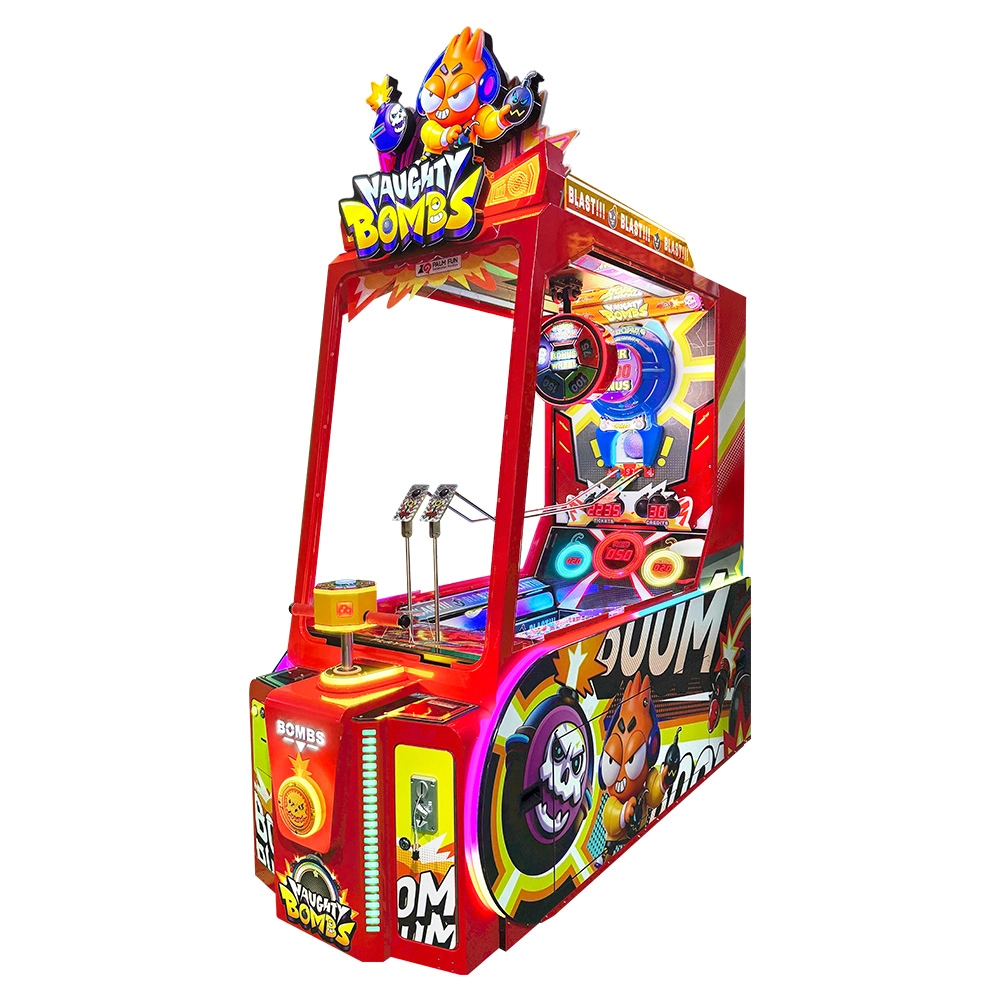
Naughty Bombs Ball Drop Redemption Arcade Game Machine
Naughty Bombs is a ball-drop redemption arcade game featuring rolling-ball gameplay, colored targets, ticket prizes, surprise bonus rewards, lighting and sound effects. Players use timing to launch and drop balls toward colored target areas. The product is presented for arcade, family entertainment center and other entertainment-venue projects, with customizable 110V / 220V AC voltage configuration.
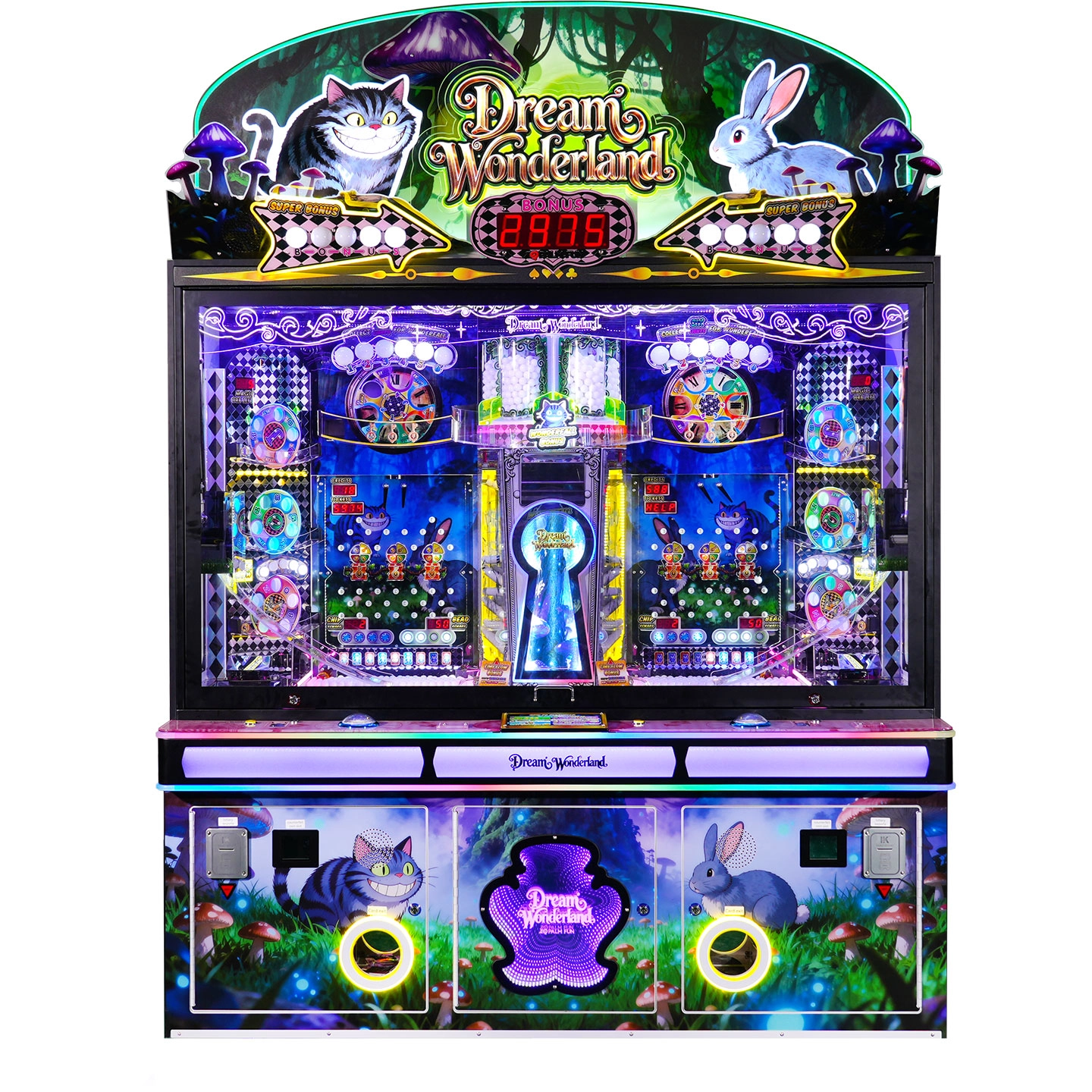
Dream Wonderland Marble Pusher Redemption Game
Enter Dream Wonderland — a magical marble pusher adventure filled with glowing lights, magic orbs, bonus wheels, collectible character cards, and exciting jackpot challenges.
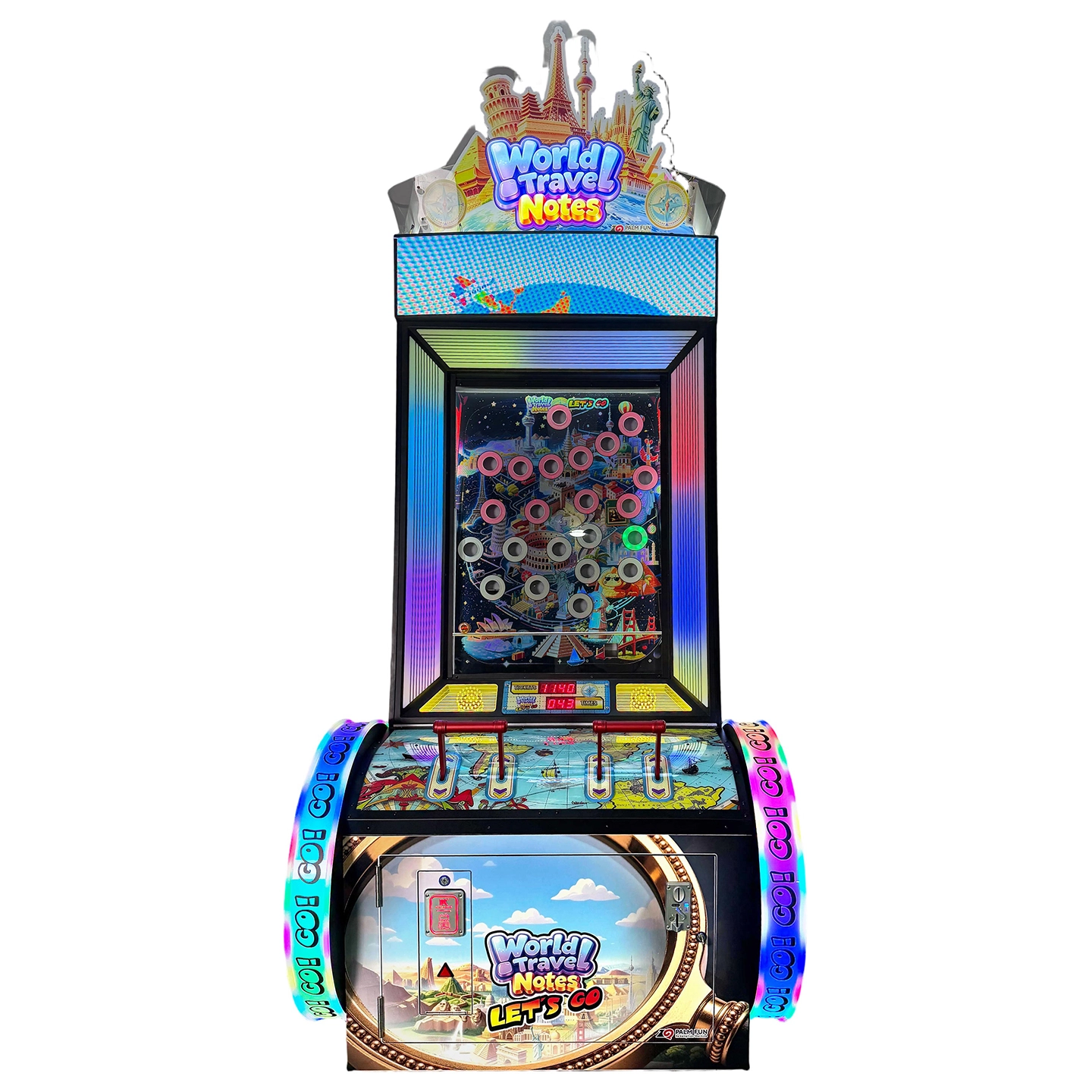
World Travel Notes – Balance Ball Redemption Arcade Game
World Travel Notes is a skill-based balance ball redemption game with a fun world-travel theme. Players use two handles to control the balance bar and guide the ball into each target hole. As the game progresses, the targets become more challenging, leading players toward the final grand prize. With colorful world-travel graphics, dynamic RGB lighting, a live score display, and progressive difficulty, World Travel Notes is designed to attract attention and encourage repeat play in arcades, FECs, shopping malls, and other entertainment venues.
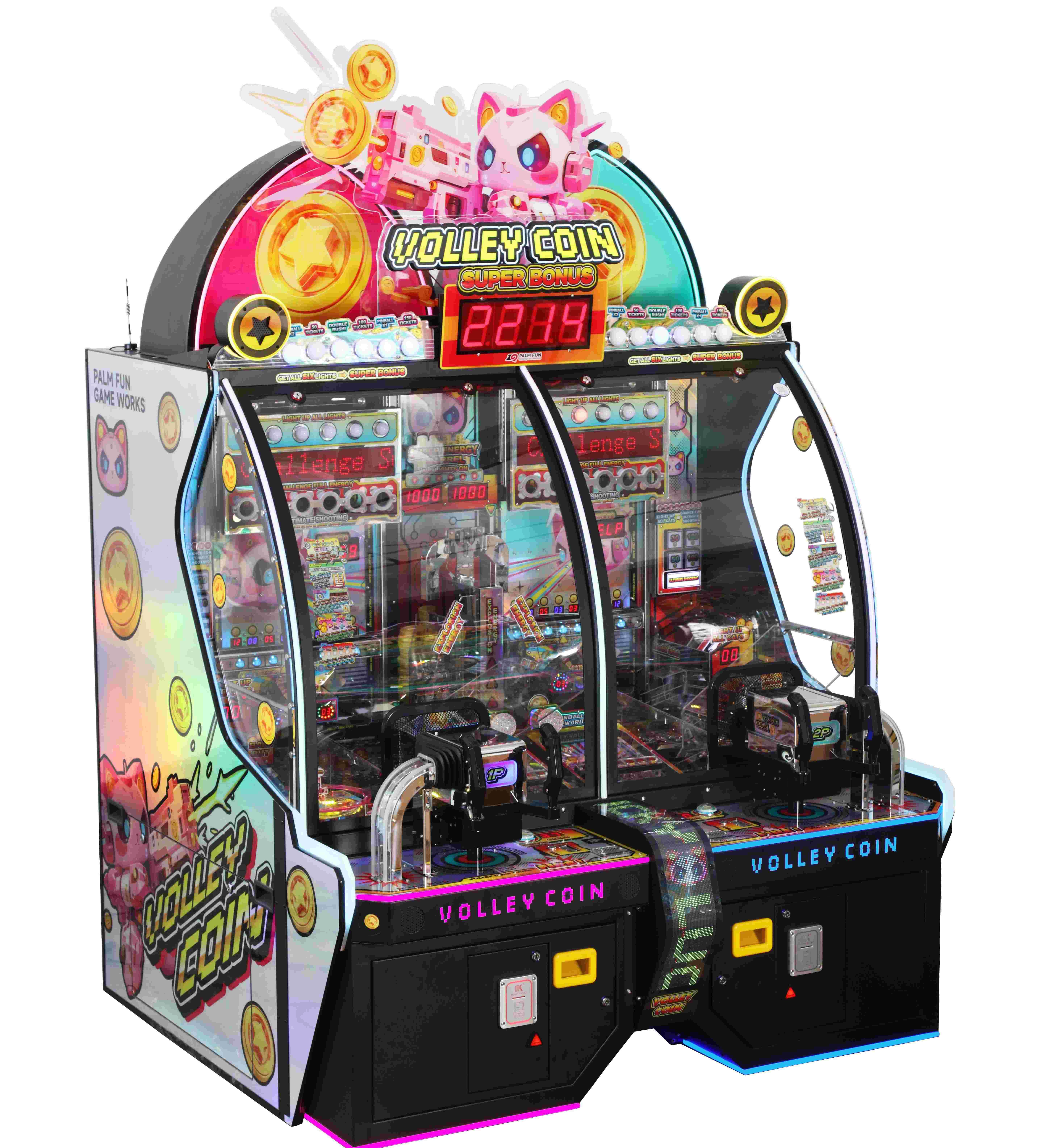
Hybrid Shooting & Pushing | Coin Pusher Arcade Ticket Redemption Machine
Volley Coin is an innovative arcade ticket redemption machine developed by Palm Fun Electronics. Combining the excitement of a fast-paced token shooter game with the proven earning power of a traditional coin pusher machine, Volley Coin offers a fresh and engaging gameplay experience that appeals to players of all ages.
Copyright © 2026 PALM FUN All Rights Reserved. | Privacy Policy • Terms and Conditions | Sitemap
palmfunarcade
Palm Fun Arcade Game
Whatsapp: +8618126837443
PalmFun Arcade
PalmFun_Arcade
PALM FUN Redemption Machine