







Where to Buy pirate coin pusher game machine
- What Buyers Should Evaluate Before Choosing a Supply Channel
- Match the machine to the venue and business model
- Compare landed cost, not just the quoted unit price
- Check evidence of quality and support
- Local Distributors Versus Direct Factory Sourcing
- When a local distributor can be the better fit
- When buying directly from a manufacturer makes sense
- Build a comparable supplier shortlist
- Shipping, Compliance, and Return on Investment
- Plan the import and receiving process before production
- Estimate operating economics using local assumptions
- Make the final decision on total value
- Frequently Asked Questions
For buyers evaluating where to buy a pirate coin pusher game machine, the practical choice is usually between an in-market distributor and an overseas manufacturer. A local distributor may simplify communication, inspection, delivery, and service, while direct factory sourcing can offer more control over configuration and unit pricing for wholesale orders. The best option depends on the total landed cost, shipping route, import requirements in the destination market, machine documentation, warranty terms, and the supplier’s ability to provide parts and technical support. Since the destination market has not been specified, buyers should verify applicable duties, electrical and product-safety requirements, and import procedures with local authorities or a qualified customs broker before placing an order.
What Buyers Should Evaluate Before Choosing a Supply Channel
Match the machine to the venue and business model
Before requesting quotations, define where the pirate coin pusher game machine will operate and how it will generate revenue. A family entertainment center, shopping center, arcade, and seasonal attraction may have different requirements for footprint, player capacity, operating hours, visibility, and maintenance access. Ask suppliers for the machine’s external dimensions, weight, power requirements, recommended operating conditions, coin or token configuration, and any available operating or sales data. These details help buyers assess whether the cabinet suits the venue and whether it can be moved through doors, lifts, and loading areas.
Clarify what “pirate” refers to in the offered product: cabinet artwork, a themed bonus feature, audio and lighting, or a complete game design. Request current photographs or a live video walkthrough of the exact model, rather than relying only on promotional renderings. Confirm whether the displayed configuration is standard or customized, and ask for a written list of included components. A product comparison should distinguish the base machine from optional payment systems, signage, spare parts, and installation services.
Compare landed cost, not just the quoted unit price
A low factory price does not by itself establish the lowest total cost. A procurement comparison should include the machine, export packing, inland transport, international freight, cargo insurance, customs clearance, duties and taxes where applicable, destination handling, and delivery to the venue. Costs vary by shipment size, route, transport mode, shipping terms, and local rules. Request an itemized quotation and identify which costs are included, which are estimates, and which remain the buyer’s responsibility.
Use a consistent quotation basis when comparing a local reseller with a direct exporter. Ask each supplier to quote the same model, options, quantity, delivery destination, and required delivery window. The agreed trade term should be clearly stated using the applicable Incoterms® rule and named place; the International Chamber of Commerce’s Incoterms® guidance explains the role of these rules in allocating certain delivery responsibilities and risks. Incoterms do not replace a full sales contract, so payment schedule, inspection rights, warranty, and remedies for nonconformity should also be documented.
Check evidence of quality and support
Request a specification sheet, quality-control process description, packing details, warranty terms, and a list of recommended consumable and replacement parts. Ask how the supplier tests coin mechanisms, sensors, motors, lighting, sound, and any prize or payout features before dispatch. Where the machine includes electronic equipment, obtain the relevant technical and conformity documents for the actual model and intended destination; do not treat a general certificate or a document for a different product as proof that local requirements are met.
Quality-management certification can be one useful supplier-screening signal, but it is not a substitute for product inspection or verification of a particular machine. Buyers can learn about the scope of quality management systems from the International Organization for Standardization’s ISO 9001 overview. Ask the supplier to identify which manufacturing site and business entity are covered by any certificate and to provide verifiable documentation. For electrical and electronic equipment, discuss relevant safety standards with the supplier and a local compliance professional; the International Electrotechnical Commission publishes international electrotechnical standards, but the applicable requirements depend on product design and destination regulations.
Local Distributors Versus Direct Factory Sourcing
When a local distributor can be the better fit
A distributor operating in the destination market may be a strong choice when a buyer needs a short delivery window, local-language service, a nearby demonstration unit, or a single-machine purchase. A local business may also coordinate delivery and initial setup or provide a locally stocked part, although the scope of these services varies and should be confirmed in writing. Buyers should verify whether the distributor is authorized to sell the specific model, whether the quoted stock is physically available, and who is responsible for warranty claims.
Local sourcing does not automatically mean that the machine was manufactured locally, that all taxes are included, or that technical support is comprehensive. Ask for the product’s country of origin, the identity of the warranty provider, the service response process, and the location of spare parts. Confirm whether the displayed machine is new, a demonstration unit, or refurbished. A distributor’s invoice and delivery promise should clearly identify the product, included accessories, payment terms, and remedies if the delivery or specification differs from the agreement.
When buying directly from a manufacturer makes sense
Direct purchasing can be attractive for operators buying several units, planning a repeat rollout, or requiring custom cabinet graphics, branding, payment options, or other agreed specifications. Buyers may communicate requirements closer to the production team and compare factory configurations without a separate reseller margin. However, factory-direct procurement transfers more coordination to the buyer: export documentation, freight arrangements, import clearance, installation planning, and local compliance checks may not be included in the quoted price.
Before paying a deposit, verify the supplier’s legal name, factory or production capability, export experience, and bank beneficiary details through independent checks. Request a signed pro forma invoice with the exact model, quantity, customization, production schedule, inspection process, packaging, shipping term, warranty, and payment milestones. For larger orders, consider a pre-shipment inspection by an independent service provider and agree in advance on what happens if the inspected goods fail the documented specifications. A factory video call can support due diligence, but it should not replace contract review, references, or inspection where the order value justifies them.
| Consideration | Local distributor in the destination market | Direct manufacturer sourcing |
|---|---|---|
| Purchase price | May include local inventory, service, and distribution costs; compare the complete offer. | May provide a lower quoted unit price, but freight, clearance, and destination charges can change total cost. |
| Lead time | Potentially faster if the exact model is confirmed in local stock. | Includes production time and international transit; obtain a written schedule and shipping estimate. |
| Customization | Depends on the distributor’s access to factory options and willingness to manage a custom order. | May offer more direct coordination of agreed factory options, subject to minimum order and production limits. |
| Support and parts | May offer local service or parts, but coverage and response times must be verified. | Can provide factory-level technical guidance, while local repair capability and parts transit need planning. |
| Buyer workload | Often fewer logistics steps if delivery and service are included in the contract. | Usually requires closer management of documents, freight, import clearance, and receiving inspection. |
Build a comparable supplier shortlist
For a fair evaluation, send the same written request for quotation to each candidate. Include quantity, venue location, required arrival date, preferred currency, electrical supply details, desired graphics, payment-system requirements, and whether delivery includes unloading or installation. Ask for separate prices for the pirate coin pusher game machine, optional accessories, spare-parts package, freight, and any service. Request the quotation’s validity period and identify whether the price can change if freight rates, configuration, or exchange rates change.
Evaluate each response against evidence rather than broad claims. A useful shortlist records the supplier’s legal identity, model number, factory or stock location, production or availability status, warranty provider, included documents, payment milestones, shipping term, estimated transit time, and parts lead time. Ask for references from comparable commercial operators where available. For cross-border shipment planning, the World Customs Organization provides information about international customs cooperation; actual classification, declarations, tariffs, and import procedures should be confirmed for the product and destination with the relevant customs authority or broker.
Shipping, Compliance, and Return on Investment
Plan the import and receiving process before production
International delivery planning should begin before a purchase order is signed. Confirm the machine’s packed dimensions and gross weight, packaging method, loading requirements, and whether it can be shipped with other equipment. Establish who prepares the commercial invoice, packing list, transport document, and any origin or conformity paperwork required for the shipment. The buyer or broker should confirm the product’s customs classification and destination charges rather than relying on an informal estimate from a seller.
Check the import, electrical-safety, labeling, consumer-protection, and amusement-device rules that apply in the actual destination market and venue. Requirements can depend on the machine’s electrical design, payment function, prize mechanism, and commercial use. Do not assume that one country’s certificate is accepted in another, or that a coin pusher is treated identically to every other amusement machine. If the product includes a cashless reader or network connection, confirm any additional integration, payment-provider, or data-security requirements with the relevant local parties.
Agree on how the machine will be inspected when it arrives. The receiving checklist can cover visible shipping damage, model and serial number, accessories, cabinet finish, power-up, basic game operation, and comparison against the approved specification. Photograph packaging before unpacking and document damage promptly in line with carrier and insurance procedures. Keep copies of the purchase contract, correspondence, inspection records, and shipping documents in one procurement file.
Estimate operating economics using local assumptions
Assess the investment using realistic site-specific inputs rather than a supplier’s headline earning claim. Estimate purchase and installation costs, expected operating days, occupancy or player traffic, coin or token policy, venue revenue share, electricity, routine maintenance, replacement parts, and downtime. Model conservative, expected, and optimistic scenarios. A machine that attracts attention but requires frequent service or does not fit the venue’s audience may produce weaker results than its purchase price suggests.
Ask the supplier what routine maintenance the operator can perform, what skills are needed, and which faults require specialist support. Clarify whether troubleshooting is available remotely, what time zone and language support covers, and how quickly common parts can be dispatched. A starter parts kit may reduce downtime, but it should be itemized and should not replace a clear warranty. For a multi-unit rollout, consider piloting one pirate coin pusher game machine before committing to a larger quantity so the operator can assess visitor response, reliability, and service requirements in the real venue.
Make the final decision on total value
The strongest sourcing option is the one that meets the buyer’s operating needs at an acceptable, documented total cost. A local distributor may be preferable where speed, hands-on service, or local stock is critical. Direct factory sourcing may suit buyers who can manage cross-border procurement and who value customization, repeat orders, or a larger quantity. Neither channel is inherently risk-free; supplier verification, clear contractual terms, relevant compliance checks, and a defined service plan matter in both cases.
Before authorizing payment, confirm that the final quotation and contract agree on the exact machine, configuration, quantity, delivery destination, schedule, payment milestones, warranty, inspection, and shipping responsibilities. Ask unresolved questions in writing and avoid assuming that verbal statements about certification, earnings, availability, or after-sales support are binding. With those checks complete, buyers can make a defensible choice between local availability and a factory-direct supply relationship.
Contact us to discuss direct shipping and a wholesale quote for your destination market based on your quantity, configuration, delivery requirements, and support needs.
Frequently Asked Questions
Is it better to buy a pirate coin pusher game machine from a local distributor or directly from a factory?
A local distributor may suit buyers who need quick access, local-language service, or nearby stock. Direct factory sourcing can suit wholesale or customized orders, but the buyer should plan for freight, import clearance, compliance checks, and local support. Compare the full landed cost and documented service terms before deciding.
What costs should I include when comparing supplier quotations?
Compare the machine and options, export packing, inland and international freight, insurance, customs clearance, applicable duties and taxes, destination handling, delivery, installation, and spare parts. Ask each supplier to identify what is included, what is estimated, and what remains the buyer’s responsibility.
What documents should I request before ordering a coin pusher machine?
Request a detailed specification, pro forma invoice, warranty terms, packing details, quality-control information, and the technical or conformity documents relevant to the actual model and destination. Confirm that any certificate applies to the supplier, manufacturing site, and product being purchased.
How can I verify an overseas manufacturer before paying a deposit?
Check the supplier’s legal identity, production capability, export experience, and payment beneficiary independently. Obtain a signed order document covering the exact model, customization, schedule, inspection, packing, shipping term, warranty, and payment milestones. Consider references and an independent pre-shipment inspection for larger orders.
How do I confirm import requirements for my market?
Ask the relevant customs authority or a qualified local customs broker to confirm the product classification, declarations, duties, and import procedures. Also verify applicable electrical-safety, labeling, and amusement-device requirements with local authorities or a compliance professional; requirements depend on the destination and machine configuration.
What should a buyer check when the machine arrives?
Check the packaging for damage, confirm the model, serial number, and accessories, inspect the cabinet, and test basic operation against the approved specification. Photograph the shipment and document any damage promptly in line with the carrier’s and insurer’s procedures.
Recommended for you
Wholesale arcade usa manufacturer and supplier in Asia
Top 10 soccer fever arcade machine for sale manufacturers and suppliers
Top tabletop arcade games Manufacturers and suppliers
Everything You Need to Know About full tilt arcade & pinball Miami private label
FAQs
Research & Development, how hard is the birth of one new redemption machines?
What details should be paid attention to in the operation of redemption machines?
① Machine parameter adjustments.
② Equipment performance and gameplay.
③ Decoration and promotion of the area and equipment.
④ Machine placement locations.
⑤ Selection of prizes.
2. The primary operational techniques for redemption machines are in the attractiveness of the gameplay, maintaining a reasonable payout rate, and creating an engaging atmosphere. Depending on the season and market changes, promotional activities should be carried out with a balance, analysis, and follow-up. Therefore, you can consider the following operational methods:
① Collaborate with several venues or businesses to distribute promotional materials to enhance external visibility and interaction.
② Conduct targeted promotional activities to retain returning customers.
③ Organize regular member events to ensure member attraction and consistent customer base. For example, offering extra lottery rewards for a certain amount of tokens deposited or giving a certain number of lottery tickets(reward points) when a membership card is issued.
④ Strengthen interaction with neighboring businesses within the commercial district.
⑤ Organize selective activities for children and offer special deals for exchanging unique children-oriented prizes.
3. Setting parameters correctly:
4.New machine arrival -- Familiarizing with the game--Initial parameter control--Promotional --ctivities and advertising--Adjusting parameters based on the number of players--Multiple adjustments of parameters--Increased popularity--Profitability--Reinvestment.
Note: Data analysis should be conducted weekly to promptly understand the ticket payout probability for each redemption machine. In case of any abnormal situations, swift follow-up and troubleshooting are essential to identify the causes and rectify the issues.
Effectively solve the pain points of the site and consume the amount of coins deposit.
So the stock quantity of pre-purchased tokens is an issue must be concerned, especially in the highly competitive current market. Only when the amusement park maintains a healthy cycle of token sales, consumption, stockpiling, consumption, and sales again can it ensure sustained growth and profitability.
How to guides works?
For example:
1. Proactively inquire and add tickets when a customer's machine is running low on tickets.
2. Assist players in organizing tickets when they are dispensed unevenly.
3. Offer storage tools such as storage bags and rubber bands when customers are arranging their tickets.
4. Provide free USB interfaces for charging near popular machines and rest areas.
5. Implement warm and clear reminders, guidance on ticket redemption, and directional signage, all designed to be straightforward. The more of these you provide, the more players will appreciate your thoughtfulness, without finding it bothersome.
The revenue proportion of redemption machines
You may also like
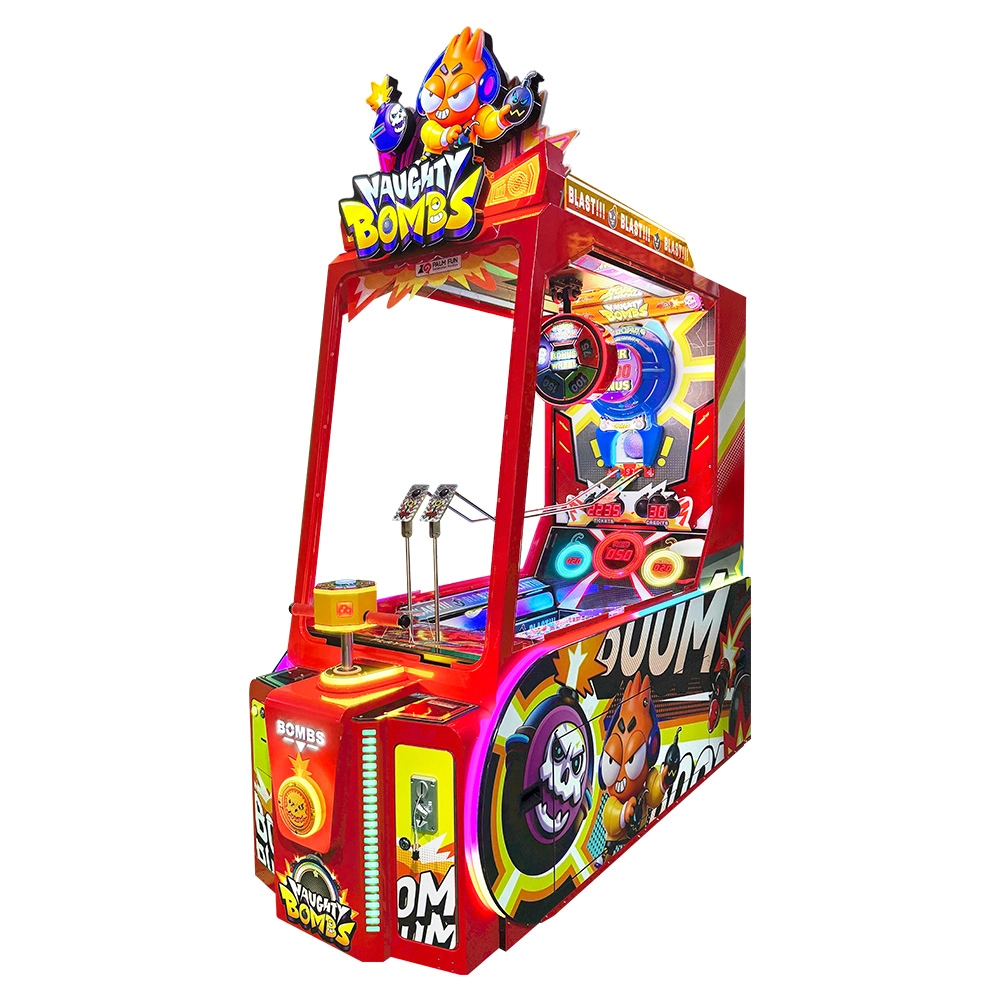
Naughty Bombs Ball Drop Redemption Arcade Game Machine
Naughty Bombs is a ball-drop redemption arcade game featuring rolling-ball gameplay, colored targets, ticket prizes, surprise bonus rewards, lighting and sound effects. Players use timing to launch and drop balls toward colored target areas. The product is presented for arcade, family entertainment center and other entertainment-venue projects, with customizable 110V / 220V AC voltage configuration.
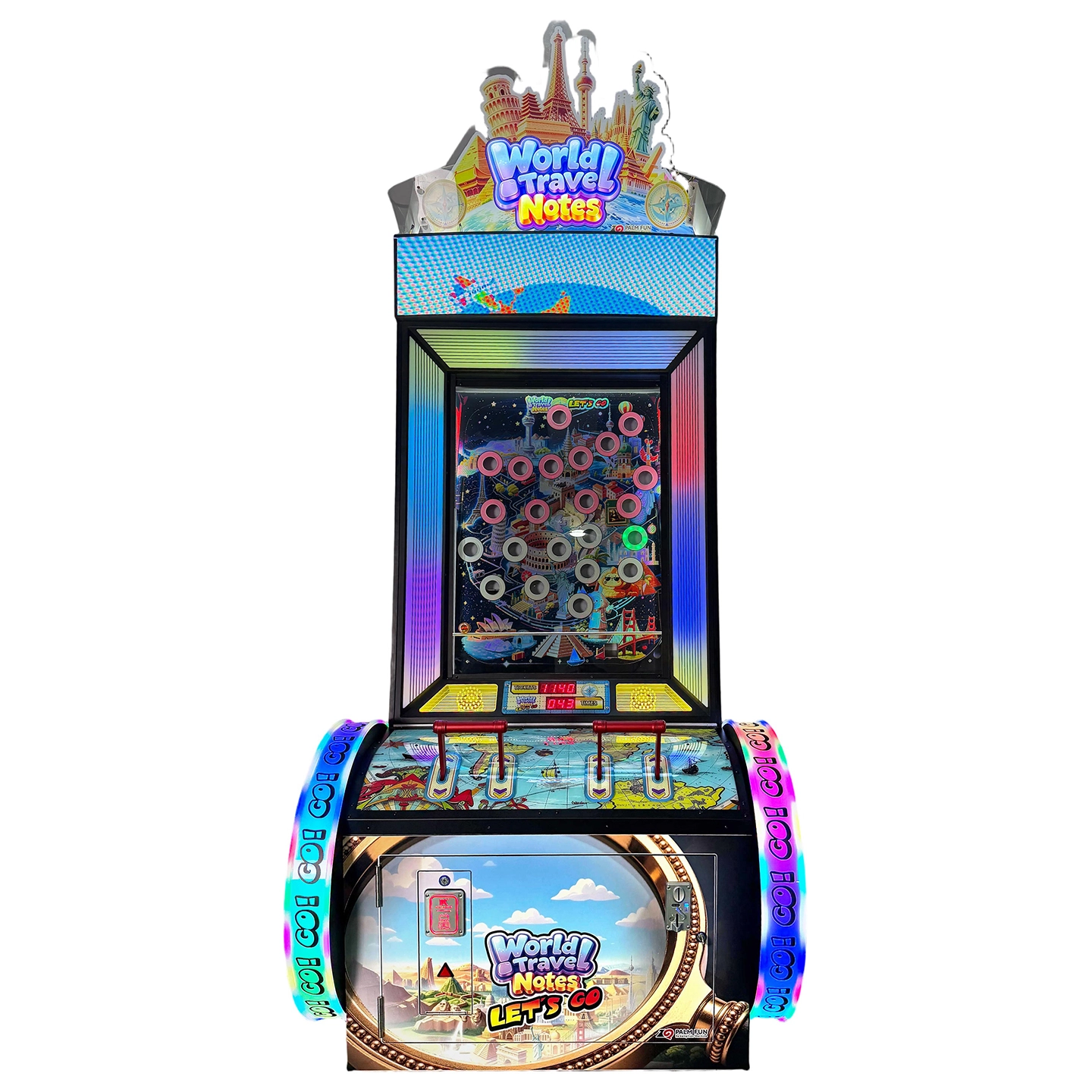
World Travel Notes – Balance Ball Redemption Arcade Game
World Travel Notes is a skill-based balance ball redemption game with a fun world-travel theme. Players use two handles to control the balance bar and guide the ball into each target hole. As the game progresses, the targets become more challenging, leading players toward the final grand prize. With colorful world-travel graphics, dynamic RGB lighting, a live score display, and progressive difficulty, World Travel Notes is designed to attract attention and encourage repeat play in arcades, FECs, shopping malls, and other entertainment venues.
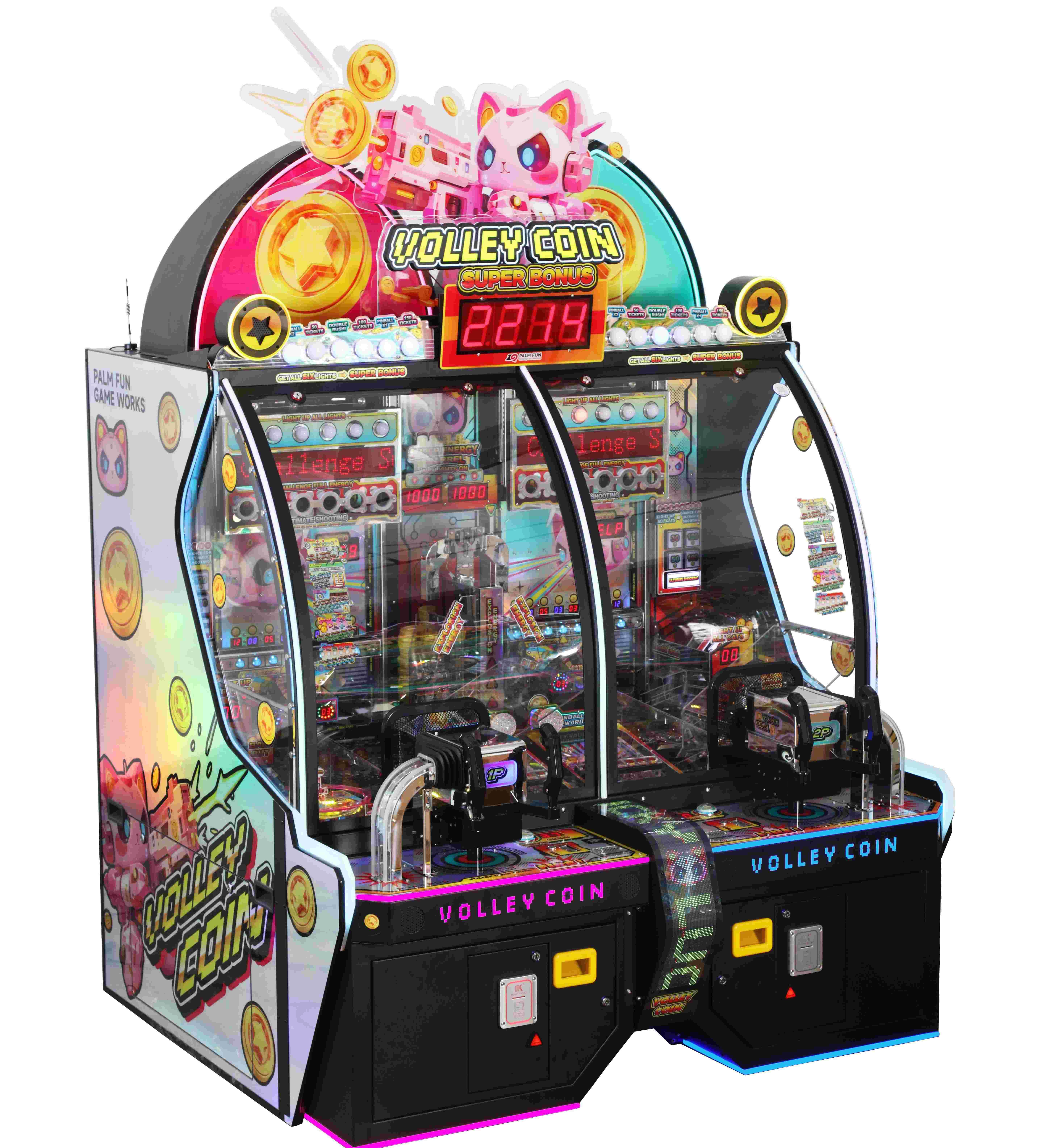
Hybrid Shooting & Pushing | Coin Pusher Arcade Ticket Redemption Machine
Volley Coin is an innovative arcade ticket redemption machine developed by Palm Fun Electronics. Combining the excitement of a fast-paced token shooter game with the proven earning power of a traditional coin pusher machine, Volley Coin offers a fresh and engaging gameplay experience that appeals to players of all ages.
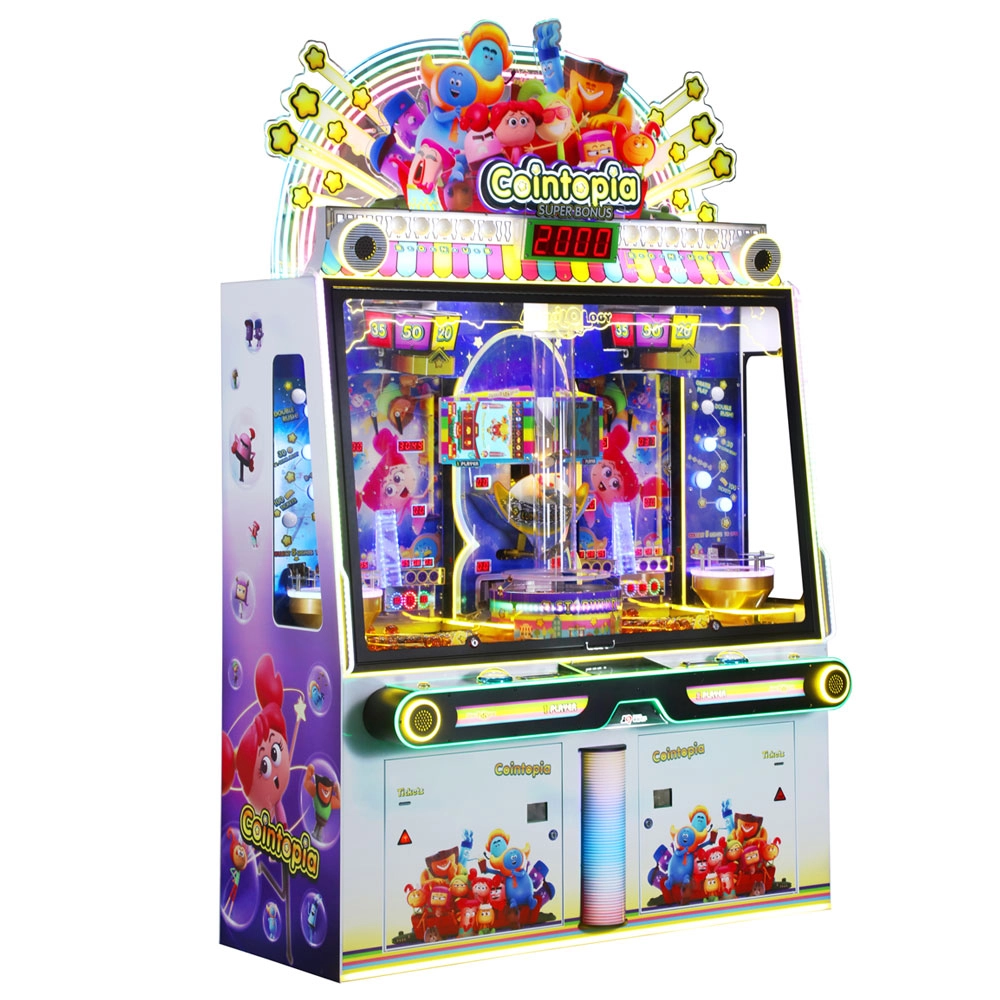
COINTOPIA, Have Fun Together With The Zodiac Buddies in an Utopia
COINTOPIA by PALM FUN is an exciting redemption game machine where players enjoy fun with zodiac buddies in a utopia setting. This ticket redemption machine offers engaging gameplay and rewarding experiences, perfect for family entertainment centers and arcades seeking top-quality redemption games.
Copyright © 2026 PALM FUN All Rights Reserved. | Privacy Policy • Terms and Conditions | Sitemap
palmfunarcade
Palm Fun Arcade Game
Whatsapp: +8618126837443
PalmFun Arcade
PalmFun_Arcade
PALM FUN Redemption Machine