


How to Win More Tickets at Arcade Ball Games
- Understand the Game Before You Spend
- Read the rules and identify the scoring target
- Observe a round before choosing your first move
- Understand what “skill” can and cannot control
- Use a Consistent Technique to Improve Your Results
- Control the launch instead of forcing it
- Make small adjustments based on what you see
- Compare games by mechanics, not by the biggest jackpot
- Discover a Different Ball-Game Experience
- How the new parallel-track concept works
- Why operators may consider adding it to a game mix
- Make the first play welcoming and transparent
- Frequently Asked Questions

To win more tickets at arcade ball games, first learn the machine’s rules and timing, then make deliberate, repeatable plays while tracking what the ball does. Arcade machines differ in ball weight, track layout, target size, and ticket settings, so no technique guarantees a win. This guide explains how to observe a game, improve control, and set a sensible play budget. It also introduces an redemption arcade ball game your’ve never played before: a new redemption concept in which players slide a large ball along parallel tracks and aim for a hole to earn rewards.
Understand the Game Before You Spend
Read the rules and identify the scoring target
Before inserting money or swiping a card, take a moment to read the instructions on the cabinet. Look for how a play starts, whether the ball is released by hand or by a mechanism, which targets award tickets, and whether the game has a bonus round. Some machines award tickets for landing a ball in a target; others use a skill shot, a timed sequence, or a combination of actions. The visible display may show a jackpot, but that does not mean every round has the same odds or payout.
Check whether the machine explains how tickets are awarded and whether a successful target gives a fixed amount or contributes to a progressive feature. If a rule is unclear, ask an attendant rather than guessing. A basic understanding of the game prevents avoidable mistakes, such as launching before the play is active or aiming at a target that does not award tickets. Arcade games have developed across many formats, as outlined in Wikipedia’s overview of arcade games; the practical lesson is that a familiar category can still contain very different mechanics.
Observe a round before choosing your first move
Watch a few plays, if the machine is in use, and notice how the ball responds. Look at the starting position, the direction of travel, the speed it reaches, and whether it rebounds from rails or obstacles. If the game uses a launcher, watch how far other players pull it back and whether a gentle or stronger release seems to suit the target. Do not assume that another player’s apparent success proves a reliable method: a single result can be luck, and the machine may have settings or variations you cannot see.
When the cabinet is free, begin with a low-risk play and treat it as a test. Make one controlled attempt, note the result, and change only one part of your technique on the next try. If you alter force, timing, and release angle all at once, it becomes difficult to learn which change mattered. This simple observation-and-adjustment routine is more useful than repeatedly making identical attempts without noticing what happens.
Understand what “skill” can and cannot control
Player control matters in games where timing, aim, or release force affects the ball’s path. However, skill does not remove uncertainty. A ball can bounce unpredictably, and the machine’s design, wear, and programmed settings influence results. Do not treat a near miss as proof that the next play must win, and do not increase spending to recover a previous loss. A useful goal is to make more informed attempts, not to expect a guaranteed ticket return.
Set a spending limit before you start and decide how many plays fit within it. If you are playing with children, agree on the limit together and make the experience about trying the game, not chasing a jackpot. Stop when you reach the limit, whether the session has gone well or poorly. That boundary helps keep a ticket game entertaining and avoids turning uncertain outcomes into an unplanned expense.
Use a Consistent Technique to Improve Your Results
Control the launch instead of forcing it
On a ball-launch game, a harder launch is not automatically a better one. Excess force may send the ball past a useful landing point, create a less predictable rebound, or make it harder to repeat the same shot. Start with a comfortable, controlled movement. Keep your hand and body position consistent, and focus on releasing smoothly. If the ball falls short, make a small adjustment; if it overshoots, reduce the force or change the timing. The machine’s own instructions should take priority over generic advice.
Where the game allows a rolling or sliding release, aim for a repeatable path rather than trying to add dramatic spin. A stable approach makes it easier to compare one attempt with the next. Avoid striking or shaking the cabinet: this can disrupt play, damage equipment, and may violate the venue’s rules. Follow posted instructions, use only the controls provided, and ask staff for help if a ball sticks or the machine appears to malfunction.
Make small adjustments based on what you see
Pay attention to the result of each play. Did the ball reach the target but bounce away? Did it lose speed on the track? Did it pass the target to one side? Those observations can guide a limited adjustment to release timing, force, or alignment, depending on the controls available. Change one variable at a time and give the new approach more than one attempt before judging it. A single bounce is not enough evidence to establish a reliable pattern.
Some ball games include a moving target or a timed opening. In that case, watch the cycle before launching and look for a repeatable moment, such as when the target reaches a particular point. Do not rush simply because other players are waiting; take the time the rules allow, then make a calm attempt. If the timing appears inconsistent or the machine behaves unexpectedly, stop experimenting and ask an attendant whether the game is operating correctly.
Compare games by mechanics, not by the biggest jackpot
A large jackpot display can attract attention, but it does not tell you how often a player can reach it or how many tickets a typical play earns. Compare machines by their rules, the control they give the player, the time needed for each round, and the cost per play. A game with a smaller visible prize may offer a more understandable skill challenge, while a high-value feature may depend on a difficult target or a less frequent bonus. There is no universal best choice; the right option depends on your budget and what you find enjoyable.
| What to compare | What to look for | Why it helps |
|---|---|---|
| Rules and target | Clear instructions and a visible scoring area | You can aim at the feature that actually awards tickets. |
| Player control | A meaningful choice in timing, aim, or launch strength | You can practise a repeatable technique instead of guessing. |
| Play cost | Price per round and the length of a typical turn | You can select a game that fits your planned budget. |
| Ticket information | How regular scores and bonus features are explained | You can compare the game fairly without assuming a jackpot is likely. |
| Machine condition | Responsive controls, a clear display, and unobstructed ball movement | Obvious faults may make a fair attempt difficult; staff can check the machine. |
Discover a Different Ball-Game Experience
How the new parallel-track concept works
An redemption arcade ball game your’ve never played before offers a different kind of physical interaction: the player slides a large ball along a pair of parallel tracks and tries to drop it into a hole to earn rewards. The basic objective is easy to understand, which makes the game approachable for first-time players, while the movement and timing create a hands-on challenge. Rather than relying on a familiar button-only format, the player directly guides the ball through the play area.
The product is described as a 100% rewards redemption game suitable for all ages. In this context, redemption describes the game’s reward category; it should not be read as a promise that every individual attempt wins tickets or a prize. Players should check the on-machine instructions for the specific scoring and reward rules at the venue. The simple goal—slide the ball and aim for the hole—makes it possible to explain the game quickly, while repeated attempts give players a chance to become familiar with its feel.
Why operators may consider adding it to a game mix
For family entertainment centers, arcades, and other amusement venues, a distinctive ball game can add variety alongside conventional ticket games. The parallel tracks and large ball create an immediately visible action that can attract attention from people walking past. A simple objective can also make it easier for families to understand what to do without a long explanation. Operators should evaluate the game in the context of their audience, available floor space, expected play flow, and the rest of their redemption mix rather than assuming that one title suits every location.
Before installation, review the supplier’s specifications, power and space requirements, operating instructions, maintenance needs, and destination-market requirements. Establish a routine for checking the track, ball, sensors, ticket mechanism, and visible cabinet condition, following the manufacturer’s guidance. For general machinery risk-management principles, see ISO 12100; operators should consult applicable local rules and qualified professionals for their own site rather than treating a general standard as a product certification. The ASTM F24 committee also provides information about standards work in the amusement-ride and device sector, though operators must confirm which requirements apply to a particular arcade installation.
Make the first play welcoming and transparent
Good onboarding starts with clear instructions: show where to position the ball, how to slide it, what counts as a successful target, and how the reward is delivered. Staff can demonstrate the movement without promising a result. Keep the instructions visible and use consistent wording on the cabinet and any nearby promotional material. This is especially useful for a new concept, because players may otherwise assume that it works like a familiar rolling-ball or launcher game.
An redemption arcade ball game your’ve never played before can appeal to casual visitors precisely because the central action is simple to see and try. For an operator, the product may provide a fresh interaction point in a redemption area; for a player, it offers a chance to practise control and enjoy the movement of the ball. As with any ticket game, transparent rules, a well-maintained machine, and realistic expectations matter more than claims of guaranteed wins. Players can focus on learning the motion and making deliberate attempts, while operators can monitor usage and maintain the equipment according to supplier guidance.
Frequently Asked Questions
Can you guarantee a win at an arcade ball game?
No. Machine mechanics, settings, ball movement, and chance all affect results. Learning the rules and using controlled, repeatable attempts can help you play more thoughtfully, but no technique guarantees tickets.
What should I do before my first play?
Read the instructions, identify the scoring target, and observe the ball’s movement if possible. Start with a controlled attempt, note what happens, and adjust only one part of your technique at a time.
Does a stronger launch always improve your chances?
No. Too much force can send the ball past a target or make the result harder to repeat. Use a controlled release and make small adjustments based on the machine’s instructions and the result.
Does “100% rewards redemption” mean every attempt wins a reward?
Not necessarily. It describes the game as a redemption-style product, not a guarantee that each individual attempt wins. Players should check the specific scoring and reward rules displayed on the machine.
What is the new parallel-track arcade ball game?
It is a redemption game in which a player slides a large ball along a pair of parallel tracks and aims to drop it into a hole to earn rewards. The concept is designed to be suitable for all ages.
Recommended for you
Master the Art of Winning Ticket Arcade Games | PALM FUN
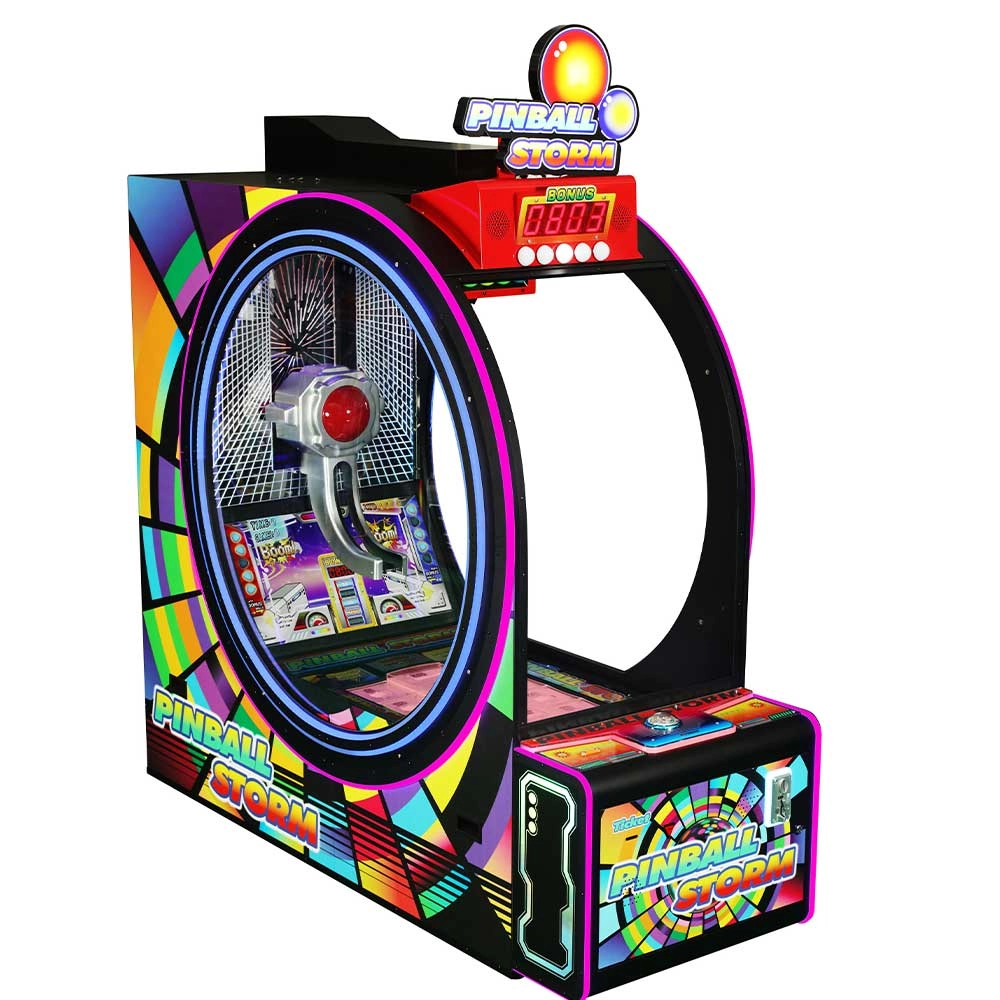
Best Ball Drop Arcade Games for Family Entertainment
Everything You Need to Know About full tilt arcade and pinball Philadelphia manufacturer
Arcade Game Manufacturers: Quality Games by PALM FUN
How to guide the players to recognize tickets at the beginning setup of the redemption machines?
Never assume that your players already understand the purpose of lottery tickets(reward points). Even in venues that have been in operation for many years, it is still discovered during on-site interviews with players that many of them are not aware. Don't believe it? Just ask consumers at the venue. The machines, redemption counters, materials hung above the venue, and announcements by staff, among others, can all be channels for informing players about the purpose of lottery tickets(reward points). It is essential to do more promotion, create large displays and large cards, and clearly communicate the purpose of lottery tickets(reward points) to the players.
Effectively solve the pain points of the site and consume the amount of coins deposit.
So the stock quantity of pre-purchased tokens is an issue must be concerned, especially in the highly competitive current market. Only when the amusement park maintains a healthy cycle of token sales, consumption, stockpiling, consumption, and sales again can it ensure sustained growth and profitability.
How to select and match redemption machines?
2. the number of redemption game configuration: according to the characteristics of redemption machine, the proportion of redemption game configuration generally accounts for 30±5% of the whole field.
3. there are a lot of equipment on the market now, but less innovative, so the choice should be targeted in management and planning. We can divide redemption machines into children's, adults's, families, etc., according to different standards, with complete varieties and many styles, so as to give guests more choices and more changes. Specific can refer to the following:
① Inserting tokens in high frequency (mainly in mechanical redemption machines)
② Skill based games (mainly in mechanical redemption machines)
③ Games with edutainment significance (mainly in video redemption machines)
④ Entertaining games (mainly in video redemption machines)
The revenue proportion of redemption machines
What is the character of mechanical redemption machine?
You may also like
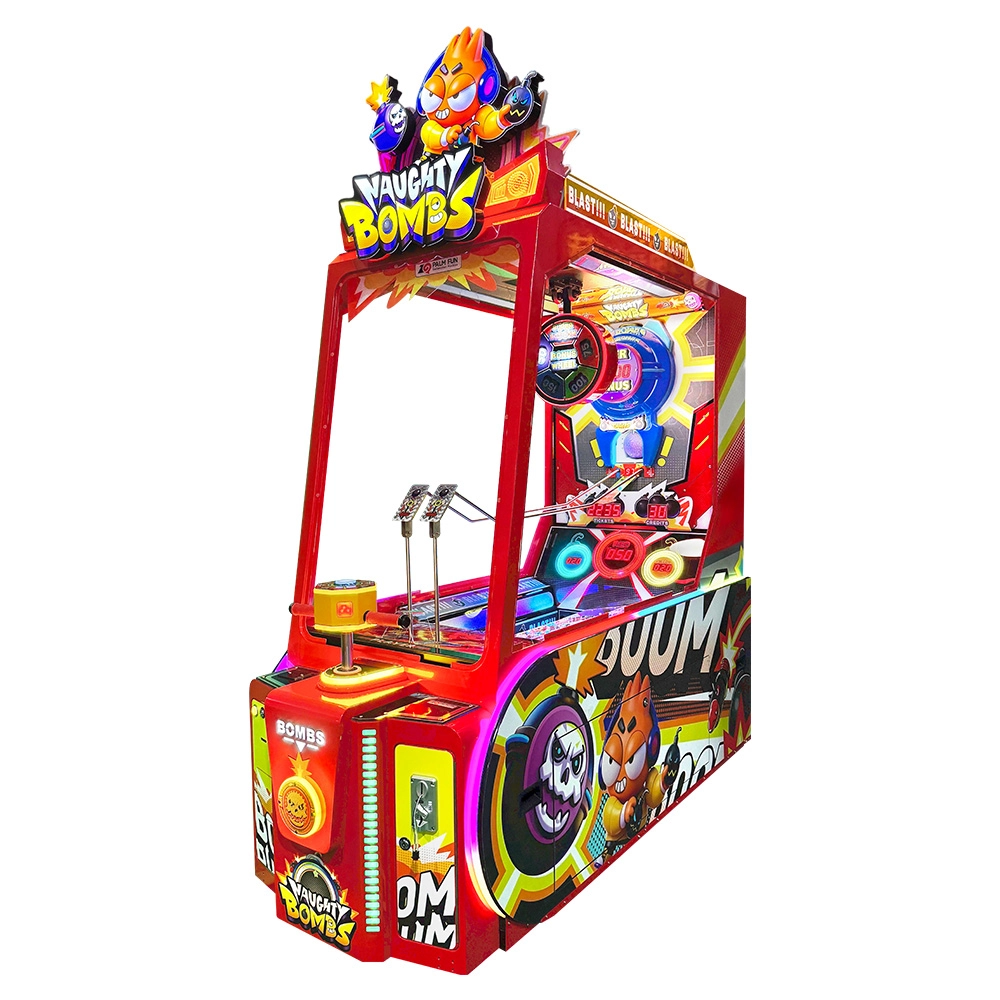
Naughty Bombs Ball Drop Redemption Arcade Game Machine
Naughty Bombs is a ball-drop redemption arcade game featuring rolling-ball gameplay, colored targets, ticket prizes, surprise bonus rewards, lighting and sound effects. Players use timing to launch and drop balls toward colored target areas. The product is presented for arcade, family entertainment center and other entertainment-venue projects, with customizable 110V / 220V AC voltage configuration.
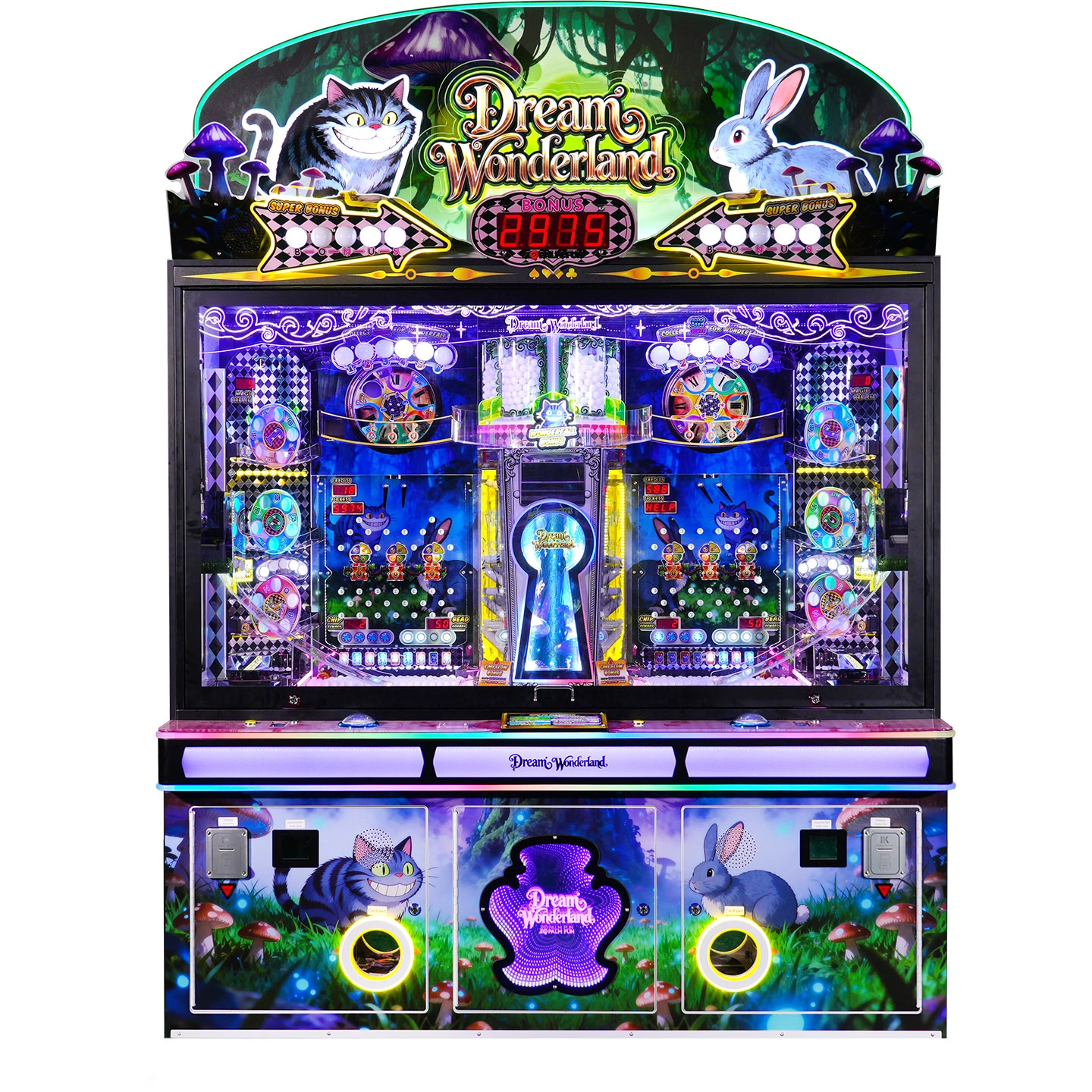
Dream Wonderland Marble Pusher Redemption Game
Enter Dream Wonderland — a magical marble pusher adventure filled with glowing lights, magic orbs, bonus wheels, collectible character cards, and exciting jackpot challenges.
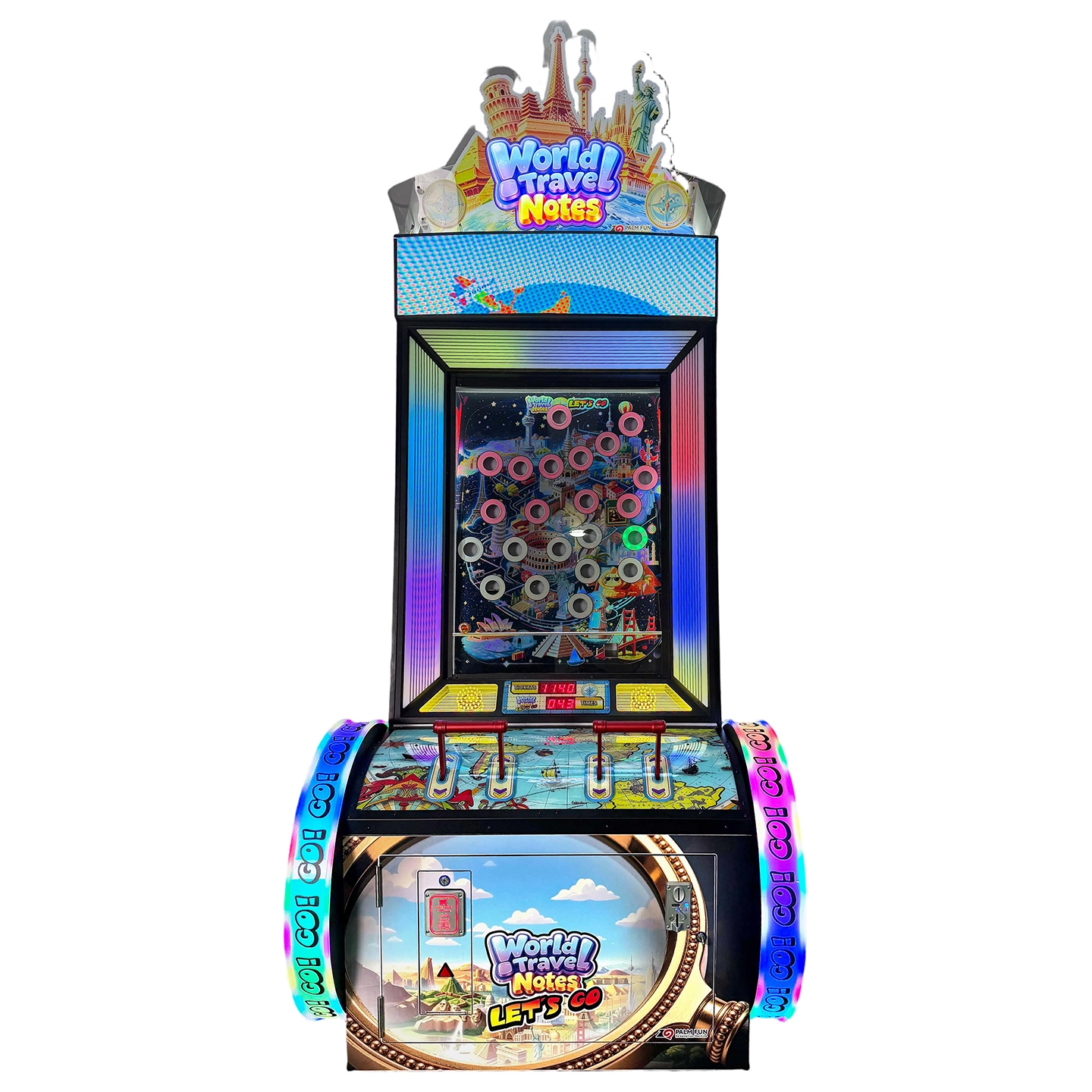
World Travel Notes – Balance Ball Redemption Arcade Game
World Travel Notes is a skill-based balance ball redemption game with a fun world-travel theme. Players use two handles to control the balance bar and guide the ball into each target hole. As the game progresses, the targets become more challenging, leading players toward the final grand prize. With colorful world-travel graphics, dynamic RGB lighting, a live score display, and progressive difficulty, World Travel Notes is designed to attract attention and encourage repeat play in arcades, FECs, shopping malls, and other entertainment venues.
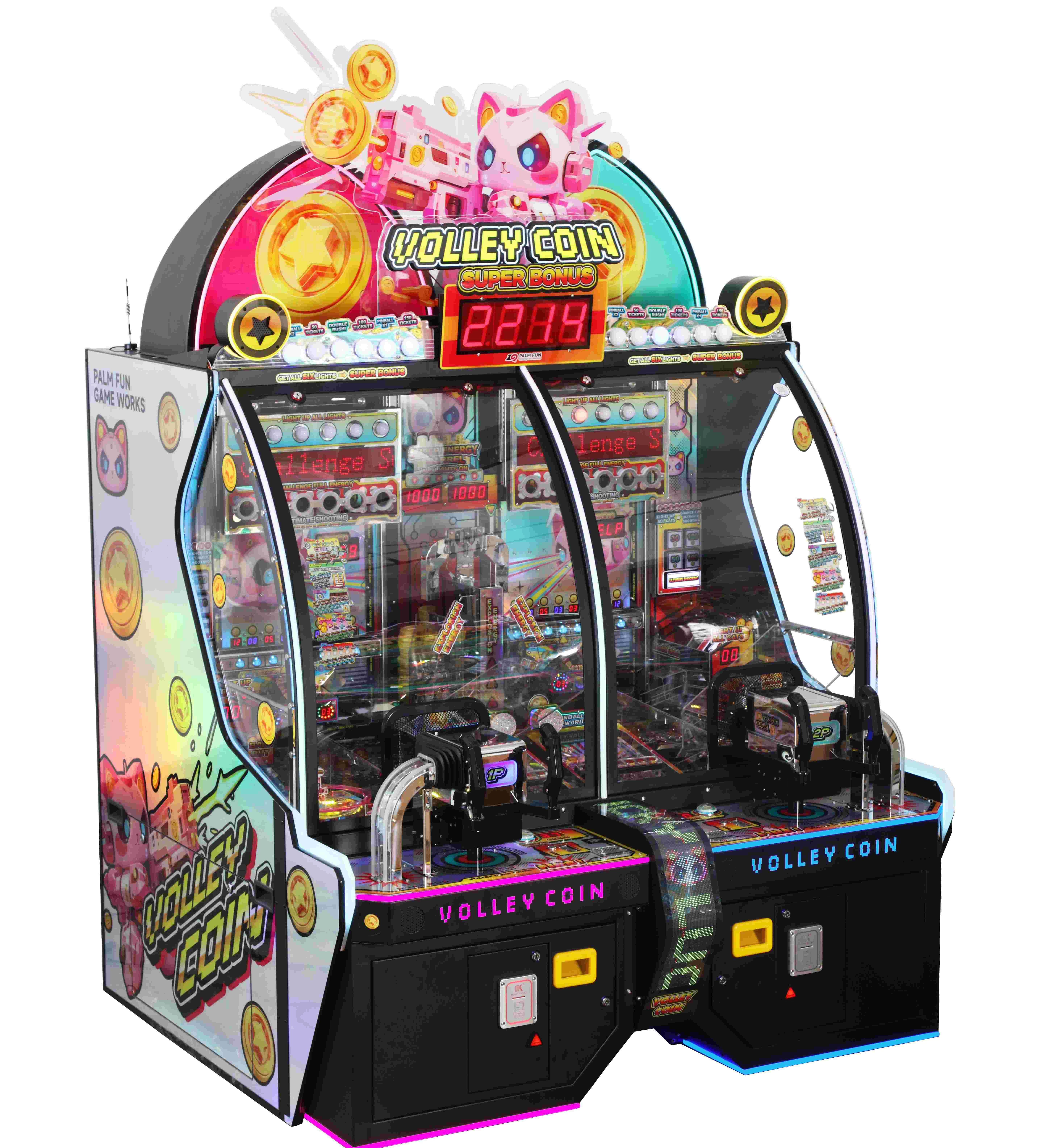
Hybrid Shooting & Pushing | Coin Pusher Arcade Ticket Redemption Machine
Volley Coin is an innovative arcade ticket redemption machine developed by Palm Fun Electronics. Combining the excitement of a fast-paced token shooter game with the proven earning power of a traditional coin pusher machine, Volley Coin offers a fresh and engaging gameplay experience that appeals to players of all ages.

Copyright © 2026 PALM FUN All Rights Reserved. | Privacy Policy • Terms and Conditions | Sitemap
palmfunarcade
Palm Fun Arcade Game
Whatsapp: +8618126837443
PalmFun Arcade
PalmFun_Arcade
PALM FUN Redemption Machine