







The Ultimate Arcade Machine Quality Control Checklist (2026 Guide)
Discover the definitive 2026 guide to arcade machine quality control. Learn how strict factory testing, routine commercial arcade game maintenance, and international safety certifications can maximize your venue's profitability and ensure long-term player satisfaction.
- What is Arcade Machine Quality Control?
- Key Takeaways: The 2026 Quality Standard
- Pre-Shipment Factory QC: What to Demand from Suppliers
- The Daily & Weekly Operational Maintenance Checklist
- Specialized QC for Coin Pushers and Redemption Games
- Industry-Leading Solution: How PALM FUN Ensures Reliability
- Expert Tips: Common Quality Control Mistakes Importers Make
- Safety and Compliance Certifications Explained
- Conclusion
- FAQs About Arcade Machine Quality Control
- What are the standard safety certifications for arcade machines?
- How often should I perform maintenance on a commercial arcade game?
- What is the difference between UL and CE certification?
- How do you test a coin pusher machine for quality?
- What are the most common hardware failures in arcade cabinets?
- Why is the Parental Advisory System (PAS) important for quality control?
- How do environmental factors like humidity affect arcade performance?
- What should I look for when choosing a reliable arcade machine supplier?
In the highly competitive family entertainment industry of 2026, operational downtime is the enemy of profitability. Whether you are managing a massive Family Entertainment Center (FEC) or a boutique retro arcade, the reliability of your equipment directly dictates your revenue. This is why Arcade Machine Quality Control is no longer just a manufacturing buzzword—it is the operational backbone of a successful gaming business.
From the moment a cabinet is assembled on the factory floor to the daily operational checks performed by floor staff, quality control ensures that hardware functions flawlessly, software logic remains fair, and safety standards protect your patrons. In this comprehensive guide, we will break down the ultimate quality control checklist, bridging the gap between factory-level manufacturing standards and venue-level maintenance.
What is Arcade Machine Quality Control?
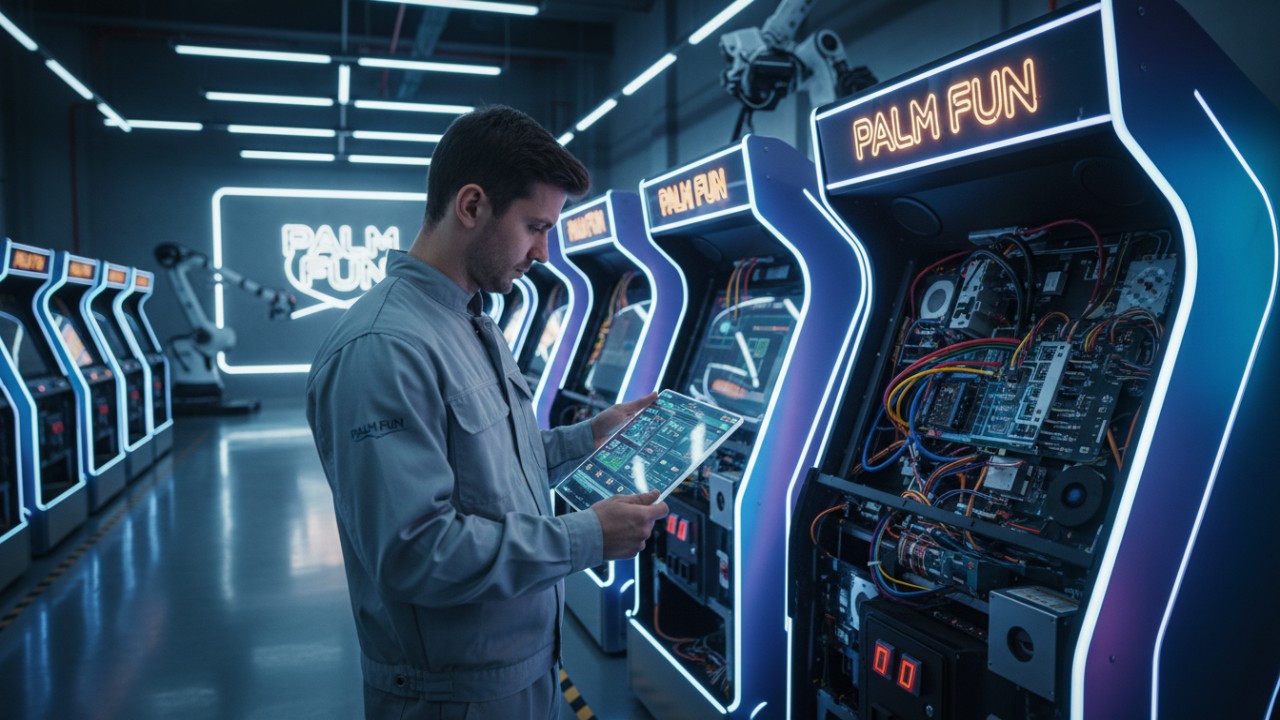
Arcade machine quality control is the systematic process of inspecting, testing, and maintaining arcade cabinets to ensure optimal performance, durability, and safety. It encompasses factory-level hardware testing, compliance with international safety standards, and routine operational maintenance to prevent revenue loss.
Implementing a robust quality control framework provides several distinct advantages for operators and distributors alike:
- Revenue Protection: Effective QC prevents unexpected out-of-order signs, minimizing downtime and maximizing daily coin-drop revenue.
- Hardware Longevity: Catching minor issues before they become catastrophic motherboard or motor failures extends the lifespan of the cabinet.
- Player Trust: Ensuring game logic fairness and responsive controls keeps players coming back. Nothing ruins an arcade's reputation faster than broken joysticks or rigged payout mechanisms.
- Legal Compliance: Adhering to strict international safety standards (like CE and UL) protects business owners from liability and regulatory fines.
Key Takeaways: The 2026 Quality Standard
The 2026 quality standard for arcade machines requires bridging the gap between rigorous factory manufacturing standards and daily operator maintenance. Staying compliant with mandatory safety certifications ensures legal operation, while specialized mechanical testing guarantees long-term profitability.
As the industry evolves with more complex electromechanical systems, operators must keep the following 2026 trends in mind:
- Comprehensive Oversight: Quality control does not end when the machine leaves the factory; it requires a seamless transition into daily venue maintenance.
- Strict Safety Mandates: Certifications such as UL, CE, and RoHS are non-negotiable legal requirements for commercial venues operating high-voltage equipment.
- Specialized Mechanics: High-revenue machines, particularly redemption and coin pushers, demand specialized mechanical and sensor testing due to their continuous-motion parts.
- Strategic Partnerships: Partnering with an R&D-focused manufacturer ensures access to durable materials, updated software diagnostics, and long-term spare part support.
Pre-Shipment Factory QC: What to Demand from Suppliers
Pre-shipment factory QC ensures that arcade machines meet acceptable quality limits before export, preventing costly hardware failures upon arrival. Suppliers must execute rigorous structural, electrical, and software stress tests to guarantee cabinet stability and game logic accuracy.
When importing machines, your arcade manufacturing testing procedures must be airtight. Do not accept equipment that hasn't passed these critical factory-level checks:
- AQL Sampling Standards: Ensure your manufacturer uses rigorous acceptable quality limit testing before export. According to the ISO 2859 standard for Acceptable Quality Limit (AQL)[1], manufacturers must use statistical sampling to ensure defect rates remain below tolerable thresholds, holding suppliers accountable for batch consistency.
- Structural Integrity Testing: Commercial cabinets take physical abuse. QC teams must verify the durability of high-density build materials (such as 0.75-inch moisture-resistant MDF wood) and ensure the cabinet's center of gravity prevents tipping.
- Electrical Component & PCB Stress Tests: Motherboards and power supplies must be tested under continuous load. This includes checking wiring harnesses for proper crimping, grounding lugs for safety, and PCB reliability to prevent overheating.
- Software & Calibration Checks: Modern games rely heavily on dynamic feedback. Factory QC must ensure game logic, ticket payout rates, and automated software calibrations operate flawlessly without freezing or crashing.
The Daily & Weekly Operational Maintenance Checklist
A consistent commercial arcade game maintenance routine is critical for maximizing machine lifespan and minimizing downtime. Operators must execute daily exterior upkeep and weekly diagnostic functionality tests to keep coin mechanisms, controls, and screens in peak condition.
To help your floor technicians stay organized, implement the following structured maintenance schedule:
| Maintenance Category | Frequency | Key Tasks & Inspections |
|---|---|---|
| Exterior Upkeep | Daily | Clean LCD screens with non-ammonia fluids, dust cabinet vents, and sanitize control panels to prevent grime buildup and image retention. |
| Control Inspection | Daily | Test the physical wear and responsiveness of professional controls (e.g., Sanwa or Seimitsu joysticks and button microswitches). |
| Functionality Tests | Weekly | Access the operator menu to run diagnostic modes. Test coin mechanisms, swipe card readers, and ticket dispenser optics. |
| Audio/Visual Audits | Weekly | Check monitors for dead pixels or burn-in, replace failing LED marquee lighting, and ensure optimal speaker output without distortion. |
| Internal Cleaning | Monthly | Open the cabinet to vacuum dust from cooling fans, power supplies, and PCB boards to prevent thermal throttling. |
Specialized QC for Coin Pushers and Redemption Games
Coin pusher machine quality standards require specialized mechanical and sensor testing due to the high stress placed on their continuous-motion parts. Routine calibration of tilt sensors, drive trains, and edge payout mechanisms is vital for fair play and profitability.
Unlike standard video arcades, mechanical games have moving parts that suffer from rapid wear and tear. When investing in Premium Redemption Arcade Machines Manufacturing, operators must ensure that the drive trains and sensors are precision-engineered.
Effective redemption game troubleshooting and quality control involve:
- Mechanical Alignment: Coin pushers require rigorous alignment checks to ensure smooth playfield operation. If the pusher shelf is off by even a millimeter, coins can jam, leading to frustrated players.
- Sensor Calibration: Routine testing of anti-cheat tilt sensors, coin drop optics, and edge payout mechanisms ensures the machine accurately registers wins without being vulnerable to exploitation.
- Motor and Drive Train Inspection: The continuous-motion motors driving the pusher shelves must undergo heavy stress testing and regular lubrication to prevent burnout.
- Precision Engineering: Subpar manufacturing in redemption games directly impacts operator profitability. High-quality gears and reinforced glass are required to withstand the daily barrage of enthusiastic players.
Industry-Leading Solution: How PALM FUN Ensures Reliability
Since 2015, PALM FUN has set the industry benchmark for arcade reliability by enforcing strict pre-shipment inspections at our state-of-the-art 3,000 square meter factory. Our skilled R&D engineers ensure every coin pusher and mechanical lottery machine meets international export standards.
At Guangzhou Palm Fun Electronics Co., Ltd., we understand that an operator's success relies entirely on the durability of their equipment. That is why our quality control process is integrated into every step of development:
- Dedicated R&D: We don't just assemble; we innovate. Our development engineers continuously run performance tests and software stability checks to stay ahead of market trends.
- Global Export Standards: Our products are recognized and popular in over 50 countries worldwide. This global footprint requires us to meet the most stringent international quality and safety benchmarks.
- Long-Term Partnerships: We aim to build lasting relationships with our clients by providing comprehensive after-sales support, troubleshooting guidance, and readily available spare parts to ensure success in the competitive gaming market.
Expert Tips: Common Quality Control Mistakes Importers Make
Importers often compromise arcade machine quality by ignoring environmental factors, overlooking essential electrical grounding checks, and prioritizing low prices over durable build materials. Failing to verify skill-based software logic can also lead to severe legal and operational compliance issues.
Avoid these common pitfalls when sourcing and maintaining your arcade fleet:
- Ignoring Environmental Factors: Failing to account for humidity and temperature effects can ruin machines. High humidity causes MDF wood enclosures to warp and creates condensation on delicate PCBs.
- Overlooking the 'Fair Play Pledge': Operators must verify if software logic is genuinely skill-based versus rigged. Rigged payout rates not only alienate players but can also violate regional gambling laws.
- Choosing Price Over Build Quality: Opting for mass-market, thin-material cabinets to save a few dollars upfront inevitably leads to cabinets that crack, shake, or fail under commercial arcade stress.
- Neglecting Ground Lug & Electrical Checks: Overlooking basic electrical grounding is a massive safety hazard, risking player shocks, motherboard fry-outs, and venue fires.
Safety and Compliance Certifications Explained
Arcade cabinet safety certifications are legally mandated standards that ensure commercial gaming equipment is safe from electrical, fire, and chemical hazards. The most critical certifications for operators and manufacturers include UL testing for North America and CE marking for European markets.
Operating uncertified machines is a massive liability. Ensure your manufacturer complies with the following:
- UL Certification: UL 22 is the Standard for Amusement and Gaming Machines[2], which dictates strict electrical, electromechanical, and fire safety requirements for coin-operated machines used indoors.
- CE & RoHS Compliance: The European Union's CE marking[3] is mandatory for importing arcade equipment into the European Economic Area, indicating adherence to health and safety standards. RoHS compliance ensures the restriction of hazardous substances like lead in electronic components.
- ASTM and PAS Standards: Navigating physical safety testing (like ASTM standards for amusement devices) and the Parental Advisory System (PAS) ensures family entertainment centers maintain age-appropriate, physically safe environments.
Conclusion
Maintaining a profitable arcade operation requires a holistic approach to quality control, starting from the manufacturer's floor to your venue's daily checklist. By enforcing strict factory standards, regular maintenance, and focusing on high-quality components, operators can maximize machine lifespan and player satisfaction. Whether you are inspecting the microswitches on a fighting game cabinet or calibrating the tilt sensors on a high-revenue coin pusher, vigilance is the key to longevity. Partnering with a reliable, R&D-focused manufacturer ensures your venue is equipped with safe, certified, and heavily tested machines designed to generate consistent income for years to come. Contact us today to optimize your Arcade Machine Quality Control strategy.
FAQs About Arcade Machine Quality Control
What are the standard safety certifications for arcade machines?
The most critical safety certifications include UL (Underwriters Laboratories) for electrical and fire safety in the US, CE marking for the European Economic Area, and RoHS, which restricts hazardous materials in electronic components.
How often should I perform maintenance on a commercial arcade game?
Commercial arcade games require daily exterior cleaning and control checks, weekly functionality and coin mechanism tests, monthly internal dusting/airflow checks, and quarterly preventive maintenance on motors and wiring.
What is the difference between UL and CE certification?
UL certification is a rigorous, often localized (US/North America) standard focusing on fire and electrical shock safety. CE is a mandatory conformity marking for products sold in Europe, indicating adherence to health, safety, and environmental protection standards.
How do you test a coin pusher machine for quality?
Coin pushers are tested by running continuous operational cycles to check motor durability, calibrating coin drop sensors and tilt alarms, inspecting edge payout mechanisms for fairness, and ensuring the physical playfield is perfectly leveled.
What are the most common hardware failures in arcade cabinets?
The most common failures include microswitch degradation in joysticks and buttons, coin mechanism jams, burnt-out LED power supplies, ticket dispenser sensor faults, and screen image retention (burn-in).
Why is the Parental Advisory System (PAS) important for quality control?
The PAS ensures that arcade games are appropriately rated for their content (green, yellow, red), which is a critical quality control step for Family Entertainment Centers (FECs) to maintain industry compliance and customer trust.
How do environmental factors like humidity affect arcade performance?
High humidity can cause MDF cabinet wood to swell, warp, or flake. It can also lead to condensation on internal PCBs and oxidation on electrical contacts, necessitating environmental controls like dehumidifiers or seasonal internal maintenance.
What should I look for when choosing a reliable arcade machine supplier?
Look for suppliers with a dedicated R&D facility, strict AQL pre-shipment testing, verifiable safety certifications, high-quality build materials, and robust after-sales support with readily available spare parts, like PALM FUN.


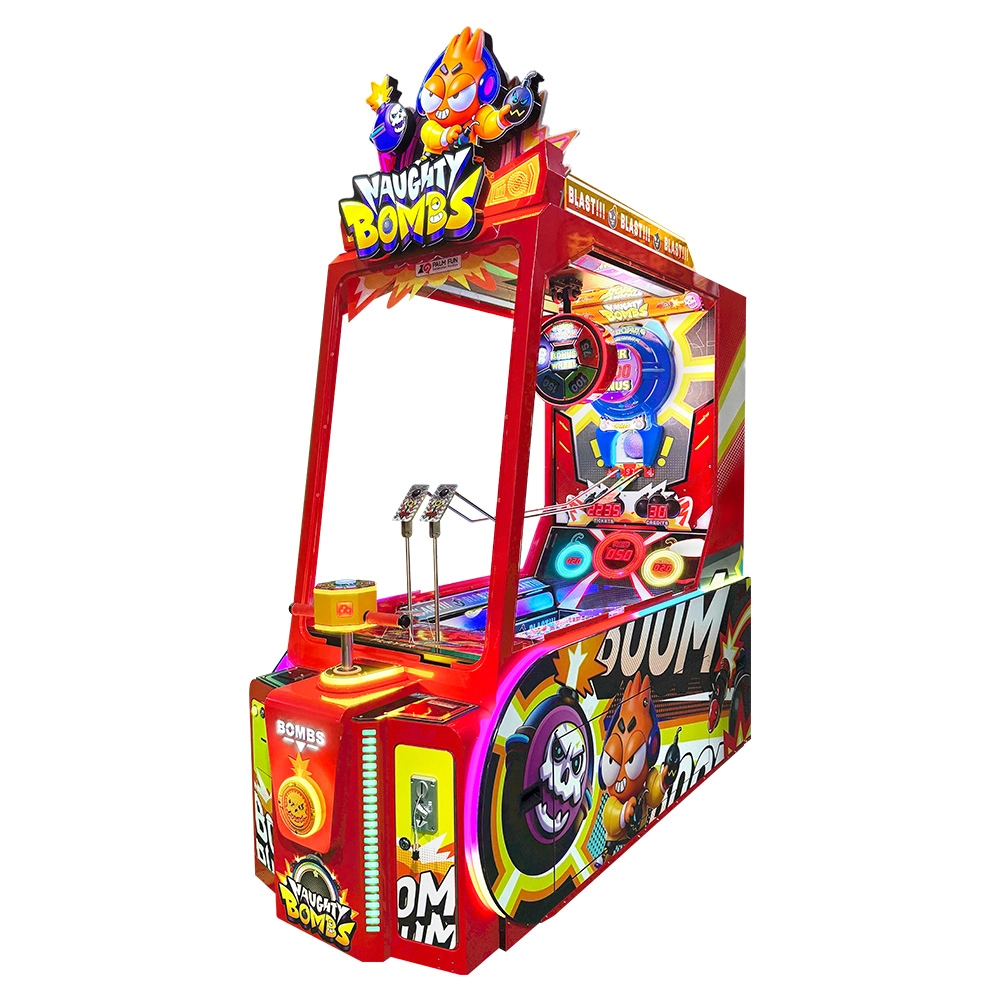
Naughty Bombs is a ball-drop redemption arcade game featuring rolling-ball gameplay, colored targets, ticket prizes, surprise bonus rewards, lighting and sound effects. Players use timing to launch and drop balls toward colored target areas. The product is presented for arcade, family entertainment center and other entertainment-venue projects, with customizable 110V / 220V AC voltage configuration.
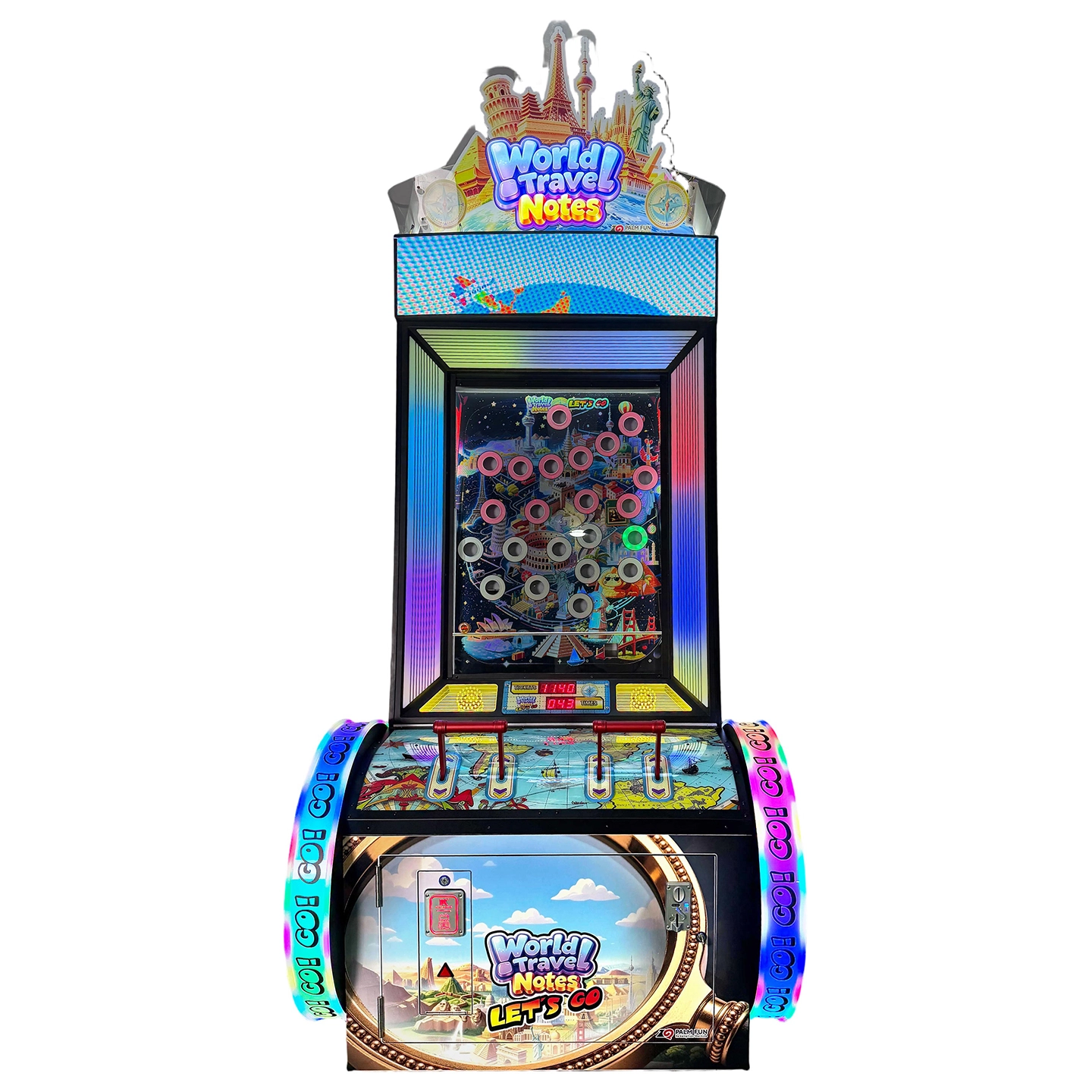
World Travel Notes is a skill-based balance ball redemption game with a fun world-travel theme. Players use two handles to control the balance bar and guide the ball into each target hole. As the game progresses, the targets become more challenging, leading players toward the final grand prize. With colorful world-travel graphics, dynamic RGB lighting, a live score display, and progressive difficulty, World Travel Notes is designed to attract attention and encourage repeat play in arcades, FECs, shopping malls, and other entertainment venues.
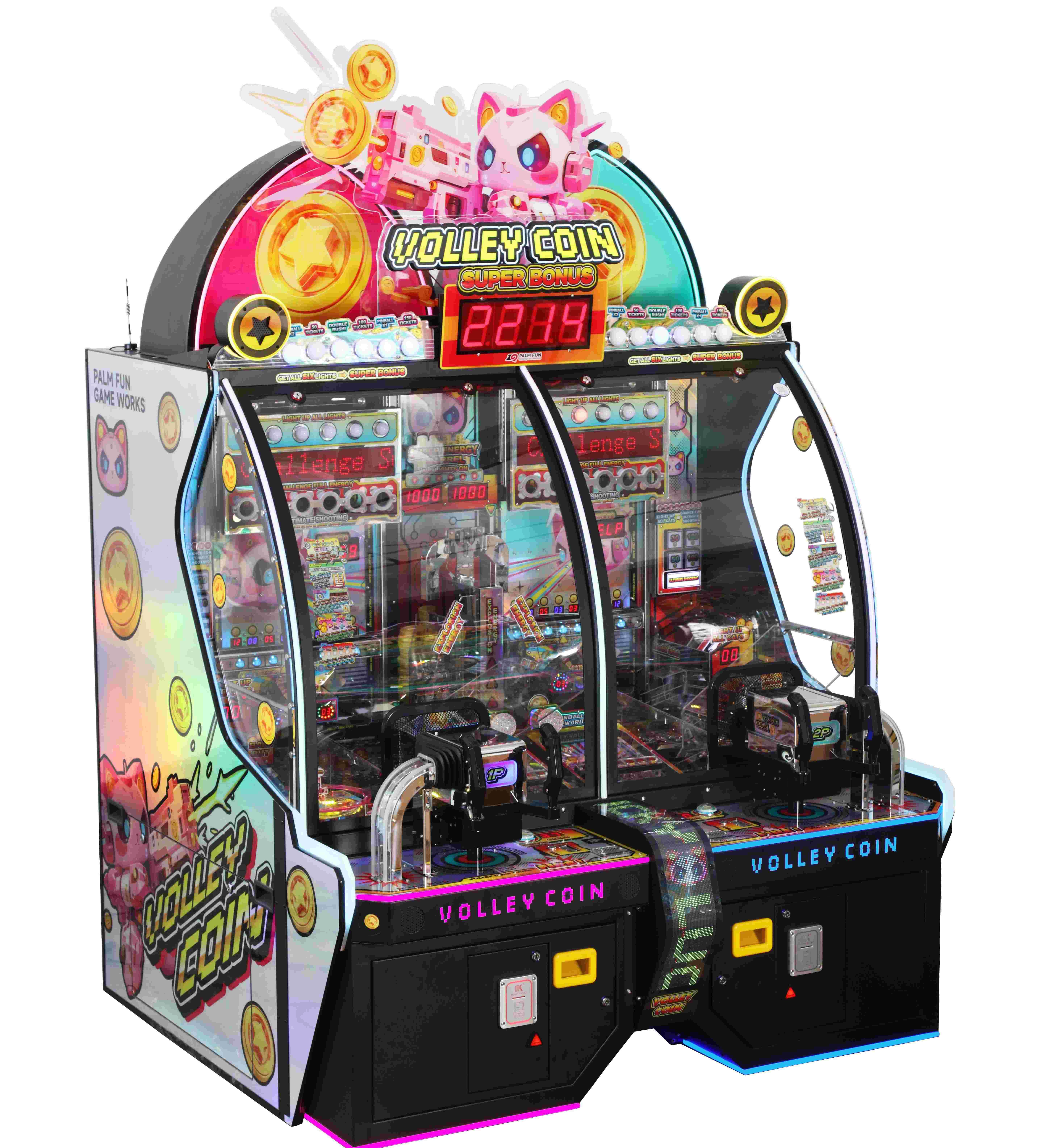
Volley Coin is an innovative arcade ticket redemption machine developed by Palm Fun Electronics. Combining the excitement of a fast-paced token shooter game with the proven earning power of a traditional coin pusher machine, Volley Coin offers a fresh and engaging gameplay experience that appeals to players of all ages.
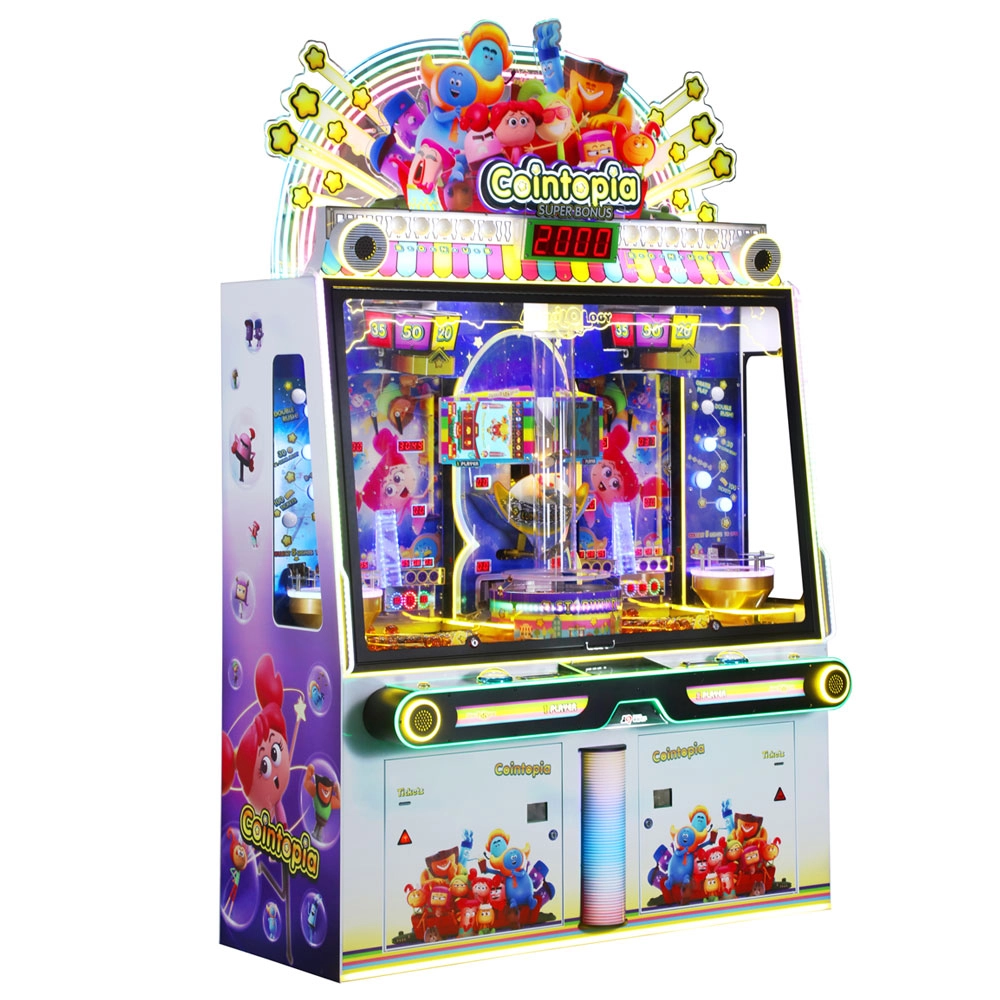
COINTOPIA by PALM FUN is an exciting redemption game machine where players enjoy fun with zodiac buddies in a utopia setting. This ticket redemption machine offers engaging gameplay and rewarding experiences, perfect for family entertainment centers and arcades seeking top-quality redemption games.
Copyright © 2026 PALM FUN All Rights Reserved. | Privacy Policy • Terms and Conditions | Sitemap
palmfunarcade
Palm Fun Arcade Game
Whatsapp: +8618126837443
PalmFun Arcade
PalmFun_Arcade
PALM FUN Redemption Machine