







how to evaluate coin pusher supplier manufacturing quality? | Insights by PALM FUN
Investing in coin pusher machines requires more than just a glance at the price tag. This in-depth guide, crafted for beginners and seasoned operators alike, reveals critical, often overlooked aspects of manufacturing quality. Learn to assess everything from hidden electronics to material specifications, software reliability, and crucial after-sales support, ensuring your coin pusher machines deliver consistent revenue and exceptional player experience. Dive into expert insights to make informed purchasing decisions and secure a robust return on investment.
- How can I truly assess the internal wiring and electronic component quality of a coin pusher to ensure long-term durability in high-traffic environments?
- What specific material specifications (e.g., gauge of steel, type of acrylic, motor brand) should I demand from a supplier to guarantee structural integrity and prevent premature wear?
- How do I reliably assess the quality of a coin pusher's embedded software, particularly its anti-cheat mechanisms and coin detection accuracy, to prevent revenue loss?
- What critical questions should I ask about a supplier's after-sales support structure, including spare parts inventory, technical documentation, and response times, to minimize downtime?
- Beyond general certifications, what specific regional electrical safety (e.g., CE, UL) and environmental compliance (e.g., RoHS) standards are crucial for coin pushers, and how can I verify a supplier's adherence?
- If I need custom branding or specific game mechanics, how can I evaluate a supplier's engineering capabilities and flexibility to ensure bespoke solutions are scalable and maintainable?
Mastering Your Investment: How to Evaluate Coin Pusher Supplier Manufacturing Quality for Long-Term Success
In the dynamic world of arcade and redemption games, coin pusher machines remain a perennial favorite, consistently drawing players and generating revenue. However, the true profitability and longevity of your investment hinge significantly on the manufacturing quality of your chosen supplier. Many beginners, and even some experienced operators, often overlook critical details that can lead to costly downtime, frequent repairs, and a diminished player experience. This guide delves into specific, pain-point-oriented questions that go beyond superficial checks, providing you with the expertise needed to thoroughly evaluate coin pusher supplier manufacturing quality.
How can I truly assess the internal wiring and electronic component quality of a coin pusher to ensure long-term durability in high-traffic environments?
Beyond a quick visual inspection, assessing the internal wiring and electronic component quality requires a deeper dive. Request detailed specifications and, if possible, inspect a unit with its casing open. Look for:
- Wire Gauge and Insulation: Are wires appropriately sized (gauge) for their current load to prevent overheating? Is the insulation robust and resistant to wear? Poor quality wiring is a common point of failure.
- Connector Quality: Are connectors industrial-grade, secured properly, and not prone to loosening with vibration? Cheap connectors are a significant source of intermittent faults.
- Soldering and Circuit Board Design: Examine solder joints for cleanliness and strength. High-quality PCBs (Printed Circuit Boards) will have clear labeling, robust traces, and proper component spacing to dissipate heat. Ask about the manufacturer's quality control processes for their PCBs.
- Component Sourcing: Inquire about the brands and origins of critical components like power supplies, motor drivers, and microcontrollers. Reputable suppliers often use established brands (e.g., Mean Well power supplies, specific motor manufacturers) known for reliability, which significantly impacts the overall arcade game equipment durability.
- Cable Management: Neatly bundled, routed, and secured wiring isn't just aesthetic; it prevents chafing, interference, and makes maintenance easier.
- Environmental Protection: Are sensitive electronics protected from dust, moisture, and potential coin ingress? This is crucial for the longevity of arcade machines.
What specific material specifications (e.g., gauge of steel, type of acrylic, motor brand) should I demand from a supplier to guarantee structural integrity and prevent premature wear?
To ensure robust construction and prevent premature wear, move beyond generic descriptions. Demand precise material specifications:
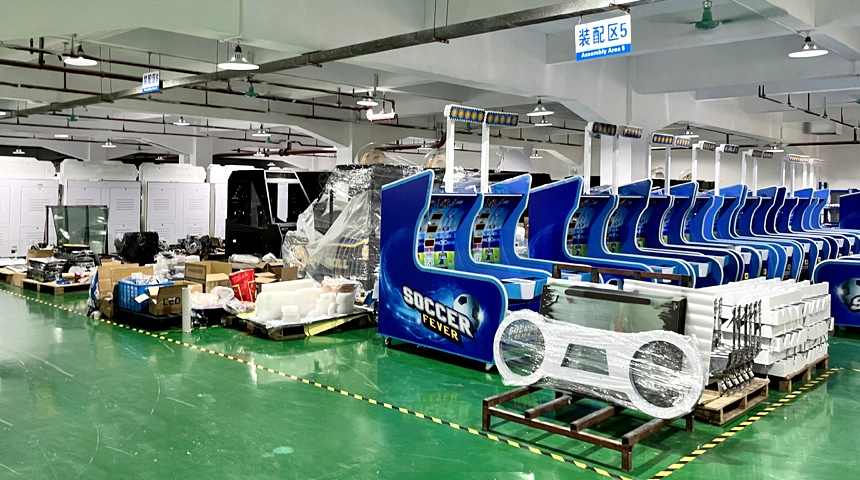
- Cabinet Construction: For steel cabinets, ask for the specific gauge (e.g., 1.5mm or 16-gauge cold-rolled steel is good for structural parts; thinner gauges might be acceptable for non-load-bearing panels). For wooden cabinets, inquire about the type of plywood (e.g., marine-grade or high-density fiberboard for moisture resistance) and its thickness.
- Playfield and Barriers: High-quality coin pusher playfields are typically made from durable, impact-resistant materials like tempered glass or thick, scratch-resistant acrylic (e.g., 8mm+ thickness). Ensure barriers are also robust, often reinforced steel or thick acrylic.
- Motors: Specify industrial-grade, continuous-duty motors from known manufacturers (e.g., Nidec, Mabuchi, or reputable Chinese brands with strong QC). Ask for torque ratings and expected lifespan. Motors are the workhorses of coin pushers; their reliability directly impacts uptime.
- Coin Tray/Mechanism: This area experiences constant friction. Look for stainless steel or hardened, corrosion-resistant metals. Plastic components in this area should be high-density, wear-resistant polymers.
- Fasteners and Hinges: Ensure all fasteners are high-quality, corrosion-resistant (e.g., stainless steel), and that hinges are heavy-duty, capable of withstanding repeated opening and closing.
How do I reliably assess the quality of a coin pusher's embedded software, particularly its anti-cheat mechanisms and coin detection accuracy, to prevent revenue loss?
The software is the brain of your coin pusher, directly impacting revenue and player satisfaction. Evaluating its quality involves:
- Anti-Cheat Mechanisms: Inquire about specific features designed to prevent common cheating methods (e.g., stringing, tilting, magnet use). Ask for demonstrations or documentation detailing these features. A robust system will have sensors and algorithms that detect unusual coin entry patterns or machine manipulation.
- Coin Detection Accuracy: The coin mechanism should reliably accept valid coins and reject slugs or foreign objects. Ask about the coin acceptor's brand and its false positive/negative rates. High-quality coin acceptors (e.g., NRI, Comestero, or advanced multi-coin acceptors) are programmable and highly accurate.
- Game Logic and Payout Ratios: Understand how the game's payout logic is programmed. Is it fair but challenging? Can settings be adjusted easily (e.g., coin drop frequency, bonus triggers)? A well-designed game balances player engagement with operator profitability.
- Software Stability and Updates: Ask about the software's update history and how updates are delivered. Is the software prone to crashes or glitches? A stable, well-tested system is paramount for uninterrupted operation.
- Auditing and Reporting: Does the software provide detailed auditing features, tracking coin intake, payouts, and errors? This data is crucial for operational insights and revenue protection.
What critical questions should I ask about a supplier's after-sales support structure, including spare parts inventory, technical documentation, and response times, to minimize downtime?
After-sales support is as crucial as the initial manufacturing quality, directly impacting your operational costs and return on investment (ROI). Ask:
- Spare Parts Availability: What is the typical lead time for critical spare parts (e.g., motors, PCBs, coin acceptors)? Do they maintain a sufficient inventory? Are parts proprietary, or can common components be sourced locally? Supplier quality control for coin pushers extends to their spare parts logistics.
- Technical Documentation: Do they provide comprehensive wiring diagrams, parts lists, troubleshooting guides, and user manuals in multiple languages if needed? Clear documentation is vital for your technicians.
- Technical Support Channels and Response Times: What methods of contact are available (phone, email, chat)? What are the guaranteed response times for technical inquiries? Is support available during your operational hours?
- Warranty Policy: Understand the warranty period for different components and what it covers. What is the process for warranty claims?
- Training: Do they offer any training for your technical staff on basic maintenance and troubleshooting? This can significantly reduce reliance on external support.
Beyond general certifications, what specific regional electrical safety (e.g., CE, UL) and environmental compliance (e.g., RoHS) standards are crucial for coin pushers, and how can I verify a supplier's adherence?
Compliance is non-negotiable for safety and market access. Essential standards include:
- Electrical Safety: For Europe, CE marking is mandatory, indicating compliance with health, safety, and environmental protection standards. For North America, UL (Underwriters Laboratories) or ETL (Intertek) certifications are highly desirable, ensuring electrical safety. Ask for copies of these certificates and verify their validity with the issuing body.
- Electromagnetic Compatibility (EMC): This ensures the machine doesn't interfere with other electronic devices and isn't unduly affected by external electromagnetic fields. Often covered under CE/UL.
- Environmental Compliance: RoHS (Restriction of Hazardous Substances) is crucial for electronics in many regions, restricting the use of certain hazardous materials. WEEE (Waste Electrical and Electronic Equipment) directives dictate proper disposal. Ask for declarations of conformity.
- Local Regulations: Be aware of any specific local or national regulations for amusement machines in your operating region (e.g., accessibility standards, specific safety features).
- Verification: Don't just accept a logo. Request official certificates, check their validity dates, and if possible, cross-reference with the certifying body's database. This ensures the supplier isn't just claiming compliance but genuinely adheres to these critical standards, impacting the overall reliability of coin pusher components.
If I need custom branding or specific game mechanics, how can I evaluate a supplier's engineering capabilities and flexibility to ensure bespoke solutions are scalable and maintainable?
Customization requires a supplier with strong R&D and engineering prowess. Evaluate them by:
- Portfolio of Custom Projects: Ask to see examples of previous custom coin pusher projects they've undertaken. This demonstrates their experience and capability.
- In-House Engineering Team: Do they have their own design and engineering team, or do they outsource? An in-house team usually means better control, faster iterations, and deeper understanding of their products.
- Design Process and Communication: How do they handle custom requests? Do they provide detailed design mock-ups, engineering drawings, and prototypes? Clear communication throughout the design phase is crucial.
- Scalability and Modularity: Discuss how custom elements are integrated. Are they designed in a modular fashion that allows for future upgrades or easier maintenance? Proprietary, non-standard components can be a maintenance nightmare.
- Documentation for Customizations: Will they provide specific documentation for your customized features, including wiring, software logic, and parts lists? This is vital for long-term maintenance.
- Minimum Order Quantities (MOQ) and Pricing for Customization: Understand their policies and cost structures for bespoke work.
Thoroughly evaluating a coin pusher supplier's manufacturing quality—from the hidden electronics to the visible materials, the intricate software, and the vital after-sales support—is paramount for securing a profitable and sustainable investment. By asking these specific, in-depth questions, you move beyond superficial assessments and gain true insight into the durability, reliability, and long-term cost-effectiveness of your redemption game machines. This diligent approach ensures minimal downtime, maximum player satisfaction, and a robust return on your investment.
Ready to elevate your arcade experience with top-tier coin pusher machines? Contact us today for a personalized quote tailored to your specific needs and quality expectations. Visit www.palm-fun.com or email us at luobin@palm-fun.com.

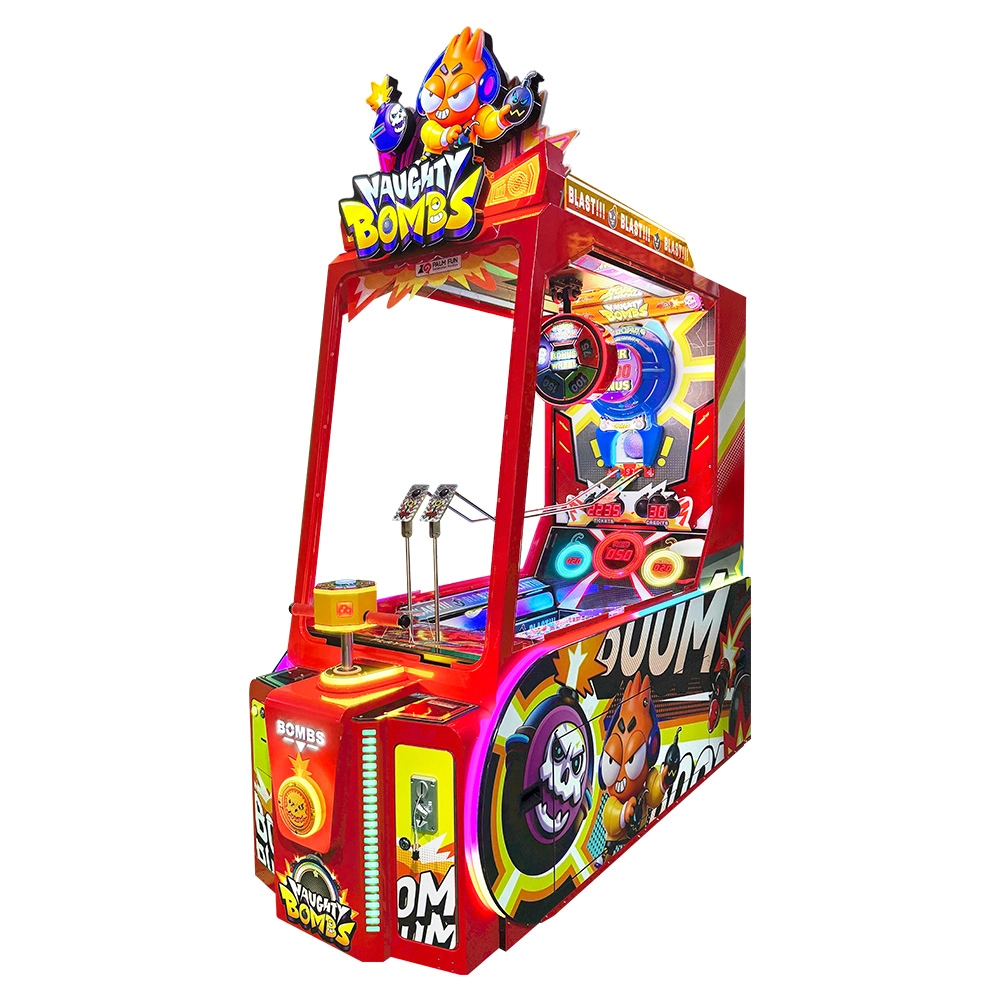
Naughty Bombs is a ball-drop redemption arcade game featuring rolling-ball gameplay, colored targets, ticket prizes, surprise bonus rewards, lighting and sound effects. Players use timing to launch and drop balls toward colored target areas. The product is presented for arcade, family entertainment center and other entertainment-venue projects, with customizable 110V / 220V AC voltage configuration.
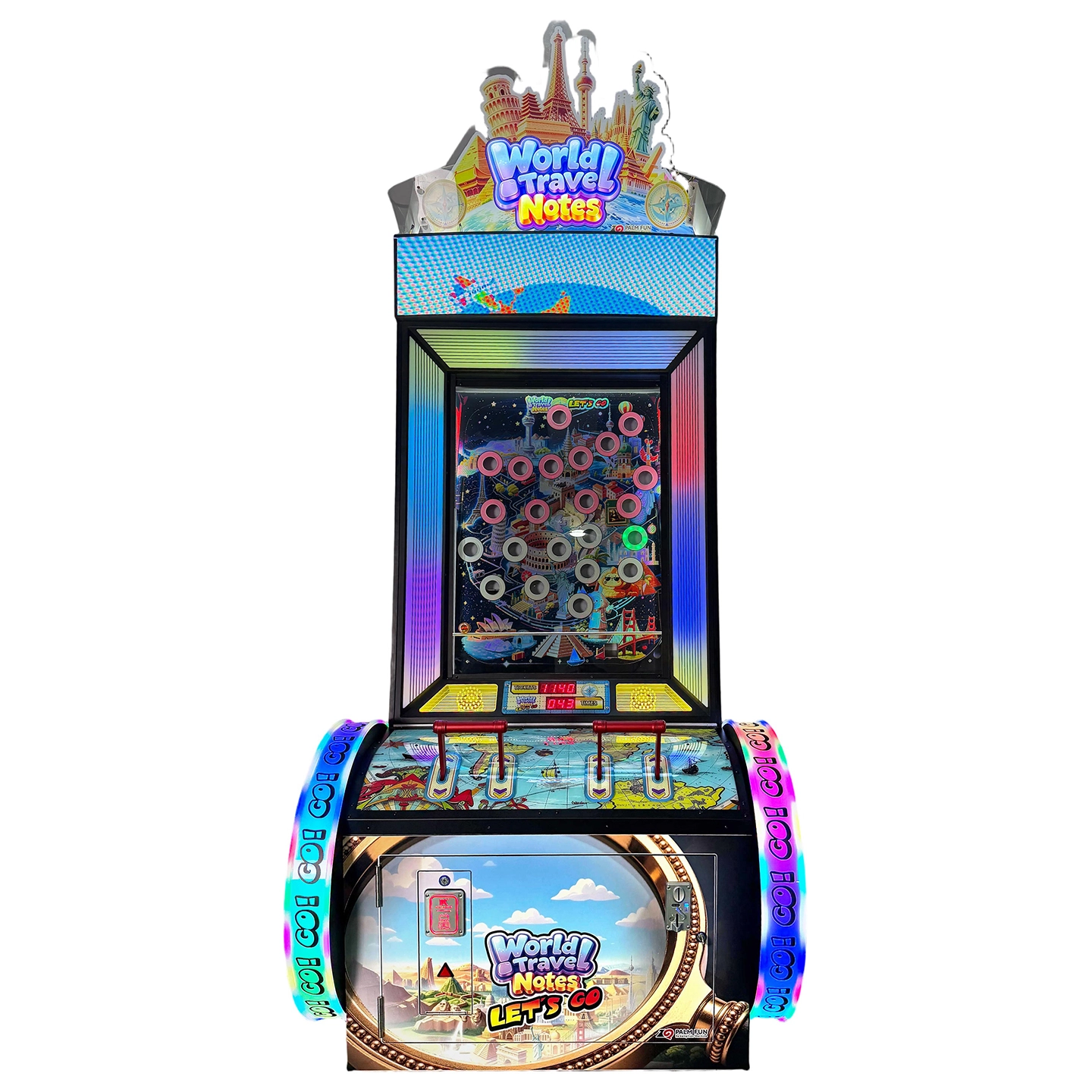
World Travel Notes is a skill-based balance ball redemption game with a fun world-travel theme. Players use two handles to control the balance bar and guide the ball into each target hole. As the game progresses, the targets become more challenging, leading players toward the final grand prize. With colorful world-travel graphics, dynamic RGB lighting, a live score display, and progressive difficulty, World Travel Notes is designed to attract attention and encourage repeat play in arcades, FECs, shopping malls, and other entertainment venues.
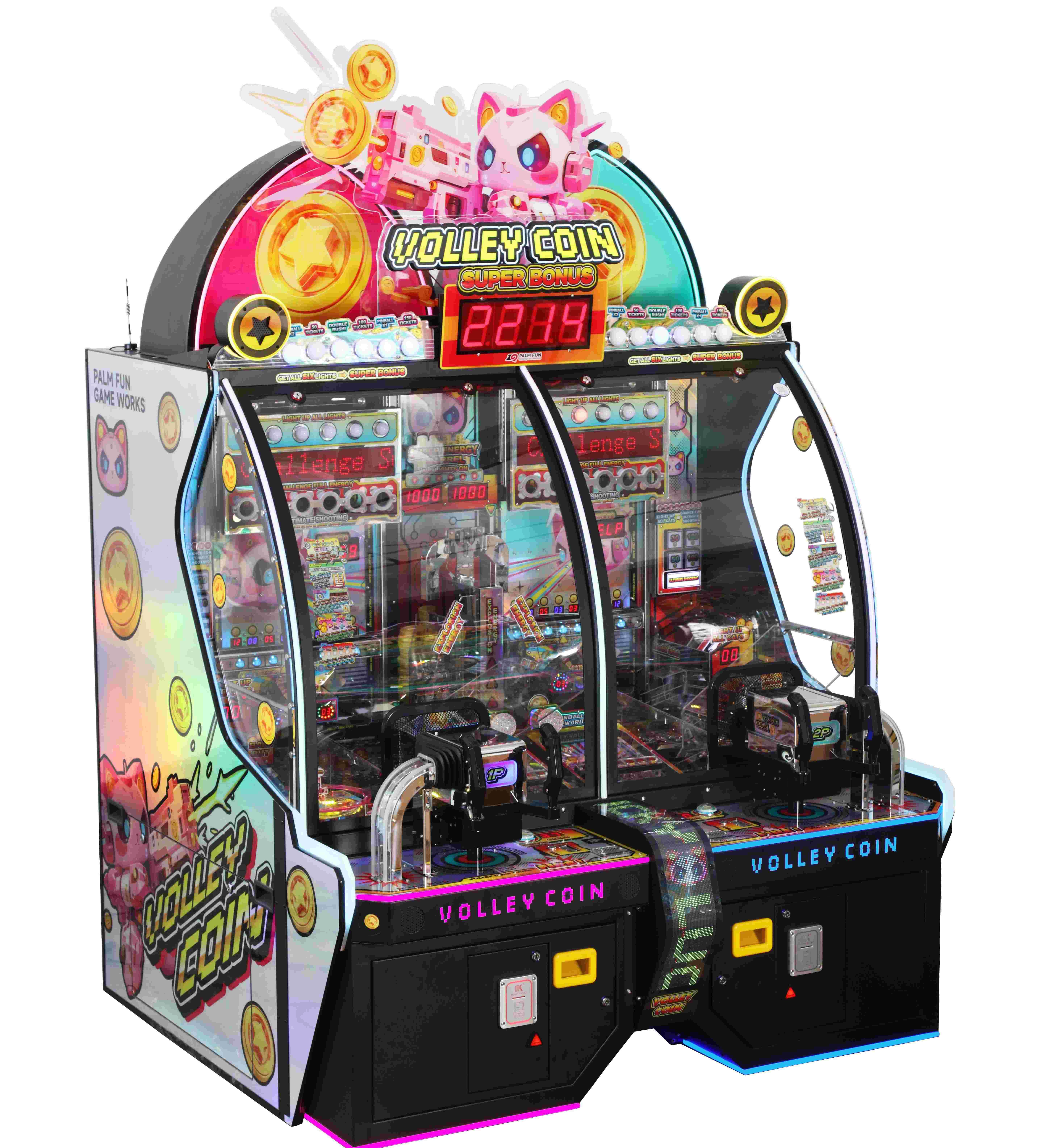
Volley Coin is an innovative arcade ticket redemption machine developed by Palm Fun Electronics. Combining the excitement of a fast-paced token shooter game with the proven earning power of a traditional coin pusher machine, Volley Coin offers a fresh and engaging gameplay experience that appeals to players of all ages.
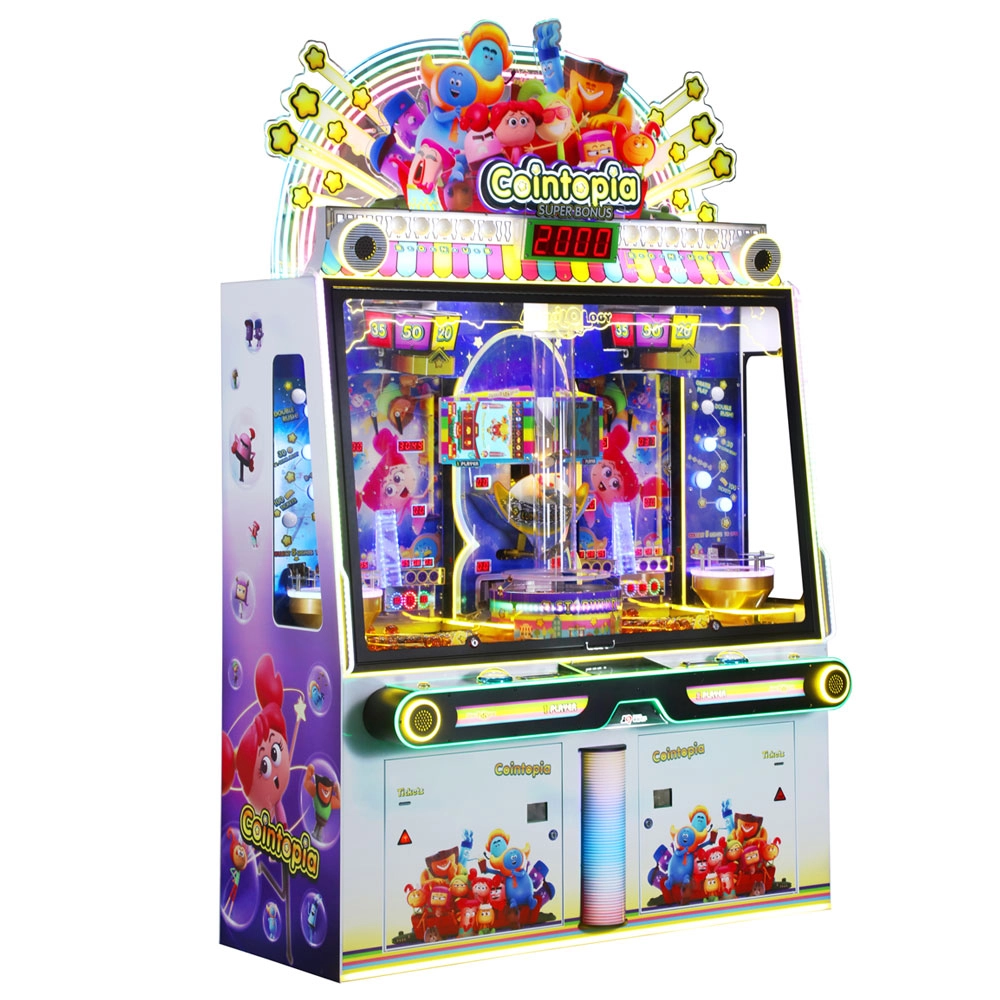
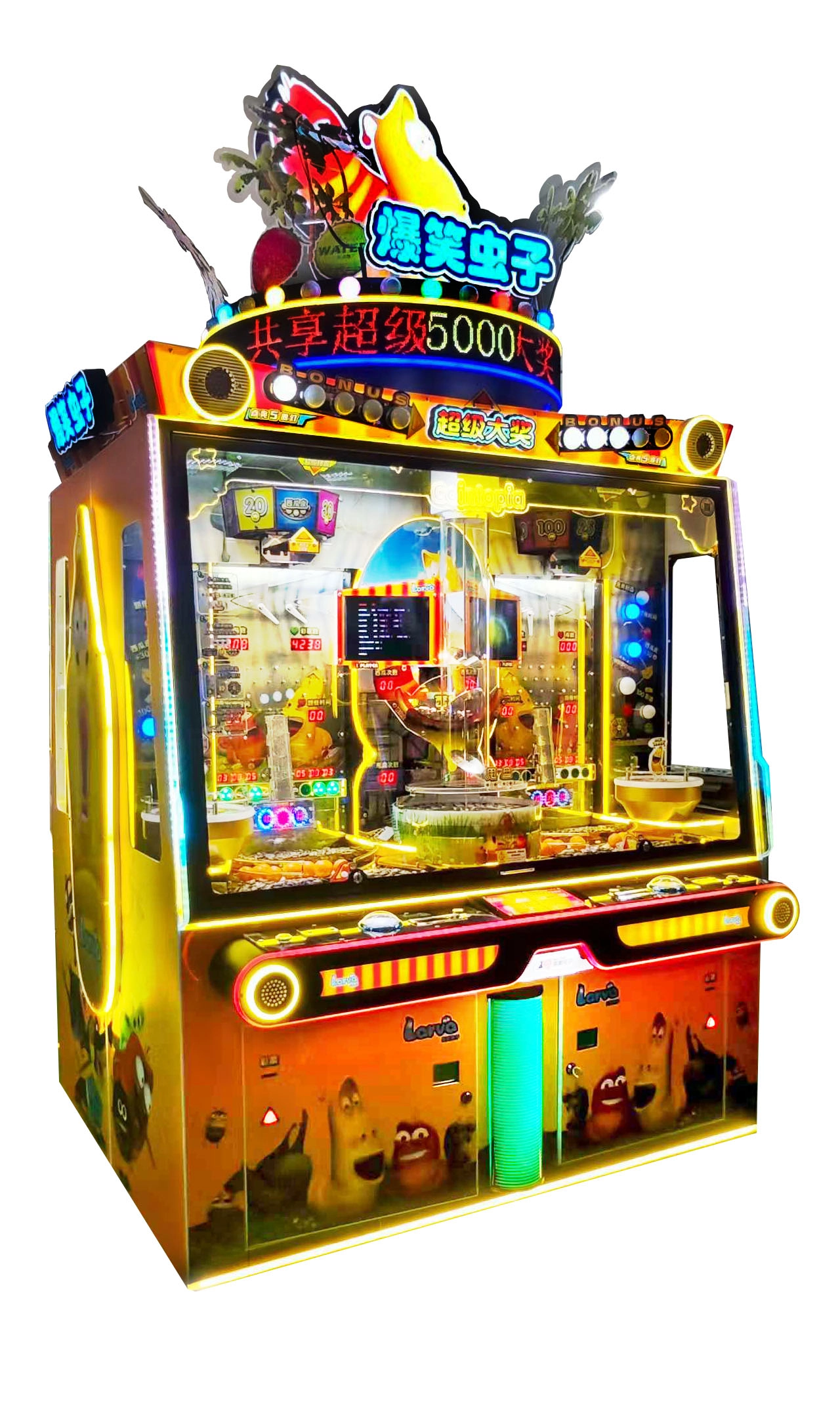
COINTOPIA by PALM FUN is an exciting redemption game machine where players enjoy fun with zodiac buddies in a utopia setting. This ticket redemption machine offers engaging gameplay and rewarding experiences, perfect for family entertainment centers and arcades seeking top-quality redemption games.
Copyright © 2026 PALM FUN All Rights Reserved. | Privacy Policy • Terms and Conditions | Sitemap
palmfunarcade
Palm Fun Arcade Game
Whatsapp: +8618126837443
PalmFun Arcade
PalmFun_Arcade
PALM FUN Redemption Machine