








Why Redemption Still Rules the Arcade Floor
This piece is an editorial digest prepared by Palm Fun Electronics for the benefit of our readers, based on the original reporting "The key to operating a successful redemption arcade" by Thomas Dodds, published by Amusements & Attractions on 29 July 2026. Quotes are reproduced from the original article with American English spelling applied and wording otherwise unchanged, and are credited to their speakers and originating organizations. The full original article is available at amusementsandattractions.com. The commentary, framing and practical guidance below are our own.
Out-of-home entertainment has spent the last few years chasing the new: competitive socializing bars, free-roam virtual reality, and immersive game rooms. You could be forgiven for assuming the redemption arcade was being quietly retired.
It is not. And the numbers make the point better than any argument.
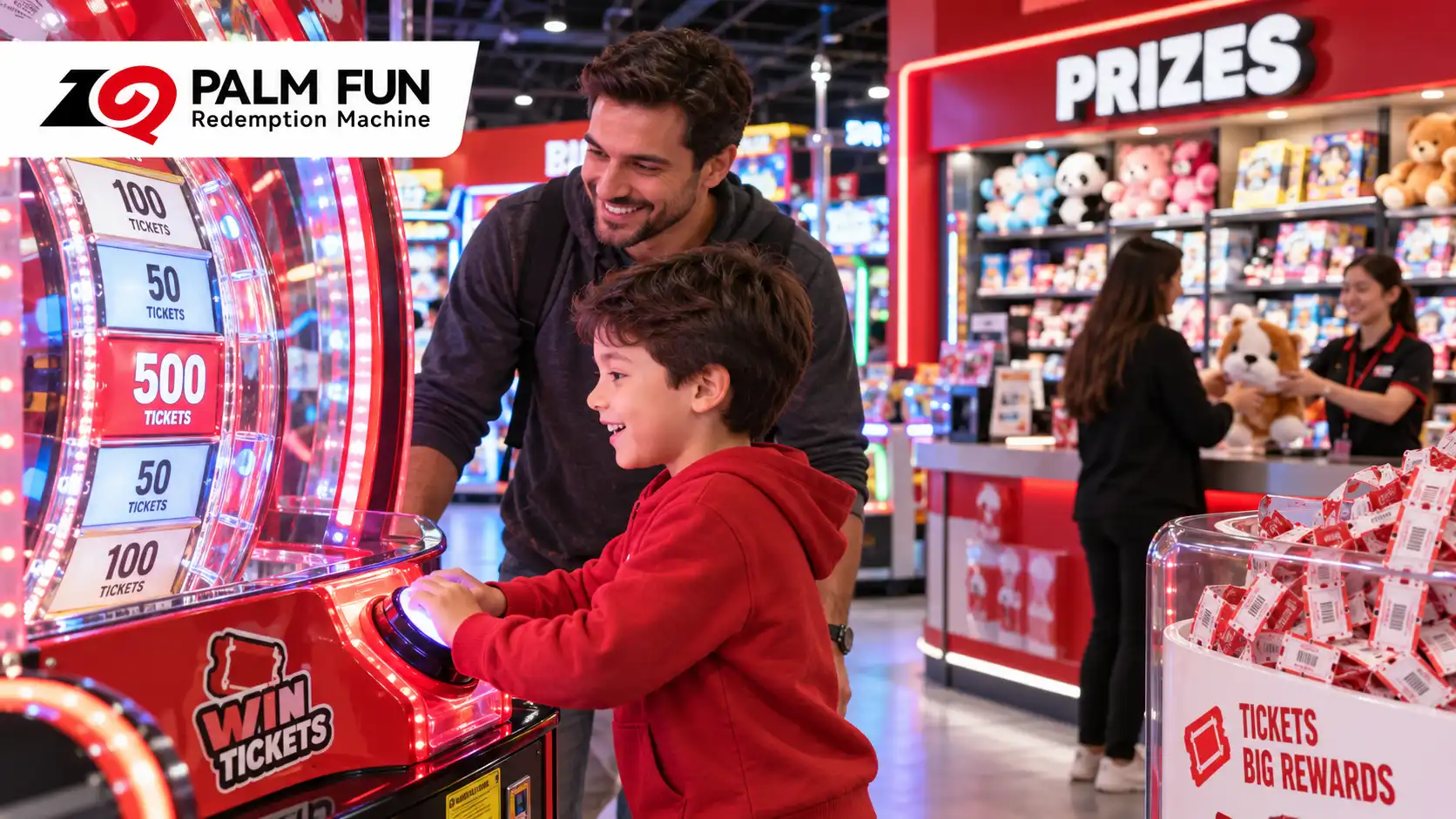
Tiziano Tredese, owner and founder of Elmac, puts ticket redemption at roughly 60 to 70 percent of the machines in any one location. Instant redemption accounts for another 20 to 25 percent, with everything else—video games, mechanical attractions—dividing up what is left. In most arcades worldwide, redemption is not a category. It is the floor.
Why has it survived every shift in consumer taste? Tredese credits two things: continuous evolution in the machines themselves and operators getting steadily better at keeping prizes fresh and relevant. Cory Haynes, co-founder of Amusement Source International, frames it as a package no other attraction quite replicates—fun, competition, and reward in a single loop.
"What has impressed me throughout my career is how redemption appeals across generations. Technology and trends may change, but people still enjoy the excitement of winning and being rewarded for their efforts. That fundamental appeal is what has made redemption such a resilient and profitable category for operators." — Cory Haynes, Co-founder, Amusement Source International
But "redemption works" is not a business plan. The operators and suppliers who do it well are specific about what separates a good redemption floor from a bad one. Four themes run through their answers.
1. The 10-second rule—and what has to happen after it
Machine selection starts with comprehension speed. Matt Bland, head of IT and creative at UDC, is blunt about the threshold: the best redemption games are understood in under ten seconds.
"Even better is a game that can be quickly understood but has levels of play that players naturally discover while playing it, so they continue to explore the game after the first few goes and hone their strategy to perform better. This encourages repeat play and delivers that moment of joy when they figure out 'Oh! That's how that works.'" — Matt Bland, Head of IT and Creative, UDC
That layering is what Benny Su, CEO of Wahlap, calls continuity—continuity of both player engagement and venue revenue. He breaks it into three design requirements: gameplay variety in the core design, easy to learn but hard to master, and layered mechanics with something to collect. Wahlap's own Infinite Tower, a robot-themed closed-loop coin pusher, applies all three: eight rare cards to collect, each set unlocking an exclusive super bonus.
What this means on the floor. A machine that only delivers the instant hit of tickets will be played once. A machine that gives players something to figure out or something to complete will be played until they beat it—and then again the next visit. When you are choosing between two cabinets at similar prices, ask which one has a second layer.
2. What players are actually buying
Two motivations have grown louder in the last few years, and both change what belongs in your game room.
The outcome has to feel like it was earned.
Lester Travasso, sales and marketing executive at Sega Amusement International, describes a market that has turned decisively toward skill.
"Players want to feel that their ability influences the outcome. Games like Odin's Hammer Strike and Simon Arcade are built around that principle, rewarding precision, timing and quick thinking rather than simply pressing a button and hoping for the best." — Lester Travasso, Sales and Marketing Executive, Sega Amusement International
This is not only a design preference—it is what brings guests back. Eric Schadrie, concept development manager at Bay Tek Entertainment, cites a survey of FEC owners in which the strongest predictors of repeat play were the belief that skill improves outcomes and the sense that the reward was worth the spend.
"When guests believe they can improve with practice and eventually hit a big win or jackpot, that's what keeps them coming back for another play." — Eric Schadrie, Concept Development Manager, Bay Tek Entertainment
Players are collecting, not just accumulating.
Eman Tahir, marketing strategy and events coordinator at Genda Americas, points to a shift in what the prize actually represents. Kiddleton's crane machines stock exclusive licensed merchandise from franchises such as Naruto, My Hero Academia, and Godzilla—items that are not available through ordinary retail.
"In many ways, redemption has become less about accumulating tickets and more about building collections. Guests are motivated by the opportunity to win a specific character, complete a set or obtain an item that isn't readily available through traditional retail channels. The emotional connection to the prize is often just as important as the gameplay itself." — Eman Tahir, Marketing Strategy and Events Coordinator, Genda Americas
Alongside that sits a push toward shared play. Sega's Putt It! Par-Tee links up to six players across cabinets; Go Go Ducky puts four players into a live duck race on a 75-inch screen. Individual play becomes a group moment—and groups stay longer than solo players.
What this means on the floor. Multi-player and collectible-driven pieces do two jobs: they raise dwell time per group, and they give guests a specific reason to return. They are also the cabinets that translate most directly into revenue per square meter, because a cabinet holding four players earns on one footprint.
3. The ticket economy: where the profit actually sits
If there is one section of this topic that decides whether a redemption floor makes money, it is payout management—and the industry is refreshingly unsentimental about it.
Anthony Maniscalco, Elaut's vice-president of sales for the US, puts the loop in its simplest form.
"The old saying 'winners create players' is tried and true. If players don't win, they don't play. Pretty simple. However, the operator must be fair with the percentage of the award to the player for their price per play. The ticket payout can be controlled through settings on the game itself, or in conjunction with the mark-up of the prizes for sale in the redemption room." — Anthony Maniscalco, Vice-President of Sales (US), Elaut
That last sentence is worth reading twice, because it identifies the two levers every operator has: the ticket rate configured in the machine's software, and the pricing structure of the prizes in the redemption room. Profit is set by how those two are balanced—not by either one alone.
Phil Smith, visual communications designer at Harry Levy Amusements, describes what that balance has to achieve:
"A balanced redemption economy is critical. Operators need to maintain strong earnings while still making players feel rewarded for their spend. That comes down to careful payout management, sensible ticket values and a well-structured prize mix. Regular monitoring of game performance and redemption rates is essential to ensure the operation remains profitable without damaging player confidence." — Phil Smith, Visual Communications Designer, Harry Levy Amusements
There is a counterweight to caution, though. John A. Stergides, sales and marketing manager at Electrocoin, argues that centers should let players win a meaningful number of tickets, because for younger guests that volume is itself part of the thrill—the physical stack of tickets in hand is proof of effort. His conclusion is a useful corrective to over-tightening:
"At the end of the day, the game has to be fun for the player, while also testing them, so that when they win, they know it is off the back of their own skill. That only makes each win feel more rewarding." — John A. Stergides, Sales and Marketing Manager, Electrocoin
The practical implication. Ticket rate is a setting, not a fixed property of the machine—and it needs revisiting whenever your game price or your prize costs change. An arcade that set its payouts two years ago and never touched them is almost certainly either giving away margin or quietly losing players. Both directions of error are expensive; only one of them is visible on the P&L.
4. The prize counter is the product.
If payout is the engine, the prize counter is the reason guests keep feeding it—and the people who supply and fit these counters are emphatic that it is not a display cabinet to be filled once a quarter.
"Ultimately, the prizes are the entire point of the experience; they transform a simple game into a goal-oriented challenge. When a guest walks into a center and sees a sad, depleted prize counter with dusty shelves and empty spaces, it immediately degrades the experience. It signals to the player that the games aren't paying out, and that winning is unlikely." — Megan Burtch, Merchandising Manager, Redemption Plus
Peter Fuller, director and founder of Green World Merchandise, names the single most important stock item—current, high-quality plush that players actually want to win—and explains why the stakes are so high:
"The prize counter is the emotional payoff of the entire redemption experience; it's the reason players keep feeding the machines. If the prizes look tired, dated or cheap, the whole experience falls flat regardless of how good the games are." — Peter Fuller, Director and Founder, Green World Merchandise
Trevor Clarke, head of Sega Prize International, offers the display principle that ties it together: run the counter like a retailer.
"Operators need to make their counters attractive in a similar way to a retailer. The display should always look clean, bright and cheery, and set out in ticket values from entry level to big ticket items. This will help visitors decide what they can afford to redeem with their hard-earned tickets." — Trevor Clarke, Head of Sega Prize International
Two further details from the same body of experience are easy to overlook and hard to replace:
- Stagger the ticket values. Steven Tan, general manager at UNIS Technology, argues players should immediately see prizes they want at every level—from low-ticket impulse items through to higher-value collectibles and electronics. Yuhanis Nawasreh, general manager at Warehouse of Games, explains the psychology: "A strong mix of instant-gratification prizes and larger aspirational rewards helps create that sense of progression." Everyone should be able to leave with something; everyone should also see something they cannot quite reach yet.
- The person behind the counter matters. Michael Aisenberg, marketing manager at Rhode Island Novelty: "The redemption counter is often the last interaction a guest has before leaving, making it a critical opportunity to create a positive final impression." A knowledgeable staff member helps guests find the right prize, keeps the area stocked and organized, and often shapes how the whole visit is remembered.
Putting it to work
Strip away the product names, and the industry's view of a successful redemption arcade comes down to five checks:
|
Check |
What good looks like |
|
Machine mix |
Built around redemption (generally the majority of the floor), with instant-win, video, and mechanical pieces supporting rather than diluting it. |
|
Comprehension and depth |
Understood in ten seconds; still revealing layers on the twentieth play. |
|
Skill visibility |
Players can tell that better play produces better outcomes—and can see a jackpot worth chasing. |
|
Ticket economy |
A defined payout target, re-tuned whenever game price or prize cost changes, was monitored against actual redemption data. |
|
Prize counter |
Retail-quality presentation, stocked across ticket-value tiers, refreshed with seasonal and licensed items, staffed by people who know the range. |
The theme running through all of it is adjustment. Redemption rewards operators who treat their floor as a live system—machines whose ticket rates can be re-tuned, prize mixes that shift with the season, and game selections that get refreshed rather than inherited. The arcade that was configured three years ago and left alone is not saving money; it is paying for the decision in margin it cannot see.
If you are planning a redemption floor—a new venue, an expansion, or a reconfiguration of an existing game room—we are glad to work through machine mix, payout configuration, and prize structure with you. Tell us your game price and your ticket value, and we will come back with a recommended setup.
Palm Fun Electronics—redemption and skill games for FEC, arcade, and bowling operators. www.palm-fun.com
Source & attribution
This article is an editorial digest prepared by Palm Fun Electronics, based on: Thomas Dodds, "The key to operating a successful redemption arcade," Amusements & Attractions, 29 July 2026—https://www.amusementsandattractions.com/amusements/insights/the-key-to-operating-a-successful-https://www.amusementsandattractions.com/amusements/insights/the-key-to-operating-a-successful-redemption-arcade
All quotations are reproduced verbatim from the original article and remain attributed to their speakers and organizations: Tiziano Tredese (Elmac); Cory Haynes (Amusement Source International); Matt Bland (UDC); Benny Su (Wahlap); Eman Tahir (Genda Americas); Lester Travasso (Sega Amusement International); Eric Schadrie (Bay Tek Entertainment); Anthony Maniscalco (Elaut); Phil Smith (Harry Levy Amusements); John A. Stergides (Electrocoin); Megan Burtch (Redemption Plus); Peter Fuller (Green World Merchandise); Trevor Clarke (Sega Prize International); Steven Tan (UNIS Technology); Yuhanis Nawasreh (Warehouse of Games); Michael Aisenberg (Rhode Island Novelty).
The headline, structure, commentary, and practical guidance notes in this article are the original work of Palm Fun Electronics. No endorsement of Palm Fun Electronics by the individuals or organizations named above is implied.

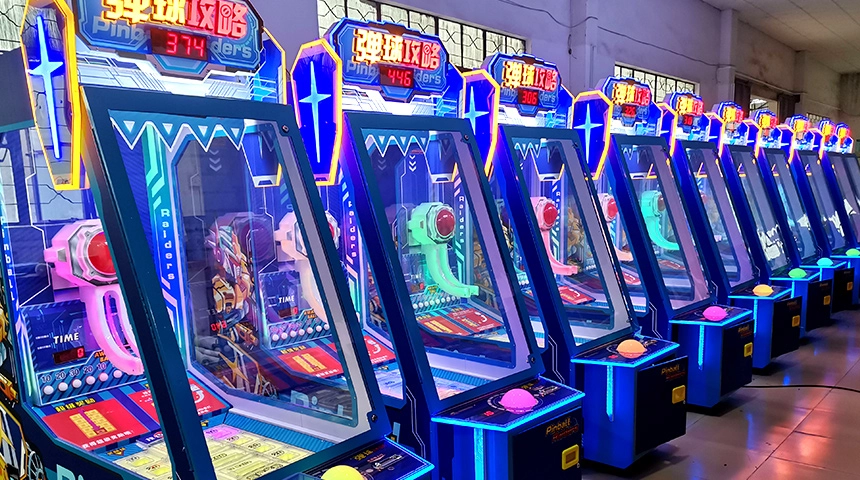
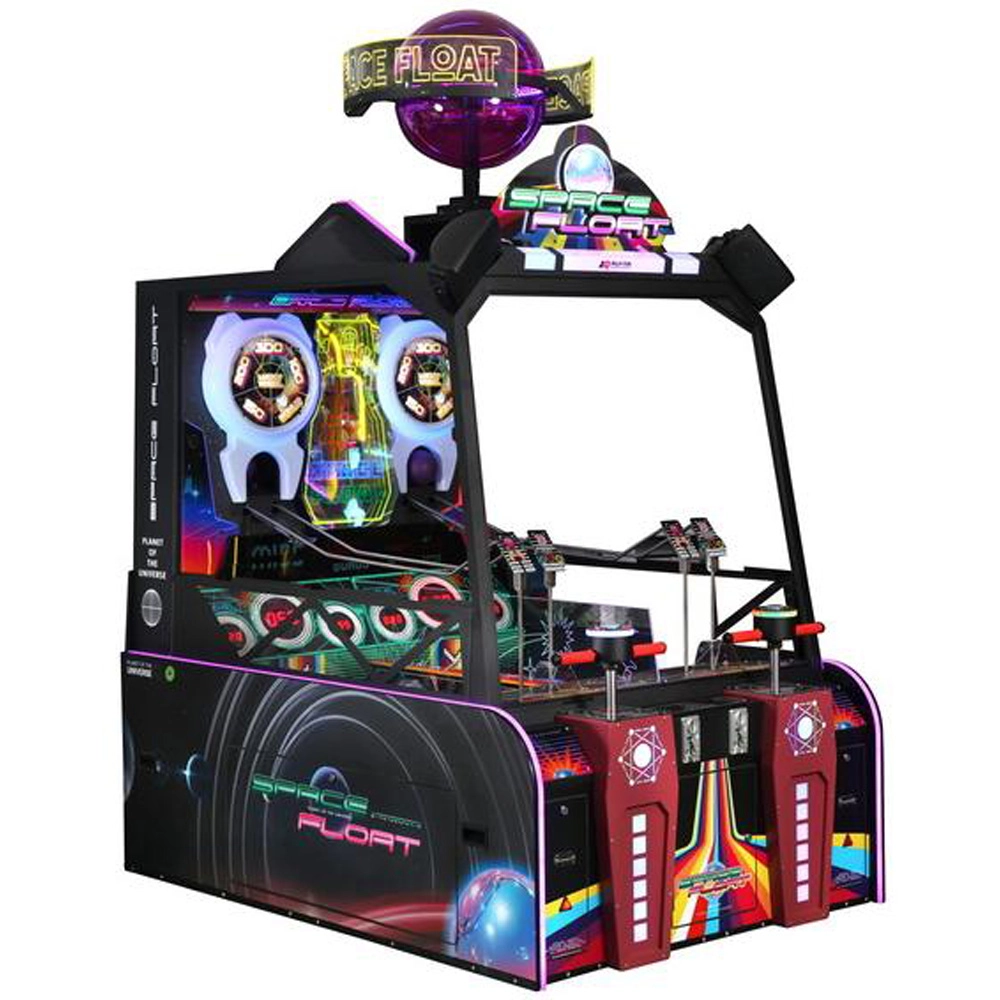
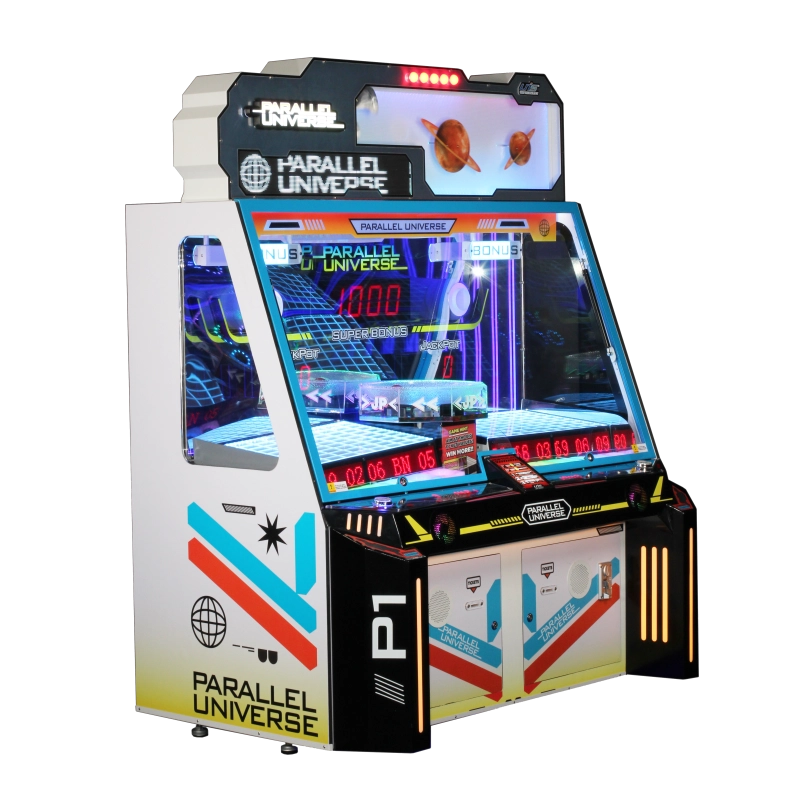
A brand-new redemption arcade ball game is an unprecedented game concept. Creative gameplay, sliding a big ball on a pair of parallel tracks. Let the ball drop into the hole, then get the rewards. This 100% rewards redemption game is suitable for all ages.
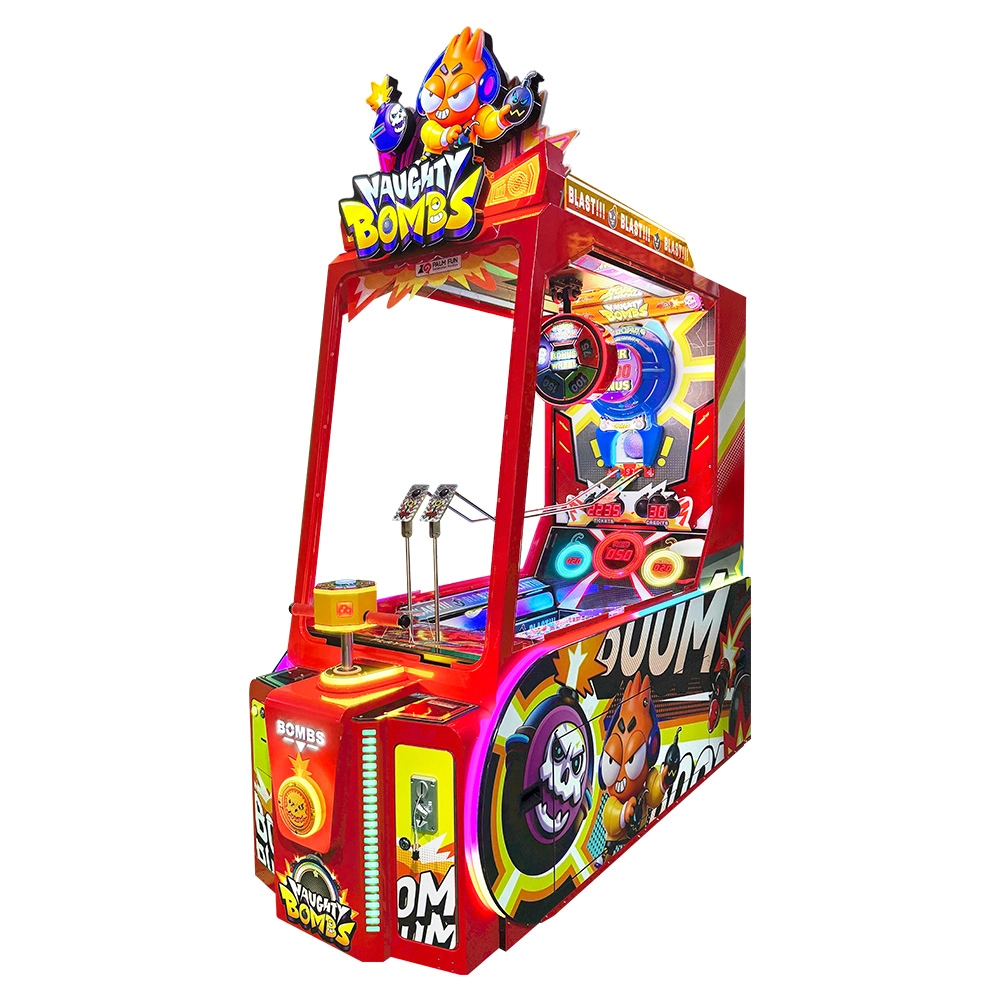
Naughty Bombs is a ball-drop redemption arcade game featuring rolling-ball gameplay, colored targets, ticket prizes, surprise bonus rewards, lighting and sound effects. Players use timing to launch and drop balls toward colored target areas. The product is presented for arcade, family entertainment center and other entertainment-venue projects, with customizable 110V / 220V AC voltage configuration.
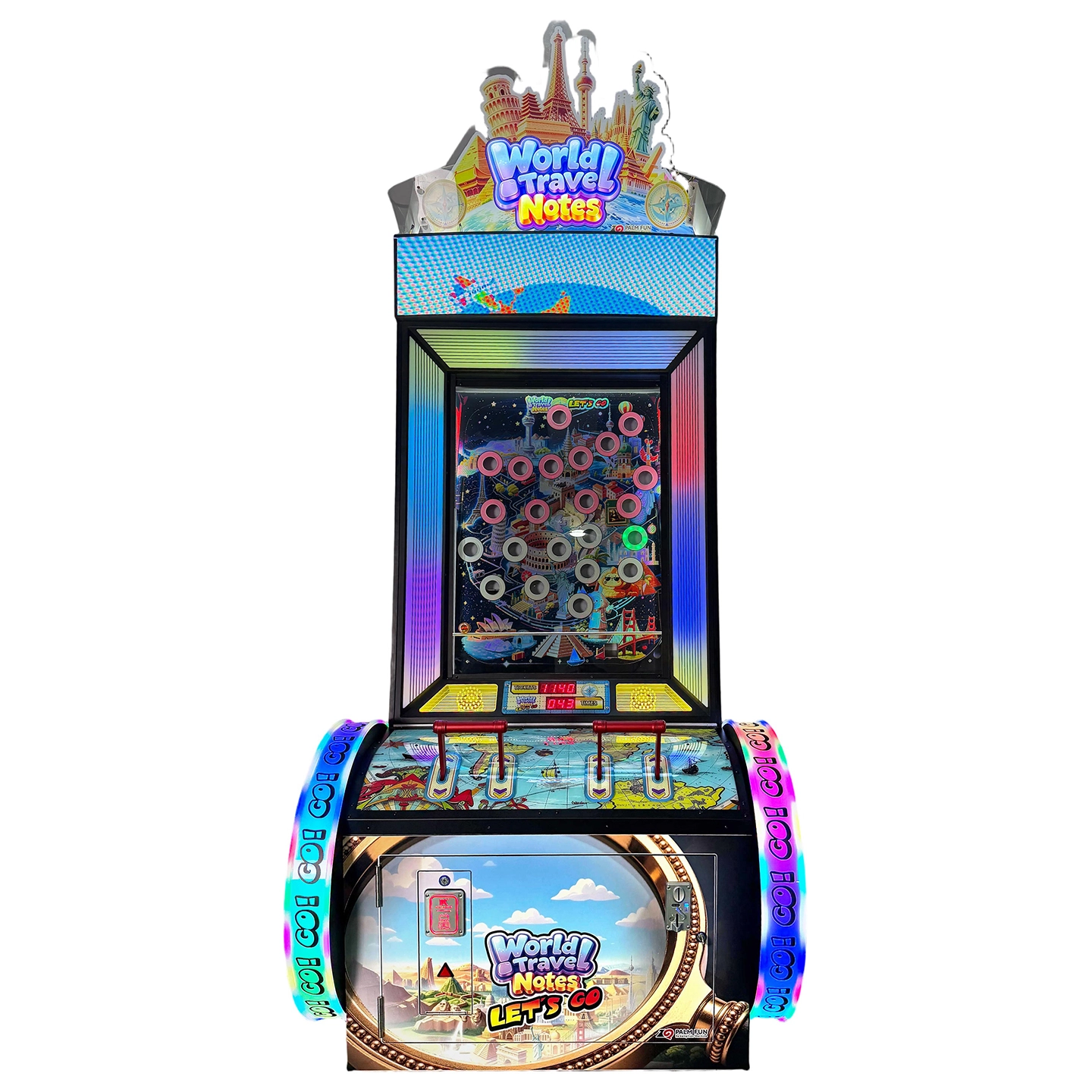
World Travel Notes is a skill-based balance ball redemption game with a fun world-travel theme. Players use two handles to control the balance bar and guide the ball into each target hole. As the game progresses, the targets become more challenging, leading players toward the final grand prize. With colorful world-travel graphics, dynamic RGB lighting, a live score display, and progressive difficulty, World Travel Notes is designed to attract attention and encourage repeat play in arcades, FECs, shopping malls, and other entertainment venues.

Copyright © 2026 PALM FUN All Rights Reserved. | Privacy Policy • Terms and Conditions | Sitemap
palmfunarcade
Palm Fun Arcade Game
Whatsapp: +8618126837443
PalmFun Arcade
PalmFun_Arcade
PALM FUN Redemption Machine