


How Soccer Fever Coin Rolling Redemption Games Work
- What Happens During a Soccer Fever Game
- 1. The player starts a paid play
- 2. The coin travels across the playfield
- 3. The machine registers and communicates the result
- How Skill, Scoring, and Ticket Settings Fit Together
- Player skill shapes the coin’s path
- Settings determine the redemption experience
- Fairness and compliance need practical checks
- Choosing, Installing, and Maintaining the Machine
- Evaluate the game for your venue and audience
- Use commissioning to catch problems early
- Plan routine care and a spare-parts response
- Frequently Asked Questions

A Soccer Fever coin-rolling redemption game turns a familiar skill challenge into a soccer-themed arcade experience: players aim and release a coin, follow its roll toward targets or scoring zones, and receive any tickets or other configured reward according to the machine’s rules. The Soccer Fever Coin-Rolling Redemption Game Arcade Machine is best evaluated by understanding its play cycle, control and scoring logic, redemption settings, maintenance needs, and fit with your venue. Exact targets, ticket values, dimensions, payment options, and service procedures depend on the machine’s configuration and should be confirmed with the supplier before purchase.
What Happens During a Soccer Fever Game
1. The player starts a paid play
A typical round begins when the player pays using the payment method supported by the machine, such as coins or a configured cashless system. The game then makes a play coin available or enables the player to use a coin, depending on the design. Because setups differ, operators should confirm whether the machine uses dedicated tokens, standard coins, or another mechanism, and check that the payment system matches local currency and venue policy.
The soccer theme gives the challenge a recognizable objective: roll the coin toward a goal, target, or marked scoring area. The player’s task is not simply to insert money and wait. They judge the release point and force, then watch how the coin travels. This active moment is what gives a coin-rolling redemption game its skill-game character and makes it easy for bystanders to understand.
2. The coin travels across the playfield
After release, the coin moves along a sloped or shaped track toward the targets. Its path is affected by the release, the track geometry, the coin’s speed, and its contact with surfaces or obstacles. A coin may enter a scoring area, miss a target, or continue to another part of the playfield. The exact sequence is specific to the machine, so do not assume that every soccer-themed game has identical lanes, goals, or outcomes.
On a soccer-themed unit, visual elements can frame the result as a shot on goal, but the machine’s mechanics determine what counts as a successful play. The Soccer Fever Coin-Rolling Redemption Game Arcade Machine should therefore be demonstrated before purchase: observe how the coin is released, where it can land, and how the player sees the result. A clear demonstration helps operators explain the game and set realistic expectations for players.
3. The machine registers and communicates the result
Depending on the design, sensors or switches may detect a coin entering a scoring zone, while the game controller applies the programmed rules. The display, sound, or lights then communicate the result. Where tickets are part of the configuration, the ticket mechanism issues the programmed amount after a qualifying event. These components and sequences vary by model; ask the supplier for a wiring or operation overview and a clear explanation of what triggers a ticket payout.
Redemption games are commonly grouped with arcade games that award tickets or prizes based on play outcomes; Wikipedia’s overview of redemption games provides general background on the category. For venue planning, the important point is that a player-facing result and an operator-facing payout setting are connected. If the display, sensor, and ticket counter do not agree, the game can create disputes, downtime, or unexpected redemption costs.
How Skill, Scoring, and Ticket Settings Fit Together
Player skill shapes the coin’s path
In a rolling game, small differences in timing and release force can change where a coin lands. A player learns through observation: release too softly and the coin may not reach a target; use too much force and it may pass the desired area. The machine’s track and target layout create the boundaries of that challenge. A well-presented game makes the objective legible without promising that a particular technique will always produce a win.
For an operator, that balance affects repeat play and perceived fairness. Players should be able to see the playfield, understand the basic objective, and recognize why a result occurred. Before opening, test the game from the player’s position and check that lighting, labels, and sound do not obscure the result. The Soccer Fever Coin-Rolling Redemption Game Arcade Machine is most useful when its soccer presentation attracts attention while the underlying rules remain easy to explain.
Settings determine the redemption experience
Ticket settings connect game outcomes to the venue’s prize counter. A higher ticket award for a difficult target may make a round exciting, but it also changes the game’s average redemption cost. A lower award can protect costs yet make the result feel less meaningful. Operators should test the full range of outcomes, record the configured values, and confirm that the payout matches the displayed rules and the venue’s prize economy.
Do not choose settings based on a single unusually lucky or unlucky round. Run repeated tests and review the machine’s documentation to understand the intended scoring logic. If the game supports adjustable settings, ask which values an operator can change, whether a service menu is protected, and how changes are saved. Local laws and venue policies may restrict how ticket awards or prizes are presented, so verify requirements for the destination market rather than relying on assumptions.
| Element | What it does | What an operator should verify |
|---|---|---|
| Coin release and track | Creates the player’s rolling challenge and guides coin movement. | Coin type, release operation, track condition, and whether coins roll consistently. |
| Targets and detection | Defines scoring zones and identifies qualifying outcomes. | Target labels, sensor response, and how misses and successful hits are handled. |
| Controller and display | Applies the programmed rules and communicates the result. | That visual or sound feedback matches the actual outcome and settings. |
| Ticket mechanism | Issues tickets when the configured rules call for a payout. | Ticket value, ticket stock, counter accuracy, and recovery steps after a jam. |
| Payment and access | Starts play and supports the venue’s payment setup. | Accepted payment method, local compatibility, access for service, and instructions. |
Fairness and compliance need practical checks
A game can be entertaining and still create operating problems if its rules are unclear or its payout is not controlled. Keep the player-facing instructions consistent with the programmed settings. Make sure staff know how to respond to a disputed result, a jam, or a machine that has stopped issuing tickets. Maintain a record of the settings and any changes so that operators can trace issues instead of guessing at the cause.
Safety and service planning should be part of procurement. ISO 12100 describes general principles for machinery risk assessment and risk reduction, while OSHA’s machine-guarding guidance explains why moving parts and access points require attention in workplaces. These sources are not a substitute for product-specific instructions or local legal advice. Request the machine’s manuals, electrical requirements, warnings, and applicable conformity documents from the supplier.
Choosing, Installing, and Maintaining the Machine
Evaluate the game for your venue and audience
Before selecting a Soccer Fever coin-rolling redemption game arcade machine, consider who will play it, where it will sit, and how it will support the rest of the game mix. A soccer theme may suit a family entertainment center, mall arcade, or venue where sports imagery already draws attention, but theme alone does not guarantee performance. Observe the game’s footprint, player approach, visibility from nearby walkways, expected queue space, and access for staff who refill tickets or perform service.
Compare the full operating picture, not just the purchase price. Ask about the included payment hardware, ticket system, warranty, spare parts, installation support, and lead time. Confirm dimensions, power needs, shipping configuration, and whether the machine can pass through the venue’s doors and routes. For imported equipment, also establish who is responsible for destination-market documentation, electrical compatibility, and any required labeling. Get answers in writing when the detail affects installation or ongoing costs.
Use commissioning to catch problems early
On arrival, inspect the cabinet and playfield for shipping damage before placing the unit into service. Follow the supplier’s installation instructions, then run a documented commissioning test. Check payment acceptance, coin movement, target detection, displays, sound, ticket output, and the counter. Test each advertised outcome, including a no-score result, and confirm the machine resets correctly between plays. Train staff to explain the rules and identify when the machine should be taken out of service.
For the Soccer Fever Coin-Rolling Redemption Game Arcade Machine, commissioning is also a chance to verify that the delivered configuration matches the quotation. Check that all promised accessories and documentation are present, and record serial numbers and contact details for service. If a setting or component differs from what was agreed, resolve it before players begin using the game, when an adjustment is easier to manage and less likely to disrupt venue operations.
Plan routine care and a spare-parts response
Coin paths, sensors, ticket mechanisms, and payment components can need attention during normal commercial use. Create a daily visual check and a more detailed periodic inspection based on the manufacturer’s manual and actual play volume. Keep the track free of dust and debris using approved cleaning methods; avoid lubricants or liquids unless the supplier specifically recommends them. Look for inconsistent coin travel, sensor misreads, loose connections, ticket jams, unusual sounds, and worn parts.
Ask the supplier which wear items are available, how to identify them, and how quickly they can be shipped to your market. A small stock of recommended consumables can reduce downtime, but stocking parts without knowing the correct part numbers can create its own problems. Maintain a simple log of faults, repairs, setting changes, and ticket-counter checks. If an issue affects safety, reliable scoring, or correct payouts, stop play and follow the supplier’s service procedure rather than improvising a repair.
To assess whether the Soccer Fever Coin-Rolling Redemption Game Arcade Machine suits your location, request a demonstration and written specifications covering play operation, available settings, payment compatibility, ticket handling, installation, warranty, and service support. For product details or help evaluating the machine for your venue, contact us at luobin@palm-fun.com.
Frequently Asked Questions
How does a Soccer Fever coin-rolling redemption game work?
A player starts a paid play, releases or uses a coin, and tries to roll it toward a scoring target. The machine registers the outcome according to its design and configured rules, then provides any configured ticket reward.
Does every successful target produce the same number of tickets?
Not necessarily. Ticket values depend on the machine’s programmed rules and configuration. Operators should confirm the settings, test different outcomes, and ensure player-facing instructions match the payout.
What should an arcade operator check before buying the machine?
Confirm dimensions, power needs, payment compatibility, coin type, target and scoring operation, ticket settings, manuals, warranty, spare-parts availability, installation support, and destination-market documentation.
How should the game be maintained?
Follow the manufacturer’s manual, keep the track clean using approved methods, and routinely check coin travel, sensors, ticket output, payment components, and visible wear. Record faults and setting changes, and stop play if scoring, payout, or safety is affected.
Can ticket settings be changed by the venue?
That depends on the specific configuration. Ask the supplier which settings are adjustable, how they are protected and saved, and whether local laws or venue policies place limits on ticket awards or prizes.
Recommended for you
Everything You Need to Know About street fighter third strike arcade
Custom Branding and Prize Integration for Pinball Arcades
Tips for Wholesale shooting arcade game in China
OEM & ODM Customization Options for Larva Game Cabinets
Effectively solve the pain points of the site and consume the amount of coins deposit.
So the stock quantity of pre-purchased tokens is an issue must be concerned, especially in the highly competitive current market. Only when the amusement park maintains a healthy cycle of token sales, consumption, stockpiling, consumption, and sales again can it ensure sustained growth and profitability.
How to guides works?
For example:
1. Proactively inquire and add tickets when a customer's machine is running low on tickets.
2. Assist players in organizing tickets when they are dispensed unevenly.
3. Offer storage tools such as storage bags and rubber bands when customers are arranging their tickets.
4. Provide free USB interfaces for charging near popular machines and rest areas.
5. Implement warm and clear reminders, guidance on ticket redemption, and directional signage, all designed to be straightforward. The more of these you provide, the more players will appreciate your thoughtfulness, without finding it bothersome.
What is the character of mechanical redemption machine?
What details should be paid attention to in the operation of redemption machines?
① Machine parameter adjustments.
② Equipment performance and gameplay.
③ Decoration and promotion of the area and equipment.
④ Machine placement locations.
⑤ Selection of prizes.
2. The primary operational techniques for redemption machines are in the attractiveness of the gameplay, maintaining a reasonable payout rate, and creating an engaging atmosphere. Depending on the season and market changes, promotional activities should be carried out with a balance, analysis, and follow-up. Therefore, you can consider the following operational methods:
① Collaborate with several venues or businesses to distribute promotional materials to enhance external visibility and interaction.
② Conduct targeted promotional activities to retain returning customers.
③ Organize regular member events to ensure member attraction and consistent customer base. For example, offering extra lottery rewards for a certain amount of tokens deposited or giving a certain number of lottery tickets(reward points) when a membership card is issued.
④ Strengthen interaction with neighboring businesses within the commercial district.
⑤ Organize selective activities for children and offer special deals for exchanging unique children-oriented prizes.
3. Setting parameters correctly:
4.New machine arrival -- Familiarizing with the game--Initial parameter control--Promotional --ctivities and advertising--Adjusting parameters based on the number of players--Multiple adjustments of parameters--Increased popularity--Profitability--Reinvestment.
Note: Data analysis should be conducted weekly to promptly understand the ticket payout probability for each redemption machine. In case of any abnormal situations, swift follow-up and troubleshooting are essential to identify the causes and rectify the issues.
How to guide the players to recognize tickets at the beginning setup of the redemption machines?
Never assume that your players already understand the purpose of lottery tickets(reward points). Even in venues that have been in operation for many years, it is still discovered during on-site interviews with players that many of them are not aware. Don't believe it? Just ask consumers at the venue. The machines, redemption counters, materials hung above the venue, and announcements by staff, among others, can all be channels for informing players about the purpose of lottery tickets(reward points). It is essential to do more promotion, create large displays and large cards, and clearly communicate the purpose of lottery tickets(reward points) to the players.
You may also like
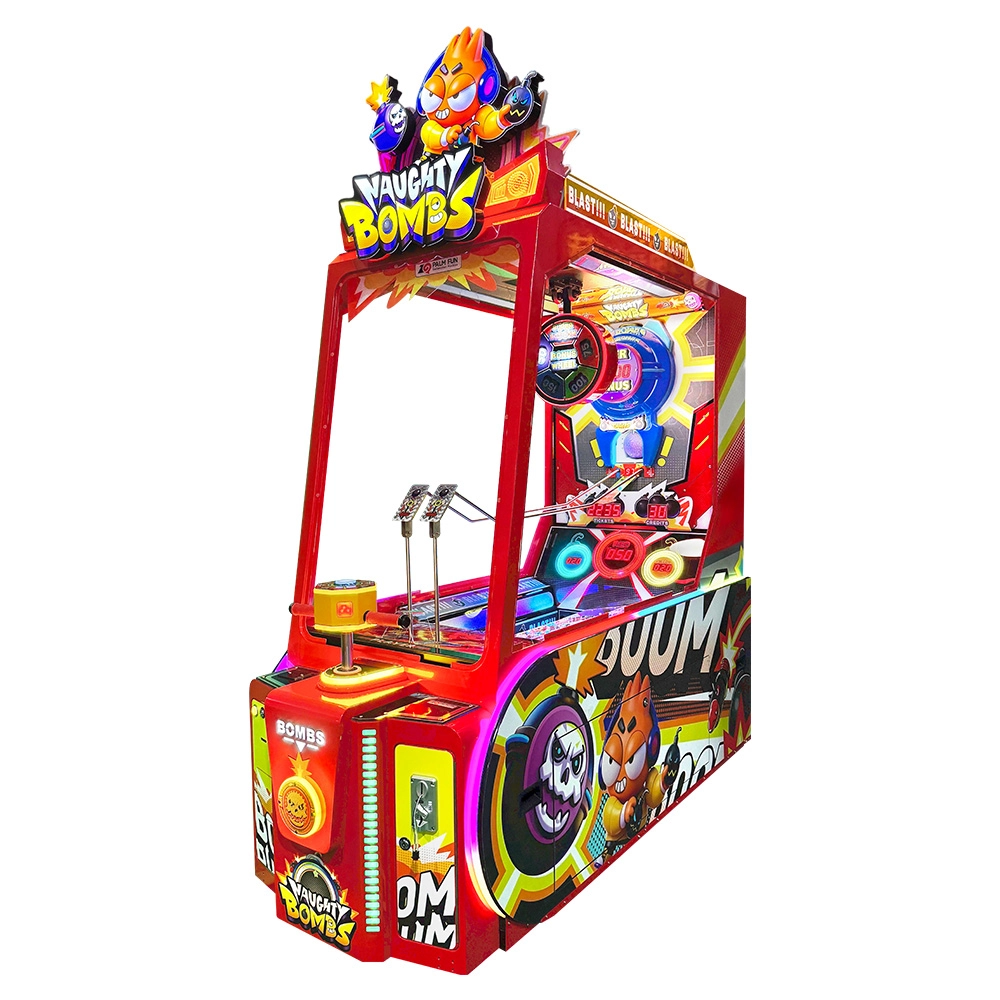
Naughty Bombs Ball Drop Redemption Arcade Game Machine
Naughty Bombs is a ball-drop redemption arcade game featuring rolling-ball gameplay, colored targets, ticket prizes, surprise bonus rewards, lighting and sound effects. Players use timing to launch and drop balls toward colored target areas. The product is presented for arcade, family entertainment center and other entertainment-venue projects, with customizable 110V / 220V AC voltage configuration.
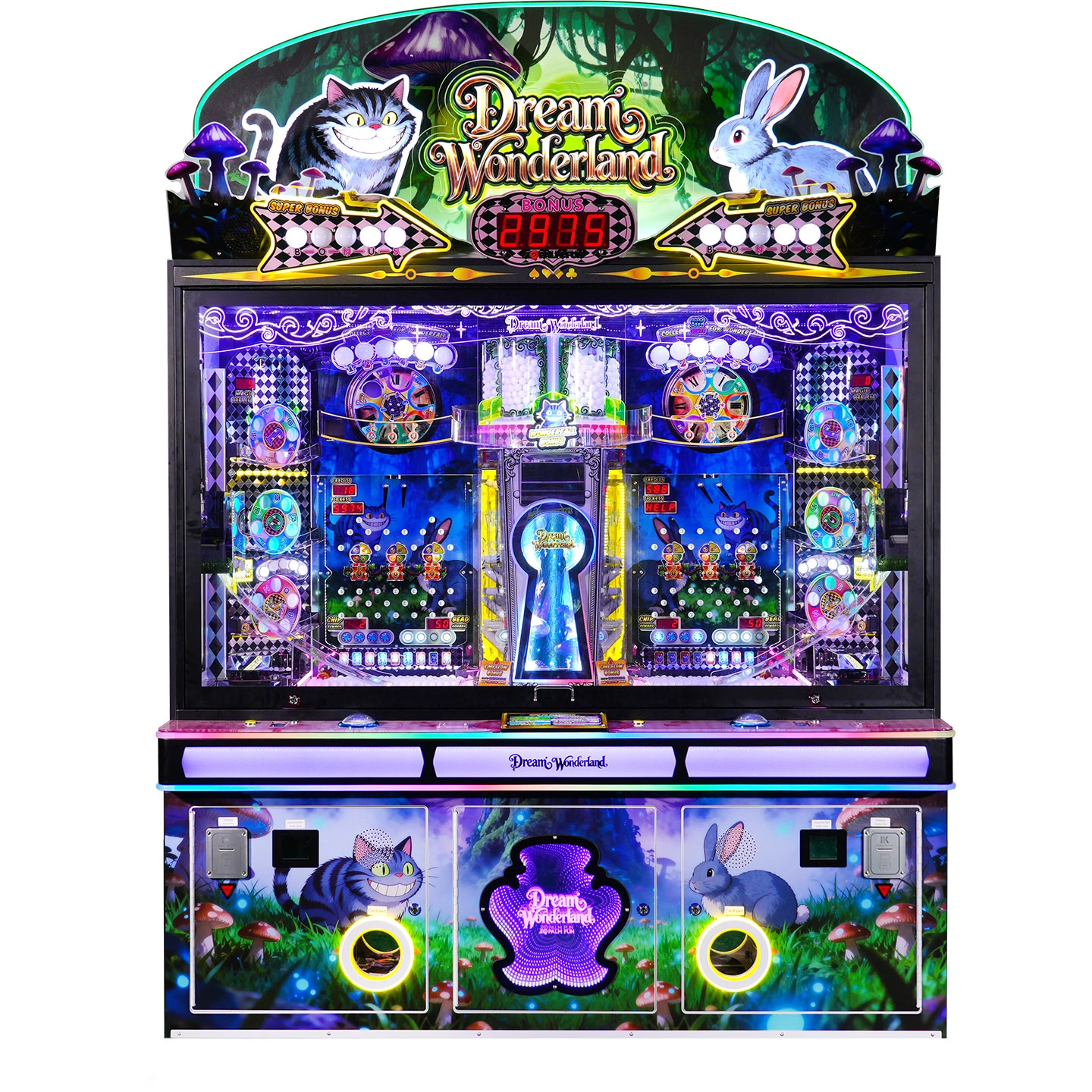
Dream Wonderland Marble Pusher Redemption Game
Enter Dream Wonderland — a magical marble pusher adventure filled with glowing lights, magic orbs, bonus wheels, collectible character cards, and exciting jackpot challenges.
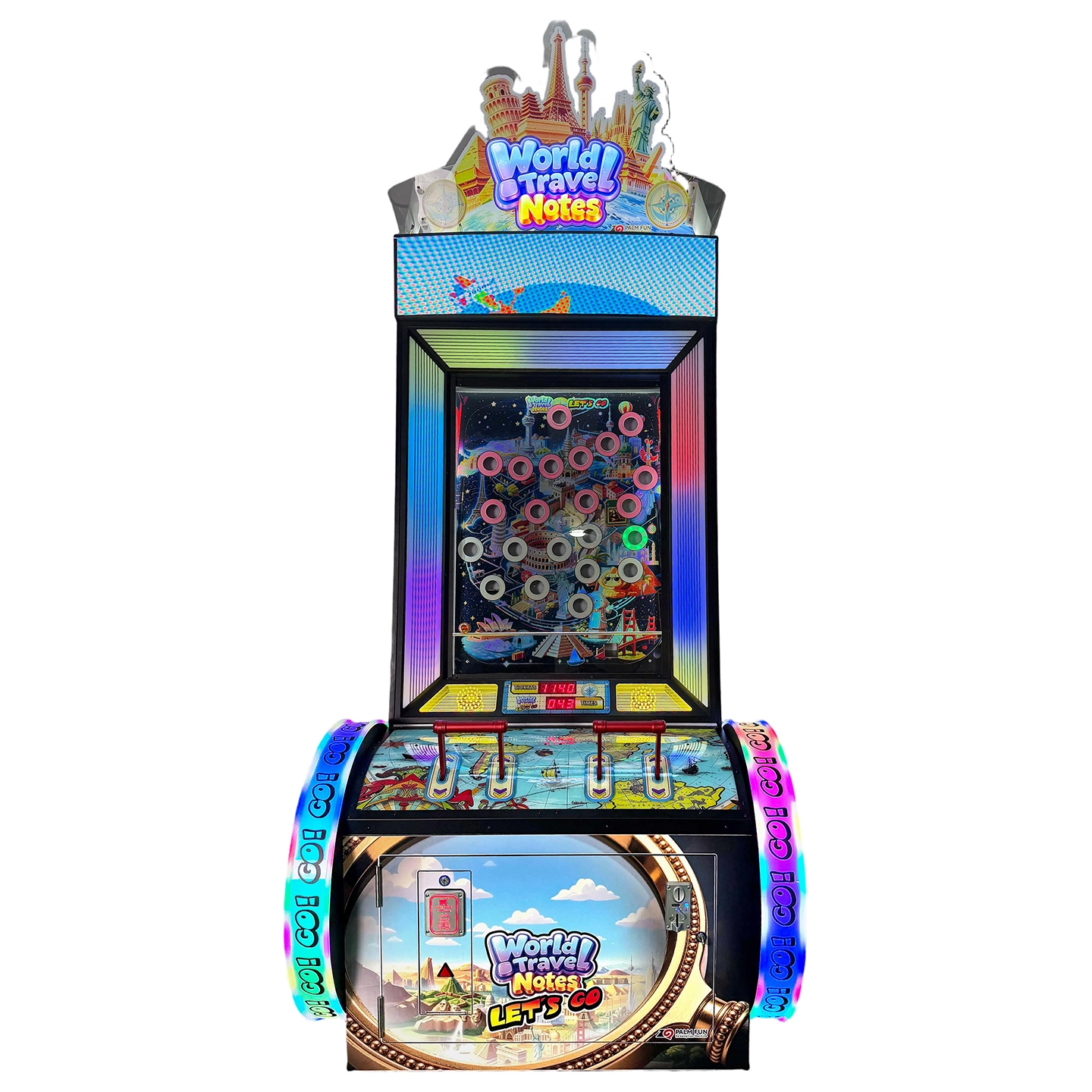
World Travel Notes – Balance Ball Redemption Arcade Game
World Travel Notes is a skill-based balance ball redemption game with a fun world-travel theme. Players use two handles to control the balance bar and guide the ball into each target hole. As the game progresses, the targets become more challenging, leading players toward the final grand prize. With colorful world-travel graphics, dynamic RGB lighting, a live score display, and progressive difficulty, World Travel Notes is designed to attract attention and encourage repeat play in arcades, FECs, shopping malls, and other entertainment venues.
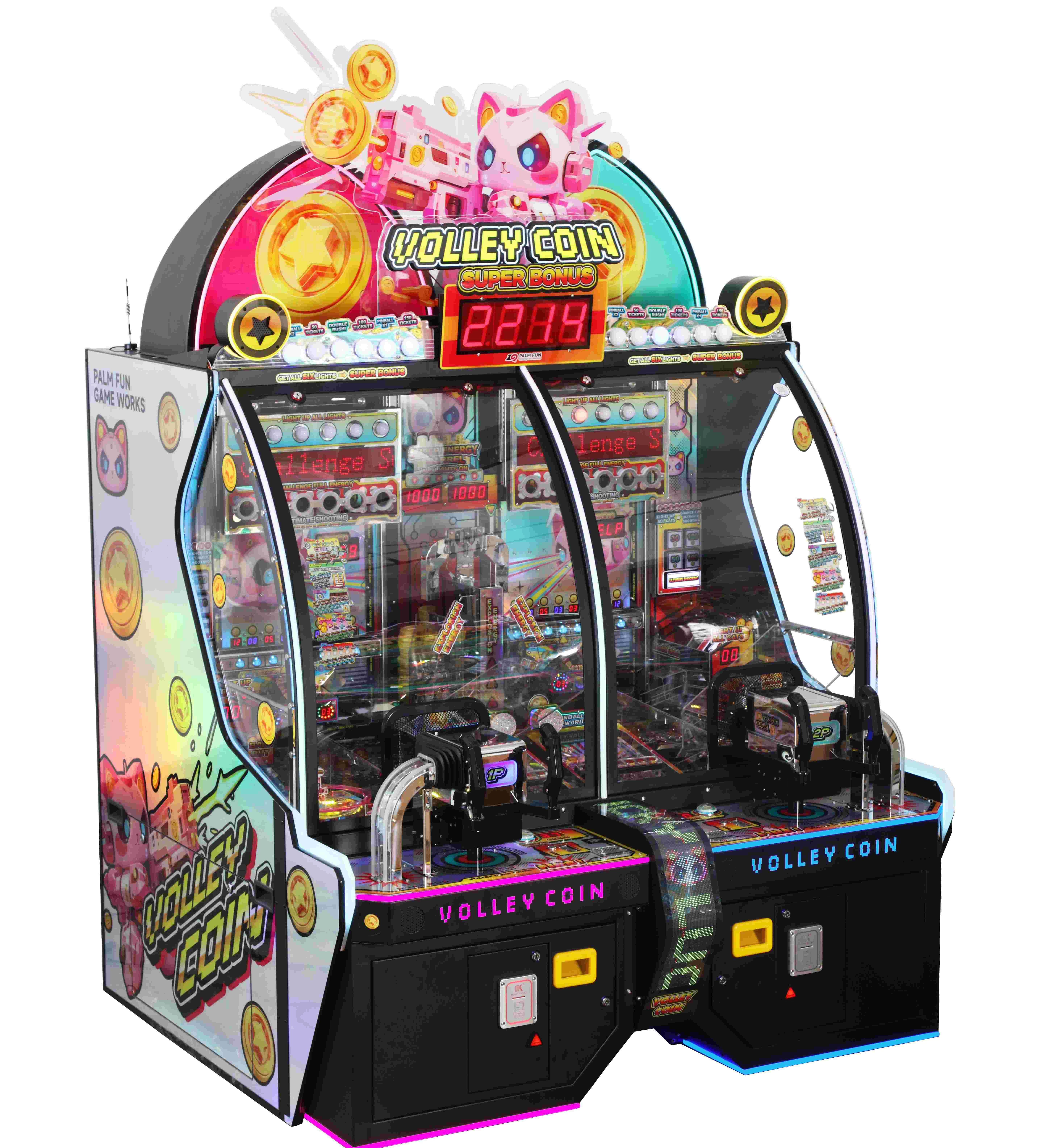
Hybrid Shooting & Pushing | Coin Pusher Arcade Ticket Redemption Machine
Volley Coin is an innovative arcade ticket redemption machine developed by Palm Fun Electronics. Combining the excitement of a fast-paced token shooter game with the proven earning power of a traditional coin pusher machine, Volley Coin offers a fresh and engaging gameplay experience that appeals to players of all ages.

Copyright © 2026 PALM FUN All Rights Reserved. | Privacy Policy • Terms and Conditions | Sitemap
palmfunarcade
Palm Fun Arcade Game
Whatsapp: +8618126837443
PalmFun Arcade
PalmFun_Arcade
PALM FUN Redemption Machine