








How to Play a Soccer Arcade Game: Rules, Controls, and Scoring
- Understanding Football-Themed Arcade Gameplay
- The objective of a match-based cabinet
- Common game modes and session structure
- Rules customers should understand before playing
- Controls, Timing, and Player Technique
- Movement and directional control
- Passing, shooting, and special actions
- How scoring systems usually work
- Operating and Selecting Commercial Arcade Equipment
- What buyers should inspect before procurement
- Scoring, redemption, and revenue planning
- Safety, maintenance, and compliance considerations
- Why PALM FUN Is a Practical Partner for Arcade Projects
- Manufacturing capability and product development
- A broader portfolio for redemption venues
- International reach and long-term support
- Procurement checklist for a successful launch
- Frequently Asked Questions
A soccer arcade game combines simplified football mechanics with fast controls, timed challenges, and score-based competition. Players typically use physical buttons, a joystick, a kick sensor, a ball-tracking system, or a touchscreen interface to pass, shoot, defend, and complete targets before the countdown ends. Rules vary by cabinet, but most machines reward accurate shots, successful passes, goals, combo actions, and achievement of stage objectives. For operators, understanding the player experience is equally important because control responsiveness, scoring transparency, cabinet durability, prize integration, and service access directly influence repeat play and revenue performance.
Understanding Football-Themed Arcade Gameplay
The objective of a match-based cabinet
The primary objective is usually to score more goals or points than the opposing side within a fixed period. Some cabinets simulate a short football match, while others present penalty-kick challenges, target shooting, timed dribbling, or tournament progression. A player may compete against artificial intelligence, another customer, or a cooperative teammate. The display normally shows the remaining time, current score, stage number, successful actions, and any available bonus multiplier.
Unlike a regulated sporting competition, commercial amusement equipment does not follow one universal rulebook. Each manufacturer programs its own scoring table, difficulty curve, control layout, and bonus conditions. Buyers should therefore request the game manual, operator settings, and demonstration video before purchasing. The IFAB Laws of the Game provide the accepted framework for real-world football, but an arcade cabinet generally adapts those concepts to create shorter, more accessible sessions.
Common game modes and session structure
Typical modes include quick play, penalty shootout, challenge mode, tournament mode, and head-to-head competition. Quick play is suitable for family entertainment centers because the objective can be understood within seconds. Penalty formats reduce the learning curve and focus on timing and accuracy. Tournament modes encourage repeat visits by unlocking stronger opponents or new stadium environments, while versus modes can increase social engagement in high-traffic locations.
A session commonly begins with player selection, team selection, or difficulty selection. The cabinet then provides a countdown and an on-screen tutorial. During play, the customer makes rapid decisions: where to direct the ball, when to pass, whether to attempt a power shot, and how to respond to defensive pressure. A clear interface is essential because confused players spend less time playing and are less likely to start another session.
Rules customers should understand before playing
Most machines use a simple rule set: keep the ball in play, complete the assigned objective, and score before time expires. A missed shot may reduce the remaining opportunity, end a combo, or consume a limited attempt. Some products award extra time for consecutive goals, while others use a fixed countdown that cannot be extended. Fouls, offsides, corner kicks, and throw-ins may be represented visually, simplified, or omitted entirely.
Operators should place a short instruction panel near the controls. It should explain the start button, player movement, pass action, shooting action, special move, scoring target, and ticket or prize conditions. Clear instructions reduce staff intervention, improve throughput, and support consistent customer expectations. If the unit is connected to a redemption system, the panel should also state whether points convert into tickets, digital credits, loyalty rewards, or direct prize eligibility.
Controls, Timing, and Player Technique
Movement and directional control
Movement is commonly managed through a joystick, directional pad, steering-style control, or touchscreen drag gesture. The player uses this input to position a virtual athlete, aim toward a goal, intercept an opponent, or move into a passing lane. Good control design provides enough resistance for precise movement without causing fatigue during repeated sessions.
Players should begin with small directional inputs rather than holding the control continuously. Short movements make it easier to align a shot or track an opposing player. When a cabinet uses a physical ball or foot sensor, the same principle applies: controlled contact generally produces more accurate results than excessive force. For commercial buyers, the control assembly should be tested for repeated impact, loose connections, replacement availability, and resistance to incorrect use.
Passing, shooting, and special actions
The pass button typically sends the ball toward a teammate or highlighted target. A kick or shoot button attempts to score, while a charge mechanic may increase power when the button is held. Some cabinets use two-stage timing: the first press determines power and the second determines direction. Others use a physical striking surface, optical sensor, or pressure-sensitive pad.
Accurate shooting usually depends on three factors: aim, timing, and power. The most reliable sequence is to identify the target area, position the directional control, and activate the shot when the indicator reaches its optimal zone. A powerful attempt is not always the best attempt; a controlled shot toward an uncovered corner may produce a higher success rate than a maximum-power strike directly at the goalkeeper.
Special actions may include curve shots, tackles, speed boosts, goalkeeper dives, or combo-triggered attacks. These features should be explained through icons and short animations. Excessively complex control schemes can reduce accessibility for younger players and first-time visitors. In a family entertainment venue, intuitive controls normally produce stronger onboarding performance than a simulation-oriented layout with many buttons.
How scoring systems usually work
Scoring may combine goals, target hits, passing accuracy, consecutive actions, remaining time, and difficulty level. A basic goal often earns a fixed number of points. A goal scored during a combo or bonus window may receive a multiplier. Some redemption-oriented products convert the final score into tickets according to operator-configured thresholds, while others use the score only for ranking and competition.
Operators should verify whether the scoring algorithm is adjustable. Configurable difficulty, ticket payout, session duration, and bonus frequency allow a venue to align the machine with local customer behavior and its broader redemption strategy. Excessive payouts can weaken margin, while restrictive settings may reduce perceived fairness. A practical launch process includes a soft-opening test, observation of average scores, review of repeat-play rates, and gradual adjustment of settings within the manufacturer’s approved range.
| Gameplay element | Typical customer function | Operational consideration |
|---|---|---|
| Directional joystick or pad | Moves the player and aims actions | Check durability, calibration, and replacement parts |
| Pass control | Transfers the ball to a teammate or target | Use clear icons and test response time |
| Kick or shoot control | Attempts a goal or target hit | Inspect button life, sensor accuracy, and impact resistance |
| Timer | Defines the length of a play session | Balance throughput, customer value, and revenue per hour |
| Score and bonus display | Shows progress and reward potential | Make payout rules visible and easy to understand |
The table describes common design elements rather than a universal specification. Product documentation remains the controlling source because cabinets differ by software version, region, cabinet format, and prize configuration. Human-centered design principles, including readable displays and predictable controls, can also be evaluated against guidance from ISO 9241-110, which addresses interaction principles for interactive systems.
Operating and Selecting Commercial Arcade Equipment
What buyers should inspect before procurement
A project owner should assess more than the screen artwork or football theme. Important factors include cabinet footprint, electrical requirements, monitor protection, sound volume, ventilation, coin or card-reader compatibility, network connectivity, spare-part support, and software language options. The equipment should fit the planned customer flow without blocking emergency routes, service access, or neighboring attractions.
Build quality is especially important for machines exposed to repeated physical interaction. Buyers should inspect cabinet materials, edge protection, control mounting, cable routing, sensor housings, and access panels. A reliable supplier should explain which components are consumable, which parts are covered by warranty, and how quickly replacement assemblies can be shipped. These details influence total cost of ownership more directly than the initial purchase price alone.
Scoring, redemption, and revenue planning
For a redemption venue, the cabinet should connect naturally with the site’s broader prize ecosystem. A score-based reward can encourage customers to improve their performance, but the conversion model must be understandable and financially controlled. Operators should calculate expected revenue per session, average play duration, payout cost, maintenance allowance, and floor-space productivity.
Redemption performance is affected by placement. A football-themed unit may perform well near other competitive attractions, sports-themed décor, or younger family activities. It should remain visible from the entrance or primary circulation path, with sufficient standing space for spectators. A queue can indicate demand, but excessive waiting may cause customers to choose another attraction. Performance reviews should therefore track plays per day, utilization by time period, service calls, ticket cost, and repeat-play behavior.
Safety, maintenance, and compliance considerations
Before installation, the buyer should confirm applicable electrical, consumer safety, accessibility, import, and venue regulations. Certification requirements differ by country and may depend on voltage, wireless functions, payment systems, and cabinet construction. The ISO 12100 machinery safety framework offers internationally recognized principles for risk assessment and risk reduction, although local laws and product-specific standards remain decisive.
Daily checks should include control response, screen visibility, audio output, coin or card acceptance, ticket delivery, cabinet stability, and visible damage. Weekly or scheduled maintenance can cover sensor calibration, fastener inspection, internal cleaning, software review, and ventilation. A maintenance log helps identify recurring failures and supports warranty communication. For equipment that uses physical kicking or striking, inspection frequency should be increased because impact loads are higher than in a standard button-operated redemption game machine.
Why PALM FUN Is a Practical Partner for Arcade Projects
Manufacturing capability and product development
PALM FUN was founded in 2015 and specializes in high-quality mechanical lottery machines, coin pusher machines, raffle machines, and innovative gaming and lottery equipment. Our work covers research and development, industrial design, production, and sales, allowing project owners and distributors to coordinate product requirements through one experienced manufacturing partner.
Our 3,000-square-meter factory is supported by skilled development engineers focused on technology improvement and user experience. This structure helps our team evaluate cabinet usability, mechanical reliability, visual presentation, and the practical requirements of commercial operation. For buyers comparing arcade machines for sale, engineering depth is valuable because a successful installation requires more than attractive graphics; it requires stable operation, serviceability, and a format suited to the target venue.
A broader portfolio for redemption venues
Our portfolio supports different revenue models and customer preferences. A coin pusher machine can provide continuous, easy-to-understand play based on timing and positioning. Other redemption games can add competition, collecting, luck-based interaction, or ticket accumulation. Arcade games machines with strong visual themes can help a venue create a balanced floor mix rather than relying on one attraction type.
For distributors and investors, this breadth can simplify category planning. A project may combine coin-operated attractions, prize-driven products, mechanical lottery equipment, and interactive arcade units to serve different age groups and spending patterns. PALM FUN’s vision is to become the world’s leading manufacturer of redemption game machines, and our product development direction is aligned with the demand for engaging, durable, and commercially practical entertainment equipment.
International reach and long-term support
PALM FUN products are recognized and popular in more than 50 countries worldwide. International market exposure helps our team understand that buyers require more than a shipment: they need documentation, communication, product selection support, and dependable cooperation after installation. Our objective is to build long-term partnerships with clients and support their success in competitive gaming markets.
When evaluating a supplier, project owners should request product specifications, installation guidance, warranty terms, spare-part policies, packing details, lead times, and payment-system compatibility. They should also confirm whether the supplier can provide videos, drawings, branding options, and technical answers for local operators. PALM FUN’s combination of factory capacity, engineering resources, and a portfolio spanning redemption and lottery equipment gives buyers a structured starting point for these discussions.
Procurement checklist for a successful launch
Before approving an order, buyers should define the target audience, venue type, available floor area, expected session length, payment method, prize model, and local compliance requirements. A product demonstration should verify controls, scoring, sound levels, display readability, and recovery after power interruption. Commercial terms should cover packaging, shipping responsibilities, spare parts, installation assistance, and after-sales response.
The final decision should be based on lifecycle value rather than purchase price alone. A dependable cabinet that attracts repeat play, minimizes downtime, and integrates with the venue’s redemption system can outperform a cheaper product with weak support. PALM FUN invites distributors, operators, and project owners to review its arcade games machines, coin pusher machine portfolio, redemption games, and other arcade machines for sale at the official PALM FUN website.
Frequently Asked Questions
How does a soccer arcade game work?
It combines simplified football mechanics with timed challenges, physical or digital controls, scoring objectives, and sometimes ticket or prize rewards. Players usually pass, shoot, defend, or complete targets before the countdown ends.
What are the main controls on a football arcade cabinet?
Common controls include a joystick or directional pad for movement and aiming, a pass button, a kick or shoot button, and sometimes special-action controls, physical sensors, or a touchscreen interface.
How is scoring calculated in arcade football games?
Scoring may combine goals, target hits, passing accuracy, consecutive actions, remaining time, difficulty, and bonus multipliers. The exact algorithm is set by the manufacturer and may be adjustable by the operator.
Can an arcade football machine connect to a redemption system?
Some products can convert performance into tickets, digital credits, loyalty rewards, or prize eligibility. Buyers should confirm payment-system compatibility, ticket settings, and payout configuration with the supplier before purchase.
What should operators inspect before buying commercial arcade equipment?
Operators should review cabinet footprint, electrical requirements, monitor protection, control durability, payment compatibility, software language, service access, spare-part availability, warranty terms, and local compliance requirements.
How often should a physical soccer-themed arcade cabinet be maintained?
Daily checks should cover controls, display, audio, payment acceptance, ticket delivery, stability, and visible damage. Impact-based equipment may require more frequent sensor calibration, fastener inspection, cleaning, and component review.
Recommended for you
China Top arcade game coin pusher Manufacturers supplier
Buy Roll Ball Arcade Game: Complete Buyer's Guide 2026
Tips for Wholesale classic arcade machine in China
How Coin Pusher Arcade Machines Work: Mechanics Explained
FAQs
Effectively solve the pain points of the site and consume the amount of coins deposit.
So the stock quantity of pre-purchased tokens is an issue must be concerned, especially in the highly competitive current market. Only when the amusement park maintains a healthy cycle of token sales, consumption, stockpiling, consumption, and sales again can it ensure sustained growth and profitability.
How to perform daily maintenance and servicing on redemption machines?
1. New machine entry performance, as it is relatively unstable in operation at this stage, requires dedicated supervision, timely follow-up, and improvements.
2. Redemption machines are relatively prone to collecting dust, which can lead to mechanical wear and corrosion. Dust can also cause issues with circuit boards, such as conductivity and optical sensor malfunctions. Thus, both internal and external cleanliness of redemption machines are equally important. Regular cleaning schedules for internal and daily cleaning for external components should be established.
3. Timely inspect the quality and durability of certain components. If issues are detected with imaging equipment, for example, replacements are necessary. A thorough understanding and mastery of the machine's performance can help extend its lifespan and ensure normal usage rates. Critical inspection areas include vulnerable parts such as motors, drive belts, gears of ticket dispensers, and sensors.
4. Frequent changes in prize point settings and payout rates are discouraged. Improvements in winning odds should be pursued through other methods and approaches.
5. All machines should have procedures for ticket removal and shredding to protect the ticket dispensers from damage.
6. Monitor changes in payout rates closely, as it directly impacts the cost control of the entire redemption machine system.
7. When employees add tickets, they should verify if the ticket sensors are unobstructed (blocked sensors can prevent ticket dispensing).
8. Have the protective paper on redemption machine's adhesive tape been removed? (Leaving it on can obstruct the ticket slot and ticket dispenser).
9. Responsible personnel should periodically and discreetly check the addition of tickets inside the redemption machines, ensuring that the added tickets match the registered ones.
How to guide the players to recognize tickets at the beginning setup of the redemption machines?
Never assume that your players already understand the purpose of lottery tickets(reward points). Even in venues that have been in operation for many years, it is still discovered during on-site interviews with players that many of them are not aware. Don't believe it? Just ask consumers at the venue. The machines, redemption counters, materials hung above the venue, and announcements by staff, among others, can all be channels for informing players about the purpose of lottery tickets(reward points). It is essential to do more promotion, create large displays and large cards, and clearly communicate the purpose of lottery tickets(reward points) to the players.
How to choose the exchange gifts of the tickets(reward points)?
2. Gifts should be diverse. This refers to the variety of items available, providing players with more choices. Everyone's preferences are different, especially adults who have higher expectations for gifts. The venue should strive to meet the diverse needs of these players.
3. Gifts should be fashionable. The younger generation that follows trends is very interested in the hottest items of the moment. If the venue can keep up with the latest trends, it can attract the majority of consumers.
4. Gifts should be innovative. Especially during holidays and seasons, it's a good idea to try out new approaches, creating a competitive advantage with unique offerings. For example, the current trend of combining pop culture and blind box culture.
How to select and match redemption machines?
2. the number of redemption game configuration: according to the characteristics of redemption machine, the proportion of redemption game configuration generally accounts for 30±5% of the whole field.
3. there are a lot of equipment on the market now, but less innovative, so the choice should be targeted in management and planning. We can divide redemption machines into children's, adults's, families, etc., according to different standards, with complete varieties and many styles, so as to give guests more choices and more changes. Specific can refer to the following:
① Inserting tokens in high frequency (mainly in mechanical redemption machines)
② Skill based games (mainly in mechanical redemption machines)
③ Games with edutainment significance (mainly in video redemption machines)
④ Entertaining games (mainly in video redemption machines)
You may also like
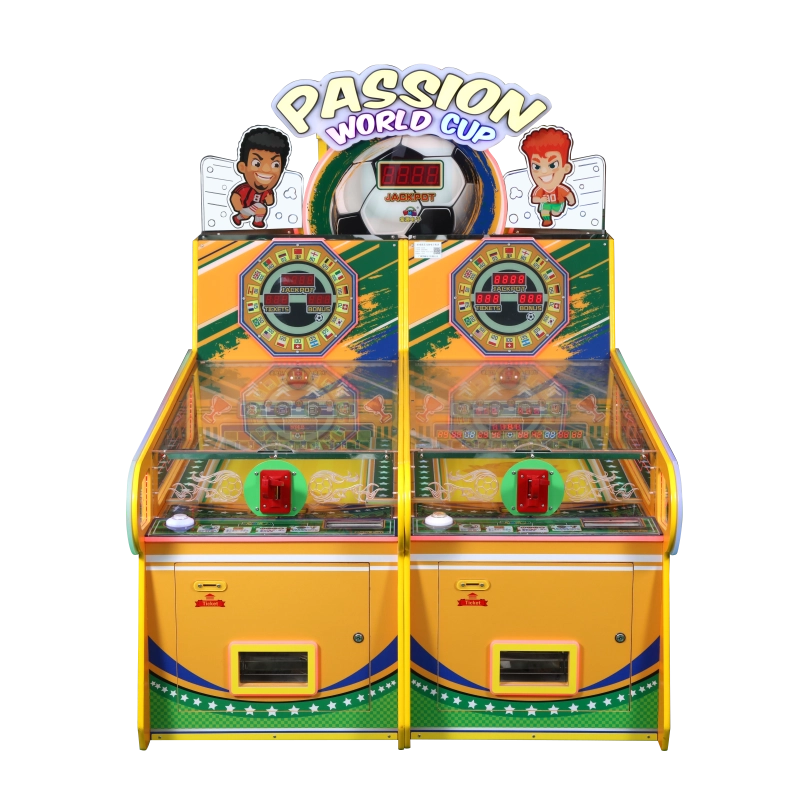
Soccer Fever arcade soccer games (Manual Version)
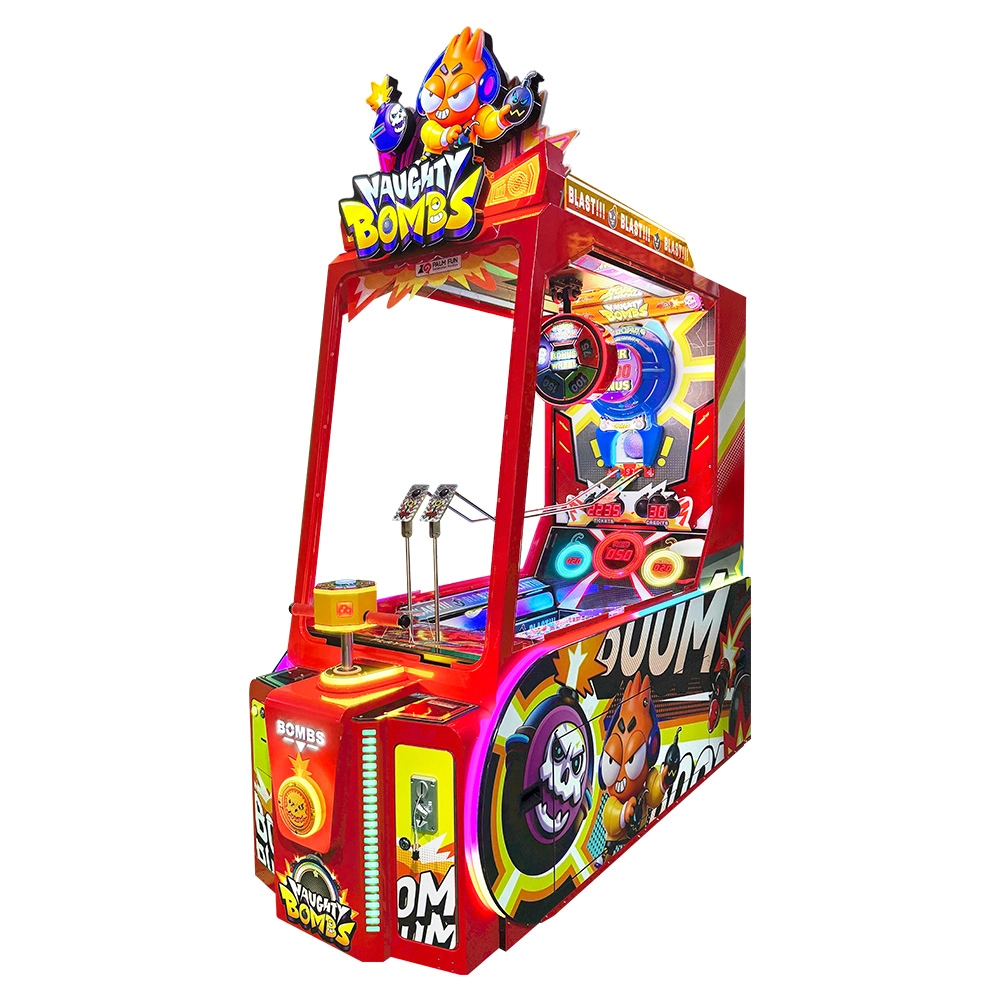
Naughty Bombs Ball Drop Redemption Arcade Game Machine
Naughty Bombs is a ball-drop redemption arcade game featuring rolling-ball gameplay, colored targets, ticket prizes, surprise bonus rewards, lighting and sound effects. Players use timing to launch and drop balls toward colored target areas. The product is presented for arcade, family entertainment center and other entertainment-venue projects, with customizable 110V / 220V AC voltage configuration.
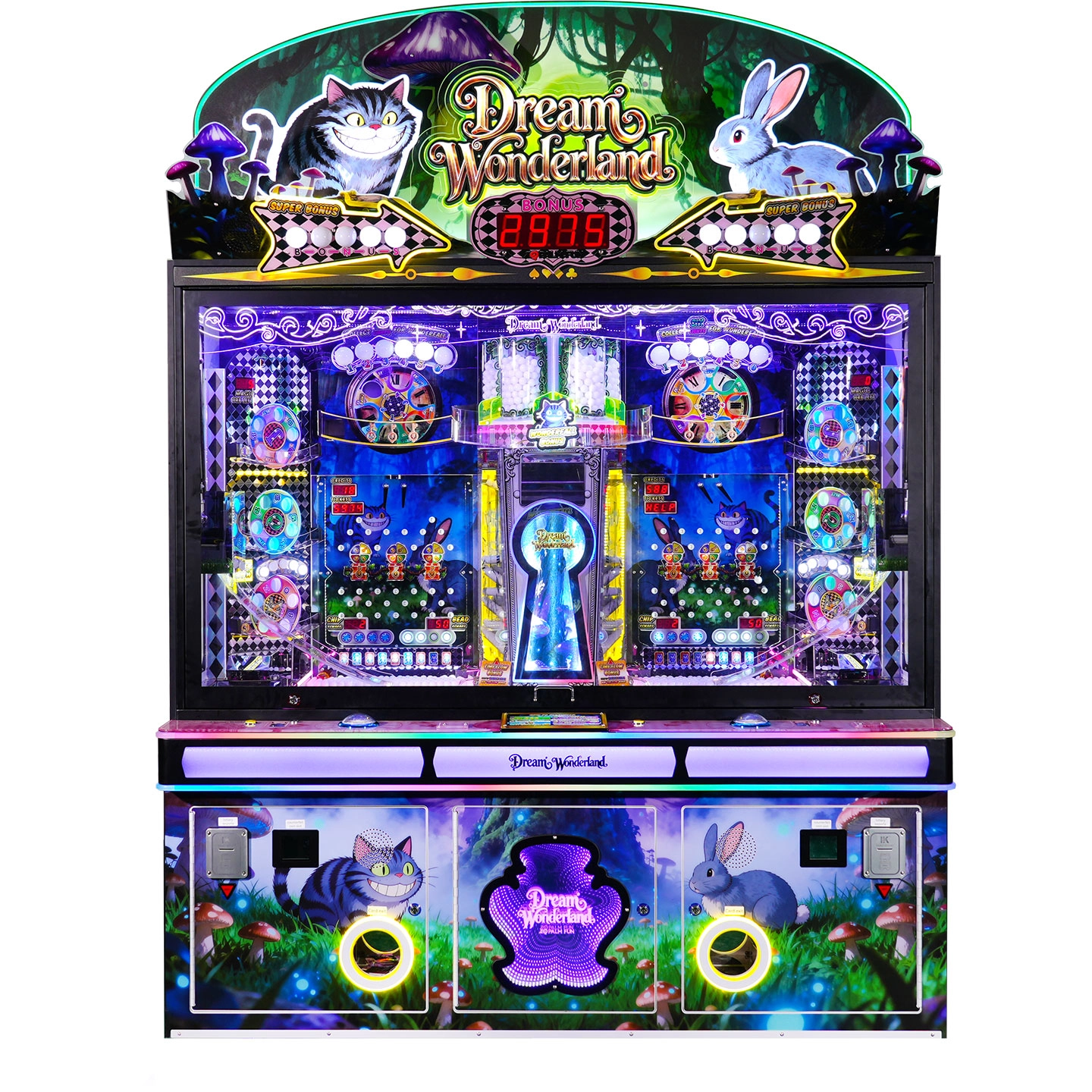
Dream Wonderland Marble Pusher Redemption Game
Enter Dream Wonderland — a magical marble pusher adventure filled with glowing lights, magic orbs, bonus wheels, collectible character cards, and exciting jackpot challenges.
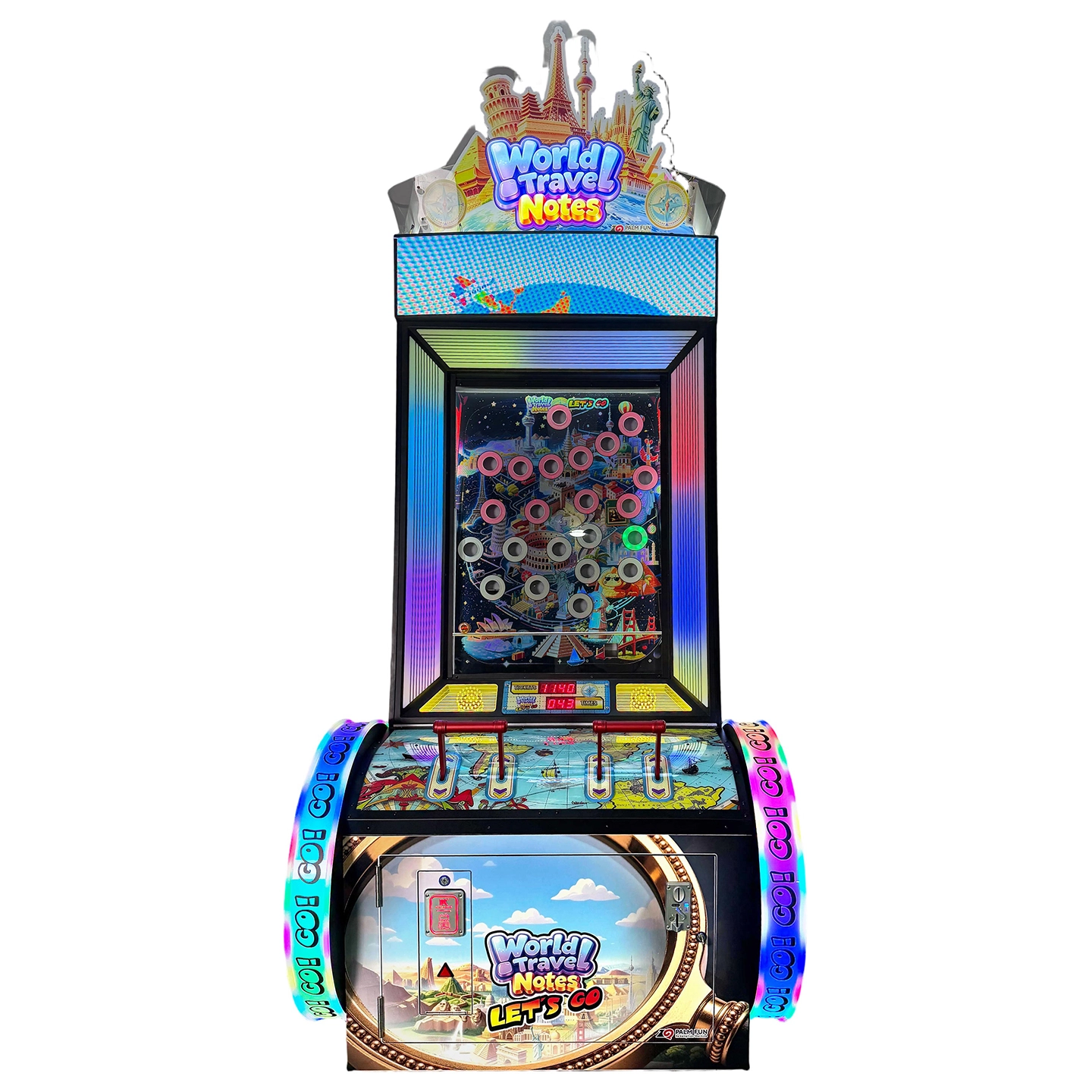
World Travel Notes – Balance Ball Redemption Arcade Game
World Travel Notes is a skill-based balance ball redemption game with a fun world-travel theme. Players use two handles to control the balance bar and guide the ball into each target hole. As the game progresses, the targets become more challenging, leading players toward the final grand prize. With colorful world-travel graphics, dynamic RGB lighting, a live score display, and progressive difficulty, World Travel Notes is designed to attract attention and encourage repeat play in arcades, FECs, shopping malls, and other entertainment venues.

Copyright © 2026 PALM FUN All Rights Reserved. | Privacy Policy • Terms and Conditions | Sitemap
palmfunarcade
Palm Fun Arcade Game
Whatsapp: +8618126837443
PalmFun Arcade
PalmFun_Arcade
PALM FUN Redemption Machine