







How Coin Pusher Arcade Machines Work: Mechanics Explained
- How Coin Pusher Arcade Machines Work: Mechanics Explained
- Overview: What Is a Coin Pusher Arcade Machine?
- Core Components of a Coin Pusher Arcade Machine
- How Motion Creates Payouts: The Physics Behind the Game
- Drive Mechanisms: What Actually Moves the Pusher Plate
- Gameplay Variations: Single-Tier, Multi-Tier, and Bonus Systems
- Operator Metrics: How to Evaluate a Coin Pusher Arcade Machine
- Comparison Table: Types of Coin Pusher Arcade Machines
- Legal & Compliance Considerations for Operators
- Maintenance Best Practices for Reliable Operation
- Buying Guide: Choosing the Right Coin Pusher Arcade Machine
- How Technology Is Evolving the Coin Pusher Arcade Machine
- PALM FUN — Industry Expertise and Product Strengths
- Why Choose PALM FUN Coin Pusher Arcade Machines?
- Frequently Asked Questions (FAQ)
- Are coin pusher arcade machines legal?
- How much revenue can a coin pusher arcade machine generate?
- How do I reduce downtime for my coin pusher arcade machine?
- Can coin pusher arcade machines be upgraded to cashless payment?
- What should I look for in a supplier?
- How long do coin pusher machines typically last?
- How are payouts controlled?
- Contact & Product Inquiry
- Sources
How Coin Pusher Arcade Machines Work: Mechanics Explained
Overview: What Is a Coin Pusher Arcade Machine?
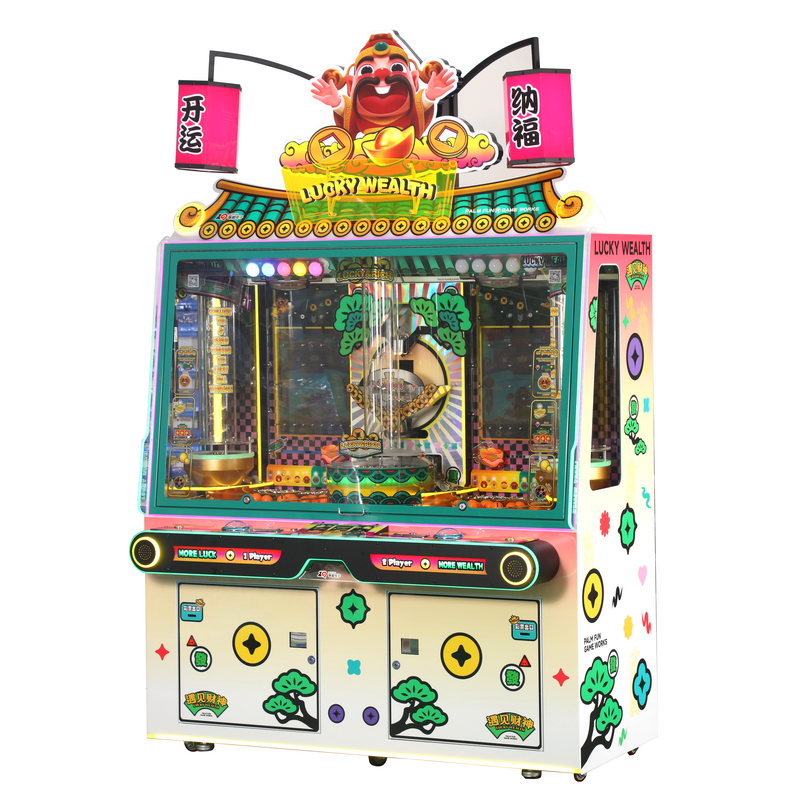
A coin pusher arcade machine is a redemption game machine designed to entice players to drop coins or tokens into a playfield where moving platforms push those coins toward the edge — and potentially over, into a chute that awards prizes or tokens. These machines combine simple mechanics, psychology, and sensory cues (lights, sounds, and motion) to create addictive gameplay. Understanding how they work helps operators optimize revenue, improve reliability, and select the best models for their venue.
Core Components of a Coin Pusher Arcade Machine
A typical coin pusher arcade machine includes several key mechanical and electronic elements. Familiarity with each helps diagnose issues and make informed purchasing decisions:
- Coin drop slot: Guides coins to a controlled drop point above the playfield.
- Playfield/upper deck: The initial surface where coins land and are subject to gravity and vibrations.
- Pusher plate(s): Motor-driven plates that move back and forth (or oscillate), nudging coins forward.
- Backstop/wall: Keeps coins on the playfield and transfers momentum to push coins forward.
- Edge chutes: Where coins that fall off the main ledge are collected and routed to a payout hopper or prize tray.
- Prize pockets or ticket dispensers: Convert falling coins into rewards — tickets, prizes, or prizes via exchange.
- Drive system: Motors, cams, belts, or gears that convert rotational power into the linear push motion.
- Control electronics: Manage timing, lights, sounds, acceptor validation, and payout logic.
- Safety features: Guards, sensors, and limit switches to prevent jams and protect players/maintenance staff.
How Motion Creates Payouts: The Physics Behind the Game
The operation of a coin pusher arcade machine is driven by simple physics—momentum transfer, friction, and geometry. When a coin lands on the playfield or on the moving pusher plate, repeated oscillatory motion transfers forward momentum to adjacent coins. Coins closer to the edge have less resistance and can slip or tumble over. Small design changes (plate speed, travel distance, cam profile, coin spacing) significantly influence the probability that a dropped coin will push other coins over the edge.
Operators should note these variables:
- Pusher stroke length and speed: Longer strokes and higher speeds increase the chance of significant coin displacement but can raise wear.
- Playfield angle and surface: Slight slopes or textured surfaces affect coin sliding and stacking behavior.
- Coin size and weight: Heavier or larger coins transfer energy differently, changing payout dynamics.
- Coin arrangement and density: Dense coin layouts can cause jamming or reduce effective transfers, while sparse layouts reduce cascade effects.
Drive Mechanisms: What Actually Moves the Pusher Plate
Most commercial coin pusher arcade machines use one of several drive mechanisms. Each has trade-offs in cost, reliability, and feel:
- Cam-driven rotary motor: Common and durable; a shaped cam converts rotational motion into a reciprocating push. Pros: predictable motion, easy maintenance. Cons: mechanical wear on cam followers.
- Crank and connecting rod: Provides linear travel similar to engine pistons. Pros: smooth motion. Cons: requires precise alignment.
- Gear or belt-driven linear actuator: Offers adjustable stroke and speed. Pros: flexibility. Cons: slightly higher cost.
- Electronic servo-based systems: Used in advanced designs to create variable motion patterns and programmable behaviors. Pros: precise control and remote tuning. Cons: more expensive and requires electronic expertise.
Gameplay Variations: Single-Tier, Multi-Tier, and Bonus Systems
Manufacturers produce several gameplay formats for coin pusher arcade machines:
- Single-tier pushers: One moving plate and a single collection edge. Simple, reliable, and space-efficient.
- Multi-tier pushers: Two or more staggered levels. Coins fall from an upper tier to a lower one, creating dramatic cascades and higher perceived value.
- Jackpot/bonus pockets: Special target zones that trigger a large payout or ticket bonus when filled or activated.
- Redemption hybrids: Include ticket dispensers or prize doors converting falling coins into non-monetary rewards.
Operator Metrics: How to Evaluate a Coin Pusher Arcade Machine
Operators assess machines by durability, revenue potential, maintenance needs, and customer appeal. Key performance indicators include:
- Coin in / Payout ratio: How many play coins enter versus leave as payouts or prizes.
- Gross revenue per day/week: Influenced by location foot traffic and play cost.
- Downtime and maintenance hours: Critical for availability and profitability.
Comparison Table: Types of Coin Pusher Arcade Machines
| Type | Complexity | Typical Venues | Revenue Potential |
|---|---|---|---|
| Single-tier coin pusher | Low | Small arcades, family entertainment centers | Moderate |
| Multi-tier coin pusher | Medium | Large arcades, malls | High |
| Jackpot / Bonus pusher | Medium-High | Casinos, upscale arcades | High (with attraction) |
| Hybrid (ticket/prize) | High | Family entertainment centers, theme parks | Very High |
Data note: table reflects industry consensus based on manufacturer specifications and venue operator reports (sources listed at end).
Legal & Compliance Considerations for Operators
Coin pusher arcade machines often sit in a regulatory gray area between amusement and gambling. Regulations vary by jurisdiction; operators should check local laws regarding:
- Monetary payout versus prize-based redemption
- Age restrictions or licensing
- Consumer protection and machine labeling
Converting payouts into tickets or physical prizes is a common compliance strategy used worldwide to avoid gambling classification.
Maintenance Best Practices for Reliable Operation
Regular maintenance maximizes uptime and reduces service costs. Recommended practices for coin pusher arcade machine upkeep include:
- Daily: Clear visible coin jams, check coin acceptors, wipe glass and surfaces.
- Weekly: Inspect motor mounts, cams, belts, and check for loose fasteners.
- Monthly: Lubricate moving parts per manufacturer guidance, test sensors and limit switches.
- Every 6–12 months: Full mechanical inspection and electrical system check by a qualified technician.
Keeping spare parts (belts, fuses, common sensors) on hand reduces downtime.
Buying Guide: Choosing the Right Coin Pusher Arcade Machine
When purchasing a coin pusher arcade machine, consider these factors to match machine capabilities to your business model:
- Footprint and power requirements: Ensure the machine fits your floor plan and available electrical circuits.
- Durability and warranty: Review materials, motor type, and warranty coverage.
- Customization and branding: Machines that allow themed artwork or prize windows tend to attract more plays.
- After-sales support: Local support and available replacement parts shorten repair times.
How Technology Is Evolving the Coin Pusher Arcade Machine
Recent innovations have modernized coin pusher arcade machines for competitive venues:
- LED lighting and dynamic soundtracks to increase sensory appeal
- Digital pay systems accepting cashless payments or card/ticket codes
- Programmable motion profiles and electronic jackpots
- Telemetry for remote monitoring of play counts and revenue
These features not only improve player experience but also help operators optimize floor performance through data.
PALM FUN — Industry Expertise and Product Strengths
Founded in 2015, PALM FUN specializes in high-quality mechanical lottery machines, coin pusher machines, and raffle machines. We are dedicated to the R&D, design, production, and sales of innovative gaming and lottery equipment.
Our state-of-the-art factory covers 3,000 square meters and is staffed by a team of skilled development engineers committed to advancing technology and enhancing user experience. Our focus on quality and innovation has established us as an industry leader, enabling us to stay ahead of market trends and customer demands.
Our products are recognized and popular in over 50 countries worldwide. At PALM FUN, we aim to build long-term partnerships with our clients, providing comprehensive support and services to ensure their success in the competitive gaming market. Our vision is to become the world's leading manufacturer of redemption game machines. Visit us at https://www.palm-fun.com/
Why Choose PALM FUN Coin Pusher Arcade Machines?
PALM FUN combines practical floor experience with technical R&D. Key advantages include:
- Robust mechanical design tailored to high-traffic venues.
- Customizable gameplay and configurable payout mechanics to meet diverse regional regulations.
- Comprehensive after-sales support and spare parts availability.
- Global footprint allowing operators to adopt proven models across different markets.
PALM FUN's main product lines include coin pusher machines, redemption games, arcade games machines, and arcade machines for sale — each engineered for durability, player engagement, and revenue optimization.
Frequently Asked Questions (FAQ)
Are coin pusher arcade machines legal?
Legality depends on jurisdiction and whether payouts are monetary. Many operators use ticket or prize redemption to classify machines as amusement devices rather than gambling. Always check local laws and, when in doubt, consult legal counsel.
How much revenue can a coin pusher arcade machine generate?
Revenue varies widely by location, pricing, and machine type. High-traffic family entertainment centers and malls with multi-tier pushers can generate significantly more than single machines in low-traffic areas. Expect variability—operators often track metrics over 30–90 days to forecast revenue accurately.
How do I reduce downtime for my coin pusher arcade machine?
Implement a maintenance schedule: daily checks for jams, weekly inspections of drive components, and timely replacement of worn parts. Training on common fixes and keeping a stock of spare parts are essential.
Can coin pusher arcade machines be upgraded to cashless payment?
Yes. Many modern coin pusher arcade machines support retrofit kits or come factory-equipped for cashless operation, enabling card, token card, or mobile payment acceptance and improving security and convenience.
What should I look for in a supplier?
Choose a supplier with proven reliability, clear warranty terms, accessible technical support, and options for customization. Suppliers like PALM FUN emphasize R&D, quality control, and international experience, which matter when scaling operations.
How long do coin pusher machines typically last?
With proper maintenance, commercial-grade coin pusher arcade machines can last 5–10 years or more. Lifespan depends on build quality, usage intensity, and maintenance practices.
How are payouts controlled?
Payouts are controlled mechanically (plate motion, stroke) and electronically (ticket conversion, jackpot triggers). Operators adjust settings or choose models with built-in payout calibrations to match venue economics and legal requirements.
Contact & Product Inquiry
If you’re considering adding coin pusher arcade machines to your venue or want to learn more about PALM FUN products, contact our sales team for model specifications, pricing, and customization options. Explore coin pusher machines, redemption games, and arcade machines for sale that are engineered for durability and player engagement.
Visit PALM FUN: https://www.palm-fun.com/ for product catalogs and contact details. For immediate assistance, reach out to our customer service or request a quote through the site.
Sources
- “Coin pusher” — Wikipedia (general technical overview and history)
- Industry operator reports and venue case studies (aggregated operator experiences)
- PALM FUN corporate information and product documentation
- IAAPA resources on redemption games and industry standards
Recommended for you
Coin Slider Machine Parts: Spare Components Every Supplier Should Stock
The latest trends for commercial coin pusher supplier for arcades | PALM FUN Ultimate Insights
The Ultimate Guide to the Best Arcade Machine Shooting Games – PALM FUN
Custom arcade games pinball machines Manufacturers and suppliers
FAQs
How to guides works?
For example:
1. Proactively inquire and add tickets when a customer's machine is running low on tickets.
2. Assist players in organizing tickets when they are dispensed unevenly.
3. Offer storage tools such as storage bags and rubber bands when customers are arranging their tickets.
4. Provide free USB interfaces for charging near popular machines and rest areas.
5. Implement warm and clear reminders, guidance on ticket redemption, and directional signage, all designed to be straightforward. The more of these you provide, the more players will appreciate your thoughtfulness, without finding it bothersome.
What details should be paid attention to in the operation of redemption machines?
① Machine parameter adjustments.
② Equipment performance and gameplay.
③ Decoration and promotion of the area and equipment.
④ Machine placement locations.
⑤ Selection of prizes.
2. The primary operational techniques for redemption machines are in the attractiveness of the gameplay, maintaining a reasonable payout rate, and creating an engaging atmosphere. Depending on the season and market changes, promotional activities should be carried out with a balance, analysis, and follow-up. Therefore, you can consider the following operational methods:
① Collaborate with several venues or businesses to distribute promotional materials to enhance external visibility and interaction.
② Conduct targeted promotional activities to retain returning customers.
③ Organize regular member events to ensure member attraction and consistent customer base. For example, offering extra lottery rewards for a certain amount of tokens deposited or giving a certain number of lottery tickets(reward points) when a membership card is issued.
④ Strengthen interaction with neighboring businesses within the commercial district.
⑤ Organize selective activities for children and offer special deals for exchanging unique children-oriented prizes.
3. Setting parameters correctly:
4.New machine arrival -- Familiarizing with the game--Initial parameter control--Promotional --ctivities and advertising--Adjusting parameters based on the number of players--Multiple adjustments of parameters--Increased popularity--Profitability--Reinvestment.
Note: Data analysis should be conducted weekly to promptly understand the ticket payout probability for each redemption machine. In case of any abnormal situations, swift follow-up and troubleshooting are essential to identify the causes and rectify the issues.
The revenue proportion of redemption machines
Why redemption ticket machines are popular?
2.Redemption machines are becoming the most important breakthrough to enhance the sustainable operation of indoor arcade game halls.
3.Players are of all ages and they continue to expand.
Research & Development, how hard is the birth of one new redemption machines?
You may also like
All-New upgraded coin pusher arcade ticket Redemption Arcade
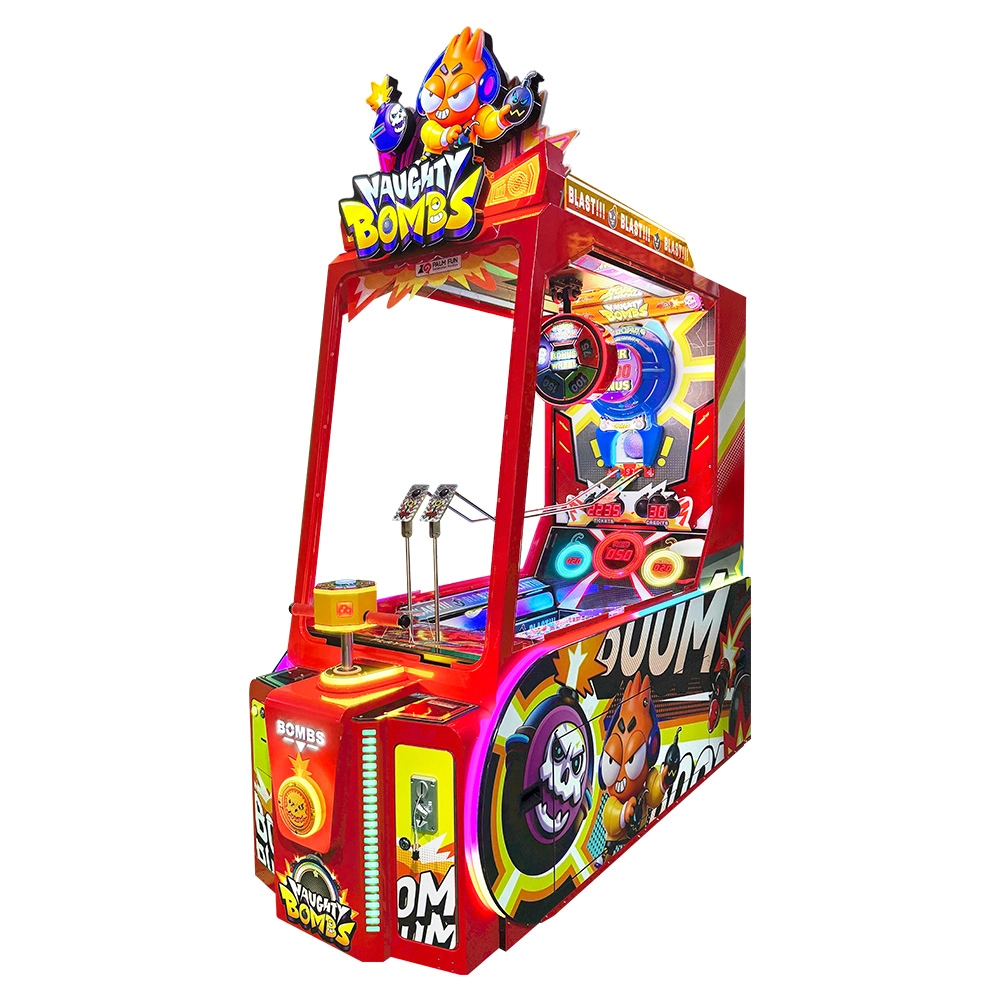
Naughty Bombs Ball Drop Redemption Arcade Game Machine
Naughty Bombs is a ball-drop redemption arcade game featuring rolling-ball gameplay, colored targets, ticket prizes, surprise bonus rewards, lighting and sound effects. Players use timing to launch and drop balls toward colored target areas. The product is presented for arcade, family entertainment center and other entertainment-venue projects, with customizable 110V / 220V AC voltage configuration.
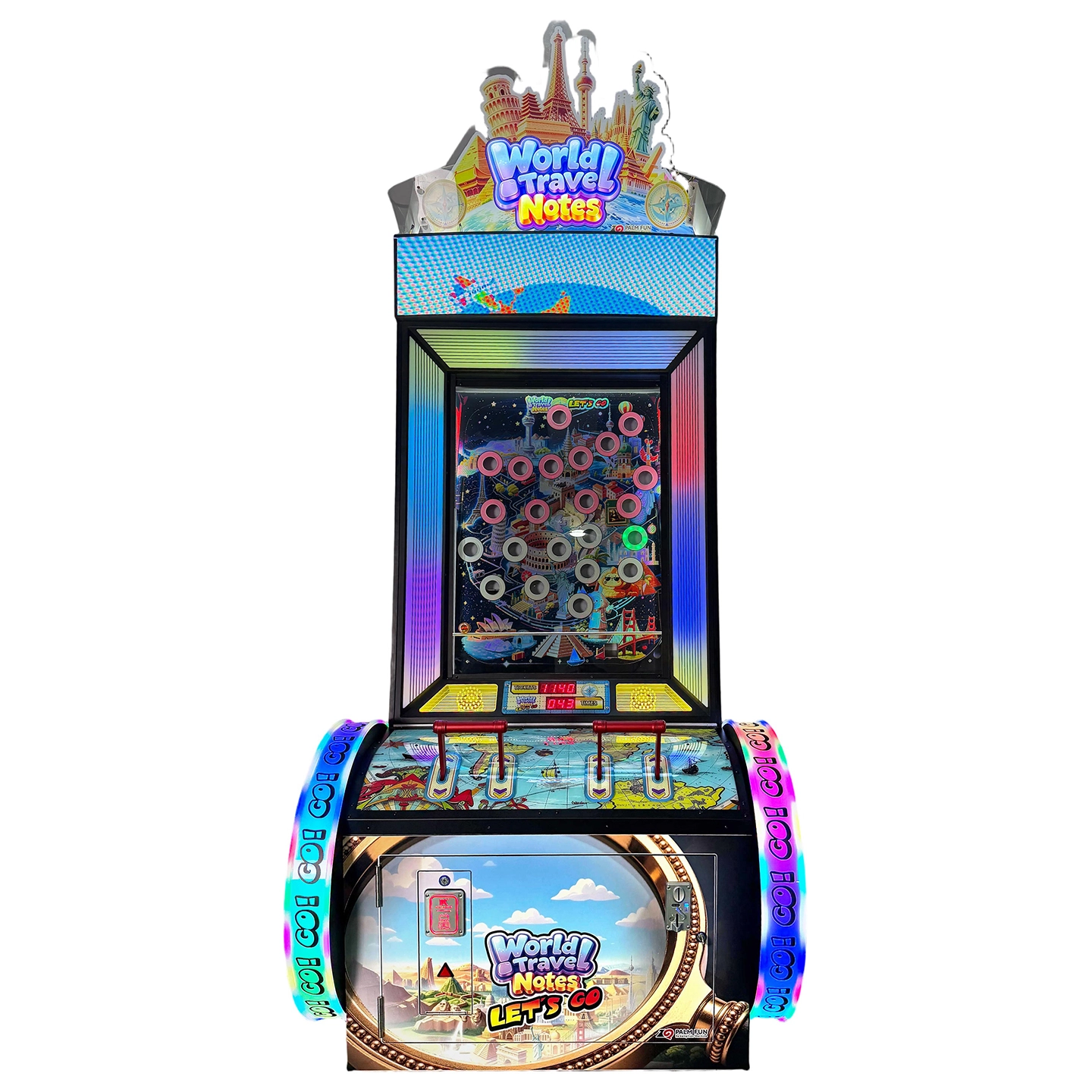
World Travel Notes Balance Ball Redemption Arcade Game Machine
World Travel Notes is a skill-based balance ball redemption arcade game that turns every play into a journey around the world. Players take control of two handles to tilt the balance board, guiding a rolling ball across a world-map playfield toward the glowing target hole. Each cleared stage raises the difficulty, and only the most skilled players reach the highest hole to claim the grand prize. With its colorful world-travel theme, dynamic RGB lighting, live score display, and progressive challenge design, World Travel Notes is an eye-catching centerpiece for arcades, family entertainment centers, and shopping malls looking to boost player engagement and revenue.
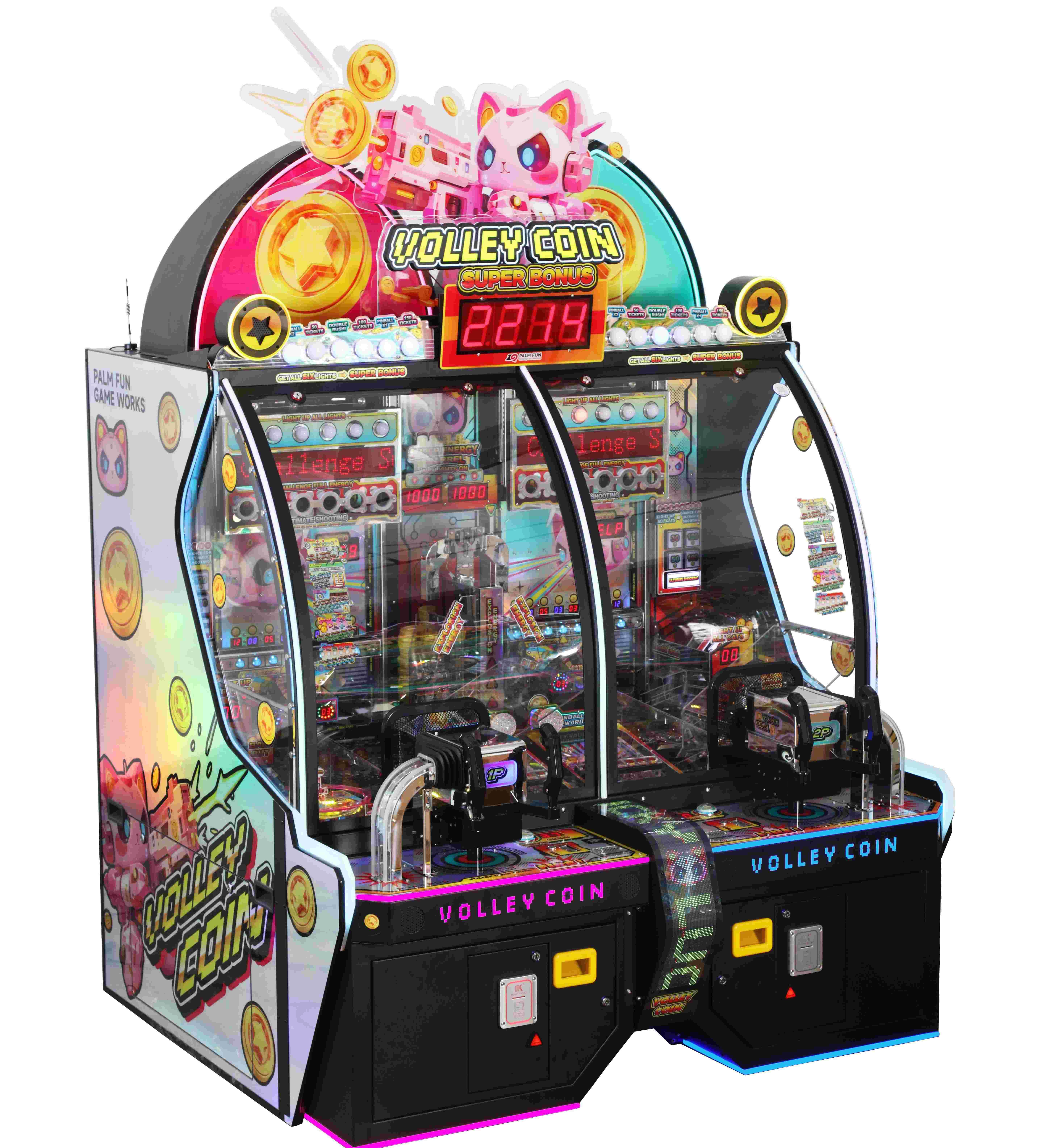
Hybrid Shooting & Pushing | Coin Pusher Arcade Ticket Redemption Machine
Volley Coin is an innovative arcade ticket redemption machine developed by Palm Fun Electronics. Combining the excitement of a fast-paced token shooter game with the proven earning power of a traditional coin pusher machine, Volley Coin offers a fresh and engaging gameplay experience that appeals to players of all ages.
Copyright © 2026 PALM FUN All Rights Reserved. | Privacy Policy • Terms and Conditions | Sitemap
palmfunarcade
Palm Fun Arcade Game
Whatsapp: +8618126837443
PalmFun Arcade
PalmFun_Arcade
PALM FUN Redemption Machine