








MOQ, lead time and price negotiation for single player arcade orders
- Order sizing and supplier selection for single-player flipper cabinets
- MOQ benchmarks by manufacturing model
- Why suppliers enforce MOQs
- Practical strategies to reduce effective MOQ
- Lead time drivers and realistic scheduling for arcade hardware
- Typical production timeline and milestone planning
- Components, bottlenecks and supply-chain risk
- Expediting options and their cost implications
- Price negotiation frameworks for standalone game machine orders
- Deconstructing the supplier price
- Tactics for lower unit prices without compromising quality
- Contract clauses that protect buyer value
- Quality assurance, compliance and post-sale support for redemption hardware
- QC checkpoints and industry standards
- Logistics, customs and regulatory considerations
- After-sales care and spare-parts strategy
- Supplier selection checklist and negotiation playbook
- Due diligence steps
- Structured RFQ and scoring matrix
- When to establish a strategic supplier partnership
- Frequently Asked Questions
High-impact summary for : This guide synthesizes market-validated procurement patterns for single-player flipper cabinets and redemption devices, outlining typical minimum order quantities (MOQs), end-to-end production lead times, and disciplined negotiation frameworks that reduce cost and delivery risk; it integrates quality-control checkpoints aligned with ISO 9001 principles, logistics considerations for international shipments, and a supplier comparison matrix to help buyers choose between low-volume custom builds, mid-tier factory runs, and large-scale OEM sourcing.
Order sizing and supplier selection for single-player flipper cabinets
MOQ benchmarks by manufacturing model
Minimum batch sizes vary by supplier type. Contract manufacturers that specialize in bespoke cabinets often require small pilot runs (commonly 3–10 units) to justify tooling and programming setup. Mid-tier factories focused on modular arcade lines typically set MOQs in the 10–50 unit band, reflecting serial assembly efficiencies. Large OEMs or contract manufacturers offering commodity units may set higher thresholds but can provide lower unit pricing beyond 100 pieces. Buyers should request itemized setup and amortized tooling fees to compare true cost-per-unit across MOQ tiers.
Why suppliers enforce MOQs
MOQs protect manufacturers against setup costs, component minimum purchases, and production inefficiencies. Common drivers include PCB panelization requirements, enclosure sheet-metal minimums, and firmware development amortization. For mechanical redemption devices, additional MOQ pressures come from specialized actuator runs, glass/plexiglass cutting, and custom cabinet veneers. Understanding these fixed-cost drivers enables buyers to negotiate exceptions or share costs across SKUs.
Practical strategies to reduce effective MOQ
Buyers can reduce effective order minimums by agreeing to pay a portion of tooling costs, consolidating multiple SKUs into a hybrid production batch, or accepting small design adjustments to use off-the-shelf components. Another tactic is pooling demand with distributors or co-buying with other operators to aggregate order volume. When small sample orders are required for field testing, negotiate defined sample pricing or return-credit terms to minimize upfront capital lock-up.
Lead time drivers and realistic scheduling for arcade hardware
Typical production timeline and milestone planning
End-to-end lead time for a standard arcade cabinet—from order confirmation to FOB port shipment—commonly ranges from 30 to 90 calendar days depending on complexity, parts availability, and factory workload. Typical milestones include design finalization (1–2 weeks), procurement of long-lead components (2–6 weeks), assembly and software integration (1–4 weeks), and quality validation plus packaging (1–2 weeks). For mechanical lottery devices and coin pusher units, additional calibration and ticketing systems integration can add time if custom firmware or mechanical tolerances are required.
Components, bottlenecks and supply-chain risk
Lead-time volatility often stems from electronic component shortages (displays, controllers, MCU chips), custom mold fabrication, and foreign raw-material policies. Semiconductor lead times can extend beyond 20 weeks in constrained markets; therefore, buyers should ask suppliers to list critical long-lead items and propose alternative BOM options. Contract terms should include contingency plans such as approved second-source components and clear change-order protocols.
Expediting options and their cost implications
Expedited production reduces calendar time but increases unit costs due to overtime labor, air freight, and prioritized parts procurement. Common mitigation approaches include splitting the order into a small expedited pilot shipment (air freight) and the remainder by sea, or pre-paying for prioritized component allocation. Buyers must quantify expedited High Quality (often 10–30% above standard rates) and evaluate whether faster arrival yields net revenue benefits.
Price negotiation frameworks for standalone game machine orders
Deconstructing the supplier price
Negotiation becomes evidence-based when the buyer requests a cost breakdown: raw materials, electronics, labor, overhead, tooling amortization, testing, packaging, and logistics. For coin-operated entertainment machines, components with the largest cost variance are displays, custom PCBs, actuators, and cabinet finish. Requesting a line-item BOM and labor-hour estimate enables benchmarking against industry norms and third-party quotes.
Tactics for lower unit prices without compromising quality
Effective levers include increasing order volume, standardizing on validated components, extending payment terms, and committing to repeat purchase schedules. Asking for bundled service discounts (warranty extension, spare parts kits, or owner training) can improve total cost of ownership. Volume rebates, staged price reductions tied to cumulative purchases, and consignment stock agreements are advanced contract models that align incentives between buyers and manufacturers.
Contract clauses that protect buyer value
Key contractual elements: fixed BOM windows, defined change-order pricing, clear acceptance test criteria, performance-based milestones, warranty scope and duration, and remedies for late delivery (penalties or credits). Include acceptance testing procedures and sample retention policies to ensure the delivered machines meet functional and safety expectations. Where applicable, specify international trade terms (Incoterms) to allocate shipping and insurance responsibilities.
Quality assurance, compliance and post-sale support for redemption hardware
QC checkpoints and industry standards
Structured QA reduces operational downtime and warranty claims. Recommended checkpoints: incoming components inspection, in-line assembly verification, firmware functional tests, burn-in cycles, and final acceptance testing on packaged units. Aligning internal QA to external standards such as ISO 9001 improves process traceability and supplier consistency. For electrical safety and EMC, consult relevant regional regulations during procurement planning.
Logistics, customs and regulatory considerations
Shipping timelines and landed cost are affected by shipment mode, port congestion, and customs classification. Buyers should request HS codes and certificate templates early to avoid clearance delays. Trade policy shifts and tariff classifications can materially affect price; reference to international trade organisations like the WTO can help buyers monitor policy developments. Choosing optimal Incoterms (e.g., FOB vs CIF) should align with buyer capabilities in customs clearance and inland logistics.
After-sales care and spare-parts strategy
For arcade installations, local uptime is critical. Negotiate spare-parts kits, documented troubleshooting guides, remote diagnostic options, and defined lead times for replacement parts. Consider stocking critical wear items locally to minimize mean time to repair. For networked redemption systems, ensure firmware update policies and secure patch distribution are contractually defined.
| Supplier Type | Typical MOQ | Standard Lead Time | Price Flexibility | Best Use Case |
|---|---|---|---|---|
| Custom boutique manufacturer | 3–10 units | 30–75 days | Medium (pay tooling) | Proof-of-concept, tailored designs |
| Mid-tier factory (modular lines) | 10–50 units | 45–90 days | High (volume discounts) | Regional operators, chain rollouts |
| Large OEM / contract manufacturer | 50+ units | 60–180 days | Very high (scale economies) | High-volume deployments |
Supplier selection checklist and negotiation playbook
Due diligence steps
Buyers should verify factory capability, request floor photos, obtain sample test videos, and confirm certifications. Publicly available resources — such as manufacturing process descriptions on Wikipedia - Manufacturing and industry benchmarks — can serve as baseline references. Validate financial stability, references from prior buyers, and after-sales availability before signing long-term commitments.
Structured RFQ and scoring matrix
Issue a clear RFQ with required deliverables, acceptance criteria, warranty terms, and expected lead times. Use a scoring matrix that weights price, delivery reliability, QA processes, and spare-parts support. Assign pass/fail thresholds to critical items (safety certifications, sample acceptance) to prevent subjective selection biases.
When to establish a strategic supplier partnership
Long-term partnerships make sense when rollouts are multi-year and involve recurring SKUs. Strategic suppliers can provide roadmap alignment, prioritized capacity, joint development, and volume-based pricing tiers. Define KPI dashboards and periodic review cadences to keep performance aligned with business goals.
Brand and capability summary: Founded in 2015, PALM FUN specializes in high-quality mechanical lottery machines, coin pusher machines, and raffle machines, and is dedicated to the R&D, design, production, and sales of innovative gaming and lottery equipment. Our state-of-the-art factory covers 3,000 square meters and is staffed by a team of skilled development engineers committed to advancing technology and enhancing user experience. Our focus on quality and innovation has established us as an industry leader, enabling us to stay ahead of market trends and customer demands.
For buyers evaluating specific cabinet types, PALM FUN offers a range of models including the linked pinball arcade and the single player arcade option for compact installations. Our product portfolio also features the Coin Pusher Arcade Ticket Redemption Machine and the popular Larva Series Coin Pusher Arcade, supported by detailed QC documentation and spare-parts plans.
We emphasize transparent procurement terms, predictable MOQs, and documented lead-time windows. Our manufacturing teams implement ISO-aligned quality controls and maintain traceability for critical components to reduce warranty exposure. Recognized in over 50 countries, PALM FUN aims to build long-term partnerships by offering modular design options, flexible production runs, and commercial terms tailored for operators, distributors, and venue owners. Visit our corporate overview at High Quality Redemption Arcade MachinesManufacturer to review technical capabilities and case studies.
Authoritative references used in this guide include process and standards information from Wikipedia - Manufacturing, quality management guidance from ISO 9001, and trade policy context from the WTO and industry organisation standards information from IEEE.
Frequently Asked Questions
What is a common MOQ for custom single-player arcade cabinets?
Custom cabinets from boutique manufacturers typically require a small pilot batch of 3–10 units to cover tooling and setup; mid-tier factories usually set MOQs of 10–50 units, while large OEMs often expect 50+ units for optimal pricing.
How long should buyers expect lead time from order to shipment?
Standard end-to-end lead time ranges from 30 to 90 days for standard cabinets; orders with custom electronics or molds may extend to 120 days or longer depending on component availability and current factory workload.
What negotiation levers reduce unit price without lowering quality?
Effective levers include increasing order volume, standardizing components, accepting partial prepayment, negotiating staged price reductions tied to cumulative purchases, and requesting bundled services such as spare parts or training to improve total cost of ownership.
What quality checks should be required before acceptance?
Suppliers should perform incoming component inspection, in-process assembly verification, firmware functional tests, burn-in cycles and final acceptance testing; aligning processes with ISO 9001 principles is recommended for traceability and consistency.
Can small buyers get sample units and what are typical terms?
Yes; many suppliers provide sample or pilot units at sample pricing or with tooling surcharges. Buyers should negotiate sample credits, defined acceptance criteria, and return or upgrade credits if the sample is approved for broader rollout.
Which contract clauses protect buyers from late delivery and BOM changes?
Include fixed BOM windows, clear change-order pricing formulas, defined acceptance testing procedures, late-delivery penalties or credits, warranty scope and remedies, and agreed procurement lead-time notifications for long-lead parts.
Recommended for you
OEM & ODM Customization Options for Larva Game Cabinets
Custom arcade ticket games Manufacturers and suppliers
China Top ball drop game Manufacturers supplier
How to Choose the commercial coin pusher supplier for arcades manufacturer and supplier ?
FAQs
How to perform daily maintenance and servicing on redemption machines?
1. New machine entry performance, as it is relatively unstable in operation at this stage, requires dedicated supervision, timely follow-up, and improvements.
2. Redemption machines are relatively prone to collecting dust, which can lead to mechanical wear and corrosion. Dust can also cause issues with circuit boards, such as conductivity and optical sensor malfunctions. Thus, both internal and external cleanliness of redemption machines are equally important. Regular cleaning schedules for internal and daily cleaning for external components should be established.
3. Timely inspect the quality and durability of certain components. If issues are detected with imaging equipment, for example, replacements are necessary. A thorough understanding and mastery of the machine's performance can help extend its lifespan and ensure normal usage rates. Critical inspection areas include vulnerable parts such as motors, drive belts, gears of ticket dispensers, and sensors.
4. Frequent changes in prize point settings and payout rates are discouraged. Improvements in winning odds should be pursued through other methods and approaches.
5. All machines should have procedures for ticket removal and shredding to protect the ticket dispensers from damage.
6. Monitor changes in payout rates closely, as it directly impacts the cost control of the entire redemption machine system.
7. When employees add tickets, they should verify if the ticket sensors are unobstructed (blocked sensors can prevent ticket dispensing).
8. Have the protective paper on redemption machine's adhesive tape been removed? (Leaving it on can obstruct the ticket slot and ticket dispenser).
9. Responsible personnel should periodically and discreetly check the addition of tickets inside the redemption machines, ensuring that the added tickets match the registered ones.
Why redemption ticket machines are popular?
2.Redemption machines are becoming the most important breakthrough to enhance the sustainable operation of indoor arcade game halls.
3.Players are of all ages and they continue to expand.
How to choose the exchange gifts of the tickets(reward points)?
2. Gifts should be diverse. This refers to the variety of items available, providing players with more choices. Everyone's preferences are different, especially adults who have higher expectations for gifts. The venue should strive to meet the diverse needs of these players.
3. Gifts should be fashionable. The younger generation that follows trends is very interested in the hottest items of the moment. If the venue can keep up with the latest trends, it can attract the majority of consumers.
4. Gifts should be innovative. Especially during holidays and seasons, it's a good idea to try out new approaches, creating a competitive advantage with unique offerings. For example, the current trend of combining pop culture and blind box culture.
Research & Development, how hard is the birth of one new redemption machines?
How to guide the players to recognize tickets at the beginning setup of the redemption machines?
Never assume that your players already understand the purpose of lottery tickets(reward points). Even in venues that have been in operation for many years, it is still discovered during on-site interviews with players that many of them are not aware. Don't believe it? Just ask consumers at the venue. The machines, redemption counters, materials hung above the venue, and announcements by staff, among others, can all be channels for informing players about the purpose of lottery tickets(reward points). It is essential to do more promotion, create large displays and large cards, and clearly communicate the purpose of lottery tickets(reward points) to the players.
You may also like
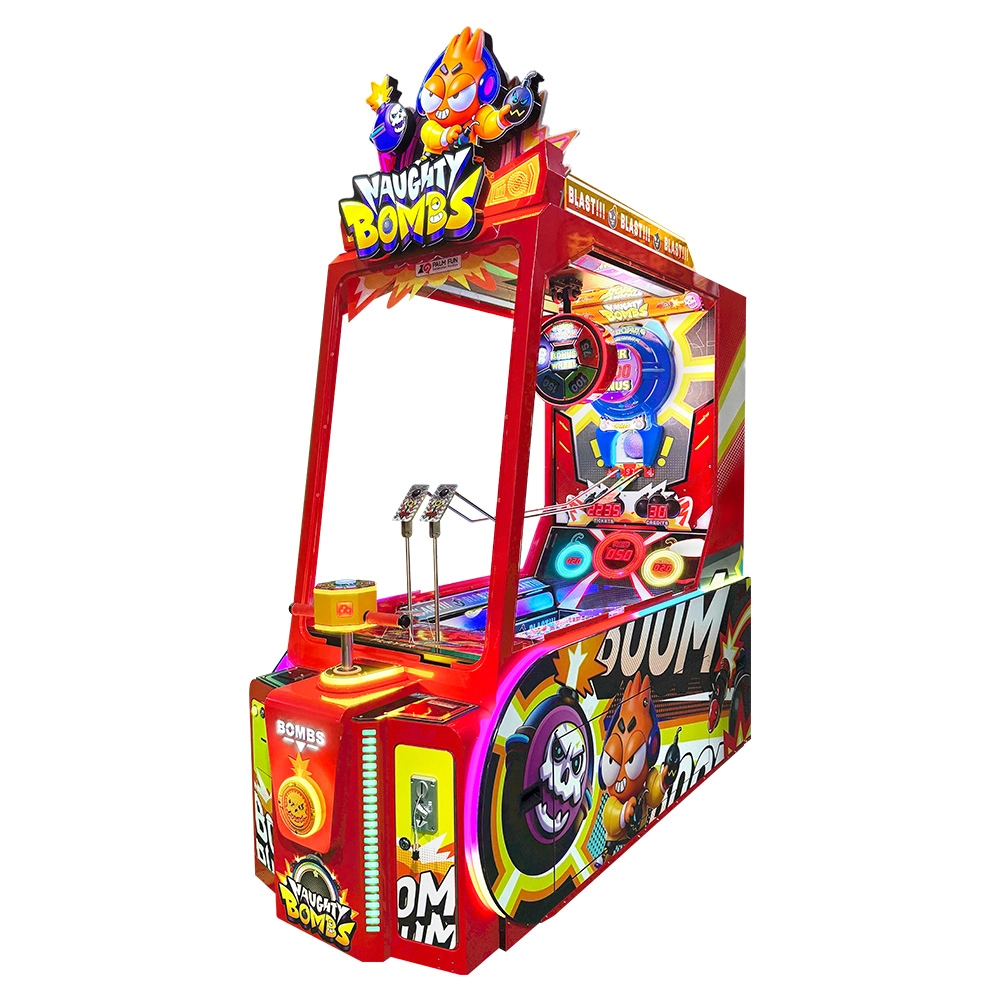
Naughty Bombs Ball Drop Redemption Arcade Game Machine
Naughty Bombs is a ball-drop redemption arcade game featuring rolling-ball gameplay, colored targets, ticket prizes, surprise bonus rewards, lighting and sound effects. Players use timing to launch and drop balls toward colored target areas. The product is presented for arcade, family entertainment center and other entertainment-venue projects, with customizable 110V / 220V AC voltage configuration.
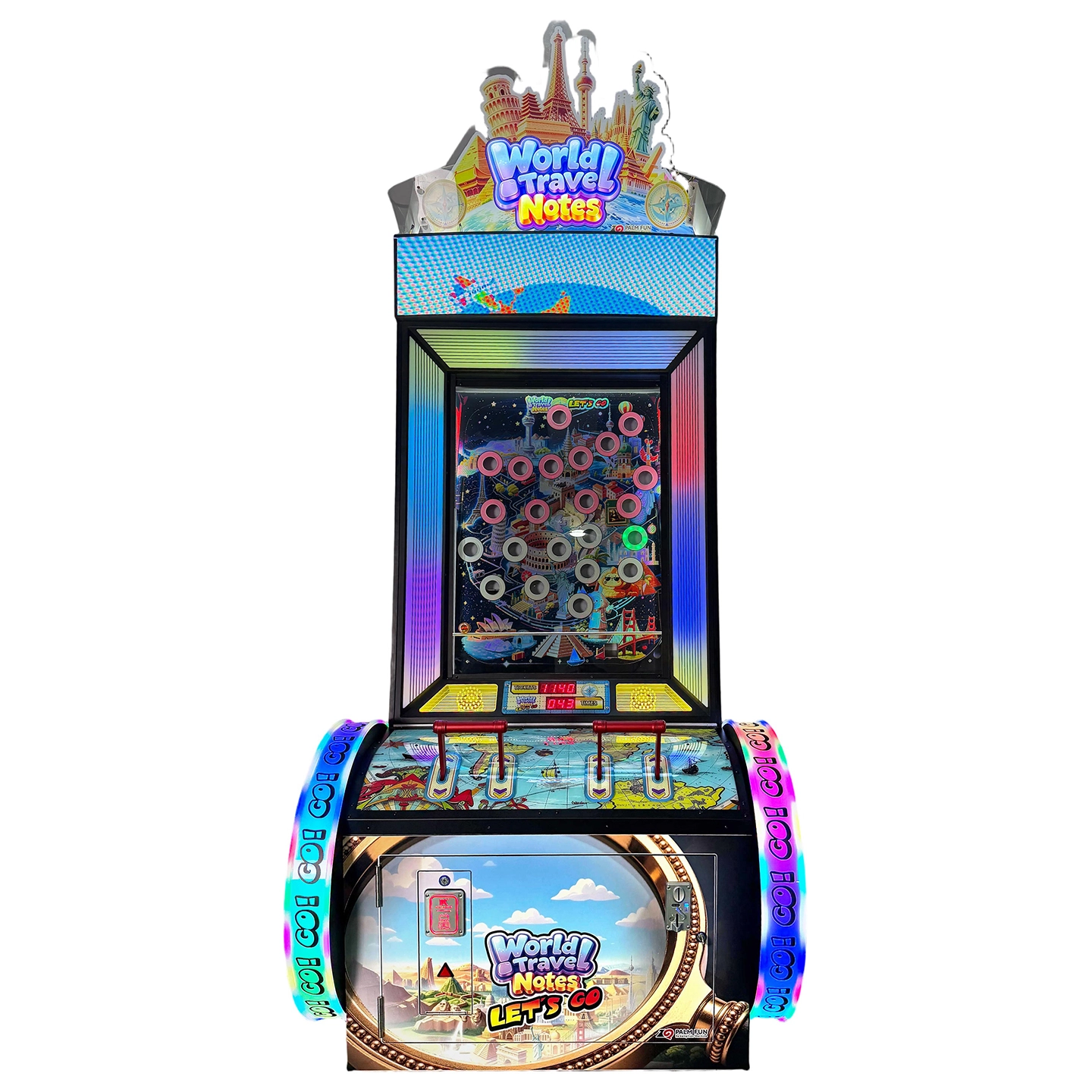
World Travel Notes – Balance Ball Redemption Arcade Game
World Travel Notes is a skill-based balance ball redemption game with a fun world-travel theme. Players use two handles to control the balance bar and guide the ball into each target hole. As the game progresses, the targets become more challenging, leading players toward the final grand prize. With colorful world-travel graphics, dynamic RGB lighting, a live score display, and progressive difficulty, World Travel Notes is designed to attract attention and encourage repeat play in arcades, FECs, shopping malls, and other entertainment venues.
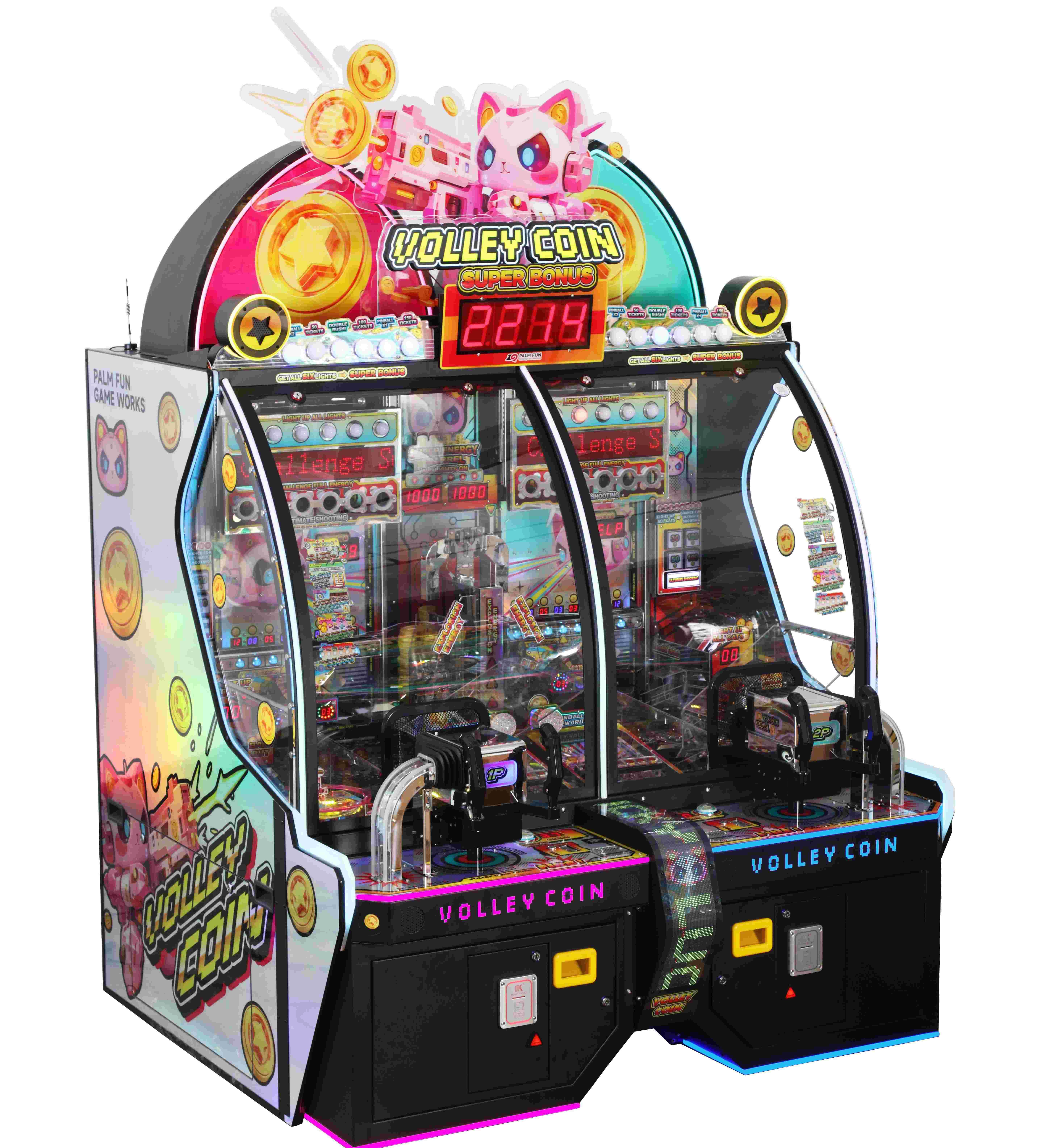
Hybrid Shooting & Pushing | Coin Pusher Arcade Ticket Redemption Machine
Volley Coin is an innovative arcade ticket redemption machine developed by Palm Fun Electronics. Combining the excitement of a fast-paced token shooter game with the proven earning power of a traditional coin pusher machine, Volley Coin offers a fresh and engaging gameplay experience that appeals to players of all ages.
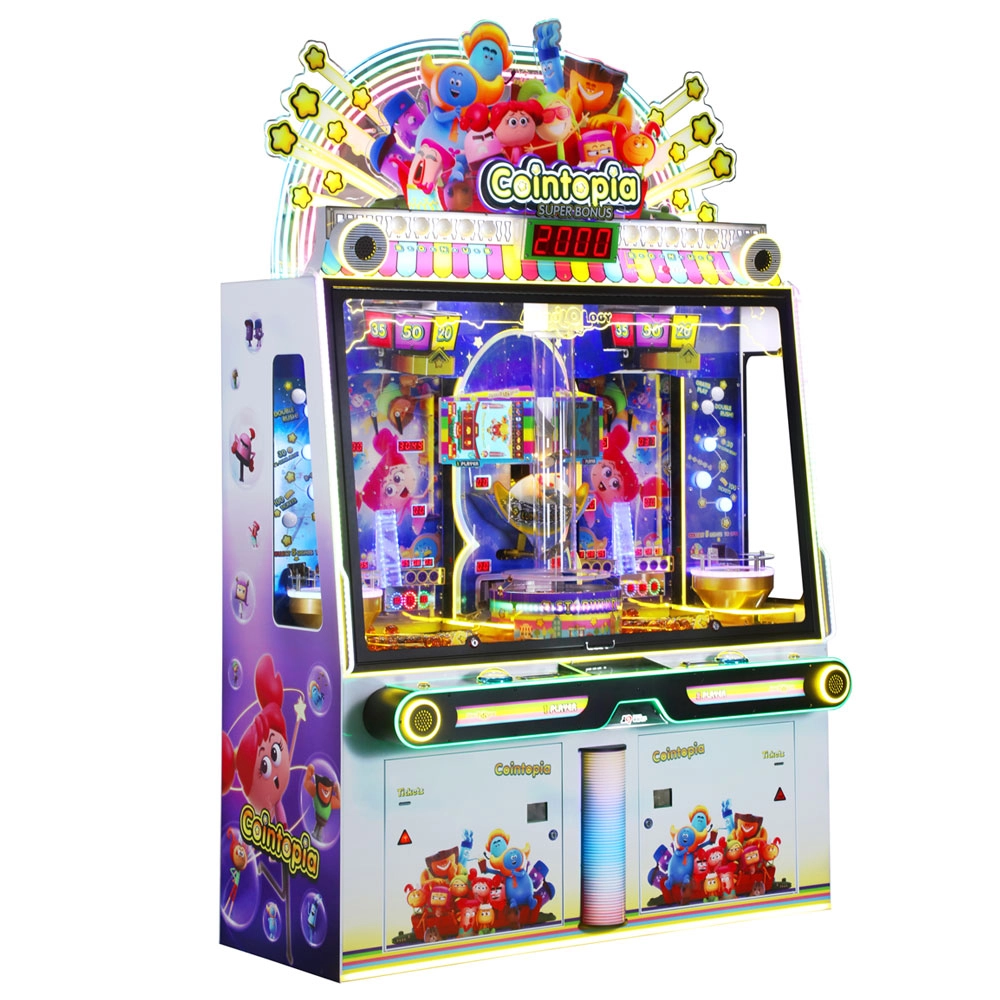
COINTOPIA, Have Fun Together With The Zodiac Buddies in an Utopia
COINTOPIA by PALM FUN is an exciting redemption game machine where players enjoy fun with zodiac buddies in a utopia setting. This ticket redemption machine offers engaging gameplay and rewarding experiences, perfect for family entertainment centers and arcades seeking top-quality redemption games.

Copyright © 2026 PALM FUN All Rights Reserved. | Privacy Policy • Terms and Conditions | Sitemap
palmfunarcade
Palm Fun Arcade Game
Whatsapp: +8618126837443
PalmFun Arcade
PalmFun_Arcade
PALM FUN Redemption Machine