








MOQ, Lead Time and Shipping: Cost Checklist for Coin Pushers
- How to Build a Complete Coin Pusher Procurement Budget
- Separate unit price from total landed cost
- Calculate MOQ against venue economics
- Include compliance and documentation costs
- Lead-Time Control for Arcade and Family Entertainment Projects
- Break the schedule into measurable milestones
- Manage component and approval risks
- Protect the launch date with buffer planning
- Shipping, Installation, and Operational Cost Checklist
- Verify dimensions, weights, and container utilization
- Plan unloading and installation before dispatch
- Forecast maintenance and spare-parts exposure
- Why PALM FUN Fits Structured Redemption Equipment Procurement
- Engineering and manufacturing capabilities
- Product options for different venue strategies
- Global partnership and buyer support
- Frequently Asked Questions
For buyers sourcing a coin pusher machine, the quoted unit price is only one part of the investment. Minimum order quantity (MOQ), production lead time, tooling, packaging, export documentation, freight, insurance, customs duties, installation, spare parts, and after-sales support all influence the final landed cost. A reliable procurement plan therefore evaluates the complete supply chain before placing an order. This checklist explains how arcade operators, distributors, investors, and family entertainment center owners can compare redemption game machine suppliers, forecast delivery dates, protect project margins, and select equipment suited to a profitable venue strategy.
How to Build a Complete Coin Pusher Procurement Budget
Separate unit price from total landed cost
A factory quotation commonly covers the machine price under a stated commercial term, but it may exclude inland transport, export clearance, ocean or air freight, destination handling, import duty, value-added tax, local delivery, commissioning, and payment charges. Buyers should request a line-item quotation that identifies the Incoterm, currency, validity period, packaging specification, warranty scope, and every excluded expense. The ICC Incoterms 2020 rules provide the commercial framework for allocating transport responsibilities, risk, and certain costs between seller and buyer; they do not replace a complete purchase contract.
A useful landed-cost model is: equipment price plus tooling and customization, export packing, origin charges, freight, cargo insurance, destination charges, customs duty, tax, local delivery, installation, payment fees, and contingency. The contingency should reflect project uncertainty rather than serve as an arbitrary markup. New importers may require a larger reserve because port charges, classification questions, and last-mile delivery conditions are less predictable.
Calculate MOQ against venue economics
MOQ can apply to complete machines, cabinet colors, control-panel layouts, printed graphics, spare-part kits, or custom electronic components. A low MOQ may be available for standard models, while private-label programs may require a higher quantity to justify artwork preparation, tooling, programming, and production setup. Buyers should ask whether the MOQ is calculated per model, per configuration, per color, or per shipment.
The correct quantity depends on the operating plan. A single entertainment center may need only a pilot order, while a distributor may require enough units to support regional inventory and replacement demand. Ordering too few units can increase per-unit freight, reduce negotiating leverage, and make spare parts harder to stock. Ordering too many can tie up capital, increase warehouse costs, and expose the owner to changes in player preferences. A phased purchase can balance these risks: launch with validated models, measure revenue per position, then scale the best-performing configuration.
Include compliance and documentation costs
Electrical and amusement-equipment requirements vary by destination. Buyers should confirm voltage, frequency, plug type, electromagnetic compatibility requirements, safety labeling, language requirements, and local licensing rules before production begins. The ISO 12100 machinery safety framework describes principles for risk assessment and risk reduction, although local authorities may require additional standards or approvals. Documentation should include commercial invoices, packing lists, bills of lading or airway bills, certificates of origin when applicable, product specifications, wiring information, and maintenance instructions.
| Cost or planning factor | Standard order | Customized or private-label order | Buyer action |
|---|---|---|---|
| MOQ | Often more flexible for existing models | May increase because of artwork, tooling, or setup | Confirm whether quantity applies by model or configuration |
| Lead time | Usually based on current component and factory capacity | Includes design approval, sampling, and production preparation | Request a milestone schedule, not only a final date |
| Packaging | Standard export carton or protective case | May require printed cartons, reinforced protection, or special labeling | Approve packing dimensions and gross weight before freight booking |
| Freight | Can be optimized by combining compatible units | Irregular dimensions may reduce container efficiency | Compare per-machine freight using verified packing data |
| After-sales support | Standard spare parts and manuals | May require customized parts lists and technical files | Define response time, warranty exclusions, and parts availability |
Lead-Time Control for Arcade and Family Entertainment Projects
Break the schedule into measurable milestones
Production lead time should be divided into order confirmation, deposit receipt, engineering review, artwork approval, component preparation, assembly, quality inspection, packing, and dispatch. This approach is more reliable than accepting a single statement such as “delivery in 30 days.” If graphics, coin mechanisms, ticket dispensers, card readers, software, or cabinet dimensions are customized, every approval cycle can affect the release date.
Project owners should create a critical-path schedule linked to venue construction. Flooring, electrical outlets, network cabling, prize counters, payment systems, and fire-safety inspections may need to be completed before machines arrive. A delayed shipment can create rent and labor costs without generating revenue, while an early shipment can create storage and insurance expenses. The commercial contract should define when the lead time begins and what events pause or extend it.
Manage component and approval risks
Mechanical amusement equipment contains cabinets, motors, sensors, lighting, control boards, coin paths, ticket systems, and other components that may have different availability cycles. Buyers should request confirmation that the proposed configuration is based on current production components rather than a provisional bill of materials. Where feasible, ask for a pre-production sample, video approval, or documented acceptance criteria covering sound, lighting, coin movement, ticket dispensing, cabinet finish, and game function.
For large installations, a factory acceptance test can reduce commissioning risk. The test should verify power-up behavior, play sequence, payout or ticket logic, safety covers, access panels, diagnostic functions, and packaging condition. Photographs, serial-number records, and inspection results provide useful evidence if a transit claim or warranty discussion later becomes necessary. The World Trade Organization customs valuation guidance also reinforces the importance of accurate commercial information when goods are imported and valued by customs authorities.
Protect the launch date with buffer planning
International logistics includes variables outside the manufacturer’s direct control, including port congestion, vessel schedules, transshipment, customs examination, weather, holidays, and local trucking capacity. A realistic launch plan includes a buffer between the expected arrival date and the public opening. The appropriate buffer depends on route complexity and local import procedures, but a buyer should never treat the factory completion date as the venue-ready date.
For urgent openings, air freight may shorten transit time but can materially increase cost because large cabinets occupy significant chargeable volume. Sea freight is commonly more economical for multiple machines, yet it requires earlier booking and more careful coordination. A freight forwarder should provide the shipping mode, estimated transit time, origin and destination charges, container or pallet requirements, and the assumptions behind the quotation.
Shipping, Installation, and Operational Cost Checklist
Verify dimensions, weights, and container utilization
Freight is calculated from actual weight, dimensional weight, volume, or a combination of these factors depending on the transport mode. A buyer should obtain packed length, width, height, net weight, gross weight, pallet count, and loading plan before comparing freight offers. Two machines with similar prices can have very different logistics economics if one uses oversized packaging or leaves unusable space in a container.
Packaging should protect glass, acrylic, lighting, control panels, moving mechanisms, and cabinet corners against vibration and impact. Export packaging may include foam, edge protection, moisture barriers, reinforced cartons, pallets, or wooden cases. If timber is used, the buyer should confirm whether it carries the required treatment marks for the destination market. Cargo insurance should be evaluated against the declared value, coverage exclusions, deductible, and claim procedure rather than selected solely by the lowest High Quality.
Plan unloading and installation before dispatch
Many arcade cabinets cannot be moved through a standard doorway without measuring the route in advance. Confirm doorway width, elevator capacity, floor loading, turning radius, stair access, loading dock height, and available electrical service. The installation plan should identify who handles unloading, positioning, leveling, assembly, software setup, payment integration, testing, and removal of packaging materials.
For a multi-unit deployment, the operator should prepare a commissioning checklist and assign responsibility for acceptance. It should cover cabinet condition, display quality, audio, lighting, controls, coin acceptance, ticket output, game reset, network connectivity where applicable, and operator access. Clear acceptance criteria reduce disputes and help staff move quickly from delivery to revenue generation.
Forecast maintenance and spare-parts exposure
The cost of ownership continues after installation. A robust budget includes consumable tickets, coins or tokens, fuses, lamps or LEDs, sensors, motors, belts, control boards, locks, wiring harnesses, and payment-system components where relevant. Ask the supplier for a recommended spare-parts list based on the number of machines, expected operating hours, and local technician capability.
Operators should also examine warranty duration, parts coverage, labor exclusions, remote troubleshooting, technical documentation, and response times. A supplier that provides clear wiring diagrams, error-code guidance, replacement procedures, and video support can reduce downtime even when a local service team is small. Revenue per machine per day, utilization, prize or ticket cost, maintenance cost, and downtime should be tracked after launch to validate the original business case.
Why PALM FUN Fits Structured Redemption Equipment Procurement
Engineering and manufacturing capabilities
PALM FUN was founded in 2015 and specializes in high-quality mechanical lottery machines, coin pusher machines, and raffle machines. Our work covers research and development, product design, production, and sales, allowing project owners to discuss commercial requirements and technical execution within one coordinated supplier relationship.
Our state-of-the-art factory covers 3,000 square meters and is staffed by skilled development engineers focused on advancing technology and improving user experience. This structure supports practical discussions about cabinet configuration, game flow, visual presentation, mechanical reliability, ticket redemption functions, and market-specific requirements. Buyers evaluating High Quality Redemption Arcade MachinesManufacturer capabilities can use factory information, inspection procedures, product documentation, and support commitments as part of supplier due diligence.
Product options for different venue strategies
Our portfolio supports operators seeking durable, engaging Coin Pusher Arcade Ticket Redemption Machine solutions, as well as distributors building a broader lineup of redemption games. The Larva Series Coin Pusher Arcade provides another themed option for venues that prioritize colorful presentation and repeat play. Product selection should be matched to available floor space, audience age, ticket economy, payment method, operator access, and the expected revenue model.
For venues that want to complement mechanical redemption units with skill and action attractions, our pinball arcade product and single player arcade option can help create a diversified entertainment zone. A balanced mix of coin-operated attractions, ticket-generating equipment, and higher-engagement arcade games machines may improve dwell time and reduce dependence on one game category.
Global partnership and buyer support
PALM FUN products are recognized and popular in more than 50 countries worldwide. Our objective is to build long-term partnerships by supporting product selection, order coordination, technical communication, and post-delivery service. For buyers comparing arcade machines for sale, this international market presence is a useful indicator to investigate alongside references, documentation, quality-control evidence, warranty terms, and export experience.
Our vision is to become the world’s leading manufacturer of redemption game machines. Buyers can review our product range and company capabilities at PALM FUN, then request a quotation that specifies MOQ, configuration, production milestones, packing data, shipping terms, and after-sales requirements. This structured approach makes supplier comparisons more transparent and helps transform a machine purchase into a controlled venue investment.
Contact PALM FUN to compare coin pusher configurations, request a complete landed-cost quotation, and select redemption equipment for your next arcade project.
Frequently Asked Questions
What costs should be included when buying a coin pusher machine internationally?
Include the equipment price, tooling or customization, export packing, origin charges, freight, cargo insurance, destination charges, customs duty, tax, local delivery, installation, payment fees, spare parts, and a contingency reserve.
How does MOQ affect the cost of arcade equipment?
MOQ can apply to complete machines, cabinet colors, graphics, configurations, or spare-part kits. A larger order may improve unit pricing and freight efficiency, while a smaller pilot order can reduce inventory risk but increase per-unit logistics cost.
What should a buyer request in a production lead-time schedule?
Request milestones covering order confirmation, deposit receipt, engineering review, artwork approval, component preparation, assembly, inspection, packing, and dispatch, together with a clear definition of when lead time begins.
Is sea freight or air freight better for arcade cabinets?
Sea freight is generally more economical for multiple large cabinets, while air freight can shorten transit time but may cost substantially more because of chargeable volume. The best option depends on the launch deadline, shipment size, route, and budget.
What information is needed to compare shipping quotations?
Buyers should obtain packed dimensions, net and gross weights, pallet or case count, loading plan, shipping mode, estimated transit time, origin and destination charges, Incoterm, insurance assumptions, and any customs or local delivery exclusions.
How can an operator reduce installation and downtime risks?
Measure doorways, elevators, floor loading, and electrical access before dispatch; define unloading and commissioning responsibilities; test controls, lighting, audio, coin acceptance, ticket output, and payment integration; and stock recommended spare parts.
Recommended for you
Are Coin Pusher Machines Profitable? Unlocking the Revenue Potential in Redemption Gaming
Installing Quarter Pushing Machines: Space and Power Requirements
Inspection checklist: accepting bulk shipments of single player arcade
Coin Pusher Arcade Machine Setup and Profitable Placement Tips
FAQs
What details should be paid attention to in the operation of redemption machines?
① Machine parameter adjustments.
② Equipment performance and gameplay.
③ Decoration and promotion of the area and equipment.
④ Machine placement locations.
⑤ Selection of prizes.
2. The primary operational techniques for redemption machines are in the attractiveness of the gameplay, maintaining a reasonable payout rate, and creating an engaging atmosphere. Depending on the season and market changes, promotional activities should be carried out with a balance, analysis, and follow-up. Therefore, you can consider the following operational methods:
① Collaborate with several venues or businesses to distribute promotional materials to enhance external visibility and interaction.
② Conduct targeted promotional activities to retain returning customers.
③ Organize regular member events to ensure member attraction and consistent customer base. For example, offering extra lottery rewards for a certain amount of tokens deposited or giving a certain number of lottery tickets(reward points) when a membership card is issued.
④ Strengthen interaction with neighboring businesses within the commercial district.
⑤ Organize selective activities for children and offer special deals for exchanging unique children-oriented prizes.
3. Setting parameters correctly:
4.New machine arrival -- Familiarizing with the game--Initial parameter control--Promotional --ctivities and advertising--Adjusting parameters based on the number of players--Multiple adjustments of parameters--Increased popularity--Profitability--Reinvestment.
Note: Data analysis should be conducted weekly to promptly understand the ticket payout probability for each redemption machine. In case of any abnormal situations, swift follow-up and troubleshooting are essential to identify the causes and rectify the issues.
How to place the redemption machines in a right place?
1,Ensure that the placement and layout of the equipment are distinct and centralized.
2,Keep noise levels low and avoid having a line of sight that spans too far to prevent players from easily taking in everything, which may slow down their movement.
3,Avoid clustering high-ticket payout machines and disperse machines of the same style.
4,Mix popular machines with less popular ones and avoid placing all popular machines together.
How to guide the players to recognize tickets at the beginning setup of the redemption machines?
Never assume that your players already understand the purpose of lottery tickets(reward points). Even in venues that have been in operation for many years, it is still discovered during on-site interviews with players that many of them are not aware. Don't believe it? Just ask consumers at the venue. The machines, redemption counters, materials hung above the venue, and announcements by staff, among others, can all be channels for informing players about the purpose of lottery tickets(reward points). It is essential to do more promotion, create large displays and large cards, and clearly communicate the purpose of lottery tickets(reward points) to the players.
What is the character of mechanical redemption machine?
How to choose the exchange gifts of the tickets(reward points)?
2. Gifts should be diverse. This refers to the variety of items available, providing players with more choices. Everyone's preferences are different, especially adults who have higher expectations for gifts. The venue should strive to meet the diverse needs of these players.
3. Gifts should be fashionable. The younger generation that follows trends is very interested in the hottest items of the moment. If the venue can keep up with the latest trends, it can attract the majority of consumers.
4. Gifts should be innovative. Especially during holidays and seasons, it's a good idea to try out new approaches, creating a competitive advantage with unique offerings. For example, the current trend of combining pop culture and blind box culture.
You may also like
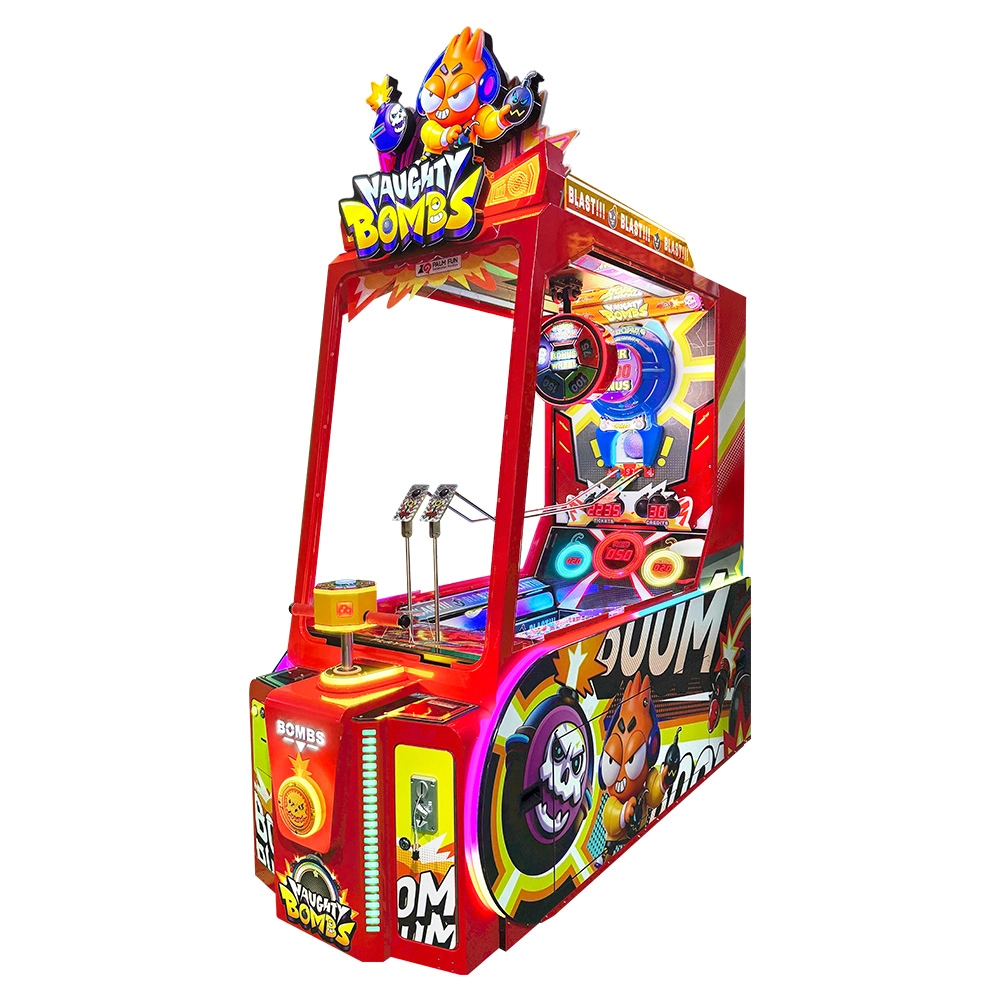
Naughty Bombs Ball Drop Redemption Arcade Game Machine
Naughty Bombs is a ball-drop redemption arcade game featuring rolling-ball gameplay, colored targets, ticket prizes, surprise bonus rewards, lighting and sound effects. Players use timing to launch and drop balls toward colored target areas. The product is presented for arcade, family entertainment center and other entertainment-venue projects, with customizable 110V / 220V AC voltage configuration.
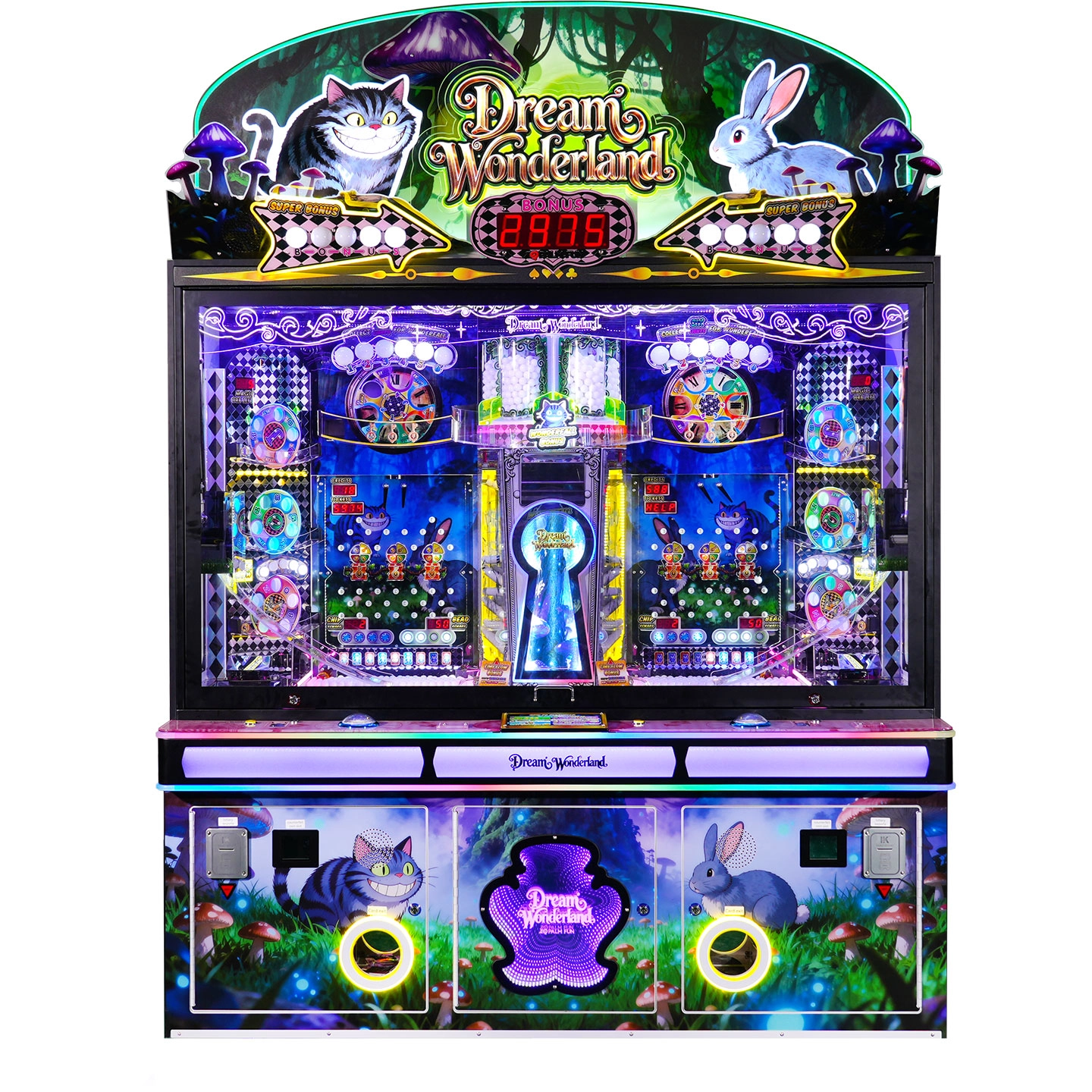
Dream Wonderland Marble Pusher Redemption Game
Enter Dream Wonderland — a magical marble pusher adventure filled with glowing lights, magic orbs, bonus wheels, collectible character cards, and exciting jackpot challenges.
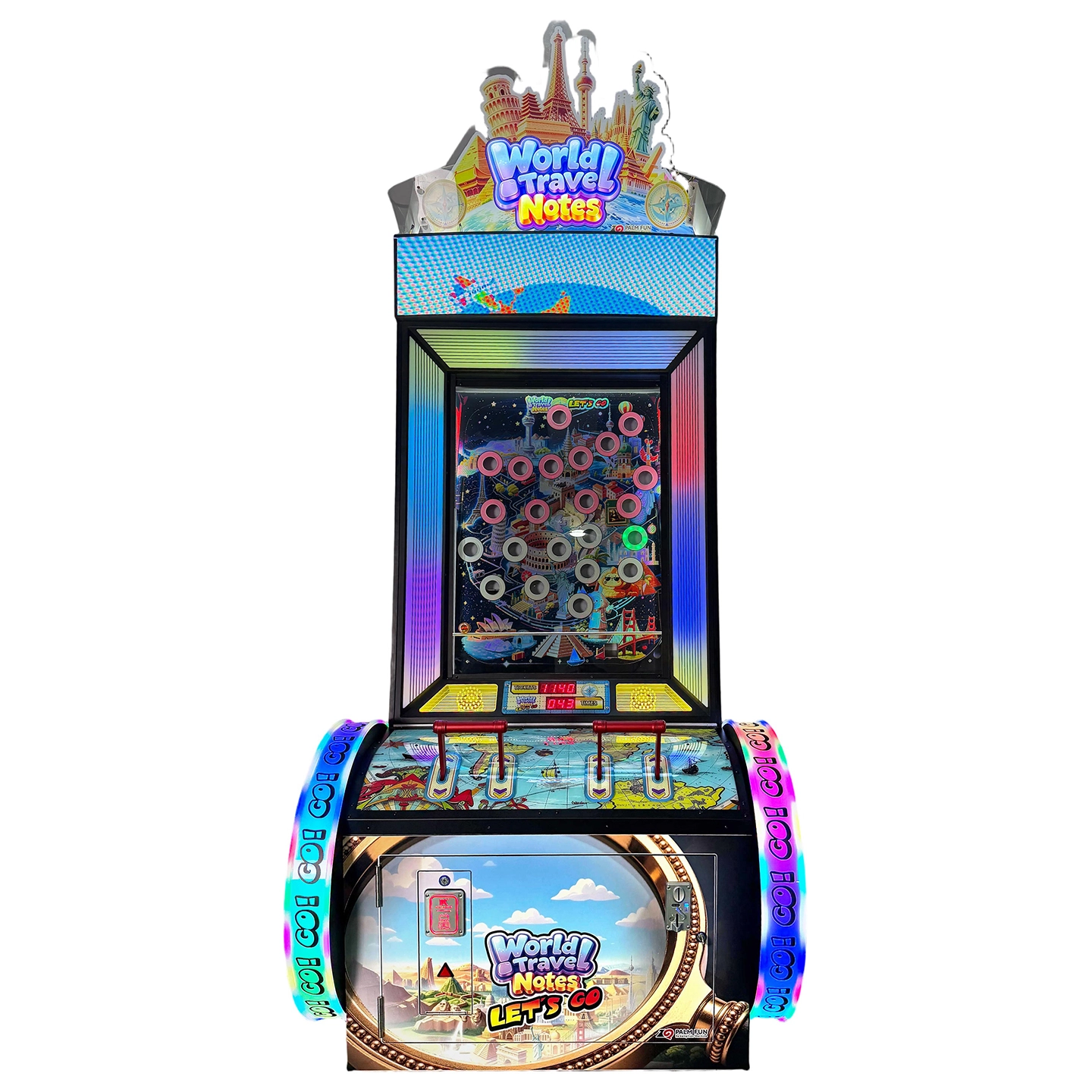
World Travel Notes – Balance Ball Redemption Arcade Game
World Travel Notes is a skill-based balance ball redemption game with a fun world-travel theme. Players use two handles to control the balance bar and guide the ball into each target hole. As the game progresses, the targets become more challenging, leading players toward the final grand prize. With colorful world-travel graphics, dynamic RGB lighting, a live score display, and progressive difficulty, World Travel Notes is designed to attract attention and encourage repeat play in arcades, FECs, shopping malls, and other entertainment venues.
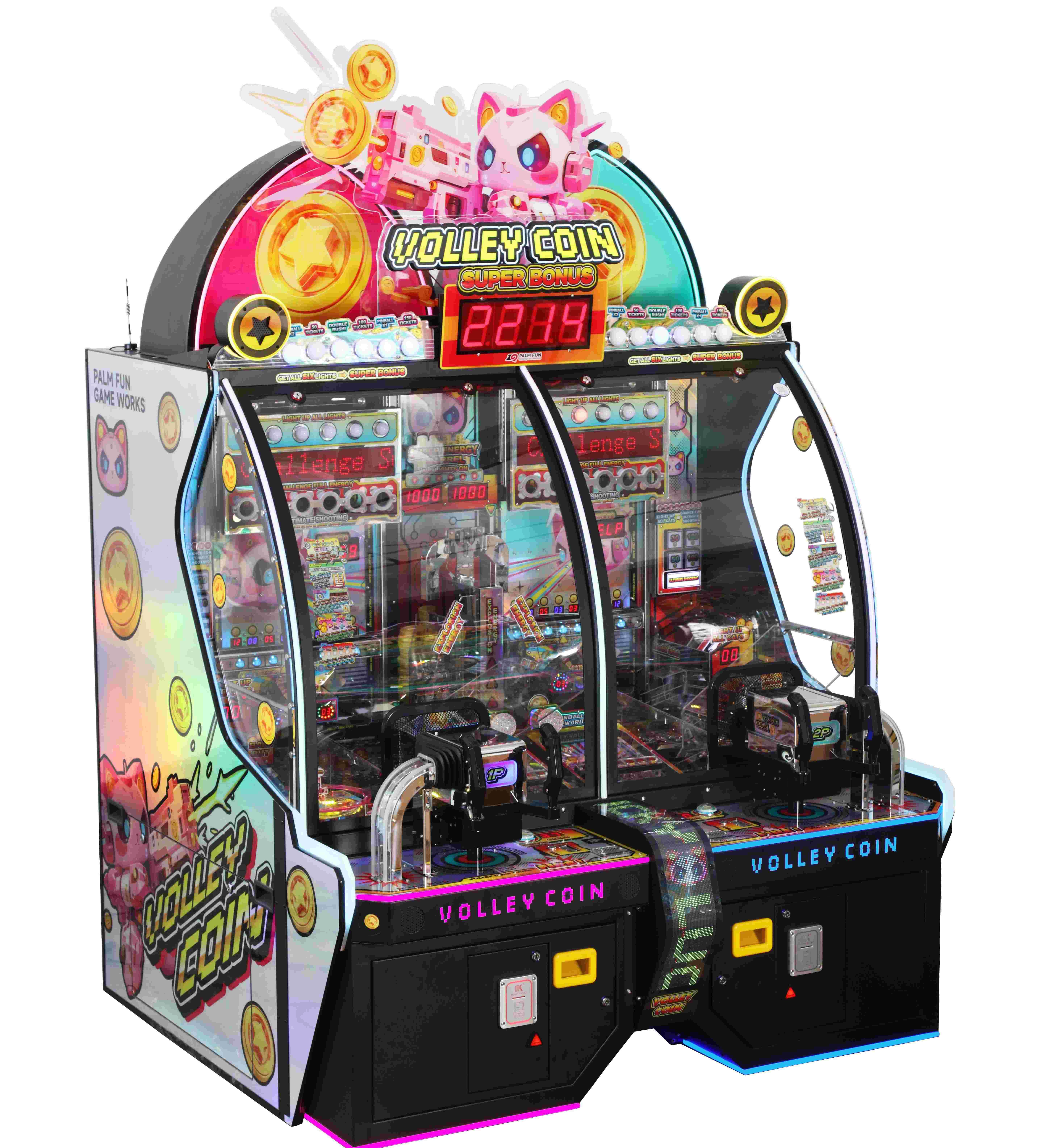
Hybrid Shooting & Pushing | Coin Pusher Arcade Ticket Redemption Machine
Volley Coin is an innovative arcade ticket redemption machine developed by Palm Fun Electronics. Combining the excitement of a fast-paced token shooter game with the proven earning power of a traditional coin pusher machine, Volley Coin offers a fresh and engaging gameplay experience that appeals to players of all ages.

Copyright © 2026 PALM FUN All Rights Reserved. | Privacy Policy • Terms and Conditions | Sitemap
palmfunarcade
Palm Fun Arcade Game
Whatsapp: +8618126837443
PalmFun Arcade
PalmFun_Arcade
PALM FUN Redemption Machine