






OEM/ODM Options: Custom Branding and Packaging for Coin Pushers
- How Private-Label Coin Pushers Create Commercial Differentiation
- OEM and ODM models serve different project objectives
- Brand identity must support player recognition
- Customization should be measured against operating economics
- Custom Packaging and Documentation for Safer Deployment
- Packaging is part of product quality
- Branded packaging can improve channel efficiency
- Quality control must cover the packed and unpacked machine
- Commercial and Technical Criteria for Selecting a Custom Supplier
- Evaluate the complete development workflow
- Compare customization routes before approving the bill of materials
- Use serviceability and ROI as approval gates
- Why PALM FUN Supports Scalable Redemption Game Programs
- Integrated R&D and manufacturing capability
- Product breadth for connected arcade environments
- International reach and partnership focus
- Frequently Asked Questions
- What is the difference between OEM and ODM coin pusher manufacturing?
- What branding elements can be customized on a coin pusher machine?
- How should export packaging be specified for arcade equipment?
- What documents should a buyer request before mass production?
- How can custom branding affect the total cost of ownership?
- Can a supplier customize a coin pusher for multiple countries?
OEM and ODM coin pusher programs give arcade operators, distributors, investors, and entertainment brands a practical way to differentiate a redemption game machine through custom cabinet graphics, branded interfaces, packaging, documentation, accessories, and regional configurations. The strongest projects do more than apply a logo: they connect brand identity with mechanical reliability, player flow, ticket or prize logic, shipping protection, installation requirements, compliance, spare-parts planning, and total ownership cost. Buyers evaluating arcade games machines should therefore treat customization as an engineering and procurement decision rather than a purely cosmetic exercise.
How Private-Label Coin Pushers Create Commercial Differentiation
OEM and ODM models serve different project objectives
OEM manufacturing generally uses a buyer-specified product architecture, visual identity, and commercial configuration. The supplier produces equipment according to approved drawings, branding standards, bill of materials, and quality requirements. This model suits established distributors, venue groups, and brand owners that already understand their market and need consistent replication across multiple locations.
ODM manufacturing starts with an existing platform or supplier-developed concept that can be adapted for a target market. Changes may include cabinet colors, artwork, control panels, prize presentation, lighting, game rules, language, payment systems, and packaging. ODM can shorten development time and reduce design risk, but the buyer should confirm which elements are proprietary, which are shared across customers, and which modifications are included in the quoted price.
Brand identity must support player recognition
Custom branding is most effective when it is visible at the decision points that matter in a busy family entertainment center. Header panels, side panels, control decks, ticket displays, coin-entry areas, prize windows, and instruction graphics should form one coherent visual system. Artwork should remain legible under venue lighting and from the circulation path, while high-contact surfaces need finishes that tolerate cleaning, fingerprints, abrasion, and repeated player use.
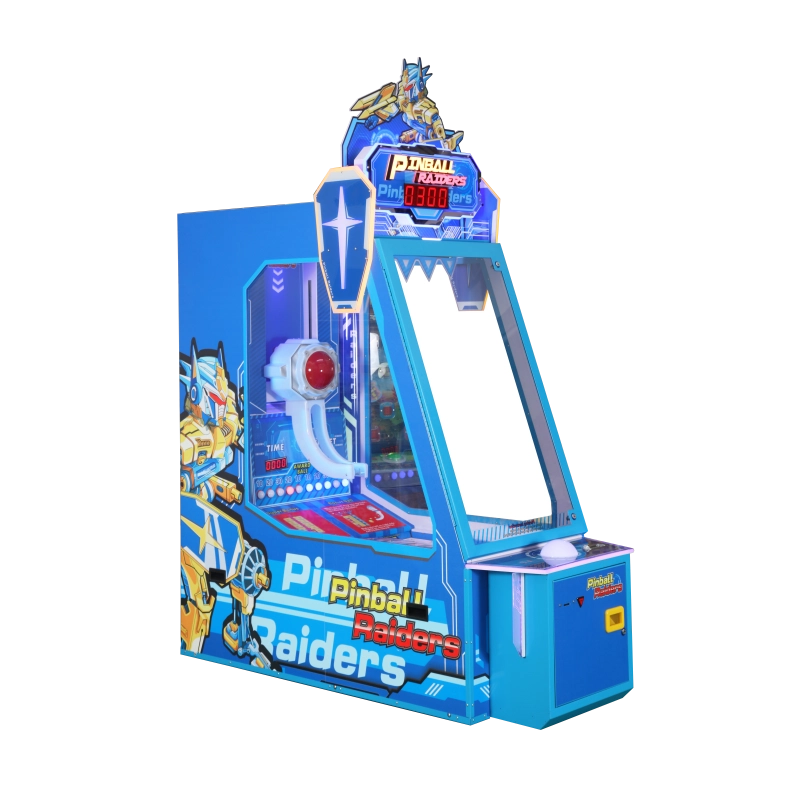
A branded amusement platform can also support a wider attraction mix. For example, a venue may position a pinball arcade cabinet beside a coin-operated pusher to create a recognizable zone for skill, chance, and ticket-based play. A single player arcade format may serve a different footprint and play pattern, so the graphics, control labeling, and merchandising message should be designed according to the intended customer journey rather than copied across every machine.
Customization should be measured against operating economics
Every design change influences cost, lead time, maintenance, or logistics. A custom molded plastic part may improve recognition but require tooling investment and a minimum order quantity. A printed vinyl wrap may provide a lower-cost test of a new theme and make future refreshes easier. Custom LED colors can strengthen visual impact, yet the buyer should verify replacement availability, heat management, power consumption, and service access.
Procurement teams should request a customization matrix covering standard features, optional features, one-time engineering charges, per-unit charges, minimum order quantities, sample approval stages, tooling ownership, artwork requirements, and expected production lead times. This document helps prevent a common sourcing problem: a low initial quotation that excludes artwork preparation, prototype freight, packaging upgrades, software changes, or spare components.
Custom Packaging and Documentation for Safer Deployment
Packaging is part of product quality
Coin pushers are large, heavy, and sensitive to cosmetic damage. Packaging should protect cabinet corners, glass or transparent panels, control assemblies, coin mechanisms, decorative trim, and movable internal components during factory handling and international transport. A reliable packaging specification may include a reinforced export carton, internal foam or molded supports, moisture-resistant barriers, palletization, edge protection, and clear orientation markings.
Buyers should ask whether the machine is secured against movement inside the carton and whether removable parts are individually protected. Packaging validation should consider loading, unloading, vibration, compression, and warehouse stacking. The ISO 780 packaging marking standard provides internationally recognized handling symbols that can support clearer logistics instructions, although packaging requirements still need to reflect the carrier, route, and destination conditions.
Branded packaging can improve channel efficiency
Distributors may use custom cartons, product labels, quick-start guides, and installation cards to create a professional unboxing experience for their resellers. Retail or location-specific packaging can also simplify inventory identification by displaying model numbers, serial references, voltage information, gross weight, carton dimensions, and handling instructions. These details reduce receiving errors and help warehouse teams match accessories and spare parts to the correct cabinet.
For multi-country distribution, packaging and documents should support the destination language and electrical configuration. Instructions should explain assembly, leveling, coin or token setup, ticket calibration, cleaning, basic fault diagnosis, and safe isolation before service. A supplier should also clarify whether replacement graphics, labels, and manuals can be reordered without purchasing a complete machine batch.
Quality control must cover the packed and unpacked machine
Factory acceptance should include visual inspection, mechanical operation, coin path performance, pusher movement, lighting, sound, ticket output, sensors, access doors, and control response. The buyer should define sampling levels or 100% testing for critical functions before shipment. A useful inspection record links the serial number to the tested configuration, artwork revision, software version, electrical test result, and packaging condition.
Risk assessment should address foreseeable use, servicing, moving parts, electrical hazards, and misuse. The principles described in ISO 12100 safety of machinery can help project owners structure hazard identification and risk reduction, while destination-market electrical and amusement-device rules must be checked separately. Product packaging should never be treated as a substitute for safe machine design, clear instructions, or appropriate venue supervision.
Commercial and Technical Criteria for Selecting a Custom Supplier
Evaluate the complete development workflow
A qualified supplier should provide a defined path from concept brief to production release. Typical stages include requirement confirmation, artwork template delivery, 3D or graphic proposal, sample or prototype approval, pilot production, inspection, packaging confirmation, and mass manufacturing. Each approval should record the responsible party, revision date, tolerances, colors, materials, and acceptance criteria.
Buyers should ask how engineering changes are controlled after approval. A formal change process prevents an unapproved substitution of acrylic, metal thickness, lighting components, coin acceptors, fasteners, or wiring. It is also important to confirm whether the supplier can reproduce the same finish and game behavior in later batches, because inconsistent cabinets create service complications and weaken brand presentation across a venue network.
Compare customization routes before approving the bill of materials
| Customization route | Typical advantage | Primary limitation | Best procurement use |
|---|---|---|---|
| Vinyl graphics and printed panels | Fast visual differentiation and relatively simple artwork changes | Finish can be affected by abrasion, heat, or cleaning chemicals | Market testing, seasonal themes, and distributor branding |
| Powder-coated or painted cabinet | Durable color treatment integrated into the enclosure | Color matching and rework can affect lead time and cost | Long-term brand programs with repeat production |
| Custom molded components | Distinctive three-dimensional identity and strong recognition | Tooling investment and minimum order requirements | Large-volume flagship programs |
| Standard platform with ODM adaptation | Shorter development cycle and lower engineering risk | Some architecture and appearance may remain shared | New operators, regional launches, and pilot fleets |
| Fully specified OEM build | Maximum control over appearance, functions, and documentation | Higher development responsibility and longer validation | Established brands requiring exclusive specifications |
Use serviceability and ROI as approval gates
Custom equipment should be easy for venue technicians to inspect, clean, reset, and repair. The design review should cover access to coin mechanisms, ticket dispensers, sensors, motors, fuses, power supplies, and control boards. Standardized fasteners, labeled wiring, replaceable graphics, and stocked wear parts can reduce downtime. Buyers should request a recommended spare-parts list based on the expected number of machines, operating hours, and geographic distance from the service center.
Return on investment depends on more than the purchase price. Project owners should model expected plays per day, average revenue per play, prize or ticket cost, payment processing, labor, electricity, maintenance, freight, installation, and downtime. A branded cabinet may earn stronger attention, but the commercial case is credible only when the machine remains available, understandable to players, and economical to service. The U.S. Consumer Product Safety Commission business guidance is a useful starting point for identifying product-safety responsibilities in the United States, although local regulations and venue policies remain decisive.
Why PALM FUN Supports Scalable Redemption Game Programs
Integrated R&D and manufacturing capability
PALM FUN was founded in 2015 and specializes in high-quality mechanical lottery machines, coin pusher machines, and raffle machines. Our team is dedicated to the research and development, design, production, and sales of innovative gaming and lottery equipment. This integrated scope helps buyers discuss mechanical performance, cabinet styling, player experience, packaging, and commercial deployment with a coordinated manufacturing partner.
Our state-of-the-art factory covers 3,000 square meters and is staffed by skilled development engineers focused on advancing technology and enhancing user experience. For OEM and ODM projects, our engineering approach can support configuration discussions around cabinet structure, themed graphics, control layouts, prize or ticket functions, lighting, and production documentation. Buyers can use the development process to distinguish essential customization from features that add cost without improving operational value.
Product breadth for connected arcade environments
PALM FUN develops equipment for operators building a balanced mix of redemption games and amusement attractions. Our portfolio includes coin pusher machine platforms, mechanical lottery equipment, raffle machines, and arcade games machines designed for commercial entertainment settings. Buyers exploring Coin Pusher Arcade Ticket Redemption Machine options can compare play mechanics and cabinet positioning, while the Larva Series Coin Pusher Arcade provides another themed direction for a family-oriented redemption area.
Our approach also supports distributors reviewing arcade machines for sale as part of a broader equipment package. A consistent visual program across different cabinet types can improve wayfinding and make a venue feel more professionally curated. At the same time, each machine should retain a clear play proposition, appropriate footprint, and service access so that branding does not compromise daily operation.
International reach and partnership focus
PALM FUN products are recognized and popular in more than 50 countries worldwide. Our manufacturing process is supported by a focus on quality, innovation, and responsiveness to market trends and customer requirements. International buyers should still confirm local import, electrical, amusement, labeling, and payment-system requirements before order confirmation, but a supplier with export experience can help organize the documentation and configuration questions that affect deployment.
Our objective is to build long-term partnerships by providing comprehensive support and services for clients competing in the gaming market. For investors, distributors, and facility owners seeking a High Quality Redemption Arcade MachinesManufacturer, the evaluation should include product fit, customization discipline, quality records, spare-parts support, packaging reliability, and communication throughout the project. PALM FUN’s vision is to become the world’s leading manufacturer of redemption game machines, with a focus on dependable equipment and commercially useful innovation.
Before requesting a quotation, buyers should prepare cabinet dimensions, target countries, voltage and frequency, payment method, prize or ticket requirements, artwork files, language needs, expected order quantity, packaging destination, delivery terms, and desired launch date. This information enables a supplier to price the project accurately and identify technical risks early. A structured brief also makes it easier to compare proposals from different manufacturers on equivalent terms.
Frequently Asked Questions
What is the difference between OEM and ODM coin pusher manufacturing?
OEM manufacturing follows buyer-defined specifications and brand requirements, while ODM adapts an existing supplier platform with agreed changes to appearance, functions, language, or configuration. OEM offers greater control, whereas ODM usually provides a faster and lower-risk path to market.
What branding elements can be customized on a coin pusher machine?
Common options include cabinet colors, vinyl graphics, header panels, side artwork, control-panel labels, lighting colors, instruction cards, logos, packaging, manuals, and selected software or game settings. Structural or molded changes may require tooling and minimum order quantities.
How should export packaging be specified for arcade equipment?
The specification should address internal immobilization, corner protection, transparent-panel protection, moisture resistance, palletization, carton markings, gross weight, dimensions, handling orientation, and destination transport conditions. Packaging should be validated together with the finished machine rather than selected only by carton price.
What documents should a buyer request before mass production?
Useful documents include approved artwork, product drawings, bill of materials, configuration records, inspection criteria, test reports, user manuals, packing lists, spare-parts recommendations, and change-control records. Destination-market electrical, labeling, and amusement requirements should also be reviewed before shipment.
How can custom branding affect the total cost of ownership?
Branding may add artwork, tooling, sample, material, packaging, and minimum-order costs. It can also improve recognition and support stronger merchandising. The decision should be based on expected revenue, repeat-order potential, replacement-part availability, cleaning durability, downtime risk, and the cost of refreshing or reproducing the design.
Can a supplier customize a coin pusher for multiple countries?
Many platforms can be configured for different languages, electrical systems, payment methods, labels, and packaging requirements, but feasibility depends on the machine architecture and destination rules. Buyers should provide country-specific requirements before design approval and confirm which changes are standard, optional, or subject to engineering charges.
Recommended for you
The Evolution of Arcade Games: A Comprehensive Guide to PALM FUN's Latest Offerings
Custom coin pusher machine for sale Manufacturers and suppliers in China
MOQ, Lead Time and Bulk Pricing for Coin Pusher Arcade Machines
Tips for Wholesale mario kart arcade game in China
FAQs
The revenue proportion of redemption machines
How to choose the exchange gifts of the tickets(reward points)?
2. Gifts should be diverse. This refers to the variety of items available, providing players with more choices. Everyone's preferences are different, especially adults who have higher expectations for gifts. The venue should strive to meet the diverse needs of these players.
3. Gifts should be fashionable. The younger generation that follows trends is very interested in the hottest items of the moment. If the venue can keep up with the latest trends, it can attract the majority of consumers.
4. Gifts should be innovative. Especially during holidays and seasons, it's a good idea to try out new approaches, creating a competitive advantage with unique offerings. For example, the current trend of combining pop culture and blind box culture.
How to perform daily maintenance and servicing on redemption machines?
1. New machine entry performance, as it is relatively unstable in operation at this stage, requires dedicated supervision, timely follow-up, and improvements.
2. Redemption machines are relatively prone to collecting dust, which can lead to mechanical wear and corrosion. Dust can also cause issues with circuit boards, such as conductivity and optical sensor malfunctions. Thus, both internal and external cleanliness of redemption machines are equally important. Regular cleaning schedules for internal and daily cleaning for external components should be established.
3. Timely inspect the quality and durability of certain components. If issues are detected with imaging equipment, for example, replacements are necessary. A thorough understanding and mastery of the machine's performance can help extend its lifespan and ensure normal usage rates. Critical inspection areas include vulnerable parts such as motors, drive belts, gears of ticket dispensers, and sensors.
4. Frequent changes in prize point settings and payout rates are discouraged. Improvements in winning odds should be pursued through other methods and approaches.
5. All machines should have procedures for ticket removal and shredding to protect the ticket dispensers from damage.
6. Monitor changes in payout rates closely, as it directly impacts the cost control of the entire redemption machine system.
7. When employees add tickets, they should verify if the ticket sensors are unobstructed (blocked sensors can prevent ticket dispensing).
8. Have the protective paper on redemption machine's adhesive tape been removed? (Leaving it on can obstruct the ticket slot and ticket dispenser).
9. Responsible personnel should periodically and discreetly check the addition of tickets inside the redemption machines, ensuring that the added tickets match the registered ones.
How to guides works?
For example:
1. Proactively inquire and add tickets when a customer's machine is running low on tickets.
2. Assist players in organizing tickets when they are dispensed unevenly.
3. Offer storage tools such as storage bags and rubber bands when customers are arranging their tickets.
4. Provide free USB interfaces for charging near popular machines and rest areas.
5. Implement warm and clear reminders, guidance on ticket redemption, and directional signage, all designed to be straightforward. The more of these you provide, the more players will appreciate your thoughtfulness, without finding it bothersome.
Why redemption ticket machines are popular?
2.Redemption machines are becoming the most important breakthrough to enhance the sustainable operation of indoor arcade game halls.
3.Players are of all ages and they continue to expand.
You may also like
Naughty Bombs Ball Drop Redemption Arcade Game Machine
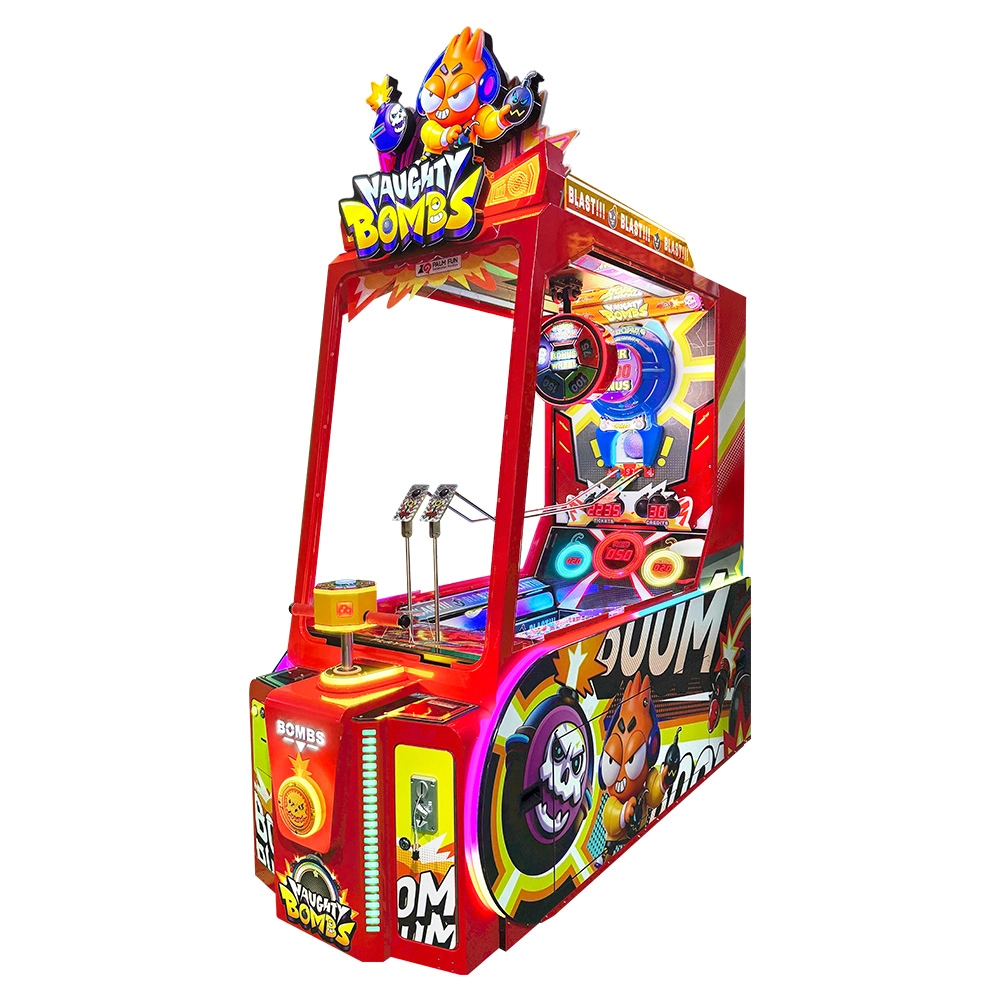
Naughty Bombs is a ball-drop redemption arcade game featuring rolling-ball gameplay, colored targets, ticket prizes, surprise bonus rewards, lighting and sound effects. Players use timing to launch and drop balls toward colored target areas. The product is presented for arcade, family entertainment center and other entertainment-venue projects, with customizable 110V / 220V AC voltage configuration.
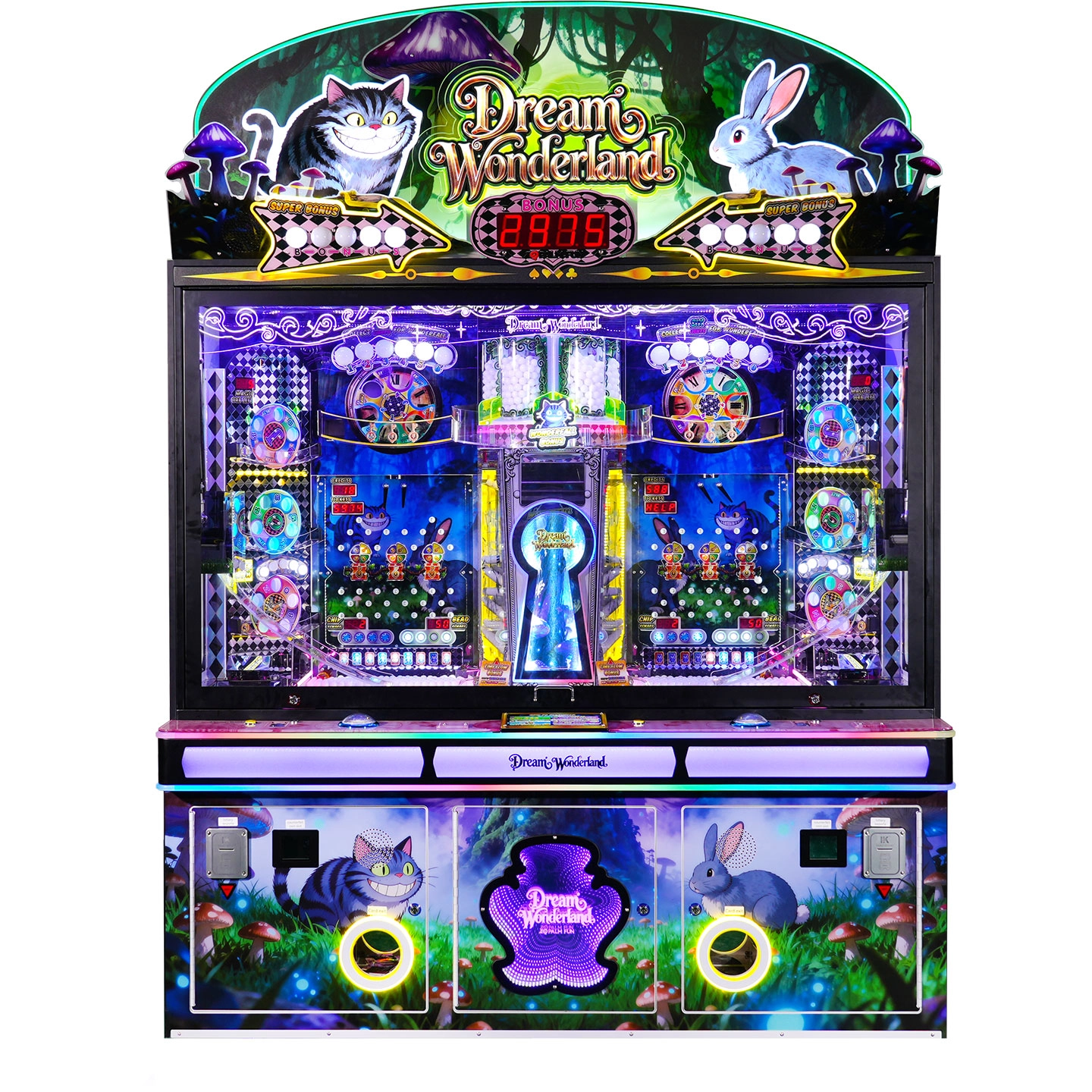
Dream Wonderland Marble Pusher Redemption Game
Enter Dream Wonderland — a magical marble pusher adventure filled with glowing lights, magic orbs, bonus wheels, collectible character cards, and exciting jackpot challenges.
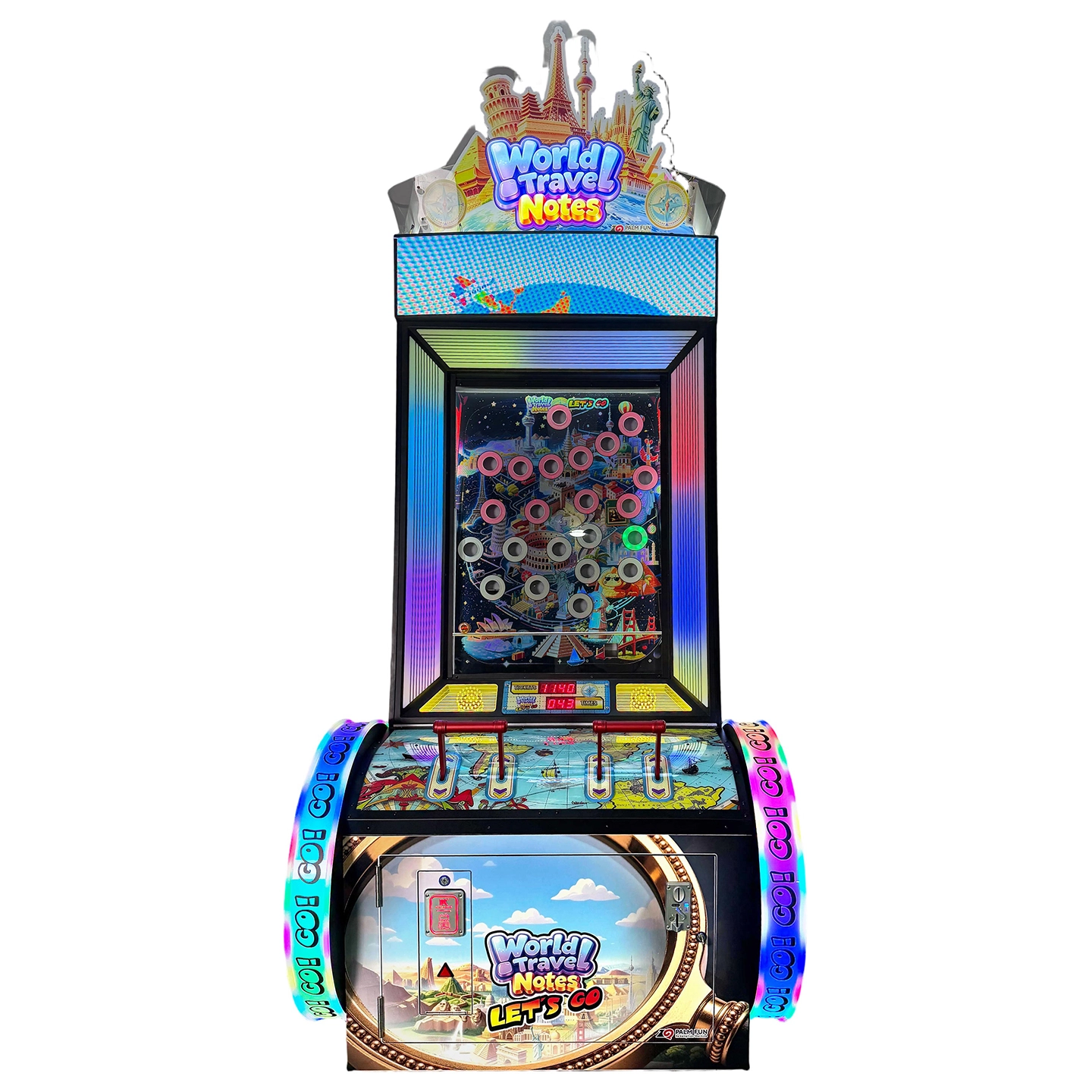
World Travel Notes – Balance Ball Redemption Arcade Game
World Travel Notes is a skill-based balance ball redemption game with a fun world-travel theme. Players use two handles to control the balance bar and guide the ball into each target hole. As the game progresses, the targets become more challenging, leading players toward the final grand prize. With colorful world-travel graphics, dynamic RGB lighting, a live score display, and progressive difficulty, World Travel Notes is designed to attract attention and encourage repeat play in arcades, FECs, shopping malls, and other entertainment venues.
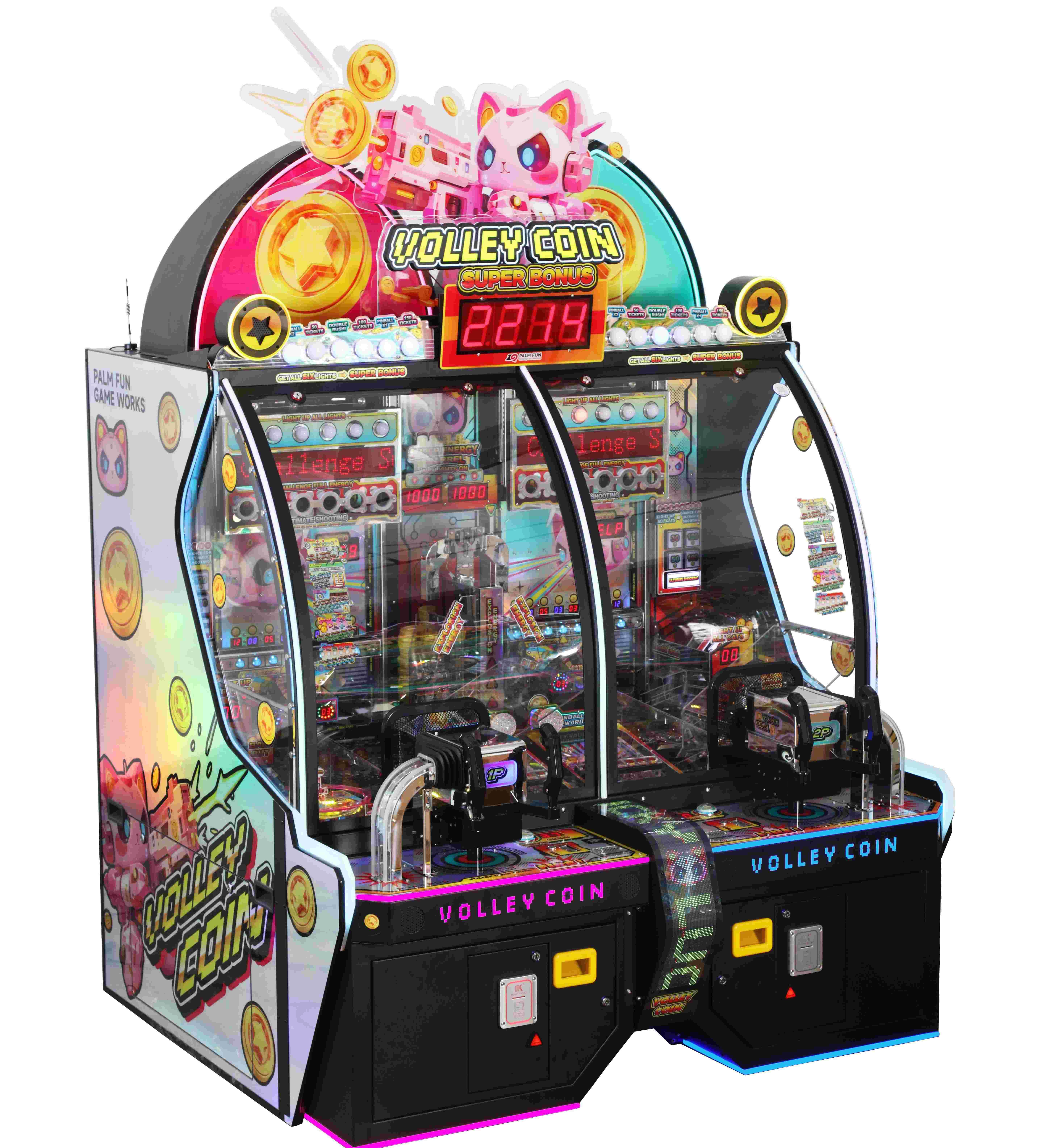
Hybrid Shooting & Pushing | Coin Pusher Arcade Ticket Redemption Machine
Volley Coin is an innovative arcade ticket redemption machine developed by Palm Fun Electronics. Combining the excitement of a fast-paced token shooter game with the proven earning power of a traditional coin pusher machine, Volley Coin offers a fresh and engaging gameplay experience that appeals to players of all ages.
Copyright © 2026 PALM FUN All Rights Reserved. | Privacy Policy • Terms and Conditions | Sitemap
palmfunarcade
Palm Fun Arcade Game
Whatsapp: +8618126837443
PalmFun Arcade
PalmFun_Arcade
PALM FUN Redemption Machine