








Price Breakdown: Total Landed Cost for Importing Coin Pushers
- How to Calculate the Delivered Cost of an Imported Coin-Operated Attraction
- Start with the commercial invoice and Incoterm
- Separate product cost from logistics cost
- Use a landed-cost formula before approving the purchase
- Cost Components That Commonly Change the Import Budget
- Freight, container utilization, and destination charges
- Duty, VAT, sales tax, and customs brokerage
- Installation, payment, and post-arrival expenses
- Procurement Controls for a Profitable Redemption Game Machine Project
- Build a landed-cost worksheet with scenarios
- Verify quality, safety, and documentation before shipment
- Compare equipment formats and revenue models
- Why PALM FUN Can Support International Arcade Equipment Procurement
- Manufacturing capability and product development
- Portfolio fit for redemption-focused venues
- Partnership value beyond the initial shipment
- Frequently Asked Questions
Total landed cost for importing a coin pusher machine is the complete amount paid to move, clear, install, and operate equipment at its destination—not simply the manufacturer’s unit price. A reliable import budget combines the machine quotation, export packing, inland delivery, ocean or air freight, cargo insurance, customs valuation, duty, VAT or sales tax, port charges, broker fees, local transportation, commissioning, and working capital. For buyers building a pinball arcade, family entertainment center, amusement park, or redemption zone, this calculation provides a more accurate basis for comparing suppliers, forecasting payback, and protecting project margins.
How to Calculate the Delivered Cost of an Imported Coin-Operated Attraction
Start with the commercial invoice and Incoterm
The first cost layer is the supplier’s commercial offer. It may include one coin pusher machine, a multi-player cabinet, a ticket redemption configuration, optional card readers, themed artwork, spare parts, or a complete batch of arcade games machines. Buyers should confirm whether the quotation is EXW, FOB, CIF, or DDP because each term transfers costs and responsibilities at a different point. The International Chamber of Commerce Incoterms 2020 rules define these responsibilities, but they do not determine customs duty or local taxes.
Under EXW, the buyer typically arranges collection from the factory and manages export logistics. FOB generally places delivery and export clearance obligations with the seller until the goods are loaded at the named port, while the buyer pays the main international freight. CIF includes cost, insurance, and freight to the destination port, but inland delivery, import clearance, duties, and final delivery usually remain with the buyer. DDP can simplify procurement, yet the importer should verify whether the supplier is legally able to act as importer of record in the destination country.
Separate product cost from logistics cost
A supplier quotation should be divided into visible and hidden components. Visible components include the cabinet, playfield, control board, lighting, coin mechanism, ticket dispenser, display, power supply, and accessories. Hidden or variable components can include export crates, fumigation treatment for wooden packaging, palletization, loading, documentation, bank charges, inspection, and destination delivery.
For a meaningful comparison, request the packed dimensions, gross weight, net weight, number of cartons, cubic-meter volume, HS classification proposed by the manufacturer, and loading quantity per 20-foot or 40-foot container. A cabinet that appears inexpensive on a per-unit basis may become less competitive if its packaging occupies excessive container space or requires special handling. Buyers should also confirm whether replacement parts are shipped with the order or billed separately, because an initial spare-parts kit can reduce downtime after installation.
Use a landed-cost formula before approving the purchase
A practical formula is: total landed cost equals product price plus export packing, origin charges, inland transport, international freight, insurance, customs duty, import tax, destination port charges, customs brokerage, local delivery, installation, payment fees, and compliance costs. Divide the result by the number of operational units to obtain the landed cost per cabinet.
Customs valuation is particularly important. In many jurisdictions, duty is calculated from the customs value rather than the factory price alone, and freight or insurance may be treated differently according to local rules. The World Trade Organization customs valuation framework explains the international principles used to establish customs value. The importer remains responsible for confirming the correct tariff code and valuation treatment with a licensed broker or the relevant customs authority.
Cost Components That Commonly Change the Import Budget
Freight, container utilization, and destination charges
International freight changes with route, season, fuel conditions, equipment availability, port congestion, and shipment volume. Ocean freight is usually economical for large arcade orders, while air freight may be justified for urgent replacement boards or small, high-value components. A quote should state whether it covers terminal handling charges, documentation, security fees, origin consolidation, destination handling, and demurrage risk.
Container utilization affects the economics of every unit. Buyers should compare the cubic volume of a single cabinet with the volume of a complete shipment and assess whether nested components, detachable marquees, or flat-packed accessories can improve loading efficiency without compromising protection. A freight forwarder can provide a current route quotation, but the project owner should request validity dates because shipping prices are time-sensitive.
Duty, VAT, sales tax, and customs brokerage
Import duty depends on the destination country, product classification, country of origin, trade agreements, and the technical description of the equipment. VAT or sales tax may be recoverable for a registered business, but it still creates a cash-flow requirement at import. Customs brokerage, examination fees, port storage, and document amendments are separate charges and should not be assumed to be included in a freight quote.
Before placing a purchase order, provide the broker with product photographs, a technical specification sheet, the invoice, packing list, bill of lading information, country of origin, and electrical details. The U.S. Customs and Border Protection import guidance illustrates why importers must maintain accurate documentation and understand their compliance responsibilities. Other jurisdictions apply their own procedures, so local professional advice remains necessary.
Installation, payment, and post-arrival expenses
Mechanical amusement equipment may require leveling, anchoring, power connection, game-setting configuration, ticket calibration, software setup, and staff training. The budget should include labor for unloading and positioning, especially when cabinets are heavy or the venue has stairs, narrow doors, or restricted delivery hours. If the equipment uses a card reader, local payment gateway, network connection, or venue management system, integration can create additional engineering costs.
Payment terms also affect the effective purchase cost. Bank transfer charges, foreign-exchange spreads, letters of credit, inspection fees, and financing expenses can materially change the cash requirement. A procurement team should compare the total payable amount in the buyer’s home currency rather than relying only on the supplier’s unit price in U.S. dollars.
| Cost category | Typical buyer question | Budget treatment | Primary evidence |
|---|---|---|---|
| Equipment price | What is included in the cabinet and accessories? | Fixed by quotation, subject to specification | Commercial invoice and technical offer |
| Origin logistics | Who pays packing, pickup, export clearance, and terminal fees? | Depends on Incoterm and shipment method | Forwarder quotation and Incoterm |
| International freight | Is the rate based on actual weight, volume, or container? | Variable by route and validity period | Booking confirmation |
| Duty and import taxes | What tariff code and customs value apply? | Country-specific and often tax-sensitive | Broker classification and customs rules |
| Destination handling | Are storage, inspection, brokerage, and delivery included? | Reserve a contingency amount | Arrival notice and local invoices |
| Commissioning | Who installs, calibrates, and trains staff? | Project-specific operating expense | Installation scope and service plan |
Procurement Controls for a Profitable Redemption Game Machine Project
Build a landed-cost worksheet with scenarios
Three scenarios are more useful than one optimistic estimate. The base case should use the forwarder’s current freight quote and the broker’s preliminary classification. The conservative case should include exchange-rate movement, port storage, inspection, delivery delays, and a contingency for replacement parts. The accelerated case should model air freight or expedited trucking if the opening date is fixed.
For each scenario, calculate cost per play, expected plays per day, payout percentage, ticket or prize expense, routine maintenance, floor-space opportunity cost, and payment-system fees. A cabinet with a higher landed cost can outperform a cheaper alternative if it delivers stronger player engagement, greater throughput, easier maintenance, or a better prize-redemption cycle. This is why procurement should evaluate lifecycle economics instead of comparing invoice prices in isolation.
Verify quality, safety, and documentation before shipment
Quality assurance reduces the financial risk of rework, rejected deliveries, and early failures. Buyers should request pre-shipment photographs, a serial-number list, a packing list, electrical specifications, operating instructions, warranty terms, and a test video showing coin acceptance, sensor response, ticket dispensing, lighting, sound, and game logic. The ISO 9001 quality management principles provide a useful framework for assessing whether a manufacturer operates controlled processes, although certification should be verified directly rather than assumed.
Electrical compliance is jurisdiction-specific. Confirm voltage, frequency, plug type, protective grounding, labels, and required declarations before production. Where the venue uses networked payment equipment, cybersecurity, data handling, and connectivity should be reviewed alongside mechanical performance. A documented factory acceptance test is especially valuable for distributors ordering multiple units with identical configurations.
Compare equipment formats and revenue models
Different cabinet formats produce different landed-cost and revenue profiles. A compact single-player cabinet may suit a small entertainment venue with limited floor space, while a wide multi-position attraction can create stronger social play and higher hourly capacity. Buyers evaluating a pinball arcade installation, a single player arcade format, or a ticket-based coin-pushing attraction should compare footprint, power consumption, service access, expected queue length, and prize economics.
For operators focused on redemption revenue, the Coin Pusher Arcade Ticket Redemption Machine category can combine physical coin movement with ticket output, while the Larva Series Coin Pusher Arcade adds a themed presentation intended to support visual attraction. The correct choice depends on the venue’s audience, prize system, floor plan, and local operating regulations.
Why PALM FUN Can Support International Arcade Equipment Procurement
Manufacturing capability and product development
PALM FUN was founded in 2015 and specializes in mechanical lottery machines, coin pusher machines, and raffle machines. Our work covers research and development, industrial design, production, and sales of innovative gaming and lottery equipment. This integrated approach helps buyers discuss cabinet construction, game mechanics, control systems, visual themes, ticket functions, and service requirements with a supplier that understands the full product lifecycle.
Our 3,000-square-meter factory is supported by skilled development engineers focused on technology advancement and user experience. Controlled production, engineering review, and product testing help project owners reduce specification gaps before shipment. For distributors and venue operators, this can simplify quotation comparison because the commercial discussion includes not only the cabinet but also configuration, packaging, spare parts, documentation, and post-arrival support.
Portfolio fit for redemption-focused venues
Our portfolio includes coin pusher machine solutions, redemption games, arcade games machines, and arcade machines for sale for different venue formats. Product selection can be aligned with floor-space limitations, player capacity, ticket objectives, visual merchandising, and payment architecture. Buyers can review our High Quality Redemption Arcade MachinesManufacturer information when assessing company background, manufacturing scope, and partnership capabilities.
Our products are recognized and popular in more than 50 countries worldwide. That international reach supports practical conversations about export packing, destination requirements, documentation, spare-parts planning, and distributor cooperation. It does not eliminate the buyer’s responsibility for local customs, safety, licensing, or tax compliance, but it provides a stronger basis for organizing the import process.
Partnership value beyond the initial shipment
Our objective is to build long-term partnerships with clients and provide comprehensive support for success in a competitive gaming market. A productive supplier relationship should continue after delivery through troubleshooting guidance, replacement-part availability, configuration assistance, and product updates. These services influence uptime and total ownership cost, particularly when a venue operates multiple cabinets across several locations.
When comparing PALM FUN with other manufacturers, buyers should issue the same specification sheet to every supplier and request a complete landed-cost input set: unit price, packed dimensions, gross weight, production lead time, Incoterm, warranty, spare-parts pricing, electrical configuration, and recommended maintenance schedule. This disciplined process produces a defensible procurement decision and helps ensure that the selected redemption game machine supports both customer experience and operating profitability.
Contact PALM FUN through our official website to review coin pusher machines and redemption equipment for an accurately planned international purchase.
Frequently Asked Questions
What is included in the total landed cost of a coin pusher machine?
Total landed cost includes the equipment price, export packing, origin transport, international freight, insurance, customs duty, import taxes, destination handling, brokerage, local delivery, installation, payment charges, and compliance expenses.
Which Incoterm is best when importing arcade equipment?
There is no universally best Incoterm. EXW gives the buyer more logistics control, FOB is commonly used for ocean shipments, CIF includes freight and insurance to the destination port, and DDP may simplify delivery when the supplier can legally manage destination import obligations.
How can buyers reduce unexpected import charges?
Buyers should obtain packed dimensions and weights, confirm the Incoterm, ask for a full freight quote, verify the tariff classification with a broker, budget for destination handling and storage, and include a contingency for exchange-rate or port-related changes.
Are import duties and VAT the same in every country?
No. Duty and VAT or sales tax depend on the destination country, product classification, customs value, trade agreements, and local tax rules. A licensed customs broker or relevant customs authority should confirm the applicable treatment.
What documents should be requested before shipment?
Important documents include the commercial invoice, packing list, technical specification sheet, country-of-origin information, electrical details, serial-number list, warranty terms, operating instructions, and evidence of pre-shipment testing.
How should operators compare a low-price cabinet with a higher-cost model?
The comparison should include landed cost per unit, throughput, player engagement, maintenance access, power consumption, expected revenue per play, prize costs, warranty support, spare-parts availability, and projected payback rather than invoice price alone.
Recommended for you
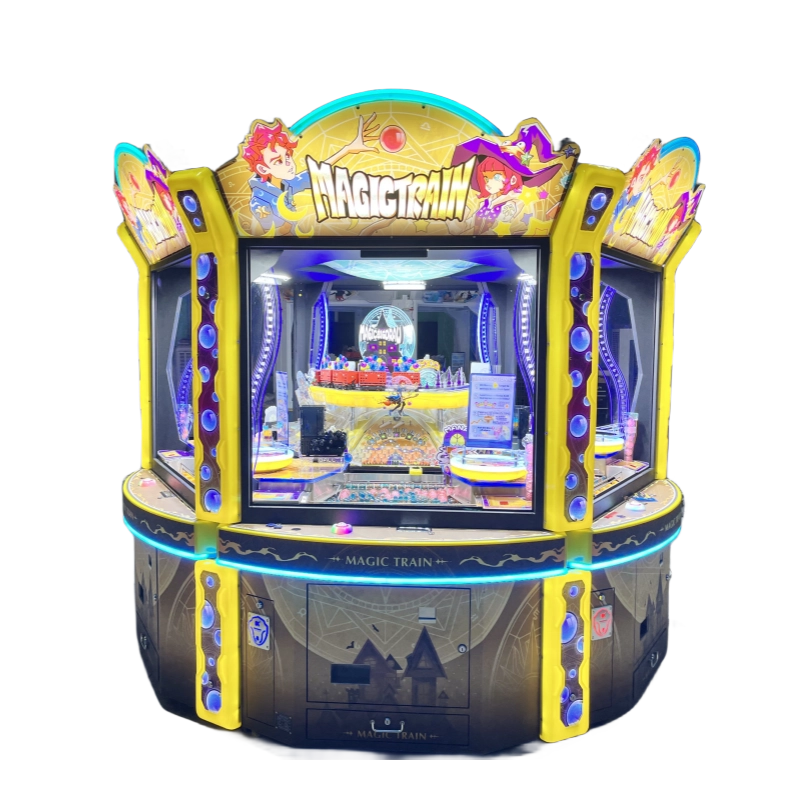
The Best Redemption Arcade Games: A Complete Guide to Fun and Entertainment
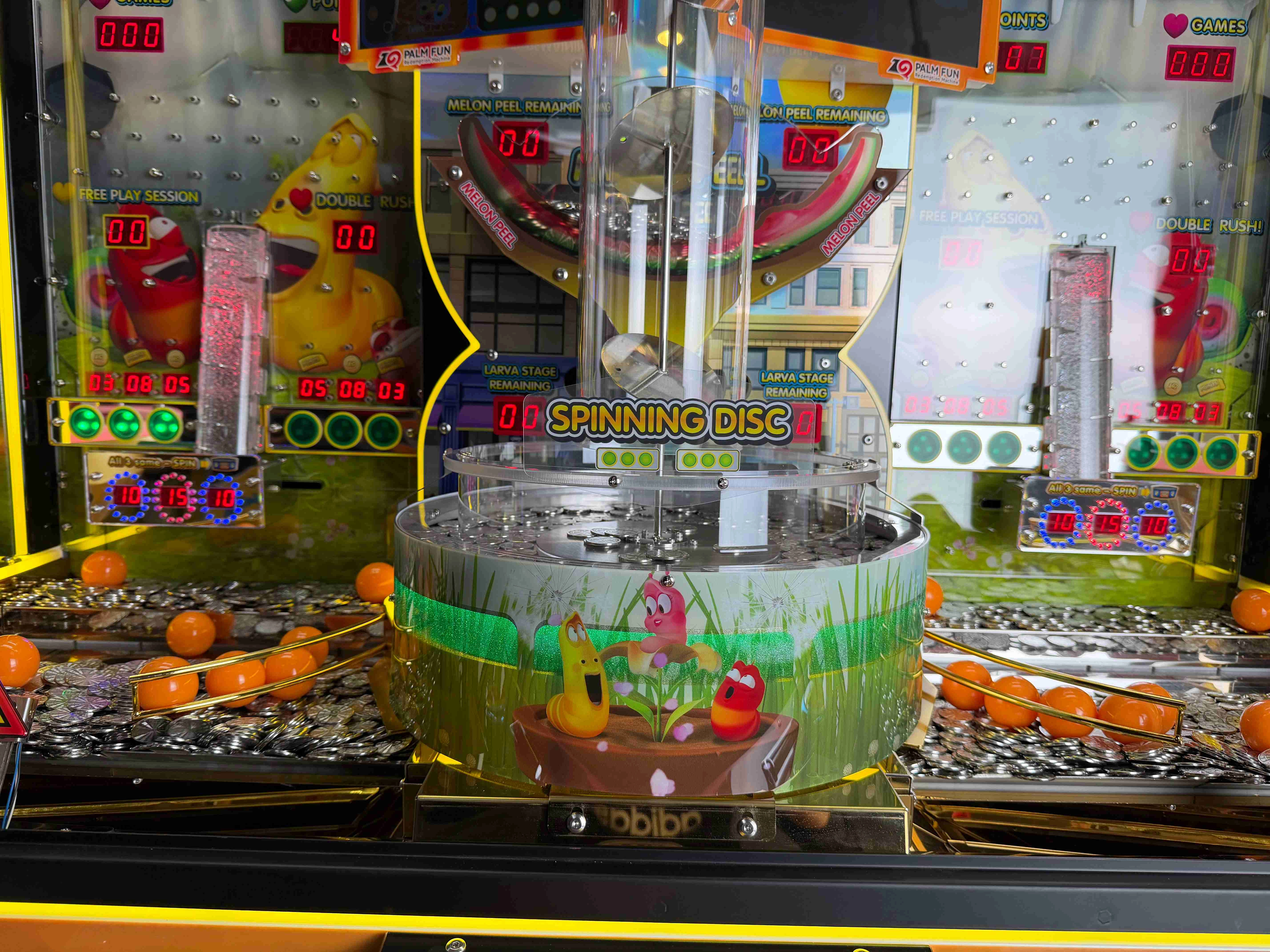
How Larva Coin Pusher Ticket Redemption Works
China Top ball drop game Manufacturers supplier
Everything You Need to Know About arcade games machines
FAQs
How to guide the players to recognize tickets at the beginning setup of the redemption machines?
Never assume that your players already understand the purpose of lottery tickets(reward points). Even in venues that have been in operation for many years, it is still discovered during on-site interviews with players that many of them are not aware. Don't believe it? Just ask consumers at the venue. The machines, redemption counters, materials hung above the venue, and announcements by staff, among others, can all be channels for informing players about the purpose of lottery tickets(reward points). It is essential to do more promotion, create large displays and large cards, and clearly communicate the purpose of lottery tickets(reward points) to the players.
How to guides works?
For example:
1. Proactively inquire and add tickets when a customer's machine is running low on tickets.
2. Assist players in organizing tickets when they are dispensed unevenly.
3. Offer storage tools such as storage bags and rubber bands when customers are arranging their tickets.
4. Provide free USB interfaces for charging near popular machines and rest areas.
5. Implement warm and clear reminders, guidance on ticket redemption, and directional signage, all designed to be straightforward. The more of these you provide, the more players will appreciate your thoughtfulness, without finding it bothersome.
Why redemption ticket machines are popular?
2.Redemption machines are becoming the most important breakthrough to enhance the sustainable operation of indoor arcade game halls.
3.Players are of all ages and they continue to expand.
How to place the redemption machines in a right place?
1,Ensure that the placement and layout of the equipment are distinct and centralized.
2,Keep noise levels low and avoid having a line of sight that spans too far to prevent players from easily taking in everything, which may slow down their movement.
3,Avoid clustering high-ticket payout machines and disperse machines of the same style.
4,Mix popular machines with less popular ones and avoid placing all popular machines together.
What is the character of mechanical redemption machine?
You may also like
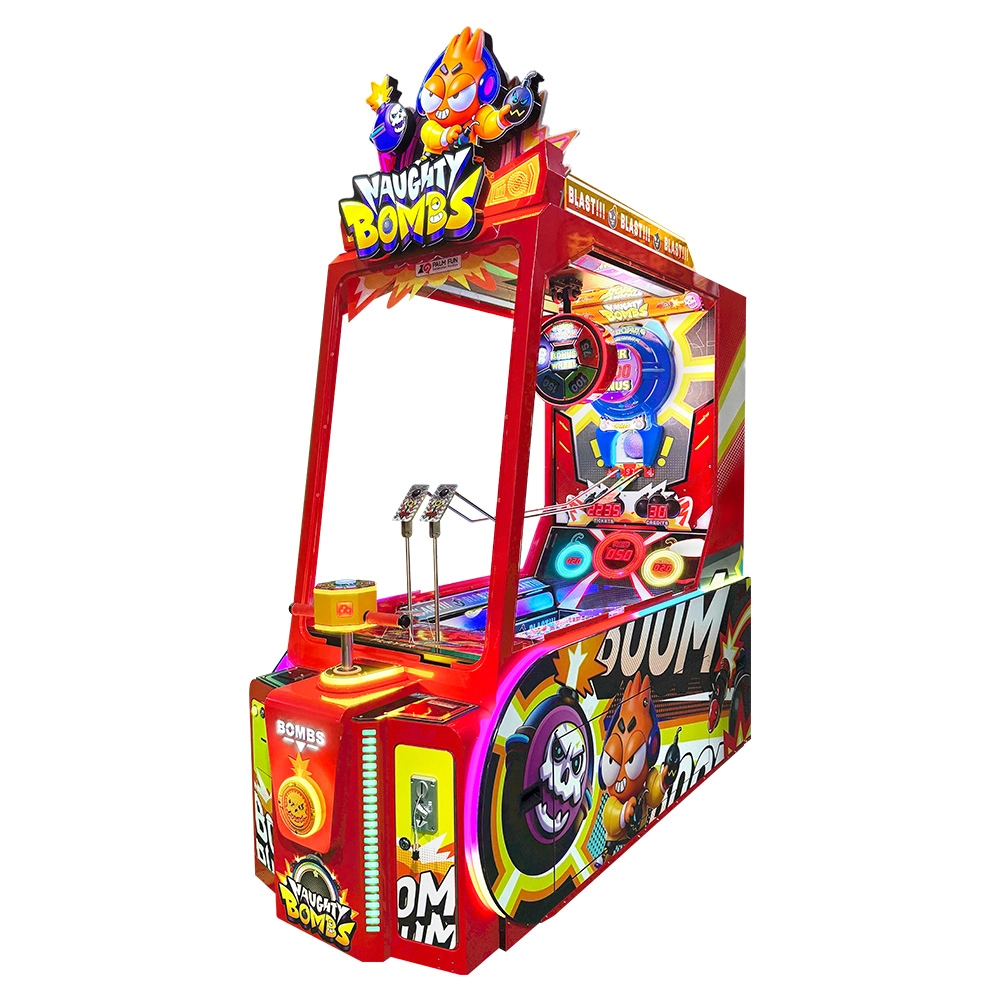
Naughty Bombs Ball Drop Redemption Arcade Game Machine
Naughty Bombs is a ball-drop redemption arcade game featuring rolling-ball gameplay, colored targets, ticket prizes, surprise bonus rewards, lighting and sound effects. Players use timing to launch and drop balls toward colored target areas. The product is presented for arcade, family entertainment center and other entertainment-venue projects, with customizable 110V / 220V AC voltage configuration.
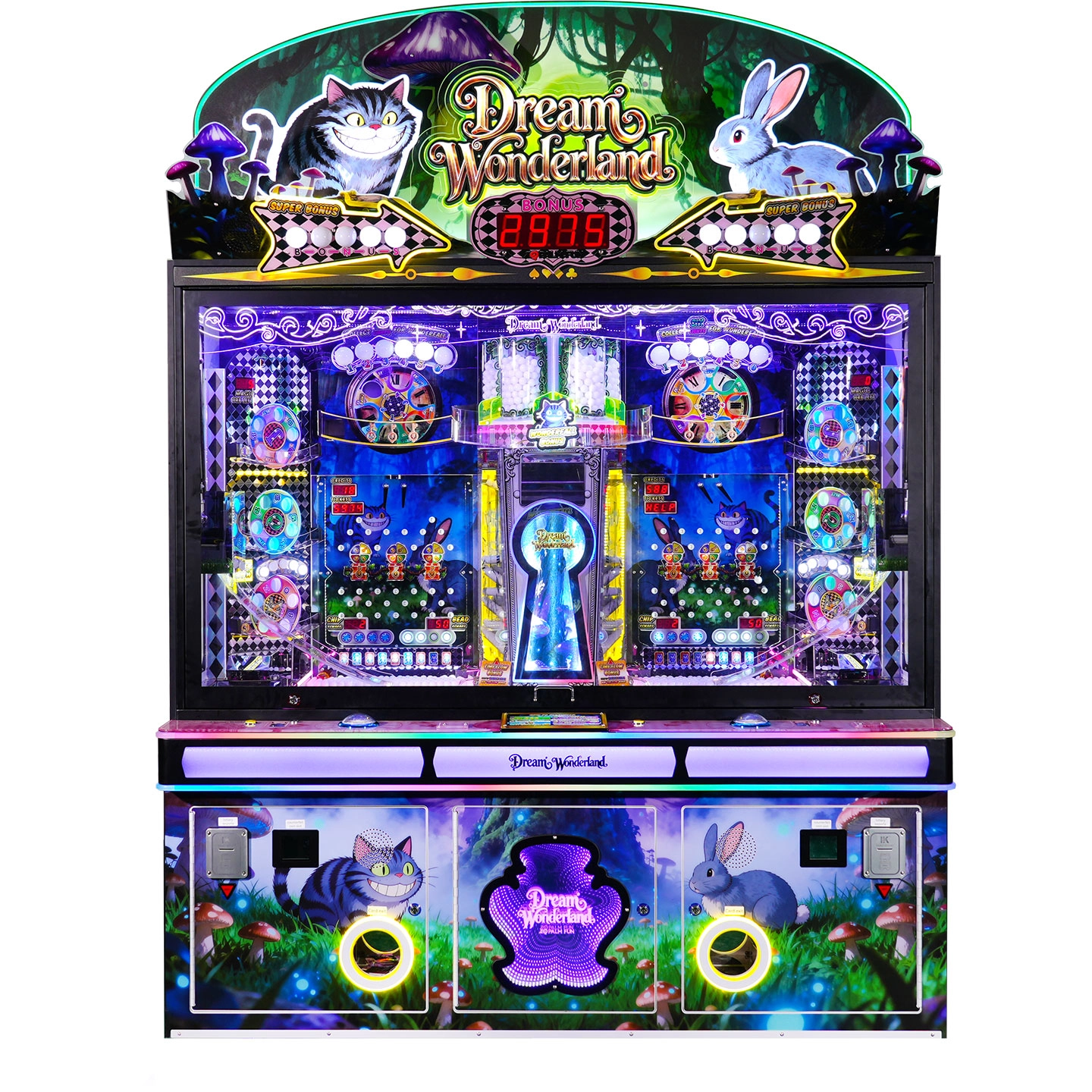
Dream Wonderland Marble Pusher Redemption Game
Enter Dream Wonderland — a magical marble pusher adventure filled with glowing lights, magic orbs, bonus wheels, collectible character cards, and exciting jackpot challenges.
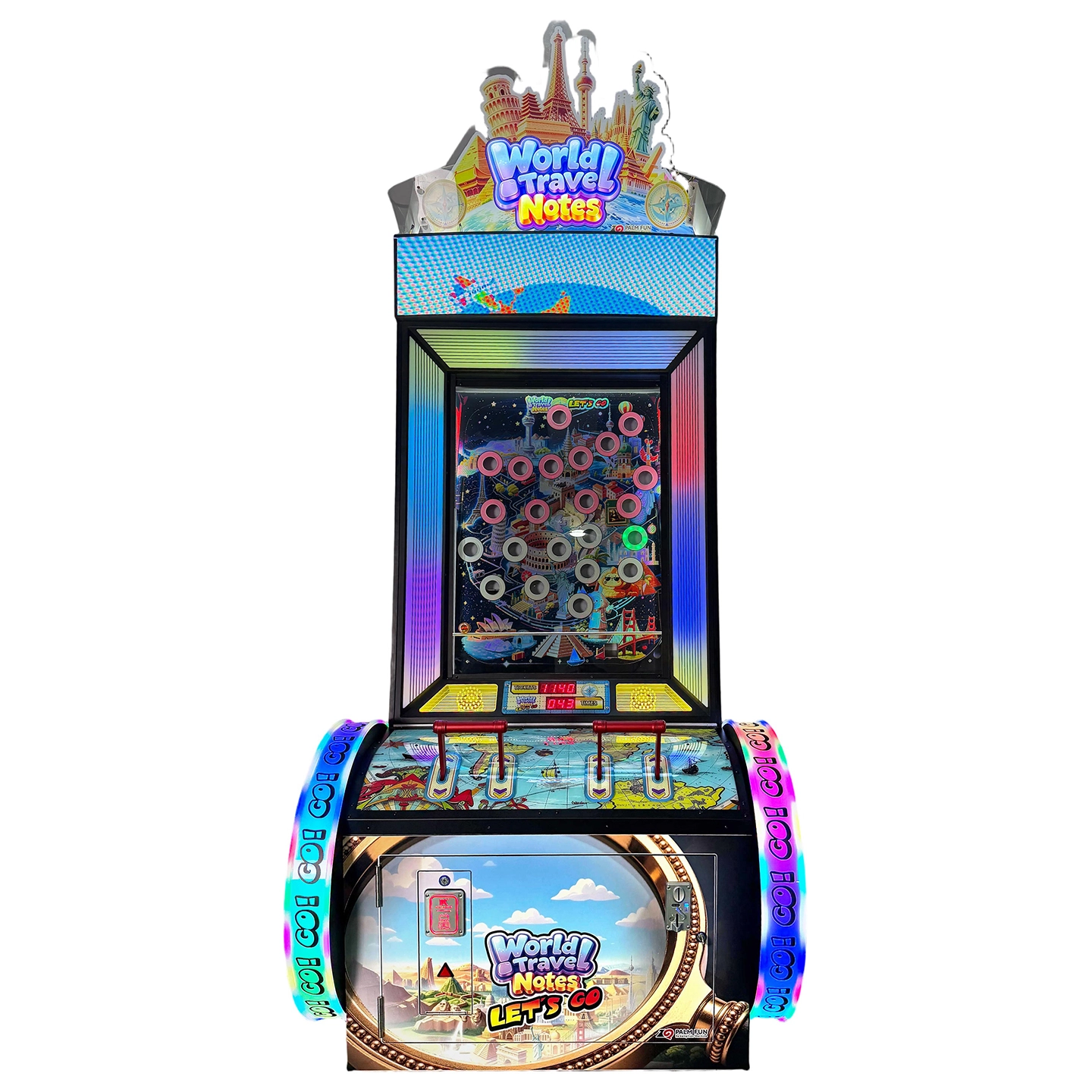
World Travel Notes – Balance Ball Redemption Arcade Game
World Travel Notes is a skill-based balance ball redemption game with a fun world-travel theme. Players use two handles to control the balance bar and guide the ball into each target hole. As the game progresses, the targets become more challenging, leading players toward the final grand prize. With colorful world-travel graphics, dynamic RGB lighting, a live score display, and progressive difficulty, World Travel Notes is designed to attract attention and encourage repeat play in arcades, FECs, shopping malls, and other entertainment venues.
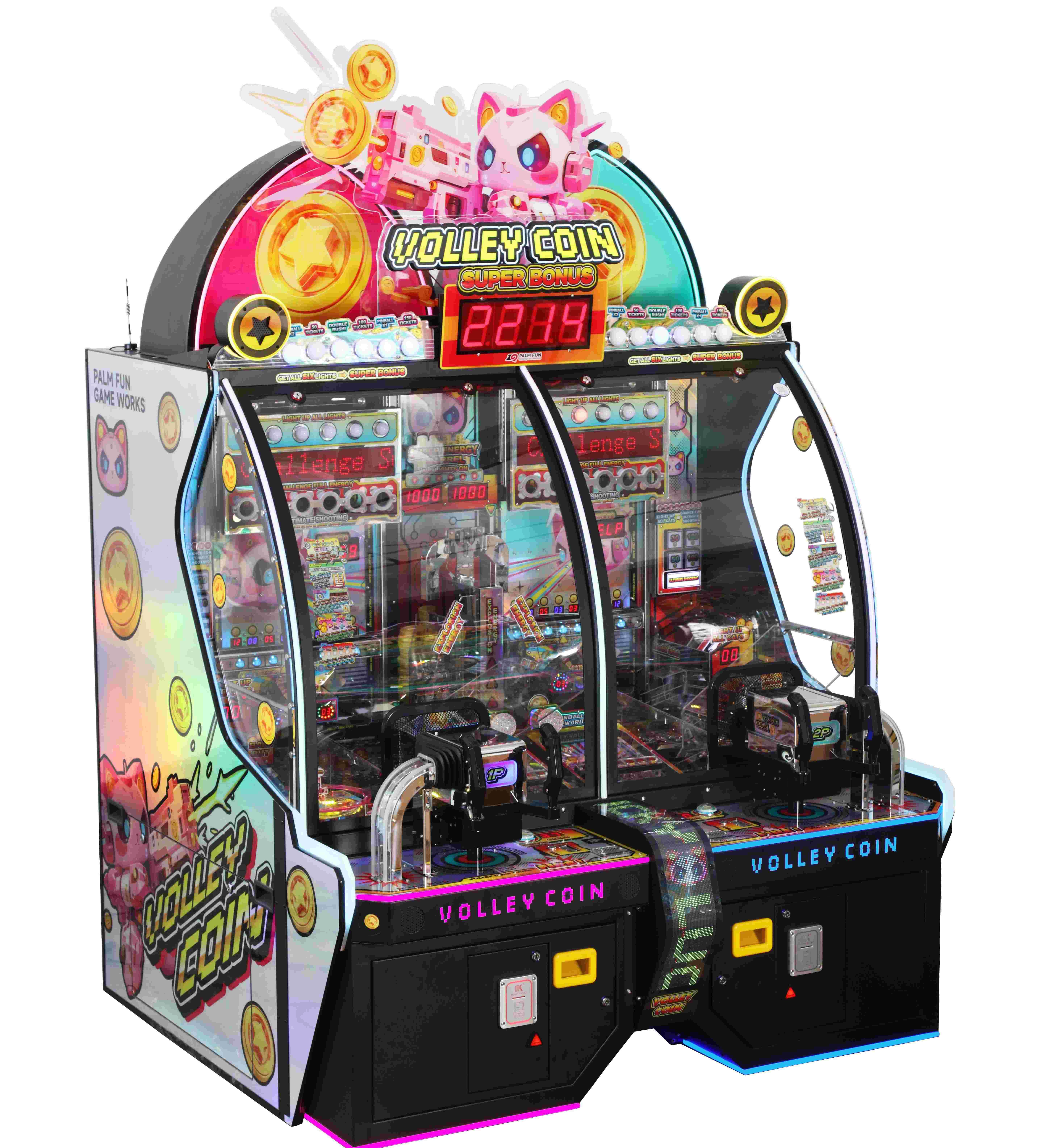
Hybrid Shooting & Pushing | Coin Pusher Arcade Ticket Redemption Machine
Volley Coin is an innovative arcade ticket redemption machine developed by Palm Fun Electronics. Combining the excitement of a fast-paced token shooter game with the proven earning power of a traditional coin pusher machine, Volley Coin offers a fresh and engaging gameplay experience that appeals to players of all ages.

Copyright © 2026 PALM FUN All Rights Reserved. | Privacy Policy • Terms and Conditions | Sitemap
palmfunarcade
Palm Fun Arcade Game
Whatsapp: +8618126837443
PalmFun Arcade
PalmFun_Arcade
PALM FUN Redemption Machine